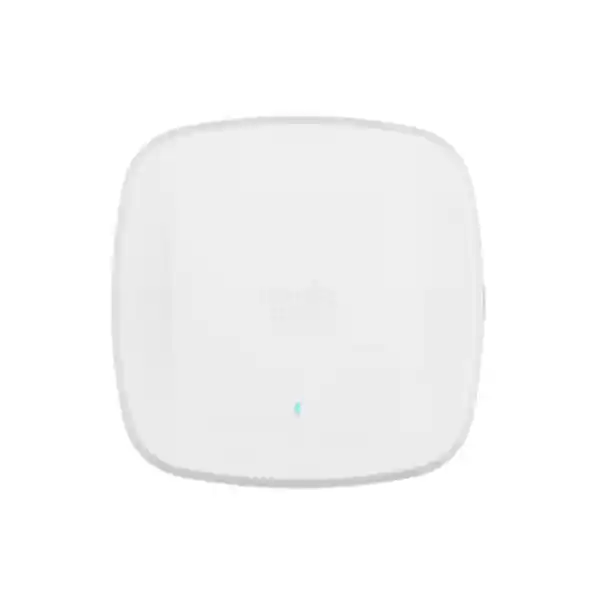
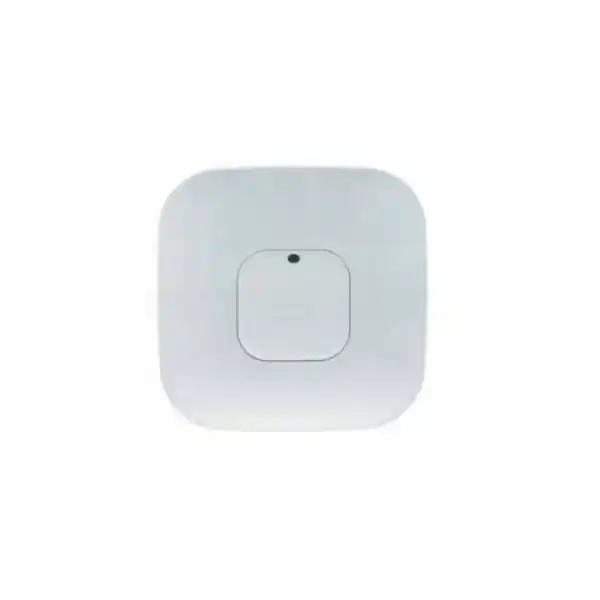
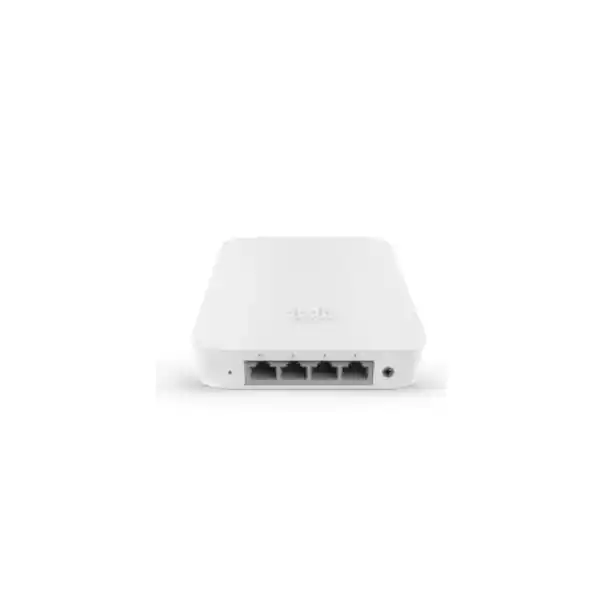
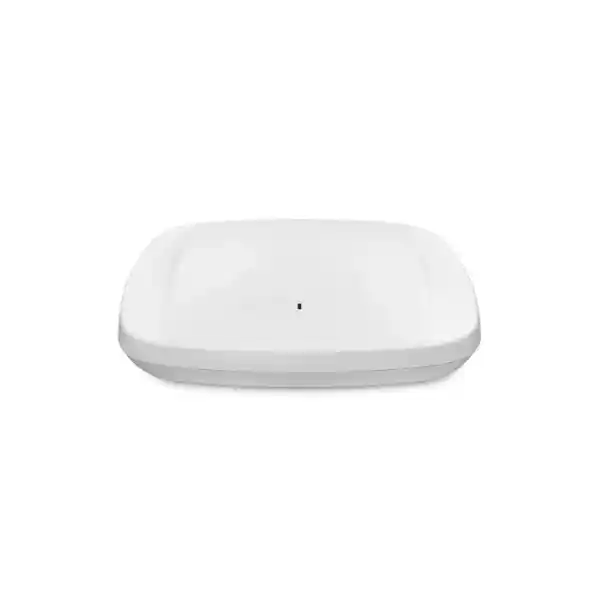
Cisco Meraki CW9166D1-MR Wi-Fi 6E Directional Enterprise Access Point
Build focused enterprise wireless coverage with the Cisco Meraki CW9166D1-MR, a cloud-managed indoor access point designed for high-density Wi-Fi 6E environments. Its integrated directional antenna architecture is particularly relevant when the intended service area occupies a defined sector rather than an entire open floor. For Ugandan businesses, successful procurement begins with an RF design, a compatible switching and power plan, licensing validation and confirmation of permitted wireless bands.
This model is not a generic ceiling access point to deploy blindly across every floor. The antenna’s intended coverage direction, building materials, client distribution and mounting height determine whether the deployment performs as planned. In auditoriums, warehouse aisles and busy shared workspaces, thoughtful orientation can help concentrate service where devices actually operate.
Request CW9166D1-MR Uganda Quote
Procurement Facts at a Glance
CW9166D1-MR, Meraki cloud-managed persona.
Wi-Fi 6E with 2.4, 5 and 6 GHz operation, subject to configuration and regulatory permission.
Integrated directional antenna, not an external-antenna connector model.
Stock, price, lead time, license and warranty are confirmed by quotation.
Architecture and Operational Fit
The CW9166D1 family combines enterprise 802.11ax radios, dedicated security and RF observation capabilities and Bluetooth Low Energy support. Cisco specifies up to 7.8 Gbps aggregate wireless frame rate for the platform; this is a theoretical combined radio figure, not a guaranteed application throughput or internet speed. Effective throughput depends on clients, channel availability, interference, airtime contention, Ethernet uplink capability and upstream network capacity. Its directional design should be assessed with a predictive and preferably on-site survey before any large-scale order.
Cisco identifies directional antenna gain of approximately 6 dBi on the fixed 2.4 and 5 GHz paths and 8 dBi on the relevant higher-band directional paths, with nominal 70-by-70 and 60-by-60 degree patterns. The flexible radio architecture and available 6 GHz operation must be reviewed against the exact software configuration and local rules. Unlike a broad omnidirectional access point, a directional unit can be oriented toward seating, aisles or other target zones. This may help avoid wasting radio energy on adjoining areas, although walls, shelving and reflections still influence actual coverage.
Enterprise Benefits
- Capacity planning: High-efficiency Wi-Fi 6E radios support busy client environments when channel plans and client capabilities align.
- Operational continuity: Cloud monitoring and alerting help administrators detect issues, while resilient switching, power and WAN designs must be provided separately.
- Scalability: Meraki Dashboard offers consistent administration across buildings and sites with appropriate licensing.
- Security: Enterprise authentication, policy controls and wireless threat monitoring can support segmented access designs.
- Visibility: Centralized telemetry can reduce time spent diagnosing poor RF conditions and client problems.
- Cost discipline: Accurate coverage planning avoids buying access points, licenses and switch ports without evidence of need.
Technical Specification Ledger
| Attribute | Specification / Procurement Guidance |
|---|---|
| Product | Cisco Catalyst Wireless 9166D1, Meraki-managed CW9166D1-MR |
| Wireless standard | IEEE 802.11ax Wi-Fi 6E with backwards-compatible client operation on supported legacy bands |
| Bands | 2.4 GHz, 5 GHz and 6 GHz, depending on regulatory authorization and radio configuration |
| Spatial streams | 4×4 MU-MIMO radio architecture |
| Aggregate frame rate | Up to 7.8 Gbps theoretical aggregate, not user throughput |
| Antenna | Integrated directional patch antennas; orientation must match RF design |
| Radio monitoring | Dedicated security/RF monitoring and BLE/IoT capability |
| Power | 802.3at/802.3bt PoE support; verify required power budget and feature behavior against current Cisco documentation |
| Management | Meraki Dashboard with suitable active subscription |
| Location | Indoor enterprise deployments; confirm environmental suitability and mounting kit |
| Compliance | Country-specific radio domain and 6 GHz authorization must be checked before supply and operation |
Configuration and Sizing Worksheet
First, record the floor area, seating or aisle geometry, client count, applications and target service levels. Next, map obstructions and select mounting locations where directional antenna sectors cover the intended users. Check available PoE budget, Ethernet cabling and uplink switching. Establish whether existing clients support 6 GHz and the required security settings. Confirm permitted channels and transmit-power rules in Uganda. Finally, price the hardware, Meraki licensing, mounting components, cabling, installation, testing and support as a single bill of materials.
Deployment Scenarios
Enterprise offices and multi-site estates
Use directional sectors in collaboration spaces or densely occupied rooms while retaining suitable omnidirectional access points elsewhere. Standardize SSIDs, authentication and monitoring through the Dashboard, but validate roaming and capacity with representative client devices.
Banking and financial services
Separate employee, guest and managed-device traffic through appropriate network policies and upstream segmentation. Align wireless authentication with organizational identity services and retain change records for audits. Wireless infrastructure is one part of a broader secure network design.
Universities and training centers
Lecture halls and examination spaces can benefit from deliberate sector placement. Assess simultaneous client density, device diversity, authentication peaks and exam-platform resilience before committing to quantities.
Public-sector institutions
Prepare formal equipment schedules showing the exact model, regulatory domain, licenses, support terms and commissioning deliverables. Confirm applicable procurement and information-security requirements before deployment.
Three Engineering Considerations
1. Wireless processing and channel planning
Wi-Fi 6E adds access to the 6 GHz spectrum where authorized, but new spectrum alone does not guarantee better performance. Client radio capabilities, channel widths, security modes and signal levels shape outcomes. A narrow directional pattern should be modeled and measured to limit dead zones and unintended overlap. Plan for practical application traffic rather than marketing aggregate data rates.
2. Cloud management and firmware operations
Meraki Dashboard provides remote configuration, network visibility and firmware administration. Buyers should establish administrative ownership, organization access, subscription responsibilities and a maintenance window policy. Review compatibility of any requested integrations and retain a recovery procedure for configuration changes.
3. Resilience and recovery
An access point does not provide independent high availability merely because it is centrally managed. Resilience requires adequate coverage overlap, reliable PoE switching, protected uplinks, suitable WAN design and documented spare-unit procedures. Test failure scenarios during commissioning and maintain inventory records that connect hardware serials to support entitlements.
Pre-Purchase Checklist
Ask whether the quotation includes the appropriate Meraki license and term, which mounting accessories are supplied, whether existing switches deliver adequate PoE, whether the regulatory SKU is authorized in Uganda and whether your client fleet can use 6 GHz. Request confirmation of firmware support, warranty channel, replacement arrangements and shipment lead time. For mixed-vendor networks, validate VLAN, RADIUS, DHCP, DNS and firewall interoperability rather than assuming every existing configuration will work unchanged.
Uganda Delivery and Procurement
FourTeck can receive requests for Kampala, Entebbe, Jinja, Mbarara, Gulu and other Uganda destinations. Share your organization name, delivery address, required quantities, target date and technical environment. A formal quotation should identify stock or sourcing status, delivery scope, tax treatment, applicable warranty, subscription requirements and any staging or installation services. No delivery time or inventory quantity is guaranteed on this page.
Regional Supply Coordination
For regional purchasing programs, consult FourTeck Uganda, FourTeck Kenya, FourTeck Africa, FourTeck UAE and FourTeck Kuwait. Country-specific radio approvals, import requirements and commercial terms must be checked for each destination.
Related Infrastructure and Services
Plan the complete wireless solution around the FourTeck Uganda catalog, including suitable PoE switching, structured cabling, mounting arrangements, network security, licensing and access point alternatives. Ask for comparisons with the Cisco Meraki CW9166I, CW9164 and other supported indoor models when omnidirectional coverage or different capacity targets may be more appropriate. Product availability and compatibility are subject to confirmation.
Technical Services
FourTeck can discuss bill-of-materials review, RF survey coordination, power and uplink validation, deployment planning, staging requirements and commissioning support as separately scoped services. Specify whether you require installation, firmware preparation, site acceptance testing, documentation or post-sales troubleshooting in the initial request so the quotation reflects the full project.
Frequently Asked Questions
Is the CW9166D1-MR suitable for warehouses?
It can be appropriate for indoor aisles and other focused coverage areas, but suitability depends on racking height, stock materials, mounting position and client movement. A predictive model followed by measurements is strongly recommended.
Does it require a Meraki subscription?
The MR persona is managed through Meraki Dashboard and requires the applicable licensing arrangement. Request a quote that explicitly lists the license tier, quantity and term.
Will every device use the 6 GHz band?
No. Devices must support Wi-Fi 6E or later, appropriate security settings and locally permitted 6 GHz channels. Older devices can use supported 2.4 or 5 GHz services.
Can it replace an omnidirectional access point one-for-one?
Not necessarily. The directional antenna creates a different coverage footprint. Replacing a broad-coverage unit without redesign may leave users outside the intended sector.
Can existing PoE switches power it?
Potentially, if they provide compatible power and sufficient per-port and total budget. Confirm power requirements, cabling and any feature limitations before purchase.
Is 7.8 Gbps the actual user speed?
No. This is an aggregate wireless frame-rate specification. Real application throughput depends on channel width, client hardware, contention, RF quality and wired network limitations.
Does it work with third-party firewalls and switches?
Standards-based connectivity generally permits integration, but the complete VLAN, authentication, routing, security and management design must be checked in the target environment.
What warranty applies in Uganda?
Warranty and replacement procedures depend on the supplied channel, applicable manufacturer terms and commercial agreement. Ask FourTeck to document the exact terms in the quote.
Are mounting parts and licenses included?
Do not assume either is bundled. Ask for an itemized offer showing the access point, mounting hardware, subscriptions, optional accessories and installation services.
Can FourTeck assist with rollout planning?
Submit floor plans, user counts, current switching details and desired coverage areas. FourTeck can discuss an appropriately scoped design review, bill of materials and deployment support proposal.
Request a Project-Ready CW9166D1-MR Quotation
For a useful commercial proposal, provide the number of access points, planned installation sites, expected device density, switch models, licensing requirements and target delivery date. Ask for an itemized response covering hardware, regulatory compatibility, mounting, subscriptions, warranty and optional deployment support.

Reviews
There are no reviews yet.