
Fortinet FortiAnalyzer 3510G in Uganda
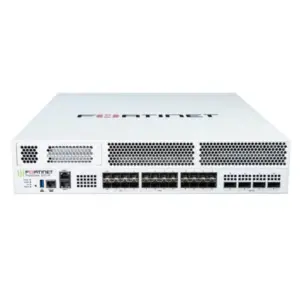
A high-capacity 4U log analytics appliance for centralized security telemetry, investigation, reporting, and SOC operations across large Fortinet environments.
Designed for organizations where log volume, retention and multi-domain administration have outgrown smaller analytics platforms, the 3510G combines up to 5,000 GB/day log handling with 96 TB of primary storage, high-speed interfaces and scale for up to 10,000 devices or VDOMs. FourTeck can help Uganda buyers size the platform around real telemetry and service requirements rather than a model name alone.
Centralized analytics for security environments generating serious log volume
FortiAnalyzer is Fortinet’s platform for consolidating telemetry across network, endpoint and cloud environments, creating a common data foundation for dashboards, investigation, reporting and automated security workflows. The 3510G is a high-capacity physical appliance in that family. It is intended for organizations that want dedicated on-premises analytics infrastructure and have requirements that justify substantially more ingest and storage than entry or midrange appliances.
Fortinet specifies up to 5,000 GB of logs per day and an analytics sustained rate of 60,000 logs per second. In collector mode, the sustained rate rises to 90,000 logs per second. The platform supports up to 10,000 devices or virtual domains and as many as 500 Administrative Domains (ADOMs). Those figures make the model relevant to large enterprises, distributed organizations, managed security environments and projects where multiple operational or customer domains need separation.
The business purpose is not simply to archive events. Centralized telemetry helps analysts move from isolated device logs to correlated investigation, trend analysis and operational reporting. Fortinet positions FortiAnalyzer as part of its Security Fabric, with native threat intelligence, automation, SIEM, SOAR and XDR capabilities available across the platform and associated services. Exact service entitlements should be checked against the chosen hardware or protection bundle before purchase.
For a Uganda deployment, the important question is whether the appliance fits the real operating profile. Device count can be misleading because a small number of busy firewalls may generate more telemetry than a much larger fleet of lightly used devices. FourTeck can review log volume, retention, ADOM requirements, rack and power planning, network interfaces, FortiCare requirements and optional FortiAnalyzer services before preparing a quotation.
What the platform changes for security operations
01
Consolidate telemetry at enterprise scale
Up to 5,000 GB/day provides substantial ingest headroom for organizations centralizing events from large security estates. Consolidation reduces the operational friction of jumping between individual devices and gives SOC teams a more coherent basis for investigation and reporting.
02
Maintain useful analytics under sustained load
Fortinet rates the appliance at 60,000 sustained logs per second in analytics mode. That matters because a platform must do more than accept data: it must keep enough analytical capacity available for security teams to search, correlate and work with the incoming telemetry.
03
Separate operations with ADOMs
Support for up to 500 ADOMs can help structure administration for business units, customers or operational boundaries. The correct ADOM design depends on governance and deployment architecture, so it should be planned before migration rather than treated as an afterthought.
04
Support fast data movement
Two 10GbE RJ45 interfaces and two 25GbE SFP28 interfaces give architects options for connecting the appliance to high-throughput data-center networks. Optics, cabling, switch compatibility and redundancy design should be confirmed for the target rack.
05
Build retention around large local capacity
The 96 TB primary storage configuration, plus SSD capacity specified for the platform, provides a substantial local data foundation. Retention still depends on actual ingest, analytics behavior and configuration, so buyers should model retention from measured logs rather than assume a fixed number of days.
06
Plan for resilient data-center operation
Redundant power supplies reduce dependence on a single PSU path when connected to appropriately designed power infrastructure. The benefit depends on the wider rack, PDU and UPS design, which should be reviewed as part of deployment planning.
The distinction is capacity combined with operational context.
For a large SOC, raw storage is only one part of the decision. The 3510G pairs high daily ingest with analytical and collector throughput, multi-domain scale, high-speed networking and FortiAnalyzer’s broader security-operations capabilities. This makes it a platform decision that should be mapped to log sources, workflows and service entitlements.
Published maximum daily log capacity.
Sustained analytical log rate.
Sustained rate when deployed in collector mode.
Maximum published scale.
Administrative segmentation capacity.
Data-center physical form factor.
FortiAnalyzer 3510G specification ledger
| Specification | Published value / guidance |
|---|---|
| Product type | Centralized log and analysis appliance |
| Daily logs | Up to 5,000 GB/day |
| Analytics sustained rate | 60,000 logs/second |
| Collector sustained rate | 90,000 logs/second |
| Maximum devices / VDOMs | 10,000 |
| Maximum ADOMs | 500 |
| Maximum analytics days at published sustained rate | 35 days |
| Form factor | 4U rackmount |
| Network interfaces | 2 × 10GbE RJ45, 2 × 25GbE SFP28 |
| Primary storage | 24 × 4 TB = 96 TB |
| Additional SSD capacity | 2 × 3.84 TB = 7.68 TB |
| Power | Dual power supplies; site electrical requirements should be verified from current installation documentation |
| Optional services | FortiGuard IOC and Outbreak Detection, Security Automation, Enterprise Bundle, Hardware Bundle, OT Security, Security Rating and Compliance; entitlement dependent |
| Hardware SKU | FAZ-3510G |
The figures that most affect purchase decisions are daily ingest, sustained LPS, retention, interface design and administrative scale. A buyer expecting 3 TB/day today may still prefer capacity above that figure if telemetry growth is rapid, but oversizing without a retention or expansion rationale can also tie up budget unnecessarily. Likewise, the maximum device figure should not be treated as a direct sizing formula: log behavior varies widely by device role, enabled security services and traffic patterns.
The 35-day analytics figure is tied to Fortinet’s published maximum sustained-rate context, not a universal retention guarantee. Actual retention depends on the data generated and the operational configuration. Before quotation, collect measured average and peak logs per second, daily volume, retention policy, number of managed domains, expected source growth and required service features. This provides a more defensible basis for selecting the appliance and subscriptions.
Five questions to answer before requesting the appliance
01 — What telemetry workload will the appliance receive?
Record average GB/day, average LPS and peak LPS for each major source group. This separates environments that need high analytical throughput from those that mainly need longer retention. It also helps decide whether analytics mode, collector roles or a distributed architecture should be considered.
02 — How large is the device and domain scale?
Count FortiGate devices, VDOMs and any additional supported telemetry sources, then map how they should be grouped administratively. The 10,000 device/VDOM and 500 ADOM ceilings are high, but governance structure can matter as much as raw counts.
03 — What must connect to the existing network?
Confirm whether 10GbE copper or 25GbE SFP28 is preferred, which switches will terminate the links, what transceivers or DACs are needed, and whether separate management, ingestion or redundancy paths are planned. Rack depth, airflow, power feeds and UPS capacity should also be checked.
04 — What growth and service entitlements are expected?
Document projected telemetry growth, new sites, additional VDOMs, retention changes and planned security services. Fortinet offers hardware and Enterprise Protection bundles plus separate services; the correct term and entitlement depend on the project.
05 — What are the deployment and support expectations?
Define implementation timing, maintenance windows, support level, replacement expectations and whether the purchase is part of a larger Fortinet refresh. This information helps align hardware, FortiCare and project logistics instead of treating them as separate decisions.
Where this capacity becomes operationally useful
Large enterprise SOC with distributed FortiGate estates
A company operating many branches, data centers and segmented virtual domains can use centralized analysis to bring security telemetry into one operational view. The 3510G is relevant when combined event volume approaches multi-terabyte daily levels or when growth makes smaller appliances difficult to size confidently. The project should still verify actual LPS, ADOM organization and retention because a geographically large network does not automatically produce a high log rate.
Managed security or multi-tenant operational environments
Organizations that separate customers or operational units through administrative domains can benefit from the appliance’s published maximum of 500 ADOMs. The key requirement is a carefully designed domain model, quotas and role structure. Buyers should confirm whether their service architecture is better served by a single large appliance, collectors feeding an analyzer, or another scalable FortiAnalyzer deployment pattern.
Regulated organizations with substantial reporting and retention needs
Financial services, public-sector entities and other organizations with formal security governance may need centralized logs for investigation, evidence, operational reporting and policy oversight. FortiAnalyzer provides reporting and analytics capabilities, while optional services can extend security operations. Compliance outcomes depend on configuration, retention policy, access controls and organizational process; purchasing the appliance alone does not establish compliance.
Data-center consolidation and security platform refresh
When older analytics hardware is being replaced, the 4U platform can serve as a consolidation target for environments whose log volume has increased over several hardware generations. Migration planning should account for supported software versions, historical data requirements, network addressing, ADOM design and maintenance windows. FourTeck can help scope the bill of materials while the customer’s technical team validates migration procedures against Fortinet documentation.
Log ingest and analytics capacity must be sized together
Security analytics sizing can fail when procurement focuses on only one metric. Daily GB indicates how much data arrives over a day, while logs per second describe event velocity. The 3510G’s published values—up to 5,000 GB/day, 60,000 sustained LPS for analytics and 90,000 sustained LPS in collector mode—show why both dimensions matter. A network can produce moderate daily volume but sharp event bursts, or a very large daily volume at a comparatively steady rate.
Analytics mode is relevant when the appliance is expected to store, index, search and analyze the data used by SOC staff. Collector mode is designed around collection behavior and has a higher sustained LPS rating. Larger architectures may distribute these roles. The correct design depends on source geography, network paths, operational resilience and the amount of analysis performed on each system.
For procurement, use measured telemetry whenever possible. Export recent FortiAnalyzer or FortiGate logging statistics, identify busy periods and include planned sites or services. Add growth headroom based on known projects rather than an arbitrary percentage. This creates a sizing record that can be revisited later and helps avoid a platform that is either immediately constrained or unnecessarily oversized.
Storage and retention are policy decisions, not just disk figures
The hardware provides 96 TB of primary capacity from 24 × 4 TB drives, with additional SSD capacity specified by Fortinet. That is a substantial local platform, but buyers should resist translating raw capacity into a fixed retention promise. Log composition, indexing, database behavior, analytics settings and daily ingest all affect how long useful data remains available.
A security team should therefore begin with policy: which logs must remain searchable, which must be retained for investigation, and how long each class is required? Then compare those requirements with actual daily data generation. Fortinet publishes a maximum analytics duration of 35 days at the model’s stated sustained LPS context, which is useful for capacity comparison but is not a universal outcome for every deployment.
Capability line 01: 96 TB primary storage supports high-volume local log retention and analytics.
Capability line 02: 35 days is Fortinet’s published maximum analytics duration under its specified sustained-rate basis.
Capability line 03: Retention should be validated against measured ingest, data policy and selected architecture.
Connectivity, services and deployment details determine the usable solution
The appliance’s two 10GbE RJ45 and two 25GbE SFP28 interfaces provide a strong foundation for high-throughput data-center connectivity, but interfaces are only useful when the surrounding design is compatible. A procurement list should identify the exact switch ports, transceivers, direct-attach cables or fiber types required. Network segmentation should also be planned so management access, log ingestion and administrative workflows follow the organization’s security architecture.
Service selection is another important variable. Fortinet’s ordering material lists hardware bundles and services including Enterprise Protection, IOC and Outbreak Detection, Security Automation, OT Security, Security Rating and Compliance, and FortiAI-related options. Availability and naming can change by ordering program or term, so the current quote should state the exact SKU, service duration and entitlement rather than relying on a generic description.
Finally, the 4U rackmount chassis and redundant power supplies need real data-center planning. Confirm rack space, rail requirements, airflow, PDU connections, UPS capacity and service access. Redundant PSUs provide value only when connected to appropriately independent power paths.
Buyer decision checklist
□ Confirm 10GbE copper versus 25GbE SFP28 link design.
□ Confirm optics, cables and switch compatibility.
□ Confirm 4U rack space, airflow and power paths.
□ Confirm base hardware versus protection bundle.
□ Confirm service term and renewal expectations.
□ Confirm software compatibility and migration plan.
□ Confirm implementation ownership and change window.
What buyers should check before purchase
| Risk | What to confirm | Why it matters | Share with FourTeck |
|---|---|---|---|
| Undersized telemetry capacity | Average/peak LPS and GB/day | Device count alone can hide heavy log generation. | Measured logging statistics and growth plan. |
| Wrong service bundle | Hardware-only versus Enterprise Protection and add-ons | Capabilities and support entitlements depend on the purchased SKU. | Required services, support level and term. |
| Infrastructure mismatch | Rack, power, optics, cabling, switching | The appliance must fit physical and network architecture. | Rack/PDU details and network bill of materials. |
| Migration complexity | Current model, software, ADOMs and historical data | Replacement projects may require staged changes and compatibility checks. | Existing environment and desired cutover approach. |
Another common risk is assuming that every optional feature is included with the base hardware. FortiAnalyzer capabilities span platform functions and separately orderable services. Ask for a line-item quote showing the appliance SKU, support, protection services and term. This is especially important for multi-year projects where renewal planning is part of total cost.
Availability and warranty expectations should also be stated clearly. FourTeck can coordinate quotation and provide guidance based on the selected supply path, but buyers should request the current commercial terms rather than rely on generic assumptions about stock or replacement times. For project quantities, provide the complete deployment schedule so sourcing can be planned against the intended rollout.
Procurement support for Uganda projects
FourTeck can assist organizations in Uganda with product selection, configuration review, quotation and delivery coordination for the FortiAnalyzer 3510G. Availability can vary with hardware supply, service bundle, subscription term and project quantity, so the recommended approach is to request a current quote using the exact technical and commercial requirements.
For Kampala-based data centers and security teams, the review can include ingest sizing, ADOM count, retention targets, network interfaces, rack and power requirements, FortiCare expectations and optional FortiAnalyzer services. FourTeck can also help buyers distinguish the base FAZ-3510G hardware SKU from bundled offerings so procurement documentation reflects the intended entitlement.
Warranty and replacement options depend on the selected Fortinet support offering and commercial terms. Buyers with formal service-level requirements should state them during quotation. For larger projects, include expected quantities and rollout phases so delivery coordination can be planned around the implementation schedule rather than handled as an isolated hardware purchase.
Uganda location coverage
FourTeck can coordinate enquiries for enterprise technology projects across Uganda, including requirements originating in Kampala, Entebbe, Jinja, Mbarara and Gulu. The practical procurement process remains the same: provide the target model, technical configuration, service term, quantity and deployment location so the quote can reflect the actual project. Delivery arrangements and availability should be confirmed at quotation stage.
East Africa and wider regional requirements
Organizations managing technology across more than one country may prefer to standardize security analytics specifications while handling commercial and delivery requirements by market. FourTeck’s regional web presence can support enquiries from Uganda, Kenya and selected Africa markets, with additional regional contact paths through UAE and Kuwait.
Regional projects should separate the technical standard from country-specific assumptions. The same FortiAnalyzer model may be part of a common architecture, but delivery arrangements, service availability, taxes, installation responsibility and commercial terms can differ. Provide a country-by-country quantity and target date so the relevant quotation can be prepared without implying shared stock or identical fulfillment conditions.
For East Africa deployments, it is also useful to define whether logs remain local to each site, feed centralized collectors or are analyzed in one location. That architecture can affect bandwidth, resilience, compliance planning and the number of appliances required. FourTeck can support the product and bill-of-material discussion while the customer’s security architect confirms the final topology.
Build the shortlist around scale, not a random model jump
FortiAnalyzer 3100G
Best fit for environments below the 3510G’s scale that can work within Fortinet’s published 3,000 GB/day, 42,000 analytics LPS and 4,000 device/VDOM limits. Ask FourTeck to compare the two models when measured telemetry does not clearly justify the larger platform.
FortiAnalyzer 3700G
A higher-capacity path with 8,300 GB/day, 100,000 analytics LPS and up to 1,200 ADOMs. It is relevant when the 3510G leaves insufficient growth or administrative headroom.
FortiAnalyzer VM or Cloud deployment
Virtual and cloud options provide a different scaling and infrastructure model. They should be evaluated when hardware lifecycle, data-center space or horizontal scale is more important than using a dedicated appliance.
Fortinet Security Fabric infrastructure
FortiAnalyzer is most valuable when its telemetry and workflows are mapped to the wider security environment. For a coordinated Fortinet project, use the FourTeck Uganda enterprise IT contact to share FortiGate models, VDOM counts and required services.
Procurement assistance focused on getting the specification right
01. Product selection guidance. FourTeck can compare FortiAnalyzer appliance tiers against measured daily logs, sustained LPS, retention and device scale so the shortlist has a technical basis.
02. Configuration review. Buyers can share interfaces, rack environment, power design, ADOM requirements and service expectations before the bill of materials is finalized.
03. Quote assistance. The quotation can distinguish hardware, bundles, support and optional services, helping procurement teams understand what each line item covers.
04. Uganda delivery coordination. Project location, quantity and target schedule can be included in the enquiry so logistics are discussed in the same process as configuration.
05. Alternative product matching. If the 3510G is too large, too small or does not fit the intended architecture, FourTeck can help build a shortlist around adjacent FortiAnalyzer models or deployment forms.
Questions procurement and security teams commonly ask
01. What is the FortiAnalyzer 3510G primarily used for?
It is a centralized log and analysis appliance for high-volume security environments. It collects and analyzes telemetry to support visibility, investigation, reporting and security operations. Fortinet positions FortiAnalyzer as a unified data and SOC platform within the Security Fabric. The 3510G is the hardware tier aimed at large deployments needing up to 5,000 GB/day and 60,000 sustained analytics logs per second.
02. How many devices can the 3510G support?
Fortinet publishes a maximum of 10,000 devices or VDOMs for this model. That figure should not be used alone for sizing because different devices generate very different amounts of telemetry. A correct assessment also checks GB/day, sustained and peak LPS, retention requirements, ADOM design and growth. FourTeck can use those inputs when helping prepare a model comparison or quotation.
03. What is the difference between analytics and collector sustained LPS?
Fortinet rates the 3510G at 60,000 sustained logs per second for analytics and 90,000 sustained logs per second in collector mode. Analytics mode emphasizes storing and analyzing data, while collector roles emphasize log collection and forwarding within larger architectures. The right role depends on topology, data flow and SOC requirements; distributed deployments should be designed from measured telemetry and current Fortinet architecture guidance.
04. Does the appliance include 96 TB of storage?
Fortinet’s current data sheet lists 24 × 4 TB drives for 96 TB of primary storage and also lists two 3.84 TB SSDs, totaling 7.68 TB of additional SSD capacity. Usable retention should not be calculated from raw capacity alone. Data type, indexing, ingest rate and configuration affect retention, so buyers should model their policy against measured daily log generation.
05. Which network interfaces are provided?
The published hardware specification includes two 10GbE RJ45 interfaces and two 25GbE SFP28 interfaces. Before ordering, confirm the target switch ports and whether the deployment requires transceivers, fiber, DACs or other connectivity accessories. The physical network design should also account for management, ingestion, redundancy and the organization’s segmentation policy.
06. Are FortiAnalyzer security services included with the base appliance?
Do not assume every optional service is included with the hardware SKU. Fortinet publishes hardware bundles and add-on services such as Enterprise Protection, IOC and Outbreak Detection, Security Automation, OT Security, Security Rating and Compliance, and FortiAI-related subscriptions. Exact entitlement depends on the ordered SKU and term. Request a line-item quote that states hardware, support and services separately.
07. Is the 3510G suitable for a multi-tenant environment?
It supports up to 500 ADOMs, which can help separate administrative environments for business units or customers. Suitability still depends on the required tenant isolation, quotas, workflows, data volume and governance model. Managed service providers or complex enterprises should map the intended ADOM structure and logging load before choosing between one large analyzer and a more distributed collector/analyzer architecture.
08. What should we provide for a Uganda quotation?
Provide the target model, quantity, average and peak LPS, GB/day, device and VDOM counts, retention objective, ADOM requirement, preferred interfaces, rack and power information, support level, optional services and deployment location. If the appliance replaces an existing FortiAnalyzer, also share the current model and software version. These details help FourTeck prepare a more relevant configuration and commercial response.
09. How does the 3510G compare with the 3100G and 3700G?
The 3100G is rated for 3,000 GB/day and 42,000 analytics LPS, while the 3510G increases those figures to 5,000 GB/day and 60,000 LPS. The 3700G rises to 8,300 GB/day and 100,000 analytics LPS. Other differences include storage, retention and ADOM scale. The right model should be selected from actual workload and growth rather than model hierarchy alone.
10. Can FourTeck help with project quantities and delivery planning?
Yes. FourTeck can use the requested quantity, configuration, service term and target deployment schedule to prepare a project enquiry and coordinate delivery requirements for Uganda. Availability varies, so no stock or delivery time should be assumed until confirmed in the current quotation. For phased rollouts, provide site groups and desired dates so sourcing discussions reflect the actual implementation plan.
Turn your log profile into a defensible FortiAnalyzer specification
Send FourTeck the daily ingest, sustained and peak LPS, device/VDOM count, ADOM requirement, retention target, interface preference, service bundle, quantity and deployment location. The team can use those details to review the appropriate FortiAnalyzer tier and prepare a Uganda quotation without assuming that one configuration fits every SOC.
Useful details: telemetry statistics • existing FortiAnalyzer model • target retention • rack/power design • 10/25GbE connectivity • support term • optional services • project schedule.
Reviews
There are no reviews yet.