
FortiAnalyzer 1000G in Uganda
A 2U centralized logging and analysis platform built for high-volume Fortinet security operations.
The FAZ-1000G gives security and infrastructure teams a dedicated platform for collecting logs, analyzing events, supporting investigations, building reports, and coordinating visibility across large Fortinet deployments. It is positioned for environments where daily log volume, retention planning, device scale, and operational consistency have moved beyond the practical limits of smaller appliances.
Centralized visibility for security operations at enterprise scale
FortiAnalyzer 1000G is a dedicated Fortinet appliance for centralized logging, analytics, reporting, and security operations. Instead of leaving important event data distributed across individual firewalls and other Security Fabric components, an organization can consolidate operational and security information into a platform designed to make that data easier to retain, search, correlate, review, and report on.
That role matters when a network grows beyond a small number of independently managed devices. A security team may need to investigate a user incident across multiple sites, compare events over time, produce recurring management or compliance reports, or retain logs for a defined operational period. Central collection gives administrators a more consistent point from which to perform those tasks and reduces dependence on the local storage and interface of each individual device.
The 1000G sits well above entry-level FortiAnalyzer appliances in capacity. Fortinet specifies up to 660 GB of logs per day, a 20,000 logs-per-second sustained analytics rate, and a 30,000 logs-per-second sustained rate when used in collector mode. It supports up to 2,000 devices or VDOMs and up to 50 Administrative Domains. Those figures make the appliance relevant to substantial multi-site environments, but they should be treated as sizing boundaries rather than a reason to select the model automatically.
For a buyer, the central question is whether the expected ingest rate, analytics workload, retention objective, number of managed devices, and planned growth align with this platform. A deployment with a modest device count can still generate substantial data, while a deployment with many lightly used devices may have different sizing characteristics. Log volume during peak periods, not just a simple device total, deserves attention.
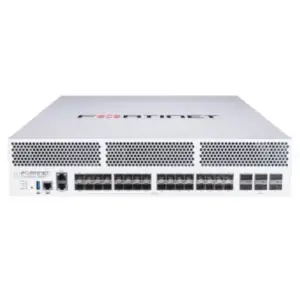
The appliance is also a physical infrastructure decision. It occupies 2U of rack space, includes 32 TB of storage, and provides two 2.5GbE RJ45 interfaces plus two 25GbE SFP28 interfaces. Rack planning, network connectivity, transceiver or cabling choices, power, resilience expectations, and the desired FortiCare or FortiAnalyzer service package should therefore be included in the bill-of-material review.
Operational value beyond simple log storage
FortiAnalyzer becomes most useful when its capacity is translated into repeatable security operations. The following benefits are tied to the appliance’s role and published scale rather than generic infrastructure claims.
01
Consolidated event evidence
Central log collection gives analysts a common location for reviewing activity across supported Fortinet infrastructure. This can shorten the practical path from an alert or user report to the relevant historical evidence, especially when an incident crosses sites, devices, or virtual domains.
02
Capacity for demanding log environments
Up to 660 GB/day and 20,000 sustained analytics LPS provide a substantial operating envelope. The business value is headroom for larger deployments without immediately fragmenting analytics across several small systems, provided real traffic patterns remain within the design limits.
03
Structured administration
Support for up to 50 ADOMs helps organizations separate administrative contexts where the operating model requires it. That can be useful for large internal environments, managed service structures, or teams that need clearer boundaries between business units or security domains.
04
Faster reporting workflows
Centralized data can support recurring operational and compliance reporting without manually assembling information from every device. The precise reports and services available depend on software and subscriptions, so buyers should map reporting requirements to the proposed license bundle.
05
High-speed data-center connectivity
The mix of 2.5GbE copper and 25GbE SFP28 interfaces gives deployment teams flexibility when connecting the appliance to modern switching infrastructure. The actual interface plan should be checked against rack topology and required optics or direct-attach cabling.
06
A clearer growth decision
Published capacity limits let procurement teams compare measured log generation with future demand. This encourages a defensible sizing process rather than buying solely by model name or number of branches.
The defining advantage is the combination of high log ingest, dedicated storage, and centralized analysis in one rack appliance.
Fortinet positions the FAZ-1000G as a centralized logging and analysis appliance with 32 TB of storage. Its scale makes it a practical candidate for organizations that need an on-premises analytics platform with enough headroom for a substantial Security Fabric footprint.
660 GB/day: published maximum daily log volume; validate against measured average and peak generation.
20,000 analytics LPS: sustained rate for analytics workloads, with 30,000 sustained LPS in collector mode.
32 TB storage: integrated storage for centralized logging; practical retention varies with ingest and configuration.
2,000 devices/VDOMs: supports large managed estates, subject to the overall performance envelope.
50 ADOMs: enables administrative segmentation where required by the operating model.
2U rackmount: a data-center appliance requiring rack, power, cooling, and network planning.
Technical specifications ledger
| Specification | FortiAnalyzer 1000G | Buyer note |
|---|---|---|
| SKU | FAZ-1000G | Confirm hardware versus bundle SKU |
| Maximum logs/day | 660 GB | Size against measured ingest and growth |
| Sustained analytics rate | 20,000 LPS | Consider peak event periods |
| Collector mode sustained rate | 30,000 LPS | Relevant to collector architecture |
| Days at max sustained LPS | 60 days | Published sizing metric; actual retention depends on workload |
| Maximum devices/VDOMs | 2,000 | Count physical and virtual domains correctly |
| Maximum ADOMs | 50 | Plan tenant/business-unit segmentation |
| Storage | 32 TB | Retention is workload dependent |
| Network interfaces | 2 × 2.5GbE RJ45; 2 × 25GbE SFP28 | Optics/cables may need separate confirmation |
| Form factor | 2U rackmount | Reserve rack space and airflow |
| Management | FortiAnalyzer platform | Software release compatibility should be reviewed |
| Services/licensing | Configuration dependent | Select support and protection services for the project |
Which specifications matter most?
The most important sizing figure is usually daily log generation because it directly affects whether the appliance has enough ingest capacity and how long data can be retained. A buyer should collect real measurements from representative days rather than rely only on a rough estimate. Peak logs per second are equally important for environments with bursty activity, large VPN events, scheduled scans, or other operational patterns that can cause short periods of heavy event generation.
Device and VDOM count provides a second boundary. The published maximum of 2,000 is substantial, but a deployment should stay within both the count and performance limits. ADOM requirements also matter where separate teams, customers, or business units need administrative separation. Finally, physical connectivity should not be treated as an afterthought. The 25GbE SFP28 ports may require compatible optics or direct-attach cables, while rack space, power, and cooling must be planned as part of installation.
Five questions to answer before requesting the final configuration
01 — What is the real logging workload?
Record average and peak daily log volume, sustained and peak event rates, and the systems expected to send data. This determines whether the 660 GB/day operating envelope is appropriate and provides the starting point for retention planning. Where measurements are unavailable, collect a representative sample before locking the design.
02 — How large is the managed estate?
Count Fortinet devices, VDOMs, sites, and expected additions. The 1000G supports up to 2,000 devices or VDOMs, but scale should be considered alongside log generation. A growth plan is useful because a system that is correctly sized for today’s estate may become constrained after branch expansion, acquisitions, or new security controls increase event volume.
03 — What must integrate with the existing environment?
Review FortiAnalyzer software compatibility, Fortinet device firmware, switching interfaces, rack infrastructure, addressing, DNS/NTP dependencies, and any external reporting or security operations integrations. Physical connectivity deserves particular attention if the 25GbE SFP28 ports will be used, because compatible transceivers or cabling may be required.
04 — Which services and retention objectives apply?
Fortinet offers multiple support and FortiAnalyzer service options. Buyers should distinguish the base hardware SKU from bundles and renewals. Define the required support term, desired analytics or protection services, operational reporting needs, and how long logs must remain available. These decisions can materially change the commercial package.
05 — What are the delivery and lifecycle expectations?
Confirm project quantity, target installation window, rack readiness, support expectations, and whether the purchase is a new deployment, capacity expansion, or replacement. Availability varies, so FourTeck can coordinate a current quotation and help identify the correct hardware and service SKUs for the intended Uganda deployment.
Quote Preparation
Share estimated GB/day, peak LPS if known, number of devices/VDOMs, required retention period, ADOM count, desired support term, preferred interfaces, rack location, project quantity, and target deployment date. These details make model validation and commercial quoting more accurate.
Where the appliance can make operational sense
Large multi-site enterprise
A business operating many branches may want a common place to analyze security events rather than relying on separate local device histories. The 1000G can support a large device/VDOM population, but the procurement team should calculate aggregate log generation from all sites and allow for planned branch growth.
Security operations team
A SOC that performs investigations, recurring reporting, and event review benefits from centralized analytics. The relevant sizing variables are not only the number of analysts but the volume of data they must search and the retention window required for investigations. Service subscriptions should be aligned to the intended workflows.
Regulated or audit-sensitive organization
Financial, public-sector, healthcare, education, and other organizations may need structured log retention and repeatable reporting. FortiAnalyzer can provide the centralized platform, but the buyer must define the actual policy or regulatory retention period and confirm that storage and licensing match it.
Segmented business or service environment
Support for up to 50 ADOMs can suit environments that need administrative separation across business units, customers, or operating groups. ADOM design should be planned before migration so permissions, device assignment, reporting, and operational ownership reflect the intended structure.
Log-volume sizing determines whether the platform stays useful as the network grows
The headline capacity of 660 GB per day is meaningful because log volume is the raw material FortiAnalyzer must ingest, store, and analyze. However, procurement should not treat that figure as a simple target to reach. A resilient design normally leaves room for normal growth and temporary bursts. New firewall policies, additional security inspection, more users, branch expansion, or changes in logging level can increase data generation without adding a single new appliance to the network.
A useful sizing exercise begins with measured data. Capture typical and busy-day log generation from the existing environment, identify expected additions over the planned service life, and note workloads that create bursts. Compare that with sustained analytics LPS as well as daily volume. If the design includes collector mode, the published 30,000 sustained LPS collector figure becomes relevant, but the architecture should be reviewed as a whole rather than selecting a mode simply for a higher number.
Retention is the other side of the equation. Fortinet lists 60 days at maximum sustained LPS for this model. Actual retention behavior depends on the workload and configuration. Organizations with longer evidence-retention requirements should therefore document those requirements explicitly. Capacity planning can then determine whether local retention, archiving strategy, or a different FortiAnalyzer architecture is appropriate.
Connectivity and physical deployment deserve the same attention as analytics capacity
The FAZ-1000G is a 2U rack appliance with 32 TB of storage and a network interface mix of two 2.5GbE RJ45 ports and two 25GbE SFP28 ports. That gives infrastructure teams options for integrating the appliance into modern data-center networks, but the chosen design must match the switching environment.
Capability line 01 — 25GbE SFP28: useful where high-speed fiber or direct-attach connectivity is appropriate. Confirm compatible transceivers, cable type, distance, and switch port support before ordering accessories.
Capability line 02 — 2.5GbE RJ45: provides copper Ethernet options that can simplify management or connectivity where compatible multi-gigabit switching is available. Confirm the intended port role in the final network diagram.
Capability line 03 — 2U rackmount: requires physical rack allocation, suitable power, cooling, cable routing, and maintenance access. These are straightforward requirements but can delay installation if omitted from project planning.
For procurement, this means the appliance should not be ordered as an isolated line item. The bill of materials may also need rack accessories, compatible network optics or cables, and the selected service package. FourTeck can review those dependencies with the customer’s network design before the quote is finalized.
Administrative scale is useful only when it matches the operating model
Fortinet specifies support for up to 2,000 devices or VDOMs and up to 50 ADOMs on the 1000G. Those numbers are especially relevant to large enterprises, distributed networks, and environments where administrative boundaries are important. Yet the best design is not necessarily the one that uses the maximum number of domains. The structure should reflect how teams actually operate.
An ADOM plan can separate responsibility across business units, customers, regions, or technical environments. Before deployment, decide who owns each domain, which devices belong to it, how reporting should be separated, and whether administrators need cross-domain visibility. This avoids reorganizing the platform after large volumes of historical data and reporting workflows have already been established.
Compatibility must also be checked at software level. Fortinet documentation lists the FAZ-1000G among supported models in current FortiAnalyzer release branches, but the exact release used in production should be selected according to Fortinet’s compatibility and upgrade guidance. Existing FortiGate and other Security Fabric software versions should be reviewed before migration or consolidation.
Buyer decision checklist
□ Count devices and VDOMs accurately.
□ Define required ADOM separation.
□ Identify administrator roles and reporting boundaries.
□ Check target FortiAnalyzer release compatibility.
□ Review migration and retention requirements.
□ Select support and service subscriptions based on operational needs.
What buyers should check before purchase
A high-capacity analytics appliance can be technically suitable and still be the wrong procurement if the bundle, retention design, accessories, or support term is mismatched. Use this risk register before approving the purchase order.
Also confirm whether the project requires replacement guidance for an older FortiAnalyzer model, whether historical logs must be migrated, and whether the customer expects a particular warranty or support response. Those requirements should be documented in the quotation rather than assumed from the appliance name.
Procurement support for Uganda projects
FourTeck can assist organizations in Uganda with configuration review, quotation preparation, and delivery coordination for the FortiAnalyzer platform. Availability can vary by hardware SKU, bundle, support term, project quantity, and supply conditions, so a current quote is the appropriate way to confirm the commercial package.
For Kampala deployments, buyers can provide the intended data-center location, required quantity, target installation schedule, and support expectations so the quote can reflect the project rather than a generic hardware line. FourTeck can also help distinguish the base FAZ-1000G appliance from FortiCare and FortiAnalyzer service bundles, reducing the risk of ordering a support renewal or bundle that does not match the intended purchase.
Warranty and service coverage should be confirmed against the selected Fortinet support SKU and the terms quoted for the project. Where a customer is replacing an older appliance, share the current model, software release, daily logging level, and desired migration timeline so the proposed path can be reviewed before procurement.
Uganda location coverage
FourTeck can coordinate product enquiries and project requirements for customers in Kampala and other Uganda locations including Entebbe, Jinja, Mbarara, and Gulu. Delivery feasibility and timing depend on the order, destination, and current supply position. For multi-site deployments, provide a quantity breakdown by destination and indicate whether equipment should be delivered centrally or coordinated for several project locations. This helps the quotation and logistics discussion reflect the actual rollout plan without assuming local stock or a fixed delivery window.
East Africa and regional availability
Organizations planning a standardized Fortinet security architecture across more than one country can ask FourTeck about coordinated sourcing for Uganda, Kenya, and selected East Africa or Africa markets. Regional projects often benefit from a consistent bill of materials, common support terms, and clear country-by-country delivery requirements. FourTeck’s Uganda technology catalogue, Kenya technology catalogue, and Africa technology catalogue provide regional contact paths.
For projects connected with Gulf procurement, requirements can also be discussed through FourTeck UAE or FourTeck Kuwait where relevant. Regional availability, warranty handling, taxes, import requirements, and delivery arrangements should be confirmed for each destination rather than assumed to be identical across markets.
Related Fortinet analytics paths to consider
Model selection should follow the measured workload. Smaller and larger FortiAnalyzer appliances provide useful reference points when the 1000G is being evaluated.
FortiAnalyzer 810G
Best fit when the expected logging requirement is materially below the 1000G class. Fortinet publishes 200 GB/day and 4,000 sustained analytics LPS for the 810G, so it can be a useful lower-capacity comparison.
FortiAnalyzer 3100G
Consider when the project requires a significantly higher ingest ceiling. Fortinet publishes up to 3,000 GB/day and 42,000 sustained analytics LPS for the 3100G, placing it above the 1000G for larger environments.
FortiAnalyzer VM
A virtual deployment can be relevant where infrastructure policy favors virtualization or cloud-aligned operations. Licensing, compute, storage, and deployment architecture differ from the physical appliance path and should be evaluated separately.
Fortinet Security Fabric planning
FortiAnalyzer is most valuable when considered as part of the broader logging, management, and security operations design. For product matching and a current bill of materials, contact FourTeck Uganda for Fortinet configuration guidance.
Why buyers contact FourTeck for this project
01 Product selection guidance. FourTeck can review whether the 1000G capacity class matches the customer’s log volume, device count, retention objective, and expected growth rather than treating the model as a one-size-fits-all choice.
02 Configuration review. The discussion can include hardware versus bundle SKU, FortiCare term, FortiAnalyzer services, interface accessories, rack requirements, and software compatibility.
03 Quote assistance. Buyers can provide a clear project brief and receive a quotation based on the intended configuration and quantity instead of relying on a generic public price.
04 Uganda delivery coordination. Destination, project quantity, and required timing can be discussed during quotation so logistics expectations are established before the order is placed.
05 Support and warranty guidance. Coverage depends on the selected Fortinet service offering. FourTeck can help identify the service term being quoted and clarify what should be confirmed for the project.
06 Alternative model matching. If measured requirements fall below or above the 1000G range, the discussion can shift to another FortiAnalyzer appliance or virtual architecture instead of forcing the original model into the design.
FortiAnalyzer 1000G buying questions
01. What is the FortiAnalyzer 1000G primarily used for?
It is a centralized logging and analysis appliance for Fortinet security environments. Organizations use FortiAnalyzer to collect security and operational logs, analyze events, support investigations, and produce reporting from a central platform. The 1000G is aimed at higher-volume environments, with Fortinet publishing capacity of up to 660 GB of logs per day and 20,000 sustained analytics logs per second.
02. How many devices can the FAZ-1000G support?
Fortinet lists a maximum of 2,000 devices or VDOMs for the 1000G. That number should not be used alone for sizing because log generation varies widely between devices and workloads. Procurement teams should check device count together with average and peak daily log volume, sustained event rate, required retention, and future expansion before deciding that the model is appropriate.
03. How much storage is included?
The published hardware description includes 32 TB of storage. The amount of time that logs can be retained is workload dependent, so 32 TB should not be translated into a fixed number of retention days without analyzing ingest. Fortinet lists 60 days at maximum sustained LPS as a sizing metric for this model; actual operational retention should be planned against the customer’s logging profile.
04. Does the appliance require licenses or support services?
The base appliance has its own hardware SKU, while Fortinet also offers bundles, support renewals, and FortiAnalyzer service options. The correct commercial package depends on the desired support level, term, and security operations features. Buyers should state whether they need hardware only, a new bundle, or renewal coverage so the quotation uses the correct Fortinet SKU and does not mix different purchase types.
05. What network connections are available?
Fortinet specifies two 2.5GbE RJ45 interfaces and two 25GbE SFP28 interfaces on the FAZ-1000G. The high-speed SFP28 interfaces can suit data-center connectivity, but the required transceivers or direct-attach cables should be confirmed against the connected switch and link distance. Buyers should include the intended network topology when asking FourTeck to review the configuration.
06. Is FortiAnalyzer 1000G suitable for a multi-site enterprise?
Yes, it can be a strong fit where many Fortinet devices or VDOMs generate enough security data to justify centralized analytics at this scale. The platform supports up to 2,000 devices/VDOMs and 50 ADOMs. Suitability still depends on measured log volume, retention requirements, administrative structure, and the software versions used across the environment, so those details should be validated first.
07. How should we prepare for a Uganda quotation?
Provide the expected number of devices and VDOMs, current or estimated GB of logs per day, peak LPS if known, required retention period, number of ADOMs, preferred support term, quantity, delivery destination, and target deployment date. If 25GbE connectivity is planned, include switch and optics requirements. This information allows FourTeck to review the model and commercial bundle more accurately.
08. Is the FAZ-1000G always the right model for 660 GB/day?
The published maximum is up to 660 GB/day, but a design should not intentionally operate at its limit without considering growth and peak behavior. If current logging is already close to the ceiling, a higher-capacity model may provide better headroom. Conversely, a much smaller workload may be served by a lower FortiAnalyzer model. Sizing should be based on measured data and lifecycle plans.
09. Can FourTeck help with replacement or expansion planning?
FourTeck can review a requirement where an organization is replacing an older FortiAnalyzer or adding capacity. Share the existing model, software version, daily log volume, retention expectations, device count, and any migration constraints. That information helps determine whether a direct appliance replacement is sensible or whether the architecture, support bundle, or capacity class should change for the new project.
10. Is availability guaranteed in Uganda?
No fixed stock or delivery promise should be assumed from this page. Availability can vary by hardware SKU, service bundle, quantity, and supply conditions. Request a current FourTeck quotation for the intended Uganda destination and project timing. The quote process can also confirm the selected model, related service SKUs, and delivery coordination requirements before procurement approval.
Build the quote around your actual logging environment
For a useful FortiAnalyzer quotation, share the numbers that drive the design: daily log volume, peak event rate, device and VDOM count, retention target, ADOM requirement, interface plan, support term, project quantity, and destination. FourTeck can use those details to review the proposed model and prepare the commercial request for your Uganda deployment.
Useful details: GB/day • peak LPS • devices/VDOMs • retention days • ADOMs • support term • connectivity • quantity • destination • target date
Reviews
There are no reviews yet.