
FortiAnalyzer BigData 4500G in Uganda
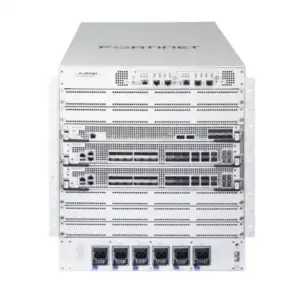
A 4U, 14-blade big-data security analytics system for hyperscale log ingestion, investigation, reporting and long-term security operations.
Designed for environments where ordinary log-management capacity becomes a constraint, the 4500G combines distributed compute, all-flash storage and high-speed networking in a purpose-built FortiAnalyzer BigData chassis. FourTeck can help enterprise and public-sector buyers in Uganda validate log volume, retention, interface, service and expansion requirements before procurement.
Security analytics built for unusually large data volumes
FortiAnalyzer BigData 4500G is the large-scale member of Fortinet’s analytics portfolio for organizations operating security environments that produce enormous streams of logs and events. Fortinet positions it for hyperscale data centers and high-bandwidth environments where fast ingestion, parallel processing and substantial local storage are necessary to keep security information usable. Rather than treating collection, storage and analysis as isolated functions, the 4500G distributes these responsibilities across its blade architecture.
The chassis contains 14 blades. Fortinet’s current documentation states that every 4500G blade participates in functions such as log collection, log storage, data processing and analytics. Each blade uses two 2.3 GHz Intel Xeon 16-core/32-thread processors, 196 GB RAM and two 7.68 TB NVMe SSDs. This distributed design matters to security operations teams because high-volume investigations can become limited not only by raw storage but also by the speed at which data can be ingested, searched and processed.
The published platform rating is 20 TB per day and 300,000 sustained logs per second, with support for more than 10,000 devices or VDOMs and up to 2,500 ADOMs. These are platform specifications, not a substitute for sizing. Buyers should still model average and peak event rates, expected retention, growth, reporting load, analytics workflows and the number of administrative domains that will be used.
Networking is equally important. The 4500G includes two network switch modules, with 25 Gbps switch-module architecture. Fortinet documents external connectivity options using 10GE SFP, 40GE QSFP or 100GE QSFP28 from the external switch module. A production design should therefore confirm compatible upstream switching, optics, cabling, IP addressing and whether logging traffic needs separation from management traffic.
For Uganda organizations, FourTeck can support the procurement stage by turning these requirements into a bill of materials and quotation. That can include the base chassis, appropriate service coverage, storage expansion where required and the correct power-cable or network accessory planning. The objective is to avoid purchasing a hyperscale platform without matching the surrounding infrastructure to its intended workload.
What the architecture changes for a security operations team
01
Absorb high sustained log volume
At up to 300,000 sustained logs per second, the platform is designed for environments where collection throughput itself is a major architectural requirement. That gives large SOC teams a purpose-built path for consolidating telemetry without sizing around small-appliance limits.
02
Keep analytics close to large data sets
Fourteen compute-and-storage blades provide parallel resources for collection, storage, processing and analytics. The practical value is an architecture intended to work on very large security data sets rather than merely archive them.
03
Plan for extensive local retention
The base system provides 215 TB of SSD storage. Retention duration depends on actual ingestion and data behavior, but the capacity gives buyers a substantial local foundation and Fortinet supports horizontal growth toward petabyte scale.
04
Serve large managed estates
Support for 10,000+ devices or VDOMs and up to 2,500 ADOMs makes the platform relevant to large distributed enterprises, service-provider-style environments and organizations that segment administration across many domains.
05
Use high-bandwidth external connectivity
10GE, 40GE and 100GE connection options let the deployment team match external connectivity to the wider data-center design. Correct optics, switching and traffic segregation remain important project decisions.
06
Expand instead of immediately replacing
Fortinet describes horizontal scalability toward petabytes. That provides a growth path for organizations whose security telemetry is expected to rise, although expansion should be planned against supported architecture and current Fortinet guidance.
The distinguishing feature is not one specification; it is the combination of ingestion, distributed compute, SSD capacity and scale.
For a high-volume SOC, a fast interface alone does not solve the data problem. Collection throughput, compute, storage, administrative scale and the ability to grow all have to align. The 4500G combines those dimensions in one purpose-built platform.
- 300,000 sustained logs/sec: published ingestion capacity for high-volume telemetry.
- 20 TB/day: Fortinet’s published daily data figure for the model.
- 215 TB SSD: all-flash base storage using two 7.68 TB NVMe SSDs per blade.
- 14 active blades: all blades participate in collection, storage, processing and analytics.
- High-speed network options: documented external connectivity at 10GE, 40GE or 100GE.
- Large administrative scale: 10,000+ devices/VDOMs and up to 2,500 ADOMs.
- Expansion path: horizontal scaling toward petabyte-class storage, subject to supported configuration.
FortiAnalyzer BigData 4500G specification ledger
| Specification | Published detail |
|---|---|
| Ordering SKU | FAZ-BD-4500G |
| Chassis | 4U with 14 blade servers and two network switch modules |
| CPU per blade | 2 × 2.3 GHz Intel Xeon, 16 cores / 32 threads each |
| Memory per blade | 196 GB RAM |
| Storage per blade | 2 × 7.68 TB NVMe SSD |
| System SSD capacity | 215 TB |
| Daily data rating | 20 TB/day |
| Sustained ingestion | 300,000 logs/sec |
| Maximum devices / VDOMs | 10,000+ |
| Maximum ADOMs | 2,500 |
| Ethernet ports | 12 × 100G/40G QSFP28 listed in Fortinet ordering information; supported setup includes 10GE SFP, 40GE QSFP or 100GE QSFP28 external links |
| Switch modules | Two modules; 25 Gbps architecture |
| Expansion | 7.6 TB SSD expansion kit available; horizontal scale toward petabytes |
| Management | FortiAnalyzer BigData GUI / CLI plus chassis management functions |
| Services | FortiCare and FortiAnalyzer service bundles available; selected service determines entitlement |
What matters most when buying: ingestion rate and storage should be evaluated together. A platform can have enough raw storage but still be undersized for peak collection, or it can ingest quickly while failing the organization’s retention objective. Device and ADOM scale also matter for multi-tenant or highly segmented environments. Networking must be reviewed early because the platform can use very high-bandwidth links and may require traffic separation between management and logging. Finally, service selection is not an afterthought: Fortinet lists Enterprise Protection, Security Automation, IOC and Outbreak, OT and Attack Surface services for this product family, with capabilities depending on the purchased entitlement. FourTeck can help translate the technical target into a current bill of materials rather than assuming that the base chassis alone represents the complete deployment.
Five questions to answer before requesting a quote
01 — What is the real logging workload?
Provide average and peak logs per second, estimated GB or TB per day and the main sources of telemetry. The 300,000 LPS figure is a platform rating, but a procurement design should account for bursts, reporting activity and future growth rather than size only for today’s average.
02 — How large is the managed environment?
Document FortiGate devices, VDOMs, administrative domains and any expected expansion. Large estates can require careful ADOM structure and operational ownership even when the raw device count remains within the published limit.
03 — What must connect to the system?
Confirm upstream switch models, available 10/40/100GbE ports, optics, cable types, VLANs and IP plan. Fortinet’s setup guidance calls for management and logging addressing, and deployments may segregate log traffic from management traffic.
04 — What retention and expansion target is required?
State the desired searchable retention period and growth assumption. The system starts with 215 TB SSD and can scale horizontally, but retention is influenced by actual log volume, enabled functions and architecture.
05 — What support and project conditions apply?
Identify the required FortiCare level, analytics services, rack and power environment, implementation responsibilities, delivery location and project quantity. These choices change the complete quotation and should be resolved before purchase.
Where a hyperscale FortiAnalyzer platform makes operational sense
Large enterprise security operations center
A multi-site enterprise with thousands of security devices can generate telemetry at a rate that makes collection and retention a continuous infrastructure problem. The 4500G fits when the SOC needs centralized Fortinet log analytics at very high sustained rates. The buying team should model peak ingestion, administrative-domain design and the period for which searchable data must remain available.
Telecommunications or high-bandwidth service environment
Networks with high traffic density can produce extremely large event streams. The platform’s distributed blades and high-speed network interfaces make it suitable for designs where log movement and processing bandwidth are major concerns. Compatibility with upstream switching, optics and traffic segmentation should be verified before ordering.
Government or national-scale distributed infrastructure
Organizations operating many sites and administrative boundaries may benefit from the large device and ADOM limits. The product can provide a central analytics foundation while preserving administrative separation. Procurement should include retention policy, access-control design, service entitlement and data-center facility requirements.
Managed security or shared operations environment
Where a security team handles many managed domains, the ability to support up to 2,500 ADOMs can be a meaningful architectural factor. The platform should still be assessed against tenancy design, reporting requirements, operational processes and growth rather than selected from ADOM count alone.
Long-term security data growth project
Organizations expecting telemetry to increase substantially can use the horizontal scale approach as a planned growth path. The key is to define expansion triggers in advance—such as retention falling below policy or sustained ingestion approaching design thresholds—so capacity is managed deliberately.
Distributed compute changes how very large log sets are handled
The 4500G’s 14 blades are not merely passive storage trays. Fortinet documents that all blades perform functions including log collection, log storage, data processing and analytics. Each blade contains two 16-core/32-thread Xeon processors and 196 GB RAM. That creates a substantial pool of compute resources alongside NVMe storage.
For a buyer, the value of this architecture appears when analysts need to work with large data volumes rather than simply retain them. Reporting, investigation and analytics all compete for processing resources. A distributed architecture is designed to parallelize those workloads across the system. This is particularly relevant where security operations teams have many concurrent users, broad data sets and frequent investigative queries.
Capacity planning still matters. Published throughput should not be interpreted as a guarantee that every combination of reports, searches and services will behave identically. The correct approach is to define expected ingestion, retention and analysis patterns, then map them to the current Fortinet sizing guidance and software release.
High-speed connectivity must be designed, not assumed
Fortinet documents 10GE SFP, 40GE QSFP and 100GE QSFP28 external connection options from Switch Module #2. That gives deployment architects flexibility, but it also means the surrounding network must be prepared for the selected link type.
Capability 01
High-bandwidth external links can match large log flows and data-center switching designs.
Capability 02
Management and logging can be planned with dedicated addressing and traffic segregation where required.
Capability 03
Two switch modules separate internal cluster networking from external network exposure.
Before purchase, confirm the upstream switch, port speed, supported optics, cable reach, LACP design where applicable and IP addressing. These details are inexpensive to validate during design and expensive to discover after a 4U analytics chassis reaches the rack.
Storage growth and retention are policy decisions
With 215 TB of SSD capacity in the base system, the 4500G starts with a large local storage pool. Fortinet also lists a 7.6 TB SSD expansion kit and describes horizontal scaling toward petabytes. The meaningful buyer question, however, is not simply “how many terabytes?” It is “how long must our useful security data remain available at our actual ingestion rate?”
Retention can be affected by event volume, data profile, enabled analytics and operational practices. A security team that must investigate events months after they occur has a different requirement from one using the platform primarily for near-term operations. Regulatory and internal policy may also define minimum retention periods.
Buyer decision checklist
- Measure average and peak daily ingestion instead of estimating from device count alone.
- Define searchable retention and archival requirements separately.
- Apply a realistic annual growth assumption.
- Identify the point at which expansion capacity should be added.
- Confirm the supported expansion architecture for the selected software release.
- Review backup, disaster-recovery and operational resilience requirements as a separate design decision.
What buyers should check before purchase
| Risk | What to confirm | Why it matters | Share with FourTeck |
|---|---|---|---|
| Undersized workload | Peak LPS and TB/day | Average rates can hide bursts | Current measurements and growth |
| Retention mismatch | Required searchable period | Storage alone does not define policy compliance | Retention target and data rate |
| Network incompatibility | 10/40/100GbE ports, optics and cabling | Wrong interfaces delay deployment | Switch model and link design |
| Incomplete entitlement | FortiCare and FortiAnalyzer services | Capabilities depend on purchased services | Required support term and security functions |
Additional checks include rack space, AC power, power cables, quantity, implementation responsibility and the exact current product bundle. Fortinet lists an AC power supply accessory separately and notes that the applicable power cable is sold separately, so regional power-cord planning should be included in the bill of materials. Buyers replacing an older BigData platform should also provide the current model and software version so migration and compatibility can be considered before the new system is quoted.
Procurement support for Uganda projects
FortiAnalyzer BigData 4500G availability in Uganda can vary with configuration, service term, project quantity and sourcing conditions. FourTeck can prepare a quotation after reviewing the required base appliance, support coverage, security services, storage expansion and network accessories. For Kampala deployments, buyers should share the intended data-center environment and delivery requirements early so the quotation reflects the project rather than only the chassis SKU.
FourTeck can also assist with configuration review, current option matching, delivery coordination and warranty guidance based on the selected product and support entitlement. No assumption should be made about immediate stock or a fixed delivery time until sourcing is confirmed. Large infrastructure projects benefit from early planning because internal approvals, service registration, optics, rack readiness and power requirements may need to align with the hardware delivery.
Uganda location coverage
FourTeck can coordinate enquiries for organizations planning Fortinet security analytics projects in Kampala and can discuss delivery requirements for projects in Entebbe, Jinja, Mbarara and Gulu. Because this is data-center-class equipment, the useful starting point is the technical and procurement requirement rather than the city alone: provide the deployment location, quantity, rack environment, preferred support term and expected schedule, and the team can review suitable sourcing and logistics options.
East Africa and regional project enquiries
Organizations with infrastructure spanning multiple markets may need consistent platform selection across sites or centralized security operations serving several countries. FourTeck can discuss requirements for Uganda, Kenya and selected East Africa or Africa markets, subject to product sourcing and project scope. Regional enquiries should specify where the equipment will be deployed, who will operate the platform and whether service entitlements need to align across locations.
For broader sourcing conversations, buyers can visit FourTeck Uganda, FourTeck Kenya, FourTeck Africa, FourTeck UAE or FourTeck Kuwait. Availability, local handling, warranty terms and delivery timing should always be confirmed for the actual destination rather than inferred from another market.
Related Fortinet and security analytics paths
Buyers who are still sizing the project may want to compare the 4500G with smaller FortiAnalyzer appliances or virtual/cloud deployment approaches. Fortinet’s current portfolio includes models such as FortiAnalyzer 3700G, 3510G, 3100G and 1000G for lower ingestion and storage requirements, while FortiAnalyzer VM and Cloud offer different deployment models. The correct alternative depends on sustained LPS, daily data, retention, device scale and operational preference.
FortiAnalyzer 3700G — for large environments that need substantial appliance performance but do not require 4500G hyperscale capacity. Ask FourTeck to compare sizing.
FortiAnalyzer 3510G — a lower-capacity appliance path for enterprise analytics requirements. Request model guidance.
FortiAnalyzer 3100G — suitable to evaluate where daily ingestion and device scale are below the BigData requirement. Discuss the workload.
FortiAnalyzer VM or Cloud — alternative deployment models for buyers prioritizing virtualization or cloud-based architecture. Review deployment choices.
Turn a platform specification into a procurement-ready configuration
01 / Product selection guidance. FourTeck can help determine whether the BigData platform is justified by the actual workload or whether another FortiAnalyzer deployment path should be evaluated.
02 / Configuration review. A quote can account for base hardware, service coverage, storage growth, interfaces, power accessories and other project dependencies rather than treating the chassis as a standalone purchase.
03 / Business IT context. Security analytics is part of a wider data-center environment. Rack, switching, power, addressing, administrative ownership and retention policy can all influence the correct design.
04 / Uganda delivery coordination. The team can review the delivery destination and project schedule once the configuration is known, with availability confirmed during quotation.
05 / Warranty and service guidance. FortiCare and FortiAnalyzer service choices can be reviewed so the quotation reflects the required support and security capabilities.
06 / Project and quantity support. For multi-unit, phased or regional projects, share the rollout plan so sourcing and configuration discussions can be aligned with the deployment.
Questions buyers ask about the 4500G
01. What is FortiAnalyzer BigData 4500G mainly used for?
It is designed for high-volume security log collection, storage, processing and analytics in very large Fortinet environments. Fortinet positions it for hyperscale data centers and high-bandwidth networks. Its 300,000 sustained LPS rating, 20 TB/day figure, large SSD pool and distributed 14-blade architecture make it most relevant where conventional analytics appliances do not provide enough ingestion, retention or administrative scale.
02. How much storage does the system include?
Fortinet lists 215 TB of SSD storage in a single 4500G system. Each of the 14 blades contains two 7.68 TB NVMe SSDs. Actual usable retention should be planned from measured daily ingestion, the organization’s retention policy and enabled workloads. Fortinet also provides an SSD expansion option and describes horizontal scaling toward petabyte-class capacity.
03. What log rate can the 4500G handle?
The published sustained ingestion rate is 300,000 logs per second, with a published 20 TB/day figure. These numbers are important sizing references, but buyers should still document average and peak rates. Reporting, analytics, retention and growth assumptions should be considered together before a final configuration is selected.
04. Which network interfaces can be used?
Fortinet’s setup documentation supports external connectivity using 10GE with SFP, 40GE with QSFP or 100GE with QSFP28 from the external switch module. Ordering information lists 12 100G/40G QSFP28 Ethernet ports. Confirm the exact link design, upstream switch compatibility, optics, cables, LACP requirements and management/logging IP plan before deployment.
05. Does the platform require additional services or licenses?
The hardware can be ordered with FortiCare and FortiAnalyzer service options. Fortinet lists Enterprise Protection and services covering security automation, indicators of compromise and outbreak detection, OT security and attack-surface functions. The required entitlement depends on the security operations use case. FourTeck can review the requested capabilities and support term when preparing the bill of materials.
06. Can the 4500G scale beyond its initial storage?
Yes. Fortinet describes horizontal scalability up to petabytes and lists a 7.6 TB SSD expansion kit for the platform. Expansion should be treated as an architecture decision rather than an informal disk addition. Confirm the current supported design, software version, retention target and capacity trigger before planning future growth.
07. Is the 4500G appropriate for a smaller enterprise?
It can be technically capable, but it may be substantially more platform than a smaller environment requires. Fortinet offers lower-capacity FortiAnalyzer appliances as well as VM and cloud options. A buyer should compare sustained LPS, daily data, retention, device count and operational model before choosing the BigData chassis. FourTeck can help review those figures before quotation.
08. What information should I provide for a Uganda quote?
Provide average and peak logs per second, estimated data per day, retention target, number of devices or VDOMs, ADOM requirements, required interfaces, upstream switch details, rack and power information, preferred support term, desired FortiAnalyzer services, quantity and delivery location. These details make it easier to prepare a configuration-specific quotation instead of quoting only the base appliance.
09. Is the product always available in Kampala?
Availability should be confirmed at the time of quotation. FourTeck does not need to assume immediate stock to assist with the project: the team can review the configuration, current sourcing, quantity and delivery requirements and then provide guidance based on the actual enquiry. Large data-center products often require more planning than standard endpoint hardware.
10. What should be checked before installation?
Confirm 4U rack capacity, power requirements and correct regional power cables, upstream network ports and optics, IP addressing, management and logging network design, administrator access, selected software release and service registration. For complex environments, document who owns each implementation task so the hardware, network and security operations teams are ready at the same time.
Plan the 4500G around your actual security data workload
Send FourTeck your current LPS, daily data volume, retention objective, device scale, interface requirements, preferred support term and Uganda delivery location. The team can use those details to review the appropriate Fortinet configuration and prepare a project quotation.
- Current and projected log volume
- Retention target and growth period
- Device, VDOM and ADOM counts
- 10/40/100GbE network requirements
- FortiCare and security-service needs
- Quantity and deployment location
Reviews
There are no reviews yet.