
Fortinet FortiAuthenticator 3000F — Enterprise Identity & Authentication Appliance
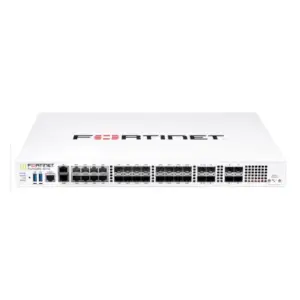
FortiAuthenticator 3000F, model FAC-3000F, is a high-capacity physical identity appliance designed to centralize authentication services for large enterprises and institutions. It gives infrastructure teams a dedicated platform for RADIUS-based access, directory-backed identity, multifactor authentication, certificate management, single sign-on, guest access workflows and related identity services. For organizations in Uganda, the appliance is particularly relevant where authentication must remain controlled within enterprise infrastructure while supporting large user populations, numerous network access devices and resilient operations.
The platform is built as a rack-mountable 2RU system. Fortinet specifies four 10/100/1000 copper RJ-45 interfaces, two SFP interfaces, 2 × 2 TB SAS local storage in a mirrored arrangement, and dual 1+1 1000W auto-ranging power supplies. Its base user entitlement supports 40,000 local and remote users, while hardware upgrade licenses can extend capacity. This makes the model appropriate for projects where a smaller authentication appliance could create an early scaling ceiling.
Procurement should be based on more than the appliance name. The final design needs to account for user population, RADIUS or TACACS+ clients, token strategy, certificate volume, directory integrations, high-availability requirements, rack depth, airflow, electrical feeds, firmware branch and support entitlement. FourTeck can help translate these requirements into a validated bill of materials for Uganda deployments.
Instant Specifications & Procurement Fact Rail
FAC-3000F
Large enterprise / high-capacity identity
4 × GE RJ-45 + 2 × SFP
2 × 2 TB SAS, RAID 1
Dual 1+1 1000W, 100–240V AC
2RU rack mount
40,000 local + remote
Quote on request; confirm current stock and support
The fact rail should be read as a starting point for procurement, not a complete design. Interface counts determine physical connectivity, while user licensing and configuration-object limits determine logical scale. High-availability deployments also require consideration of the second appliance, support, compatible licensing and network design. Warranty and support terms can vary by contract and sourcing route, so FourTeck should confirm the applicable regional coverage on the formal quotation.
Operational Product Architecture & Overview
FortiAuthenticator sits in the identity control plane rather than in the ordinary data-forwarding path. Its job is to provide trusted authentication and identity services to network devices, security gateways, applications and users. That architectural distinction matters because buyers should size the system around identity transactions, users, clients, certificates, tokens, directory synchronization and operational resilience rather than firewall throughput alone.
A typical deployment connects FortiAuthenticator to enterprise directories such as LDAP-compatible identity stores, network access servers, Fortinet security infrastructure and administrative systems. RADIUS can provide centralized authentication for VPN, wireless, switching and other access use cases. Certificate services can support enterprise credential lifecycle needs, while token-based workflows add stronger verification to password-based access. SAML 2.0, OIDC and related standards broaden integration choices for modern applications and federated identity scenarios.
The 3000F is designed for organizations that have outgrown departmental identity appliances or need a deliberate capacity reserve. The base license supports 40,000 users, and Fortinet offers stackable hardware user upgrade licenses in 100, 1,000, 10,000 and, for this model, 100,000-user increments. Buyers should distinguish licensed user capacity from other configurable limits and from real-world performance. Fortinet explicitly notes that documented maximum configuration values are not performance commitments. A sound design therefore considers peak login storms, VPN reconnections, wireless reauthentication, certificate operations, directory latency and failure scenarios.
Local mirrored SAS storage provides resilience against a single-drive failure and gives the appliance dedicated capacity for its operating data. Dual power supplies allow connection to independent power feeds where the rack and facility support them. Front-to-back forced airflow should be aligned with data-center hot-aisle/cold-aisle planning. At 2RU and approximately 601 mm deep, physical clearance should be checked before purchase, particularly in older communications racks that may be shallower than modern server cabinets.
The appliance addresses a common enterprise pain point: identity services are often fragmented among directories, network devices, VPN systems, token platforms and certificate tools. Centralizing core authentication functions can simplify policy administration and reduce inconsistent access rules. It also gives security and infrastructure teams a clearer operational boundary for authentication services, which is valuable during audits, migrations and incident response.
Enterprise Business Outcomes & Value Analysis
The business case is strongest when FortiAuthenticator replaces scattered authentication administration with a governed platform. The operational gain is not simply fewer servers; it is the ability to define responsibility for authentication, document dependencies, standardize onboarding and offboarding, and establish a predictable recovery plan. For regulated organizations, this can also simplify evidence gathering by reducing the number of places where access configuration must be reviewed.
Key Hardware & Software Highlights
2RU Enterprise Chassis
Provides a server-class physical platform for large identity deployments. Confirm rack depth, rail clearance, airflow direction and service access before installation.
Redundant Power
Dual 1+1 1000W auto-ranging supplies support resilient power design. Use separate protected feeds when the facility provides independent A/B circuits.
Mirrored SAS Storage
Two 2 TB SAS drives in RAID 1 protect against a single-disk failure and provide dedicated local storage for appliance operations.
RADIUS & Directory Integration
Centralizes authentication for compatible network services and connects identity decisions to enterprise directory sources.
Certificate Services
Supports certificate-oriented workflows including x.509, certificate revocation, CSR import, SCEP and related standards.
Federation & Modern Identity
Support for SAML 2.0, OIDC and OAuth-related capabilities enables integration with a wider set of enterprise application architectures.
Technical Specifications Ledger
| Item | FortiAuthenticator 3000F |
|---|---|
| Model | FAC-3000F |
| Copper Interfaces | 4 × 10/100/1000 RJ-45 |
| SFP Interfaces | 2 |
| Storage | 2 × 2 TB SAS, RAID 1 |
| Power Supply | Dual 1+1 1000W, 100–240V |
| Base / Published Upgrade User Limit | 40,000 / up to 240,000 in current product data sheet; verify against intended firmware and license order |
| FortiTokens | Up to 480,000 in current product data sheet; configuration limits vary by software branch |
| User Groups | Up to 24,000 in current product data sheet; verify software-specific limits |
| CA Certificates | 300 |
| User Certificates | Up to 1,200,000 |
| Dimensions | 88 × 438 × 601 mm |
| Weight | 20 kg |
| Form Factor | Rack mountable, 2RU |
| Power Source | 100–240V AC, 50–60 Hz |
| Power Consumption | 193.30W average / 236.28W maximum |
| Airflow | Front to back |
| Operating Temperature | 0°C to 40°C |
| Storage Temperature | -40°C to 70°C |
| Humidity | 5%–90% non-condensing |
| Management | CLI, direct console DB9 CLI, HTTPS |
| High Availability | Active-passive HA and configuration synchronization HA |
Specifications can change across documentation and software releases. Fortinet’s newer product material and release notes may present different configurable ceilings, so the purchase design should be validated against the exact software version, support contract and licenses intended for deployment. Maximum configurable objects should not be interpreted as guaranteed transaction performance.
Configuration & Sizing Worksheet
Step 1 — Establish the identity population
Count employees, contractors, administrators, guests and service identities that may be represented on the platform. Separate current active users from projected growth and define a three-to-five-year planning horizon. The base 40,000-user entitlement may be sufficient for many large organizations, but expansion licenses should be included where growth or consolidation will exceed that figure.
Step 2 — Map authentication workloads
List VPN concentrators, firewalls, wireless controllers, switches, applications and other systems that will use RADIUS, TACACS+, federation or certificate services. Estimate normal and peak authentication activity. Pay special attention to morning login peaks, wireless reauthentication intervals and recovery events where many users reconnect simultaneously.
Step 3 — Validate rack, cooling and power
Reserve 2RU per appliance and confirm at least 601 mm chassis depth plus space for cabling and airflow. The appliance uses front-to-back airflow. For resilient installations, connect the two power supplies to separate protected electrical feeds and ensure UPS capacity reflects the documented maximum draw plus facility engineering margin.
Step 4 — Define licensing and strong authentication
Determine whether the project requires hardware user upgrades, FortiToken licenses, SMS services, enhanced authentication capabilities, support subscriptions or licensing for an HA peer. Some functions and deployment patterns carry separate entitlements. Validate every license line before purchase rather than assuming all authentication methods are included with the base hardware.
Step 5 — Prepare the quote checklist
Provide FourTeck with model, quantity, user count, projected growth, HA requirement, token count, directory sources, network access client count, preferred support term, rack location, power standard and delivery destination. Also state whether staging, firmware preparation, configuration assistance or migration support is required. This information reduces bill-of-material revisions and helps align the commercial quotation with the actual deployment.
Deployment Scenarios & Industry Use Cases
Large Enterprise & Multi-Site Networks
A national enterprise can place FortiAuthenticator at a primary data center and use it as a central identity service for branch firewalls, VPN gateways, wireless infrastructure and administrative access. Where authentication is business-critical, a second appliance can provide active-passive resilience. Directory synchronization and standardized RADIUS policies reduce the need to maintain separate credentials on individual network devices. Capacity planning should include all branches and future acquisitions, not only headquarters.
Financial & Banking Institutions
Banks and financial organizations often need strong control over administrator access, remote access and employee authentication. FortiAuthenticator can form part of a layered identity design with directory services, multifactor authentication and certificate-based controls. High availability, change management and audit evidence should be designed before rollout. Procurement should also include recovery procedures, secure administrative access, time synchronization, logging destinations and support coverage.
Educational & Campus Networks
Universities may have large populations of staff, students, guests and devices spread across campuses and residences. A centralized platform can help unify authentication for wireless, VPN and administrative services while keeping identity sources coordinated. Because academic populations fluctuate by semester, buyers should size for enrollment peaks and guest events rather than average daily usage. Device-based access and certificate workflows may also be relevant for managed endpoints and laboratories.
Government & Public-Sector Procurement
Government departments can use a dedicated authentication appliance to separate identity control from individual network devices and establish a consistent access framework across sites. Procurement should define data-center location, administrator roles, directory dependencies, certificate requirements, HA design, support escalation and replacement procedures. Where procurement rules require detailed technical compliance, FourTeck can align the quoted bill of materials with the requested appliance, licensing and service scope.
Technical Deep Dive: Platform, Software & Resilience
Processing, Interfaces and Hardware Architecture
Unlike a firewall whose primary metric is packet throughput, FortiAuthenticator is engineered around identity services. The physical architecture combines multiple Ethernet interfaces, dedicated local storage, server-class power redundancy and a rack-mount platform suitable for continuous data-center operation. The four copper Gigabit ports and two SFP interfaces allow management and service connectivity to be designed around enterprise switching standards. Interface use should follow the intended network segmentation and HA topology rather than simply connecting every available port.
The mirrored SAS disks provide local resilience, but RAID is not a substitute for configuration backup or HA. Operational teams should maintain documented backup and recovery procedures and test them. The 2RU chassis and 20 kg weight also mean installation should be planned as a server-class rack task, with appropriate rails, lifting practice, cabinet depth and cable management.
Software Ecosystem, Firmware Security & Operational Control
FortiAuthenticator supports established identity and certificate standards including RADIUS, LDAP, x.509, certificate revocation, PKCS formats, SCEP, SAML 2.0, OIDC and related mechanisms. This standards-oriented approach allows it to participate in mixed enterprise environments rather than functioning only as an isolated appliance. Nevertheless, compatibility should be validated for each target application and network device because vendors can implement optional protocol features differently.
Firmware lifecycle management should be treated as a controlled change process. Confirm the software branch supported by the appliance, review release notes, validate integration dependencies and stage upgrades before production. Administrative access should use secure management paths, role separation and protected credentials. Logging should be forwarded to appropriate monitoring or audit systems, and time synchronization must be reliable because authentication and certificate processes depend on accurate time.
High Availability, Redundancy & Disaster Recovery
Fortinet documents active-passive HA and configuration synchronization HA for the platform. A resilient design should include two appliances, independent rack power feeds, redundant network paths where practical and a documented failover process. Buyers should confirm any licensing requirements that apply to the secondary node. The HA design must also account for upstream dependencies: if both appliances depend on a single directory server, switch, power distribution unit or WAN path, the authentication service can still fail despite appliance redundancy.
Disaster recovery goes beyond local HA. Organizations with strict continuity requirements should document configuration backup, certificate recovery, token dependencies, directory connectivity and administrator break-glass procedures. Test scenarios should include appliance failure, directory outage, network isolation and power loss. The objective is to understand not merely whether the second node becomes active, but whether users can continue authenticating through the full dependency chain.
Pre-Purchase Buyer Gap Checklist
Are there additional licenses? Potentially. User expansion, tokens, SMS services, certain enhanced capabilities and HA-related licensing can affect the final bill. Obtain a line-by-line entitlement review before purchase.
Is the published maximum the same as guaranteed performance? No. Fortinet notes that maximum configurable values are not a performance commitment. Size around real authentication patterns and resilience requirements.
Will it fit an existing rack? The chassis is 2RU and approximately 601 mm deep. Confirm cabinet usable depth, rail compatibility, rear cable bend radius and front-to-back airflow clearance.
How much power should be reserved? Fortinet lists approximately 193.30W average and 236.28W maximum consumption for the platform. Electrical engineering should also account for UPS margin, redundant feeds and other rack equipment.
Can it integrate with non-Fortinet systems? The appliance supports widely used protocols such as RADIUS, LDAP, SAML 2.0, OIDC and certificate standards. Actual interoperability should be validated against the target vendor’s supported methods.
What should be checked about software generation? Confirm the supported firmware branch for FAC-3000F and the feature/configuration limits for that branch. Documentation can differ across releases, so design against the version planned for production.
Does RAID remove the need for backups? No. RAID protects against a drive failure; it does not replace configuration backup, certificate recovery planning or a secondary appliance for service continuity.
What belongs on the purchase order? Include the appliance, required user upgrades, authentication tokens or services, support entitlement, HA peer if needed, accessories, deployment services and any agreed staging or migration assistance.
Uganda Procurement & Delivery Logistics
FourTeck Uganda can prepare a project quotation around the FAC-3000F appliance and the licensing, support and service components required for the deployment. A useful request for quotation should state quantity, delivery location, user population, projected growth, required authentication methods, high-availability preference, support term and any implementation assistance. Where a tender or internal procurement process uses a compliance matrix, provide the requested technical schedule so the quoted configuration can be mapped to the requirement.
Order processing and delivery timing depend on current distribution availability, import logistics, selected support entitlement and destination. Buyers should request a current lead-time confirmation at quotation stage rather than relying on a generic delivery promise. For time-sensitive projects, include the target installation date and any site-access constraints. FourTeck can also discuss staging tasks such as firmware preparation, basic appliance readiness checks and bill-of-material validation before dispatch.
For deployments outside Kampala, plan onward transport and receiving arrangements in advance. The appliance is a 20 kg rack system, so secure handling and suitable packaging are important. The receiving team should verify carton condition, serial details and ordered accessories before installation. Rack power, network cabling, IP addressing, DNS, NTP and directory access should be ready before the commissioning window to avoid delays.
Uganda Coverage Matrix
Kampala
Enterprise headquarters, data centers, financial institutions and government environments.
Entebbe
Corporate, aviation, hospitality and institutional identity infrastructure projects.
Jinja
Industrial, education and multi-site network authentication requirements.
Mbarara
Regional enterprise, education, healthcare and distributed branch deployments.
Gulu
Public-sector, NGO, education and regional business infrastructure projects.
Coverage planning should include the final delivery point, installation responsibility and any remote-site dependencies. For multi-city rollouts, a central authentication architecture can reduce local administrative overhead, but WAN resilience and branch fallback behavior should be considered in the design.
Cross-Border & Regional Supply Chains
Organizations operating across East Africa or the Gulf can coordinate related infrastructure requirements through FourTeck regional channels. Visit FourTeck Uganda for local procurement, FourTeck Kenya for Kenya projects, FourTeck Africa for broader African requirements, FourTeck UAE for United Arab Emirates sourcing and FourTeck Kuwait for Kuwait requirements.
Cross-border projects should standardize model numbers, license quantities, support terms and configuration baselines before orders are split among countries. This reduces the risk of inconsistent entitlement or hardware selections. Import rules, taxes, lead times and warranty handling can differ by destination, so each regional quotation should state its applicable commercial terms.
Related Infrastructure & Internal Planning Links
A FortiAuthenticator deployment commonly sits alongside firewalls, secure access infrastructure, switching, wireless systems, tokens and support services. Explore the FourTeck Uganda enterprise technology portfolio or contact the team for compatible Fortinet security products, authentication accessories, rack infrastructure, UPS systems and structured cabling requirements. Because internal category paths can change, the project team can provide current links and model recommendations for the exact deployment.
For a complete identity project, consider the authentication appliance together with a second FAC-3000F for HA, compatible FortiToken options, user expansion licenses, network switches providing resilient connectivity, UPS capacity for both power supplies, rack PDUs with independent feeds and the appropriate Fortinet support contract. The most reliable bill of materials is one that treats these components as a system rather than as unrelated purchases.
FourTeck Technical Service Capabilities
FourTeck can support procurement teams with engineering validation before the order is finalized. This includes checking the requested model against the expected user scale, identifying user upgrade requirements, reviewing HA quantities, confirming accessory and support lines and checking whether the proposed rack and power environment is appropriate for the appliance. Bill-of-material validation is particularly useful when a project includes tokens, subscription services or multiple sites.
Where agreed as part of the service scope, staging can include inventory verification, appliance inspection, firmware readiness planning and pre-shipment preparation. Production configuration should follow the customer’s approved security policy and change-control process. For migrations, the implementation plan should document directory dependencies, authentication clients, certificates, token enrollment, rollback conditions and acceptance tests.
Post-sales assistance can focus on installation guidance, configuration troubleshooting, escalation coordination and lifecycle planning. Support boundaries and response commitments should be defined in the commercial proposal. Customers with strict uptime requirements should maintain active vendor support and a documented replacement path rather than depending only on best-effort troubleshooting after a failure.
Extended Technical FAQ
1. What is FortiAuthenticator 3000F used for?
FortiAuthenticator 3000F is used to centralize enterprise authentication and identity-related services. Typical functions include RADIUS authentication, integration with directory systems, multifactor authentication workflows, certificate management, single sign-on, guest identity functions and federation using supported standards. It is not a general-purpose firewall or application server. The appliance is most appropriate when an organization wants a dedicated, governed authentication layer serving many users and network systems. Before deployment, map every relying device and application so authentication policies, network paths and failover behavior can be tested.
2. How many users does FAC-3000F support?
Fortinet’s current product data sheet lists a 40,000-user base capacity and an upper limit of 240,000 local and remote users with applicable upgrades. Fortinet’s ordering guide lists stackable hardware user upgrade licenses, including a 100,000-user option for FAC-3000F. Software release documentation can show different configuration limits for particular branches, so the intended firmware version and license plan should be verified before purchase. Registered-user capacity should also not be treated as a guarantee of transaction performance under every workload.
3. Does the appliance support high availability?
Yes. Fortinet documents active-passive HA and configuration synchronization HA. A proper HA project normally requires a second compatible appliance and a network design that removes other single points of failure. Buyers should verify licensing requirements for the secondary node and ensure each appliance can use independent power feeds. HA testing should cover authentication continuity, directory reachability, network routing and administrative access. Configuration synchronization is valuable, but operational teams still need backups and a documented disaster-recovery procedure.
4. What licenses may be required beyond the appliance?
Requirements depend on the project. The base hardware includes a defined user entitlement, while additional user capacity can require hardware upgrade licenses. FortiToken, SMS-related services, enhanced authentication capabilities and support subscriptions may introduce additional lines. Fortinet’s ordering material also notes separate licensing considerations for HA nodes in certain contexts. The safest approach is to define user count, token method, HA topology, support duration and required features first, then validate the full entitlement list before issuing the purchase order.
5. Can FortiAuthenticator work with third-party infrastructure?
The platform supports common standards such as RADIUS, LDAP, x.509, SAML 2.0, OIDC, OAuth-related mechanisms and certificate enrollment formats, which makes integration with mixed environments possible. However, standards support does not automatically guarantee that every vendor implements every optional function identically. For critical systems, obtain the target product’s authentication documentation and run a pilot using the intended protocol, attributes, certificates and failover behavior. This is especially important for legacy applications and specialized network access devices.
6. What rack and power requirements should be checked?
FAC-3000F is a 2RU appliance measuring approximately 88 × 438 × 601 mm and weighing about 20 kg. The rack should provide sufficient usable depth for the chassis, rails and rear cabling. Airflow is front to back, so installation should align with the data center’s cooling layout. Fortinet specifies dual 1+1 1000W auto-ranging supplies with 100–240V AC input. Published consumption is approximately 193.30W average and 236.28W maximum. UPS and PDU capacity should be engineered with suitable margin.
7. Does RAID 1 mean a second appliance is unnecessary?
No. RAID 1 protects local storage against a single-drive failure; it does not protect against chassis failure, motherboard failure, software problems, maintenance downtime, network isolation or a site outage. Organizations that depend on authentication for business continuity should consider active-passive HA and remove upstream single points of failure as well. Keep configuration backups, document certificate recovery and test the dependency chain. Resilience is achieved by combining storage protection, redundant power, HA, network design, backups and operational procedures.
8. How should a bank or government agency prepare for deployment?
Start with a documented identity architecture. Define directories, administrator roles, authentication clients, token methods, certificate requirements, logging destinations, NTP sources, network zones, HA behavior and recovery procedures. Establish a controlled firmware baseline and test integrations before production. Procurement should include the complete hardware and license bill, vendor support, any implementation services and replacement procedures. Security teams should also define break-glass access and audit responsibilities so an authentication outage does not prevent authorized recovery work.
9. Can FourTeck assist with configuration and migration?
Configuration and migration assistance can be scoped as part of the project. The exact service should be agreed before ordering and may include bill-of-material validation, staging, firmware preparation, installation guidance, directory integration planning, RADIUS client migration, token rollout support and acceptance testing. A migration should always include rollback criteria and a maintenance window appropriate to the business impact. For complex environments, provide existing topology and identity documentation early so dependencies can be identified before cutover.
10. How do I request a quotation in Uganda?
Send FourTeck Uganda the requested model FAC-3000F, quantity, delivery city, user count, projected growth, HA requirement, preferred support term and required authentication methods. Include token quantities, any user upgrade requirement, installation target date and whether staging or deployment assistance is needed. If the purchase is governed by a tender or technical compliance schedule, attach the relevant requirement list. FourTeck can then prepare a commercial response aligned with the requested hardware, licensing and service scope and confirm current availability and lead time.
Plan Your FortiAuthenticator 3000F Procurement
For a dependable deployment, confirm the appliance quantity, current and future user population, authentication clients, token strategy, HA topology, rack space, redundant power, firmware branch, support entitlement and delivery destination before the order is released. FourTeck Uganda can review these requirements and prepare a project-specific quotation for FAC-3000F hardware, applicable licenses and related services. Current stock, lead time, warranty handling and commercial terms should be confirmed on the formal quote.
A well-prepared identity project reduces surprises during installation and makes future expansion easier. Share your topology, expected scale and implementation schedule so the proposed bill of materials can be checked against the operational requirement.
Reviews
There are no reviews yet.