
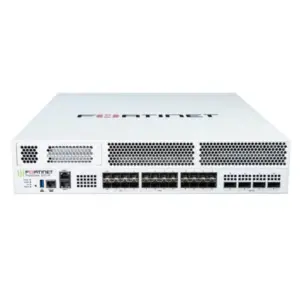
Fortinet FortiExtender 212F in Uganda
A dual-modem CAT12 LTE wireless WAN extender for resilient branch, retail, remote-site and FortiGate-connected business networks.
The FortiExtender 212F gives IT teams a dedicated cellular WAN platform that can be positioned where mobile signal is strongest rather than forcing the LTE radio to sit beside a firewall in a rack, cabinet or communications room. With two CAT12 LTE modems, dual-SIM capability per modem, five configurable Gigabit Ethernet ports and support for FortiGate WAN or LAN extension, it is suited to organisations that need path diversity, rapid branch connectivity or a practical cellular backup architecture. Final performance depends on mobile operator coverage, spectrum availability, antenna placement, data plan, network design and management mode.
Fortinet
FEX-212F
Indoor wireless WAN extender
2 × CAT12 LTE modems
2 × dual-SIM
Quote based
A cellular WAN platform built for network continuity and deployment flexibility
The FortiExtender 212F is designed to separate cellular connectivity from the physical location of the firewall or router. That distinction matters in real sites. A firewall is often installed where power, cabling and security are convenient, while the strongest LTE signal may be near a window, higher on a wall or in another part of the building. By placing the FortiExtender where radio conditions are more favourable and linking it back to the network over Ethernet, an organisation can build a cleaner wireless WAN design without relocating its security appliance.
The model uses two internal Sierra Wireless EM7565 CAT12 LTE modems. Fortinet specifies downlink and uplink capability of up to 600 Mbps and 150 Mbps respectively at the modem category level; actual throughput is network dependent and should not be treated as a guaranteed site speed. Each modem supports dual SIM, giving four SIM slots across the appliance. That architecture is useful when a business wants carrier diversity, operational resilience or the ability to build switching policies around multiple subscriptions. It does not replace careful carrier testing. Signal quality, network congestion, radio bands, tower proximity and data-plan policy can influence results far more than the theoretical modem ceiling.
Five Gigabit Ethernet RJ45 ports can be configured for WAN or LAN roles, and one port supports 802.3at PoE powered-device operation. This can simplify placement when a suitable PoE source is available. GPS/GNSS capability is also part of the platform. The device can operate in standalone scenarios or integrate with FortiGate for WAN extension and LAN extension, helping organisations keep policy and branch connectivity aligned with a Fortinet security architecture.
For Uganda deployments, the important purchasing decision is not merely whether cellular backup is desirable; it is how the appliance will be powered, which operators and SIM plans will be used, where the unit will be mounted, whether external antenna arrangements are needed, and whether management will be FortiGate-based, standalone or cloud-managed. FourTeck can help buyers turn those questions into a bill of materials and quote rather than ordering an incomplete combination.
Why the 212F can strengthen a business WAN design
01
Two cellular modems create more design options
A dual-modem platform can support more resilient cellular architectures than a single-radio device. IT teams can plan different carriers, subscriptions or modem roles according to operational requirements. The business benefit is not simply extra hardware; it is the ability to reduce dependence on one mobile path when continuity is important.
02
A practical backup path for critical sites
When a fixed broadband circuit fails, LTE can provide an independent transport medium. The 212F is therefore valuable for branches where payment systems, cloud applications, communications or remote administration cannot simply stop until a terrestrial provider restores service. The actual failover behaviour depends on the upstream network design and FortiGate configuration.
03
Placement can follow radio conditions
A dedicated extender can be mounted away from the main firewall, allowing cellular reception to be considered independently from rack location. In buildings where the communications room has weak mobile signal, that can be a major operational advantage. Site surveying remains important because walls, glazing, height and local tower conditions affect reception.
04
FortiGate integration reduces architectural friction
FortiExtender can operate as a WAN extension or LAN extension of FortiGate. For organisations already using Fortinet security appliances, this makes the cellular component part of a familiar network architecture rather than a completely separate consumer router with its own disconnected policy model.
05
Five Gigabit Ethernet ports support flexible attachment
The RJ45 interfaces are configurable for WAN or LAN roles. That gives designers room to adapt the appliance to branch topology rather than treating it as a fixed one-port modem. Port assignment should still be planned against FortiExtender software capabilities and the intended FortiGate relationship.
06
PoE input can simplify installation
The 802.3at PoE powered-device port provides another way to power the unit where a suitable PoE source is available. This can reduce the need to place the extender beside a mains socket. Power budgeting and compatibility should be confirmed before specifying injectors or switches.
The defining feature is not raw LTE speed; it is the combination of dual cellular radios, deployment flexibility and Fortinet network integration.
2 × CAT12 LTE modems
Supports a dual-radio cellular architecture with up to 600 Mbps downlink and 150 Mbps uplink modem-category capability per radio under suitable network conditions.
Four SIM slots
Each modem has dual-SIM capability, enabling carrier and subscription planning for continuity or operational flexibility.
5 × GE RJ45
Configurable Ethernet interfaces support practical WAN/LAN attachment, with one 802.3at PoE PD port.
Global model
Fortinet lists FEX-212F as a global FortiExtender model; local operator band compatibility and service quality should still be verified for Uganda.
FortiExtender 212F specification ledger
| Product | Fortinet FortiExtender 212F, SKU FEX-212F |
|---|---|
| Product type | Indoor broadband wireless WAN extender |
| Cellular modems | 2 × internal 3G/4G/LTE CAT12 global modems; Sierra Wireless EM7565 platform |
| Modem-category data rate | Up to 600 Mbps downlink / 150 Mbps uplink per CAT12 modem; actual carrier performance varies |
| SIM support | 2 × dual-SIM, four SIM slots total |
| Ethernet | 5 × Gigabit Ethernet RJ45 ports, configurable WAN/LAN |
| PoE | 1 × 802.3at PoE powered-device port, 25.5 W referenced in ordering information |
| Location services | GPS/GNSS service |
| Management | FortiGate-managed, standalone, or FortiExtender Cloud-managed depending on deployment and licensing |
| FortiGate integration | Supports WAN Extension and LAN Extension use cases |
| Bluetooth | Supported; disabled by default. Fortinet recommends securing devices with passwords before enabling Bluetooth. |
| Power adapter | Region-specific adapter is sold separately in Fortinet ordering information; PoE input is another supported power method |
| Support | FortiCare options are available separately; select term and service level according to project requirements |
The figures that most affect a purchase are the dual-modem design, SIM arrangement, Ethernet topology and power method. CAT12 is a modem category, not a promise of 600 Mbps at a Ugandan site. Radio performance depends on mobile-network conditions and the bands offered by the chosen carrier. The four SIM slots are useful only when the subscriptions, switching logic and operational procedures are designed around them. Buyers should therefore decide whether they want two operators, two plans from one operator, separate primary and backup roles, or a more specialised policy before deploying the appliance.
Power also deserves early attention. If PoE is part of the installation plan, confirm the available 802.3at source and total power budget. If the deployment will use a mains adapter, include the correct region-specific accessory in the quotation rather than assuming one is bundled. Management choice can affect licensing and operational workflow. A FortiGate-managed branch may have different requirements from a standalone fleet managed through FortiExtender Cloud. FourTeck can review these dependencies before quotation.
Five questions to answer before specifying the unit
01 What must the cellular link carry?
A backup path for email and administration has very different data and failover requirements from a primary link serving cloud applications, VoIP, cameras or point-of-sale systems. Define the essential applications, expected traffic and acceptable degradation during a fixed-line outage. This informs data-plan selection and whether LTE is suitable as primary transport or continuity capacity.
02 How much resilience is actually required?
The 212F provides two modems and four SIM slots, but those resources should map to a deliberate resilience strategy. Ask whether the business needs two independent operators, two subscriptions from the same operator, modem-level separation or a simpler active/standby arrangement. Carrier diversity can be valuable, but only when both operators have usable coverage at the location.
03 How will it connect to the existing network?
Confirm the FortiGate model and software environment if the appliance will be FortiGate-managed. Fortinet publishes compatibility matrices for FortiExtender hardware, FortiExtender OS and FortiOS. A standalone installation has a different management path. Port roles, VLANs, cabling and physical placement should be documented before installation.
04 What management, support and growth path is expected?
Decide whether central cloud management is required and review the applicable FortiExtender Cloud licence. Consider FortiCare support separately from the hardware. For growing estates, think beyond one site: standardising SIM policy, naming, monitoring, firmware maintenance and installation practices can reduce operational inconsistency across branches.
05 What must be included in the physical installation?
Confirm PoE availability, mains adapter requirement, mounting position, cabling route and antenna conditions. A good LTE device placed in a poor radio location can still deliver disappointing results. Signal testing at the intended mounting position should be part of deployment planning, especially in reinforced buildings, basements or internal communications rooms.
Quote preparation
Share the number of sites and units, intended FortiGate model, preferred Ugandan operators, primary or backup use case, management choice, support term, expected installation method and whether PoE or a power adapter is required. This helps FourTeck prepare a more complete bill of materials.
Where dual-modem LTE can solve a real operational problem
Branch continuity for finance, service and professional offices
A branch with a single fibre or fixed-wireless circuit may be operationally exposed if that provider fails. The 212F can provide a cellular path that is physically and commercially separate from the main connection. In a FortiGate environment, the branch can incorporate LTE into its WAN architecture rather than relying on staff to connect an emergency hotspot manually. The configuration should define which business applications continue during failover and how much data those applications consume.
Retail and transaction locations
Retail sites often need continuous access for payment processing, inventory, cloud systems, communications and management. A cellular backup path can reduce the operational impact of a fixed-line interruption. Dual modems can also support a design that considers more than one operator. The buyer should validate signal at each store, estimate outage traffic, and decide whether large updates, guest access or nonessential services should be restricted while the site is on LTE.
Rapid activation of temporary or new sites
A new branch may be ready before the fixed circuit is delivered. Cellular WAN can provide interim connectivity while the permanent service is pending, allowing secure network services to be brought online sooner. This use case is attractive for project offices, temporary operational spaces and phased rollouts. It is important to size the SIM data plan for the temporary period and confirm that local LTE coverage is stable enough for the expected applications.
Remote facilities with limited wired options
Some sites are difficult or expensive to reach with fixed infrastructure. The 212F can serve as a cellular transport option when the available mobile network is stronger than the wired alternatives. Such deployments need careful antenna and placement work. A remote site may also benefit from out-of-band-style access strategies, monitoring and clear procedures for SIM usage, because sending engineers to correct a physical or configuration issue can be costly.
Dual CAT12 modems are most valuable when they are tied to an intentional carrier strategy
The 212F contains two Sierra Wireless EM7565 modem modules. Each is an LTE Category 12 radio with dual-SIM capability. That combination is materially different from a basic single-modem LTE router. It gives network teams the raw building blocks for a more resilient cellular design, but it does not automatically create resilience. The deployment must define how the modems and SIMs will be used, how switching will be triggered, what failure states matter, and which carrier combinations offer useful independence at the site.
A common mistake is to assume that inserting multiple SIMs guarantees service diversity. Two SIMs from the same operator may still depend on the same local radio infrastructure. Even two different operators can share upstream dependencies or have similarly weak signal inside a particular building. The practical approach is to test candidate networks where the unit will actually be mounted and to choose subscriptions based on coverage, stability and application needs, not only advertised mobile speed.
CAT12 provides a useful performance envelope, but the modem maximum is not a site-level service commitment. Carrier aggregation availability, spectrum, radio conditions and network load vary. Businesses should size critical workloads so that the continuity plan remains useful even when LTE performance is lower than ideal. That is especially important for voice, payment traffic, remote desktop, cloud collaboration and other latency-sensitive applications.
FortiGate integration can make cellular connectivity part of the network architecture rather than an afterthought
FortiExtender can operate in FortiGate-managed scenarios and supports WAN Extension and LAN Extension use cases. This is important for organisations that already standardise security and branch networking on Fortinet. Instead of treating LTE as an isolated appliance that staff only touch during an outage, the cellular service can be integrated into the design, monitored and governed with a clearer relationship to the security edge. Exact features depend on supported FortiOS and FortiExtender OS combinations, so compatibility should be confirmed against the current Fortinet matrix before rollout.
Power and placement can determine whether the deployment works as intended
The 212F includes one 802.3at PoE powered-device port. That is a practical feature because the ideal location for cellular reception may not have a convenient mains outlet. With a suitable PoE source, network and power can be delivered over Ethernet, making wall or high-level placement easier. Fortinet ordering information also lists region-specific AC power adapters as accessories rather than assuming a universal adapter is included. Buyers should therefore specify the desired power method as part of the quotation.
Placement should be decided after signal testing, not from a floor plan alone. Reinforced concrete, metal cabinets, low-level rooms and internal areas can reduce mobile reception. The best mounting point may be away from the main rack. Because the FortiExtender can connect back over Ethernet, that separation is one of the architectural advantages of using a dedicated wireless WAN extender instead of depending on a cellular interface built directly into a firewall.
Buyer decision checklist
- Test the intended mobile operators at the planned mounting point.
- Confirm whether PoE or a region-specific AC adapter will power the unit.
- Check cable route, mounting accessibility and physical security.
- Document which Ethernet interface will connect to the FortiGate or local network.
- Confirm software compatibility before a multi-site rollout.
- Include support and cloud-management licensing only where required by the chosen operational model.
What to check before purchase
| Risk | What to confirm | Why it matters | What to share with FourTeck |
|---|---|---|---|
| Wrong model variant | FEX-212F indoor model, not FortiExtenderVehicle 212F or another regional device | Similar names can refer to products built for different deployment environments | Exact intended application and environment |
| Carrier mismatch | Operator coverage, supported service and SIM plan | Cellular performance depends on the local network, not only the modem | Preferred operators and deployment address/region |
| Missing power accessory | PoE source or correct AC adapter | The power adapter is listed separately in Fortinet ordering information | PoE availability and preferred power method |
| Management mismatch | FortiGate-managed, standalone or cloud-managed operation | Management method can affect licensing and operational workflow | FortiGate model, firmware plan and number of sites |
A purchase should also account for support expectations, project quantity, installation responsibility and the possibility of replacement models over the lifecycle of a multi-year rollout. If the requirement spans several branches, it is useful to define a standard deployment template before buying in quantity. That template should identify the SIM policy, naming convention, firmware baseline, power method, mounting standard and escalation process for carrier faults. FourTeck can use those details to help structure a quote and recommend alternatives if the specified model is constrained or another FortiExtender better fits the project.
Quote and deployment guidance for Uganda
FourTeck can assist Uganda organisations with model confirmation, bill-of-materials review, quote preparation, accessories, management choices and project quantity planning. Availability can vary by time, configuration and supply route, so the recommended approach is to request a current quotation rather than assume stock status or delivery timing. Where a project includes FortiGate integration, share the existing firewall model and software plan so compatibility can be reviewed before procurement.
For deployments in Kampala, FourTeck can coordinate quotation and supply planning based on the requested quantity and configuration. Uganda projects may also involve sites in Entebbe, Jinja, Mbarara and Gulu; these locations should be discussed as one project so delivery coordination, carrier testing responsibilities and configuration standards can be planned consistently. Warranty and support guidance depends on the selected Fortinet service offering and should be stated in the quotation.
Planning multi-country Fortinet wireless WAN projects
Organisations operating across Uganda and Kenya, or across selected East Africa markets, often benefit from standardising the hardware platform while allowing mobile subscriptions and implementation details to vary by country. The FEX-212F is listed by Fortinet as a global model, which makes it relevant to regional architecture discussions, but each country still requires local carrier verification, regulatory awareness, suitable data plans and delivery planning. A design that works well at one branch should not be assumed to deliver identical radio performance at another location.
FourTeck can discuss project requirements through its Uganda, Kenya and broader Africa channels, and regional procurement may also involve UAE or Kuwait entities where commercially relevant. These links are useful for organisations that centralise purchasing but deploy equipment in multiple markets: FourTeck Uganda, FourTeck Kenya, FourTeck Africa, FourTeck UAE and FourTeck Kuwait. Regional support should be confirmed for the exact project; these links do not imply local stock or guaranteed delivery times.
Related Fortinet paths to consider
Practical assistance around the product decision
01
Model selection guidance. FourTeck can help distinguish FEX-212F from other FortiExtender models and from similarly named vehicle/rugged variants so the selected platform matches the intended environment.
02
Configuration review. Power method, FortiGate integration, management licensing, carrier design and accessories can be checked before a quote is finalised.
03
Project and quantity support. Multi-site requirements can be structured around consistent hardware, support terms and deployment assumptions rather than treated as isolated device purchases.
04
Alternative matching. If the project needs a single modem, different LTE category or 5G, FourTeck can discuss another FortiExtender path rather than forcing the 212F into a mismatched requirement.
05
Uganda delivery coordination and support guidance. Current availability, delivery arrangements and Fortinet service options can be discussed in the commercial quotation without making assumptions about stock or warranty terms.
FortiExtender 212F buyer questions
01. What is the FortiExtender 212F mainly used for?
It is an indoor wireless WAN extender built to provide 3G/4G LTE connectivity for business networks. Common uses include backup WAN, primary cellular connectivity where wired services are limited, rapid activation of new sites, and FortiGate WAN or LAN extension. Its dual CAT12 modems and four SIM slots make it particularly relevant where a business wants more cellular-path flexibility than a single-modem appliance provides.
02. Does the 212F support two mobile operators?
The hardware has two modems and two SIM slots per modem, so a design can incorporate multiple SIM subscriptions. Whether two different operators are the best approach depends on coverage and the required failover policy. Before rollout, test candidate networks at the actual installation point and confirm the selected SIM plans are suitable for business traffic, expected data volume and continuity requirements.
03. Is 600 Mbps guaranteed on LTE?
No. Fortinet describes the CAT12 modem capability as up to 600 Mbps downlink and 150 Mbps uplink. Those figures describe the modem category under suitable network conditions, not a guaranteed service level at a particular branch. Real throughput depends on mobile operator spectrum, signal strength, carrier aggregation, congestion, antenna conditions, subscription policy and other network factors.
04. Can FortiExtender 212F work with FortiGate?
Yes. Fortinet supports FortiGate-managed operation and WAN/LAN extension use cases for the FortiExtender family. Buyers should confirm the specific FortiOS and FortiExtender OS compatibility for their planned versions before deployment. For an existing FortiGate site, sharing the firewall model and firmware plan with FourTeck helps make the compatibility review part of procurement rather than an installation-day discovery.
05. Is a power adapter included?
Fortinet ordering information lists region-specific AC power adapters separately for the FEX-212F family. The device also includes an 802.3at PoE powered-device port. Buyers should therefore confirm how the unit will be powered and include the correct accessory or a compatible PoE source in the project bill of materials. This is especially important when the extender will be mounted away from the main communications rack.
06. Does the appliance need a FortiExtender Cloud licence?
Cloud licensing depends on how the device will be managed. Fortinet provides FortiGate-managed and standalone approaches as well as FortiExtender Cloud-managed options. A buyer should not automatically add or remove a licence without first deciding the operating model. For a multi-site standalone fleet, central cloud management may be relevant; for a FortiGate-integrated design, the management path can be different.
07. Is the 212F suitable for Uganda mobile networks?
Fortinet lists FEX-212F as a global model, which supports consideration for Uganda projects. However, a global hardware designation does not guarantee identical service with every operator or at every site. Confirm local carrier compatibility, signal quality, available LTE bands and the intended data plan. Testing at the installation location is advisable where cellular connectivity will carry critical business traffic.
08. What should I provide when requesting a quote?
Provide the required quantity, deployment city or project region, whether LTE is primary or backup, the FortiGate model if one is involved, preferred mobile operators, desired support term, management approach and the planned power method. If the project covers several branches, include the site count and whether you want a standard configuration across locations. These details help FourTeck quote the hardware and relevant accessories more accurately.
09. What alternatives should be considered?
The right alternative depends on why the 212F is being considered. A project that needs only one CAT12 modem may be better aligned with a different FortiExtender model, while requirements for higher LTE category or 5G may point to other F-series or newer G-series options. FourTeck can compare the operational requirement, management model and carrier environment before recommending a substitute.
Plan the complete FortiExtender 212F deployment before you order
For a useful quotation, share your quantity, FortiGate model, preferred Ugandan carrier or carriers, primary-versus-backup requirement, management choice, support term and power method. FourTeck can review these details with the hardware requirement and help identify accessories or alternative FortiExtender models where necessary.
- Number of units and project sites
- Existing FortiGate model and software plan
- Carrier/SIM strategy and intended traffic
- PoE or AC power requirement
- Cloud management and FortiCare expectations
Reviews
There are no reviews yet.