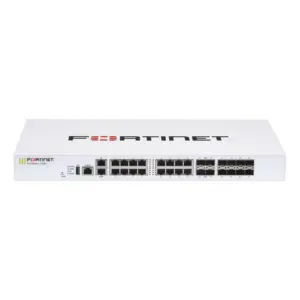
Fortinet FortiMail 900G Enterprise Email Security Appliance for Uganda
Fortinet FortiMail 900G is a rack-mount enterprise email security appliance built for organizations that need to protect high-volume mail flow while keeping administration, quarantine, policy enforcement, malware screening, sender controls, data protection, and business continuity under a single operational platform. In practical terms, it sits in the path of inbound and outbound email, or integrates with supported cloud-mail environments, to inspect messages before they become a business problem. For procurement teams in Uganda, the value of the 900G is not simply the number of messages it can process. Its importance lies in combining capacity, redundant power, encrypted storage, domain scale, policy depth, and centralized administration in a form factor suitable for serious production environments.
The FortiMail 900G is positioned for mid-size to large enterprises, universities, government departments, financial institutions, healthcare networks, service providers, and organizations with multiple protected domains. The appliance is especially relevant where email is a critical operational service and where a failure, delayed queue, compromised mailbox, malicious attachment, spoofed executive message, or uncontrolled outbound data transfer can create measurable business impact. Its 1U chassis helps preserve rack space while dual hot-swappable power supplies support resilient power design. Four Gigabit Ethernet copper interfaces and two Gigabit SFP interfaces provide practical connectivity choices for data-center switching, while secure encrypted drives and hardware RAID options support local message-handling and retention functions.
A successful FortiMail project begins with sizing rather than brand selection. FourTeck therefore recommends establishing protected domain count, average and peak message volume, mailbox count, inbound-to-outbound traffic ratio, attachment profile, quarantine expectations, cloud-mail coexistence requirements, rack depth, power-feed design, and support term before a final bill of materials is approved. A hardware-only comparison can be misleading because production deployments commonly include protection subscriptions, support services, optics, implementation, redundancy planning, and migration work.
Instant Specifications and Procurement Fact Rail
FortiMail 900G, hardware appliance
Mid-size to large enterprise, education and government
4 × GE RJ45 and 2 × GE SFP
1U rack mount
Dual hot-swappable AC power supplies
16 GB
2 × 4 TB default configuration with optional additional drive pair
Configuration-based quotation for Uganda projects
The fact rail above is intended to help procurement teams verify the physical platform before getting into service tiers and implementation scope. The most important early checks are rack depth, dual power availability, interface type, protected-domain requirement, and expected message rate. For high-availability designs, confirm whether the project will use a second FortiMail appliance and how mail routing will behave during planned maintenance or an unplanned failure. For cloud-mail environments, confirm whether the intended architecture relies on traditional mail routing, supported mail-service integration, or a hybrid of both. Warranty and support coverage should be quoted according to the selected Fortinet support program and term rather than assumed from the appliance alone.
Operational Product Architecture and Overview
The FortiMail 900G is designed around the operational reality that enterprise email security is a flow problem, a policy problem, and a continuity problem at the same time. A gateway must accept or relay legitimate business mail without becoming a bottleneck, but it must also examine sender reputation, message structure, links, attachments, authentication signals, content patterns, and organizational policy. If any of these functions are undersized, the symptom may appear as delayed mail, excessive queue growth, inconsistent enforcement, or administrators disabling controls to keep users productive. The 900G addresses this by combining a dedicated hardware platform with high message-processing capacity and enterprise-grade local storage.
Fortinet specifies up to 1.3 million messages per hour for email routing under its stated test conditions, up to 900,000 messages per hour with FortiGuard antispam and virus outbreak services, and up to 650,000 messages per hour with the Enterprise ATP profile under the same reference message size. These numbers are useful sizing anchors, but they should not be treated as guaranteed production rates for every organization. Message size, attachment type, inspection depth, policy complexity, local quarantine activity, concurrent administrative tasks, and traffic bursts all affect real deployment behavior. The right procurement approach is to size for peak-hour demand with headroom instead of matching an average-day figure to a laboratory maximum.
The appliance supports up to 500 protected email domains in its base platform specification, with additional domain scale possible under the appropriate management entitlement. That makes the 900G relevant not only for a single large corporate domain but also for holding groups, universities with departmental domains, managed environments, government structures, and organizations that operate separate business units or subsidiaries. Policy capacity is similarly important: administrators can separate authentication, content inspection, anti-spam, antivirus, routing, data-protection, and quarantine behavior by domain or business requirement rather than forcing every user into one global rule set.
Storage architecture is another operational differentiator. The platform uses secure encrypted drives and supports hardware RAID modes including RAID 0, 1, 5, 10 and hot-spare configurations depending on drive count. This matters because mail-security appliances can store quarantine items, logs, message data, local mailboxes in server mode, and other operational information that becomes important during incident investigation or service disruption. Encryption at the drive level helps protect stored information if a drive is physically removed, while RAID gives infrastructure teams options to balance capacity, resilience, and rebuild behavior.
Network connectivity is deliberately straightforward. Four copper Gigabit Ethernet ports cover common management and data-segment requirements, while two Gigabit SFP slots allow fiber integration where switch distance, electrical isolation, or data-center cabling policy calls for it. Because the appliance is 1U but approximately 610 mm deep, buyers should confirm cabinet clearance, rail compatibility, rear cable bend radius, and front-to-back airflow before shipment. Space measured only by rack units is not enough; shallow wall cabinets and compact communications racks may not accommodate the chassis safely.
From a mail-flow perspective, the 900G can be deployed as a secure gateway between the internet and internal mail systems, as part of a high-availability pair, in front of Microsoft 365 or Google Workspace routing designs, or in architectures where selected domains and traffic paths are handled differently. The correct topology depends on DNS, MX records, trusted relays, outbound smart-host configuration, disaster recovery strategy, and whether the organization requires internal-to-internal scanning. FourTeck can help convert those requirements into a deployment diagram before equipment is ordered so that licensing, addressing, optics, and cabling match the intended production state.
Enterprise Business Outcomes and Value Analysis
Large organizations cannot treat email inspection as a background task. Payroll notices, purchase orders, tenders, customer requests, password resets, board correspondence, and regulatory communications all depend on prompt delivery. The 900G provides a message-processing envelope intended for high-volume environments, reducing the risk that protective controls must be weakened during peak periods. Buyers should still measure hourly bursts, not only daily totals. A business that sends 400,000 messages per day may appear modest, yet a concentrated campaign, bulk notification window, or morning synchronization period can create a much higher short-duration load. Headroom preserves consistent inspection when those peaks occur.
Dual hot-swappable power supplies allow the appliance to connect to separate power feeds or UPS systems, removing a single internal power supply from the list of avoidable failure points. For organizations that require mail security to remain available through hardware maintenance or appliance failure, a second unit should be evaluated for a high-availability architecture. Redundancy must be designed end to end: two appliances connected to one switch, one UPS, or one upstream circuit do not constitute a resilient service. FourTeck can review power, switching, routing, and mail-exchange dependencies together.
Up to 500 protected domains on the base specification gives the 900G room for consolidated operations. This can simplify environments where multiple subsidiaries, campuses, departments, or customer domains would otherwise require separate appliances. The policy model allows administrators to preserve different handling rules while operating from one platform. When growth is expected, buyers should model three-year domain and traffic forecasts rather than current values only. Domain count, mailbox count, and message rate do not always grow together, so each should be tracked separately during sizing.
Email remains a primary route for phishing, malicious attachments, impersonation, credential theft, business-email compromise, and accidental data leakage. FortiMail consolidates protective controls so that administrators can apply sender, authentication, content, antivirus, outbreak, link, attachment, and data-protection policies consistently. Central policy is valuable because inconsistent controls are difficult to audit. Procurement teams should include policy-design workshops in the project scope, especially when migrating from an existing gateway whose allow lists, block lists, relay rules, disclaimers, and exception logic have accumulated over many years.
A platform can have strong inspection capability yet still create operational risk if administration is fragmented. FortiMail brings message tracking, quarantine, configuration, policy, logs, and service status into a centralized workflow. That supports help-desk escalation, security investigation, and controlled change management. During procurement, identify who will own day-to-day administration, who approves policy exceptions, how often reports are reviewed, how configuration backups are stored, and which events must be forwarded to an external monitoring platform. Clear ownership is as important as appliance capacity.
The 900G has a specified average power consumption of approximately 165.56 W and maximum required power of 189.4 W. Those figures are modest compared with many general-purpose server deployments, but total project cost includes far more than electricity. Subscription term, support level, redundancy, optics, rack infrastructure, implementation, migration, administrator training, and renewal planning all affect lifecycle cost. A three- or five-year procurement comparison should place hardware, recurring services, support, replacement strategy, and operational labor on one sheet so that the least expensive year-one option does not become the most expensive long-term choice.
Encrypted local drives, message traceability, quarantine control, policy separation, and data-loss functions help organizations build more defensible operating procedures. The appliance itself does not create compliance automatically; policies must be mapped to the organization’s legal, contractual, and records-management requirements. Buyers in regulated sectors should document retention expectations, administrator access, audit logging, exception handling, incident response, and data-residency considerations before implementation. That preparation avoids late-stage surprises when legal, risk, or internal audit teams join the project.
Key Hardware and Software Highlights
Preserves rack density while providing the storage, memory, network connectivity and redundant power expected in a production security gateway.
Supports common copper data-center connections for management, trusted, untrusted, synchronization or segmented mail-flow designs according to the chosen architecture.
Provides fiber connectivity for environments where distance, electrical separation or structured-cabling standards make optical links preferable.
Helps protect locally stored message and operational data if storage media is removed from the chassis or handled during service activity.
Allows storage layouts including RAID 0, 1, 5, 10 and hot spare depending on installed drive count, enabling buyers to select a balance between usable capacity and resilience.
Supports separate power feeds and replacement of a failed supply without a planned appliance shutdown when the surrounding electrical design is correctly implemented.
Supports up to 500 protected email domains in the base appliance specification and a large number of per-domain and system-wide policies for differentiated control.
Provides administrators with controlled workflows for suspicious messages and policy-driven handling of sensitive outbound content.
The most useful way to read this feature list is to connect every component to an operational requirement. Redundant power matters only when separate feeds are available. Fiber interfaces matter only if the correct SFP modules and switch ports are specified. RAID matters only when the chosen drive count and protection target are documented. Domain capacity matters only when future mergers, subsidiaries, customer domains, or campus structures are included in the forecast. A procurement checklist that ties each feature to a requirement prevents unnecessary options while also reducing the risk of discovering a missing component during installation.
Technical Specifications Ledger
| Category | FortiMail 900G Specification | Procurement Note |
|---|---|---|
| Recommended deployment | Mid to large enterprise, education and government departments | Appropriate when mail volume, domain count and policy complexity exceed small-branch requirements. |
| Copper interfaces | 4 × 10/100/1000 RJ45 | Confirm switch port availability, VLAN design and cable category. |
| Optical interfaces | 2 × Gigabit Ethernet SFP | Transceiver type and fiber patching should be added to the bill of materials when required. |
| Power supplies | Dual, redundant, hot-swappable | Best practice is separate UPS or PDU feeds where facility design permits. |
| Storage | 2 × 4 TB default, with optional additional 2 × 4 TB | Final usable capacity depends on drive count, RAID layout and local retention behavior. |
| Drive security | Secure encrypted drives | Useful for organizations with formal media-handling and data-protection controls. |
| RAID | Hardware RAID 0, 1, 5, 10 and hot spare depending on drive count | Select the layout after defining resilience and capacity objectives. |
| Memory | 16 GB | Factory platform specification. |
| Form factor | 1U rack mount | Check cabinet depth, rails, airflow and cable clearance, not only rack-unit count. |
| Protected domains | Up to 500 base protected email domains | Advanced management entitlement can increase the protected-domain limit. |
| Server-mode local mailboxes | Up to 1,500 | Use-case dependent; most gateway deployments integrate with an existing mail platform. |
| Routing performance | Up to 1.3 million messages/hour under reference test conditions | Production sizing should include inspection profile, message size and burst headroom. |
| Antispam plus virus outbreak performance | Up to 900,000 messages/hour under reference test conditions | Use as a planning anchor rather than a guaranteed workload figure. |
| Enterprise ATP performance | Up to 650,000 messages/hour under reference test conditions | Advanced inspection can reduce maximum rate compared with routing-only operation. |
| Dimensions | 44 × 438 × 610 mm | Depth is the critical rack-planning dimension. |
| Weight | Approximately 12.87 kg | Allow for safe handling and rail support during installation. |
| Power source | 100–240 V AC, 50–60 Hz | Compatible with common data-center AC environments; verify PDU socket type locally. |
| Maximum current | 6 A at 100 V, 3 A at 240 V | Use for circuit and PDU planning. |
| Maximum power required | 189.4 W | Budget both feeds properly in redundant designs. |
| Average power | 165.56 W | Useful for annual energy and UPS runtime estimates. |
| Heat dissipation | 646.23 BTU/hour | Include in rack cooling calculations. |
| Airflow | Front to back | Avoid blocked intake or opposing cabinet airflow. |
| Humidity | 5% to 93%, non-condensing | Operate in a controlled equipment-room environment. |
| Operating temperature | 10°C to 35°C | Important for sites without continuous cooling. |
| Storage temperature | -40°C to 70°C | Applies to non-operating storage and transport conditions. |
| Compliance | FCC Part 15 Class A, RCM, VCCI, CE, UL/cUL, CB, BSMI, RoHS | Confirm any project-specific certification requirement in the tender documentation. |
Configuration and Sizing Worksheet
Step 1: Workload and Scale Estimation
Start with real mail statistics. Record the number of protected domains, active mailboxes, average messages per day, peak messages in any one-hour period, average attachment size, maximum permitted message size, and percentage of outbound traffic. Add planned growth for at least three years. If marketing systems, application alerts, billing platforms, scanners, multifunction printers, or customer portals relay mail through the security gateway, include those flows separately. Automated systems can generate sharp bursts that ordinary user-mail averages hide. Also document how much mail is rejected at connection time versus fully inspected, because clean accepted mail and hostile inbound attempts place different demands on the environment.
Step 2: Environmental and Rack Requirements
Reserve 1U of vertical rack space, but confirm at least 610 mm chassis depth plus allowance for power connectors, network cables, rail hardware and rear-door clearance. The appliance uses front-to-back airflow, so place it in a cabinet that follows the same cooling direction. Verify the equipment room can maintain the supported operating temperature range. For remote branches or secondary sites, do not assume an air-conditioned office room is equivalent to a controlled data center; overnight cooling policy and generator transitions can matter. Record the rack location, RU position, cabinet depth, PDU type and cooling arrangement in the deployment worksheet.
Step 3: Redundant Power and Cabling Compatibility
The strongest design connects each hot-swappable power supply to a different protected feed, ideally separate PDUs backed by appropriately designed UPS and generator systems. Confirm plug type and available sockets before delivery. For network connectivity, decide whether copper or SFP links will be used for each interface and identify the exact switch model, port type and transceiver standard. Do not order generic optics without verifying compatibility and fiber type. Determine whether management traffic will be isolated on a dedicated interface or VLAN and whether high-availability heartbeat or synchronization links require separate cabling.
Step 4: Licensing and Subscription Tiers
Treat the appliance, protection services and support as one solution rather than separate purchases. Decide whether the project requires antispam and outbreak protection, advanced threat services, premium support, enhanced management capabilities, priority replacement, or other Fortinet service options. Compare one-, three- and five-year commercial terms on a lifecycle basis. A longer term can simplify budget planning and reduce renewal administration, while a shorter term may match project funding cycles. The correct choice depends on procurement policy, expected hardware lifecycle, support requirements and renewal governance.
Step 5: Quote Preparation Checklist
Provide FourTeck with the target delivery city, organization type, number of domains, mailbox count, current mail platform, peak hourly message rate if known, desired support term, requirement for a second appliance, preferred copper or fiber connectivity, rack and power details, and whether installation is included. Add the current gateway make and model if this is a migration. Include any tender requirement for manufacturer authorization, compliance documents, warranty statements, serial-number reporting, or staged delivery. A complete request allows the commercial team to quote the correct appliance and service combination while the technical team checks for missing optics, rails, spare power cords, or migration services.
Deployment Scenarios and Industry Use Cases
Large Enterprise and Multi-Site Networks
A large company may operate headquarters in Kampala, regional offices, warehouses, factories, retail sites and cloud-hosted applications while still maintaining one or several central mail domains. In this topology, FortiMail 900G can provide a consolidated security layer at the data-center or cloud-connectivity edge. Remote offices do not necessarily need separate mail-security appliances if mail traffic is already centralized. The design should account for internet-path redundancy, DNS behavior, mail queueing during WAN failure, and whether local applications must continue sending messages when headquarters connectivity is unavailable. Organizations with multiple legal entities can maintain distinct domain policies while central administrators monitor the overall service.
Financial and Banking Institutions
Banks, microfinance providers, insurers and payment organizations typically face strict change-control, logging, segregation-of-duty and incident-response requirements. Email carries customer instructions, statements, internal approvals, supplier documents and executive communication, so the cost of impersonation or malicious attachment delivery can be high. In this environment, the 900G should be deployed with carefully governed authentication policies, strong outbound data controls, centralized quarantine ownership, external log retention and tested high availability. Procurement should include support response expectations, replacement procedures, configuration backup policy and a documented rollback plan for upgrades. Where branch systems or automated banking applications send mail, those relay paths should be inventoried before cutover.
Educational and Campus Networks
Universities and large schools can have unusually diverse email behavior. Staff, students, alumni systems, learning platforms, admissions portals, finance systems and research groups may operate different domains or sending patterns. Message volume often changes sharply around admissions, examination results, registration and fee-payment periods. The 900G’s domain scale and policy separation allow central infrastructure teams to apply different controls where appropriate without multiplying appliances. Campus procurement should pay special attention to sender reputation for high-volume notification systems, student-account lifecycle, delegated administration, quarantine support load and integration with Microsoft 365 or Google Workspace environments.
Government and Defense Procurement
Public-sector deployments often require formal bills of materials, technical compliance schedules, delivery documentation, serial-number records, warranty evidence, controlled administrator access, and defined support escalation. The FortiMail 900G provides the hardware capacity and redundant design suited to central agencies, ministries and departmental mail services, but project success depends on matching the appliance to the authority’s operating policy. Requirements for isolated networks, approved update procedures, retention, removable-media handling, rack security and disaster recovery should be identified at the tender stage. FourTeck can help translate these controls into hardware, service and implementation line items so that technical and commercial submissions remain aligned.
Technical Deep Dive 1: Processing, Inspection and Hardware Architecture
Email security processing is fundamentally different from simple packet forwarding. A gateway may need to hold a message long enough to evaluate sender behavior, envelope information, authentication results, body text, embedded links, attachments, content rules and malware indicators. Some messages are accepted immediately, some are rejected before body transfer, some are quarantined, and others trigger external or advanced inspection services. The architecture therefore needs CPU capacity, memory, network I/O and storage performance to work together. FortiMail 900G’s published message rates show why buyers should compare inspection profiles rather than quote only the highest routing figure. Routing-only capacity is greater than capacity with multiple security services active because deeper inspection requires more work per message.
The appliance’s 16 GB memory supports concurrent policy and mail-handling operations, while local encrypted storage provides space for quarantine, logs, local mailboxes and related operational data. Hardware RAID is significant because storage failure can affect more than historical information; depending on configuration, it can influence quarantine availability, logging depth and recovery operations. Organizations that require higher storage resilience should evaluate four-drive configurations and an appropriate RAID level rather than assuming the default two-drive arrangement matches every retention objective.
Network ports should also be assigned intentionally. Separate interfaces can be used for management, internal and external mail paths or high-availability functions according to the deployment design. Using fiber may provide better distance and electrical isolation, but it introduces transceiver and patching requirements that must be included in the bill of materials. Gigabit links are more than sufficient for most email gateway traffic because message inspection capacity is typically measured in messages per hour rather than multi-gigabit bulk transfer. What matters is reliable connectivity, low packet loss and correct routing to upstream and downstream mail systems.
Technical Deep Dive 2: Software Ecosystem, Firmware Security and Operational Control
FortiMail software provides the operational layer that turns appliance capacity into policy. Administrators define protected domains, trusted and untrusted relays, recipient policies, authentication checks, content profiles, antivirus behavior, data-protection rules, quarantine settings, routing and administrative access. The practical challenge is not enabling every control; it is selecting controls that improve protection without causing unnecessary false positives or mail delays. A structured implementation normally begins with domain and relay configuration, then authentication and sender controls, then inspection profiles, and finally organization-specific exceptions. Staged rollout makes troubleshooting easier than importing years of legacy rules without review.
Firmware management should be treated as a controlled operational process. Before an upgrade, teams should read release notes, verify current and target versions, export configuration backups, confirm maintenance windows and understand rollback options. High-availability environments can reduce disruption, but they do not eliminate the need for change control. Organizations with strict governance may require vulnerability review, test-environment validation or approval from a change advisory board before production updates. FourTeck can assist with version planning and pre-shipment staging where the project scope includes these services.
Operational control also includes administrator roles, logging and integration with monitoring systems. Security teams should decide which personnel can change mail policies, release quarantined messages, create exemptions, view message content or manage system configuration. Shared administrator accounts should be avoided where individual accountability is required. Logs should be retained long enough to support incident investigations and help-desk cases. When external event collectors or monitoring platforms are used, their connectivity and log formats should be tested before go-live rather than added after the first incident.
Technical Deep Dive 3: High Availability, Redundancy and Disaster Recovery
Email has a natural store-and-forward characteristic, so a short security-gateway outage may not always cause message loss; upstream servers can queue and retry. That does not mean resilience is optional. A prolonged outage can delay critical business correspondence, overload upstream queues, trigger user complaints and complicate recovery. A high-availability FortiMail design reduces this risk by providing a second security appliance that can continue service during maintenance or failure. The exact architecture should be based on Fortinet-supported modes, network design, DNS strategy and service requirements.
Redundancy must include every dependency around the appliance. Two FortiMail units connected to a single top-of-rack switch still depend on that switch. Two power supplies connected to one PDU still depend on that PDU. Two internet circuits sharing one last-mile route may still fail together. A resilience review should therefore map power, switching, routing, DNS, upstream connectivity, mail servers, cloud services and administrative access. The appliance pair is one layer in a larger continuity design.
Disaster recovery also requires configuration protection. Keep encrypted, access-controlled configuration backups at defined intervals and after significant changes. Document MX records, internal relay routes, NAT rules, certificates, trusted hosts, DNS dependencies and service credentials so the environment can be reconstructed if the primary site is unavailable. If a secondary data center exists, determine whether it will host another FortiMail platform, accept direct mail, or rely on cloud-based continuity. Test failover at scheduled intervals and record how long external mail takes to reroute, how queues behave, and what administrators must do when normal service is restored.
Pre-Purchase Buyer Gap Checklist
Are protection services included with the hardware price? Do not assume they are. Hardware, support and security-service bundles can be quoted in different combinations. Ask for line-by-line part numbers, term length and renewal details so commercial comparisons are valid.
What happens when the subscription expires? Confirm exactly which cloud-delivered protection services, updates, support privileges and advanced capabilities depend on an active entitlement. Build renewal ownership into the procurement process before the first term ends.
Is the appliance deep enough for the existing rack? The chassis is about 610 mm deep before cable clearance. Many branch cabinets described as 19-inch racks are too shallow. Measure usable internal depth from front mounting rail to rear obstruction and allow space for airflow and connectors.
Will both power supplies really be redundant? Only if they are connected to independent protected feeds. If both plug into one extension strip or single UPS, the power design still has a common failure point.
Are SFP modules included? Treat optics as separate design items unless the quotation explicitly states otherwise. Match transceiver type to switch capability, fiber type, connector type and distance.
Can the 900G protect Microsoft 365 or Google Workspace? Yes, it can be used in architectures that protect cloud-hosted mail, including supported integration options. The exact approach depends on licensing, mail flow, DNS and whether the organization requires gateway routing, cloud API integration or both.
How many domains will be needed three years from now? Count active domains, aliases, subsidiaries, acquisitions, test domains and externally managed business units. The base platform supports up to 500 protected domains, and additional management licensing can increase that limit.
What is the real peak mail rate? Average daily volume can hide busy one-hour windows. Pull statistics from the current gateway or mail platform and include bulk notifications, automated application mail and seasonal peaks.
Does existing policy need to be migrated exactly? Usually not. Long-lived gateways accumulate obsolete allow lists and exceptions. Migration is an opportunity to classify rules as required, temporary, redundant or risky. Preserve business-critical behavior while removing technical debt.
How will replacement hardware be handled? Select the support and replacement service that matches the organization’s tolerance for downtime and logistics. A site outside the capital may need a different spare strategy than a headquarters with immediate courier access.
What is the hardware generation lifecycle? Ask for current product lifecycle status, support-term availability and expected planning horizon at the time of quotation. Lifecycle decisions change over time, so they should be verified during each procurement rather than copied from an old tender.
Can it integrate with non-Fortinet firewalls and switches? Yes. FortiMail does not require the surrounding network to use the same vendor. Standard IP routing, DNS, SMTP and supported management integrations allow deployment in heterogeneous networks. Cross-vendor environments should still be documented so monitoring, authentication and incident workflows are tested.
Uganda Procurement, Delivery and Project Logistics
For Uganda projects, FourTeck can structure a FortiMail 900G quotation around the full deployment rather than a bare appliance. The commercial process normally begins with the buyer’s organization name, delivery location, expected quantity, required support term and any deadline attached to a tender or project. Technical information such as domain count, message volume and current mail platform helps prevent under-sizing or the omission of necessary service subscriptions. Where formal procurement documents are required, request them at the quotation stage so the response can include the appropriate product descriptions, part numbers and warranty or support statements.
Delivery planning should separate manufacturer or distributor lead time from local transport time. Enterprise security appliances are often supplied against confirmed orders rather than held in large quantities in every market. Availability can therefore change by week, bundle and support term. FourTeck can provide the current lead-time position during quotation and coordinate delivery to Kampala or onward transport to regional locations. For urgent replacements, buyers should discuss advance-replacement or priority service options before a failure occurs rather than depending on standard procurement during an outage.
Pre-configuration support can reduce installation risk. Depending on scope, staging may include firmware validation, basic management settings, interface planning, hostname and time configuration, initial policy framework, administrator setup, backup creation and labeling. Sensitive customer information should be handled under an agreed process, and production credentials should be changed or securely transferred at handover. For migrations, a pre-cutover checklist should cover MX records, DNS TTL values, existing mail relays, certificates, allow lists, outbound routes, firewall policies and rollback steps.
Uganda buyers should also account for power quality, rack environment and local hands-on support when selecting deployment location. A highly capable security appliance can still suffer repeated outages if installed in a hot, dusty, shallow or poorly powered cabinet. Site-readiness checks are inexpensive compared with emergency remediation after go-live.
Local Coverage Matrix
Primary corporate and data-center projects, centralized email platforms, financial-sector deployments, government procurement and headquarters migrations.
Business, hospitality, aviation-linked organizations and branch environments requiring secure mail flow and coordinated delivery from Kampala-area logistics.
Manufacturing, education, distribution and regional enterprise sites where centralized FortiMail security may protect users and application-generated mail.
Regional institutions, healthcare, education, financial services and multi-site organizations requiring planned delivery and remote technical coordination.
Government, non-governmental organizations, education and distributed enterprise environments where support logistics and resilient connectivity should be planned in advance.
Coverage should be understood as project logistics and technical coordination rather than an assumption of immediate local stock in every city. For installations outside Kampala, FourTeck can coordinate shipment, remote preparation and implementation planning according to the project scope. Buyers with strict commissioning dates should include site access, rack readiness, power availability, internet connectivity and responsible technical contacts in the schedule so that delivery does not arrive before the location is ready to receive and install the appliance.
Cross-Border and Regional Supply Chains
Organizations that operate across East Africa, the Gulf and broader African markets often benefit from coordinated sourcing because support terms, part numbers, standards and documentation can be aligned across countries. FourTeck supports regional requirements through country and regional platforms including FourTeck Uganda, FourTeck Kenya, FourTeck Africa, FourTeck UAE, and FourTeck Kuwait.
For cross-border projects, procurement teams should standardize the target FortiMail model, subscription bundle, support term and software baseline while allowing for local power, shipping, tax and implementation differences. Central organizations may prefer one commercial framework with country-specific delivery, while subsidiaries may purchase locally against an approved global design. Early coordination helps avoid receiving identical-looking appliances with different service terms or renewal dates. It also makes spare strategy easier because the organization knows which units and support contracts can be used in each operating region.
Related Products and Internal Procurement Paths
A complete email-security project may involve more than the FortiMail appliance. Buyers can review the Uganda enterprise technology catalogue and contact the team for related Fortinet security platforms, switching, optics, racks, UPS systems, structured cabling and professional services. Organizations building a broader security architecture may also compare FortiGate next-generation firewalls for perimeter protection, FortiAnalyzer for centralized logging and reporting, FortiManager for policy administration across supported Fortinet infrastructure, and FortiSandbox options where dedicated advanced file analysis is required.
For mail projects specifically, related line items can include a second FortiMail 900G for high availability, compatible SFP transceivers, fiber patch cords, rack PDUs, UPS capacity, spare power cords, console access, configuration services and support upgrades. Where Microsoft 365 or Google Workspace is used, the project may also include mail-routing changes, DNS work, connector configuration and staged migration services. Contact FourTeck Uganda sales and engineering with the existing environment and target outcome so the quotation can group required components rather than leaving the buyer to reconcile separate product lists.
FourTeck Technical Service Capabilities
Enterprise email-security procurement benefits from engineering validation before purchase. FourTeck can review the proposed FortiMail 900G against message volume, domain count, mail platform, interface requirements, rack constraints and resilience objectives. This bill-of-materials verification is intended to catch practical omissions such as missing optics, unsuitable support terms, absent redundancy, insufficient rack depth or unplanned migration dependencies. Where a tender contains technical compliance points, the team can map the offered configuration to the relevant requirements and identify items that need clarification.
Staging services can be scoped for projects that need a more prepared appliance on arrival. Typical activities may include hardware inspection, firmware-version validation, initial management settings, naming conventions, interface mapping, configuration backup and documentation. Pre-shipment firmware updates should be carried out only after confirming the target release is appropriate for the customer environment and migration plan. For replacement projects, configuration translation and policy rationalization can be planned separately because legacy gateways frequently contain rules that should not be copied unchanged.
Post-sales support can include remote troubleshooting, configuration guidance, change planning, support-case coordination and assistance with manufacturer escalation according to the purchased service level and FourTeck scope. For critical environments, establish escalation contacts, device serial records, entitlement details and configuration-backup location before go-live. These operational preparations shorten response time when an incident occurs and reduce dependency on one administrator’s memory.
Extended Technical FAQ
1. Is FortiMail 900G suitable for Microsoft 365 environments in Uganda?
Yes. FortiMail 900G can be deployed to protect organizations using Microsoft 365, but the correct design depends on how mail is routed and which licensed services are selected. Some organizations use FortiMail as a secure gateway through configured connectors and mail-routing rules, while others may use supported cloud-mail integration capabilities as part of the design. Before ordering, document inbound and outbound mail flow, accepted domains, connector requirements, public DNS, existing security layers and whether internal application relays must also be protected. A staged change with low DNS TTL values and a rollback plan is recommended for production cutovers.
2. Does the FortiMail 900G require additional subscriptions?
The hardware can be quoted separately from protection services and support, and most production buyers should expect to purchase an appropriate service bundle rather than only the chassis. The exact requirement depends on which FortiGuard protection capabilities, technical support level, advanced management features and replacement services are needed. Ask for a quotation that lists every manufacturer part number, term length and renewal item. This prevents a low hardware-only price from being mistaken for the complete cost of operating the platform. For budgeting, compare one-, three- and five-year options together with the organization’s expected appliance lifecycle.
3. How many email domains can FortiMail 900G protect?
The published base specification supports up to 500 protected email domains. Fortinet notes that domain associations can be used for additional domains that share configuration with a primary domain, and an advanced management entitlement can increase the protected-domain limit. Buyers should not size only by today’s registered domains. Include subsidiaries, acquired companies, aliases, project domains, regional identities and future expansion. Also remember that domain count is only one sizing factor; mail volume, policy complexity, quarantine use, local mailboxes and inspection depth may drive capacity before the domain limit is reached.
4. What network interfaces are available on the 900G?
The appliance provides four 10/100/1000 copper RJ45 interfaces and two Gigabit Ethernet SFP interfaces. This combination supports common data-center designs using copper access ports or fiber uplinks. When fiber is required, identify the exact switch model, desired optic standard, fiber type, connector and distance before ordering transceivers. The appliance does not need a multi-gigabit link for most mail traffic because email throughput is generally constrained by message inspection rather than raw Ethernet bandwidth. Interface assignment should still be documented for management, mail-flow segments and any high-availability functions.
5. Can FortiMail 900G operate in a high-availability design?
Yes, FortiMail deployments can be designed for high availability, and organizations with strict uptime requirements should evaluate a second appliance. The important point is that resilience must extend beyond the FortiMail units. Separate network paths, switches, power feeds, UPS systems, internet connections, DNS design and downstream mail services may all affect end-to-end availability. A pair of appliances connected to one switch and one PDU still has common failure points. Before purchase, define the maximum acceptable mail delay, maintenance-window expectations and failover behavior so the surrounding architecture can be designed to match.
6. What rack and power requirements should be checked?
FortiMail 900G is a 1U rack-mount appliance measuring approximately 44 × 438 × 610 mm and weighing about 12.87 kg. The 610 mm chassis depth is important because shallow communications cabinets may not provide sufficient room for the appliance, rails and rear cabling. Power input is 100–240 V AC at 50–60 Hz. Maximum required power is approximately 189.4 W, with average consumption around 165.56 W. The platform includes dual hot-swappable power supplies, so resilient installations should connect them to separate protected power feeds where practical.
7. What storage and RAID options are supported?
The current 900G specification lists two 4 TB drives in the default configuration with an optional additional pair of 4 TB drives. The drives are secure encrypted drives. Hardware RAID supports RAID 0, RAID 1, RAID 5, RAID 10 and hot-spare arrangements depending on the number of installed drives. The right layout depends on whether the priority is maximum usable capacity, tolerance of drive failure or balanced performance and resilience. Buyers using extensive quarantine, server-mode mailboxes or longer local retention should review storage requirements before finalizing the drive configuration.
8. How fast can FortiMail 900G process email?
Fortinet publishes up to 1.3 million messages per hour for routing under its reference test conditions, up to 900,000 messages per hour with antispam and virus outbreak protection, and up to 650,000 messages per hour with the Enterprise ATP profile. These figures are useful for comparison but are not a promise that every production environment will achieve the same rate. Message size, attachment types, enabled inspection, local logging, quarantine activity, policy count and traffic bursts all influence actual performance. Size the appliance using measured peak load and leave operational headroom.
9. Can FourTeck help migrate from another email-security gateway?
Yes, migration assistance can be included in the project scope. A good migration begins with discovery of protected domains, mail routes, DNS records, connectors, certificates, trusted relays, allow lists, block lists, content rules, disclaimers, data-protection rules and quarantine procedures. The goal is not simply to copy every existing rule. Old gateways often contain years of temporary exceptions that no longer have a business owner. FourTeck can help classify required settings, build a staged cutover plan, define rollback steps and coordinate testing so legitimate business mail is verified before the old system is retired.
10. How are warranty and replacement handled in Uganda?
Warranty, technical support and replacement logistics depend on the Fortinet support service purchased with the appliance. Buyers should choose a service level that reflects business impact, site location and the organization’s ability to operate during a hardware fault. Priority replacement options may be appropriate for critical sites, while organizations with a high-availability pair may have more tolerance for standard replacement timing. During procurement, record serial numbers, entitlement references, support contacts and escalation procedures. For sites outside Kampala, consider transport time and whether a spare or redundant appliance is justified by the required recovery objective.
Build a Deployment-Ready FortiMail 900G Quote
Send FourTeck the number of protected domains, mailbox count, current mail platform, peak message volume, preferred support term, target delivery city and high-availability requirement. The team can then prepare a configuration-based quotation covering the FortiMail 900G appliance, protection services, support, optics, redundancy and implementation items relevant to the project. If you are replacing an existing gateway, include its model and a brief description of current mail flow so migration dependencies can be identified early. For formal tenders, attach the technical schedule and delivery deadline so the proposed bill of materials can be aligned with the submission.
An accurate quote should answer more than price. It should confirm what is included, what renews, which service term applies, whether the rack and power environment is suitable, how the appliance connects to the existing mail system and what work is required before production cutover. That clarity reduces procurement delays and makes technical acceptance easier when the equipment arrives.