
Fortinet FortiNDR Cloud 500F Sensor – Network Detection Sensor for Uganda
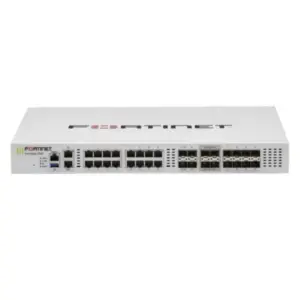
The Fortinet FortiNDR Cloud 500F Sensor is the small hardware sensor in the FortiNDR Cloud architecture. It is positioned at selected network observation points to receive mirrored traffic and supply network visibility to the cloud-delivered FortiNDR service. For an enterprise buyer, the important procurement distinction is that this is not simply another inline firewall or a replacement for an existing gateway. It is part of a network detection and response design in which traffic visibility, monitored bandwidth, sensor placement, cloud subscription capacity, support coverage, and integration planning must be sized together.
Organizations in Uganda can use this sensor where passive observation of business traffic is required without redesigning the production forwarding path. Typical placements include a data-center aggregation layer, campus core, branch concentration point, server segment, internet edge observation point, or other switch location capable of supplying SPAN or equivalent mirrored traffic. Fortinet documentation identifies support for sniffer/SPAN/802.1Q deployments and a cloud-based sensor plus SaaS portal architecture. This makes pre-order traffic mapping particularly important: the project team should identify what traffic must be observed, which switch or packet-broker ports will supply it, what physical media is used, and the sustained aggregate volume that will be forwarded into the subscribed service.
FourTeck supports Uganda procurement with bill-of-materials review, subscription planning, interface validation, delivery coordination and pre-deployment preparation. Because Fortinet has refreshed its current sensor portfolio and documentation over time, buyers requesting the 500F should have the exact hardware generation and orderable SKU confirmed on the commercial quotation before purchase. Current Fortinet material may map the small-sensor position to newer 500G ordering, while legacy documentation references 500F. This validation prevents a project from being built around an obsolete ordering assumption.
Instant Procurement Facts
Passive FortiNDR Cloud network sensor
Sniffer / SPAN / 802.1Q visibility
Hardware sensor with FortiNDR Cloud SaaS
Configuration and generation confirmation required
Kampala and nationwide project delivery
Confirm FortiCare/support term on quotation
A technically complete quote should identify the precise sensor hardware, optics or copper handoff requirements, FortiNDR Cloud bandwidth subscription, sensor support entitlement, subscription duration, and any professional staging requirements. Fortinet’s ordering model uses service throughput across sensors, so the quantity of physical sensors alone does not define the cloud-service requirement. Procurement teams should therefore provide monitored traffic estimates rather than only a device count.
Operational Architecture and Product Overview
Network security controls such as firewalls, endpoint protection and access controls are essential, but security teams also need visibility into activity that traverses internal networks. A network detection sensor addresses this requirement by observing traffic from strategic points and supplying the resulting telemetry to the detection platform. In a FortiNDR Cloud deployment, the sensor is the collection element while the SaaS environment provides centralized analysis and investigation functions. This separation lets an organization place sensors where traffic is generated while maintaining a common operational view.
The 500F class is intended for the smaller end of the hardware-sensor range. Its correct use is determined less by the physical size of a company than by the traffic presented to the observation point. A large enterprise can use multiple small sensors at remote locations, while a smaller organization with a high-volume data-center link may need a larger sensor. The sizing process should therefore start with network topology and monitored traffic rather than employee count.
SPAN planning deserves particular attention. A sensor cannot analyze traffic that is not delivered to it. Switch mirroring should cover the VLANs, trunks or interfaces that carry the workloads under review, and oversubscription of a mirror destination can result in dropped packets before the sensor ever receives them. Teams should document expected peak rates, east-west versus north-south coverage, asymmetric paths, VLAN tagging, and whether a network packet broker is present. Where several links are aggregated, the combined observed load must be considered.
FortiNDR Cloud also introduces a service-capacity dimension. Fortinet’s ordering guidance describes a mandatory base cloud subscription with throughput capacity and stackable capacity increments, while sensor hardware carries an annual support/license component for forwarding traffic to the SaaS platform. Contract terms can vary by current program and generation. The result is a solution whose cost consists of more than appliance hardware: buyers should compare the complete multi-year subscription, support, capacity, and deployment bill.
Operationally, this architecture can simplify distributed visibility. Sensors can be placed close to important network segments while analysts work through a centralized service. Integration planning should identify the organization’s existing firewall, SIEM, SOAR, XDR, EDR and incident-response processes. Fortinet lists integrations across these categories, including FortiGate NGFW. The objective is to ensure detections become actionable operational events rather than an isolated console that the security team must monitor separately.
Enterprise Business Outcomes and Value Analysis
1. Performance integrity
Sizing the sensor against actual mirrored traffic helps preserve useful visibility during busy periods. Buyers should measure peak rather than average link utilization and include growth headroom.
2. Reliability
Passive observation avoids making the sensor a required forwarding hop. Production traffic continues on its normal network path while the monitoring architecture receives a copy.
3. Scalability
Additional observation locations can be introduced as the enterprise expands, subject to sensor sizing and subscribed aggregate service capacity.
4. Security visibility
Network-level observation complements endpoint and perimeter controls by giving analysts another source of evidence for suspicious activity across monitored segments.
5. Central operations
A SaaS portal can support distributed environments without requiring every observation location to operate an independent analysis stack.
6. Cost control
Correct capacity planning reduces the risk of buying an undersized sensor or unnecessary hardware. Multi-year service requirements should be included in TCO calculations.
Key Hardware and Software Highlights
Fortinet legacy documentation for the FortiNDR Cloud 500F identifies a small hardware sensor with copper and SFP+ connectivity and passive traffic monitoring capability. Current Fortinet documentation shows the successor small-sensor class with updated interfaces. Because product naming and orderable SKUs have changed, FourTeck recommends validating the exact generation on the quote rather than copying a legacy interface list into a new deployment design.
| Capability | Procurement significance |
|---|---|
| Passive sniffer/SPAN monitoring | Plan switch mirror sources, VLAN visibility and peak traffic volume. |
| Cloud-delivered analysis | Cloud subscription and sensor forwarding entitlement form part of the solution. |
| Physical network interfaces | Confirm copper/fiber media, speed, transceivers and generation before ordering. |
| Central service integration | Map alert handling to existing SIEM, SOAR, XDR, EDR and FortiGate workflows. |
Technical Specifications Ledger
| Specification | FortiNDR Cloud 500F procurement guidance |
|---|---|
| Class | Small FortiNDR Cloud hardware sensor; confirm current successor/orderable generation. |
| Deployment method | Sniffer, SPAN and 802.1Q-supported observation architecture. |
| Analysis platform | FortiNDR Cloud SaaS portal. |
| Legacy 500F interface profile | Legacy Fortinet material lists 1G copper, 10G SFP+ and 10G copper connectivity for the small sensor. Exact port allocation should be confirmed against the supplied hardware revision. |
| Current small-sensor generation | Current Fortinet cloud data sheet lists 500G with 10/25GbE SFP28, 1GbE RJ45 and 10GbE RJ45 interfaces. |
| Cloud retention | Fortinet currently advertises 365-day FortiNDR Cloud data retention; validate contractual scope for the purchased service. |
| Subscription | FortiNDR Cloud base throughput service is mandatory in current ordering guidance; sensor support/forwarding entitlement is separately identified. |
| Dimensions / power / environmental limits | Confirm against the exact 500F hardware data sheet or current replacement SKU before rack and UPS design. These values should not be inferred from a successor model. |
| Compliance | Request the applicable regulatory declarations for the exact shipping SKU where tender documentation requires them. |
This ledger intentionally separates confirmed architectural characteristics from generation-specific values. Enterprise procurement frequently spans months, while security appliance families can transition to newer hardware. Using the quoted shipping SKU as the final source for rack dimensions, input power, thermal output and optics avoids engineering a cabinet around a discontinued revision.
Configuration and Sizing Worksheet
1. Estimate monitored workload
Record each intended observation point and its peak mirrored traffic. Include server VLANs, internet-edge flows, inter-VLAN traffic, data-center trunks and any packet-broker aggregation. Use peak utilization data from switches or monitoring tools rather than interface line rate alone, but preserve sensible growth headroom. Where traffic is asymmetric, ensure both directions are visible if the investigation use case requires them.
2. Validate the environment
Identify rack location, available rack depth, ambient conditions, management connectivity and access to the mirror source. Before final order, confirm the exact appliance dimensions and power requirements for the shipping generation. Check that cabinet PDUs, UPS capacity and grounding practices meet the site standard.
3. Confirm cabling and optics
Document every sensor-facing link by media type and speed. State whether the source is RJ45 copper, multimode fiber or single-mode fiber and identify connector and optic standards. Do not assume a transceiver is compatible simply because the nominal speed matches. The bill of materials should identify supported optics and patch leads for the exact hardware generation.
4. Size cloud services and support
Fortinet’s current ordering guidance treats aggregate sensor throughput as the basis for cloud-service capacity. Add the expected traffic from all sensors in scope and select the appropriate subscription quantity and contract term. Include the sensor’s annual support/forwarding entitlement and determine whether optional log ingestion or automation services are required.
5. Prepare the quote request
Provide the legal organization name, delivery city, number of observation sites, peak monitored throughput per site, desired contract term, existing Fortinet environment, switch mirror capabilities, required optics, preferred delivery window and whether pre-configuration is required. For tenders, add mandatory compliance, warranty and documentation requirements at the beginning so they can be incorporated into the commercial response.
Deployment Scenarios and Industry Use Cases
Large enterprise and multi-site networks
A distributed company can position sensors at important branches or aggregation points while using the cloud service as a common investigation plane. The architecture should prioritize sites containing critical applications, shared services, privileged administration traffic or major internet breakouts. Smaller locations can be assessed for virtual sensor suitability where appropriate, while higher-volume hubs may require a larger hardware sensor. The design should account for the total monitored service throughput across the deployment.
Financial and banking institutions
Banks and financial organizations typically need tightly controlled visibility across data-center, branch, payment, user and administrative zones. The sensor can complement existing preventive controls by observing selected network segments. Procurement teams should involve security, network and compliance stakeholders early because data handling, cloud-region requirements, retention, incident workflow and change-control requirements can influence the architecture. Mirror configuration must avoid unintended visibility gaps between redundant paths.
Educational and campus networks
Universities and large schools often combine student networks, staff systems, research environments, wireless infrastructure, data centers and public-facing services. Traffic volume can vary sharply during registration, examinations and large events. Sensor placement should therefore follow campus topology and security priorities, with attention to core switching, server environments and internet gateways. Cloud-delivered analysis can reduce the need to host a dedicated analysis platform on campus.
Government and regulated procurement
Public-sector deployments should begin with formal requirements for cloud use, data residency, retention, auditability, warranty, support and approved network zones. FortiNDR Cloud is a SaaS architecture, so organizations whose policy prohibits monitored data from leaving the local environment should evaluate whether the on-premises FortiNDR architecture is more appropriate. This distinction should be resolved before tender specification rather than after hardware delivery.
Technical Deep Dive: Processing and Sensor Architecture
The practical role of the sensor is capture and telemetry generation at the network observation layer. The design must deliver representative traffic to the sensor without making it responsible for normal packet forwarding. This changes the engineering priorities compared with a firewall. For a firewall, inline throughput and session handling directly affect production traffic. For a passive NDR sensor, the main concerns are visibility completeness, mirror quality, monitored bandwidth, interface compatibility and the ability to deliver useful telemetry to the cloud service. A badly placed sensor can be fully operational yet miss important attack paths simply because the relevant VLANs or links are not mirrored.
When a packet broker is available, traffic can be filtered, aggregated and distributed to sensors according to policy. Without a packet broker, switch SPAN configuration becomes central to the design. Avoid sending unnecessary traffic merely because it is easy to mirror; instead prioritize segments aligned with threat scenarios and investigation requirements. This improves the quality of the deployment and helps keep monitored service capacity predictable.
Technical Deep Dive: Cloud Ecosystem and Operational Control
FortiNDR Cloud centralizes analysis as a service and is designed to integrate into broader security operations. Fortinet currently lists SIEM, SOAR, XDR, EDR and FortiGate NGFW integration categories. During implementation, the security team should decide which platform owns incident triage, which detections should create cases, which response actions require human approval, and how long evidence must remain available. A technically connected integration is not the same as a usable operating process; responsibilities, escalation rules and notification paths should be documented.
Cloud delivery also changes lifecycle responsibilities. The service layer is maintained as SaaS, while the organization still owns sensor placement, local connectivity, access control, subscription continuity and integration governance. Support entitlement should be kept current so hardware and forwarding functions remain aligned with the contracted service.
Technical Deep Dive: Availability, Redundancy and Recovery
Because the sensor observes copies of traffic rather than carrying production traffic inline, sensor failure should not become a production forwarding outage when the architecture is correctly designed. It does, however, create a monitoring blind spot. High-value environments should therefore treat visibility availability as an operational requirement. Options include monitoring redundant paths, maintaining spare capacity, documenting replacement procedures and ensuring switch mirror configurations can be restored quickly after maintenance.
Disaster-recovery planning should include configuration records for SPAN sources, sensor management addressing, cabling diagrams, cloud registration details, support contacts and replacement procedures. If a core switch is replaced during a network incident, the mirror configuration can easily be omitted from the recovery checklist. Including NDR observation requirements in network disaster-recovery runbooks helps prevent silent loss of monitoring after infrastructure changes.
Pre-Purchase Buyer Gap Checklist
Is the appliance price the complete cost? No. Budget for the required FortiNDR Cloud service capacity, sensor support/forwarding entitlement, contract duration, optics/cabling and any staging or professional services. Optional ingestion or automation services may also apply to the wider design.
Is 500F still the exact orderable hardware? Fortinet documentation now shows newer 500G small-sensor ordering while some product pages and older material reference 500F. Request generation confirmation on the quote. A buyer asking for 500F should not automatically receive a different model without that substitution being documented.
Can the sensor see every network segment automatically? No. Visibility depends on what the network delivers to its monitoring interfaces. SPAN, TAP or packet-broker design determines the observation scope.
Does link speed equal monitored throughput? Not necessarily. A 10GbE physical link can carry far less than 10Gbps in normal operation, while multiple mirrored sources can collectively exceed expected capacity. Use measured peak traffic and growth assumptions.
Will it replace the firewall? No. NDR is complementary visibility and response technology. Firewall policy enforcement, endpoint controls, identity controls and other preventive layers remain important.
What about physical rack clearance and power? Confirm exact dimensions, input requirements and thermal characteristics against the quoted shipping SKU. Do not use successor-model values for a legacy 500F procurement.
Will it work with a mixed-vendor network? Passive traffic visibility is fundamentally based on receiving network traffic copies, but integration capabilities vary. Validate required SIEM, SOAR, EDR, firewall and ticketing integrations during design.
What happens if cloud use is restricted? FortiNDR Cloud is a SaaS offering. Organizations requiring an air-gapped or fully local analysis environment should assess Fortinet’s on-premises FortiNDR product family instead.
Uganda Procurement, Delivery and Technical Preparation
FourTeck can prepare a Uganda commercial quotation after the technical scope is defined. For a single-site request, the essential inputs are the observation point, monitored bandwidth, interface media, service term and delivery location. Multi-site projects should provide a simple site schedule so sensor quantities and aggregate cloud throughput can be calculated. Where procurement is governed by a tender, share the required warranty wording, manufacturer authorization requirements, delivery milestones and acceptance criteria at quotation stage.
Order processing should include confirmation of the exact Fortinet part number and generation, especially for 500F requests during a portfolio transition. Once the bill of materials is accepted, logistics can be coordinated for Uganda and any required pre-shipment checks can be scheduled. Delivery timing depends on confirmed stock position, manufacturer/channel availability, import routing and order quantity; therefore lead time should be stated on the formal quotation rather than assumed from a generic product page.
Pre-configuration can include labeling, inventory capture, firmware validation where appropriate, management addressing preparation and deployment documentation. Network-specific SPAN configuration remains dependent on the customer’s switch environment, so FourTeck can review the intended topology and identify the information the implementation team should have ready.
Uganda Coverage Matrix
Kampala: suitable for head-office, data-center, financial, telecom and large-campus deployments requiring centralized project coordination. Entebbe: support for enterprise, hospitality, aviation-adjacent and institutional environments with monitored network segments. Jinja: procurement for industrial, education, branch and regional business infrastructure. Mbarara: coverage for western Uganda organizations, campuses, healthcare networks and distributed enterprise sites. Gulu: support for northern Uganda projects, public-sector sites, NGOs, education and branch infrastructure. Nationwide projects can be quoted as a coordinated bill of materials with site-by-site sensor allocation and one aggregate subscription-sizing exercise.
Cross-Border and Regional Supply Chains
Organizations operating across East Africa and the Gulf can coordinate related procurement through FourTeck regional channels. Uganda requirements are available through FourTeck Uganda, Kenya projects through FourTeck Kenya, broader continental requirements through FourTeck Africa, UAE requirements through FourTeck UAE, and Kuwait requirements through FourTeck Kuwait. Multi-country buyers should standardize the technical design first, then separate local delivery, tax, import and support requirements by destination. This reduces model drift between sites while allowing commercial documentation to match each jurisdiction.
Related Solutions and Internal Procurement Paths
A FortiNDR Cloud sensor is normally purchased as part of a wider security-operations architecture rather than in isolation. Buyers can review Fortinet security solution quotations, request compatible SFP and SFP+ transceiver guidance, plan FortiGate integration, discuss SIEM and security operations integration, request rack and UPS sizing, or ask for multi-site deployment assistance. Where the 500F is no longer the preferred shipping generation, FourTeck can quote the current Fortinet small-sensor equivalent with the substitution clearly identified.
FourTeck Technical Service Capabilities
FourTeck’s procurement workflow can include engineering validation before the order is released. The objective is to catch mismatches that are expensive to resolve after delivery: wrong sensor generation, inadequate cloud throughput, unsupported optics, missing support subscriptions, unsuitable rack assumptions, or incomplete site quantities. Bill-of-materials verification compares the requested architecture with the quoted hardware and service components.
Staging requirements can be agreed before shipment. Depending on project scope, this can include asset recording, serial-number capture, labeling, basic management preparation, firmware review and packing by site. Pre-shipment firmware work is performed only when appropriate to the support state and agreed implementation plan. Post-sales technical support can assist with deployment preparation, topology review, escalation coordination and documentation required to move from delivered hardware to an operational monitoring service.
Extended Technical FAQ
1. What is the FortiNDR Cloud 500F Sensor used for?
It is a hardware network sensor for the FortiNDR Cloud architecture. It receives mirrored or otherwise supplied network traffic from selected observation points and forwards relevant telemetry into the cloud-delivered service for detection and investigation. It is not intended to replace a firewall or become the normal forwarding path for production traffic. The quality of the deployment depends on correct sensor placement and mirror configuration. Before purchase, identify the traffic segments that matter to your security objectives and ensure the switching or packet-broker infrastructure can deliver them to the sensor.
2. Does the 500F require a FortiNDR Cloud subscription?
Yes, the hardware belongs to a cloud-service architecture rather than operating as a complete standalone NDR platform. Fortinet ordering guidance identifies mandatory FortiNDR Cloud service throughput and a sensor support/license component for forwarding traffic to the SaaS platform. The commercial bill should therefore include hardware, service capacity and support for the selected contract period. Exact part numbers can change as the product family evolves, so FourTeck should validate the current orderable SKUs and term before issuing the final quotation.
3. How should we size the sensor?
Start with the traffic that will actually be mirrored to the sensor. Measure peak traffic at the intended observation point, account for multiple mirror sources, consider bidirectional traffic and include growth headroom. Do not size only from the number of employees or the line rate printed on a switch port. A branch with a modest user population can generate significant data traffic, while a large office may send only selected segments to NDR. For multi-site designs, calculate both local sensor requirements and the aggregate service throughput used by all sensors.
4. Can FortiNDR Cloud 500F be deployed with non-Fortinet switches?
The sensor’s passive observation role is based on receiving network traffic from the infrastructure, so the core requirement is that the network can provide an appropriate mirrored or tapped feed using compatible physical interfaces and VLAN handling. However, operational integrations and automated response capabilities are product-specific and should be validated separately. When using mixed-vendor switching, document how SPAN sessions are configured, whether the switch imposes mirror limits, how VLAN tags are preserved, and whether redundant network paths require more than one observation source.
5. What interface type should we order?
Interface planning must follow the exact hardware generation and the source network. Legacy 500F material and current 500G material do not present identical interface specifications. State whether each feed is copper or fiber, its speed, fiber type, connector and distance. Then match supported transceivers and patch leads to the quoted sensor. This is particularly important when an older 500F request is fulfilled by a current-generation replacement. The substitution should be technically reviewed rather than assumed to be a drop-in match for every existing cable and optic.
6. What warranty and replacement support is available?
Support should be quoted using the applicable Fortinet entitlement for the exact sensor generation and contract term. Fortinet ordering guidance identifies FortiCare Premium within current sensor support licensing. Replacement service levels and regional handling can depend on the purchased support program, stock location and contractual terms. If your organization has a required restoration time, state it before quotation so the support option can be checked against that objective. Keep serial numbers, entitlement records and deployment location details available to simplify any support case or replacement process.
7. Does the sensor need to be installed inline?
No. The normal FortiNDR Cloud sensor design is passive observation using sniffer/SPAN or related traffic-copy methods. That is beneficial because the sensor does not need to become a production forwarding dependency. The tradeoff is that visibility is only as complete as the traffic feed. If a SPAN session is removed during a switch change or a redundant path is not mirrored, the monitoring system may lose visibility while user traffic continues normally. Configuration documentation and post-change verification are therefore important operational controls.
8. Can we use FortiNDR Cloud in a government or highly regulated environment?
Potentially, but the architecture must first satisfy the organization’s cloud, data handling, residency, retention and security policy requirements. FortiNDR Cloud is SaaS-based and Fortinet advertises cloud storage regions and defined retention for the service. A regulated buyer should confirm the region and contractual terms applicable to its subscription rather than relying solely on general marketing information. Where policy requires all analysis and data to remain inside the customer’s network or an air-gapped environment, Fortinet’s on-premises FortiNDR architecture may be the more appropriate product family.
9. What information should we send FourTeck for an accurate Uganda quote?
Send the number of sites, city or delivery destinations, monitored traffic estimate for each site, network interface types, switch or packet-broker details, desired subscription duration, existing Fortinet products, required integrations, support expectations and project deadline. If you specifically require the 500F generation, state whether substitutions are permitted. For formal tenders, include mandatory compliance documents and warranty wording. These inputs allow FourTeck to validate whether the requested small sensor is appropriate and to calculate the associated cloud-service and support components.
10. What happens if Fortinet has replaced the 500F with a newer model?
The quote should identify the current orderable equivalent and explain the change before the order is accepted. Fortinet’s current ordering material shows a 500G small sensor while older documentation references the 500F. A generation change can alter interfaces, performance, optics and support SKUs, so procurement should not treat the model name as cosmetic. FourTeck can review the intended topology against the current sensor, identify any cabling or sizing changes, and provide a bill of materials based on the shipping product rather than a discontinued specification.
Request a FortiNDR Cloud 500F Uganda Procurement Review
For a useful quotation, send your monitored traffic estimate, number of observation sites, copper or fiber interface requirements, preferred subscription term, existing security integrations and delivery city. FourTeck will use these details to validate the hardware generation, cloud-service capacity, support entitlement and accessory requirements. This is especially important for 500F requests because current Fortinet ordering references newer small-sensor hardware. A generation-confirmed bill of materials gives your network and procurement teams a common specification for approval, budgeting, delivery and implementation.
Reviews
There are no reviews yet.