
Fortinet FortiVoice Gateway FVG-GS24 – 24-Port FXS Analog Voice Gateway for Uganda
The Fortinet FortiVoice Gateway FVG-GS24 is a purpose-built enterprise voice gateway for organizations that need to connect traditional analog telephones, fax machines and similar subscriber devices to a FortiVoice communications platform. Rather than forcing an immediate replacement of every analog endpoint, the gateway creates a practical migration path by providing twenty-four FXS interfaces in a compact 1U rack-mount appliance. This makes it especially relevant for hotels, hospitals, schools, government facilities, financial organizations, industrial sites and established offices where analog devices remain operationally useful even as the core communications environment moves toward IP-based telephony.
For procurement teams in Uganda, the FVG-GS24 addresses a familiar infrastructure problem: the business wants centralized IP communications and stronger administrative control, but some endpoints cannot be economically or operationally replaced at once. Guest-room telephones, security phones, lift phones, reception devices, fax equipment, service desks and legacy handsets may still require analog connectivity. The FVG-GS24 provides a controlled bridge between these endpoints and compatible FortiVoice systems while supporting modern networking and voice-security capabilities.
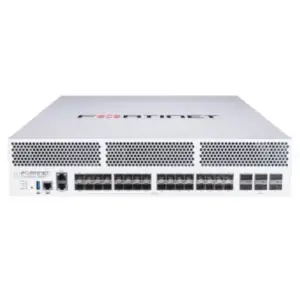
The appliance provides 24 FXS analog extensions, two RJ45 network interfaces, voice QoS, IEEE 802.1Q VLAN capability, SIP over TLS, SRTP, SNMP, fax-over-IP and T.38 support. It can be administered through web and command-line interfaces and is designed for centralized use with supported FortiVoice deployments. Its rack-mount design allows structured installation alongside switches, firewalls, patching and voice infrastructure.
Instant Specifications & Procurement Fact Rail
FVG-GS24
24 FXS extensions
2 RJ45 interfaces
1U rack mount
50 W
Quote-based
The FVG-GS24 should be specified when a project requires up to twenty-four analog subscriber connections at one installation point. Unlike an FXO gateway, which connects traditional telephone company lines, the GS24 is an FXS model intended to provide analog extension interfaces for endpoint devices. This distinction is important during bill-of-materials preparation. Procurement teams should count the actual analog phones and fax endpoints that must remain in service, reserve reasonable capacity for moves or additions, and verify the managing FortiVoice platform before placing an order.
Operational Product Architecture & Overview
The operational role of the FVG-GS24 is straightforward but strategically important. It terminates analog subscriber equipment at the edge of a FortiVoice deployment and presents those resources to the communications environment in a manageable form. Each of the twenty-four FXS connections corresponds to an analog extension, allowing organizations to retain devices that depend on traditional analog signaling while the wider voice platform uses IP networking.
This architecture is valuable during phased modernization. Replacing a PBX can be comparatively simple at the core, but replacing every endpoint across a large building or campus can create cost, cabling and operational challenges. Some endpoints have little reason to become sophisticated IP phones. A basic wall telephone in a utility area, a guest-room handset or a fax machine may need only dependable dial tone and extension functionality. By concentrating twenty-four analog interfaces into one rack appliance, the GS24 helps reduce scattered adapters and gives administrators a cleaner infrastructure boundary.
The dual RJ45 interfaces provide network connectivity for integration into the IP environment. Voice QoS support assists with traffic prioritization, while 802.1Q VLAN support allows voice infrastructure to participate in segmented network designs. SIP over TLS and SRTP provide mechanisms for protecting signaling and media where supported and correctly configured. SNMP provides another operational tool for monitoring, and both web and command-line management options support different administrative workflows.
Fax compatibility deserves particular attention because fax traffic can expose weaknesses in poorly planned voice migrations. The gateway supports fax over VoIP and T.38, helping organizations retain fax-dependent workflows where these remain necessary. Nevertheless, buyers should validate end-to-end fax requirements, carrier behavior, codec policy and FortiVoice configuration during design rather than treating fax as an automatic extension of ordinary voice service.
Fortinet lists G.711 u-law/A-law, G.729a, G.722 and G.726 among supported codecs. DTMF options include in-band operation, RFC2833-style signaling as listed in product documentation, and SIP information methods. These capabilities give administrators flexibility when matching the gateway to the wider call-control and network environment.
Enterprise Business Outcomes & Value Analysis
1. Performance & Voice Integrity
A dedicated gateway separates analog endpoint conversion from ad-hoc desktop adapters. With voice QoS, supported codecs and purpose-built FXS interfaces, the design can provide a more orderly basis for maintaining voice quality across a managed LAN. Correct switch configuration, bandwidth planning and WAN engineering remain essential for predictable results.
2. Reliability & Operational Continuity
Centralizing twenty-four analog ports in a rack-mounted unit makes the physical voice environment easier to document, protect with UPS power and service than a collection of unmanaged converters. Dual network connections and FortiVoice integration support resilient communications design, subject to the topology and platform configuration selected for the project.
3. Infrastructure Scalability
The GS24 is particularly useful where analog demand is dense. Smaller GS04 or GS16 variants may suit lower port counts, while the GS24 concentrates twenty-four extensions in 1U. Multiple gateways can be considered when project scale and the managing FortiVoice system capacity permit.
4. Security & Segmentation
SIP over TLS, SRTP and 802.1Q VLAN capabilities allow the gateway to participate in a more structured voice-security architecture. These features are not substitutes for firewall policy, secure administration, certificate management and network access controls, but they provide useful building blocks.
5. Centralized Management
FortiVoice can manage supported FXS gateways, including gateway discovery and extension creation. Central administration reduces the need to treat every analog endpoint as an isolated device and helps operations teams maintain a consistent configuration model.
6. Total Cost of Ownership
The strongest financial case is often endpoint preservation. If twenty-four existing analog devices remain suitable for their jobs, a gateway can defer or avoid unnecessary handset replacement. The 50 W operating-power specification also allows facilities teams to include the appliance in UPS and rack-power calculations.
Key Hardware & Software Highlights
24 FXS Extensions
Twenty-four analog subscriber ports provide capacity for a substantial group of conventional telephones or compatible fax devices from a single gateway.
1U Rack Architecture
The rack-mount format is suited to structured communications rooms where the gateway can be installed with LAN switching, FortiVoice equipment, patching and protected power.
Dual Network Interfaces
Two RJ45 interfaces provide the physical network connectivity required for integration into the voice infrastructure and support practical network design options.
Protected Voice Transport
SIP over TLS and SRTP capabilities support protected signaling and media in compatible deployments, helping organizations align analog migration with modern communications-security practices.
VLAN and QoS
802.1Q VLAN and voice QoS support make the appliance easier to incorporate into segmented enterprise networks with explicit voice traffic policies.
Fax Migration
Fax-over-IP and T.38 support provide a migration option for departments that still depend on fax workflows, subject to complete path compatibility.
Technical Specifications Ledger
| Specification | FVG-GS24 |
|---|---|
| Analog Extensions | 24 FXS |
| Nominal Loop Current | 30 mA |
| Interface Wire Impedance | 600Ω / 900Ω; TBR21, AU, NZ, UK profiles listed |
| Network Interfaces | 2 RJ45 |
| Form Factor | Rack mount, 1U |
| Operating Power | 50 W |
| Maximum Operating Temperature | 122°F / 50°C |
| Maximum Altitude | ≤ 2 km under listed Class B compliance conditions |
| Dimensions | 1.75 × 17 × 9.25 in; manufacturer metric listing: 44.4 × 234.9 × 431.8 mm |
| Weight | 10 lb / 4.5 kg |
| Voice QoS / VLAN | Supported / 802.1Q supported |
| Secure Voice | SIP over TLS and SRTP |
| Monitoring | SNMP |
| Fax | Fax over VoIP and T.38 |
| Management | Web interface and command-line interface |
| Codecs | G.711 u-law/A-law, G.729a, G.722, G.726 |
| Compliance | FCC Part 15 Subpart B Class B; ICES-003 Issue 7 Class B as listed by manufacturer |
Specifications should be validated against the current manufacturer data sheet and exact regional hardware revision at quotation stage. Published dimensions should also be checked against the rack layout, cable bend radius and neighboring equipment. A nominal 1U height does not remove the need to reserve appropriate front and rear service clearance.
Configuration & Sizing Worksheet
1. Count the Analog Workload
Create a room-by-room or department-by-department list of every analog device that will remain after the communications upgrade. Separate ordinary phones, fax machines, emergency or utility phones and special devices. The GS24 offers twenty-four FXS extensions, so a deployment with twenty-two active devices leaves only two spare positions. Projects expecting near-term growth should evaluate whether another gateway or a different endpoint strategy is more appropriate.
2. Confirm the Managing FortiVoice Platform
Do not purchase solely on port count. Confirm the exact FortiVoice appliance, virtual system or cloud design that will manage the gateway and verify supported gateway capacity. Fortinet documentation indicates that FXS gateways work with appropriate FortiVoice systems and can be discovered or manually added in supported deployments.
3. Plan Rack, Environment and Power
Reserve 1U of rack space plus practical cable-management clearance. The published operating-power figure is 50 W. Include the gateway in UPS calculations and decide whether the communications rack requires separate protected feeds. Confirm the equipment room remains within environmental limits and has suitable grounding, ventilation and physical security.
4. Validate Cabling
The GS24 aggregates analog connectivity and therefore requires careful analog-side cable planning. Document the relationship between each physical FXS position and its destination extension. Existing building cabling should be tested before migration, particularly where old copper pairs, intermediate distribution frames or undocumented cross-connects are involved.
5. Define Network and Security Policy
Choose management addresses, VLAN placement, switch ports, QoS markings, routing, firewall rules and administration controls before installation. Where SIP over TLS or SRTP is required, include certificate and interoperability considerations in the deployment plan rather than enabling security features without an end-to-end design.
6. Prepare the Quote Package
For a clean commercial quotation, provide the model, quantity, deployment city, required support or warranty coverage, FortiVoice platform, analog endpoint count, desired installation assistance and target delivery date. This information helps reduce revision cycles and makes it easier to identify missing accessories or services before purchase approval.
Deployment Scenarios & Industry Use Cases
Large Enterprise and Multi-Site Networks
A large enterprise may standardize its main offices on IP phones while retaining analog devices in warehouses, reception areas, utility rooms or remote facilities. The FVG-GS24 can consolidate twenty-four such endpoints at a location and bring them under the wider FortiVoice administration model. For multi-site environments, each site should be assessed independently because analog density, WAN resilience and local survivability requirements vary.
Financial and Banking Institutions
Banks and financial organizations frequently operate controlled branch environments where reliability, segmentation and change management are important. A gateway can preserve approved analog endpoints while the institution modernizes call control. Network teams can place voice infrastructure into designated VLANs, apply QoS and use supported secure signaling and media capabilities. Procurement should also consider spare hardware strategy, branch replacement procedures and support escalation paths.
Educational and Campus Networks
Schools, universities and training campuses often have analog phones distributed through administrative offices, guard posts, dormitory areas and service locations. Re-cabling all areas for new IP handsets may not be economically justified during the first phase of a voice upgrade. A centrally installed GS24 can help reuse existing analog wiring where it remains serviceable while providing a path into FortiVoice.
Government and Public-Sector Procurement
Government projects typically require detailed model identification, technical compliance, documented warranty terms and a controlled bill of materials. The FVG-GS24 can be specified as a 24-port FXS gateway where analog subscriber support is part of the requirement. Tender documents should distinguish FXS extensions from FXO trunks and PRI interfaces to avoid procurement of the wrong gateway class.
Hospitality and Healthcare
Hotels and healthcare facilities may have hundreds of simple room or ward phones that do not require full IP handset functionality. The GS24 can be deployed in groups, subject to FortiVoice platform capacity, to preserve those analog endpoints while centralizing communications. Engineers should verify emergency calling, numbering, cabling, power resilience and operational procedures before migration.
Technical Deep Dive: Voice Processing & Analog Interface Architecture
The essential engineering function of an FXS gateway is to provide the subscriber-side electrical and signaling behavior expected by analog endpoints and translate communications into the IP voice environment. For the GS24, twenty-four analog extensions are concentrated into a single appliance. The published nominal loop current is 30 mA, while listed impedance options include 600Ω and 900Ω together with regional profiles. These details matter when engineers are dealing with existing analog estates because endpoint behavior can depend on electrical characteristics, cabling length and local configuration.
On the packet side, codec choice influences bandwidth and interoperability. G.711 generally favors high-fidelity conventional telephony at a higher bandwidth requirement, while other supported codecs can be selected where appropriate. The best codec policy should be consistent with FortiVoice configuration, WAN characteristics and any upstream services. Voice QoS should also be engineered across the full path: marking traffic at one device provides limited benefit if switches, routers or WAN services ignore the markings.
Technical Deep Dive: Software Control, Security & Management
FortiVoice integration is a major reason to choose a FortiVoice gateway instead of a generic analog adapter. Supported FortiVoice systems can discover FXS gateways and create extensions corresponding to their ports. Administrators can also manually add gateways when required. This relationship simplifies lifecycle management because the gateway becomes part of the voice system rather than an isolated conversion box.
The device supports web and command-line administration, providing both graphical and structured operational methods. SIP over TLS and SRTP support can protect signaling and voice media in appropriately configured environments. Security planning should still include strong administrator credentials, management network restrictions, timely firmware maintenance, configuration backups and controlled change procedures.
Technical Deep Dive: Availability, Redundancy & Recovery
Voice continuity depends on more than the gateway itself. A resilient design should consider the FortiVoice platform, LAN switching, WAN paths, upstream trunks, DNS and addressing services, electrical power and the analog distribution plant. The GS24 has dual network interfaces and is described within Fortinet’s gateway family as supporting continuity-oriented designs. Buyers should define the required failure behavior before deployment: which calls must remain available, what happens during WAN loss, how quickly failed equipment must be replaced and whether a spare gateway should be held locally.
Power protection is equally important. With a published 50 W operating figure, the gateway is a manageable UPS load, but the full voice stack must be calculated together. Keeping the gateway alive is of little value if the associated switches or FortiVoice controller lose power. A recovery plan should include configuration records, port-to-extension mapping, firmware versions, spare cables and a documented replacement procedure.
Pre-Purchase Buyer Gap Checklist
Is this an FXO gateway? No. The GS24 is an FXS gateway with twenty-four analog extension interfaces. Buyers requiring PSTN line interfaces should specify the appropriate FXO model instead.
Can it connect existing analog phones? That is its primary role. However, unusual analog devices should be tested for signaling, impedance, voltage and feature compatibility before a large rollout.
Does it support fax? The published feature set includes fax over VoIP and T.38. Successful fax operation still depends on the entire call path and configuration.
Will it fit a standard rack? It is a 1U rack-mount model. Engineers should verify the rack depth, cable path and service clearance using current mechanical documentation.
What is the power requirement? Fortinet lists 50 W operating power. UPS sizing should include every device needed for voice service, not just the gateway.
Are licenses required? Gateway procurement should be checked alongside the selected FortiVoice platform, support entitlement and any platform subscriptions or service requirements. Commercial licensing can vary by solution architecture, so the quote should identify hardware and recurring items separately.
Can it be centrally managed? Supported FortiVoice systems can manage FXS gateways, including discovery and extension association. Confirm the exact FortiVoice model and software release during design.
What about lifecycle and firmware? Record the hardware model, serial numbers, installed firmware and approved upgrade baseline. For enterprise procurement, lifecycle management is as important as initial installation.
Uganda Procurement & Delivery Logistics
FourTeck can prepare a Uganda quotation for the Fortinet FortiVoice FVG-GS24 based on quantity, delivery location, required support coverage and deployment scope. A useful request should identify whether the gateway is for a new FortiVoice installation, an expansion or a migration from an existing PBX. Providing the existing analog endpoint count and FortiVoice model helps the technical team validate the proposed bill of materials before commercial processing.
Order processing may include model verification, sourcing confirmation, commercial approval, import and delivery coordination, and optional pre-shipment preparation. Actual lead times vary with stock position, distribution channel, order quantity and logistics conditions, so delivery dates should be confirmed on the formal quotation rather than assumed from a generic estimate.
For projects that require configuration support, FourTeck can help define addressing, gateway association, extension mapping, firmware readiness and installation prerequisites before equipment reaches site. This is particularly useful for branch rollouts where installation windows are short and local teams need a repeatable deployment plan.
Uganda Coverage Matrix
Kampala: suitable for enterprise headquarters, financial institutions, hotels, healthcare facilities, government offices and data-room deployments requiring structured FortiVoice integration.
Entebbe: procurement and delivery can support hospitality, logistics, aviation-adjacent businesses and branch communications projects where analog endpoints remain part of operations.
Jinja: industrial, education and commercial organizations can specify the GS24 for analog extension migration within centralized voice modernization projects.
Mbarara: regional offices, healthcare organizations, universities and multi-site businesses can use quote-based supply and deployment planning for FortiVoice gateway requirements.
Gulu: organizations planning regional communications upgrades can request equipment sourcing, compatibility review and logistics coordination based on project schedules and site requirements.
Cross-Border & Regional Supply Chains
Organizations operating across East Africa and the Gulf often benefit from using a consistent product specification and documentation process across multiple countries. FourTeck’s regional web presence supports procurement coordination for Uganda, Kenya, broader African markets, the United Arab Emirates and Kuwait. Cross-border projects should account for import procedures, local tax treatment, delivery terms, support entitlement and the destination country’s electrical and telecommunications requirements.
A standardized FVG-GS24 bill of materials can simplify multi-country rollouts, but each site still needs its own endpoint count, rack plan, network configuration and delivery schedule. Central procurement teams should maintain a site matrix showing quantity, FortiVoice controller, firmware baseline, extension ranges, support coverage and installation responsibility.
Related FortiVoice Products & Planning Paths
Projects with fewer analog extensions can evaluate FortiVoice GS04 and GS16 gateway variants, while requirements for traditional telephone company lines should be directed toward the relevant FortiVoice FXO gateway rather than an FXS model. PRI environments should evaluate the FortiVoice GT series. Buyers planning a complete communications refresh should also consider the appropriate FortiVoice phone system, FortiFone endpoints, LAN switching, firewall policy, UPS capacity, rack accessories and structured cabling.
For local commercial support, visit the FourTeck Uganda technology portfolio or contact the Uganda sales team. A complete quotation can combine the gateway with compatible voice infrastructure and implementation services, reducing the risk of receiving hardware without the required platform, cabling or support elements.
FourTeck Technical Service Capabilities
A successful analog migration begins with engineering validation rather than box shipment. FourTeck can review the requested model against the intended FortiVoice environment, validate the quantity of analog extensions, identify related infrastructure requirements and help produce a cleaner bill of materials. This reduces common ordering mistakes such as confusing FXS and FXO interfaces or underestimating the number of required ports.
Where project scope permits, staging can include firmware review, configuration preparation, extension mapping and documentation before dispatch. Pre-shipment preparation is useful for distributed deployments because it gives installers a consistent starting point and can reduce time spent on repetitive setup at remote sites. Post-sales assistance can cover implementation questions, configuration review and escalation guidance according to the purchased service arrangement.
For formal projects, customers should request that serial tracking, warranty terms, support coverage and any required Fortinet service entitlements be shown clearly in commercial documentation. The objective is a traceable procurement package that can be handed from purchasing to engineering and operations without ambiguity.
Extended Technical FAQ
1. What exactly does the FortiVoice FVG-GS24 do?
The FVG-GS24 is a 24-port FXS gateway. It provides analog extension interfaces so traditional analog phones and compatible fax machines can operate within a supported FortiVoice communications environment. Each FXS port represents an analog extension. The gateway is useful when an organization wants to modernize its PBX or call-control system without replacing every analog endpoint. It is not a 24-line PSTN trunk gateway; buyers who need incoming traditional telephone lines should look at the appropriate FXO gateway category.
2. Is the FVG-GS24 suitable for fax machines?
Fortinet lists fax over VoIP and T.38 support for the gateway family, making the GS24 a candidate for fax migration. Fax reliability depends on more than the local gateway, however. The FortiVoice configuration, codec handling, network quality, upstream SIP service and remote fax endpoint can all affect results. Organizations with critical fax workflows should identify those devices during design and test representative call paths before moving every fax machine into production.
3. Can the gateway be managed from FortiVoice?
Yes, supported FortiVoice systems can manage FXS gateways. Fortinet documentation describes both automatic discovery and manual addition workflows, and the FortiVoice system creates extensions corresponding to gateway ports. Exact management behavior and supported gateway capacity depend on the FortiVoice platform and software version, so procurement should include a compatibility check against the customer’s actual appliance, virtual platform or cloud service before ordering.
4. Does the GS24 support encrypted voice?
The published capabilities include SIP over TLS and SRTP. SIP over TLS can protect signaling, while SRTP can protect media streams when the rest of the voice environment is configured compatibly. These capabilities should be implemented as part of an end-to-end security design. Certificate handling, FortiVoice policy, endpoint compatibility, firewall rules, administrator access and firmware maintenance all influence the actual security posture.
5. What rack and power capacity should be reserved?
The FVG-GS24 is a 1U rack-mount appliance and Fortinet lists 50 W operating power. Reserve a full rack unit and allow sufficient space for cable routing, airflow and maintenance access. For UPS calculations, include the FortiVoice controller, network switches, routers and other components required to keep calls functioning during an outage. A voice continuity design should not protect only the gateway while leaving the rest of the call path without backup power.
6. What network features help enterprise deployment?
The gateway supports two RJ45 network interfaces, voice QoS, 802.1Q VLAN, SNMP, SIP over TLS and SRTP. These features allow it to fit into a structured enterprise network with voice segmentation, traffic prioritization, monitoring and protected communications. Network administrators should define VLAN IDs, IP addressing, switch configuration, QoS policy, routing and management access before installation. Consistent configuration across all sites is especially valuable in multi-branch deployments.
7. Does buying the gateway include every license needed for a FortiVoice deployment?
The hardware should be quoted in the context of the overall FortiVoice solution. Depending on the selected FortiVoice platform and support model, separate service, subscription or support items may apply. Buyers should ask for a line-item quotation that distinguishes the FVG-GS24 hardware, FortiVoice platform, support entitlements, implementation services and any recurring commercial components. This approach prevents hidden budget gaps and makes renewal planning easier for finance and IT teams.
8. How should warranty and hardware replacement be planned in Uganda?
Warranty and replacement procedures should be confirmed on the supplier quotation and matched to the operational importance of the site. A branch that cannot tolerate prolonged analog-service loss may require stronger support coverage or a locally held spare. Keep serial numbers, purchase records, firmware versions and configuration backups in the asset register. If a unit fails, having documented port mappings and a prepared replacement procedure can materially reduce recovery time.
9. Can FourTeck help with configuration before delivery?
Configuration assistance can be scoped around the project. Useful preparation may include validating the FortiVoice platform, confirming extension ranges, planning network addresses and VLANs, reviewing firmware, documenting analog port mappings and preparing installation notes. The exact work should be agreed before ordering because some customers need only hardware supply while others require a staged deployment package. Providing a clear site list and target configuration at quotation stage helps determine the appropriate service level.
10. When should I choose GS24 instead of GS04 or GS16?
Choose based primarily on the number and concentration of analog extensions. GS04 provides four FXS ports, GS16 provides sixteen and GS24 provides twenty-four. The GS24 is particularly efficient when a rack location serves a dense group of analog devices and a 1U appliance fits the infrastructure plan. Smaller sites may be better served by a lower-port model. Always include expected growth and spare-port policy in sizing rather than buying exactly enough capacity for today’s active endpoints.
Request a FortiVoice FVG-GS24 Quote for Uganda
Send FourTeck your required quantity, delivery city, FortiVoice platform, analog endpoint count and preferred support scope. The team can prepare a commercial quotation and help validate whether the FVG-GS24 is the correct FXS gateway for your deployment. For projects involving multiple sites, include a location-by-location quantity and installation schedule so procurement and engineering requirements can be aligned before ordering.
A well-prepared gateway purchase should answer five questions before approval: how many analog devices will connect, which FortiVoice platform will manage them, where the gateway will be installed, how voice service will be protected against power or network interruption, and what support coverage is required after deployment. Resolving these items early reduces implementation risk and produces a more predictable rollout.
Reviews
There are no reviews yet.