
FortiWeb 600E in Uganda
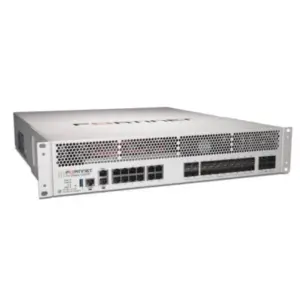
A dedicated 1U web application firewall for protecting business web applications and APIs at the application layer.
Fortinet positions FortiWeb as a web application and API protection platform. The 600E hardware model provides up to 750 Mbps throughput with copper and SFP Gigabit Ethernet connectivity, making it relevant where an organization wants dedicated on-premises application protection rather than relying only on a perimeter network firewall.
Product overview
For an organization in Uganda, this becomes relevant when customer portals, online services, web-based business systems, public websites, partner portals or APIs are important enough that application-layer attacks could interrupt operations, expose information or create incident-response work. FortiWeb is designed to provide web application and API protection, including capabilities intended to address common web attack patterns and malicious application behavior. The 600E is the hardware form of that platform, suitable where the buyer prefers an appliance deployed in its own infrastructure.
The 600E should not be selected only because its headline throughput appears higher than an internet circuit. Real sizing should consider peak protected application traffic, encrypted traffic, the number and type of applications, expected connection behavior, security policies, logging requirements, deployment architecture and resilience. Fortinet publishes performance values as maximum figures that can vary with configuration and workload. A buyer planning high availability should also account for a second compatible unit and the associated network design.
Fortinet’s current FortiWeb documentation continues to list the 600E in configuration references, while the current product family also includes newer F-series appliances. That makes lifecycle and software-version planning an important procurement conversation. FourTeck can help compare the requested 600E against currently available FortiWeb hardware, review interfaces and project quantities, and prepare a quote based on the intended deployment rather than assuming that an older model is automatically the best fit.
Business benefits
01
Application-aware protection
FortiWeb focuses controls on web applications and APIs, giving security teams a purpose-built layer for traffic that legitimately passes through network firewalls. This helps organizations separate application protection from general perimeter policy and tune defenses around published services.
02
Dedicated capacity for protected web traffic
Fortinet lists up to 750 Mbps throughput for the 600E. A dedicated appliance gives procurement teams a clear capacity point around which to assess current web traffic and growth, while remembering that actual performance depends on enabled functions and configuration.
03
Flexible network insertion
Four GE RJ45 interfaces, including two bypass ports, plus four GE SFP interfaces provide options for integrating the appliance into copper- or fibre-connected environments. The final topology should be checked against switch ports, transceivers and deployment mode.
04
High-availability planning
FortiWeb supports active/passive and active/active clustering in the appliance family. Organizations running revenue-critical or public-facing services can design redundancy rather than making one appliance a single point of failure. Exact architecture should be validated before procurement.
05
Centralized security operations
A dedicated WAF gives administrators a defined control point for web policies, event visibility and application-security operations. This can simplify responsibility for teams that need to distinguish application-layer events from general network-security alerts.
06
Rack-based deployment
The 1U form factor is appropriate for data-centre and server-room installation. Buyers should still confirm rack depth, airflow, power feeds and maintenance access as part of the implementation plan.
What distinguishes the 600E
Its value is the combination of dedicated web application protection, appliance-based deployment and practical Gigabit Ethernet connectivity for organizations whose protected traffic falls within the model’s capacity envelope.
750 Mbps: Fortinet’s published maximum throughput for the model.
Network connectivity: 4 GE RJ45, of which two are bypass capable, plus 4 GE SFP interfaces.
1U appliance: Rack-mountable hardware intended for infrastructure deployment rather than endpoint installation.
Application licensing: Fortinet’s historical appliance specification lists unlimited application licenses; security services and support requirements should still be confirmed for the desired deployment.
Technical specifications ledger
| Specification | FortiWeb 600E | Buyer note |
|---|---|---|
| Product type | Web application firewall appliance | For web application and API protection |
| Throughput | Up to 750 Mbps | Actual performance varies by configuration |
| RJ45 interfaces | 4 GE RJ45, 2 bypass | Confirm topology and bypass requirements |
| SFP interfaces | 4 GE SFP | Transceivers/cabling selected separately as required |
| Form factor | 1U rack appliance | Confirm rack space and airflow |
| High availability | Active/Passive, Active/Active clustering | Second unit and design required for resilient deployment |
| Administrative domains | 32 | Useful where administrative separation is required |
| Power input | 100–240V AC, 50–60Hz | Confirm local PDU and power design |
| Operating temperature | 0°C to 40°C | Maintain suitable equipment-room cooling |
| Software/services | Configuration dependent | Confirm current FortiCare and security-service requirements |
For purchase decisions, throughput is only the first filter. The most important question is how much traffic will actually be inspected by the WAF at peak periods and which security functions will be enabled. Encryption, application behavior and policy complexity can change appliance load. Interface selection matters next: copper RJ45 may fit an access-layer design, while SFP connectivity may be preferred in a data-centre distribution path. Buyers should confirm optics because SFP modules and fibre types must match the connected network equipment.
High availability is another material specification rather than an optional afterthought. If the protected application cannot tolerate a WAF outage, procurement should budget for a compatible pair and design the surrounding switching accordingly. Finally, because the 600E belongs to an earlier hardware generation than the current 600F, confirm software release compatibility, support coverage and availability before committing a new long-term project to this exact model.
Configuration worksheet
01 What application traffic must be protected?
Document internet-facing websites, portals, APIs and internal web systems that will traverse the appliance. Record normal and peak throughput rather than relying on ISP bandwidth. This determines whether 750 Mbps is a sensible capacity point and helps identify traffic that should or should not pass through the WAF.
02 What scale and connection behavior should be expected?
Application count alone does not describe load. Include concurrent users, API clients, seasonal peaks, encrypted traffic and expected growth. Security teams should also identify applications with unusually large uploads, persistent sessions or high transaction rates because those characteristics influence sizing.
03 How will it connect to existing systems?
Confirm switch interfaces, VLAN design, copper versus fibre, SFP requirements, IP addressing and the chosen FortiWeb deployment mode. If bypass functionality is part of the failure strategy, make that explicit. Compatibility planning prevents an appliance purchase from being delayed by missing optics, cabling or topology changes.
04 What growth, subscription and resilience plan is required?
Consider whether protected traffic is likely to exceed the 600E’s performance range during the expected service life. Confirm the FortiWeb security-service and support package needed, plus whether the deployment requires an HA pair. A newer model may be the better path if growth or lifecycle requirements make the 600E too constrained.
05 What installation and support expectations apply?
Share rack location, power design, cooling, implementation window, project quantity and required support term. For regulated or mission-critical environments, include change-control and maintenance expectations so the commercial bill of materials aligns with operations.
Ideal business use cases
Customer-facing business portals
An organization operating a customer portal may already allow HTTPS through its perimeter firewall because users must reach the service. The operational requirement is therefore not simply to block the port, but to inspect web requests and enforce application-focused policies. A dedicated FortiWeb appliance can sit in the application delivery path and provide a security control designed for that purpose. The 600E can fit when measured protected traffic is within its capacity and the network can accommodate its GE interfaces. If the portal is business critical, plan an HA pair and verify the current support lifecycle before procurement.
API-backed digital services
Organizations exposing APIs to mobile applications, partners or online services need to treat those interfaces as protected application assets. FortiWeb’s platform focus includes API protection as well as conventional web applications. The buyer should identify API traffic separately, understand authentication and transaction patterns, and verify which FortiWeb security services are required. The appliance choice should leave capacity for growth rather than sizing only to today’s average traffic.
Public-sector and education web platforms
Institutions often operate multiple public sites, self-service portals and administrative applications. A hardware WAF can provide a dedicated enforcement point in front of these systems while allowing security teams to maintain policies by application. Administrative-domain capability can also be relevant where responsibilities are segmented. Procurement should map applications, ownership, expected traffic and maintenance windows before choosing the exact model and subscription.
Data-centre application security layer
Enterprises hosting business applications in their own server rooms or data centres may prefer an appliance that integrates directly with existing switches and racks. The 1U format and copper/SFP connectivity support this style of deployment. The important compatibility checks are interface media, rack and power planning, network insertion mode, redundancy and upstream/downstream switching. Where future traffic is expected to grow materially, compare the 600E with newer FortiWeb models before finalizing the architecture.
Deep dive 01 — Web and API traffic inspection
The reason to deploy a WAF is that important application attacks occur inside web traffic that a business intentionally permits. FortiWeb is built to inspect that layer and apply policies around applications and APIs. This makes the appliance relevant after basic network reachability decisions have already been made. Security teams can treat the WAF as a specialist control in the application publishing architecture rather than asking a general-purpose perimeter rule set to solve every web-security problem.
For buyers, the key requirement is to inventory the applications that will actually traverse the device. A portal with a few hundred users can behave very differently from a high-frequency API even when their average Mbps looks similar. HTTPS adds processing requirements because inspection requires visibility into encrypted sessions. Application behavior, request size, connection rates and enabled security functions all matter. This is why published maximum throughput should be treated as a sizing reference rather than a guaranteed production figure.
Deployment planning should also define ownership. Network teams may control VLANs and switching, while application or security teams define WAF policies. Agreeing these responsibilities before installation reduces operational friction and helps ensure that application changes are reflected in protection policies.
Deep dive 02 — Connectivity and resilient insertion
The 600E combines four Gigabit Ethernet RJ45 interfaces, including two bypass ports, with four Gigabit SFP interfaces. That mix gives infrastructure teams options when inserting the WAF into an existing application path, but it also makes pre-purchase network mapping essential. The correct ports depend on where the appliance sits, the selected deployment mode, switch capabilities and the media already used in the rack.
Capability line 1: GE copper ports can support straightforward connections to compatible Ethernet switching.
Capability line 2: GE SFP ports allow fibre or supported transceiver-based connectivity where appropriate; optics must be selected to match the network.
Capability line 3: FortiWeb supports active/passive and active/active clustering, enabling resilience designs when a single appliance would create unacceptable service risk.
For a production portal, the network diagram should be prepared before the purchase order. It should show upstream and downstream switches, VLANs, port media, IP addressing, HA links and failure behavior. If bypass ports are expected to preserve connectivity during certain failures, the exact design should be validated against Fortinet documentation and the intended security posture. Resilience is not just a checkbox: the surrounding network and application architecture must support the chosen cluster design.
Deep dive 03 — Lifecycle, software and service selection
The 600E remains visible in Fortinet documentation, but the current FortiWeb product family highlights newer F-series hardware such as the 600F. That distinction matters for a buyer planning a new multi-year deployment. Hardware availability, software compatibility, FortiCare coverage and security-service options should be confirmed for the exact serializable product before a project is committed.
A technically suitable appliance can still be the wrong procurement choice if its lifecycle does not match the expected operating period. Conversely, an organization maintaining an established 600E environment may have a valid reason to request the same model for consistency, sparing strategy or a controlled expansion. FourTeck can review the requested model against current sourcing options and identify whether a newer FortiWeb appliance should also be quoted.
Buyer decision checklist
□ Confirm the FortiWeb software release required by your security team.
□ Confirm current FortiCare eligibility and desired support term.
□ Identify required FortiGuard/FortiWeb security services.
□ Check whether the project is a new deployment, expansion or replacement.
□ Compare expected traffic growth against 750 Mbps maximum published throughput.
□ Confirm whether an HA pair is required.
□ Validate SFP optics, rack, power and cabling before order.
This lifecycle review protects the project from a common procurement error: choosing hardware solely from a specification sheet without checking how the product will be supported and operated over the intended service period.
What buyers should check before purchase
| Risk | What to confirm | Why it matters | Share with FourTeck |
|---|---|---|---|
| Wrong capacity | Peak protected traffic, HTTPS load and growth | Published throughput is an up-to value | Traffic measurements and forecast |
| Connectivity mismatch | RJ45/SFP media, optics, VLANs and topology | Missing optics or unsuitable ports can delay deployment | Network diagram and switch details |
| Incomplete security package | Support and security-service subscriptions | Desired features and support depend on the selected service package | Required term and operational expectations |
| Lifecycle mismatch | Current availability and software/support path | 600E is older than the current 600F generation | New deployment, replacement or expansion context |
Also confirm rack space, power, cooling, quantity and implementation timing. If the application cannot tolerate interruption, specify high availability at quotation stage rather than trying to add resilience after deployment. Buyers replacing an existing WAF should share the current model, interface use, peak utilization and policy requirements. That information helps identify whether a like-for-like replacement is appropriate or whether the new project should move to a different capacity tier.
Uganda availability and service
FourTeck can assist Uganda organizations with product selection, configuration review, quotation and delivery coordination for FortiWeb projects. Availability can vary by model, support package, quantity and sourcing cycle, so the 600E should be quoted against the exact requirement rather than presented as guaranteed stock. For Kampala projects, provide the required quantity, deployment architecture and service term so the quotation can reflect the intended use.
Where the exact 600E is not the strongest current fit, FourTeck can also help identify a suitable FortiWeb alternative based on traffic, interfaces and lifecycle requirements. Warranty and support guidance should be confirmed against the supplied product and selected Fortinet service coverage. Project buyers can request consolidated planning for appliances, compatible optics and related network components where required.
Uganda location coverage
Organizations planning FortiWeb deployments in Kampala, Entebbe, Jinja, Mbarara and Gulu can contact FourTeck for quotation and delivery coordination. The same configuration-first process applies across Uganda: share the protected workload, quantity, interface requirements, support term and preferred project schedule. Delivery arrangements and commercial availability are confirmed during quotation rather than assumed in advance.
East Africa and regional availability
Multi-country IT teams can use FourTeck’s regional websites when planning related technology procurement across Uganda, Kenya and selected East Africa or Africa markets. Regional sourcing requirements differ by country, product availability and project scope, so buyers should request a country-specific quote. Organizations with requirements in the UAE or Kuwait can also use the relevant FourTeck regional site for local commercial guidance. No branch, stock position or delivery time is implied by these links.
Related products and useful FourTeck links
FortiWeb 600F — a newer same-family hardware path with Fortinet-published throughput of up to 1 Gbps; ask FourTeck to compare it when lifecycle or extra capacity matters. Request a FortiWeb comparison
FortiWeb 400F — relevant for lower-throughput deployments where the 600E capacity tier may be unnecessary. Ask about FortiWeb sizing
FortiWeb 1000F — a higher-capacity path for projects that need more headroom than the 600E class. Discuss higher-capacity WAF options
FourTeck Uganda — browse business technology sourcing support at FourTeck Uganda.
Regional projects — use FourTeck Kenya or FourTeck Africa when the project extends beyond Uganda.
Why buyers contact FourTeck
01 / Product selection guidance. A WAF purchase starts with the protected applications and traffic profile. FourTeck can use those details to help narrow the appropriate FortiWeb capacity tier instead of treating every appliance as interchangeable.
02 / Configuration review. Interface media, high availability, support coverage and security services can materially change the bill of materials. Reviewing these elements before quotation reduces missing-item risk.
03 / Commercial quotation. Buyers can request current product, subscription and project pricing based on quantity and required term. This is more useful than relying on an unverified online price for an enterprise security appliance.
04 / Uganda delivery coordination. FourTeck can discuss delivery arrangements during the quotation process, with timing dependent on the selected configuration and sourcing status.
05 / Alternative matching. If the 600E is unavailable or no longer the preferred lifecycle choice, the requirement can be reviewed against newer FortiWeb models rather than forcing an unsuitable substitution.
Frequently asked questions
01. What is FortiWeb 600E used for?
It is a hardware web application firewall used to protect web applications and APIs. The appliance is placed in an application traffic path so organizations can apply controls designed for HTTP and HTTPS behavior rather than relying only on general network firewall rules. It is most relevant where published applications are important business assets and require a dedicated application-security layer.
02. What throughput does the 600E provide?
Fortinet publishes up to 750 Mbps throughput for the 600E. Treat this as a maximum reference, not a guaranteed production rate. Actual performance varies with system configuration, enabled inspection functions, encrypted traffic and workload characteristics. A proper sizing exercise should use peak protected application traffic and growth expectations rather than the organization’s internet circuit speed alone.
03. Which network ports are available?
The model is listed with four Gigabit Ethernet RJ45 ports, including two bypass ports, plus four Gigabit Ethernet SFP interfaces. Buyers should confirm whether their design needs copper or fibre connections and identify the correct SFP optics and cabling. Port availability alone does not define the topology; deployment mode, VLAN design and HA architecture also need review.
04. Can the appliance be deployed in high availability?
FortiWeb appliances support active/passive and active/active clustering. If an application cannot tolerate a single WAF failure, high availability should be designed from the beginning and normally requires a compatible second appliance plus suitable network connections. The exact cluster design should be validated against the FortiWeb version and the organization’s switching and application architecture.
05. Does FortiWeb require subscriptions or support services?
The required commercial package depends on the security functions and support level the organization intends to use. Buyers should confirm current FortiCare and applicable FortiWeb/FortiGuard security-service options for the exact appliance and desired term. FourTeck can incorporate these requirements into a quotation so hardware and services are reviewed together rather than purchased as disconnected items.
06. Is the 600E the current FortiWeb model in this capacity range?
Fortinet’s current product family page also lists the newer FortiWeb 600F, with published throughput of up to 1 Gbps. The 600E remains referenced in Fortinet documentation, but buyers planning a new deployment should compare availability, software support, lifecycle and capacity before choosing between generations. Existing 600E environments may have different compatibility considerations.
07. What information should I send for a Uganda quote?
Provide the number and type of applications, peak protected throughput, approximate HTTPS proportion, required interfaces, HA requirement, desired support or security-service term, quantity and deployment location. If replacing an existing appliance, include its model and peak utilization. These details help prepare a more relevant bill of materials and reduce repeated clarification during procurement.
08. Can FourTeck assist with Kampala deployment planning?
FourTeck can assist with product selection, configuration review, quotation and delivery coordination for Kampala and wider Uganda requirements. Installation scope, professional services, delivery timing and warranty arrangements should be confirmed as part of the specific quotation. Buyers should not assume that an online product listing represents immediate local stock or a complete deployment package.
09. What should I check before replacing an existing WAF with the 600E?
Compare peak throughput, interfaces, deployment mode, policies, certificates, HA design, software compatibility and support requirements. Migration is not only a hardware swap because application-security policies and network insertion can affect service behavior. For an older platform, also compare the 600E against current FortiWeb hardware so the replacement provides a suitable lifecycle and growth path.
Plan the FortiWeb configuration before requesting the appliance
Send FourTeck your application count, peak protected traffic, HTTPS profile, required interfaces, HA plan, subscription term and project quantity. These details allow the quotation to reflect the actual deployment and make it easier to compare the 600E with a current FortiWeb alternative when appropriate.
Reviews
There are no reviews yet.