
Fortinet FortiVoice Gateway FVG-GS16 – 16-Port FXS Voice Gateway for Uganda
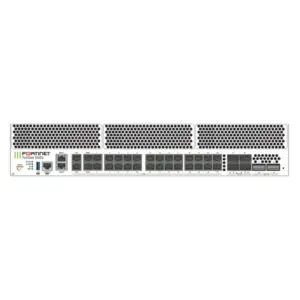
The Fortinet FortiVoice Gateway FVG-GS16 is a purpose-built analog telephone adapter gateway for organizations that need to connect conventional analog telephones, fax machines and compatible analog devices to a modern FortiVoice communications platform. Its defining capability is straightforward: sixteen FXS ports provide sixteen analog extension connections, while two 10/100 Ethernet interfaces connect the gateway to the IP network. This makes the unit especially useful where a business wants to preserve working analog endpoints, room phones, service phones or fax equipment while moving call control and administration toward an IP-based FortiVoice environment.
For Ugandan enterprises, the purchasing decision is often less about replacing every telephone and more about controlling migration risk. Existing buildings may already contain extensive copper cabling, remote rooms may rely on simple analog handsets, and operational teams may prefer a phased transition rather than a disruptive all-at-once replacement. The FVG-GS16 addresses that practical middle ground. It allows sixteen analog endpoints to be represented as extensions within a supported FortiVoice deployment and can be discovered or added for management from compatible FortiVoice systems.
The product is relevant to corporate offices, education facilities, healthcare administration, hotels, government departments, industrial sites and branch networks where analog endpoint continuity remains important. Procurement teams should confirm the FortiVoice controller model, firmware compatibility, number and type of analog endpoints, network topology, power arrangements and support requirements before ordering. FourTeck can help review these points so the supplied bill of materials matches the intended deployment rather than treating the gateway as an isolated appliance.
Instant Specifications & Procurement Fact Rail
FVG-GS16
16 × FXS
2 × 10/100 Ethernet
Analog extension gateway
Contact for current Uganda supply
FortiCare coverage available by contract
The fact rail summarizes the attributes that most directly influence procurement. FVG-GS16 is the model identifier, and its sixteen FXS interfaces are intended for sixteen analog extensions. The two Ethernet interfaces provide network connectivity to the FortiVoice environment. Buyers should distinguish FXS from FXO and PRI requirements before placing an order: FXS ports are used to serve analog subscriber devices such as telephones or fax machines, whereas other gateway families address different line types. This distinction is fundamental because a gateway with the wrong interface type cannot simply be substituted during installation.
Current stock position, lead time, commercial warranty handling and support-contract duration should be confirmed on the quotation because these factors can vary with order timing, quantity and sourcing route. The official ordering information identifies a 24×7 FortiCare contract option for the FVG-GS16. Organizations with formal maintenance requirements should decide whether support coverage must be included in the original purchase order and align the support term with internal asset-management policy.
Operational Product Architecture & Overview
The FVG-GS16 sits at the boundary between analog endpoint wiring and an IP communications network. On one side are sixteen FXS connections. Each port provides the subscriber-side interface required by a compatible analog telephone or fax endpoint. On the other side, the gateway uses Ethernet to participate in the network and communicate with the FortiVoice system. This architecture enables organizations to preserve endpoint behavior familiar to users while centralizing call-control functions in a FortiVoice deployment.
A common procurement trigger is the discovery that a site cannot economically replace every analog device during a communications refresh. Some endpoints may be installed in lifts, reception areas, guard posts, warehouses, classrooms, hotel rooms, workshops or low-traffic locations where a basic handset remains entirely adequate. Other sites retain fax devices because a business process or external counterparty still depends on them. Re-cabling such locations for new endpoint types can exceed the cost of the voice equipment itself. A sixteen-port FXS gateway gives architects a controlled migration path: keep selected analog devices, connect them through the gateway and integrate those extensions with the wider FortiVoice environment.
Management integration is another important architectural advantage. Supported FortiVoice systems can discover FXS gateways on the network, and administrators can also add them manually. Once associated, gateway extensions can be managed as part of the phone-system environment. This reduces the operational fragmentation that can occur when an organization uses unrelated analog adapters with separate management methods. Administrators can apply gateway configuration, inspect device information and coordinate firmware operations through the supported FortiVoice workflow.
The network design still deserves careful attention. Voice quality and manageability depend on stable IP connectivity between the gateway and the controlling communications system. Procurement teams should therefore include switch ports, VLAN design, addressing, cabling, power availability and physical placement in the deployment plan. Where the analog cabling terminates in a telecommunications room, placing the gateway close to that termination point can simplify patching and fault isolation. Where analog endpoints are spread across buildings, multiple gateways may be operationally cleaner than extending large quantities of copper back to one location.
The FVG-GS16 should not be evaluated as a generic high-throughput data appliance. Its purpose is voice gateway functionality and analog extension integration. The most meaningful capacity figure is the sixteen FXS ports rather than a data-center throughput benchmark. Buyers should size around endpoint count, call behavior, site layout and resilience requirements. A site needing twelve analog extensions may choose one unit with spare capacity; a site needing twenty or more should evaluate multiple units or the appropriate higher-port model, while also checking the management capacity of the FortiVoice system.
Operational risk is reduced when the design documents every analog port, extension number, physical endpoint, cable route and business owner. This is particularly useful during cutover because technicians can test dial tone, inbound and outbound calling, fax behavior where applicable, caller identity behavior and emergency calling policies in a structured sequence. The gateway becomes part of a managed communications architecture rather than an undocumented adapter hidden in a cabinet.
Enterprise Business Outcomes & Value Analysis
1. Performance & Call-Path Integrity
By dedicating sixteen FXS interfaces to analog extensions, the gateway provides a structured connection point instead of relying on a collection of unrelated adapters. The practical outcome is simpler troubleshooting, consistent port mapping and a clearer relationship between physical endpoints and managed extensions. Performance planning should focus on call concurrency, LAN stability, codec and system settings, and the quality of analog cabling rather than raw packet-throughput figures.
2. System Reliability & Service Continuity
The dual network connections and FortiVoice ecosystem integration support a professionally managed deployment. Reliability is strengthened further by correct power design, protected network switching, configuration backups, tested firmware procedures and documented recovery steps. Buyers should treat the gateway as part of the voice service chain and provide the same power and network discipline applied to other communications equipment.
3. Network & Infrastructure Scalability
Sixteen-port increments make capacity planning understandable. Additional analog demand can be mapped by site and building, allowing planners to determine whether spare ports, another GS16 or a different FortiVoice gateway model best fits the expansion. This avoids overbuilding the initial project while preserving a clear growth path.
4. Enterprise Security & Administrative Control
Centralized management within supported FortiVoice environments helps administrators control gateway association, configuration and firmware processes. Security still depends on the surrounding design: management access should be restricted, administrative credentials protected, firmware maintained and voice-network segmentation aligned with organizational policy.
5. Centralized Management & Operational Simplicity
Auto-discovery and manual enrollment options simplify deployment workflows. Administrators can manage gateway extensions through FortiVoice rather than maintaining an entirely separate endpoint-management framework. This can reduce training overhead and shorten troubleshooting when support teams already operate FortiVoice.
6. Total Cost of Ownership & Migration Efficiency
The largest economic benefit may come from retaining serviceable analog endpoints and existing copper runs. Instead of replacing every device immediately, organizations can prioritize investment where IP endpoints provide the greatest value. The gateway can therefore support phased modernization and reduce unnecessary endpoint disposal, installation labor and re-cabling expense.
7. Procurement Standardization
Using a defined Fortinet gateway model with a documented ordering code gives procurement teams a repeatable specification for branches and projects. Standardization improves bill-of-materials review, spare planning, support-contract administration and deployment documentation across multiple sites.
Key Hardware & Software Highlights
The FVG-GS16 combines a focused physical interface set with FortiVoice management capabilities. The core hardware characteristic is sixteen FXS ports. These are subscriber interfaces, so they are selected when the requirement is to connect analog devices as extensions. This should be verified against the project drawings because confusing FXS and FXO requirements is one of the most expensive avoidable errors in voice-gateway procurement.
16 FXS interfaces
Maps sixteen analog devices to sixteen extension connections, supporting a compact branch or departmental analog footprint.
Dual 10/100 Ethernet
Provides network connectivity for integration with the FortiVoice communications environment and supports flexible physical network design.
FortiVoice discovery
Supported FortiVoice systems can discover compatible FXS gateways, reducing manual onboarding effort during deployment.
Managed extensions
Each analog port corresponds to an extension, making port-to-user documentation and administration easier to structure.
Firmware workflow
FortiVoice management documentation provides procedures for applying configuration and managing firmware, supporting controlled lifecycle operations.
Support-contract option
An official 24×7 FortiCare contract ordering option is listed for the model, useful for organizations requiring formal vendor support coverage.
From an operational perspective, these capabilities are more valuable when accompanied by disciplined configuration. Administrators should create a port schedule that records gateway name, port number, extension, endpoint type, physical location and responsible department. Network teams should record switch ports and VLAN assignments. Service teams should retain the approved firmware version and configuration baseline. This converts the gateway from a simple hardware component into a well-controlled part of the enterprise communications estate.
Technical Specifications Ledger
| Item | FVG-GS16 Detail | Procurement Meaning |
|---|---|---|
| Product family | FortiVoice Gateway | Designed for integration with FortiVoice communications environments. |
| Model | FVG-GS16 | Use this identifier in the bill of materials and quotation. |
| Voice interfaces | 16 × FXS | Supports sixteen analog subscriber endpoint connections. |
| Mapped extensions | 16 analog extensions | Plan extension numbering and endpoint assignments for each port. |
| LAN interfaces | 2 × 10/100 Ethernet | Reserve appropriate Ethernet switch connectivity. |
| Primary function | FXS analog voice gateway | Confirm that the project requires subscriber-side analog interfaces rather than FXO or PRI. |
| Management | Supported FortiVoice discovery and management workflow | Verify the controlling FortiVoice system and firmware before deployment. |
| Support option | 24×7 FortiCare contract option listed by manufacturer | Specify support duration on the purchase request when required. |
| Dimensions | Confirm against current manufacturer data sheet / supplied hardware revision | Do not finalize cabinet clearance from assumptions. |
| Power input / draw | Confirm on current data sheet and quotation | Required for UPS sizing and protected power planning. |
| Environmental limits | Confirm current manufacturer specification | Validate room temperature, ventilation and installation conditions. |
| Compliance | Confirm region-specific documentation for project | Important for regulated and tender-driven procurement. |
Only specifications that can be supported confidently should be treated as fixed procurement data. The sixteen FXS ports, sixteen analog extension mapping and two 10/100 network interfaces are established model characteristics. Physical dimensions, exact power consumption, environmental ratings and region-specific compliance markings should be validated from the current manufacturer documentation associated with the offered hardware revision before a tender or installation drawing is frozen. This approach prevents an outdated document or reseller listing from becoming an engineering assumption.
The same discipline applies to compatibility. Fortinet documentation identifies management support for FortiVoice systems at specified platform tiers, but product generations change over time. A buyer should therefore provide the exact FortiVoice appliance or virtual-machine model and current software release when requesting a quote. FourTeck can use that information to check the intended design and flag obvious mismatches before dispatch.
Configuration & Sizing Worksheet
Step 1 — Count the analog workload
List every analog telephone, fax machine or compatible analog endpoint that must remain in service. Separate active requirements from future reserve. If the project needs fourteen ports today, a sixteen-port gateway provides two spare positions. If it needs seventeen, one unit is insufficient and the design should be reviewed for a second gateway or a different capacity option. Also identify endpoints with unusual requirements so they can be tested before broad rollout.
Step 2 — Map physical locations and cabling
Record where each analog cable terminates. In older buildings, cable routes may converge in a legacy PBX room. In newer campuses, they may terminate in several telecommunications closets. The physical distribution can determine whether one centralized gateway or several local gateways produces a cleaner design. Include patch panels, labeling, surge considerations and cable condition in the survey.
Step 3 — Validate network and protected power
Reserve network switch connectivity and confirm addressing, VLAN and management-access policy. Voice equipment should normally be placed on protected power appropriate to the organization’s continuity requirements. Confirm the current unit’s power specification before sizing a UPS. If the site depends on analog phones during utility interruptions, the entire call path—including gateway, switches, FortiVoice system and upstream connectivity—must remain powered, not only the gateway.
Step 4 — Confirm platform and support compatibility
Provide the exact FortiVoice model, software release and deployment type. Determine whether the project requires a FortiCare support contract and for how long. Support should be budgeted deliberately rather than discovered after installation. If the organization has change-control windows or strict maintenance procedures, include firmware staging and rollback planning in the implementation scope.
Step 5 — Build the quote package
A complete quote request should state quantity, destination city, FortiVoice controller model, required analog port count, endpoint types, support term, expected delivery window and whether pre-configuration assistance is required. For tender projects, add the requested validity period, tax treatment, delivery terms and documentation requirements. This information helps the supplier return a commercially useful response rather than a bare hardware price that later requires multiple revisions.
Step 6 — Define acceptance tests
Before deployment, agree how the installation will be accepted. Typical tests include gateway discovery, extension registration, calls between analog and IP extensions, inbound and outbound call routing where applicable, fax testing, caller identity behavior, transfer behavior and recovery after reboot. Documenting these tests makes handover measurable and gives support teams a known-good baseline.
Deployment Scenarios & Industry Use Cases
Large Enterprise and Multi-Site Networks
A multi-site enterprise may have modern IP phones at headquarters while branch offices still contain analog handsets in warehouses, guard stations, workshops or utility rooms. The FVG-GS16 can provide a standardized analog-extension layer at selected branches. Central teams can document each gateway by site and assign port ranges consistently. This is particularly useful when a phased communications program must operate across different building ages and cabling standards.
Financial and Banking Institutions
Banks and financial organizations often prioritize change control, predictable support and strong documentation. Analog endpoints may remain in back-office areas or specialist facilities even after customer-facing communications are modernized. A controlled gateway deployment allows legacy endpoint requirements to be isolated and documented. Procurement should include firmware governance, administrative-access policy, protected power, spare strategy and support-contract coverage. Any regulated recording or emergency-calling requirement should be validated at the full system level rather than assumed from the gateway alone.
Educational and Campus Networks
Schools, universities and training campuses frequently contain many buildings with existing copper telephone wiring. Replacing every endpoint and cable run may not be practical within one budget cycle. FVG-GS16 units can be positioned where analog cabling terminates, allowing selected classrooms, offices, reception points or security posts to remain operational as analog extensions while central communications services evolve. Campus teams should survey cable condition and label every circuit before migration to reduce troubleshooting time.
Government and Public-Sector Procurement
Government projects commonly require formal bills of materials, documented model numbers, warranty procedures, delivery records and technical acceptance. The FVG-GS16 offers a clearly defined sixteen-port FXS role that can be incorporated into such schedules. Tender documents should specify the intended FortiVoice platform, required support term and whether installation, configuration, training or only supply is expected. Compliance documentation should be requested for the exact offered unit and project rather than inferred from generic product-family information.
Hospitality and Property Operations
Hotels, serviced properties and large facilities may have numerous room or service-area analog phones connected through established copper. A gateway approach can preserve those endpoint investments while integrating communications with a centralized system. Capacity should be planned by floor or telecommunications room, and room-number-to-port mappings should be kept accurate so maintenance teams can resolve faults quickly without tracing circuits from scratch.
Technical Deep Dive 1: Voice Processing & Gateway Architecture
The FVG-GS16 performs a specialized boundary function. Analog subscriber signaling exists in a fundamentally different domain from IP-based call control. The gateway presents FXS interfaces to analog endpoints and connects upstream through Ethernet, allowing those endpoints to participate in the FortiVoice communications environment. For the buyer, the architectural significance is that legacy devices can be retained without asking the central phone system to provide sixteen built-in analog subscriber ports.
Sizing therefore starts with ports and service behavior. Sixteen physical FXS interfaces establish the hard endpoint ceiling for one unit. Network engineers should then consider call patterns, voice-network quality, switch design and the FortiVoice system’s overall capacities. Unlike a firewall or aggregation switch, the gateway is not selected primarily by gigabit throughput. Its value lies in predictable conversion and management of analog extension connections.
The dual Ethernet interfaces provide network attachment, but buyers should not interpret the presence of two ports as a guarantee of every redundancy behavior they may associate with data-center appliances. The intended topology and supported failover behavior should be confirmed in the relevant FortiVoice documentation for the deployed software version. This distinction matters because resilient voice service depends on end-to-end design: switch redundancy, gateway power, call-control availability, WAN paths and carrier services may all influence continuity.
Technical Deep Dive 2: Software Ecosystem, Firmware Security & Operational Control
FortiVoice management integration is a central operational reason to choose the FVG-GS16 in a FortiVoice environment. Supported systems can discover the gateway, while manual addition remains available when required. Administrators can work with gateway extensions and use documented management actions for configuration and firmware. This creates a more coherent operational model than deploying a mixture of unrelated analog adapters with separate credentials, interfaces and update procedures.
Firmware governance should be treated as a formal process. Before an update, teams should review release guidance, confirm compatibility with the FortiVoice system, back up relevant configuration, schedule a maintenance window and define rollback steps. After the change, test representative analog extensions and any fax workflows. Management access should be limited to authorized administrators and placed behind appropriate network controls. Default or weak credentials should never remain in production.
Operational control also means maintaining accurate asset records. Record serial number, purchase date, support entitlement, firmware release, IP address, switch location, gateway name and port assignments. These details shorten support cases and reduce the risk of an engineer changing the wrong device during maintenance. Where multiple sites use the same model, adopt a naming standard that includes country, city, site and gateway sequence.
Technical Deep Dive 3: Availability, Redundancy & Recovery Planning
A voice gateway can be operationally important even when it serves only a small number of endpoints. A security desk phone, reception handset or service-area line may have a higher business impact than its port count suggests. Availability planning should therefore classify endpoints by criticality. High-priority analog devices may justify spare hardware, protected power and faster support coverage.
Recovery planning should document how a failed gateway is replaced. Keep the approved configuration, extension mapping, firmware baseline and network settings accessible to the support team. If a cold spare is maintained, periodically verify that it is still compatible with the production FortiVoice release and that required accessories are stored with it. A spare that cannot be commissioned because documentation or cabling is missing provides little practical resilience.
Disaster recovery must consider dependencies beyond the appliance. If the building loses power, the analog phone will not remain useful unless the gateway and supporting network infrastructure remain powered. If the WAN is unavailable, call behavior depends on the wider FortiVoice topology and survivability design. Procurement teams should therefore avoid treating a gateway purchase as a complete continuity solution. It is one component in a layered communications architecture.
Pre-Purchase Buyer Gap Checklist
Are there hidden recurring costs? The hardware should be quoted separately from any desired FortiCare support coverage and professional services. Confirm what is included in the commercial offer: appliance, power accessories, support term, delivery, taxes, configuration and installation. This prevents a low headline price from becoming an incomplete project budget.
Will it work with the existing FortiVoice system? Do not rely on product-family familiarity alone. Provide the exact FortiVoice model and software version for compatibility review. Platform generations and support matrices change, and a precise check is more reliable than assuming every FortiVoice appliance manages every gateway release.
Does sixteen ports mean sixteen analog devices? The GS16 is documented with sixteen FXS ports mapped to sixteen analog extensions. Count the actual devices and include spare capacity. If a project has sixteen active devices and expects growth, buying exactly sixteen ports leaves no local reserve.
Can it replace an FXO gateway? No assumption should be made here. FXS and FXO serve different electrical and telephony roles. If the requirement is to connect analog subscriber devices, FXS is relevant. If the requirement concerns analog trunk lines, the design must be reviewed for the correct gateway type.
What about fax compatibility? The FortiVoice FXS gateway is positioned for traditional analog phones and fax machines, but real-world fax reliability can depend on the end-to-end voice environment, configuration, carrier path and fax device. Test representative workflows before migrating a large fax estate.
Will it fit the cabinet and UPS? Confirm physical dimensions, mounting approach, power input and maximum consumption from the current manufacturer documentation for the offered hardware. Cabinet depth, ventilation, socket type and UPS runtime should be checked before shipment, especially at remote branches where installation resources are limited.
How should lifecycle risk be handled? Ask for current orderability, support status and available support term at quotation time. Keep firmware and support-entitlement records after purchase. If the gateway serves critical analog endpoints, consider a spare strategy and document replacement procedures before a failure occurs.
Can existing copper cabling be reused? Often the gateway is purchased precisely to preserve existing analog wiring, but cable condition matters. Old joints, poor labeling, excessive runs or electrical interference can create faults that appear to be gateway problems. A cable survey and tone/continuity verification can save substantial commissioning time.
Uganda Procurement & Delivery Logistics
FourTeck supports Uganda organizations that need a structured commercial and technical path for FortiVoice gateway procurement. A useful request begins with the exact model, quantity and delivery city, followed by the FortiVoice controller details and desired support coverage. For FVG-GS16 projects, include the number of analog endpoints and whether they are telephones, fax devices or other compatible equipment. This lets the quote process address the actual deployment rather than only the appliance price.
Order processing can include bill-of-materials review, confirmation of current supply position, commercial documentation and coordination of delivery requirements. Lead times can vary with stock, quantity and sourcing route, so the quotation should be treated as the authoritative statement for the specific order. Buyers working to a fixed cutover date should state that date early enough to allow for logistics, internal purchase approvals and technical staging.
Pre-configuration planning may include addressing conventions, extension mapping, firmware baseline review and deployment documentation, depending on the agreed service scope. For remote sites, staging before shipment can reduce the amount of work required on location. The customer should still provide accurate network details and confirm that the destination has suitable power, Ethernet connectivity and analog patching available.
Warranty and support handling should also be defined before purchase. If FortiCare is required, specify the desired term and service level in the request. Retain serial-number and entitlement records after delivery. For institutional procurement, request any needed invoice, delivery, tax and compliance documents as part of the commercial workflow so the shipment and acceptance process matches internal controls.
Local Coverage Across Uganda
Projects in Kampala can be planned for headquarters, branch, hospitality and campus environments where analog extension migration is common. Entebbe deployments may include offices, service organizations and facilities requiring dependable legacy endpoint integration. Jinja projects can cover industrial, educational and commercial sites with distributed analog wiring. Mbarara organizations can use the same structured approach for regional offices and institutional communications, while Gulu deployments may benefit especially from careful pre-shipment staging where specialist installation resources must be coordinated in advance.
Regardless of city, the most effective procurement process is to provide site count, endpoint count, FortiVoice model, support requirement and expected deployment date. For multi-city rollouts, gateways can be standardized with consistent naming, port schedules and acceptance tests. This creates repeatable documentation and helps central support teams troubleshoot branches without relying on local knowledge alone.
Cross-Border & Regional Supply Chains
Organizations operating across East Africa, the Gulf and wider African markets often benefit from a common equipment standard and coordinated sourcing process. FourTeck regional resources can support planning through Uganda, Kenya, Africa, UAE and Kuwait. Regional procurement should still account for local import processes, delivery terms, support entitlement and project documentation in each destination.
For a multinational rollout, standardize the technical template but validate each country’s commercial and regulatory requirements separately. Keep model numbers, support terms and firmware baselines consistent where practical. This simplifies spares, engineering training and configuration control while allowing local logistics to be managed according to the destination market.
Related FortiVoice Products & Planning Links
A complete communications bill of materials may include more than the FVG-GS16. Buyers with smaller analog requirements can evaluate the FortiVoice FVG-GS04, while projects requiring a larger FXS footprint can review the FortiVoice FVG-GS24. Requirements involving analog trunk connectivity should be reviewed against the FortiVoice FXO gateway range, and PRI connectivity should be assessed through the FortiVoice PRI gateway range.
For the broader communications design, review FortiVoice phone systems and FortiFone endpoints. The correct combination depends on extension count, trunk requirements, site topology, resilience targets and existing devices. FourTeck can review the bill of materials as a system so gateway quantities, controller capacity and endpoint choices are aligned.
FourTeck Technical Service Capabilities
Technical procurement support begins with engineering validation. FourTeck can review the intended FortiVoice platform, analog endpoint count and gateway role to identify obvious specification mismatches before ordering. This is particularly important when a project description uses broad terms such as analog gateway without distinguishing FXS, FXO and PRI requirements.
Bill-of-materials verification can include gateway quantities, support-contract requirements and related communications components. Where staging is included in the agreed scope, teams can prepare deployment documentation, review firmware requirements and organize port or extension schedules before shipment. Pre-shipment firmware work should always be coordinated with the customer’s production version and change policy rather than applying updates without context.
Post-sales technical support can assist with deployment questions, configuration review and escalation preparation. Effective support is faster when the customer maintains serial numbers, firmware versions, configuration backups, topology diagrams and a clear description of the fault. For complex issues, this evidence helps distinguish endpoint, cabling, network, gateway and call-control problems.
Extended Technical FAQ
1. What exactly does the FortiVoice FVG-GS16 do?
The FVG-GS16 is a FortiVoice FXS gateway with sixteen ports mapped to sixteen analog extensions. Its role is to let traditional analog telephones, fax machines and other compatible analog subscriber devices connect into a FortiVoice communications environment. It is useful when an organization wants to modernize call control without immediately replacing every analog endpoint or existing copper run. The gateway connects to the network through two 10/100 Ethernet interfaces. Before ordering, confirm that the requirement is truly for FXS subscriber ports, because analog trunk connectivity and PRI connectivity use different gateway types.
2. Can the FVG-GS16 be managed by FortiVoice?
Yes, supported FortiVoice environments provide management workflows for FXS gateways. Documentation describes automatic discovery as well as manual addition, and each GS16 port maps to an analog extension. Administrators can work with gateway configuration and firmware through documented FortiVoice processes. Compatibility should nevertheless be checked against the exact FortiVoice appliance or virtual-machine model and software release used by the customer. Product generations and platform support can evolve, so the current deployment should be validated rather than relying only on older project experience.
3. Does the gateway require additional licensing?
Licensing and support should be reviewed in the context of the complete FortiVoice deployment. The manufacturer lists a 24×7 FortiCare contract option for the FVG-GS16, but the commercial requirement for a specific customer depends on the desired support level and the surrounding FortiVoice system. Ask for the appliance, support coverage and any professional services to be itemized separately on the quotation. This makes recurring and one-time costs visible and helps procurement compare offers on an equivalent basis. If the organization already holds FortiVoice entitlements, provide those details during review.
4. Can I connect fax machines to the FVG-GS16?
Fortinet positions its FXS gateway capability for traditional analog phones and fax machines, so fax connectivity is a recognized use case. However, successful fax operation depends on more than the physical FXS port. The complete path—including configuration, codec behavior, network conditions, upstream services and the fax device itself—can affect reliability. For a business that depends heavily on fax, test representative devices and destinations during a pilot. Do not wait until full cutover to discover that a specific legacy machine or external route needs configuration adjustment.
5. Is FVG-GS16 the right model for analog telephone lines from a carrier?
Not necessarily. The GS16 provides FXS interfaces intended for analog subscriber endpoints. Carrier-provided analog trunk lines normally involve a different interface role, so the requirement must be identified correctly before purchase. If a project brief says only analog lines, ask whether those lines terminate at telephones or arrive from a telecommunications provider. That single distinction can determine the correct gateway family. FourTeck can review the topology and recommend that the bill of materials be corrected before ordering if the requested interface type does not match the intended connection.
6. How should we plan warranty and hardware replacement?
Start by defining the required support coverage in the purchase order and keeping serial-number and entitlement records after delivery. For critical sites, consider whether a spare unit is justified by the business impact of losing sixteen analog extensions. A replacement plan should include configuration backup, firmware baseline, network settings, extension-to-port mapping and physical cabling labels. This allows a technician to replace hardware methodically rather than rebuilding the site from memory. Warranty processing terms and replacement logistics should be confirmed on the quotation for the Uganda order.
7. Can FourTeck help with configuration before delivery?
Pre-configuration and staging requirements can be discussed as part of the project scope. Useful preparation may include reviewing the FortiVoice platform, defining gateway naming, documenting analog extension mappings, checking firmware alignment and preparing a deployment checklist. The customer should provide accurate network and extension information so staging reflects the production environment. Even when pre-configuration is performed, on-site acceptance testing remains important because analog cabling, switch configuration and endpoint behavior cannot be fully validated away from the destination site.
8. How many FVG-GS16 units do we need?
Divide the required analog endpoint count by sixteen, but do not stop at the arithmetic. Consider physical building distribution, spare capacity and criticality. Thirty analog devices could theoretically be served by two sixteen-port gateways, but if those devices are split across distant buildings, the cabling design may favor additional local gateways. Conversely, twelve devices in one telecommunications room may fit neatly on a single unit with four spare ports. Also confirm that the FortiVoice system can manage the planned gateway count and extension capacity.
9. What should be checked before installation day?
Confirm delivery contents, model and serial numbers, support entitlement, approved firmware, IP addressing, switch ports, VLAN settings, protected power and analog patching. Label every analog circuit and prepare an extension-to-port schedule. Verify that administrators have the necessary FortiVoice access and that configuration backups exist. Define acceptance tests for calling and fax workflows where applicable. If the installation is at a remote branch, ensure the technician has patch leads, labeling materials, console or management access as required, and contact details for the central voice administrator.
10. What information should we send for an accurate Uganda quotation?
Send the product name FVG-GS16, required quantity, destination city, organization name, expected purchase timing and FortiVoice system model. Add the number and type of analog endpoints, required support term, whether installation or staging is needed, and any tender documentation requirements. If the project spans Kampala, Entebbe, Jinja, Mbarara, Gulu or multiple locations, list quantities by site. A structured request allows the supplier to address logistics, support and technical fit together and reduces the number of commercial revisions needed before a purchase order can be issued.
Request a FortiVoice FVG-GS16 Uganda Quote
If your project needs sixteen analog extensions integrated with a FortiVoice environment, send FourTeck the required quantity, destination, FortiVoice system model, endpoint count and preferred support term. The team can review the bill of materials, clarify interface requirements and coordinate the commercial and delivery process. For multi-site projects, include a site-by-site quantity plan so staging, labeling and logistics can be structured consistently.
A precise request helps avoid the two most common procurement problems: ordering the wrong analog interface type and underestimating the number of ports required after growth and spare capacity are considered. Include any deadline, tender condition, warranty expectation or pre-configuration requirement at the beginning of the process.
Reviews
There are no reviews yet.