
Yealink Management Cloud Service Uganda – Centralized Enterprise Device & Workspace Management
Yealink Management Cloud Service (YMCS) is a cloud-based administration platform built to give enterprise IT teams, managed service providers and distributed organisations a practical way to deploy, configure, monitor, maintain and troubleshoot compatible Yealink communications devices from a centralized interface. Instead of treating every phone, meeting-room endpoint, room panel or supported USB device as an isolated asset, administrators can organize estates by site, device type and operational requirement, then carry out repeatable management tasks across many endpoints. For organisations operating several offices in Uganda, this changes endpoint administration from a collection of manual interventions into a controlled operational process.
The service is particularly relevant when a communications estate has grown beyond what a small IT team can efficiently manage device by device. Typical challenges include inconsistent firmware, configuration drift, uncertainty about endpoint status, delayed fault discovery, repeated travel to branch offices, and difficulty proving that planned maintenance was completed. YMCS brings these activities into a web-based management environment with device inventory, firmware and resource management, configuration, sites, scheduled tasks, operating-state visibility, diagnostics, alarms and quality information. Workspace capabilities extend the management model to rooms, room equipment, calendars, digital signage and operational insight where the selected service plan and endpoints support those functions.
For procurement teams, YMCS should be treated as an operational service rather than a physical appliance. The correct purchase depends on the number and type of endpoints, required management functions, subscription tier, deployment region, integration requirements and support scope. FourTeck helps Uganda customers translate those requirements into a quote that can include licensing guidance, compatibility review, deployment planning and endpoint staging.
Instant Procurement Facts
Yealink Management Cloud Service (YMCS)
Public cloud management service
Compatible Yealink phones, room and workspace devices
Web-based centralized operations
Subscription / quote based
FourTeck quotation and deployment guidance
Unlike a hardware purchase where interface counts and rack dimensions dominate the decision, YMCS procurement is driven by managed endpoint count, device family, required feature tier and operational scope. Buyers should therefore prepare an endpoint inventory before requesting a final quote. Include model names, quantities, firmware baselines where known, office locations, room-system types, administrative ownership and the desired subscription period. This allows licensing to be aligned with the actual estate. Warranty is normally attached to physical Yealink endpoints rather than the cloud service itself; service entitlement, subscription term and support scope should be confirmed on the quotation. Network access, firewall rules and device compatibility should also be validated before rollout.
Operational Architecture and Management Model
YMCS is designed around centralized control of distributed endpoints. Compatible devices establish management connectivity to the service, allowing administrators to view inventory and operational state and, according to device capability and licensed function, perform configuration, firmware, resource, diagnostic and control tasks. This model is useful because the device does not need to be physically near the administrator. A Kampala IT team can therefore maintain compatible endpoints deployed in Entebbe, Jinja, Mbarara or Gulu without making every routine change a field visit.
At the device-management layer, administrators can group endpoints into sites and apply operational actions in bulk. Firmware and resource management helps reduce version fragmentation. Scheduled tasks allow disruptive maintenance to be planned outside normal working hours. Alarm functions help administrators identify abnormal conditions rather than waiting for users to report every issue. Diagnostic information can shorten the path from complaint to probable cause, especially when the support team needs to establish whether a problem is local to one endpoint, associated with a configuration change, or visible across a wider group.
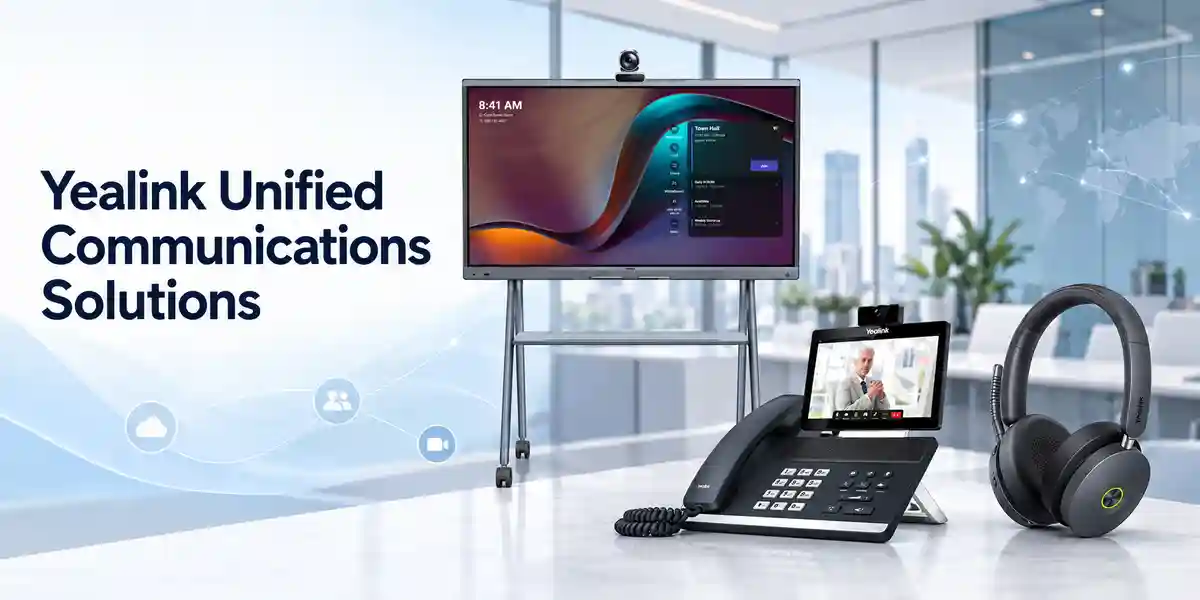
For phone estates, bulk management is one of the central operational advantages. Administrators can manage firmware and device resources across groups rather than repeating the same action manually. Real-time alarms can be used to surface issues such as poor call quality or unsuccessful firmware operations, while notification workflows help keep support personnel aware of conditions that require attention. Scheduled maintenance supports controlled change windows, and task results provide an operational record that can be reviewed after execution.
Workspace management broadens the platform beyond conventional desk phones. Supported room systems and workspace devices can be represented in a centralized environment so that administrators can inspect room status, equipment information, alerts and operational data. Depending on the plan and deployment, functions can include remote control, workspace visualization, digital signage, calendar synchronization, room availability, analytics and integrations. This is particularly valuable for organisations standardizing meeting spaces across headquarters, branches, training centres or customer-facing facilities.
Security architecture matters because a management platform can perform privileged actions on endpoints. Yealink describes YMCS as built on Microsoft Azure infrastructure and documents layered controls across physical, network, application and data domains. Administrators should still apply their own governance: use named accounts, assign roles according to job responsibility, restrict administrative access, review audit information, protect integration credentials and document who can execute remote actions. Cloud management does not remove the need for internal change control; it makes disciplined change control easier to execute consistently.
Network readiness is another architectural dependency. Endpoints and administrative clients need appropriate access to the required Yealink management domains and service ports. Firewall and proxy policies should be reviewed before a large migration. Where organisations use tightly controlled egress policies, the network team should validate the current Yealink network-requirement documentation during deployment because service endpoints and requirements can change. This preparation avoids a common rollout failure in which licensing and device assignment are complete but endpoints cannot establish reliable management connectivity.
Enterprise Business Outcomes and Value Analysis
1. Operational Consistency
Centralized configuration, firmware and resource workflows help reduce endpoint-to-endpoint variation. Standardization matters in voice and meeting estates because configuration drift can produce support cases that are difficult to reproduce. Grouped administration gives IT teams a clearer method for maintaining approved baselines.
2. Service Reliability
Alarms, operating-state visibility and diagnostic tools help teams discover and investigate issues sooner. The platform does not replace resilient LAN, WAN, voice or meeting infrastructure, but it can improve the speed and discipline with which endpoint faults are identified and handled.
3. Multi-Site Scalability
Site organization and bulk operations allow a small administration team to support a larger estate. Adding branches does not have to mean duplicating every routine management activity. This is useful for banks, retailers, education groups, government agencies and enterprises with geographically distributed offices.
4. Controlled Access
Multi-level administration and authorization functions help organisations divide responsibility. A central team can retain governance while delegated administrators or service partners receive appropriate operational access. Buyers should map roles before rollout so privileges follow internal responsibility boundaries.
5. Simpler Maintenance
Scheduled tasks and remote operations reduce the need to touch every endpoint manually. Maintenance can be grouped by site or device class and performed during approved windows. This can reduce travel, repetitive labour and disruption, especially when endpoints are deployed across multiple districts.
6. Lifecycle Cost Control
The strongest cost case usually comes from reduced administration effort and fewer avoidable site visits. Subscription cost should be compared with the labour required for manual provisioning, patching, fault isolation and asset visibility. The larger and more distributed the estate, the more important centralized operations become.
7. Workspace Visibility
For supported room and workspace deployments, administrators can bring room equipment, calendar status, alerts and operational information into a common environment. This creates a more coherent operating model for meeting spaces and shared workplace resources.
8. Integration Readiness
YMCS supports integration scenarios involving Microsoft services, ServiceNow and open interfaces. Integration should be scoped carefully: confirm the required plan, regional availability, authentication model, endpoint support and ownership of the external platform before committing to a workflow.
Key Platform Highlights
| Capability | Operational Purpose |
|---|---|
| Device inventory | Maintain centralized visibility of managed endpoint identity, model and operating information. |
| Firmware and resources | Coordinate approved software and resource distribution across compatible devices. |
| Configuration management | Reduce manual configuration and support consistent operational baselines. |
| Scheduled tasks | Execute planned maintenance in controlled windows and review task outcomes. |
| Diagnostics and alarms | Surface abnormal conditions and provide administrators with information for faster investigation. |
| Quality visibility | Support investigation of communication quality concerns where compatible reporting is enabled. |
| Room management | Centralize supported room equipment, status, configuration and alerts. |
| Open interfaces | Enable approved third-party workflows through authenticated service interfaces where licensed. |
Because YMCS is a service, there is no appliance ASIC, rack unit, local backplane or fixed power supply to specify. Its relevant technical architecture consists of cloud service availability, endpoint connectivity, management protocols, authentication, role controls, supported device firmware, service tier and integration interfaces. Procurement documents should describe those dependencies rather than importing hardware specifications that do not apply to a cloud platform.
Technical Specifications Ledger
| Specification | YMCS Detail | Procurement Note |
|---|---|---|
| Platform type | Cloud-based management service | No local rack appliance required for the standard cloud service. |
| Infrastructure basis | Microsoft Azure-based service architecture | Confirm applicable regional service and data handling requirements. |
| Administration | Web-based management | Administrative workstations require appropriate network access. |
| Endpoint scope | Compatible Yealink phone, room, workspace and supported peripheral families | Support varies by model, firmware and function; validate the estate list. |
| Core management | Inventory, configuration, firmware/resources, sites, scheduled tasks, diagnostics and alarms | Available functions depend on service tier and endpoint. |
| Workspace functions | Room management, status, device operations, alerts, analytics and digital signage capabilities | Scope varies by subscription and supported room hardware. |
| Integrations | Microsoft 365/Exchange scenarios, Microsoft Teams, Microsoft Entra ID, Microsoft Places and ServiceNow scenarios | Confirm tenant, plan, region and prerequisite licensing. |
| Open interface | Authenticated HTTPS service interface for supported management functions | Application credentials and rate limits apply. |
| Common network access | Yealink documents management domains and TCP service ports including HTTPS | Use the current vendor network-requirement document during implementation. |
| Physical dimensions | Not applicable to cloud service | Endpoint dimensions remain device-specific. |
| Power draw | Not applicable to cloud service | Budget PoE or local power for managed endpoints separately. |
| Subscription tiers | Device and room service tiers with feature differences | Select by endpoint type and required functions, not simply by device count. |
The specification ledger should be read as a procurement baseline rather than a substitute for a compatibility check. Cloud platforms evolve more frequently than fixed hardware. Device support can depend on firmware, and individual management functions may not be implemented identically across phone, MeetingBar, MeetingBoard, MVC, RoomPanel, RoomCast, touch-panel and control-system families. For that reason, FourTeck recommends attaching an endpoint schedule to the quotation and recording any required integration or remote-control function against each device family.
Configuration and Sizing Worksheet
Step 1 – Count the Managed Estate
Create a device register containing model, quantity, MAC or serial information where available, physical site, current firmware and business owner. Separate desk phones from meeting-room systems, panels, USB peripherals and other workspace devices. A simple total device count is useful, but model-level detail is more important because feature support differs. Include planned purchases for the next subscription period so the quote does not become undersized shortly after activation.
Step 2 – Define Administrative Scope
Document who will manage the platform. Decide whether administration remains with one central IT team, is delegated to branch administrators, or is shared with a service provider. Identify which personnel need full control, which need monitoring or troubleshooting functions, and which should have limited site responsibility. This role map supports safer privilege assignment and helps avoid giving broad access simply because responsibilities were not defined during procurement.
Step 3 – Check Network and Security Readiness
Ask the network team to review outbound access, proxy behaviour, DNS resolution, TLS inspection and firewall policies against current Yealink requirements. Highly restricted organisations should perform this work before mass onboarding. Also decide whether administrative access requires corporate VPN, IP allowlisting, single sign-on or other internal controls. Record the approved change window for adding required network rules.
Step 4 – Select the Service Tier
Match the tier to actual operational functions. If the requirement is primarily phone inventory, configuration, firmware, alarms and diagnostics, a device-focused plan may be sufficient. If the project requires room remote control, workspace insight, ServiceNow workflows, Microsoft Places integration or advanced room functions, verify the applicable room or workspace tier. Avoid choosing solely on price because missing one critical function can force a commercial change after deployment.
Step 5 – Plan Onboarding
Choose whether devices will be introduced in phases by site, department or model family. A pilot group is strongly recommended. It provides a controlled way to test connectivity, firmware behaviour, configuration policies, alarms and operational processes before scaling to the entire estate. Define success criteria for the pilot, including device visibility, task execution, administrator access and rollback handling.
Step 6 – Prepare the Quote
Provide FourTeck with organisation name, billing country, endpoint list, number of sites, required term, desired service tier, integration requirements, onboarding target date and any need for staging or remote implementation support. If physical Yealink endpoints are being purchased at the same time, include those models and quantities so device supply and management entitlement can be aligned in one procurement exercise.
Deployment Scenarios and Industry Use Cases
Large Enterprise and Multi-Site Networks
A national enterprise may have hundreds or thousands of endpoints spread across headquarters, regional offices, warehouses and customer-service locations. The operational problem is not simply initial provisioning; it is maintaining consistency for years after installation. YMCS can provide a common management plane for supported Yealink equipment so administrators can group sites, inspect status, distribute firmware or resources, schedule tasks and investigate alarms. For branches with limited local technical staff, remote administration can significantly reduce dependency on physical attendance for routine endpoint work. The deployment should use a phased model, beginning with a representative pilot and then onboarding sites in controlled waves.
Financial and Banking Institutions
Banks and financial organisations often combine strict change control with a large branch footprint. In this environment, centralized management can help standardize endpoint configuration while preserving administrative governance. Procurement should focus on role design, auditability, approved maintenance windows, network egress controls and documented firmware baselines. A bank should validate data handling and service-region requirements through its own risk process and ensure that any cloud administration service is reviewed against internal policy. YMCS can support operational discipline, but the organisation remains responsible for its identity, network, endpoint and change-management controls.
Educational and Campus Networks
Universities, colleges and large schools may operate phones and meeting devices across faculties, administrative buildings, libraries, residences and remote campuses. Device counts can grow over time and responsibility may be divided between central IT and local teams. Site grouping and delegated administration can make this environment easier to operate. Scheduled firmware and configuration work can be aligned with academic calendars and maintenance periods. Room and workspace functions can also be relevant where institutions use Yealink meeting systems for hybrid teaching, administrative meetings and collaboration spaces.
Government and Public-Sector Procurement
Government deployments typically require formal bills of materials, documented approval, defined support ownership and careful security review. YMCS should be evaluated as part of the full communications architecture, not as a standalone purchase. The tender or quotation should state managed models, quantities, subscription term, service tier, administrative model, support responsibilities, required integrations and deployment locations. Where policy imposes restrictions on cloud services or data location, those requirements must be resolved before purchase. FourTeck can assist with technical mapping and quotation preparation, while the procuring authority retains responsibility for its compliance determination.
Technical Deep Dive: Cloud Processing and Endpoint Operations
YMCS does not process communications traffic like a session border controller or Ethernet switch. Its role is management and operations. The platform receives management information from supported endpoints, maintains device and site context, and orchestrates administrative actions. This distinction is important during architecture review: purchasing YMCS does not add voice-call bandwidth, LAN switching capacity or internet throughput. Instead, it improves the control plane around endpoint lifecycle management.
Bulk operations are valuable because repetitive device work is converted into an orchestrated task. Firmware, configuration and resource changes can be prepared centrally and applied to defined device groups. Scheduled execution enables maintenance outside working hours, while task monitoring helps administrators understand whether actions completed successfully. For distributed estates, this provides an operational advantage over informal processes where individual devices may remain on different software levels simply because local access is inconvenient.
The management model also supports diagnostic workflows. Administrators can use available device state, alarm and quality information to narrow down faults. Effective troubleshooting still requires understanding of DHCP, DNS, VLANs, PoE, SIP services, Microsoft Teams or other calling platforms, WAN conditions and endpoint configuration. YMCS is therefore best viewed as a force multiplier for qualified administrators rather than a replacement for network engineering.
Technical Deep Dive: Service Security and Operational Control
A centralized endpoint platform requires careful identity and access design. Yealink documents security practices for YMCS and describes an Azure-based service architecture with controls across infrastructure and application layers. Organisations should complement those controls with internal governance. Administrative accounts should be assigned to individuals, privileges should follow job roles, credentials should be protected, and access should be reviewed when staff change responsibilities. Integrations should use dedicated credentials and be documented as part of the service inventory.
Network communication should be treated as an explicit dependency. Firewall teams should use current vendor documentation to allow required domains and ports rather than creating broad unrestricted rules. TLS inspection, proxies and restrictive egress controls should be tested because they can affect management connectivity. Where web access restrictions are required, available allowlisting and identity controls should be assessed as part of the implementation design.
Firmware governance deserves equal attention. Centralized upgrade capability makes it easier to distribute software, but it also increases the impact of a poorly planned change. Enterprises should establish a ring-based approach: lab devices first, then a small production pilot, then broader deployment. Record the approved firmware version for each model family and preserve a rollback or recovery procedure. Schedule changes during periods when affected users can tolerate a reboot or temporary interruption.
Technical Deep Dive: Availability, Resilience and Recovery
Because YMCS is a cloud management service, resilience planning differs from an on-premises appliance cluster. The communications endpoints and calling services should be designed so that loss of management connectivity does not become equivalent to loss of all business communications. Administrators should understand which device functions continue locally and which management actions require cloud reachability. This separation should be tested during acceptance.
Operational recovery begins with documentation. Keep an authoritative endpoint inventory, configuration standards, firmware baselines, site ownership and escalation contacts. If a device must be replaced, the support team should know how to identify the correct model, recover its intended configuration and return it to the proper site grouping. If a network policy blocks management access, administrators should be able to distinguish that condition from a device failure.
For major changes, avoid updating every endpoint simultaneously. Maintenance waves reduce risk and make it easier to identify whether a new firmware or configuration change caused an unexpected effect. Critical locations such as contact centres, executive floors or operations rooms should have their own change windows. Cloud management simplifies execution, but resilience still depends on thoughtful sequencing, tested configurations and clear operational ownership.
Pre-Purchase Buyer Gap Checklist
Is licensing included with every Yealink device? Do not assume so. Management entitlement and advanced workspace functions can be commercially distinct from the endpoint. Ask for the service tier, subscription period and quantity to be shown clearly on the quotation.
Will every existing Yealink model support every function? No blanket assumption should be made. Compatibility varies by device family, firmware and function. Provide the exact model list and required capabilities so support can be checked before purchase.
Does YMCS replace the PBX, SIP platform or Microsoft Teams service? No. It is an endpoint and workspace management platform. Calling services, user licensing, SIP trunks, Microsoft subscriptions and network infrastructure remain separate architectural components.
Are there hidden infrastructure requirements? There is no rack appliance for the standard cloud service, but network connectivity is essential. Firewall, DNS, proxy and security policies must permit the required service communication. Managed endpoints still require their normal Ethernet, Wi-Fi, PoE or power arrangements.
Can a service provider manage the environment? YMCS supports multi-level management concepts that can fit service-provider operating models. The organisation should nevertheless define administrative boundaries, approval processes and responsibility for changes before delegating access.
What happens during a firmware upgrade? Behaviour depends on the endpoint, but upgrades can involve rebooting and service interruption. Use pilot groups and maintenance windows. Do not schedule mass changes during business-critical periods without prior validation.
How should subscription quantity be calculated? Start with the actual managed estate and growth forecast. Separate phones, room systems and other device classes because the applicable service tier may differ. Include spares and planned deployments where commercially appropriate.
What should be confirmed for third-party integration? Identify the exact external service, tenant ownership, required workflow, authentication model and licensing prerequisites. Integration availability should be confirmed against the selected YMCS plan and current vendor documentation.
Does cloud management eliminate local support? It can reduce routine site visits, but physical faults, cabling, PoE, damaged handsets and local network problems may still require onsite intervention. The strongest support model combines remote visibility with a defined field-service process.
Uganda Procurement, Delivery and Activation
FourTeck supports Uganda organisations that need to procure Yealink management services alongside compatible communications endpoints. The commercial process begins with requirement capture rather than simply issuing an arbitrary subscription quantity. Customers should provide device models, counts, locations, required management functions and subscription term. FourTeck can then structure the request around the appropriate service scope and identify where endpoint compatibility or licensing clarification is needed.
Because YMCS is delivered as a cloud service, “delivery” primarily means entitlement, account preparation and deployment coordination rather than shipment of a physical server. When a project also includes Yealink phones, meeting-room systems, panels, headsets or accessories, physical logistics become part of the same deployment plan. Lead times therefore depend on the service entitlement, endpoint availability, project quantity, import requirements where applicable and staging scope. Buyers should request a written commercial proposal for project-specific timing rather than relying on a generic estimate.
Pre-configuration can include inventory preparation, firmware baseline planning, site naming, configuration policy review and pilot coordination. For larger estates, a staged rollout is recommended. A small representative group is onboarded first, operational processes are validated, and subsequent sites are migrated in waves. This approach reduces project risk and gives administrators practical experience before they manage the full environment.
Coverage Across Uganda
In Kampala, YMCS is well suited to headquarters, financial institutions, corporate offices, contact-centre environments and multi-building enterprises that need a common management view. Entebbe deployments can include hospitality, logistics, aviation-adjacent businesses, NGOs and branch offices requiring remote administration from central IT teams. In Jinja, manufacturing, education, healthcare and commercial organisations can use centralized device operations to reduce repetitive maintenance across sites.
For Mbarara, the same management model supports regional offices, universities, healthcare facilities and growing enterprises that may not maintain a large specialist communications team at every location. Gulu organisations can benefit where endpoints need to be standardized and monitored while specialist administrators remain in another city. The practical value is consistent: cloud management reduces the dependency between routine endpoint administration and the physical location of the administrator, while local field support remains available for cabling, power or hardware issues that cannot be resolved remotely.
Regional and Cross-Border Supply
Enterprises operating across several countries often need a consistent communications standard with local commercial support. FourTeck can support requirements across Uganda, Kenya, the wider African market, the UAE and Kuwait. A cross-border project should standardize model naming, firmware baselines, site taxonomy, administrative roles and subscription renewal dates wherever practical.
For physical endpoints, logistics differ by destination, stock position, project quantity and import process. For the cloud service, regional considerations include account region, service availability, commercial entitlement and internal governance. Multi-country organisations should decide whether administration is centralized globally, delegated by country, or shared with local technical teams. This decision should be made before onboarding because it influences role structure, site design and escalation procedures.
Related Yealink Solutions for a Managed Estate
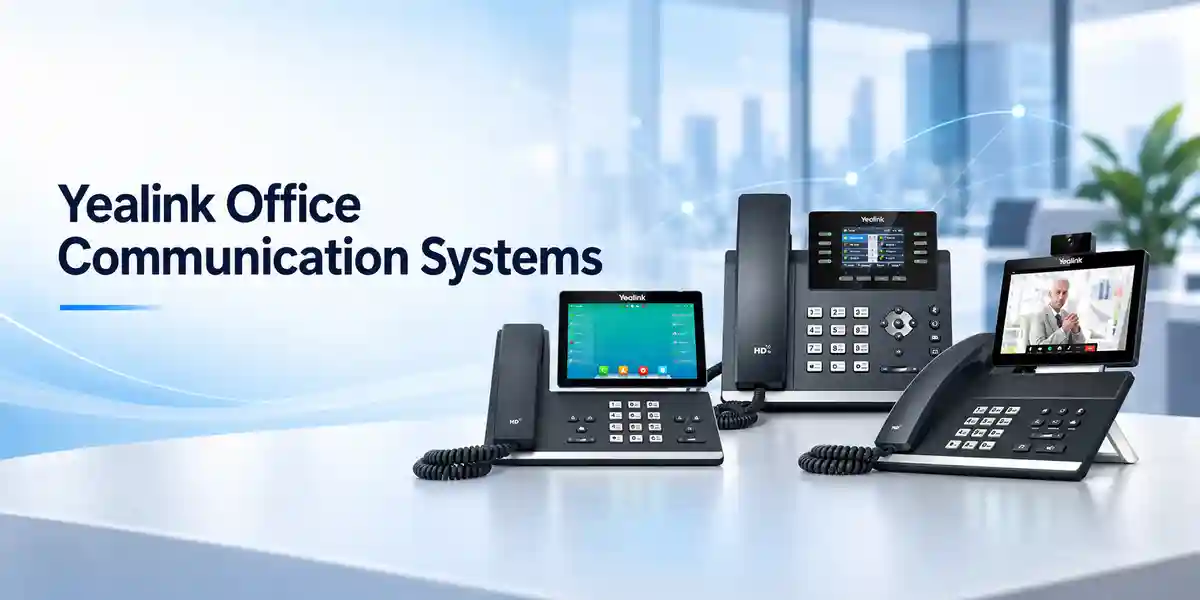
YMCS delivers the greatest operational value when endpoint selection and management design are considered together. Organisations refreshing their estate can review Yealink IP phone solutions in Uganda for office users, reception desks and shared spaces. Executive and advanced users may require larger displays, wireless connectivity or expansion options, while call-centre teams may prioritize headset integration and streamlined call handling. Meeting spaces can combine compatible Yealink room systems, panels and collaboration devices with centralized workspace operations.
Buyers should also plan the supporting network. Desk phones may depend on PoE switching, voice VLAN configuration, DHCP options, QoS policies and resilient uplinks. Meeting rooms can require additional Ethernet ports, USB peripherals, display connections and room-calendar integration. Rather than purchasing endpoints independently, request a complete bill of materials covering devices, power requirements, network dependencies, licenses and management entitlement. This reduces the risk of discovering after delivery that an accessory, switch capacity increase or service tier was omitted.
FourTeck Technical Service Capabilities
FourTeck can support the technical preparation surrounding a YMCS deployment, beginning with bill-of-materials verification. This means checking that the proposed endpoint families, quantities, management tier and related accessories reflect the stated business requirement. For mixed estates, model-level validation is particularly important because supported management functions can differ between phone and room-system generations.
Staging services can help establish a controlled starting point for deployment. Activities may include recording device identity, reviewing firmware levels, applying agreed configuration baselines, organizing site information and preparing a pilot group. Pre-shipment firmware work can reduce the amount of change required after devices reach remote offices, although the final production baseline should always be validated against the customer’s calling platform and deployment policy.
Post-sales support can assist with onboarding, connectivity troubleshooting, management workflows and escalation. Effective support depends on clear boundaries: LAN faults, SIP platform issues, Microsoft tenant administration, internet connectivity and physical cabling may involve different teams. A documented responsibility matrix prevents every problem from being treated as a platform fault and helps incidents reach the correct technical owner faster.
Frequently Asked Questions
1. What is Yealink Management Cloud Service used for?
YMCS is used to centrally administer compatible Yealink communications and workspace devices. Depending on the device and subscribed functions, administrators can maintain inventory, organize sites, manage configurations, distribute firmware and resources, schedule tasks, monitor operating state, receive alarms and use diagnostic information. Room and workspace functions can add room-equipment management, remote operations, workspace visibility, calendars, digital signage and integrations. It is most useful when an organisation has enough endpoints or enough geographic spread that device-by-device administration becomes inefficient. It should be planned as an operational management service, not as a replacement for the calling platform, LAN, WAN or endpoint hardware.
2. Can YMCS manage all Yealink phones and meeting-room products?
Compatibility must be checked by exact model, firmware and requested function. A device may connect to the management platform yet not support every workspace or remote-control feature available to another family. This is why a proper quotation should include a model-level endpoint schedule instead of only a total quantity. Existing estates should be inventoried before licensing is ordered. Where firmware must be updated to enable a supported management function, that requirement should be included in the deployment plan. FourTeck can use the device list to identify questions that need vendor confirmation before the project is committed.
3. Does YMCS require an on-premises server?
The standard YMCS offering is a cloud-based service, so buyers do not normally purchase a dedicated rack server for the management platform. Managed endpoints and administrator workstations do require network connectivity to the applicable service endpoints. Organisations with restrictive firewall, proxy or DNS policies should review the current vendor network requirements before rollout. Physical endpoints still require their normal LAN, PoE, Wi-Fi, display, USB or local power arrangements. The absence of a management appliance reduces local infrastructure overhead, but it does not remove the need for careful network and security preparation.
4. What licensing information is needed for a quote?
Provide the number of devices, exact model families, number of rooms where relevant, required subscription term and the management functions you expect to use. Also state whether the requirement includes phone management only, room and workspace management, advanced remote functions, analytics, digital signage or integrations. If the organisation expects growth during the subscription period, include planned quantities so commercial sizing can account for the likely estate. The quote should clearly distinguish cloud-service entitlement from physical Yealink endpoint hardware, calling-platform subscriptions and third-party services such as Microsoft or ServiceNow licensing.
5. How secure is the service?
Yealink publishes security documentation for YMCS and describes an Azure-based architecture with layered security controls. Enterprise buyers should still conduct their own risk assessment. Review data handling, account region, administrative roles, authentication, integration credentials, network access, audit requirements and internal approval processes. Use least-privilege access and named administrative accounts, and remove or change access promptly when responsibilities change. Security is a shared operational responsibility: the cloud platform provides service controls, while the customer remains responsible for its endpoint configuration, user administration, local network, identity governance and change-management procedures.
6. Can firmware upgrades be performed remotely?
Firmware and resource management are central YMCS capabilities for supported devices. Remote distribution can save significant administration time, particularly across branches. However, mass upgrades should be governed carefully. Test the target firmware on lab or pilot devices, confirm compatibility with the calling or meeting platform, schedule the production change during an approved window and deploy in waves. Some endpoint upgrades involve rebooting and temporary service interruption. Maintain records of the approved version by model family and define recovery steps before large-scale execution. Centralized tooling makes upgrades easier to perform, but disciplined change control remains essential.
7. Can YMCS integrate with Microsoft environments?
Yealink documents several Microsoft-oriented scenarios, including calendar synchronization, Microsoft Teams administration functions, Microsoft Entra ID sign-on scenarios and Microsoft Places integration. The exact capability depends on the selected service tier, endpoint family, firmware, tenant configuration and current product availability. Buyers should specify the intended workflow rather than simply requesting “Microsoft integration.” For example, room-calendar synchronization, administrator sign-on and workspace mapping are different requirements with different prerequisites. Confirm both Yealink and Microsoft licensing before purchase and identify which team owns tenant-side configuration during deployment.
8. What happens if a managed endpoint fails physically?
Cloud management can help administrators identify device status and may assist diagnosis, but it cannot repair a damaged Ethernet port, failed power supply, broken handset or defective display. Physical hardware replacement follows the applicable endpoint warranty or support process. Keep model, serial information, purchase records and site location in the asset register so support can identify the unit quickly. If a replacement is issued, the technical team should follow a documented process to connect it, apply the approved firmware and configuration, associate it with the correct site and verify normal service before closing the incident.
9. Is YMCS useful for a small business?
It can be, especially when the business has several locations, limited onsite technical staff or a strong need for consistent device configuration. For a very small single-site estate, the commercial value depends on how much management effort the organisation wants to centralize and which functions it needs. Buyers should compare subscription cost with the time spent provisioning, updating and troubleshooting endpoints manually. A small organisation that is growing rapidly may also value establishing centralized management early, because operating processes can scale without being redesigned after the device estate becomes difficult to control.
10. What should we send FourTeck before requesting a final quotation?
Send an endpoint list with models and quantities, office locations, the number of rooms, current or planned calling platform, desired subscription period, target deployment date and required management functions. Note any Microsoft, ServiceNow or other integration requirements. If security policies restrict outbound internet access, mention that so network prerequisites can be considered early. For projects that include new Yealink hardware, include user profiles and room types so the device bill of materials can be reviewed together with management entitlement. The more complete the requirement, the more precise the commercial and technical proposal can be.
Build a Manageable Yealink Estate in Uganda
If your organisation is deploying Yealink phones, meeting rooms or workspace devices across one or many Uganda locations, define the management model at the same time as the endpoint bill of materials. FourTeck can help map device quantities, compatible models, subscription scope, network prerequisites, staging needs and rollout phases into a procurement-ready quotation. This approach reduces licensing ambiguity and gives technical teams a clearer path from purchase to operational handover.
Send the endpoint inventory, site count, required management functions, subscription period and target activation date. For an existing estate, include model names and current firmware where possible. For a new deployment, include the planned Yealink hardware so management entitlement and endpoint supply can be aligned. Large environments can also request pilot and staged-rollout guidance.
Reviews
There are no reviews yet.