Business Voice Endpoint • Uganda Supply
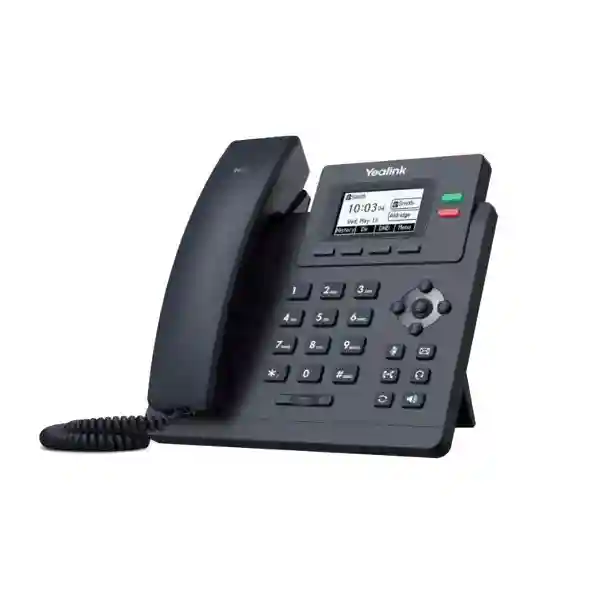
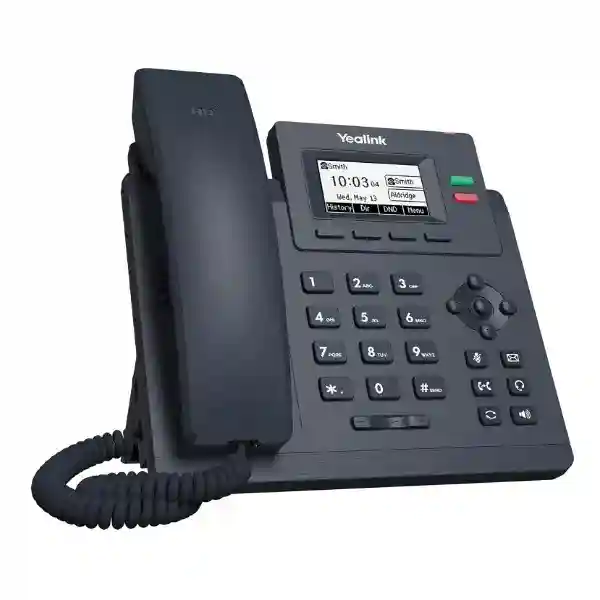
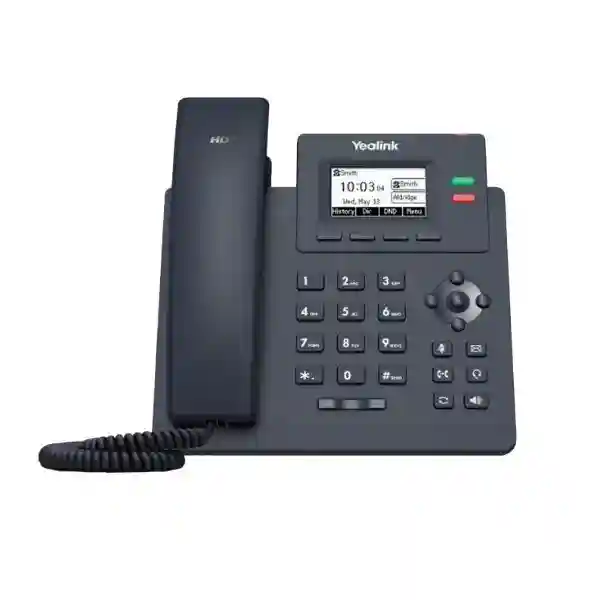
Yealink SIP-T31W Wi-Fi IP Phone for Business Communications
The Yealink SIP-T31W is a dual-line SIP desk phone designed for organizations that want professional voice calling, built-in dual-band Wi-Fi and Power over Ethernet in an accessible business endpoint. It gives procurement teams a useful middle path between a basic wired handset and a more expensive feature phone: users receive HD voice, two SIP accounts, a backlit graphical display, local five-way conferencing and flexible network connectivity without unnecessary desktop complexity.
For Ugandan offices, branch locations, schools, clinics, hotels, warehouses and service desks, the T31W can simplify endpoint rollout where running a dedicated data cable to every desk is inconvenient. Its integrated 2.4 GHz and 5 GHz 802.11a/b/g/n/ac Wi-Fi can connect the phone to an approved wireless network, while dual 10/100 Ethernet interfaces remain available for conventional LAN deployments. IEEE 802.3af PoE support enables compatible switches to carry power and network connectivity over Ethernet. Where PoE is unavailable, the model supports an external 5 V power adapter.
A successful voice deployment depends on more than the handset. Buyers should validate PBX registration, VLAN and QoS policy, wireless coverage, PoE budget, firewall traversal, user provisioning and headset requirements before ordering at scale. FourTeck can assist with this validation and prepare a quantity-based commercial proposal aligned with the intended site design.
Instant Specifications & Procurement Fact Rail
SIP-T31W
2 SIP accounts
2.4/5 GHz Wi-Fi
2 × 10/100 RJ45
802.3af PoE Class 2 / 5 V DC
Quote on request
The fact rail is intended to accelerate early procurement screening. The T31W belongs in projects where two registered voice identities are sufficient, 10/100 Ethernet is appropriate for the endpoint, and wireless connectivity is useful. Warranty terms, stock position, lead time and included accessories should be confirmed on the issued quotation because these can vary by supply batch and project arrangement.
Operational Product Architecture & Overview
The T31W is engineered as a purpose-built SIP voice endpoint rather than a general computing device. Its architecture combines a handset, full-duplex speakerphone, graphical user interface, Ethernet switching, integrated dual-band wireless networking and SIP signaling functions in one desktop appliance. That design matters in enterprise procurement because every additional endpoint becomes part of the operational network. A phone must register reliably, obtain addressing, discover the correct VLAN, receive configuration, negotiate voice codecs, maintain time synchronization and preserve acceptable audio under real traffic conditions.
The two-port 10/100 Mbps Ethernet switch supports common desk layouts where one network drop reaches the phone and a second connection can serve a nearby workstation when the network design permits it. The integrated Wi-Fi option is particularly useful for desks, counters and temporary locations where pulling new Ethernet is disruptive. Wireless voice still requires disciplined WLAN engineering: signal strength, channel planning, roaming expectations, airtime utilization and QoS policy should be assessed rather than assuming Wi-Fi alone guarantees call quality.
For audio, Yealink combines HD handset and HD speaker capabilities with G.722 wideband voice and a range of narrowband codecs including G.711, G.723.1, G.729, G.726 and iLBC. Smart Noise Filtering, acoustic echo cancellation, packet-loss concealment, adaptive jitter buffering and automatic gain control are intended to keep conversations intelligible in normal office conditions. The phone also supports DTMF through in-band, RFC 2833 and SIP INFO methods, which is important when users interact with IVRs, banking menus, help desks and other automated systems.
Two VoIP accounts fit individual users, shared service desks and basic line separation requirements. Call hold, transfer, forwarding, waiting, mute, do-not-disturb, redial, auto answer, direct IP calling and local five-way conferencing cover everyday telephony workflows. PBX-dependent functions such as BLF, call pickup, call park, voicemail and hot desking can be available when the connected SIP platform implements the required features and provisioning.
Security is another procurement concern. The T31W supports SRTP for media, TLS 1.3 for protected signaling, HTTPS administration, AES-256 encrypted configuration files, digest authentication, secure boot, 802.1X and VPN-related functions including OpenVPN and L2TP. Wireless networking supports WPA2 and WPA3. These capabilities allow the handset to participate in a security-conscious design, but policy enforcement still depends on correct configuration of the PBX, certificate environment, WLAN, switches and management systems.
At scale, configuration consistency is often more important than a long feature list. Browser, phone-menu and auto-provisioning methods are supported, with FTP, TFTP, HTTP and HTTPS provisioning, plug-and-play mechanisms and TR-069 capabilities. Yealink device-management ecosystems can further assist fleet administration. Procurement teams should therefore define the provisioning method before shipment so the endpoint rollout does not become a desk-by-desk manual exercise.
Enterprise Business Outcomes & Value Analysis
Key Hardware & Software Highlights
Dual-Band Wireless
Integrated IEEE 802.11a/b/g/n/ac connectivity supports both 2.4 GHz and 5 GHz bands, with specified dynamic rates up to 433 Mbps. For voice, the operational advantage is placement flexibility rather than headline wireless throughput.
Ethernet & PoE
Two RJ45 10/100 Mbps ports support network and optional PC connectivity. IEEE 802.3af Class 2 PoE can simplify power delivery where compatible switching is available.
Purpose-Built Display
The 2.3-inch 132×64 graphical LCD with backlight presents line state, caller information, menus and soft-key functions without the cost or power profile of a large color panel.
Headset Connectivity
A dedicated RJ9 headset port and support for EHS wireless headset workflows help service desks and frequent callers use compatible headset arrangements. Exact accessory compatibility should be confirmed before ordering.
Voice Processing
HD handset and speaker audio, Smart Noise Filtering, AEC, PLC, adaptive jitter buffering and gain control address common office-call challenges such as echo, inconsistent levels and background distraction.
Provisioning & Management
Web, handset and remote provisioning options enable anything from a small manual installation to a centrally controlled fleet. HTTPS-based provisioning is preferable where the platform supports it.
Technical Specifications Ledger
The following ledger consolidates the principal manufacturer-confirmed specifications relevant to procurement. Firmware revisions can add or refine supported functions, and interoperability depends on the connected SIP service, so project-specific validation remains recommended.
| Category | Specification |
|---|---|
| SIP accounts | Up to 2 VoIP accounts |
| Display | 2.3-inch, 132 × 64-pixel graphical LCD with backlight |
| Wi-Fi | Built-in dual band IEEE 802.11a/b/g/n/ac, 2.4/5 GHz, up to 433 Mbps dynamic rate |
| Ethernet | 2 × RJ45 10/100 Mbps Ethernet ports |
| PoE | IEEE 802.3af, Class 2 |
| External power | AC 100–240 V input; DC 5 V/0.6 A output adapter specification |
| Power consumption | PSU approximately 1.3–1.7 W; PoE approximately 2–2.6 W per manufacturer datasheet |
| Audio | HD handset, HD speaker, Smart Noise Filtering, full-duplex speakerphone with AEC |
| Wideband codec | G.722 |
| Narrowband codecs | G.711 μ-law/A-law, G.723.1, G.729 family, G.726, iLBC |
| Conference | Local 5-way audio conferencing |
| Directory | Local phonebook up to 1,000 entries; XML/LDAP remote phonebook support |
| Security | SRTP, TLS 1.3, HTTPS, AES-256 configuration encryption, digest authentication, secure boot, IEEE 802.1X, WPA2/WPA3 |
| Networking | IPv4/IPv6, static/DHCP, VLAN, LLDP/CDP, QoS 802.1p/Q and Layer 3 ToS DSCP |
| Ports | 1 × RJ9 handset, 1 × RJ9 headset, 2 × RJ45 Ethernet |
| Dimensions | 188 × 189 × 162 × 50 mm (W × D × H × T) |
| Operating temperature | -10 to +45°C |
| Operating humidity | 10–95% |
| Installation | Adjustable stand; wall-mountable with appropriate accessory/installation arrangement |
Configuration & Sizing Worksheet
Step 1 — Count Users and Calling Identities
Start with the number of physical desks and the number of SIP identities each desk requires. The T31W supports two accounts, so it fits a user with a primary extension plus a second identity, or a shared function with two registrations. If users require numerous independently registered lines, extensive BLF keys or expansion modules, another Yealink model may be more appropriate. Separate handset quantity from spare quantity and identify reception, security, warehouse and executive positions that may have different needs.
Step 2 — Choose Wired, Wireless or Mixed Connectivity
Map every location to a network method. Wired PoE is generally straightforward where managed switching and structured cabling already exist. Wi-Fi is useful where cable installation is impractical, but conduct a wireless survey for larger deployments. Confirm SSID design, WPA policy, VLAN handling, signal levels and congestion. Avoid treating the maximum wireless data rate as a call-quality guarantee; voice stability depends on radio conditions and network design.
Step 3 — Validate Power
For PoE sites, calculate switch power budget for the complete endpoint count and retain engineering margin. Confirm the switch supports IEEE 802.3af and that UPS runtime aligns with business continuity expectations. For Wi-Fi deployments, remember that wireless network access does not itself power the phone: a local adapter or suitable Ethernet power arrangement is still required. Include adapters in the bill of materials where needed.
Step 4 — Validate PBX, Codec and Security Policy
Document the SIP platform, registrar addresses, transport, authentication method, media encryption requirement, codec order, DTMF method, NAT traversal and emergency-calling policy. If the organization mandates TLS, SRTP, certificate validation or 802.1X, test the exact configuration before mass deployment. Hosted voice providers may supply their own approved templates, and certain advanced PBX features can depend on platform support.
Step 5 — Define Provisioning
Decide whether phones will be manually configured, provisioned by a PBX, enrolled through a device-management system or directed to an HTTPS provisioning service. Capture MAC-address handling, firmware baseline, admin-password policy, user PIN rules and remote-support procedure. A defined provisioning workflow can save substantial installation time across many branches.
Step 6 — Prepare the Quote Request
Provide quantity, destination, required delivery date, PBX or hosted voice platform, wired/Wi-Fi split, PoE availability, adapter quantity, headset requirement, wall-mount requirement and any staging request. Also identify whether phones need labeling, firmware alignment, account templates or site grouping before dispatch. This information lets FourTeck build a more accurate bill of materials and reduces avoidable changes after order approval.
Deployment Scenarios & Industry Use Cases
Large Enterprise & Multi-Site Networks
In a distributed organization, the T31W can serve standard user desks while more advanced phones are reserved for executives, receptionists or heavy line-monitoring roles. Central provisioning can standardize firmware, dial plans and security parameters. Branches with established cabling may use PoE, while selected temporary or difficult-to-cable positions can use Wi-Fi. The important design task is preserving consistent SIP reachability and voice QoS between locations.
Financial & Banking Environments
Banks and financial offices typically require controlled endpoint configuration, segmentation and secure management. The phone’s TLS, SRTP, HTTPS, 802.1X and encrypted configuration capabilities can support a broader security architecture. Procurement should still validate certificate handling, PBX policy, network access control and change management through a pilot before fleet approval.
Education & Campus Networks
Schools, universities and training campuses can deploy the T31W in administration offices, faculty rooms, libraries, security points and service counters. Wi-Fi can help at selected buildings where new cable installation is difficult. Network teams should separate voice policy from general student wireless traffic and confirm coverage in every intended installation area.
Government & Public-Sector Procurement
Public institutions often require structured bills of materials, model consistency and clear acceptance criteria. The T31W’s focused feature set can simplify standard endpoint specifications. Tender documents should state quantity, power method, SIP compatibility, required security controls, warranty expectation, delivery destinations and any staging or labeling requirements rather than relying on model name alone.
Technical Deep Dive 1: Voice Processing & Endpoint Architecture
A desk phone’s most important processing task is turning real-time speech into stable packetized media while maintaining signaling and user-interface responsiveness. The T31W supports wideband G.722 for HD voice as well as common narrowband codecs used across legacy and modern SIP systems. Codec selection should be treated as a network design choice. G.722 can provide a more natural voice experience when supported end-to-end, while G.711 is widely interoperable. Compressed codecs can be useful where bandwidth policy requires them, but administrators should verify licensing and platform support where applicable.
Voice processing includes acoustic echo cancellation for hands-free operation, packet-loss concealment to reduce the audible effect of missing media packets, adaptive jitter buffering to absorb variation in packet arrival time and automatic gain control to manage levels. These mechanisms help, but they cannot compensate for a severely congested LAN or unstable WLAN. VLAN separation, DSCP marking, switch QoS and WAN engineering remain essential for larger deployments. The T31W supports 802.1p/Q and Layer 3 ToS DSCP mechanisms so it can participate in a properly configured quality-of-service design.
The integrated Ethernet switch and Wi-Fi radio provide alternative access paths, but procurement should map each endpoint to a defined topology. For a wired desk, a common pattern is switch-to-phone Ethernet with PoE and an optional downstream PC. For a wireless desk, the phone associates with the enterprise WLAN and uses local DC power unless another power arrangement is provided. This distinction should be documented in the bill of materials so wireless phones are not delivered to locations without a practical power source.
Technical Deep Dive 2: Firmware Security & Operational Control
The T31W includes several controls that are relevant to enterprise voice security. TLS 1.3 can protect SIP signaling where the PBX and certificate environment support the required configuration, while SRTP can protect voice media. HTTPS provides a protected path for web management and provisioning, and AES-256 configuration-file encryption can help protect sensitive configuration material. Secure boot adds integrity protection at the device startup layer. WPA2 and WPA3 are available for wireless security, while 802.1X can participate in network access-control designs.
Security capabilities are only useful when deployed consistently. Administrators should change default credentials, restrict management access, use protected provisioning, establish a firmware-maintenance process and disable unnecessary services where policy allows. Certificates, NTP/SNTP time, DNS and provisioning URLs should be designed as dependencies rather than afterthoughts. Before a mass rollout, test factory reset behavior, reprovisioning, credential recovery and firmware upgrade procedures so support staff know how to restore an endpoint without improvising.
Operational control also includes inventory and configuration governance. Record device identifiers, assigned user or location, firmware baseline and deployment site. If a centralized Yealink management platform or PBX provisioning service is used, establish role-based administration and change approval. For regulated environments, preserve configuration standards and test records as part of the acceptance package.
Technical Deep Dive 3: Availability, Redundancy & Recovery
The handset itself is only one element of voice availability. The T31W supports call-server redundancy features, but end-to-end resilience requires redundant or recoverable upstream services. A resilient design may include UPS-backed PoE switches, redundant core switching, multiple WAN paths, resilient SIP call control and tested DNS or failover behavior. For Wi-Fi endpoints, wireless-controller and access-point resilience should also be considered.
Recovery planning should define what happens when a phone loses power, cannot reach the registrar, receives a failed firmware update or is moved between sites. Central provisioning can help rebuild configuration after reset. Spare units can reduce replacement time, especially for remote branches. Keep the spare strategy proportional to fleet size, site criticality and replenishment lead time rather than applying a fixed percentage without context.
Disaster-recovery exercises should include voice endpoints. Test whether users can re-register after a PBX failover, whether DHCP and DNS remain available, whether VLAN assignment survives network changes and whether emergency numbers route correctly. A phone that powers on is not necessarily operational; acceptance should confirm registration, inbound and outbound calling, DTMF, transfer, hold, voicemail access and any business-critical feature.
Pre-Purchase Buyer Gap Checklist
Are there hidden recurring licenses? The physical phone should be evaluated separately from the service platform. SIP PBX, hosted voice, device management or support services may have their own licensing or subscriptions. Ask for a quote that distinguishes hardware from recurring services.
Will it work with our PBX? The phone uses standards-based SIP, but advanced feature behavior varies by platform. Confirm registration, BLF, voicemail, transfer, conferencing, directory integration and provisioning with the intended PBX or hosted provider. A pilot is sensible when replacing an existing fleet.
Does Wi-Fi remove all cabling? It can remove the data cable requirement at selected desks, but the phone still needs electrical power. If Ethernet PoE is not present, plan for the correct external power adapter and nearby mains power.
Is 10/100 Ethernet enough? For the phone’s own voice traffic it is ample. If a high-throughput workstation will connect through the phone’s downstream Ethernet port, the 100 Mbps interface may become a desktop-network limitation. In that case, consider a Gigabit-capable phone or give the workstation a separate network connection.
Can we use existing headsets? The phone provides an RJ9 headset interface and supports EHS workflows, but headset and EHS accessory compatibility should be checked by exact model. Do not assume every wireless headset connects directly.
What is included in the box? Manufacturer package descriptions can vary by region and batch, with Ethernet cable status sometimes optional. The issued quotation should explicitly list the handset, cord, stand, adapter and any optional accessories so receiving teams can check deliveries accurately.
What about lifecycle and firmware? Confirm the firmware baseline and project support expectations at the time of purchase. For long deployments, maintain a tested firmware policy and avoid mixing versions casually across the fleet.
Will wireless voice work everywhere? Only if the WLAN provides suitable coverage and capacity. Conduct a survey for important sites, prefer well-designed 5 GHz coverage where appropriate and validate voice performance during busy periods.
What physical clearance is needed? The phone measures approximately 188 × 189 × 162 × 50 mm in the manufacturer’s dimensional format and uses an adjustable stand. Allow space for the handset, cables and comfortable keypad access. Wall mounting requires an appropriate mounting arrangement.
What should acceptance testing include? At minimum: boot, network access, SIP registration, inbound/outbound calls, caller ID, hold, transfer, DTMF, speakerphone, headset where used, voicemail access, directory functions, time synchronization and reprovisioning. Add organization-specific features to the acceptance sheet.
Uganda Procurement & Delivery Logistics
FourTeck’s Uganda procurement workflow can begin with a quantity and technical requirement rather than a fully developed bill of materials. For a Yealink SIP-T31W request, provide the number of phones, delivery destination, required date, PBX or hosted voice service and whether the endpoints will use wired PoE or Wi-Fi. Include adapter, headset and wall-mount needs. For multi-site projects, split quantities by destination so packaging, labeling and dispatch planning can be discussed before order confirmation.
Commercial quotations should be reviewed for exact model, quantity, accessories, warranty terms, lead time, tax treatment, payment terms and delivery scope. Stock status can change, so procurement teams should use the validity period stated on the quotation rather than assuming availability from an earlier discussion. Larger projects may benefit from staged delivery if branches are being commissioned in phases.
Technical pre-configuration can reduce installation effort where project scope permits. Typical preparation may include firmware alignment, configuration templates, network parameters, provisioning references or site labeling. The precise staging service should be documented before order processing because account credentials and security material require controlled handling. Organizations with their own provisioning platform may prefer devices delivered with a defined baseline and then enrolled on site.
For receiving, designate a contact who can verify quantities and packaging condition. For rollout, keep a device inventory linked to user or location. Where project acceptance is formal, test a sample or pilot group before releasing the entire fleet to production.
Local Coverage Matrix
In Kampala, organizations commonly require office, branch, hospitality and service-desk voice endpoints with structured deployment support. Entebbe projects may include corporate offices, logistics operations and hospitality environments where Wi-Fi flexibility can be useful. Jinja deployments can span commercial, education and industrial sites, while Mbarara and Gulu projects often benefit from careful branch-level planning for power, connectivity and replacement logistics. FourTeck can prepare project quotations around these destination requirements rather than treating Uganda as a single undifferentiated delivery point.
Head office, branches, service desks
Hospitality, logistics, corporate sites
Commercial, education, industrial
Regional offices and institutions
Branch and institutional deployments
Cross-Border & Regional Supply Chains
Organizations operating across East Africa and the Gulf may need the same endpoint family supplied to multiple countries. FourTeck regional web properties can support procurement discussions for Uganda, Kenya, the broader African market, the UAE and Kuwait. Cross-border projects should identify destination-specific quantities, required documentation, delivery terms and local power/accessory requirements before purchase.
A standardized model can simplify user training and provisioning across countries, but local network conditions and hosted-voice services may differ. Maintain a common endpoint configuration baseline while allowing controlled site-specific values for SIP servers, VLANs, time zones, emergency routing and directories. Where equipment moves between countries, confirm warranty and support handling rather than assuming service terms transfer automatically.
Related Yealink Options & Deployment Paths
The T31W is best considered within a broader endpoint plan. Organizations that do not need Wi-Fi can compare other T3-series wired models, while users who require Gigabit Ethernet, color displays, more SIP accounts or additional programmable keys can move to higher models. Reception and executive positions may justify richer interfaces than ordinary desks. Headset-heavy roles should be designed around confirmed accessory compatibility rather than buying a generic headset after the phones arrive.
Explore FourTeck Uganda enterprise technology solutions or use the Uganda contact and quotation page to request related Yealink phones, PoE switching, structured network components, headsets and deployment assistance. For multi-country sourcing, the regional links above can help align requirements with the appropriate market.
FourTeck Technical Service Capabilities
A well-specified handset order starts with engineering validation. FourTeck can help customers review endpoint quantities, account requirements, network access method, PoE availability, PBX compatibility considerations and accessory needs before the commercial bill of materials is finalized. This is particularly useful when a project mixes ordinary user desks, reception positions, meeting rooms and remote branches.
Bill-of-materials verification aims to catch practical omissions such as missing power adapters at Wi-Fi-only desks, unsuitable headsets, insufficient PoE capacity or a phone model whose Ethernet interface does not fit the workstation throughput requirement. Where agreed in the project scope, staging can include firmware alignment, baseline configuration preparation, labeling or other pre-shipment tasks. Sensitive credentials should be handled through an agreed secure process.
Post-sales support can focus on isolating whether a reported issue belongs to the endpoint, network, wireless layer, provisioning system or SIP platform. Maintaining configuration records and a repeatable test checklist makes troubleshooting faster. For warranty cases, retain purchase records, serial information and fault details so the support path can be evaluated efficiently.
Extended Technical FAQ
1. Is the Yealink SIP-T31W suitable for office Wi-Fi calling?
Yes. The T31W has integrated dual-band 2.4 GHz and 5 GHz Wi-Fi supporting IEEE 802.11a/b/g/n/ac, so it can register to a SIP platform over an appropriately designed wireless network. The practical advantage is avoiding a dedicated data cable at selected desks. Wi-Fi does not remove the need for power, however; the phone still requires an external adapter or a suitable powered Ethernet arrangement. For large deployments, validate coverage, channel planning, security policy and busy-hour performance. Voice endpoints should not be placed on a poorly engineered WLAN simply because the handset supports wireless connectivity.
2. Can the T31W be powered by PoE?
Yes. The manufacturer specifies IEEE 802.3af Class 2 Power over Ethernet support. In a conventional wired deployment, a compatible PoE switch can therefore supply network connectivity and electrical power through the Ethernet connection. This can simplify desk cabling and allow voice endpoints to benefit from centralized UPS protection when the switching infrastructure is backed up. Before ordering a large quantity, calculate the aggregate PoE budget and available ports on each access switch. If the phone will use Wi-Fi without Ethernet at a location, plan for the appropriate external power adapter because wireless connectivity itself does not provide power.
3. How many SIP accounts and simultaneous line identities does it support?
The SIP-T31W supports up to two VoIP accounts. That makes it suitable for standard users, shared desks and many service positions that need one or two registered identities. It is not intended to replace a high-line-count receptionist console or a premium executive phone with numerous programmable keys. Before purchase, distinguish SIP registrations from PBX features such as hunt groups, shared lines and call queues, because a server can present workflows that do not map one-for-one to physical account count. If the user needs more registered accounts or extensive line monitoring, compare a higher Yealink model.
4. Does the T31W support secure SIP deployments?
The phone includes security mechanisms relevant to enterprise deployments, including TLS 1.3, SRTP, HTTPS, AES-256 configuration-file encryption, digest authentication, secure boot, IEEE 802.1X and WPA2/WPA3 for wireless networking. These features provide useful building blocks, but a secure deployment requires matching support and correct configuration across the PBX, certificate infrastructure, provisioning server, switches and WLAN. Organizations should define approved signaling transport, media encryption, certificate handling, administrator access and firmware policy. A pilot should verify the exact security profile before many phones are deployed, particularly in regulated or highly controlled environments.
5. Will the T31W work with our existing SIP PBX or hosted provider?
The T31W uses standards-based SIP and supports common voice codecs and network mechanisms, so it can interoperate with many SIP environments. Exact compatibility should nevertheless be verified with the intended platform. Basic registration and calling may work while advanced features such as BLF, shared-line appearance, remote directories, call recording, hot desking or centralized provisioning require platform-specific implementation. Ask the PBX or hosted-service provider whether it maintains an approved Yealink profile. For a business-critical migration, test a sample handset for registration, inbound and outbound calling, DTMF, transfer, hold, voicemail, directory access and any required feature keys.
6. Does the phone require a recurring license?
The handset purchase and the voice service should be treated as separate commercial components. A deployment may require licenses or subscriptions from the SIP PBX, hosted telephony provider, device-management service or support contract even when the physical endpoint itself is purchased outright. Requirements vary by platform and project. Ask for a commercial proposal that clearly separates handset hardware, optional accessories, implementation services and recurring voice or management charges. This prevents a low hardware price from obscuring the ongoing service cost and gives procurement teams a more accurate total-cost comparison across competing designs.
7. Can we connect a computer through the phone?
The T31W provides two 10/100 Mbps Ethernet ports, allowing a common desk arrangement in which one port connects toward the network and another can connect to a PC when the network policy supports that topology. The key procurement consideration is speed: the interface is Fast Ethernet rather than Gigabit Ethernet. That is more than sufficient for voice traffic, but a workstation requiring throughput above 100 Mbps should not be unintentionally constrained by passing its network connection through the phone. For higher-performance desktop networking, use a separate Gigabit connection or select a phone model with Gigabit Ethernet.
8. What should we check when using headsets?
The phone has an RJ9 headset port and supports EHS wireless headset workflows. Compatibility still needs to be checked by exact headset model and, where relevant, the required EHS accessory. Connector shape alone is not a complete compatibility guarantee. Contact-center and frequent-caller deployments should test answer/end-call control, ring indication, microphone level, receive volume and user comfort. Include the headset model in the quote request so the endpoint and accessory can be validated together. If users already own headsets, provide the manufacturer and model rather than assuming they can be reused without an adapter.
9. What warranty and replacement details should procurement confirm?
Warranty duration and processing terms should be taken from the FourTeck quotation or sales documentation applicable to the specific transaction rather than assumed from a generic regional statement. Procurement should confirm the warranty baseline, what proof of purchase is required, how faults are diagnosed, where replacement processing occurs and whether advance replacement is part of the commercial arrangement. For larger fleets, maintain serial-number records and consider holding a small pool of compatible spares based on site criticality and replenishment lead time. A spare strategy reduces operational downtime while a failed device is being assessed.
10. Can FourTeck assist with configuration before delivery?
Project-specific staging can be discussed as part of the quotation. Useful preparation may include firmware alignment, configuration templates, provisioning references, site labels and other agreed baseline tasks. The correct approach depends on how the customer manages SIP credentials and device enrollment. Some organizations prefer phones to receive their final configuration automatically after connection to a trusted network, while others require more preparation before shipment to remote branches. Provide the PBX type, provisioning method, site structure and security requirements when requesting the quote so the proposed staging scope can be defined accurately.
Prepare Your Yealink SIP-T31W Uganda Procurement
For a precise commercial proposal, send FourTeck the required quantity, delivery city, SIP platform, preferred wired or Wi-Fi connectivity, PoE availability, adapter count, headset requirements and target deployment date. For multi-site projects, include the quantity per branch and any staging, labeling or firmware requirements. This gives the technical and commercial teams enough context to review the endpoint choice, identify missing accessories and prepare a bill of materials aligned with the actual deployment.
The SIP-T31W is especially relevant when organizations need a focused two-account business phone with HD voice and the freedom to choose between Ethernet and dual-band Wi-Fi. Confirming the network and power design before purchase protects the rollout from avoidable cabling, throughput and compatibility surprises.

Reviews
There are no reviews yet.