ENTERPRISE WIRELESS | UGANDA PROCUREMENT
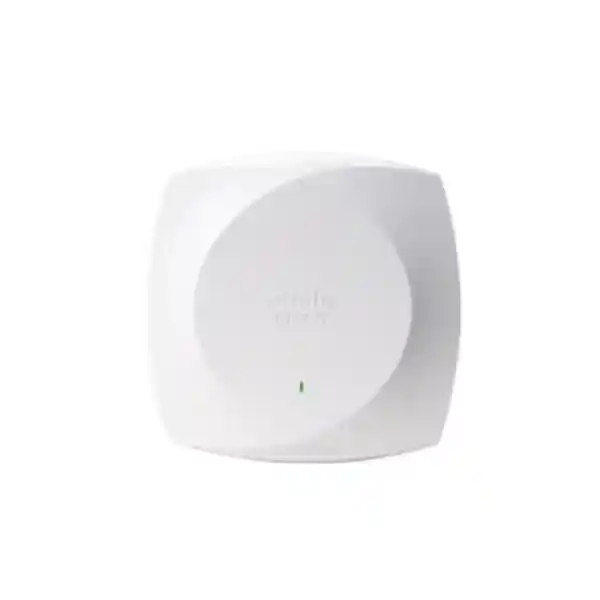
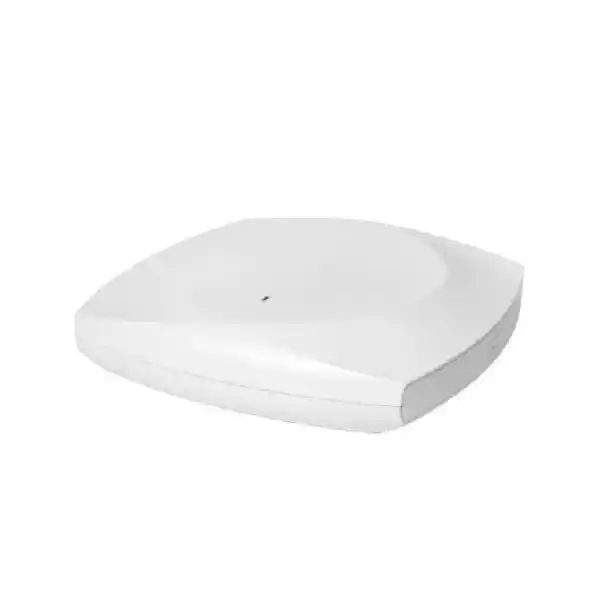
Cisco Meraki CW9174I Wi-Fi 7 Indoor Enterprise Access Point
The Cisco CW9174I is an indoor enterprise wireless access point with integrated omnidirectional antennas, Wi-Fi 7 capabilities, flexible radio operation and a multigigabit Ethernet connection. It is suited to organizations replacing congested older wireless infrastructure or planning secure connectivity across offices, classrooms, meeting areas and shared facilities.
Wireless performance depends on more than the model printed on the enclosure. Access point placement, construction materials, client capabilities, Ethernet cabling, switch power, software configuration and country-specific radio permissions determine the usable experience. Procurement should therefore pair the CW9174I hardware with a practical site design and an appropriate Cisco Networking Subscription.
The model can be operated in supported Cisco management environments, but the chosen software personality and management platform must be specified during deployment planning. Confirm the desired Meraki cloud-managed or Catalyst controller-based approach before preparing the purchase order. The hardware is not a substitute for a complete wireless design, and quoted maximum radio rates are not guarantees of end-user throughput.
FourTeck Uganda supports procurement planning for organizations seeking a documented, supportable wireless refresh. We can review requested quantities, compatible power sourcing equipment, license terms and deployment accessories before a formal quotation is issued. The objective is to avoid discovering after delivery that a switch lacks the correct power budget, a required license was omitted or the intended radio band is unavailable in the installation country.
Procurement Facts at a Glance
CW9174I; indoor integrated omnidirectional antenna variant. Do not confuse with the external-antenna CW9174E.
IEEE 802.11be Wi-Fi 7, with backward compatibility subject to configured modes and supported clients.
One RJ-45 Ethernet interface supporting 100 Mbps, 1 Gbps, 2.5 Gbps and 5 Gbps link speeds.
802.3bt Class 5 for full-power capability; 802.3at permits a reduced operating envelope. Verify power budget before ordering.
Cisco Wireless Essentials or Wireless Advantage subscription, as appropriate for the intended deployment.
Price, lead time, tax treatment, support coverage and warranty conditions are confirmed on request; no live stock claim is made.
Operational Architecture and Network Design
The CW9174I provides a flexible radio arrangement. In supported tri-band operation it offers 2×2 operation at 2.4 GHz alongside 4×4 operation at 5 GHz and 6 GHz. A supported dual-band configuration can instead use 4×4 operation on both 2.4 GHz and 5 GHz. This flexibility matters because the ideal spectrum plan is different for a dense collaboration floor, a classroom building and a mixed-device warehouse office. The radio arrangement and availability of 6 GHz are constrained by software, country regulations and deployment configuration.
Wi-Fi 7 features include multi-link operation, 4096-QAM, OFDMA and preamble puncturing. These capabilities can improve radio resource use under suitable conditions, but their benefits depend on compatible clients and configuration. Legacy phones, printers and embedded devices will not suddenly gain Wi-Fi 7 capabilities. A thoughtful design retains practical support for the device fleet while introducing newer bands and services where allowed.
A dedicated scanning radio supports visibility into the radio environment, while the separate IoT radio supports compatible device-oriented services. Security architecture must still define network access policy, segmentation, authentication, monitoring and operational ownership. The access point alone cannot establish a compliant enterprise security posture.
The wired edge is equally important. A 5 Gbps-capable uplink is useful only when the switch port, cable installation and available power can support the negotiated mode. Existing 1 Gbps infrastructure may continue to function in a constrained design, but buyers should not budget around headline wireless capacity without evaluating uplink contention. For multi-floor projects, the access layer, aggregation links, DHCP services, firewall rules and WAN capacity should be assessed together.
Management choice also influences the architecture. The Cisco 9174 family supports relevant Meraki and Catalyst software environments; licensing, onboarding workflow, feature entitlement and firmware requirements should be checked against the selected platform. A purchaser migrating from an older Cisco estate should document controller compatibility and the intended operating mode rather than assuming every legacy controller can manage the device.
Business Outcomes and Investment Considerations
- Performance integrity: Use a wireless survey and realistic concurrent-device estimates to establish capacity. Radio data rates represent physical-layer ceilings, not promised application speeds.
- Operational continuity: Distribute access points and switching infrastructure so a single access point outage does not eliminate essential coverage. Redundant upstream services require separate network design.
- Scalability: Standardize installation, labeling, naming and switch configurations across branches to simplify future expansion and troubleshooting.
- Security: Plan WPA3 where appropriate, enterprise authentication, guest isolation and network segmentation around actual endpoint capabilities and organizational policy.
- Central management: Select a supported Cisco management architecture, establish administrator roles and document alert routing, firmware change control and configuration backups.
- Cost control: Include hardware, subscriptions, power sourcing, mounting, structured cabling, installation, surveys and lifecycle support in the total project cost.
- Energy planning: Model the number of ports and the switch’s aggregate PoE budget. A compatible connector does not prove sufficient available wattage.
- Procurement assurance: Require a clearly identified regional SKU, valid license line items, delivery conditions and a written warranty process.
Hardware and Software Highlights
Integrated antenna design: The CW9174I is the internal omnidirectional antenna model. This simplifies common indoor mounting patterns, but coverage should be verified rather than inferred from antenna type alone.
Multigigabit interface: One 100M/1G/2.5G/5G RJ-45 uplink enables connection to modern enterprise switches. Link speed is subject to power mode, cable quality and switch capability.
Dedicated management console: An RJ-45 console interface supports appropriate local service workflows. Site access and administrator permissions should be controlled.
USB accessory support: The access point includes USB 2.0; available USB power differs by power mode. Confirm any proposed peripheral’s compatibility before including it in a bill of materials.
DC power option: A 54 V DC jack is specified for the compatible MA-PWR-50WAC adapter. The adapter should be explicitly quoted when needed rather than assumed included.
Software: Cisco lists IOS XE 17.18.2 or later and Meraki MR32.1.5 or later in the 9174 series data sheet. Exact supported versions and management arrangements should be rechecked during commissioning.
Technical Specifications Ledger
| Specification | CW9174I Detail |
|---|---|
| Product category | Indoor Wi-Fi 7 enterprise access point, internal omnidirectional antenna |
| Radio configuration | 2×2 2.4 GHz plus 4×4 5 GHz and 4×4 6 GHz, or 4×4 2.4 GHz plus 4×4 5 GHz, subject to configuration |
| Wi-Fi 7 channels | Up to 320 MHz at 6 GHz where permitted; up to 160 MHz at 5 GHz |
| Ethernet | 1 x RJ-45 100M/1G/2.5G/5G |
| Other ports | RJ-45 console, USB 2.0, 54 V DC input |
| Maximum PoE requirement | 37 W in specified 802.3bt full-feature configuration; 25.5 W at 802.3at in documented reduced-power configuration |
| Typical power draw | 15.9 W under Cisco’s specified 802.3at typical-use test; actual use varies |
| Dimensions | 22.6 x 22.6 x 4.9 cm, excluding bracket |
| Weight | 1.52 kg |
| Operating temperature | 0 to 50 degrees C |
| Operating humidity | 10% to 90% noncondensing |
| Security | WPA3 support; final authentication capabilities depend on software and deployment design |
| Subscriptions | Cisco Wireless Essentials or Cisco Wireless Advantage, with applicable terms |
Technical values are drawn from the Cisco Wireless 9174 Series data sheet. Country-specific certifications, channel plans, software feature availability and included accessories should be validated for the exact ordered SKU. Theoretical aggregate physical-layer rates must not be presented as guaranteed wired or application throughput.
Configuration and Sizing Worksheet
1. Estimate real workload
Record staff, guest and managed-device counts by zone. Distinguish connected devices from simultaneously active devices and identify high-bandwidth video, voice, classroom testing, collaboration and specialized equipment. Include projected growth, roaming patterns and peak attendance. Device counts alone cannot establish access point quantity because building materials, RF noise and application demands differ substantially.
2. Survey the environment
Collect floor plans, ceiling heights, partition types, installation restrictions and cable pathways. A predictive design can identify likely mounting locations, but critical sites should also be validated on site. Confirm the location of electrical rooms and PoE switching, including any cable length constraints. The CW9174I is an indoor product; do not substitute it for weatherproof outdoor hardware.
3. Check switch power and cabling
Inventory switch model, available PoE standard, remaining PoE budget and multigigabit port capacity. Full-feature 5 Gbps operation should be planned with the specified 802.3bt Class 5 supply or supported DC power arrangement. Lower power modes impose restrictions. Test installed copper links and identify any ports that will negotiate below the intended speed.
4. Select management and subscription
Specify whether the deployment will use supported Meraki or Catalyst management, the license tier, subscription term and any required supporting services. Verify compatibility against current Cisco documentation and existing network management equipment. Licensing should be a visible purchase-order line rather than a vague future assumption.
5. Prepare a complete quote request
Include company name, delivery city, project reference, estimated quantity, target installation date, management preference, subscription term, power source, mounting accessories, support needs and any tender compliance documents. Ask for line-item pricing and explicitly confirm taxes, freight, warranty handling and lead time.
Deployment Scenarios
Large enterprises and branch networks
For a headquarters deployment, segment floors into wireless planning zones and ensure upstream switching can handle expected traffic. Centralized configuration can help standardize SSIDs, access policies and monitoring across sites. In branches, compare WAN availability, local survivability requirements and the selected management platform’s operational dependencies. Avoid relying on a single access point for a business-critical area without coverage validation.
Banking and financial services
Financial environments frequently separate employee, guest, operational and specialized endpoint traffic. Design wireless authentication and segmentation in coordination with the organization’s risk and compliance teams. Use documented change controls for firmware, identity services and network policies. Access point procurement should be accompanied by an auditable deployment design rather than a hardware-only quotation.
Schools, colleges and universities
Education sites experience concentrated client loads during lectures, examinations and assemblies. Plan for concurrent sessions and realistic application traffic rather than simply counting seats. Dense classrooms may require careful channel allocation and transmit-power planning to reduce contention between adjacent rooms. Legacy devices may require a separate compatibility strategy.
Government and regulated institutions
Public-sector purchasing may require precise SKU identification, country-specific radio approval, documented support entitlement, asset labeling and acceptance testing. Security requirements must be validated with the purchasing organization. Where a facility has restricted areas, installation planning should include physical access control and the appropriate treatment of management credentials.
Hospitality and shared offices
Guest networks should be separated from administrative traffic, and expected occupancy should inform access point density. Wi-Fi coverage in corridors is not equivalent to usable coverage inside rooms. Test real client performance at intended service locations before final acceptance.
Technical Deep Dive: Radio Efficiency and Wired Capacity
Wi-Fi 7 introduces mechanisms that can improve spectrum utilization in compatible environments. Multi-link operation allows supported devices and network configurations to make use of multiple links; the actual benefit varies with the supported implementation, regulatory limits and client capabilities. Preamble puncturing can allow more useful channel operation when portions of a wide channel encounter interference. OFDMA schedules smaller transmissions more efficiently in suitable multi-client traffic patterns. These mechanisms should be evaluated alongside ordinary fundamentals such as channel reuse, received signal quality and interference.
Although Cisco publishes high aggregate physical-layer figures for supported configurations, usable throughput is constrained by protocol overhead, client radio design, channel width, airtime sharing, encryption and the wired network. A 5 Gbps Ethernet interface does not promise 5 Gbps to an individual user. Procurement specifications should describe application outcomes and test methodology rather than demanding unrealistic speed-test numbers from every endpoint.
Technical Deep Dive: Software, Firmware and Security Operations
The selected Cisco management environment defines the administrative workflow. Before deployment, identify software versions, onboarding permissions, administrator authentication, license status and any required upstream services. Record approved configuration baselines and a process for maintenance windows. Firmware upgrades should be planned around compatibility and rollback considerations, particularly in sites where authentication infrastructure or legacy clients have strict interoperability requirements.
Security planning should include the wireless authentication method, guest isolation, segmentation, certificate lifecycle, access logging and administrator privilege management. WPA3 support is useful, but no single wireless standard substitutes for a complete access-control design. Security-sensitive organizations should test actual endpoint behavior against their chosen policy before scaling to every building.
Technical Deep Dive: Availability and Recovery
An access point is one component of the service chain. Wireless continuity also depends on switching, PoE, cabling, upstream routing, identity services and power. A practical recovery design identifies spare equipment policy, replacement lead time, configuration records and a repeatable acceptance test. If the access point fails, coverage overlap may reduce disruption, but overlapping coverage cannot be assumed without an RF survey.
For mission-critical deployments, consider redundant switch paths where the architecture supports them, resilient upstream services, UPS-backed switching and documented support escalation. The CW9174I itself has one wired Ethernet uplink; do not describe it as having dual redundant Ethernet connections. Availability claims should reflect the completed network topology, not merely the access point’s feature list.
Buyer Due-Diligence Checklist
Is a license included? Do not assume so. Request an itemized quotation showing the appropriate Cisco Networking Subscription and its term. Confirm the selected tier covers the features and management approach your project requires.
Will 6 GHz work in Uganda? Availability is subject to country certification and permitted spectrum use. Obtain confirmation for the exact regulatory domain and software version before designing coverage that depends on 6 GHz.
Can existing switches power the device? Possibly, but capabilities vary. Cisco documents distinct feature limits for 802.3bt, 802.3at and 802.3af operation. Check both the per-port standard and total switch power budget.
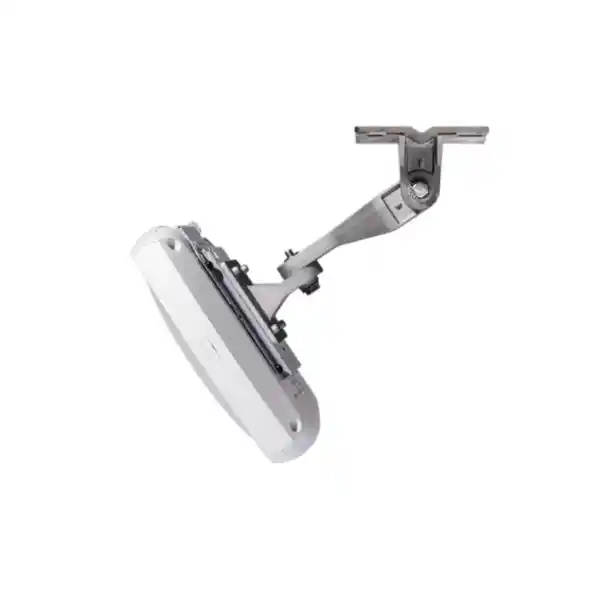
Are brackets and adapters included? Inclusion can vary by commercial bundle. List required mounting kits, DC adapter and accessories explicitly in the quotation.
Will it work with an existing controller? Only supported management platforms and versions should be assumed. Identify the controller model and release before committing to a rollout.
Is the listed radio rate the expected internet speed? No. Theoretical radio link figures are not equivalent to client throughput, application performance or ISP capacity.
What is the warranty? Warranty and support terms depend on the ordered product, regional eligibility and applicable agreements. Request written confirmation with the quote.
How many units are required? Determine quantity from the building plan, active users, applications, spectrum constraints and coverage validation. A fixed users-per-access-point rule is not a reliable engineering method.
Uganda Procurement and Delivery
FourTeck Uganda can prepare a project-specific quotation for CW9174I hardware and associated requirements. Buyers should provide the destination, target quantity, subscription term, existing switching environment and required accessories. Commercial confirmation should include availability, currency, applicable taxes, shipping arrangements, estimated lead time and warranty processing instructions. No specific inventory or dispatch promise is implied by this page.
For a staged deployment, consider a pilot area before full shipment or installation. Pilot testing can verify radio coverage, client compatibility, switch power behavior and the intended management workflow. The pilot also gives the purchaser an opportunity to refine the final bill of materials, avoiding preventable additions after approval.
Local Coverage: Kampala, Entebbe, Jinja, Mbarara and Gulu
Projects in Kampala may prioritize dense offices and multistorey commercial buildings. Entebbe requirements can include hospitality, education and corporate sites. Jinja organizations may combine administration offices with industrial facilities that require careful RF assessment. Mbarara and Gulu buyers may need coordinated branch procurement and clear shipping documentation. Service scope and delivery options for each location are confirmed during quotation, not assumed universally available.
Cross-Border Project Coordination
Regional teams can coordinate specifications across Uganda, Kenya, African enterprise markets, the UAE and Kuwait. The correct regulatory SKU, shipping documents, subscription eligibility, import requirements and local service coverage must be validated for each destination. A configuration approved in one country is not automatically authorized in another.
Related Procurement Options
For a different antenna approach, review Cisco’s CW9174E external-antenna variant in the Cisco Meraki access point family. Sites with different capacity or port requirements may compare the CW9172I and CW9176I. Complementary project line items include compatible multigigabit PoE switches, mounting hardware, structured cabling, licensing and management subscriptions. Discuss a coordinated bill of materials through FourTeck Uganda procurement rather than purchasing wireless hardware in isolation.
FourTeck Technical Service Scope
FourTeck can discuss bill-of-materials verification, power budget review, accessory compatibility, deployment planning and available staging or configuration support. Any pre-shipment firmware service, on-site installation, post-sales support or engineering engagement should be specified and confirmed in the written scope. Where customers already have network engineers, the quotation process can focus on technical compliance, license completeness and accurate delivery documentation. For turnkey requirements, provide a clear site list and acceptance criteria so the proposed services can be assessed.
Frequently Asked Questions
1. What is the Cisco Meraki CW9174I?
It is an indoor Cisco Wireless 9174 Series enterprise access point featuring Wi-Fi 7 and integrated omnidirectional antennas. It targets organizations that need modern wireless access for a range of business devices. The access point is part of a larger network system that also requires suitable switching, management, authentication and internet connectivity. The correct configuration depends on expected users, coverage geometry and regional spectrum rules. A site survey is recommended for installations where performance or continuity is critical.
2. Does the CW9174I require a subscription?
Yes. Cisco documents Cisco Networking Subscription requirements for the 9174 Series, with Wireless Essentials and Wireless Advantage options. The appropriate license depends on the selected deployment and management features. Ask for a quote that shows the subscription as a separate line item, including term and renewal considerations. Before purchasing, confirm the intended Meraki or Catalyst management approach and current compatibility requirements. An incomplete license order can delay deployment even when the physical access points have arrived.
3. Is CW9174I a tri-band access point?
The model supports a tri-band arrangement involving 2.4, 5 and 6 GHz, with specified radio capabilities, as well as a supported alternative dual-band arrangement. The actual operational bands depend on configuration, software and regional regulatory authorization. Do not assume 6 GHz is available at every installation address. For a Uganda project, confirm the correct regulatory domain and permitted frequencies before finalizing a radio design or making a performance commitment based on 6 GHz.
4. What PoE standard is required?
Cisco lists 802.3bt Class 5 power for the documented full-feature configuration, including the 5 Gbps link mode and specified USB power. Operation with 802.3at is documented with a reduced operating envelope and a 2.5 Gbps link limit in the relevant table. An 802.3af mode has substantially reduced functionality. Verify switch hardware, power budget, port configuration and cabling. Do not equate successful power-up with full feature availability.
5. How fast is the Ethernet port?
The CW9174I has a multigigabit RJ-45 Ethernet port supporting 100 Mbps, 1 Gbps, 2.5 Gbps and 5 Gbps. The actual negotiated speed depends on the connected switch, available power and cabling. A 5 Gbps uplink can help avoid bottlenecks in suitable environments, but it does not guarantee an individual wireless client will achieve that rate. For accurate planning, assess aggregate application traffic, client capability and uplink utilization.
6. Can this model replace an older Meraki access point?
It may be a suitable upgrade, but a replacement project should not assume identical mounting, power, licensing or RF behavior. Compare the old and new models, review switch PoE capabilities, verify management compatibility and inspect the existing cable plant. Newer radios may change the preferred number and location of access points. Conduct a pilot or survey before replacing a large fleet, especially where voice roaming, warehouse devices or specialized terminals are involved.
7. Can the CW9174I be installed outdoors?
The CW9174I is specified as an indoor access point. It should not be treated as an outdoor weatherproof product. Locations exposed to rain, moisture, dust or severe temperature variation may require a different enclosure or a purpose-built outdoor access point. The documented CW9174I operating range is 0 to 50 degrees C with noncondensing humidity limits. Even indoor spaces should be evaluated for ceiling heat, ventilation, mounting security and maintenance access.
8. Does it support WPA3 and enterprise security?
The published specification includes WPA3 support. Effective security depends on the selected software, compatible clients, authentication infrastructure and correctly configured policies. Organizations should consider enterprise identity integration, guest network isolation, segmentation, certificate management and administrative access controls. Where older clients require transitional configurations, assess the security implications rather than enabling broad compatibility without review. Compliance outcomes cannot be inferred from the access point model alone.
9. What warranty and support should buyers expect?
Request the applicable Cisco warranty and subscription support terms for the exact regional part number. Commercial terms may vary by channel, contract and destination. Ask who handles initial troubleshooting, how replacement requests are initiated, which documentation is required and whether any advance replacement entitlement is included. FourTeck can clarify the proposed supply and service scope during quotation. Avoid assuming that every hardware order includes on-site labor or identical replacement timelines.
10. How can a Uganda buyer obtain an accurate quotation?
Provide the required number of access points, installation cities, preferred software management environment, subscription term, existing switch models, expected client density and planned delivery date. Include any mounting kits, DC adapters, spare units, survey or staging services in the request. A complete bill of materials should identify the precise SKU and country compliance requirements. FourTeck can then discuss the relevant supply options and issue commercial terms subject to confirmation.
Plan Your Cisco CW9174I Deployment with FourTeck Uganda
Get a procurement proposal aligned with your site, network architecture and support requirements. Share your floor plans, switch inventory, access point quantity, subscription preference and installation city to help identify the correct configuration. Ask for explicit confirmation of regulatory compatibility, accessories, delivery, licensing and warranty terms. For multi-site projects, include a location schedule and any phased rollout deadlines so the quotation can reflect your actual implementation plan.
Contact FourTeck Uganda for Pricing
Technical reference: Cisco Wireless 9174 Series official data sheet. Specifications and availability are subject to change.


Reviews
There are no reviews yet.