ENTERPRISE WIRELESS | UGANDA PROCUREMENT
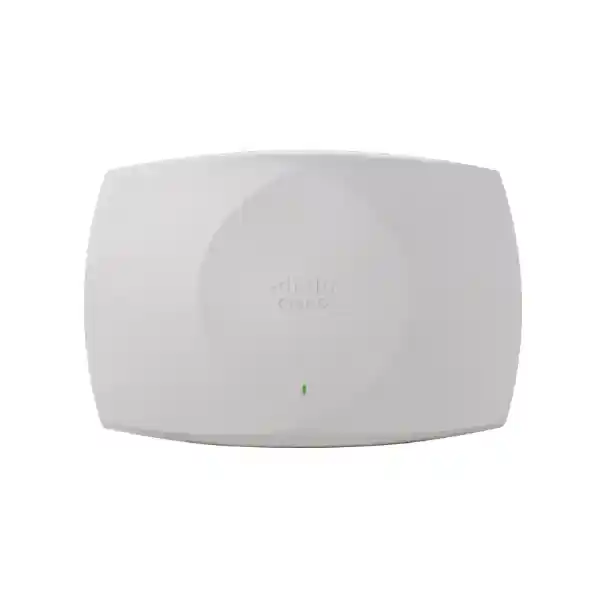
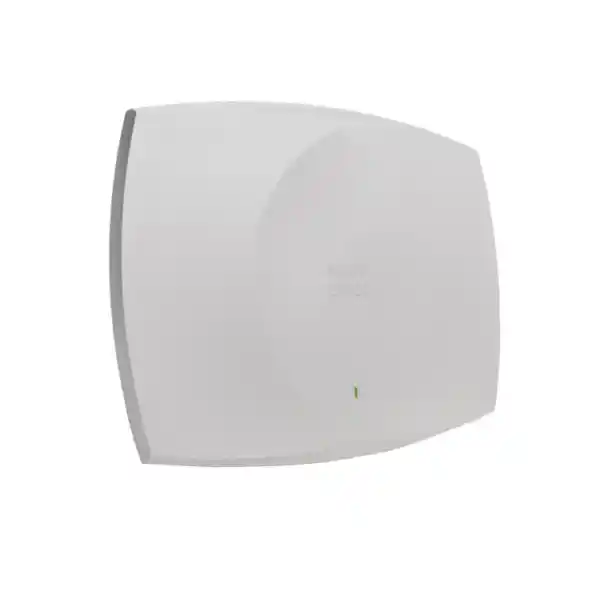
Cisco Meraki CW9179F Wi-Fi 7 High-Density Venue Access Point
The Cisco Wireless CW9179F is a premium, convertible indoor/outdoor access point for high-density public environments. It is built for venues where thousands of people may gather, move, roam and simultaneously demand dependable wireless connectivity. Unlike a conventional office access point, its flexible radio arrangements and configurable beam patterns are intended to support engineered coverage across seating bowls, concourses, exhibition halls and other challenging layouts.
Ugandan buyers planning stadium networks, large university facilities, event centers or airport connectivity should evaluate the CW9179F as part of an end-to-end wireless design. Access point capability is only one element: upstream switch capacity, power delivery, licensed management, structured cabling, interference planning, client behavior and internet bandwidth all determine the user experience. FourTeck helps buyers prepare a technically coherent request for quotation, rather than ordering hardware without the accessories and subscriptions needed for installation.
With Wi-Fi 7 features, four-stream radios, dual 10 Gbps-capable multigigabit Ethernet ports and support for Meraki or Catalyst management approaches, the CW9179F offers substantial flexibility. Actual enabled features depend on firmware, management mode, country rules and installation design. A site survey remains essential for dependable capacity planning.
Procurement Facts at a Glance
Cisco Wireless CW9179F; confirm exact country and management ordering SKU.
Wi-Fi 7, 2.4/5/6 GHz operation subject to local regulatory permissions.
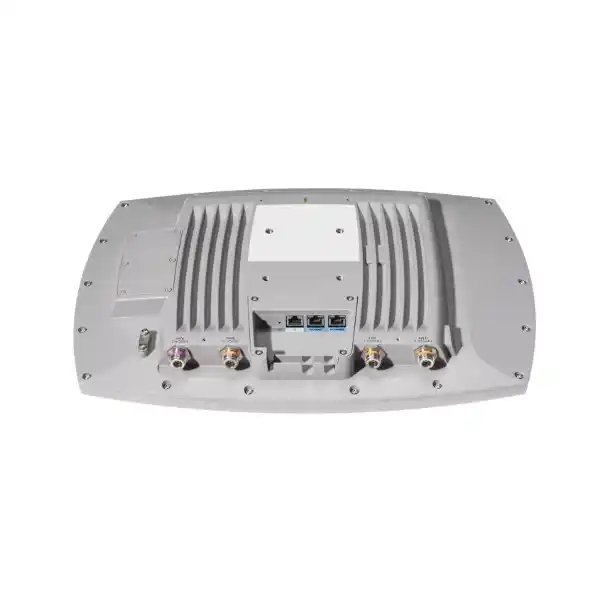
Two 100M/1G/2.5G/5G/10G RJ-45 Ethernet interfaces.
Price, lead time, support and warranty are confirmed on quotation; no stock claim is implied.
Architecture and Venue Design
The CW9179F is designed around multiple radios and adaptable antenna behavior, enabling network designers to consider how different frequency bands should serve dense populations. Its quad-radio arrangements can allocate capacity across 2.4 GHz, two 5 GHz radios and 6 GHz, depending on the chosen configuration. Cisco specifies up to 24 Gbps aggregate physical-layer rate in a supported quad-radio configuration. This is a theoretical PHY figure, not measured user throughput; protocol overhead, client mix, interference, channel availability and wired uplinks materially affect delivered performance.
Large public venues create unusual propagation challenges. A single access point may see many devices but still serve them poorly if its coverage overlaps excessively with neighboring cells. Directional design, mounting position and power control can matter more than maximum advertised data rate. The CW9179F provides software-configurable beam patterns to help qualified designers align coverage with venue geometry. Teams should document intended mounting heights, expected crowd density, seating materials, obstruction zones, stage structures and possible temporary event installations before finalizing quantities.
Two 10 Gbps-capable copper uplinks provide high-capacity connection options to suitable aggregation or access switches. Verify the actual port operating mode, redundancy behavior and power architecture against the final configuration; the existence of two ports does not itself guarantee active-active aggregation or seamless failover. Similarly, the presence of modern radio security features does not remove the need for correctly designed authentication, guest isolation and network segmentation.
Business Outcomes
- Capacity planning: Multiple radios and Wi-Fi 7 features support engineered service in crowded environments, provided channel plans and client distributions are validated.
- Reliability: A structured installation with monitored uplinks, resilient switching and operational runbooks reduces avoidable outage risk.
- Scalability: Consistent templates, documented naming and staged rollout procedures simplify growth from one venue section to many.
- Security: WPA3 capabilities and policy-based network segmentation can protect staff, contractors and visitors when implemented appropriately.
- Management: Select the supported Meraki cloud or Catalyst operational model that matches your organization’s existing skills and licensing.
- Lifecycle cost: Budget for subscriptions, support, mounting hardware, cabling, multigigabit switching, installation and eventual replacements.
Technical Specifications Ledger
| Parameter | Details |
|---|---|
| Model | CW9179F |
| Wireless generation | IEEE 802.11be Wi-Fi 7 |
| Radio bands | 2.4, 5 and 6 GHz; permitted channels depend on regulatory domain |
| Spatial streams | 4×4 MU-MIMO radio architecture; supported configurations vary |
| Ethernet | 2 × 100M/1G/2.5G/5G/10G RJ-45 |
| Console | RJ-45, default 115200 bps |
| Antenna | Configurable beam arrangements; external antenna connectors; validate approved accessories |
| Wireless features | OFDMA, MU-MIMO, multi-link operation, WPA3, 4096-QAM and preamble puncturing, subject to mode and client support |
| Management | Supported Meraki cloud or Catalyst controller software persona; verify entitlements |
| Catalyst software | Cisco IOS XE 17.18.1 or later per Cisco data sheet; check recommended release |
| Mounting and power | Confirm approved mount, power supply method and switch power budget against ordered variant |
| Environmental ratings | Convertible indoor/outdoor design; verify enclosure, temperature and installation conditions in official hardware guide |
Configuration and Sizing Worksheet
Step 1 — Count concurrent users. Distinguish ticketed attendance from simultaneous active devices. Estimate smartphone, tablet, point-of-sale and operational terminal populations separately. Include peak arrival, intermission and exit surges.
Step 2 — Map service zones. Draw seating sectors, corridors, hospitality rooms, press areas and outdoor approaches. Identify walls, metallic structures and potential interference sources. Survey each zone instead of assuming a fixed square-meter coverage figure.
Step 3 — Validate switching. Inventory multigigabit ports, power capabilities, uplink oversubscription, cable length and cable category. Budget additional capacity where the current access layer cannot support the intended design.
Step 4 — Choose management. Confirm whether Meraki cloud or Catalyst controller operation is appropriate, and itemize the required license, duration, support entitlement and compatible firmware.
Step 5 — Prepare a quotation. Specify quantities, delivery location, regulatory domain, preferred management, installation environment, mounting accessories, antenna requirements, warranty expectations and acceptance-test criteria.
Uganda Deployment Scenarios
Stadiums and Event Venues
High attendance creates concentrated airtime demand, rapid roaming and burst traffic. Designers can use sectional RF planning, measured antenna patterns and suitable switching to target dense seating areas while minimizing unnecessary cell overlap.
University Campuses and Auditoriums
Large lecture theaters and multipurpose halls may experience abrupt session transitions. Separate teaching, administrative and guest policies, then measure performance during full-capacity events rather than only in empty buildings.
Airports and Transport Facilities
Travelers, operational handhelds and tenant networks often have different access requirements. Use segmentation, controlled guest access, monitoring and documented incident procedures.
Government and Financial Facilities
Where public and restricted wireless zones coexist, conduct formal risk assessment, approved encryption and identity design, procurement review and change-control planning. Regulatory and institutional approvals remain the buyer’s responsibility.
Technical Deep Dives
Radio Performance and Traffic Handling
Wi-Fi 7 improves the available design toolkit through wider channels where legally permitted, advanced modulation and multi-link features. Realized benefit depends on client capability and spectrum conditions. Many existing clients remain on older standards, so the capacity model should reflect the installed device population. Aggregate radio PHY rates must never be treated as a guarantee of application throughput.
Firmware, Identity and Operational Control
Maintain a documented software baseline, supported management mode, administrator access policy and scheduled maintenance process. Validate compatibility before firmware upgrades, particularly when an installation depends on third-party identity systems, captive portals or specialized endpoints. Preserve configuration records and a rollback procedure.
Resilience and Recovery
Wireless availability depends on much more than the access point. Consider upstream switch redundancy, power resilience, DHCP and DNS reachability, authentication infrastructure, internet path diversity and monitoring. Run outage simulations and confirm how guest and business-critical networks behave during partial failures.
Pre-Purchase Due Diligence
Ask for the exact ordering part number and regulatory domain. Clarify whether the quoted amount includes cloud management entitlement or Catalyst licensing, approved antenna and mounting kits, power accessories, shipping, taxes, installation and support. Check whether the existing switching infrastructure offers the required multigigabit connectivity and power. Confirm the approved radio channels for Uganda and whether 6 GHz operation is authorized for the intended indoor or outdoor installation. Request current lifecycle notices from the manufacturer rather than assuming a particular support horizon. Obtain written acceptance criteria covering coverage, roaming, concurrency and critical application behavior.
Uganda Procurement and Delivery
FourTeck can receive a CW9179F inquiry for Kampala, Entebbe, Jinja, Mbarara, Gulu and other destinations in Uganda. Share the installation address, required quantity, requested delivery date and any institutional procurement conditions. Formal quotations should specify equipment, subscriptions, approved accessories, taxes, freight and support separately. Delivery timing depends on supplier confirmation, import arrangements and the selected configuration; no immediate stock or fixed delivery date is represented here.
For multinational projects, buyers can coordinate regional sourcing requirements through FourTeck Uganda, FourTeck Kenya, FourTeck Africa, FourTeck UAE and FourTeck Kuwait. Each jurisdiction may have distinct import, certification, warranty and radio-domain requirements.
Related Wireless Planning Options
Compare the CW9179F against Cisco CW9178I for indoor high-performance deployments, CW9176D1 for directional indoor coverage, and CW9177 series products for outdoor installations. The appropriate selection depends on the survey, permitted frequencies and capacity objectives. Explore related access point families through the Cisco wireless access point portfolio, review the official CW9179F data sheet, and use the Uganda enquiry form for accessory and licensing requests.
FourTeck Technical Service Scope
Ask about requirements review, bill-of-materials validation, switching compatibility, staging, approved firmware preparation and post-delivery assistance. Any survey, installation, configuration, acceptance testing or ongoing support should be explicitly included in the agreed scope. This helps prevent misunderstandings about whether the purchase covers hardware supply alone or a complete managed deployment.
Frequently Asked Questions
1. Is CW9179F suitable for a stadium?
Yes, it is specifically positioned for high-density public venues. However, suitability for a particular stadium depends on RF design, mounting, audience density and backhaul. A survey and capacity plan are necessary to determine quantities and positions.
2. Is this a Wi-Fi 7 access point?
Yes. It supports IEEE 802.11be features. Individual features require compatible clients, supported software, configuration and authorized spectrum. Older wireless devices can still affect airtime utilization and should be included in sizing.
3. Can the device be managed through Meraki?
The platform supports Meraki cloud management as an available operational approach. Confirm the ordering SKU, software persona, licensing and conversion prerequisites before purchasing. Do not assume that a controller-mode deployment can be switched without planning.
4. Does it need a 10 Gbps switch?
It has two multigigabit interfaces capable of 10 Gbps. The selected link speed depends on the switch, cable plant and design. Review throughput goals and the access layer before deciding whether a switch upgrade is necessary.
5. Can it be installed outdoors?
The CW9179F is designed for convertible indoor/outdoor applications. Verify the specific installation guide, approved mounting hardware, environmental exposure, lightning protection and applicable regulatory restrictions before deploying it outdoors.
6. Is 6 GHz available everywhere in Uganda?
Do not assume unrestricted 6 GHz use. The legal channel set, indoor/outdoor permissions and device regulatory domain must be checked with current local requirements and the manufacturer’s country configuration.
7. What licenses should appear on the quote?
The answer depends on the chosen management platform, feature entitlements and support term. Request a separate line for every subscription or software entitlement, with start date, duration and renewal assumptions stated clearly.
8. Are mounting and antenna accessories included?
Package contents vary by ordering configuration. Request an itemized bill of materials and verify that any external antennas, brackets, cabling, surge protection and power accessories are approved for the intended installation.
9. How are warranty and replacement handled?
Warranty and replacement arrangements depend on the purchased SKU, Cisco terms, support coverage and reseller agreement. Ask for written eligibility, service level, return procedure and Uganda logistics details before issuing a purchase order.
10. Can FourTeck help with rollout planning?
Submit your site details, current network diagram, expected concurrency and preferred management model. Request a defined engineering scope covering survey, bill-of-materials review, configuration, testing and handover as needed. Services are subject to confirmation in the quotation.
Request a Cisco CW9179F Quote for Uganda
Send your project location, expected user count, venue type, existing switch model and preferred management platform. Ask for a complete equipment and licensing schedule, approved accessories, regional compliance confirmation, delivery estimate and optional technical services. A complete brief helps produce a more accurate procurement proposal and reduces costly changes after ordering.

Reviews
There are no reviews yet.