CLOUD-MANAGED ACCESS SWITCHING | UGANDA PROCUREMENT
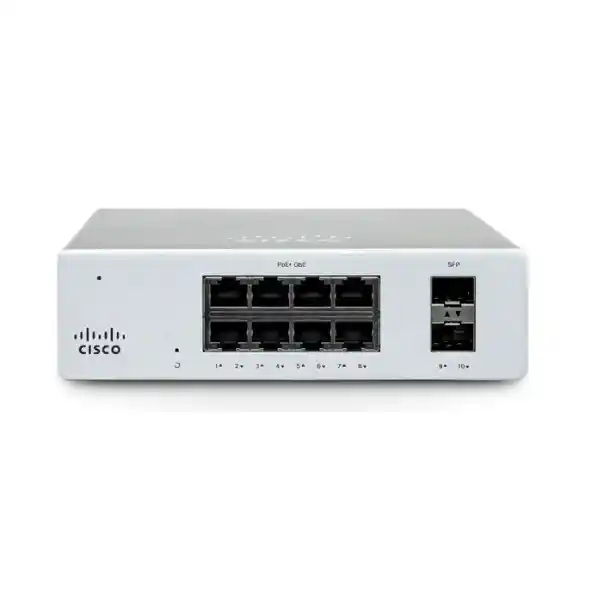
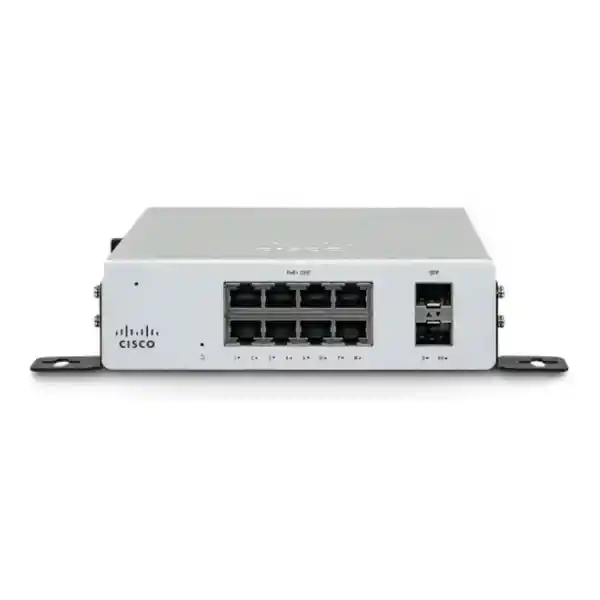
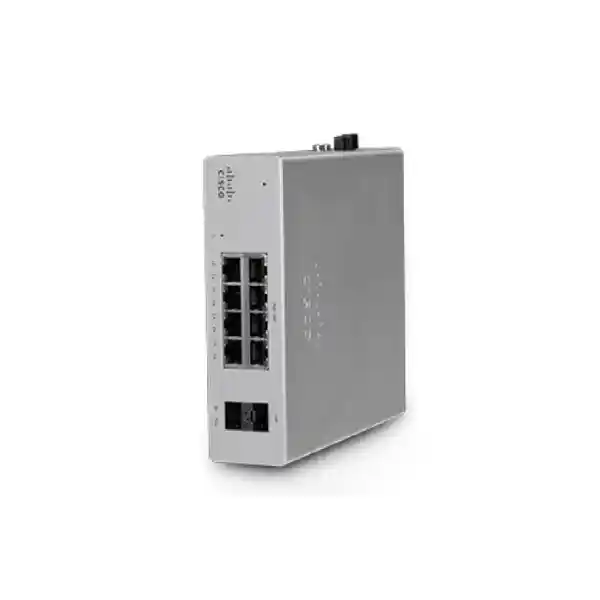
Cisco Meraki MS130-8P-I 8-Port PoE+ Enterprise Access Switch
The Cisco Meraki MS130-8P-I is a compact, centrally managed Layer 2 network switch for connecting and powering devices at business network edges. It combines eight 10/100/1000 Ethernet interfaces, two 1 Gigabit SFP uplinks and a shared 120-watt Power over Ethernet budget. An internal power supply and fanless construction make this particular MS130 variant useful where cabinet space, acoustic comfort and clean power-cable routing matter. Buyers planning a new branch, replacing an unmanaged switch or standardizing several small sites should evaluate the entire solution: switch hardware, Meraki licensing, powered-device demand, uplink modules and local delivery.
The MS130-8P-I is an access-layer product, not a substitute for a firewall, internet router or high-capacity aggregation switch. Its cloud-managed design gives network administrators a common operational view without requiring a full-time engineer at each office. Appropriate deployment depends on working connectivity to the Meraki cloud and an active, suitable management license. Plan segmentation and security policies according to the wider network architecture.
Procurement facts at a glance
MS130-8P-I; eight 1GbE RJ45 access ports and two 1GbE SFP uplinks.
PoE+ up to 30W per port, with a combined 120W available across powered ports.
Integrated AC power supply; fanless operation; plan the appropriate regional power cord.
Price, stock, lead time, license and regional warranty arrangements are confirmed by quotation.
Architecture and operating model
At the access layer, switching must perform two jobs consistently: carry traffic between local Ethernet devices and provide predictable access to the upstream network. The MS130-8P-I offers a published 20Gbps switching capacity across its ten Gigabit interfaces. Its two SFP ports are 1GbE interfaces, not 10GbE SFP+ uplinks; selecting a 10GbE optic will not transform them into higher-speed ports. An access switch of this size works well where eight or fewer copper connections meet actual demand and where uplink oversubscription has been evaluated. A building with many high-bandwidth wireless access points, cameras recording continuously and large workstation transfers may require a larger or multigigabit alternative.
Meraki Dashboard provides centralized configuration, switch-port status, VLAN controls, remote packet capture, firmware management and monitoring capabilities. Administrators can standardize templates and operating procedures across dispersed sites while retaining site-specific port assignments. Management does not remove the need for careful topology design: uplink redundancy, IP addressing, DHCP services, gateway routing, firewall policies and authentication infrastructure still depend on the broader environment.
Business outcomes and engineering value
- Predictable access throughput: Gigabit copper ports support everyday office traffic, while separate SFP uplinks preserve copper access-port availability. Verify uplink utilization during busy periods rather than assuming all devices can continuously transmit at line rate toward one upstream link.
- Lower on-site administration burden: Dashboard visibility can help an off-site network team identify disconnected endpoints, changed port conditions and device-level alerts before dispatching a technician.
- Repeatable branch rollouts: Standard VLAN naming, port descriptions, approved uplink optics and documented license terms reduce inconsistencies across many sites.
- Access segmentation: VLAN tagging, access controls and 802.1X capabilities support a structured approach to separating employee, guest, voice and operational devices when deployed with the necessary upstream services.
- Practical PoE consolidation: A single switch can deliver data and power to compatible phones, access points and cameras, reducing separate power adapters while retaining a clear total wattage limit.
- Quiet local operation: Fanless hardware can be placed in a suitable ventilated office cabinet or equipment space without fan noise. Avoid sealed, overheated enclosures.
- Lifecycle visibility: Include license renewal, firmware policy, replacement stock and incident response ownership in the purchase decision, not only initial hardware cost.
Technical specifications
| Specification | MS130-8P-I |
|---|---|
| Product class | Cloud-managed Layer 2 access switch |
| Copper ports | 8 × 10/100/1000 Mbps RJ45 |
| Uplink ports | 2 × 1GbE SFP |
| PoE | 802.3at PoE+, up to 30W per port; total 120W budget |
| Switching capacity | 20Gbps |
| Power supply | Internal AC supply |
| Published load | 8W idle / 128W maximum |
| Cooling | Fanless |
| Dimensions | 4.4 × 23 × 23cm (H × W × D) |
| Weight | Approximately 1.3kg |
| Operating temperature | 0–45°C |
| Humidity | 5–95% |
| Mounting | Desktop or integrated wall mount |
| Management | Cisco Meraki Dashboard; appropriate license required |
Reference: Cisco Meraki MS130 datasheet. Confirm regional SKU and accessory selections against the current manufacturer documentation.
Configuration and sizing worksheet
First, list every connected device and classify it as powered or non-powered. Record the expected maximum draw of each powered endpoint, including startup and feature-dependent requirements. For example, four endpoints needing 20W each and two needing 10W each produce a 100W planned load, leaving 20W of the shared 120W budget. Eight endpoints requesting 30W each would require 240W and therefore exceed the switch budget despite each individual port supporting up to 30W. Consider power headroom and future additions before committing to this eight-port model.
Next, map the upstream path. Determine whether existing fiber requires short-reach or long-reach optics and confirm connector type, distance, fiber grade and approved transceiver compatibility. Copper uplink modules are another possibility where appropriate. Verify VLAN tagging, spanning-tree behavior, link aggregation requirements and any authentication prerequisites with the network team. Confirm that internet access and management connectivity can be established at commissioning.
Finally, measure the intended mounting area and airflow. The internal power supply simplifies the equipment layout, but the switch still requires a compatible regional power cord and safe electrical feed. If installing in a rack, include a suitable shelf or approved mounting arrangement rather than assuming full-width rack ears are supplied. Capture the required license duration, target delivery date, support contact, invoice details and any acceptance-testing requirements in the quotation request.
Deployment scenarios
Distributed enterprise branches
A regional office can connect desks, a voice endpoint, a wireless access point and a small number of operational devices to the MS130-8P-I. The two SFP uplinks allow an engineer to design fiber connections where compatible with the upstream network. Use documented port profiles so that a replacement switch can be commissioned consistently. Where downtime carries significant cost, provide a spare or an approved alternate connection path and test recovery procedures.
Financial and regulated workplaces
A banking service point may use VLAN separation and 802.1X policies to help distinguish staff workstations from voice or ancillary equipment. This switch alone does not create a complete compliant environment: firewalls, logging retention, endpoint protection, physical security and documented change control remain essential. Ask the security team to approve switch management access, firmware practices and monitoring integration before deployment.
Schools and campus edge locations
A classroom wing, administrative office or small library can use the eight Gigabit ports for local devices while centrally managed settings make multi-building administration more consistent. Assess wireless access point consumption carefully; newer high-demand access points can require both greater power and multigigabit uplink speeds than this model offers. Select a larger switch when endpoint growth or classroom density requires it.
Public-sector offices
Government teams often need a transparent bill of materials, documented license entitlements, an identifiable warranty route and clear receiving procedures. The MS130-8P-I can serve modest access-edge needs when the agency permits cloud-based management. Review organizational policies for cloud connectivity, device inventory and change authorization before purchasing.
Three engineering considerations
1. Packet forwarding and link planning
The published 20Gbps switching capacity describes the model’s hardware switching envelope. Actual application performance depends on packet sizes, endpoint capabilities, uplink utilization, cabling and the wider network. Avoid treating switching capacity as guaranteed application throughput. A single 1GbE uplink can become a bottleneck even when several local copper ports remain lightly utilized. Review expected simultaneous traffic, traffic bursts and any requirement for dual paths. Use compatible SFP modules and validate physical-layer stability during acceptance testing.
2. Cloud administration and security operations
Dashboard management provides a consistent place to configure port behavior, observe switch health and plan firmware maintenance. Establish named administrative roles, suitable authentication controls and a documented procedure for approving configuration changes. Integrate available logging with existing operations processes. Before go-live, validate VLAN membership, access restrictions, DHCP behavior and device onboarding. Because cloud management and licensing are integral to the platform, confirm subscription entitlements and renewal responsibility before purchase.
3. Resilience and incident recovery
The MS130-8P-I has one internal power supply and should not be represented as a dual-power-supply switch. Improve service continuity through an appropriately sized UPS, protected cabling, resilient upstream topology where supported and tested configuration recovery procedures. For sites with strict uptime targets, a spare switch and documented replacement workflow may be more practical than relying on an unverified replacement lead time. Review spanning-tree and aggregation behavior with the upstream platform before enabling redundant links.
Buyer questions to resolve before issuing a purchase order
Does the price include the necessary Meraki license, or is it a separate line item? Is the quotation for the exact MS130-8P-I internal-power variant rather than the externally powered MS130-8P? Are compatible SFP modules included? Is the correct regional mains lead specified? Is the total powered-device load within 120W? Are eight copper ports sufficient after allowing for growth? Does the site need multigigabit access or 10GbE uplinks? Is the mounting location suitable for a 23cm-deep fanless device? Who will claim the serial number in the Dashboard organization? What warranty process applies locally, and what proof of purchase is needed? Each question affects operational readiness and the true landed cost.
Uganda ordering and delivery
FourTeck Uganda can be contacted for an itemized supply quotation for Kampala installations and regional projects. Share the delivery location, quantities, technical schedule and procurement deadline. Ask for written confirmation of current stock or sourcing lead time, shipping charges, any applicable taxes, license inclusion and support scope. For larger rollouts, request staged deliveries and a serial-number inventory aligned with site codes. Optional pre-configuration, labeling and commissioning services should be specified in the statement of work rather than assumed to accompany the hardware.
Local coverage planning
For Kampala, coordinate receiving arrangements and installation access with the site team. For Entebbe, account for airport-area security and delivery scheduling where relevant. Jinja deployments may benefit from grouped site shipments; Mbarara offices should verify the nominated receiving contact and local power environment; Gulu projects should allow for appropriate transit and site-readiness checks. Delivery coverage and timelines for each location require quotation confirmation. For every site, collect cabinet photographs, fiber details, power socket type and a contact who can verify the delivered model.
Regional supply coordination
Organizations managing multiple countries can align switch models and license terms across Uganda, Kenya, other African markets, the UAE and Kuwait. Country-specific customs, taxes, warranty arrangements and approved power accessories must be checked for each order. Maintain a common bill-of-materials template but allow local variations where electrical, procurement or import requirements differ.
Related procurement options
Explore the FourTeck Uganda product catalog for complementary networking equipment. Request comparison pricing for the Cisco Meraki MS130-8P with external adapter, higher-port-count MS130 access switches, multigigabit MS130 variants, supported 1GbE SFP transceivers, approved power cords and suitable UPS protection. A related-model comparison should focus on actual port count, PoE capacity, uplink speed, enclosure type and subscription cost. Do not substitute a similar-looking model without reviewing the differences.
Technical service coordination
Before shipment, request bill-of-materials review, accessory matching, licensing verification and, where agreed, serial-number capture. Network teams may also request labeling, approved firmware checks, basic configuration staging and acceptance test documentation. Confirm the exact services, security responsibilities, administrator access method and delivery milestones in writing. After installation, keep a record of the hardware serial, assigned license, network location, uplink optic, connected powered devices and support contact.
Frequently asked questions
Is the MS130-8P-I a managed switch?
Yes. It is a Cisco Meraki Dashboard-managed Layer 2 access switch. Administrators can configure and monitor switch ports and supported network features centrally. A suitable Meraki management license is part of the deployment plan. Confirm the exact entitlement and license term in the quotation, and ensure the site can establish the connectivity needed for cloud management.
How many devices can receive PoE power?
Up to eight copper interfaces can be considered for powered endpoints, but actual simultaneous support depends on total consumption. Each powered port supports up to 30W, while the switch shares 120W overall. A collection of eight 20W devices would require 160W and exceed that budget. Size from endpoint requirements, not only port count.
Does this switch have 10GbE uplinks?
No. The MS130-8P-I has two 1GbE SFP uplinks. If the design requires 10GbE SFP+ connectivity, consider an appropriate alternative in the MS130 range and confirm the exact model. The physical presence of an SFP slot does not imply support for higher-speed SFP+ modules.
What is different about the I variant?
The MS130-8P-I uses an internal power supply, unlike the MS130-8P model with an external adapter. This difference affects power-cable planning and enclosure dimensions. Specify the full model suffix on purchase orders to avoid receiving the wrong power configuration.
Is the unit suitable for a quiet office?
Its fanless construction can be beneficial in noise-sensitive areas. However, fanless does not mean it can be placed in a sealed box or exposed to excessive heat. Respect the published 0–45°C operating range and provide sufficient ventilation around the chassis.
Can it be mounted in a standard rack?
The model supports desktop and integrated wall mounting. A standard full-width rack installation may require a suitable shelf or separately specified arrangement. Confirm cabinet clearance, cable bend radius, power access and any required mounting hardware before ordering.
Which optical modules are compatible?
Cisco documentation lists supported 1GbE options including MA-SFP-1GB-SX, MA-SFP-1GB-LX10 and MA-SFP-1GB-TX. Select the module only after confirming distance, fiber type, connector requirements and the upstream device. Include optics explicitly in the bill of materials if needed.
Can it connect to equipment from other vendors?
Standard Ethernet and VLAN interfaces can interoperate with compatible equipment, subject to correct configuration. Verify negotiation, tagging, spanning-tree and aggregation settings at both ends. Manufacturer-specific management functions should not be assumed to work across vendors.
What should the warranty quotation specify?
Ask for the applicable manufacturer warranty or replacement entitlement, the authorized support route, exclusions, required evidence and expected local handling procedure. Do not assume a fixed local replacement time unless the supplier commits to it in writing. Keep serial numbers and invoices available for any future claim.
Can FourTeck help with configuration?
Ask for an explicit services quotation covering switch onboarding, VLAN planning, port labeling, firmware checks, connectivity testing and handover documentation. The work scope should identify who controls the Meraki organization and who authorizes configuration changes. This prevents ambiguity between hardware supply and engineering services.
Procure the correct MS130-8P-I configuration
Send your required quantity, delivery town, endpoint power schedule, uplink type and preferred license term. Request a written quote covering the exact internal-power model, appropriate accessories, current availability, warranty arrangements and optional implementation services. A complete bill of materials helps avoid commissioning delays and unexpected additional purchases.

Reviews
There are no reviews yet.