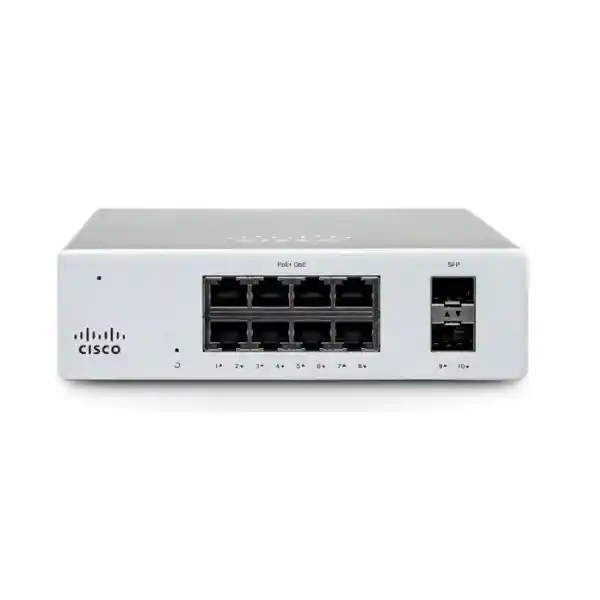
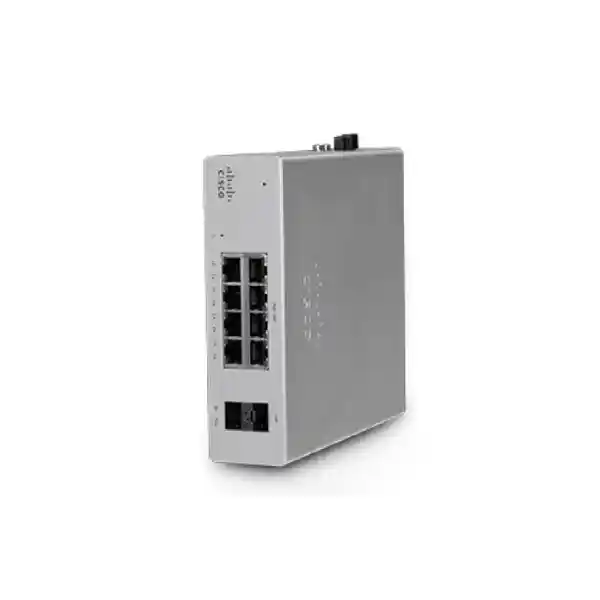
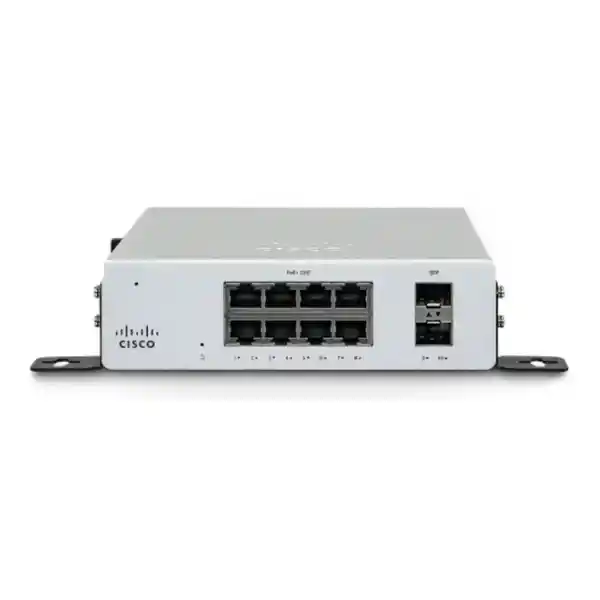
Cisco Meraki MS130R-8P Rugged Cloud-Managed PoE Access Switch
The Cisco Meraki MS130R-8P extends cloud-managed access switching into locations where conventional office switching hardware may be unsuitable. Designed as a rugged member of the Meraki MS130 family, it provides eight Gigabit Ethernet access interfaces with Power over Ethernet capability and dedicated fiber-capable uplinks for connecting remote edge infrastructure back to the wider network. The practical value of this model is not simply its port count. It is intended to help organizations place managed switching closer to endpoints located in exposed, operationally difficult or environmentally challenging areas while retaining centralized visibility through the Meraki Dashboard.
Typical procurement conversations around the MS130R-8P involve outdoor wireless coverage, surveillance networks, warehouse connectivity, transport infrastructure, industrial sites, campuses and remote buildings. In each case, the switch is only one element of a reliable deployment. Buyers must consider environmental protection, mounting, power availability, surge and lightning protection, grounding, cabling, fiber distance, optical modules, PoE load, cloud licensing and physical security. A project-specific bill of materials should therefore be validated before purchase.
Procurement Fact Rail
Cisco Meraki MS130R rugged access switching
Cloud-managed operational model
8 x Gigabit Ethernet PoE-capable ports
Designed for distributed edge endpoints
Confirm license, power accessories, optics, mounting and environmental design on quotation
Stock position, lead time, exact warranty handling and bundled accessories can vary by order and sourcing route. They should be documented in the commercial quotation rather than inferred from the model name.
Rugged Edge Architecture and Operational Role
Enterprise networks increasingly extend beyond climate-controlled communications rooms. Wireless access points may need to be installed near yards or external work areas. Cameras may be positioned at gates and perimeter locations. Warehouses can have endpoints separated by long distances, while remote utility, transport or campus infrastructure may need local Ethernet aggregation before traffic returns over fiber. The MS130R-8P addresses this class of deployment by combining the Meraki management model with a rugged switching platform.
Its eight copper access interfaces allow a compact group of endpoints to connect locally. Power over Ethernet can reduce the requirement for separate electrical outlets at every compatible endpoint, although a complete PoE calculation remains essential. Each connected device should be listed with its maximum expected power requirement and the aggregate demand checked against the switch’s supported budget. Engineering margin should be retained for startup behavior, future replacement devices and configuration changes.
Fiber uplinks are especially relevant in rugged deployments because copper Ethernet distance and electrical exposure can become limiting factors. Fiber can connect a remote switch location back to a distribution point while providing electrical isolation along the data path. The chosen SFP module, fiber type, connector, wavelength and distance must match the peer equipment. Buyers should never assume that an arbitrary optic is supported simply because its physical form factor fits.
Meraki Dashboard centralizes configuration and operational visibility. A network team responsible for multiple sites can establish switch-port configurations, VLAN assignments and supported access controls while monitoring device health and investigating connectivity events remotely. This can reduce unnecessary travel to remote locations, but cloud management does not remove the need for sound local infrastructure. The site still requires reliable power, appropriate protection, suitable cabling and a documented physical recovery process.
Enterprise Outcomes
Place managed Ethernet access nearer cameras, wireless equipment and operational endpoints instead of extending numerous individual cable runs back to a distant indoor cabinet.
Use the Meraki cloud-management architecture to maintain consistent configurations and investigate remote-site issues from a centralized administrative environment.
Deliver network connectivity and power to compatible endpoints while reducing local power adapters, subject to supported standards and aggregate power limits.
Design uplinks appropriate for remote buildings and distributed infrastructure where distance, electrical isolation or bandwidth requirements favor fiber.
Bring difficult edge locations into the same Meraki administrative framework used for other supported branch and campus switching deployments.
Evaluate hardware, cloud licensing, optics, environmental accessories, protection and support as one deployment rather than treating the switch as an isolated purchase.
Hardware and Software Highlights
| Component | Deployment Value |
|---|---|
| 8 x Gigabit Ethernet access ports | Compact aggregation for edge endpoints without deploying a high-density indoor access switch. |
| Power over Ethernet capability | Supports compatible powered endpoints while simplifying local power distribution. |
| SFP uplink connectivity | Supports fiber-oriented backhaul designs for remote or electrically challenging locations. |
| Rugged platform design | Better aligned with demanding edge deployments than standard office-focused switching hardware. |
| Meraki Dashboard management | Centralized configuration, monitoring and troubleshooting for geographically distributed sites. |
| Layer 2 access functionality | Supports structured segmentation and access-layer operation within a wider routed and secured network architecture. |
Technical Procurement Ledger
| Item | Procurement Guidance |
|---|---|
| Model | Cisco Meraki MS130R-8P |
| Product class | Rugged cloud-managed Layer 2 access switch |
| Copper interfaces | 8 x Gigabit Ethernet access ports |
| Endpoint power | PoE capability; validate endpoint requirements and total supported power budget against current Cisco documentation and proposed power input. |
| Uplink | SFP connectivity; specify supported optic, fiber medium, connector and link distance in the bill of materials. |
| Management | Cisco Meraki Dashboard with appropriate licensing. |
| Environmental deployment | Rugged edge applications; validate temperature, ingress exposure, mounting and enclosure requirements for the actual site. |
| Power architecture | Confirm required power input components, regional power arrangements, grounding and surge protection for the project. |
| Licensing | Appropriate Meraki switching license should be included in procurement planning. |
| Warranty / replacement | Confirm current Cisco entitlement and FourTeck commercial handling on the formal quotation. |
Configuration and Sizing Worksheet
1. Identify the Edge Workload
Create a port-by-port list before ordering. Record every camera, access point, telephone, sensor gateway, controller or other Ethernet endpoint. Note which devices require PoE and which use local power. Retain spare capacity where future additions are likely. If more than eight copper endpoints are anticipated, evaluate whether multiple rugged switches or another architecture is more appropriate.
2. Build the Power Budget
Document the maximum power requirement of every powered endpoint rather than relying on typical consumption. Consider startup demand, cold-weather behavior where relevant and replacement devices that may have different requirements. The power source feeding the switch must be designed to support both the switching platform and expected PoE load.
3. Validate Environmental Conditions
Record expected minimum and maximum temperatures, direct weather exposure, humidity, dust, vibration, mounting orientation and access for maintenance. Rugged does not mean that every installation can be left completely exposed without engineering controls. Confirm the manufacturer’s environmental limits and use a suitable enclosure or protection system wherever site conditions require it.
4. Engineer the Uplink
Specify fiber type, route length, termination, transceiver type and the peer interface. Check optical budgets for longer links. In outdoor environments, physical fiber protection and entry into cabinets or buildings should form part of the installation scope.
5. Confirm Cloud Licensing
The Meraki management model depends on appropriate licensing. Align the license term with organizational procurement cycles and request clear hardware and license line items. Verify any desired advanced functionality against current entitlement and firmware requirements.
6. Prepare the Quote Package
A complete request should include switch quantity, destination, endpoint schedule, PoE requirements, uplink design, license duration, power and mounting needs, environmental conditions and requested installation or staging services. This gives the supplier enough information to identify omissions before they delay commissioning.
Deployment Scenarios in Uganda
Outdoor Wireless Coverage
Business compounds, campuses, hospitality properties and industrial facilities may need wireless coverage beyond the main building. A rugged edge switch can aggregate compatible access points closer to their mounting locations while fiber carries traffic back toward the main network. The installation should include appropriate surge, grounding and environmental design.
Video Surveillance Networks
Security cameras positioned at entrances, yards, perimeter zones or remote structures can benefit from local PoE switching. Calculate camera power demand, recording traffic, uplink capacity and fault-domain impact. Critical surveillance designs may require multiple switches or alternate paths so that one hardware failure does not remove an entire coverage area.
Warehousing and Logistics
Large warehouses often need connectivity at loading areas, distant aisles and external dispatch zones. The MS130R-8P can support compact edge clusters while Dashboard provides centralized visibility. Site surveys should assess temperature, dust, equipment impact risk, cable routing and secure mounting.
Industrial and Utility Locations
Industrial edge networking requires careful separation between information systems and operational equipment. The switch can provide Ethernet access within an approved architecture, but it should not be assumed to replace specialized industrial security, safety or control systems. Confirm electromagnetic, power and environmental conditions with project engineers.
Government and Distributed Public Infrastructure
Remote administrative buildings and public infrastructure can use centralized management to improve visibility across dispersed sites. Procurement teams should confirm organizational policies governing cloud management, administrator access, asset registration, data handling and replacement processes before standardization.
Three Engineering Deep Dives
Access Switching and Edge Traffic
The switch operates at the access layer, where endpoint traffic first enters the managed network. Good design begins with traffic classification. Cameras may generate continuous streams, wireless access points can create variable bursts and operational endpoints may have low bandwidth but high availability requirements. Port assignments should therefore be based on service role rather than convenience. VLANs can separate logical traffic classes where supported by the wider design. Upstream capacity must accommodate aggregate demand, and any bottleneck should be intentionally placed and monitored. The MS130R-8P is not intended to replace the firewall or routing core; those functions should remain with appropriate devices.
Cloud Operations and Firmware Governance
Dashboard-based administration can simplify dispersed switch estates because configuration, health information and troubleshooting are presented centrally. Organizations should still establish governance around administrator roles, multifactor authentication, change approval, firmware maintenance and alert handling. Remote management is most effective when physical port labels, site drawings and asset records accurately correspond with Dashboard naming. Firmware updates should be scheduled around operational windows and reviewed for feature or compatibility implications.
Resilience at Difficult Sites
Rugged hardware addresses only part of site resilience. Reliable service depends on power quality, cable protection, grounding, environmental controls, upstream path design and replacement logistics. A remote switch may be physically harder to reach than one in a server room, making spare strategy and documentation more important. Critical sites can maintain a compatible spare and a restoration procedure covering physical replacement, cloud claim or inventory processes, configuration synchronization and endpoint testing. UPS or appropriately engineered DC backup should be considered where service continuity is required.
Pre-Purchase Gap Checklist
Licensing: establish whether the quoted license term matches the organization’s preferred renewal cycle and whether every required switch is correctly covered. Power: verify the source, conversion equipment and total PoE load rather than assuming the hardware alone contains everything required for site power. Environment: compare actual temperature, moisture, dust and exposure against manufacturer limits. Mounting: establish how the unit will be physically secured and how technicians will safely access it. Fiber: confirm optic compatibility on both ends of the uplink and the exact fiber plant. Grounding and surge protection: include these in exposed installations according to site engineering requirements. Cloud access: make sure organizational security policies permit the Meraki management architecture. Lifecycle: confirm current product availability, support status and replacement procedures. Compatibility: validate VLANs, authentication, endpoint PoE standards and upstream equipment. Acceptance: define tests for port connectivity, PoE operation, uplink stability, Dashboard visibility and site documentation before deployment is signed off.
Uganda Procurement and Delivery
Ugandan projects can be quoted for Kampala and surrounding commercial districts as well as Entebbe, Jinja, Mbarara, Gulu and other locations. For rugged deployments, the delivery address alone is not enough information. Share the intended environment and deployment purpose so the quotation can account for licenses, optics and relevant accessories. Large projects should provide a site schedule indicating quantities and expected installation phases.
Lead time, stock, taxes, freight, warranty handling and commissioning services are confirmed in the formal commercial offer. Where hardware will be staged before shipment, agree on naming conventions, network ownership, firmware expectations and configuration responsibility. Equipment received at site should be inspected before installation and matched against the approved bill of materials.
Regional Supply Coordination
Organizations operating across borders can coordinate requirements through FourTeck’s regional presence for Uganda, Kenya, broader African markets, UAE and Kuwait. Multi-country projects should identify where licenses will be assigned, where hardware will be deployed, the required delivery terms and whether configurations need to follow a common corporate standard.
Related Network Components
A complete MS130R-8P deployment may also require supported SFP transceivers, appropriate fiber patch leads, outdoor-rated or protected Ethernet cabling, surge protection, grounding components, suitable power equipment, mounting hardware and Meraki switching licenses. Wireless projects may require compatible Meraki access points, while surveillance deployments should account for camera power and upstream recording capacity. For locations that do not require rugged hardware, compare conventional indoor Meraki MS130 switches before finalizing the architecture. Send the complete requirement through the FourTeck Uganda contact page for bill-of-materials review.
FourTeck Technical Service Scope
Technical assistance can be scoped around product selection, bill-of-materials verification, license planning, optic compatibility, endpoint power calculations, configuration preparation and pre-shipment staging where commercially agreed. For rugged projects, installation readiness should also consider enclosure design, grounding, surge protection, fiber termination and access for future maintenance. Acceptance testing can document switch visibility, firmware state, uplink operation, VLAN configuration, endpoint connectivity and PoE delivery. Exact engineering and post-sales commitments should be recorded in the accepted quotation or service scope.
Frequently Asked Questions
What type of deployment is the Cisco Meraki MS130R-8P intended for?
It is a rugged cloud-managed access switch intended for edge locations where a conventional office switch may not be the preferred choice. Typical examples include protected outdoor network points, warehouses, campuses, transportation areas, surveillance deployments and distributed infrastructure. The exact site must still be assessed against Cisco’s environmental specifications. Rugged construction should not be interpreted as permission to ignore water exposure, temperature, dust, lightning, grounding or enclosure requirements.
How many copper network ports does it provide?
The MS130R-8P provides eight Gigabit Ethernet copper access ports. When planning a site, count every expected endpoint and reserve capacity for realistic expansion. If a design already consumes all eight ports on day one, consider whether another switch, a larger topology or an additional edge location would provide a more maintainable solution.
Can the switch power cameras and wireless access points?
The model provides PoE capability for compatible endpoints, but a successful design requires more than confirming that PoE is present. Check each device’s supported standard and maximum power requirement, calculate simultaneous demand and verify the switch and its power arrangement can support the resulting load. Retain engineering margin instead of designing to an exact theoretical limit.
Does the MS130R-8P require a Meraki license?
The Meraki cloud-management architecture requires appropriate licensing. Include the license in the initial procurement budget rather than treating it as an afterthought. License terms and feature entitlements can affect lifecycle cost and functionality, so request clear license part numbers, durations and renewal implications in the quotation.
Can fiber be used for the uplink?
The platform includes SFP uplink connectivity suitable for supported fiber transceivers. The transceiver on the switch must match the fiber medium, wavelength, connector arrangement, link distance and equipment at the opposite end. For remote-site projects, have the fiber path documented and tested rather than ordering optics solely from a generic description.
Does rugged mean the switch can be mounted anywhere outdoors?
No. Rugged equipment still has defined environmental and installation limits. Direct weather, water ingress, solar loading, extreme temperatures, corrosive environments and electrical exposure can require additional engineering measures. Site conditions should be compared with the current manufacturer specifications and a suitable enclosure, mounting method, grounding and surge strategy used where required.
What should be considered for lightning and surge exposure?
Outdoor and distributed networks require a site-specific electrical protection design. Grounding, bonding, surge protection, cable routing and building-entry practices should be assessed by qualified personnel according to applicable standards and site conditions. Fiber uplinks can help provide electrical isolation along the data path, but they do not eliminate the need to protect the switch’s power system and copper endpoint connections.
Can the MS130R-8P replace a router or firewall?
It should be treated primarily as an access-layer switch, not as a replacement for dedicated WAN routing and perimeter security platforms. A complete network typically places appropriate routing and firewall functions elsewhere. Define the Layer 2 boundaries, VLANs, upstream gateways and security policies before commissioning the switch.
What information should Ugandan buyers send for a quotation?
Provide the number of switches, deployment locations, endpoint types, expected PoE requirements, preferred license term, fiber distances, available power and any environmental concerns. Include delivery destinations and indicate whether staging, configuration or installation assistance is required. This information allows the quotation to identify associated components instead of covering only the base switch.
How should organizations prepare for hardware failure at a remote site?
Document the physical location, cabling, port assignments and uplink details, and maintain accurate Dashboard naming. Critical deployments can consider holding a compatible spare and defining who is authorized to replace hardware. The recovery procedure should cover safe physical replacement, power and grounding checks, cloud inventory processes, configuration restoration and functional testing of every critical endpoint.
Plan Your Cisco Meraki MS130R-8P Deployment
For an accurate Uganda quotation, provide the intended site environment, number of switches, connected devices, PoE requirements, fiber distances, licensing term and delivery location. FourTeck can use these details to review the proposed bill of materials and identify associated components before purchase. Availability, pricing, delivery timing, warranty handling and technical services are confirmed through the formal quotation.

Reviews
There are no reviews yet.