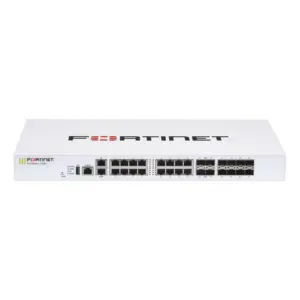
Cisco Meraki MX Cloud-Managed Firewall and Secure SD-WAN Appliances
Cisco Meraki MX is a family of centrally managed security and SD-WAN appliances for business internet edges, branch connectivity and distributed enterprise networks. It is a product family rather than one fixed hardware specification. The correct selection depends on site size, available WAN bandwidth, security inspection demands, VPN architecture, availability expectations and subscription entitlement.
For Uganda organizations operating multiple offices, a cloud-managed network edge can simplify policy consistency and visibility. A headquarters team can supervise branch connectivity and investigate WAN behavior through a common management environment, subject to configured access and licensing. This reduces the need to treat every branch as an unrelated deployment, while still requiring careful local network design and documented recovery procedures.
Procurement Facts at a Glance
Meraki MX security and SD-WAN appliances; individual hardware variants must be selected.
Meraki cloud dashboard with supported remote provisioning and policy administration.
Model-specific; verify WAN/LAN ports, uplink media, adapter or supply and rack accessories.
Confirm current eligible subscription model, term, quote, lead time and warranty for the selected SKU.
Architecture and Network Operations
At the branch edge, an MX appliance sits between service-provider connectivity and internal switching or wireless infrastructure. Administrators can define traffic policies, network segmentation and VPN relationships while using dashboard visibility to examine network events. Security features and their performance implications differ by license and hardware generation. Firewall throughput should not be confused with performance under all advanced inspection services; procurement should use the relevant published metric for the intended feature set.
Typical design work begins with WAN addressing, VLAN mapping, DHCP responsibility, upstream modem behavior and failover requirements. The MX must fit the site’s routing topology rather than being inserted without reviewing existing dependencies. If a business relies on public-facing services, private tunnels or non-Meraki peers, the technical team should validate supported modes and migration steps before purchasing.
Enterprise Value and Business Outcomes
- Throughput integrity: Size against real traffic peaks, encryption and enabled inspection features, allowing headroom for growth.
- Reliability: Evaluate dual-WAN design, spare equipment and supported high-availability arrangements rather than assuming a single appliance eliminates outages.
- Scalability: Standardize templates across branches while selecting hardware for each site’s actual demand.
- Security: Apply suitable firewall and threat-control capabilities with documented administrative access and change review.
- Management: Use centralized monitoring and remote administration to reduce repetitive on-site configuration work.
- Lifecycle cost: Budget hardware, subscriptions, internet links, installation, replacement processes and future renewal obligations together.
Hardware and Software Feature Matrix
| Capability | Operational significance | Procurement check |
|---|---|---|
| WAN and LAN interfaces | Connect providers and internal networks | Count and media vary by model |
| Auto VPN | Simplifies supported site-to-site connectivity | Confirm topology and peer compatibility |
| Security services | Adds protection and policy controls | Validate license and inspected throughput |
| Cloud dashboard | Central configuration and monitoring | Plan administrative roles and connectivity |
| High availability | Supports resilient edge design where applicable | Confirm matching equipment and design rules |
Technical Specifications and Model Selection Ledger
Because Cisco Meraki MX names a family, a single throughput, chassis dimension, power draw or interface count cannot accurately describe every offering. Use the selected model’s current Cisco datasheet and approved bill of materials for contractual specifications. Representative family members include MX67 and MX68 for smaller branches, MX75 and MX85 for larger branch requirements, MX95 and MX105 for demanding branches, and MX250 or MX450 for larger campus or aggregation use cases; availability and lifecycle status must be confirmed when quoting.
| Specification | Selection guidance |
|---|---|
| Firewall throughput | Use current published rating for exact model and test conditions. |
| Security throughput | Validate separately with intended protection services enabled. |
| WAN ports | Verify physical interfaces, supported WAN roles and provider handoff. |
| LAN ports | Match switch uplinks, VLAN design and link speeds. |
| Dimensions and mounting | Check rack units, depth, clearance and accessory requirements. |
| Power | Confirm supply rating, plug type, UPS budget and redundancy options. |
| Operating environment | Confirm temperature, ventilation and environmental limits per SKU. |
| Warranty | Check applicable Cisco terms and regional replacement eligibility. |
Configuration and Sizing Worksheet
Step 1 — Users and workloads: Record concurrent users, endpoint types, voice and video traffic, cloud applications and peak business hours. Include growth forecasts and special traffic patterns such as backup replication.
Step 2 — Internet and VPN: Document primary and secondary circuits, their symmetric or asymmetric speeds, public IP availability, branch tunnels and remote-access needs. Consider traffic that will traverse encrypted tunnels rather than only internet breakout.
Step 3 — Physical installation: Measure rack clearance, confirm cooling and power conditions, select correct patch leads and identify whether fiber optics or mounting accessories are required.
Step 4 — Subscription: Compare the currently available licensing structures and feature tiers. Obtain a quotation showing the hardware line, licensing line, service term and any separate implementation services.
Step 5 — Acceptance: Agree on failover tests, dashboard ownership, configuration backup procedures, monitoring responsibilities and the escalation route before commissioning.
Deployment Scenarios Across Uganda
Distributed Enterprises
A multi-branch organization may standardize MX appliances at regional offices and establish encrypted connectivity to a primary site or cloud resources. Site-specific sizing still matters: a sales office and a busy distribution center may have different throughput, segmentation and uptime requirements. Deployment plans should define who approves policy changes and who supports local cabling.
Financial Services
Banks and regulated institutions may use centrally governed edge policies alongside segmentation, logging and tested recovery procedures. Appliance selection must be reviewed against internal controls, audit requirements and any regulator-specific obligations; the hardware alone does not establish compliance.
Education and Campuses
Schools and universities often need to separate administrative, staff, student and guest traffic. The edge design should consider identity infrastructure, content controls where licensed, bandwidth fairness and campus aggregation capacity.
Government and Public Sector
Public procurement commonly requires explicit model identification, support terms, authorized purchasing records, approved configuration standards and a documented replacement plan. These should be included in the tender response rather than inferred from generic family descriptions.
Three Technical Design Considerations
Packet Processing and Performance
The appliance must handle stateful traffic processing, policy evaluation, routing and encrypted flows within its published capabilities. Actual performance depends on traffic characteristics, feature combinations and firmware. Compare the model’s current performance documentation with a representative pilot wherever workloads are critical. Leave enough capacity for short traffic spikes, new SaaS applications and future circuit upgrades.
Firmware and Management Governance
Cloud-managed administration simplifies fleet-wide visibility but makes account security and change discipline essential. Define administrator roles, multifactor authentication policies, change windows, alert ownership and firmware validation steps. Before a broad upgrade, test business-critical VPN and application behavior in a representative site. Document how to reach support if a change affects connectivity.
Availability and Disaster Recovery
Resilience requires more than a spare WAN port. Review carrier diversity, power continuity, appliance redundancy, switching dependencies, addressing and recovery responsibilities. Where high-availability pairs are supported, confirm exact pairing requirements and test failover during commissioning. Include branch restoration steps and replacement lead-time assumptions in the operational runbook.
Questions to Resolve Before Ordering
Ask whether the quotation includes an appropriate subscription and whether the chosen features are entitled for the full requested term. Confirm whether advanced inspection changes expected throughput. Check whether the hardware model is actively sold and supported in the intended deployment period. Verify rack depth, adapter or power-cord type, optics and the number of available WAN connections. Review how existing non-Meraki VPN peers will interoperate and whether routing, NAT or remote-access requirements need additional validation. Ask for the exact manufacturer hardware SKU, license SKU and regional warranty conditions on the commercial offer. Avoid purchasing from a family-level description alone.
Uganda Procurement and Delivery
FourTeck Uganda can receive requirements for Kampala headquarters, Entebbe facilities, Jinja industrial operations, Mbarara branches and Gulu regional offices. Submit the number of sites, preferred MX models if known, expected delivery address, required licensing term and installation scope. A formal quotation should identify taxes, freight, payment terms, lead time, warranty and any optional staging or configuration work. Stock and delivery dates are confirmed during quotation, not guaranteed by this page.
For organizations sourcing across borders, coordinate equipment and subscription eligibility for each destination. Regional enquiry points include Uganda, Kenya, Africa, UAE and Kuwait. Customs, taxes and lead times depend on destination and the final supply arrangement.
Related Procurement Items
A complete edge refresh may also require Meraki MX subscriptions, compatible access switches, wireless access points, rack mounting accessories, approved optics and patch cables and UPS power protection. Request a consolidated bill of materials to avoid overlooked installation dependencies.
Technical Services and Acceptance Support
Discuss engineering validation, model comparison, bill-of-materials review, staging and firmware preparation when requesting a quotation. Availability and scope of each service should be agreed before purchase. For rollout planning, document site contacts, provider credentials, VLAN assignments, VPN peer information, maintenance windows and post-installation acceptance tests. A clearly defined handover makes ongoing support and troubleshooting more predictable.
Frequently Asked Questions
Is Cisco Meraki MX a single firewall model?
No. MX refers to a family of cloud-managed security and SD-WAN appliances with different capacities and interfaces. A correct quotation must name the exact model and hardware SKU. Branch-size labels alone do not establish whether an appliance is suitable for your workload.
Do MX appliances require licensing?
Meraki deployments have licensing or subscription requirements that depend on the purchasing model and desired features. Request the exact entitlement, term and renewal conditions with the hardware quotation. Confirm current licensing policies for the intended organization before making assumptions about portability or mixing tiers.
Can MX connect multiple branches securely?
Supported site-to-site VPN features can connect distributed sites. Network architects should first document address overlaps, hub placement, bandwidth requirements, routing and expected failover behavior. Non-Meraki peer connectivity should be validated separately because feature support and configuration differ from Meraki Auto VPN.
Can I use two internet providers?
Many MX models support multi-WAN arrangements, but interface availability and specific behavior are model-dependent. Verify the selected appliance, upstream carrier handoffs and intended failover design. Carrier diversity and independent power are important because two circuits sharing the same physical path may not provide meaningful resilience.
How should firewall performance be compared?
Use the exact model’s current manufacturer datasheet and compare like-for-like metrics. Basic firewall throughput, VPN throughput and performance with advanced security functions can differ. Add headroom for peak periods and consider a pilot for sensitive workloads.
Does the MX replace all network security tools?
No single edge appliance substitutes for endpoint protection, identity governance, backups, secure configuration and incident response. MX provides a range of network controls, with features depending on license and model. Security architecture should consider the wider operating environment.
Can the appliance be installed in an existing rack?
That depends on the model and rack dimensions. Confirm mounting hardware, rack depth, ventilation, electrical requirements and available patching space. Some compact units and larger rack appliances have substantially different installation needs.
What happens if an appliance fails?
The response depends on the applicable warranty, support entitlement, regional replacement process and the customer’s network design. Confirm service levels before ordering and document a temporary connectivity plan. High-availability designs should be tested rather than assumed to work automatically.
Can FourTeck help with configuration planning?
Include your intended configuration and deployment support requirements in the enquiry. The quotation can then clarify whether design review, staging, installation and handover are included or offered separately. Providing a network diagram and circuit details will improve the accuracy of the scope.
What information is needed for a Uganda quote?
Provide organization name, delivery city, number of locations, estimated users, WAN speeds, required security capabilities, preferred license duration and target installation date. If the model is undecided, request sizing assistance and a comparison of appropriate options.
Plan Your Cisco Meraki MX Deployment
Share your site count, circuit speeds, desired security controls and purchasing timeline. FourTeck Uganda can help structure a model-specific procurement enquiry covering appliance hardware, subscription terms, compatible accessories and deployment considerations. Final prices, stock, regional warranty and service commitments are confirmed in the formal quotation.