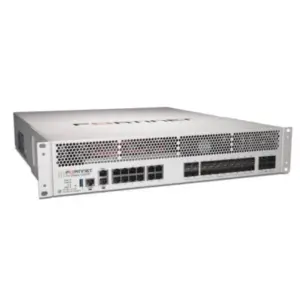
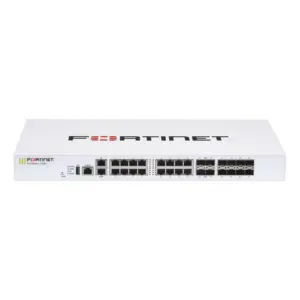
Fortinet Firewall for Data Centers Uganda
A FortiGate data-center firewall is a high-performance next-generation firewall platform for protecting critical applications, high-speed east-west traffic, internet edges, and hybrid infrastructure.
Fortinet positions its high-end FortiGate family for data-center environments where security inspection must keep pace with large session counts, encrypted traffic, segmentation, and high-capacity network links. The correct appliance depends on the exact throughput profile, security services enabled, port mix, availability design, rack and power plan, and license term. FourTeck can help business and project buyers in Uganda translate those requirements into a suitable model shortlist and quotation.
High-speed security for infrastructure where inspection cannot become the bottleneck
Fortinet’s data-center firewall portfolio is built around FortiGate next-generation firewalls designed for environments where business-critical applications and large volumes of traffic need security controls at the perimeter, between internal segments, and across hybrid architectures. In practical terms, these platforms can enforce firewall policy, application controls, intrusion prevention, encrypted-traffic inspection, VPN connectivity, segmentation, and other security services while also supporting high-capacity interfaces and large session volumes. Fortinet’s current public data-center portfolio includes high-end models such as FortiGate 1000F, 3000F, 3200F, 3500F, 3700F, 3800G, 4800F, 7081F, and 7121F, with threat-protection figures and hardware characteristics that vary substantially by model.
That variation is important for buyers. A bank protecting customer-facing services, a colocation operator handling large east-west flows, a government data center segmenting sensitive networks, and an enterprise consolidating multiple perimeter firewalls may all describe the need as a “data-center firewall,” yet require very different appliances. The deciding factors include the amount of traffic that will actually be inspected, the percentage that is encrypted, the number of simultaneous connections, the speed of upstream and internal switching, how many virtual domains or segmented environments are needed, and whether the architecture requires active-passive or active-active high availability.
Fortinet uses purpose-built Security Processing Units in its FortiGate architecture and the FortiOS operating system across the platform. This common operating environment can simplify policy consistency when an organization already uses FortiGate at branch, campus, cloud, or other network edges. For a new deployment, it also means buyers should evaluate not only appliance hardware but the intended management model, logging and analytics plan, FortiGuard service bundle, support term, and integration with related Fortinet components where appropriate.
For Uganda buyers, FourTeck’s role is to help convert a technical requirement into a purchase-ready configuration. That can include comparing candidate FortiGate models, checking required transceiver types, discussing high-availability pairs, clarifying license terms, identifying rack and power considerations, and preparing a quote that reflects the intended deployment rather than an arbitrary appliance size.
Why high-end FortiGate platforms are considered for data-center protection
Maintain security inspection at high traffic volumes
Data-center links can carry substantially more traffic than branch or campus edges. Fortinet’s high-end models are designed to combine high packet-processing capacity with security services such as intrusion prevention, application control, threat protection, SSL/TLS inspection, and IPsec VPN. The business value is the ability to keep protection active on critical flows without treating the firewall as an unavoidable throughput choke point. Actual performance remains model and feature dependent, which is why inspected-traffic figures matter more than a single maximum firewall number.
Segment east-west traffic to reduce lateral exposure
The most important benefit for many data centers is internal segmentation. Server-to-server and application-to-application flows often stay inside the facility rather than passing through the internet perimeter. Fortinet supports segmentation and, in supported models and designs, hardware-accelerated VXLAN functions that can help enforce policy across modern virtualized or cloud-like environments. This gives security teams more control over which workloads may communicate and can help limit the reach of an intrusion.
Scale connectivity with high-speed interfaces
Current Fortinet data-center models span 25GE, 50GE, 100GE, 200GE, and 400GE connectivity depending on the appliance. That matters when a firewall is placed between high-capacity switching fabrics or at a data-center interconnect. Matching interface speed, port count, optics, breakout requirements, and redundancy prevents the security layer from forcing an unnecessary redesign of the surrounding network.
Use one operating system across multiple FortiGate form factors
FortiOS is used across physical and virtual FortiGate options. For organizations standardizing on Fortinet, this can support more consistent policy models, familiar administration, and a common approach to security controls across branches, campuses, data centers, and cloud deployments. The operational advantage is not that every location uses the same hardware, but that teams can work with a related software and policy environment while selecting hardware appropriate to each site.
Support high session scale and demanding connection rates
Large digital platforms, service-provider environments, and heavily virtualized applications can create huge numbers of concurrent sessions and rapid new connection rates. High-end FortiGate models are designed with substantially higher capacity than smaller appliances. Correct sizing helps avoid state-table pressure and protects application responsiveness during traffic spikes, software updates, large customer events, or periods of increased encrypted activity.
Plan resilient firewall pairs for critical services
A data-center firewall normally protects infrastructure that cannot depend on a single appliance. FortiGate high-availability designs can be used to create redundant deployments, while several high-end appliances also include multiple power supplies. Buyers should still verify the exact failover design, upstream and downstream switching, power feeds, state synchronization requirements, rack placement, and maintenance process. Resilience is an architecture decision, not a checkbox on the appliance.
The distinguishing value is the combination of large-scale network capacity, security inspection, segmentation, and a common FortiOS platform.
Fortinet’s public data-center portfolio is not one fixed appliance. It is a range that starts with high-end fixed systems and extends to very large modular chassis. That gives procurement teams a wider sizing path, but it also makes requirements definition essential. A 1000F-class deployment and a 7000F-class deployment belong to the same broad security family while addressing very different traffic, interface, rack, power, and growth demands.
Data-center FortiGate selection ranges
This page represents a product family and procurement category rather than one fixed model. The ledger below combines confirmed current Fortinet portfolio information with configuration-dependent guidance.
| Specification area | Current portfolio guidance | Buyer interpretation |
|---|---|---|
| Product type | FortiGate Next-Generation Firewall for high-end data-center use | Choose a specific appliance only after documenting the deployment role. |
| Threat-protection throughput | Fortinet currently lists examples from 13 Gbps (FortiGate 1000F) up to 520 Gbps (FortiGate 7121F), with intermediate models at different ratings. | This is generally more relevant to real protected workloads than raw firewall throughput, but testing methodology and feature set must be reviewed. |
| Firewall / packet processing | Configuration dependent by model; high-end platforms are designed for very large aggregate traffic and packet rates. | Record peak and sustained traffic, packet size profile, and growth target. |
| Interfaces | Model dependent; current high-end systems include combinations of 25GE, 50GE, 100GE, 200GE, and 400GE ports. | Confirm port speed, port count, optics, breakout, redundancy, and switch compatibility. |
| IPsec VPN | Supported; throughput and tunnel scale vary by model. | Include remote-site, cloud, partner, and data-center interconnect VPN demand in sizing. |
| SSL/TLS inspection | Supported; performance is configuration and model dependent. | Estimate the encrypted percentage of north-south and east-west traffic and the inspection policy. |
| Segmentation | Firewall zoning, virtual domains, internal segmentation; VXLAN support is available in selected models and deployments. | Map security zones, tenants, environments, and trust boundaries before purchase. |
| Management | FortiOS; centralized management can use FortiManager. Analytics and logging can use FortiAnalyzer or appropriate Fortinet services. | Determine whether the firewall is standalone or part of a larger Fortinet estate. |
| Security services | FortiGuard services are available in multiple bundles and terms. | License choice affects security coverage, recurring cost, and the final SKU. |
| Session capacity | Model dependent; high-end products support very large concurrent session and connection-rate requirements. | Large web, cloud, service-provider, and application environments should model sessions, not only bandwidth. |
| Form factor | Fixed rack appliances and large modular chassis, depending on model. | Check RU allocation, depth, weight, airflow, service access, and rack design. |
| Power | Multiple power-supply designs; AC and selected DC variants depending on model. | Confirm electrical feed, redundancy, plug type, PDU capacity, and data-center power standards. |
| Storage / logging | Some models have local-storage variants; centralized logging design is separate. | Decide whether local disk is needed and define log-retention and reporting requirements. |
Which figures influence the purchase most?
For most enterprise data-center projects, the critical figures are threat-protection throughput, SSL/TLS inspection capacity, session scale, session setup rate, interface speed, and availability design. A firewall may advertise an extremely high Layer 3 or Layer 4 forwarding number, but that figure does not answer how the system will behave when intrusion prevention, application identification, antimalware, web controls, logging, and encrypted-traffic inspection are active. Procurement teams should therefore ask the network and security teams for expected production policies rather than size from internet-circuit speed alone.
Interface planning is the second major factor. If the surrounding switching fabric uses 100GE or 400GE, the firewall must provide the required port type and sufficient links for both traffic and redundancy. Optics, DAC or AOC choices, fiber type, breakout arrangements, and switch-side transceivers can materially affect the bill of materials. Finally, rack space and power should be checked early because the largest FortiGate platforms differ considerably from fixed 1U to 4U appliances. FourTeck can help review these details before a quote is finalized.
Five questions to answer before a FortiGate data-center quote
01What traffic and security functions will the firewall process?
Specify the current and projected north-south traffic, east-west traffic, data-center interconnect traffic, and VPN traffic. Then identify which services must be enabled: IPS, application control, antimalware, web filtering, SSL/TLS inspection, sandbox integration, or other FortiGuard functions. The answer changes the model because raw firewall throughput and fully inspected security throughput are very different measurements.
02How many users, devices, servers, sessions, and high-speed links must be supported?
Bandwidth alone does not describe a data-center workload. Share peak concurrent sessions, new sessions per second where known, the number of segmented zones or tenants, and expected link speeds. Internet-facing platforms, large virtual estates, telecom services, and high-volume APIs can create demanding session characteristics even when average bandwidth appears moderate.
03What must the firewall connect to and integrate with?
List core switches, spine-leaf fabrics, routers, internet edges, hypervisors, cloud platforms, authentication systems, SIEM tools, and existing Fortinet products. Physical compatibility includes transceiver standards, fiber type, breakout cables, port-channel design, and rack/power details. Operational compatibility includes routing protocols, segmentation design, logging, authentication, and policy-management workflows.
04What growth, license, and expansion path is expected?
A platform sized only for current traffic may be unsuitable after a network refresh, server consolidation, cloud migration, or new security-inspection policy. Share the expected three- to five-year growth range, planned 100GE or 400GE upgrades, future site connectivity, and any expected changes in security services. License term and FortiGuard bundle should also align with the organization’s budgeting and risk-management approach.
05What are the installation, support, delivery, and resilience expectations?
Confirm whether the project needs a high-availability pair, spare optics, DC power, local-storage variants, specific airflow, a defined FortiCare level, or staged delivery. Also share any target installation window, rack location, change-control constraints, and project quantity. These details affect the final SKU and whether accessories should be quoted with the appliance.
Where high-end FortiGate firewalls commonly fit in enterprise architecture
Financial-services or government data center
A regulated organization may need to isolate public-facing services, application tiers, databases, privileged administration networks, and partner connections while maintaining predictable performance. FortiGate can act as a policy-enforcement point between zones and at the internet edge, with logging and security-service options selected for the organization’s controls.
The configuration should be based on inspected east-west traffic, application sensitivity, concurrent sessions, high-availability objectives, and the switching fabric. A pair of appropriately sized appliances may be preferable to a single oversized unit if the resilience design requires independent failure domains, but the architecture must be reviewed case by case.
Private cloud or virtualized enterprise platform
Large virtualized environments generate significant internal traffic between workloads. A data-center firewall can provide segmentation controls that are closer to application trust boundaries, while selected FortiGate models support VXLAN-oriented designs that may fit modern network overlays. This is useful where teams want security policy to follow logical application zones rather than rely only on physical network boundaries.
Buyers should share hypervisor and overlay architecture, expected east-west bandwidth, virtual network count, routing design, and whether centralized policy management is required. The physical firewall interface plan must match the leaf or aggregation layer.
Service-provider, hosting, or colocation environment
A hosting or service-provider network may require very high session scale, large connection rates, tenant separation, and high-capacity interfaces. Fortinet’s largest data-center platforms are designed for extreme scale and may be appropriate where many customers or services share the same secured infrastructure.
The key inputs are session numbers, tenant or VDOM requirements, DDoS architecture, upstream routing, port density, interface speeds, and growth. A modular chassis may make sense at the top end, while a fixed high-end appliance may be simpler where capacity requirements are lower.
Data-center interconnect and disaster-recovery links
Organizations replicating data between primary and recovery facilities may need to secure very large flows without materially slowing backup, replication, or application traffic. Current high-end FortiGate models include 100GE to 400GE connectivity options that can align with high-capacity interconnects.
For this use case, the firewall should be sized around the protected interconnect throughput, encryption method, session profile, and failover design. Network teams should also define whether replication traffic needs deep inspection, policy segmentation, IPsec encryption, or a combination of controls.
Threat protection must be measured against the traffic the business actually inspects
Data-center procurement often begins with an impressive firewall throughput figure. That number is useful for understanding hardware scale, but it is not sufficient for selecting a production security platform. In a real deployment, traffic may pass through intrusion prevention, application identification, antivirus or inline malware controls, SSL/TLS decryption, web filtering, DNS controls, sandbox integrations, logging, and VPN encryption. Each function introduces processing work, and the performance that matters is the throughput achieved with the planned security stack active.
Fortinet publishes separate figures for several of these workloads in its model datasheets and product matrix. For example, the high-end portfolio page lists threat-protection performance that differs significantly by model. That allows buyers to shortlist systems based on a security workload rather than a pure forwarding benchmark. Even then, test conditions must be read carefully because an enterprise traffic mix in a lab will not exactly reproduce every organization’s application profile, packet sizes, encryption types, or rule base.
A practical sizing exercise should start with traffic baselines from existing firewalls, network telemetry, or capacity tools. Record average and peak throughput, then separate internet-bound, inter-zone, replication, backup, user-to-application, and machine-to-machine traffic where possible. Estimate what percentage is encrypted and what percentage will be decrypted. Note which security profiles will apply to each zone. Finally, add a realistic growth margin and allow for maintenance, failover, and future policy changes.
This approach produces a better model decision and a better budget discussion. It can also reveal that a smaller appliance is sufficient for the current workload or that the network is actually constrained by interface architecture, sessions, or SSL inspection rather than headline bandwidth. FourTeck can use the resulting information to compare FortiGate options more meaningfully.
High-speed interfaces change the firewall from an appliance choice into an architecture choice
Modern data centers increasingly use 25GE, 100GE, 200GE, or 400GE connectivity between switching layers and between sites. Fortinet’s high-end family includes models with these interface classes, but the presence of a port speed does not mean every design is automatically compatible. Port quantity, transceiver type, breakout support, oversubscription, redundancy, and the number of links needed for high availability all influence the appliance selection.
Before a purchase order is raised, the network team should provide a port map showing current switch interfaces, link aggregation, VLAN or VRF boundaries, HA links, management connections, and any dedicated synchronization or logging paths. Transceiver costs can be significant, especially on high-speed links, so optics should be included in the bill of materials rather than assumed to be bundled. If the data center uses a standardized optical platform, that policy should be checked against the exact FortiGate model and switch-side requirements.
Licensing, management, and support can change the final configuration as much as the hardware
A FortiGate appliance is only one part of a production data-center security purchase. FortiGuard security services, FortiCare support, central management, analytics, local storage requirements, and accessory choices all affect the final SKU and operating model. Organizations that need advanced threat prevention should define which FortiGuard bundle or individual services are required and how long the subscription should run. A one-year procurement and a multi-year project can have very different commercial structures even when the underlying hardware is identical.
Management architecture should also be decided before rollout. A standalone firewall can be operated directly through FortiOS, while larger estates often use FortiManager for centralized policy and device management. FortiAnalyzer can support centralized logging, analytics, and reporting. The right choice depends on the number of firewalls, separation of duties, compliance obligations, log-retention needs, and whether the organization already has Fortinet management tools.
Support expectations should be discussed with the same care. Data-center systems can protect critical services, so buyers may require a specific FortiCare level, a defined support term, replacement expectations, or project spares. Availability of particular support options can be geographic or contract dependent, so FourTeck should confirm current terms during quotation rather than the project team assuming a specific response or replacement commitment.
Buyer decision checklist
- Which FortiGuard services must be active at launch, and which may be added later?
- What subscription term aligns with budget, security policy, and renewal planning?
- Will the firewall be managed directly, through FortiManager, or through an existing management estate?
- Where will logs be stored, how long must they be retained, and what reporting is required?
- Is local storage on the appliance required, or is a non-storage model preferred?
- Which support level, replacement expectation, or project spare strategy should be priced?
What buyers should check before purchase
| Risk | What to confirm | Why it matters | What to share with FourTeck |
|---|---|---|---|
| Wrong model class | Inspected throughput, SSL/TLS load, VPN, sessions, growth. | An undersized system can constrain applications; an oversized system can waste budget. | Traffic data, current firewall statistics, feature set, growth target. |
| Interface mismatch | Port speeds, port count, fiber type, optics, breakout, switch compatibility. | High-end interfaces can require specific transceivers and network design. | Switch models, required links, optical standard, redundancy diagram. |
| Incomplete license bill | FortiGuard bundle, FortiCare term, management and analytics components. | Hardware without the planned services may not meet the security policy. | Required security controls, subscription length, existing licenses. |
| Rack and power oversight | RU, depth, airflow, AC/DC feed, PDU, redundancy. | Large fixed appliances and chassis differ greatly in physical requirements. | Rack standard, free RU, PDU details, power feed, airflow policy. |
| Availability and lifecycle assumption | Current orderability, recommended replacement model, lead time, support eligibility. | Enterprise hardware portfolios change and project timelines may outlast a model cycle. | Required date, quantity, preferred model, acceptable alternatives. |
The purpose of the register is not to make procurement slower. It is to prevent the common situation where a firewall arrives and the project discovers that the optics are missing, the license bundle is wrong, the platform is too small for SSL inspection, the rack cannot accept the chassis, or the power feed does not match. These are avoidable errors when the technical team and procurement team share a short, structured requirement before quotation.
Configuration review and quote coordination for Uganda projects
Fortinet Firewall for Data Centers Uganda availability can vary by the exact FortiGate model, FortiGuard bundle, support term, quantity, transceivers, power option, and project timing. FourTeck can coordinate a current quotation after the requirement is defined, and can help buyers compare suitable high-end FortiGate options instead of treating the broad category as a single fixed SKU.
For Kampala projects, the most useful starting point is a short network brief containing the existing firewall or router model, peak traffic, target security services, required high-speed interfaces, HA design, and deployment date. If the project is a replacement, include the reason for replacement: capacity, lifecycle, security feature gap, interface upgrade, data-center consolidation, or standardization. That context helps FourTeck identify whether the buyer should stay close to the current capacity or move to a newer platform tier.
Delivery coordination, warranty guidance, and project quantity planning can be discussed during quotation. FourTeck should confirm current terms for the selected model rather than assuming stock, delivery timing, support response, or replacement conditions. Buyers with public-sector, education, financial-services, telecom, or enterprise procurement processes can also provide tender schedules, documentation requirements, and bill-of-material templates so the quote can be prepared in a useful format.
Uganda location coverage
FourTeck can discuss Fortinet data-center firewall requirements for organizations operating in Kampala and for projects serving Entebbe, Jinja, Mbarara, and Gulu. The appropriate supply and delivery plan depends on the selected model, order quantity, project schedule, and any accessories or subscription services included. Multi-site organizations should share whether the firewall will be installed centrally in one data center, deployed as a primary and disaster-recovery pair across locations, or supplied as part of a wider network refresh.
Regional project coordination for organizations with connected infrastructure
A data-center security project may serve more than one country even when the primary purchase is for Uganda. Organizations with operations in Kenya or other selected East Africa markets may want a consistent FortiGate architecture across data centers, disaster-recovery sites, offices, and cloud connections. FourTeck can discuss a coordinated bill of materials where the commercial and delivery requirements permit, while each country’s supply, support, tax, import, and project conditions should be reviewed separately.
For wider Africa projects, the same technical principle applies: standardize the security architecture where it makes sense, but do not assume every location requires the same appliance. A primary data center may need a high-end model with 100GE or 400GE connectivity, while a recovery site or regional facility may need a smaller platform that still uses FortiOS and related Fortinet management tools. This can preserve operational consistency without oversizing every site.
FourTeck also works across regional web properties for selected Africa markets, the UAE, and Kuwait. Buyers managing cross-border infrastructure can use the relevant regional contact path to discuss current availability and commercial handling rather than assuming the Uganda quote automatically applies elsewhere.
Fortinet models and regional resources to compare
Practical assistance before the purchase order is placed
Product selection guidance
High-end FortiGate models overlap in some use cases but differ in threat-protection performance, interfaces, session scale, chassis size, storage, and power. FourTeck can help compare options against the stated requirement.
Configuration review
A quote can include the appliance, FortiGuard services, FortiCare, optics, cabling, local-storage variants, and other accessories required for the target design, reducing the chance that key items are omitted.
Business IT context
Procurement decisions often involve more than a datasheet. FourTeck can work from an existing network diagram, replacement brief, bill of materials, or tender requirement to understand how the firewall fits the broader infrastructure.
Uganda delivery coordination
Once the model and configuration are confirmed, FourTeck can discuss current supply and delivery coordination for the project location. Timing and availability should always be confirmed for the final SKU and quantity.
Warranty and support guidance
Support terms can vary by contract and geography. FourTeck can clarify the support and warranty information associated with the quoted configuration so the purchasing team has the correct documentation.
Alternative product matching
If the preferred FortiGate model is not the best fit for the required capacity, lifecycle, interface plan, or schedule, FourTeck can discuss another current Fortinet model that better aligns with the project.
Questions Uganda buyers ask about Fortinet data-center firewalls
01. What is a Fortinet data-center firewall used for?
It is used to enforce security policy around high-value applications, server networks, data-center internet edges, internal segments, and links between facilities or cloud environments. FortiGate platforms can combine firewalling, intrusion prevention, application control, VPN, encrypted-traffic inspection, segmentation, and FortiGuard security services. The exact use case depends on where the appliance is placed and which security controls are enabled.
02. Which FortiGate model is suitable for a data center?
There is no single correct model for every data center. Fortinet currently lists high-end models ranging from the FortiGate 1000F through much larger fixed and modular platforms. The decision should be based on threat-protection throughput, SSL/TLS inspection, sessions, interface speed, port density, HA design, rack and power constraints, and expected growth. FourTeck can help compare current models after those inputs are known.
03. Should I size the firewall from internet bandwidth?
Internet bandwidth is only one sizing input. A data-center firewall may also inspect east-west server traffic, inter-zone flows, VPN traffic, backup or replication traffic, and encrypted application sessions. Security services can reduce the usable throughput compared with raw forwarding. A better sizing method uses peak inspected traffic, session counts, SSL/TLS inspection demand, interface design, and a growth margin.
04. Do Fortinet data-center firewalls require subscriptions?
The hardware can provide core firewall and networking functions, while FortiGuard services add security capabilities and updates depending on the selected bundle. FortiCare provides support options. The exact services, term, and SKU should be chosen for the organization’s policy and budget. Buyers should ask for the subscription and support structure to be listed clearly on the quote so renewal planning is straightforward.
05. Can FortiGate support 100GE or 400GE data-center links?
Selected high-end FortiGate models support 100GE, 200GE, and 400GE interfaces, while other models use different combinations of 25GE, 50GE, and high-speed ports. The exact port map varies by appliance. Buyers should confirm switch-side interfaces, optics, breakout requirements, and the number of redundant links before choosing a model, because interface compatibility can be as important as firewall performance.
06. Can the firewall be used for internal segmentation?
Yes. Internal segmentation is a common data-center use case for FortiGate, helping control traffic between application zones, server groups, tenants, or trust boundaries. Selected designs also support VXLAN-oriented segmentation. The best architecture depends on the switching fabric, routing model, virtual domains, workload locations, and amount of east-west traffic. A network diagram is useful when requesting a model recommendation.
07. Do I need two FortiGate units for a data center?
Critical environments commonly use high availability so a single appliance failure does not remove the security control point. Whether the project needs two units, how they are cabled, and how failover works should be decided from the service-availability objective. The surrounding switches, power feeds, rack locations, synchronization links, routing, and maintenance process should all be included in the HA design rather than simply ordering a second unit.
08. What information should I send for a quotation?
Send the existing firewall model if this is a replacement, peak traffic, expected inspected throughput, SSL/TLS usage, security services, interface speeds and quantities, number of zones or tenants, VPN demand, HA requirement, preferred subscription term, rack and power information, and project location. If these numbers are not available, send a network diagram and describe the business applications and current performance issue so the requirements can be refined.
09. Is Fortinet Firewall for Data Centers Uganda available immediately?
Availability cannot be assumed across every high-end model, license bundle, and quantity. Current orderability and delivery should be confirmed for the exact FortiGate appliance, FortiGuard term, support level, optics, and accessories included in the bill of materials. FourTeck can provide a current quote and discuss delivery coordination after the configuration is defined.
10. Can FourTeck help if the requested model is not the best fit?
Yes. A replacement or tender may name a model that no longer aligns with the required throughput, interface design, lifecycle, or project schedule. FourTeck can review the requirement and discuss another current FortiGate option within the data-center portfolio. The alternative should be evaluated against the same technical criteria rather than chosen only because it is newer or larger.
Build the FortiGate quote around your real data-center workload
Share the traffic profile, security services, interface design, high-availability requirement, FortiGuard term, rack and power constraints, and project schedule. FourTeck can use those details to narrow the current Fortinet data-center portfolio and prepare a configuration-aligned quotation for Uganda.
- Current firewall or target capacity
- Peak and inspected throughput
- Port speeds, optics and link quantities
- HA, licensing and support term
- Installation location and project quantity