
Fortinet FortiADC 220F Application Delivery Controller for Uganda
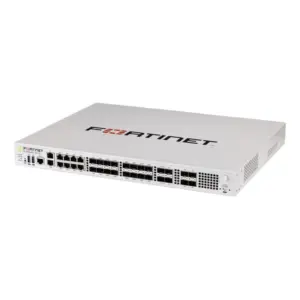
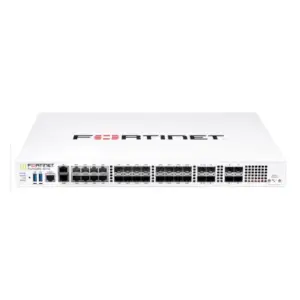
Fortinet FortiADC 220F is a purpose-built 1U application delivery controller for enterprises that need to distribute application traffic, improve service availability, accelerate encrypted workloads and apply application-layer controls in front of business systems. It is suited to data centers, private-cloud environments, campus services and regional application platforms where a conventional server load balancer may not provide the operational visibility, health monitoring, policy control and security integration required by modern infrastructure teams.
The platform is specified for up to 5 Gbps Layer 4 and 4 Gbps Layer 7 throughput, 160,000 Layer 4 connections per second, 500,000 Layer 4 HTTP requests per second, six million maximum concurrent Layer 4 connections and 40,000 Layer 7 connections per second under the vendor’s stated test methodology. SSL bulk encryption throughput is rated at 1.2 Gbps and compression throughput at 2 Gbps. These figures make the 220F a practical choice for organizations consolidating multiple internal or externally published applications behind a dedicated delivery tier without immediately moving to the larger FortiADC platforms.
Procurement should begin with measured peak traffic rather than Internet circuit speed alone. Application concurrency, new connection rates, TLS handshakes, persistence requirements, health-check frequency, content inspection, logging and expected growth can materially affect sizing. FourTeck can help Uganda customers translate these variables into a bill of materials covering the appliance, appropriate service entitlement, compatible optics and cabling, rack requirements and implementation support.
Instant Specifications and Procurement Fact Rail
FortiADC 220F, 1U hardware ADC
Up to 5 Gbps / 4 Gbps
Up to 1.2 Gbps
8 GB ECC / 120 GB SSD
4x GE RJ45 and 4x GE SFP
Single supply; 80W listed average consumption
The appliance is designed for rack deployment with front-to-back airflow. Published dimensions are approximately 44 x 438 x 416 mm. The operating temperature range is 0°C to 40°C, and humidity is specified at 5% to 95% non-condensing. Buyers should validate cabinet depth, airflow direction, PDU outlet availability and the exact transceiver types required by connected switches before purchase. Stock position, lead time, support entitlement and warranty handling should be confirmed on the formal Uganda quotation because these are commercial variables rather than fixed hardware specifications.
Operational Product Architecture and Overview
An application delivery controller sits between clients and application servers and makes traffic-distribution decisions based on configured virtual services, server pools, health information and delivery policies. This architecture helps separate the public or client-facing service address from individual backend servers. If one server becomes unhealthy, traffic can be directed toward available members according to the configured load-balancing logic, helping operations teams maintain service continuity while servers are patched, replaced or scaled.
FortiADC extends this role beyond basic traffic distribution. The FortiADC family combines Layer 4–7 application delivery, reverse-proxy functions, application acceleration, web application protection capabilities, DDoS controls, authentication functions and integration with the broader Fortinet Security Fabric. For the 220F, the architecture is particularly relevant to organizations that need a dedicated appliance at a branch data center, corporate headquarters, institutional data center or application hosting site but do not require the port density or performance of higher FortiADC models.
Connection-rate specifications are important because many business applications create large numbers of short-lived sessions. A platform can have sufficient aggregate bandwidth while still being constrained by connection establishment, SSL handshakes or Layer 7 processing. The 220F is rated at up to 160,000 Layer 4 connections per second and 40,000 Layer 7 connections per second, with up to 500,000 Layer 4 HTTP requests per second and six million concurrent Layer 4 connections. Procurement teams should compare these figures with real telemetry from existing reverse proxies, firewalls, web servers and monitoring systems.
The system provides 8 GB ECC memory and 120 GB SSD storage. ECC memory is valuable in an always-on infrastructure appliance because it is designed to detect and correct certain memory errors. Local storage supports the operating environment and operational data needs of the appliance. Management methods include HTTPS, SSH CLI, direct console access and SNMP, enabling both graphical administration and integration into established network operations practices.
A common procurement trigger is application growth that has made direct server publishing difficult to manage. Another is the need to terminate or process TLS away from backend application servers. Organizations also consider an ADC when maintenance windows are increasingly disruptive, when health-aware traffic distribution is required, or when multiple applications need consistent delivery policy. The correct design should account for failure domains: placing a single ADC in front of redundant servers improves backend resilience but does not eliminate the ADC itself as a failure point. Where application availability requirements demand it, buyers should evaluate a high-availability pair and the corresponding switch, IP addressing, routing and power design.
Enterprise Business Outcomes and Value Analysis
Key Hardware and Software Highlights
| Component or Capability | Operational Relevance |
|---|---|
| 4x GE RJ45 plus 4x GE SFP | Provides copper and fiber Gigabit interface options for integration with access, aggregation or data-center switching. |
| 8 GB ECC memory | Supports reliable appliance operation while providing error-correcting memory characteristics appropriate to infrastructure workloads. |
| 120 GB SSD | Local solid-state storage for the appliance operating environment and associated system functions. |
| Layer 4–7 delivery | Allows traffic decisions to be made using network, transport and application-aware policies rather than simple destination forwarding alone. |
| SSL processing | Can centralize encrypted application delivery tasks and reduce the need for each backend server to handle every delivery function independently. |
| 10 virtual domains | Supports logical separation for environments requiring segmented administration or service contexts, subject to design and software capabilities. |
The single power-supply design deserves attention during availability planning. Redundant application servers do not by themselves protect against loss of the ADC caused by appliance or power failure. For higher service objectives, a two-appliance topology with independent power paths and redundant switching should be evaluated. Similarly, the presence of SFP interfaces does not mean optics are automatically included; exact transceivers, fiber type, wavelength, connector and switch compatibility should be specified in the bill of materials.
Technical Specifications Ledger
| Specification | FortiADC 220F |
|---|---|
| L4 / L7 Throughput | 5 Gbps / 4 Gbps |
| L4 CPS | 160,000 |
| L4 HTTP RPS | 500,000 |
| Maximum L4 Concurrent Connections | 6 million |
| L7 CPS, 1:1 | 40,000 |
| SSL CPS/TPS, 2K keys | 1,200 |
| SSL Bulk Encryption | 1.2 Gbps |
| Compression Throughput | 2 Gbps |
| SSL Acceleration | Software |
| Virtual Domains | 10 |
| Memory | 8 GB ECC |
| Network Interfaces | 4x GE RJ45, 4x GE SFP |
| Storage | 120 GB SSD |
| Management | HTTPS, SSH CLI, Direct Console DB9 CLI, SNMP |
| Power Supply | Single |
| Form Factor | 1U |
| Dimensions | 44 x 438 x 416 mm approximately |
| Average Power Consumption | 80W listed |
| Heat Dissipation | 273 BTU/h |
| Operating Temperature | 0°C to 40°C |
| Storage Temperature | -20°C to 75°C |
| Humidity | 5% to 95% non-condensing |
| Airflow | Front to back |
| Power Efficiency | 80 Plus Gold |
Performance values are vendor-rated maximums and vary with configuration and traffic profile. SSL figures depend on cipher, key size, connection behavior and enabled services. Treat published throughput as a sizing reference, not a guarantee that every combination of delivery and inspection features will operate simultaneously at the headline figure.
Configuration and Sizing Worksheet
Step 1 — Measure workload. Record peak inbound and outbound application throughput, average and peak concurrent sessions, HTTP request rates, new TCP connections per second and TLS handshakes. Separate ordinary business-hour demand from month-end, enrollment, payment, reporting or campaign peaks. Apply a sensible growth horizon so the appliance is not sized only for today’s utilization.
Step 2 — Map applications. List every virtual service, backend server pool, protocol, port, health-check method, persistence requirement, certificate, hostname and DNS dependency. Identify applications that require source-IP preservation, client-certificate validation, custom headers, redirects or specialized timeout behavior.
Step 3 — Validate rack and environment. Reserve 1U rack space plus appropriate clearance for installation and cable management. Confirm cabinet depth for the roughly 416 mm chassis, front-to-back cooling, ambient temperature, humidity, grounding and access for maintenance. Ensure the site can maintain the specified operating range.
Step 4 — Design power and resilience. Because the 220F has a single power supply, critical deployments should evaluate two appliances with independent PDUs or UPS-backed feeds. Availability design must include upstream and downstream switches as well as the ADCs; otherwise a shared switch can remain a single point of failure.
Step 5 — Confirm interfaces. Decide which links use RJ45 copper and which use SFP. For fiber, specify multimode or single-mode cabling, distance, connector type and compatible optics. Do not leave transceiver selection until installation day.
Step 6 — Validate commercial entitlement. Confirm the required FortiADC bundle, support term, security services and renewal period on the quotation. Features and subscriptions can evolve between software releases and commercial programs, so the order should state the required capabilities rather than relying on an informal assumption.
Step 7 — Prepare the quote request. Include quantity, single-appliance or HA requirement, expected throughput, SSL profile, interfaces, optics, support term, destination city, preferred delivery schedule and whether FourTeck should provide staging or configuration assistance. A complete requirement reduces revisions and makes the proposed bill of materials easier for technical and finance teams to approve.
Deployment Scenarios and Industry Use Cases
Large Enterprise and Multi-Site Networks
Enterprises can place the FortiADC 220F in front of ERP portals, intranet applications, customer systems, APIs and shared web services hosted at a central site. Branches continue to reach stable virtual service addresses while backend servers can be maintained or expanded behind the ADC. In multi-site designs, the local ADC should be considered together with WAN routing, DNS, disaster-recovery policy and any global traffic-management requirement. The 220F is not simply a bandwidth appliance; connection behavior and encrypted workload determine whether it is appropriately sized.
Financial and Banking Institutions
Banks, microfinance organizations, payment providers and other financial institutions often require controlled application publishing, health-aware distribution and consistent TLS handling. An ADC can provide a dedicated delivery tier between client networks and application servers. The production design should include change control, certificate lifecycle processes, centralized monitoring and tested failover. Security requirements should be mapped to the exact FortiADC service bundle and, where specialized web application protection is required, architects should determine whether complementary Fortinet security platforms are part of the design.
Educational and Campus Networks
Universities and large schools can use an ADC to distribute traffic for student portals, learning platforms, library systems, admissions services and internal applications. Demand can be highly seasonal: registration and results publication may create peaks far above normal daily utilization. Sizing should therefore use observed peak events and anticipated growth rather than a simple average. A centralized delivery platform can also make maintenance of server pools more manageable during semester transitions.
Government and Public-Sector Procurement
Government agencies frequently need clear technical specifications, formal bills of materials, warranty terms and auditable support arrangements. FortiADC 220F can serve application-delivery requirements where its performance and interface profile match the workload. Procurement documents should define required throughput, availability architecture, support duration, installation scope, optics and acceptance criteria. For sensitive or regulated environments, the customer should independently validate current certification, hardening and compliance requirements applicable to the project.
Technical Deep Dive: Processing and Acceleration Architecture
Application delivery performance is multi-dimensional. Layer 4 throughput describes transport-oriented traffic capacity, while Layer 7 throughput reflects application-aware processing. Connections per second measure how quickly new sessions can be established, and concurrent connections indicate how many sessions can remain active. SSL throughput and SSL transactions per second add another constraint when encrypted services dominate. For the 220F, published values include 5 Gbps Layer 4, 4 Gbps Layer 7, 160,000 Layer 4 CPS, 40,000 Layer 7 CPS, 1,200 SSL CPS/TPS with the vendor’s stated 2K-key test and 1.2 Gbps SSL bulk encryption.
This distinction matters in real deployments. A file-transfer application may emphasize sustained throughput, while a busy portal with many short requests can stress connection setup. A transactional HTTPS platform can place heavier emphasis on TLS handshakes. Compression, persistence, inspection and logging add their own processing demands. Capacity planning should therefore model the actual application mix rather than comparing a single headline number with an Internet circuit.
Technical Deep Dive: Software Ecosystem and Operational Control
FortiADC operates as part of Fortinet’s broader application delivery and Security Fabric ecosystem. The product family provides Layer 4–7 ADC and reverse-proxy functions and supports application security capabilities, authentication and integration. Administrators can work through HTTPS, SSH CLI, console and SNMP. These access methods support a disciplined operating model in which routine administration can be performed through controlled management networks while console access remains available for recovery or initial deployment.
Firmware governance should be treated as an operational process. Before upgrades, teams should review release notes, supported upgrade paths, configuration backups, known issues and the maintenance window. Where HA is deployed, the upgrade procedure should be rehearsed and aligned with service availability requirements. Configuration ownership, administrator roles and log retention should also be defined before production handover.
Technical Deep Dive: High Availability and Disaster Recovery
A load balancer often becomes a critical dependency because many applications converge on it. Consequently, redundancy needs to be designed above and below the appliance. A high-availability ADC pair should connect through a switching topology that does not reintroduce a single point of failure, and each appliance should use independent protected power where possible. Routing, VLANs, gateway behavior and session implications must be tested under failure.
Disaster recovery is broader than local HA. If applications can fail over to another data center, the design must define how clients are directed to the alternate site, how application data is replicated and what happens to active sessions. DNS, global load balancing, WAN routing or upstream mechanisms may be involved. Recovery objectives should be documented and tested. Purchasing a second appliance without a complete network and application failover plan does not by itself create disaster recovery.
Pre-Purchase Buyer Gap Checklist
Licensing: Ask which FortiADC functions are included in the quoted bundle, which services require active subscriptions and what renewals are expected after the initial term. The quotation should identify the commercial part numbers and service duration.
Lifecycle: Confirm current orderability and support lifecycle at the time of purchase. Hardware model availability and support dates can change, so lifecycle confirmation should be part of procurement approval for projects with long deployment horizons.
Rack clearance: The chassis is approximately 416 mm deep, but real installation depth must also account for power leads, network cables, bend radius and rail or shelf arrangement. Verify the cabinet rather than assuming every 19-inch rack has adequate usable depth.
Power: Published average consumption is 80W and heat dissipation is listed at 273 BTU/h. Facilities teams should size UPS and cooling with suitable margin and should account for two appliances when planning an HA deployment.
Optics: SFP ports provide interface flexibility but optics and fiber characteristics must match the connected switch. Specify media, distance and connector requirements on the order.
Cross-vendor interoperability: Standard Ethernet and IP integration is generally straightforward, but the application design may depend on VLANs, routing, link aggregation, certificates, DNS and server behavior. Validate the intended topology against the actual switch, firewall and server environment.
Migration: Existing load-balancer configurations from another vendor should not be assumed to translate one-for-one. Inventory virtual servers, pools, monitors, persistence, redirects, certificates and custom traffic rules, then map each requirement to FortiADC functionality.
Support: Define who opens vendor cases, who owns configuration troubleshooting, what replacement service is required and whether remote or onsite engineering assistance is part of the purchase.
Uganda Procurement and Delivery Logistics
FourTeck supports Uganda organizations that need a structured procurement path for Fortinet application delivery infrastructure. A useful quotation request includes the exact model, quantity, service term, deployment city, required delivery schedule and any optics or implementation services. For a production FortiADC project, include the expected traffic profile and whether the requirement is for a single appliance, a high-availability pair or multiple sites.
After technical validation, the commercial quotation can reflect the agreed bill of materials and available supply route. Lead times should be confirmed at quotation or order stage because enterprise hardware availability can vary. For staged projects, customers can identify firmware, addressing, VLAN, hostname and basic configuration requirements before dispatch. Sensitive credentials should be exchanged through an agreed secure process rather than embedded in ordinary purchase documentation.
Delivery planning should consider who will receive the equipment, whether the destination has controlled access, and whether installation must align with a maintenance window. For regional sites, it is useful to coordinate the hardware arrival with the availability of local rack space, UPS capacity, patch leads, optics and engineering staff. This prevents an appliance from arriving before the environment is ready for acceptance testing.
Uganda Coverage Matrix
Enterprise, government, financial, telecom and data-center procurement coordination.
Corporate, institutional and infrastructure project supply planning.
Industrial, education and distributed-enterprise deployment requirements.
Regional enterprise and campus infrastructure sourcing support.
Regional public-sector, institutional and business technology procurement.
For any city, the delivery plan should state the receiving location, contact procedure and project deadline. Where installation support is required, share the intended topology and rack environment early enough for technical review. Delivery feasibility and timing remain subject to the confirmed quotation and logistics arrangement.
Cross-Border and Regional Supply Chains
Organizations operating across East Africa, the Gulf and broader African markets can coordinate related infrastructure requirements through FourTeck regional sites. Uganda customers can visit FourTeck Uganda; Kenyan projects can use FourTeck Kenya; broader continental requirements can be directed through FourTeck Africa. UAE requirements are supported through FourTeck UAE, while Kuwait projects can reference FourTeck Kuwait.
Cross-border projects should standardize model, firmware policy, support entitlement and accessory selection where practical. At the same time, import requirements, delivery terms, tax treatment, warranty routing and local installation responsibilities may differ by destination. Each site should therefore receive a country-specific commercial confirmation even when the technical standard is shared across the organization.
Related Infrastructure and Internal Procurement Paths
A complete ADC project usually includes more than the appliance. Review enterprise networking solutions for switching and connectivity requirements, and use the Uganda quotation desk to specify compatible SFP optics, patch leads, rack accessories and UPS requirements. Customers considering a larger FortiADC platform can request comparisons with FortiADC 320F and other current models so sizing is based on actual workload rather than model naming alone.
Security architecture may also include FortiGate next-generation firewalls or dedicated web application protection depending on the application risk model. Ask for a topology review when the ADC will sit behind or in front of existing firewalls, when SSL inspection occurs at multiple layers, or when application traffic crosses segmented security zones. For high availability, request two-appliance BOM validation and confirm the switch ports, optics and protected power feeds required by both nodes.
FourTeck Technical Service Capabilities
FourTeck can assist procurement teams with engineering validation before an order is finalized. This includes checking the proposed model against throughput and connection requirements, reviewing interface and optic needs, confirming the intended single-node or HA topology and validating that the commercial bill of materials reflects the requested support term. For replacement or expansion projects, providing the current topology and application inventory helps identify migration dependencies before hardware arrives.
Staging requirements can include agreed firmware preparation, baseline addressing, hostname and management configuration, subject to project scope. A pre-shipment review can also verify appliance quantity, accessory requirements and documented serial information. Post-sales technical support can be aligned to the purchased service and implementation scope, with escalation paths established for configuration questions or vendor support cases.
For production changes, FourTeck recommends a documented implementation plan with configuration backup, rollback steps, acceptance tests and responsible contacts. Application owners should participate in validation because network reachability alone does not prove that authentication, persistence, transactions and backend dependencies behave correctly after migration.
FortiADC 220F Technical FAQ
What performance does FortiADC 220F provide?
The published specification lists up to 5 Gbps Layer 4 throughput and 4 Gbps Layer 7 throughput. It also lists 160,000 Layer 4 connections per second, 500,000 Layer 4 HTTP requests per second, six million maximum concurrent Layer 4 connections and 40,000 Layer 7 connections per second. SSL bulk encryption is rated at 1.2 Gbps. These values are test-based maximums and should be interpreted in the context of enabled features, traffic mix, TLS behavior and configuration. For procurement, compare several performance dimensions with production telemetry rather than using throughput alone.
Which network interfaces are available?
The FortiADC 220F data sheet lists four Gigabit Ethernet RJ45 interfaces and four Gigabit Ethernet SFP interfaces. This allows a design to use copper or fiber Gigabit connectivity depending on the switching environment. SFP optics must be selected to match the link medium, distance and peer switch. Before ordering, document which physical ports will serve client-side, server-side, management or HA-related connectivity and check whether the design requires additional switch ports, VLAN trunks or link aggregation.
Does it support high availability?
FortiADC deployments can be designed for high availability, but the complete topology matters. The 220F itself uses a single power supply, so a critical service should evaluate two appliances and independent protected power paths. Redundant switching and upstream connectivity should also be considered. During implementation, test appliance failure, link failure and maintenance procedures rather than assuming redundancy works because two devices are installed. Application behavior and session persistence should be included in the acceptance test.
What should be checked before selecting the 220F for HTTPS applications?
Measure encrypted throughput and TLS transaction rates, not just ordinary network bandwidth. The 220F is rated at 1.2 Gbps SSL bulk encryption and 1,200 SSL CPS/TPS under the vendor’s stated 2K-key test conditions. Real applications may use different ciphers, certificates and session-reuse behavior. Also inventory certificate count, renewal procedures, client-certificate requirements and where TLS should terminate. If security inspection is enabled alongside delivery features, include that combination in capacity planning.
Are licenses and subscriptions required?
Commercial entitlement depends on the FortiADC bundle and services selected at the time of purchase. Fortinet positions FortiADC with application delivery and integrated security capabilities, but buyers should require the quotation to identify the exact bundle, support term and included services. This avoids ambiguity about renewals and feature entitlement. Provide FourTeck with the functions you expect to use—such as application delivery, web protection or support coverage—so the proposed part numbers can be checked before the purchase order is issued.
Can FortiADC 220F replace an existing load balancer from another vendor?
It can serve as the application delivery platform where its capabilities and capacity meet the requirement, but migration should be treated as a configuration-mapping project. Export or document the existing virtual servers, pools, health monitors, persistence methods, redirects, certificates, routing behavior and custom rules. Then map each function to the FortiADC design and test it in a controlled window. Vendor-specific traffic rules rarely translate automatically, so application owners should validate behavior after migration.
What are the rack, environmental and power requirements?
The appliance is a 1U platform measuring approximately 44 x 438 x 416 mm, with front-to-back airflow. Published operating temperature is 0°C to 40°C and humidity is 5% to 95% non-condensing. Average power consumption is listed at 80W, with heat dissipation of 273 BTU/h. Check usable cabinet depth, cooling direction, grounding, PDU socket type, UPS capacity and cable clearance. In HA deployments, calculate facilities requirements for both appliances and the associated switching equipment.
How is warranty or hardware replacement handled?
Hardware replacement handling depends on the purchased Fortinet support service and the applicable regional process. Fortinet offers priority replacement options across the FortiADC family, but the exact response and logistics should be confirmed in the commercial support entitlement. Keep appliance serial numbers, support contract details, configuration backups and diagnostic information accessible to the operations team. When requesting a FourTeck quote, state any required replacement objective so the appropriate support option can be considered before purchase.
Can FourTeck help with configuration and staging?
Configuration assistance can be scoped around the project requirement. Useful pre-deployment inputs include management addressing, VLANs, routing, virtual-service addresses, backend server pools, health-check logic, DNS dependencies and certificate requirements. Staging should never replace production acceptance testing: application owners must verify login flows, transactions, persistence, failover and monitoring in the actual environment. For complex migrations, request engineering review before ordering so hardware sizing and implementation scope are aligned.
How do I decide between FortiADC 220F and a larger model?
Compare peak Layer 4 and Layer 7 throughput, new connection rates, concurrent sessions, SSL workload, compression demand, interface speed, virtual-domain requirements and growth. The 220F provides Gigabit interfaces and up to 5/4 Gbps L4/L7 throughput; larger FortiADC models offer higher performance and, depending on model, faster interfaces and greater capacity. If the current workload already approaches a major published limit, choose headroom rather than planning to operate continuously near the platform ceiling.
Request a Fortinet FortiADC 220F Uganda Procurement Quote
Send FourTeck your appliance quantity, deployment city, expected Layer 4 and Layer 7 traffic, TLS workload, interface requirements, HA design and preferred support term. For replacement projects, include the existing load-balancer model and a summary of virtual services so migration dependencies can be reviewed. For new projects, share the server topology, switching environment and availability objective. FourTeck can then prepare a more precise bill of materials covering the FortiADC appliance, commercial entitlement, compatible connectivity items and agreed technical services.
Final specifications, bundle contents, lifecycle status, stock, lead time, pricing and warranty terms should be confirmed on the formal quotation before purchase. This is especially important for regulated, government and high-availability projects where technical acceptance criteria and support response requirements form part of procurement.
Reviews
There are no reviews yet.