
Fortinet FortiExtender WAN 50G in Uganda
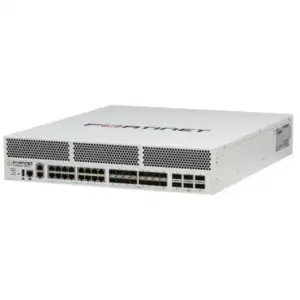
An indoor 5G/LTE gateway built to extend high-throughput wireless WAN connectivity to FortiGate and distributed edge environments.
The FEW-50G is aimed at organizations that want fast cellular WAN for branch resilience, rapid deployment, out-of-band access, or locations where wired connectivity alone does not provide the required flexibility. Its dual 5GE-capable Ethernet interfaces help preserve high cellular throughput between the gateway and downstream network equipment.
Fortinet
FEW-50G
Indoor 5G/LTE gateway
2 × 5GE/2.5GE/1GE RJ45
5G/LTE, dual physical SIM + eSIM
Desktop or wall
High-speed cellular WAN for the distributed edge
The Fortinet FortiExtender WAN 50G is a purpose-built cellular gateway for organizations that need a fast and resilient WAN path without treating cellular connectivity as an afterthought. Fortinet positions the FEW-50G as an ultra-fast 5G gateway for the AI-enabled edge, with a 5G/LTE modem, a claimed downlink capability of up to 7 Gbps, and two multi-gigabit Ethernet interfaces that can operate at 5GE, 2.5GE, or 1GE. That combination matters because a fast radio link is less useful when the local handoff to the firewall or network is constrained by a slower Ethernet interface.
For business buyers, the product is most relevant when a site requires a primary wireless WAN service, a secondary path for business continuity, rapid activation before fixed circuits are available, or out-of-band access to support troubleshooting. Branch offices, retail locations, remote facilities, temporary sites, kiosks, and distributed technology environments can all benefit when the operational objective is to keep a secure network connected even when fixed access is unavailable or delayed.
The gateway uses eight internal 5G/LTE omnidirectional antennas and an internal GNSS antenna, avoiding the visual and installation complexity associated with multiple external cellular antennas in many indoor environments. Fortinet states that the unit can be wall or desk mounted so it can be positioned where 5G/LTE reception is strongest. The practical implication for procurement teams is that placement and signal quality should be evaluated before the final cabling plan is fixed.
Integration is another important selection point. Fortinet documents FortiExtender operation with FortiGate as a WAN extension and provides management options through FortiGate, FortiEdge Cloud, and FortiManager depending on the deployment model. This can make the gateway particularly relevant to organizations already standardizing on the Fortinet Security Fabric. However, model compatibility, firmware alignment, and the number of supported FortiExtenders on a given FortiGate platform should be reviewed before rollout.
FourTeck can assist Uganda buyers with variant selection, carrier and SIM questions, FortiGate integration planning, power and mounting requirements, quantity planning, and quote preparation. Availability can vary by model and project quantity, so the most useful quotation request includes the intended FortiGate model, preferred mobile operator, number of sites, whether the cellular link is primary or backup, and any required deployment schedule.
Why the architecture can improve branch resilience and deployment flexibility
Multi-gigabit handoff for fast 5G service
Two 5GE/2.5GE/1GE RJ45 interfaces give network designers flexibility to connect the gateway to equipment capable of taking advantage of a high-speed cellular service. This reduces the risk of placing a 1GbE bottleneck immediately behind a faster radio link and is especially valuable where the FEW-50G supports high-throughput branch or edge workloads.
Cellular resilience with dual physical SIM and eSIM
Fortinet specifies two physical SIMs and one eSIM for the FEW-50G. This gives deployment teams options when designing carrier resilience, migration, or operational continuity. The actual service strategy depends on operator coverage, commercial data plans, local carrier support, and the way failover is configured.
Cleaner indoor deployment
Eight internal 5G/LTE antennas and an internal GNSS antenna simplify the physical appearance of the gateway compared with designs that require multiple external cellular antennas. Wall or desktop installation also lets teams position the device where indoor signal is practical without turning the firewall rack into the only possible placement location.
FortiGate integration for a unified edge design
FortiExtender can operate as a FortiGate WAN extension, allowing the cellular connection to become part of a broader Fortinet networking and security architecture. For existing FortiGate environments, this can reduce operational fragmentation by keeping link control, policy, and security workflows aligned with the firewall platform.
Out-of-band serviceability
Console and USB connectivity can support out-of-band operational workflows, giving administrators another path for remote troubleshooting when the primary wired service or routing path is unavailable. This benefit is most valuable when the out-of-band design is planned in advance rather than treated as an emergency afterthought.
Flexible power choices
The gateway supports IEEE 802.3at Power over Ethernet on one port or a 12V/3A power adapter. This gives site designers flexibility when deciding whether to power and backhaul the unit from network infrastructure or use local DC power. The correct PoE budget and switch capability should be confirmed during design.
A 5G gateway designed so the local network can keep pace with the cellular link.
The distinctive value of this model is the combination of an indoor integrated-antenna design, 5G/LTE modem capability, dual multi-gigabit Ethernet interfaces, multiple SIM options, and FortiGate-oriented deployment. It is not simply a USB cellular modem or basic LTE backup device; it is intended to become a managed WAN element at the edge.
5G/LTE modem: Internal single modem with 5G/LTE support. Actual service performance is carrier, band, plan, signal, and network dependent.
Cellular downlink: Fortinet specifies up to 7 Gbps downlink for the FEW-50G platform.
LAN/WAN interfaces: Two RJ45 ports operating at 5GE, 2.5GE, or 1GE provide flexible high-speed handoff.
SIM flexibility: Two physical SIM slots plus eSIM support allow a deployment to be designed around appropriate operator options.
Placement: Desktop or wall mounting with eight internal 5G/LTE antennas and internal GNSS supports neat indoor deployment.
FortiExtender WAN 50G technical specifications
| Specification | FEW-50G detail |
|---|---|
| Product type | Indoor 5G/LTE gateway |
| Regional variants | FEW-50G-AM and FEW-50G-EA |
| Modem | Internal 1 × 5G/LTE modem |
| Cellular antennas | 8 × internal 5G/LTE antennas |
| GNSS | 1 × internal GNSS/GPS antenna |
| SIM support | 2 × physical SIM plus 1 × eSIM |
| Ethernet | 2 × 5GE/2.5GE/1GE LAN/WAN RJ45 ports |
| Console | 1 × RJ45 console port |
| USB | 1 × USB 3.0 Type-A with 5V/0.5A output |
| Bluetooth | BLE 5.0+ |
| PoE | 1 × Port 2, IEEE 802.3at (25.5W) |
| Alternative power | 12V/3A power adapter included according to Fortinet datasheet |
| Power consumption | 15W average; 19W maximum |
| Mounting | Wall-mount or desktop |
| Dimensions | 67 × 209 × 222 mm (2.64 × 8.23 × 8.74 in) |
| Weight | 1.0 kg (2.21 lb) |
| Operating temperature | 0°C to 40°C |
| Storage temperature | -20°C to 70°C |
| Humidity | 5% to 95% non-condensing |
| IEEE standards | 802.1q, 802.1d, 802.3ab, 802.3bz, 802.3af, 802.3at |
The specifications that most strongly influence purchase decisions are the regional modem variant, Ethernet handoff, power method, and deployment conditions. The FEW-50G’s two 5GE-capable ports are particularly important when the selected 5G service is expected to deliver more than 1 Gbps, because they allow the wired side of the gateway to operate above traditional Gigabit Ethernet. The actual end-to-end throughput still depends on the mobile network, coverage, radio conditions, FortiGate capabilities, traffic mix, and service plan.
Power also deserves attention. A site can use 802.3at PoE or the included 12V/3A adapter, but the network switch or PoE injector must have the required budget. For wall placement away from the rack, PoE can simplify cabling and lets the gateway be positioned for stronger cellular reception. The indoor environmental limits should also be respected; this is not the rugged outdoor model. Finally, regional carrier and band compatibility should be validated before a project is standardized across multiple Uganda sites.
Five questions to answer before specifying the gateway
01 — What is the operational role of the 5G link?
Decide whether the FEW-50G will be the primary WAN connection, a secondary failover path, a temporary activation link, or an out-of-band management channel. The answer changes how you size the data plan, choose carrier diversity, configure SD-WAN or failover policy, and assess the required availability level. A primary 5G service is normally planned differently from a rarely used backup link.
02 — What throughput and traffic scale should the site support?
Estimate real application demand rather than selecting solely on the radio headline. Video, cloud applications, backups, branch-to-cloud traffic, software distribution, large data transfers, and AI-enabled edge workloads can all create very different utilization patterns. The gateway can expose multi-gigabit Ethernet, but the selected FortiGate, mobile subscription, carrier network, and local radio conditions must also support the intended throughput.
03 — How does it connect to the existing Fortinet environment?
Identify the exact FortiGate model and FortiOS version at each site, then verify supported FortiExtender integration and scaling. Fortinet publishes limits for how many FortiExtenders can be used in WAN or LAN extension roles on different FortiGate platforms. Firmware compatibility should also be checked before a staged deployment so that the appliance and management platform are aligned.
04 — What carrier, SIM, and future growth strategy is required?
The presence of two physical SIM slots and eSIM support gives flexibility, but those options need a deliberate service design. Consider whether you want one primary operator, separate primary and backup operators, project-specific eSIM provisioning, or a migration path between operators. Coverage maps are a starting point, but signal testing at each real site is more useful for final planning.
05 — What installation, power, delivery, and support expectations apply?
Confirm whether the unit will be desktop or wall mounted, whether PoE is preferred, whether a compatible PoE switch or injector is available, and how far the gateway must be placed from the firewall. For project deployments, provide expected quantity, target sites, required delivery window, and any warranty or support expectations so the commercial quote reflects the actual project rather than only the appliance.
Where the FEW-50G can solve practical connectivity problems
Branch continuity where a wired link is not enough
A branch can retain a fixed broadband circuit for normal operation while using the FEW-50G as a resilient cellular path. The business requirement is continuity when the primary service is interrupted. The gateway fits because it can connect into a FortiGate WAN design and provide a separate carrier-based route. The configuration note is that failover behavior, health checks, policy, data-plan limits, and operator diversity should be planned in advance.
Rapid activation for new or temporary sites
When a business location must begin operating before fiber or fixed broadband installation is complete, 5G can reduce dependency on the wired circuit delivery date. The FEW-50G can be installed indoors near a suitable signal location and connected to the local firewall or network over multi-gigabit Ethernet. Teams should still validate indoor reception, SIM activation, power, and long-term data consumption before relying on the link for production service.
High-throughput cellular edge for data-heavy applications
Some distributed sites need more than basic backup bandwidth. Video, cloud-native tools, large file movement, software deployment, analytics, and edge workloads can make a multi-gigabit handoff valuable. Fortinet’s up-to-7-Gbps downlink specification and dual 5GE ports make the platform appropriate for considering these workloads, subject to actual carrier performance and the rest of the network path.
Out-of-band access for remote operational support
For sites that are expensive or slow to visit, a cellular route can be part of a remote recovery design. Console and USB functions support operational workflows alongside the cellular WAN capability. This use case is strongest when the business defines who can access the out-of-band path, how it is secured, how the data plan is maintained, and how the device is powered during an upstream network incident.
Multi-gigabit Ethernet changes how a cellular gateway can be used
A common limitation in cellular WAN appliances is that the radio technology improves faster than the wired interface used to hand traffic to the firewall. The FEW-50G addresses that mismatch with two RJ45 interfaces that support 5GE, 2.5GE, and 1GE operation. For a business evaluating premium 5G service, this is more than a specification checkbox. It determines whether a high-performing radio link can reach the rest of the network without being immediately limited to one gigabit.
The value is strongest in environments where the mobile network can actually deliver substantial throughput and where the downstream FortiGate or switch also has compatible multi-gigabit ports. Procurement should therefore treat the gateway, firewall interface, cabling, and carrier service as one path. A 5GE port on the FEW-50G cannot create multi-gigabit performance if the connected firewall interface or service plan is slower.
The dual-port design also supports practical topology choices. Depending on the network design and FortiExtender mode, separate ports can support connectivity to multiple network devices or high-availability arrangements. Fortinet’s broader FortiExtender platform documentation describes direct connections to high-availability FortiGate pairs on models with multiple LAN interfaces. The exact FEW-50G deployment should be mapped to the intended FortiGate architecture before installation.
For a buyer, the decision is straightforward: choose this class of gateway when the cellular link is expected to carry meaningful production traffic and the wired handoff needs room to scale. If the requirement is only low-bandwidth telemetry or occasional backup traffic, a simpler cellular gateway may meet the operational need. FourTeck can help compare the expected traffic profile with the FortiGate and carrier design before quoting the final configuration.
SIM flexibility and carrier resilience require planning, not assumptions
The FEW-50G provides two physical SIM slots and eSIM support, which gives network teams several ways to design service continuity. That flexibility is useful, but procurement should not interpret the number of SIM options as an automatic guarantee of uninterrupted service. Real resilience depends on which operators are used, whether their radio networks share upstream dependencies, the strength of signal at each location, the terms of each data plan, and how failover is configured.
For multi-site deployments, standardization is valuable. A project can define a primary operator, backup operator, approved SIM profile, data allowance, monitoring approach, and activation process. This avoids a situation where each branch is deployed with a different ad hoc configuration. When eSIM is used, provisioning responsibilities should also be clear between the carrier, IT team, and installation partner.
Uganda buyers should consider practical site testing where the gateway will actually be mounted. Indoor walls, glazing, building materials, neighboring structures, and the local mobile network can influence performance. The FEW-50G’s integrated antennas keep the installation neat, but the unit still needs a location with suitable radio conditions.
2 physical SIM slots for deployment flexibility.
eSIM support for compatible operator provisioning.
FortiGate-oriented management and WAN integration.
Placement, power, and environmental fit can determine real-world success
The FEW-50G is an indoor gateway with a desktop or wall-mount form factor, and this makes physical planning part of the network design. Cellular signal quality can vary substantially inside a building. The strongest location may be near a window, on a higher wall, or simply away from dense equipment racks. Because the gateway offers PoE support, designers can place it where radio reception is useful while keeping the FortiGate elsewhere, provided the Ethernet run and PoE design are appropriate.
Fortinet lists IEEE 802.3at PoE on Port 2 and also supplies a 12V/3A power adapter according to the datasheet. The average power consumption is 15W and maximum is 19W. A PoE design should confirm that the chosen switch or injector has enough available power and that the cable path is suitable. A local power design should consider whether the outlet is protected by the same UPS or backup-power strategy as the rest of the network.
The published operating range is 0°C to 40°C with 5% to 95% non-condensing humidity. That makes it appropriate for normal indoor technology spaces but not a substitute for Fortinet’s rugged outdoor models when the device will be exposed to weather or harsher environmental conditions.
Buyer decision checklist
- Confirm the intended wall or desktop mounting location.
- Test carrier signal where the unit will actually sit.
- Choose between 802.3at PoE and local DC power.
- Verify the connected FortiGate or switch supports the required Ethernet speed.
- Keep the gateway within its published indoor temperature and humidity range.
- Plan UPS protection if cellular connectivity is expected to remain available during power interruptions.
What buyers should check before purchase
| Risk | What to confirm | Why it matters | What to share with FourTeck |
|---|---|---|---|
| Wrong regional variant | FEW-50G-AM versus FEW-50G-EA and carrier compatibility. | Radio band and regional support can affect whether the gateway works as expected. | Country, carrier, deployment locations, and preferred part number. |
| FortiGate mismatch | Firewall model, firmware version, supported integration, and port speed. | The gateway must fit the firewall’s management and physical interface capabilities. | Exact FortiGate model and FortiOS version. |
| Poor radio placement | Signal strength in the planned indoor mounting location. | A capable gateway cannot compensate for consistently weak or obstructed cellular service. | Site type, mounting location, operator, and any signal test results. |
| Power or installation gap | 802.3at PoE budget, DC outlet, UPS protection, cabling, and wall mounting. | The device must remain powered and correctly positioned for the WAN design to function. | Preferred power method and installation constraints. |
A second category of risk is commercial and operational. Do not assume a specific carrier data plan, subscription, support entitlement, or service level is included with the hardware unless it is explicitly stated in the quotation. The appliance and the cellular service are separate elements of the solution. Similarly, if the gateway will be part of a larger Fortinet project, include any required FortiCare, management platform, FortiGate licensing, project installation, or accessories in the same design review.
For quantity purchases, share the complete site list and target deployment sequence. This makes it easier to plan regional variants, project quantities, staging, and delivery coordination. If the FEW-50G is being chosen as a replacement for an older FortiExtender, provide the existing model and current topology so that the new gateway can be checked against the same operational role rather than compared only by radio technology.
Planning FEW-50G supply for Uganda
FortiExtender WAN 50G availability in Uganda can vary by regional part number, project quantity, and distribution timing. FourTeck can assist with a current quotation, configuration review, delivery coordination, and product matching based on the intended deployment. Because carrier compatibility and the AM or EA variant can influence the correct selection, provide the preferred mobile operator and target installation locations when requesting a quote.
For Kampala projects, FourTeck can help buyers organize branch quantities, required accessories, power approach, FortiGate pairing, and delivery planning before orders are finalized. Warranty and support guidance can be discussed against the exact part number and commercial offer rather than assumed from a generic product description. Organizations rolling out multiple sites should also identify whether all locations will use the same carrier strategy or whether different operator profiles are required.
The most efficient enquiry includes the model, quantity, FortiGate platform, mobile carrier, installation type, and target timeline. Contact FourTeck Uganda for a current project quote and configuration discussion.
One procurement conversation for multiple Uganda sites
Businesses planning deployments in Kampala, Entebbe, Jinja, Mbarara, and Gulu can use one project specification while still accounting for carrier coverage and site-specific installation conditions. A standardized bill of materials helps simplify procurement, but radio performance should be validated at each location because indoor signal conditions differ. FourTeck can support quotation and delivery coordination across Uganda without assuming identical mobile network performance at every site.
East Africa and regional project coordination
Organizations with sites in Uganda and Kenya or broader East Africa can benefit from keeping the cellular gateway specification, FortiGate integration method, and operational policy consistent while selecting the correct regional hardware and carrier service for each country. FourTeck can assist with product enquiries through its Uganda, Kenya, Africa, UAE, and Kuwait web presence where relevant to the project, while actual availability, delivery arrangements, and support terms should be confirmed for each market.
Regional rollouts should not assume that a cellular profile validated in one country will automatically apply elsewhere. Band support, carrier certification, SIM provisioning, tariffs, roaming policy, and regulatory requirements can differ. The device model and FortiExtender OS version can remain part of a common technical standard while the mobile service layer is localized. Useful regional resources include FourTeck Uganda, FourTeck Kenya, and FourTeck Africa.
Related Fortinet products and selection paths
The best alternative path depends on whether the priority is 5G throughput, LTE-only resilience, rugged installation, integrated Wi-Fi, vehicle deployment, or a specific FortiGate topology. FourTeck can help match the requirement to an appropriate FortiExtender model rather than treating every cellular gateway as interchangeable.
Practical assistance before the purchase order is issued
01. Product selection guidance helps distinguish the FEW-50G from other FortiExtender models based on radio technology, interface speed, form factor, and operational role.
02. Configuration review can include the FortiGate platform, firmware compatibility, WAN role, carrier strategy, SIM options, and power design.
03. Quote assistance can be built around exact project quantities, target deployment timing, and the required regional model instead of a generic hardware request.
04. Uganda delivery coordination supports businesses planning one site or multi-location rollouts, with availability confirmed during quotation rather than assumed from online content.
05. Warranty and support guidance can be aligned with the exact part number and commercial offer, including any relevant Fortinet service requirements.
06. Alternative product matching helps when the project instead needs LTE, rugged outdoor operation, vehicle mounting, integrated Wi-Fi, or a different FortiExtender capacity.
FortiExtender WAN 50G buyer questions
01. What is the FortiExtender WAN 50G used for?
It is an indoor 5G/LTE gateway for adding high-speed cellular WAN connectivity to business networks. It can be used for primary WAN, failover, rapid branch activation, or out-of-band access depending on the design. Fortinet specifically positions it as a high-throughput cellular gateway for the distributed edge and FortiGate environments.
02. Does the FEW-50G support 5 Gigabit Ethernet?
Yes. Fortinet specifies two RJ45 LAN/WAN ports that support 5GE, 2.5GE, and 1GE. This is important for sites using fast 5G service because the Ethernet handoff can operate above 1 Gbps when the connected firewall or switch, cabling, and overall network path also support the selected speed.
03. How many SIM options are available?
The FEW-50G supports two physical SIMs and one eSIM according to Fortinet’s current product information. The exact carrier strategy should be designed around local operator support, service plans, coverage, and desired failover behavior. Multiple SIM options provide flexibility, but they do not by themselves guarantee carrier diversity or uninterrupted service.
04. Can the gateway be powered by PoE?
Yes. Fortinet lists IEEE 802.3at PoE support on Port 2 at 25.5W. The datasheet also lists a 12V/3A power adapter as an included power option. When PoE is planned, confirm the switch or injector has a sufficient power budget and that the cable route supports the chosen mounting location.
05. Does it need external cellular antennas?
No external cellular antennas are required for the standard indoor FEW-50G design because Fortinet specifies eight internal 5G/LTE antennas and one internal GNSS antenna. The gateway should still be installed where indoor signal quality is suitable, since antenna integration does not remove the need for careful placement and carrier validation.
06. Can it integrate with FortiGate?
Yes. Fortinet documents FortiExtender integration with FortiGate for WAN extension and other Fortinet fabric use cases. Buyers should confirm the exact FortiGate model, FortiOS version, interface speed, and supported FortiExtender scale before rollout. FourTeck can review this information during the quotation and configuration stage.
07. Which regional model should Uganda buyers choose?
Fortinet lists FEW-50G-AM and FEW-50G-EA variants. The correct choice depends on regional radio support and carrier compatibility, so the intended mobile operator and deployment location should be confirmed before ordering. FourTeck can help identify the appropriate orderable part for the Uganda project based on the current commercial and technical requirement.
08. Is the FEW-50G suitable for outdoor installation?
The FEW-50G is specified as an indoor product with an operating temperature of 0°C to 40°C and a wall or desktop mounting format. For exposed, industrial, or outdoor environments, buyers should evaluate Fortinet’s rugged FortiExtender models instead of assuming the indoor unit can be installed without appropriate environmental protection.
09. What information should I provide for a quote?
Provide the quantity, target Uganda locations, preferred mobile operator, FortiGate model and FortiOS version, intended primary or failover WAN role, preferred PoE or DC power method, regional variant if known, and target deployment date. This helps FourTeck prepare a more accurate product and project quotation.
10. Can FourTeck support a multi-site rollout?
FourTeck can assist with product selection, configuration review, quotation, quantity planning, and delivery coordination for multi-site projects. Availability and commercial terms should be confirmed for the exact project. For cellular deployments, each location should also have its carrier coverage and signal conditions validated even when the hardware and network design are standardized.
Build the FEW-50G quote around your real WAN design
Share your FortiGate model, preferred mobile operator, site count, target deployment locations, required cellular role, power method, and project timing. FourTeck can use those details to review the configuration and prepare a Uganda quotation for the appropriate FortiExtender WAN 50G variant.
- FortiGate model and firmware
- Carrier and SIM or eSIM requirement
- Primary, backup, or out-of-band WAN role
- Quantity and deployment schedule
- PoE or local power preference
Reviews
There are no reviews yet.