
FortiManager 3100G in Uganda
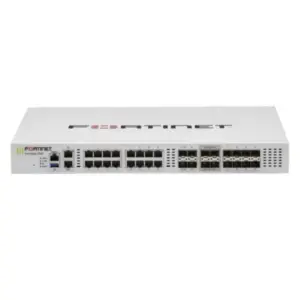
A high-capacity Fortinet management appliance for organizations that need centralized policy, configuration, workflow, and operational control across thousands of Fortinet devices and VDOMs.
For large distributed networks, the management platform is part of the security architecture. The FMG-3100G gives infrastructure and security teams a dedicated appliance sized for substantial Fortinet estates, while leaving room for licensed growth beyond its default managed-device capacity.
Central control for a large Fortinet estate
FortiManager is Fortinet’s centralized management platform for the Fortinet Security Fabric. The 3100G is a hardware appliance positioned for large environments where the number of managed devices, virtual domains, administrative domains, policies, and operational changes can make device-by-device administration impractical. It gives network operations and security operations teams a common management plane for organizing and controlling supported Fortinet infrastructure.
The central buying question is scale. Fortinet specifies 4,000 devices/VDOMs as the default capacity for this model. With the appropriate supported device add-on licensing, the platform can reach 8,000. This distinction matters in organizations that use multiple VDOMs on FortiGate appliances because each VDOM counts as one licensed network device. A deployment with 1,500 physical appliances can therefore consume materially more management capacity when virtual domains are included.
The appliance also provides substantial local storage: 64 TB from sixteen 4 TB SAS self-encrypting hard drives plus 3.84 TB from two 1.92 TB NVMe SSDs, with Fortinet listing 56 TB usable storage after RAID. RAID 50 is the default, while multiple RAID levels are supported. Two GbE RJ45 and two 25GbE SFP28 interfaces support management connectivity appropriate to a data-center deployment.
For Uganda buyers, the FMG-3100G is most relevant when management requirements have outgrown smaller appliances or when a project needs a dedicated centralized platform with significant capacity. FourTeck can help review the device and VDOM count, administrative-domain requirements, software compatibility, rack and power planning, interfaces, support subscription, and expected expansion before a commercial quote is prepared.
Operational outcomes that matter at scale
01
Centralized policy administration
Large Fortinet estates become difficult to govern when configuration work is fragmented across individual appliances. A centralized management platform helps teams coordinate policy packages, configuration changes, and administrative workflows from one operational layer. The business value is consistency: changes can be planned and governed with a clearer understanding of how they affect distributed infrastructure.
02
Capacity for thousands of managed objects
The 4,000 default devices/VDOMs capacity addresses environments well beyond ordinary branch management. Expansion to 8,000 through supported add-on licensing creates a defined growth path, reducing the chance that a rapidly expanding Fortinet estate immediately forces a management-platform replacement.
03
High-capacity resilient storage design
The combination of SAS self-encrypting disks, NVMe storage and supported RAID choices gives the appliance a storage architecture intended for enterprise operation. Buyers should still select RAID and retention-related settings according to their own operational requirements rather than assuming the factory default is automatically ideal.
04
Fast data-center connectivity
Two 25GbE SFP28 ports complement two GbE RJ45 ports. This gives deployment teams flexibility when integrating the appliance into modern data-center switching designs. Optics, cabling and switch-side compatibility should be confirmed as part of the bill of materials.
05
Serviceability and power resilience
Fortinet specifies removable hard drives and redundant hot-swap power supplies. These characteristics support data-center operating practices where component replacement and power-path resilience are important. The surrounding rack, PDU and electrical design must still be planned correctly.
06
Management extension capability
Fortinet documentation lists the FMG-3100G among hardware models that can host management extension applications. Organizations considering extensions should validate software release compatibility and cumulative resource requirements before enabling them in production.
Built around centralized control, capacity and enterprise deployment discipline.
The defining characteristic of the 3100G is not a single interface or storage figure; it is the combination of large management scale, substantial local storage, rack-focused hardware and licensing-based expansion. That combination makes it appropriate for teams that need to turn a large collection of Fortinet devices into a more governable operating environment.
- 4,000 default devices/VDOMs: a large baseline for enterprise and service-provider estates.
- Up to 8,000 devices/VDOMs: available with supported add-on licensing, subject to current Fortinet ordering terms.
- 64 TB SAS SED plus 3.84 TB NVMe: a mixed storage architecture with 56 TB usable after RAID as specified by Fortinet.
- RAID flexibility: support includes RAID 0/1, 1s, 5, 5s, 6, 6s, 10, 50 and 60; RAID 50 is the default.
- 25GbE uplink capability: two SFP28 interfaces are provided alongside two GbE RJ45 ports.
- 3RU chassis: rack space, airflow, depth, power and service clearance should be incorporated into deployment planning.
FortiManager 3100G technical specifications
| Specification | Confirmed detail |
|---|---|
| Default devices/VDOMs | 4,000 |
| Maximum devices/VDOMs | 8,000 with supported device add-on license |
| Storage capacity | 64 TB (16 × 4 TB) SAS SED HDD + 3.84 TB (2 × 1.92 TB) NVMe SSD |
| Usable storage after RAID | 56 TB |
| Default RAID | RAID 50 |
| Supported RAID | RAID 0/1, 1s/5, 5s/6, 6s/10/50/60 |
| Interfaces | 2 × GbE RJ45, 2 × 25GbE SFP28 |
| Console | DB-9 |
| Form factor | 3RU rackmount |
| Dimensions | 13.0 × 44.0 × 65.0 cm |
| Weight | 31.57 kg |
| Power supply | 100–127V~/10A, 200–240V~/5A; redundant hot-swap power supplies |
| Power consumption | 395 W average / 510 W maximum |
| Operating temperature | 0°C to 40°C |
| Airflow | Front to back |
| TPM | Supported |
| 24×7 support | Subscription; confirm selected term and service level |
For procurement, the device/VDOM count deserves the most attention because it determines whether the default entitlement is sufficient. Storage architecture matters when the appliance will carry significant management and logging responsibilities, while the 25GbE interfaces influence transceiver and switching requirements. Physical planning is equally important: at 3RU and approximately 65 cm deep, the appliance needs suitable rack depth, front-to-back airflow and a power design that can make proper use of its redundant hot-swap supplies. Buyers should also confirm the FortiManager software release appropriate for the managed Fortinet estate. A technically capable appliance can still be the wrong purchase if licensing, firmware compatibility, optics or rack infrastructure are not aligned.
Five questions to answer before requesting a quote
01 — What exactly will FortiManager manage?
List every Fortinet device and every VDOM expected to be under management. The licensing metric makes this more important than a simple appliance count. Include near-term deployments, branch rollouts and planned segmentation so the platform is sized for the project rather than only today’s inventory.
02 — What scale must the platform support over its planned life?
Determine the current count, expected annual growth and whether the 4,000 default capacity provides adequate headroom. If the project may exceed that level, discuss supported add-on licensing and the practical growth path before ordering.
03 — Which software releases and existing systems must remain compatible?
Document FortiOS and other managed-product versions, administrative workflows, authentication dependencies and integration requirements. Compatibility should be checked against the FortiManager release selected for deployment.
04 — Which extensions, ADOMs and support services are required?
Large organizations frequently need administrative separation, support coverage or management extension applications. These choices affect licensing, operational design and sometimes resource planning. Confirm them as part of the initial bill of materials.
05 — What are the data-center installation requirements?
Confirm rack space, rack depth, available power feeds, airflow direction, 25GbE optics, copper connectivity, console access and change-window expectations. These practical details can determine whether installation proceeds smoothly.
Where the appliance makes operational sense
Large multi-site enterprise
A business with hundreds or thousands of Fortinet-managed locations needs policy changes to be controlled centrally rather than repeated manually. The 3100G fits when the combined device and VDOM count is within its licensed scale. The project team should map branch growth, VDOM usage and administrative boundaries before choosing the final entitlement.
Service-provider or managed infrastructure environment
Operational teams managing multiple customer or organizational domains benefit from a dedicated management layer and clear administrative separation. The key configuration questions are capacity, ADOM requirements, access governance and software compatibility. Procurement should include a realistic growth forecast rather than only contracted devices at launch.
Government or education network with distributed sites
Distributed institutions often need standardized configuration, controlled administrative workflows and a platform that can grow as new sites are commissioned. The appliance’s rack design, redundant power and high-capacity storage suit centralized data-center deployment, subject to the institution’s own resilience and compliance design.
Enterprise consolidation project
Organizations moving from fragmented management to a common Fortinet operating model can use FortiManager to establish centralized control. The migration plan should inventory existing configurations, software versions, VDOMs, administrators and change procedures before devices are brought under central management.
Device and VDOM capacity is the first sizing decision
Fortinet’s licensing note states that each virtual domain operating on a physical or virtual device counts as one licensed network device. This is a crucial planning detail. An organization that owns 2,500 FortiGate appliances is not necessarily a 2,500-device FortiManager environment. If many of those appliances host multiple VDOMs, the effective management count can be considerably higher.
The 3100G starts with a default capacity of 4,000 devices/VDOMs. Fortinet lists a maximum of 8,000 with supported device add-on licensing. That gives the model meaningful expansion room, but it should not be treated as unlimited growth. Procurement teams should create a current-state count and a forecast that includes acquisitions, new branches, network segmentation projects, lab environments and disaster-recovery infrastructure.
Capacity planning should also consider operational organization. Administrative domains can help separate managed environments, and Fortinet’s current product information identifies ADOM capability for this model as add-on based. The precise license and software requirements should therefore be confirmed for the intended design.
Storage, RAID and serviceability
The appliance combines sixteen 4 TB SAS self-encrypting hard drives with two 1.92 TB NVMe SSDs. Fortinet specifies 56 TB usable storage after RAID and RAID 50 as the default. Supported RAID choices include 0/1, 1s, 5, 5s, 6, 6s, 10, 50 and 60. The presence of removable hard drives and redundant hot-swap power supplies aligns the hardware with enterprise rack operations where service access and resilience are expected.
Storage decisions should be made in the context of the actual FortiManager workload and organizational retention requirements. RAID selection changes usable capacity and resilience characteristics. Buyers should avoid assuming that raw disk capacity is equivalent to usable operational storage. FourTeck can help ensure that the quoted hardware and support choices match the intended deployment, while final configuration policy remains the responsibility of the customer’s technical design.
Data-center connectivity and physical readiness
Two 25GbE SFP28 ports give the FMG-3100G high-speed network connectivity, while two GbE RJ45 ports provide copper Ethernet options. The correct interface design depends on the management network, switch architecture and redundancy model. SFP28 ports also introduce a procurement dependency: the transceivers or direct-attach cabling must be compatible with the switch side and suitable for the required distance and media.
The chassis occupies 3RU and measures approximately 13 × 44 × 65 cm. It weighs about 31.57 kg, so rack installation should be planned rather than treated as a desktop-style deployment. Front-to-back forced airflow must align with the data center’s cooling pattern. Fortinet lists average power consumption at 395 W and maximum consumption at 510 W, with redundant hot-swap power supplies. Separate resilient feeds may be appropriate where the facility design supports them.
Buyer decision checklist
- Reserve 3RU and confirm usable rack depth.
- Verify front-to-back airflow compatibility.
- Confirm electrical feeds and PDU connectors.
- Select appropriate 25GbE SFP28 optics or cabling if those interfaces will be used.
- Confirm switch-side speed and transceiver compatibility.
- Plan console and out-of-band operational access.
- Allow safe installation handling for a 31.57 kg appliance.
What to check before purchase
| Risk | What to confirm | Why it matters | Share with FourTeck |
|---|---|---|---|
| Capacity mismatch | Devices plus VDOMs | VDOMs count toward licensed devices | Current and forecast counts |
| Software mismatch | Managed product and FortiManager versions | Feature and device support varies by release | Version inventory |
| Incomplete bill of materials | Support, licenses, optics and rack needs | Hardware alone may not complete the deployment | Support term and interface design |
| Growth constraint | Three-to-five-year expansion | Management capacity should survive planned growth | Expansion roadmap and project quantities |
Model validation is particularly important for a platform of this scale. Buyers should distinguish between the hardware identifier FMG-3100G, support renewal SKUs, optional service subscriptions and any add-on licensing required by the deployment. A quote should identify these separately so the procurement team understands what is included. Warranty and support expectations should be discussed in terms of the selected FortiCare service rather than assumed from the hardware name. If the appliance is replacing an older FortiManager, share the current model, software release, device database size, VDOM count and desired migration window so compatibility and transition requirements can be reviewed.
Planning a FortiManager deployment in Uganda
Availability for enterprise Fortinet appliances can vary by configuration, support term, project quantity and supply conditions. FourTeck can prepare a Uganda quotation after confirming the exact hardware, required licensing, support coverage and deployment accessories. For Kampala projects, buyers should provide the planned installation site, quantity, desired support term and network interface requirements so the commercial proposal reflects the actual deployment.
FourTeck can also assist with configuration review, delivery coordination and guidance on current warranty or support options associated with the selected Fortinet service. These steps are especially useful for infrastructure projects where purchase approval depends on a complete bill of materials rather than a hardware-only line item. No stock or delivery-time assumption should be made until it is confirmed in the quotation.
Within Uganda, project enquiries may originate from Kampala as well as organizations operating in Entebbe, Jinja, Mbarara and Gulu. FourTeck can coordinate product and quotation discussions for these locations while confirming delivery arrangements according to the specific order and destination.
Support for regional procurement planning
Organizations with infrastructure spanning more than one country often need the same management architecture documented across several procurement teams. FourTeck can support enquiries for Uganda and, where relevant to the project, coordinate product discussions involving Kenya and selected East Africa or Africa markets. Regional requirements should be stated clearly because taxes, logistics, commercial terms, support arrangements and availability can differ by destination.
For organizations with purchasing activity in the Gulf, FourTeck’s regional web presence also covers the UAE and Kuwait. These links are useful for separate country enquiries rather than evidence of local stock or a guaranteed delivery commitment. Visit FourTeck Uganda, FourTeck Kenya, FourTeck Africa, FourTeck UAE or FourTeck Kuwait according to the purchasing entity and destination.
Related FortiManager options to discuss
Model selection should follow the managed estate rather than a fixed preference. Buyers below the 3100G’s scale may want to review smaller FortiManager hardware options, while exceptionally large environments should compare the higher-capacity models in the current Fortinet range. FourTeck can help map the device/VDOM count to the appropriate appliance before a quote is finalized.
FortiManager 1000G: a lower-capacity hardware path for organizations whose managed estate does not require the 3100G baseline. Ask FourTeck to compare sizing.
FortiManager 3750G: a higher-scale hardware path for very large environments. Request a model comparison.
FortiManager VM: a virtual deployment path where infrastructure policy favors virtualization rather than a dedicated appliance. Discuss appliance versus VM requirements.
FortiAnalyzer: a complementary Fortinet analytics and logging platform that may form part of a broader operations design. Review the wider Fortinet management stack.
Procurement assistance around the product, not just the part number
01 — Product selection guidance. FourTeck can use your device and VDOM inventory to help determine whether the 3100G is appropriately sized or whether another FortiManager model should be evaluated.
02 — Configuration review. Licensing, ADOMs, support, interfaces, optics and software compatibility can be discussed before the purchase request is finalized.
03 — Quote assistance. A structured request helps separate hardware, subscription and accessory requirements so procurement stakeholders can understand the proposed bill of materials.
04 — Uganda delivery coordination. Delivery requirements can be reviewed against the actual order and destination without assuming stock or lead time before confirmation.
05 — Project and quantity planning. Multi-appliance or multi-site projects can be discussed as a project rather than as isolated line items, helping keep configuration requirements consistent.
06 — Alternative matching. If the 3100G is larger or smaller than the real requirement, FourTeck can help identify a more appropriate current FortiManager path.
FortiManager 3100G buyer questions
01. What is the FortiManager 3100G used for?
It is a centralized Fortinet management appliance for large environments. It helps network and security teams administer supported Fortinet infrastructure from a common management platform rather than treating every managed device as an isolated configuration point. It is particularly relevant where policy consistency, administrative workflows, controlled changes and large device counts are important operational requirements.
02. How many devices can it manage?
Fortinet specifies 4,000 devices/VDOMs by default and up to 8,000 with supported device add-on licensing. Capacity calculations must include virtual domains because each VDOM on a physical or virtual device counts as one licensed network device. Buyers should therefore provide both the physical device inventory and VDOM count when requesting sizing guidance.
03. What storage does the appliance include?
Fortinet lists 64 TB from sixteen 4 TB SAS self-encrypting HDDs plus 3.84 TB from two 1.92 TB NVMe SSDs. Usable storage after RAID is specified as 56 TB. RAID 50 is the default, and several other RAID levels are supported. The appropriate storage configuration should follow operational requirements and resilience policy.
04. Does it require a FortiCare subscription?
Fortinet’s current model information identifies 24×7 support as subscription based for the 3100G. The exact service term and support level should be selected as part of the quote. Buyers should avoid assuming that the hardware SKU alone represents the complete support requirement; FourTeck can help separate the appliance and applicable service options.
05. What network interfaces are provided?
The appliance provides two GbE RJ45 ports and two 25GbE SFP28 ports, plus a DB-9 console port. If the SFP28 interfaces will be used, the project should specify compatible optics or cabling and verify switch-side requirements. Interface planning is best completed before quotation so accessory requirements are not discovered during installation.
06. Is the FMG-3100G suitable for rack installation?
Yes. It is a 3RU rackmount appliance measuring approximately 13 × 44 × 65 cm and weighing about 31.57 kg. Fortinet specifies front-to-back airflow and redundant hot-swap power supplies. Buyers should confirm rack depth, available RU space, cooling direction, electrical feeds and installation handling before deployment.
07. Can it run FortiManager management extensions?
Fortinet documentation lists FMG-3100G among hardware models that can host management extension applications. The specific extension, FortiManager release and cumulative resource requirements should be validated before production use. This is particularly important when multiple extensions or resource-sensitive FortiManager features are planned on the same appliance.
08. Is the appliance available in Uganda?
FourTeck can prepare a Uganda quotation and coordinate availability based on the required hardware, support, licensing, accessories, quantity and destination. Availability can vary, so stock and delivery timing should be confirmed in the actual quotation rather than assumed from the model page. Kampala and wider Uganda project requirements can be submitted through the contact page.
09. What information should I provide for a quote?
Provide the current and forecast device count, VDOM count, Fortinet product families, software versions, required administrative separation, preferred support term, network interface requirements, project quantity and installation location. If this is a replacement project, include the current FortiManager model and migration objective so the proposed configuration can be reviewed in context.
10. Should I choose the 3100G or another FortiManager model?
The answer depends primarily on managed scale, growth, deployment model and licensing requirements. The 3100G is positioned for a large estate with 4,000 devices/VDOMs by default and expansion up to 8,000. Smaller environments may be better served by a lower-capacity model, while much larger estates should review higher-scale FortiManager options.
Build the FortiManager quote around your real managed estate
Send FourTeck your device and VDOM count, growth forecast, Fortinet software versions, required support term, ADOM requirements, interface needs and Uganda delivery destination. The team can use those details to review the model and prepare a more complete commercial proposal.
- Current and planned devices/VDOMs
- Software and compatibility requirements
- Support and licensing needs
- Rack, power, optics and cabling requirements
- Quantity and delivery destination
Reviews
There are no reviews yet.