
Enterprise Network Detection Sensor • Uganda Supply
Fortinet FortiNDR Cloud 900F Sensor — Enterprise Network Detection and Response
The FortiNDR Cloud 900F is the large physical sensor in the FortiNDR Cloud architecture. It observes mirrored network traffic from switching infrastructure and supplies network telemetry to the cloud service so security teams can investigate suspicious activity without inserting the appliance directly into the production forwarding path. For organizations in Uganda, that makes the 900F particularly relevant where visibility must be expanded across high-value server segments, campus cores, data-center aggregation points, internet edges, and other locations where traditional controls may not provide enough behavioral context.
Procurement should be approached as a solution rather than a stand-alone appliance purchase. The sensor hardware, annual sensor support and forwarding entitlement, FortiNDR Cloud service capacity, monitored throughput, transceivers, cabling, rack position, management connectivity, and traffic-mirroring design all need to agree. Fortinet documentation identifies the 900F as a large FortiNDR Cloud hardware sensor and supports sniffer/SPAN and 802.1Q monitoring. FortiNDR Cloud itself is delivered as a cloud service and can integrate with security operations platforms such as SIEM, SOAR, XDR, EDR and FortiGate. FourTeck can therefore prepare a bill of materials around the actual network rather than quoting an isolated chassis that later requires corrections.
A useful quotation request includes the approximate aggregate mirrored traffic rate, number of monitoring points, switch port types, fiber standards, required subscription duration, intended cloud region where applicable, delivery destination, and any internal support or warranty requirements. This allows engineering review before commercial approval and reduces the chance of discovering a missing optical module, insufficient monitoring capacity, or licensing mismatch during installation.
Procurement Snapshot
Product: FortiNDR Cloud 900F large hardware sensor
Primary role: Passive network traffic observation for FortiNDR Cloud
Monitoring: SPAN/TAP and VLAN-tagged traffic support
Connectivity: Copper plus high-speed SFP+ monitoring options
Deployment: Enterprise rack/data-center or secure network room
Commercial model: Hardware plus applicable cloud service and annual sensor entitlement
Quote advice: Validate monitored throughput and optics before ordering.
Instant Specifications & Procurement Fact Rail
FortiNDR Cloud 900F large sensor
Large enterprise monitoring
Passive mirrored/SPAN/TAP traffic
1GbE copper and 10GbE SFP+/copper
Quote-based enterprise supply
Confirm FortiCare and subscription term on quote
The fact rail is intended as a starting point, not a substitute for bill-of-materials validation. FortiNDR Cloud has evolved across hardware generations, and current Fortinet ordering material should be checked at quotation time because newer sensor designations may coexist with 900F references in deployed estates and regional supply channels. A buyer replacing an existing 900F should provide the current serial-number context and subscription details where possible; a buyer creating a new deployment should have the proposed architecture reviewed against the currently orderable sensor generation. FourTeck can align the requested 900F requirement with the correct commercial part references available for the project while preserving the intended capacity and monitoring design.
Operational Product Architecture & Overview
Network detection projects often begin after a security team identifies a visibility gap. Firewalls can enforce policy, endpoint tools can inspect managed hosts, and log platforms can correlate events, yet lateral movement, unmanaged devices, internal service-to-service communication, encrypted session metadata, and unusual east-west behavior can remain difficult to understand. A passive network sensor addresses a different layer of the problem: it receives copies of traffic from network infrastructure, interprets that traffic for the detection platform, and does so without becoming a forwarding dependency for business applications.
The 900F is designed for this collection role in FortiNDR Cloud. Rather than forcing production packets through the sensor, a switch SPAN session, network TAP, or compatible mirrored feed sends a copy to a monitoring interface. This separation matters operationally. If a passive sensor is being serviced, production forwarding can continue because the sensor is not the device that routes the original packet. The network design still requires care: oversubscribed SPAN sessions can drop mirrored packets, asymmetric monitoring can remove context, and incorrect VLAN or trunk handling can hide important segments. Good sizing therefore starts with the traffic source, not merely with the sensor name.
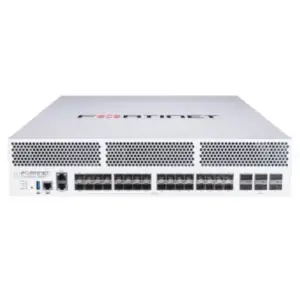
Fortinet documentation for the 900F generation describes a physical interface mix that includes a 1GbE copper interface, two 10GbE SFP+ interfaces and two 10GbE copper interfaces, with multiple interfaces usable for sniffing. This gives architects flexibility when the monitored environment contains a combination of copper access or management connectivity and optical aggregation links. Exact port assignment, supported optics, and the final monitoring topology should be verified against the appliance documentation and the switch configuration selected for the deployment.
The cloud side changes the operating model compared with a fully on-premises NDR platform. FortiNDR Cloud centralizes analysis and investigation capabilities in the service while sensors provide the network observation points. This can simplify multi-site visibility because organizations do not have to deploy a full analysis stack at every monitored location. It also makes WAN and outbound connectivity planning important: the sensor must be able to communicate as required with the service, and organizational policies concerning cloud regions, retention, firewall egress, proxying, and data governance should be reviewed before purchase.
FortiNDR Cloud is positioned to work alongside established security operations tools rather than replacing every control. Fortinet lists integrations across SIEM, SOAR, XDR, EDR and FortiGate environments. In practice, this means a buyer should map how detections will enter the existing incident workflow. A SOC may want FortiNDR findings to enrich a case in a SIEM, initiate an orchestration workflow, or correlate with endpoint and firewall evidence. Defining that workflow during procurement helps determine which integrations, administrator roles, network permissions, and operational owners need to be ready on deployment day.
Another architectural consideration is packet inspection policy. FortiNDR Cloud sensor software can expose settings for packet capture and packet inspection engines, depending on supported sensor resources and platform version. These capabilities should be enabled according to the organization’s privacy policy, investigation requirements, capacity plan, and Fortinet guidance. Capturing more data is not automatically better: retention, sensitivity, legal requirements, and operational value all need to be balanced. FourTeck can help document the intended monitoring scope so implementation teams know which networks are in scope and which are intentionally excluded.
Enterprise Business Outcomes & Value Analysis
1. Performance and Throughput Integrity
A network sensor is useful only when the monitoring design feeds it representative traffic. The 900F’s mix of 1GbE and 10GbE connectivity supports placement around substantial enterprise switching environments, but procurement teams should distinguish physical port speed from sustainable monitored workload. Aggregate mirrored traffic, bursts, duplicate packets, packet size distribution, inspection features, and subscription capacity can all influence sizing. FourTeck recommends documenting average and peak traffic at every proposed SPAN or TAP source before finalizing the sensor count.
2. System Reliability and Operational Continuity
Passive monitoring avoids placing the sensor directly in the production forwarding path. That reduces the operational blast radius associated with maintenance because application traffic is not dependent on the sensor to reach its destination. Reliability still depends on sound deployment practices: stable power, suitable rack cooling, protected management connectivity, documented switch mirroring, monitored sensor health, and tested cloud communication. For critical sites, buyers should also plan how monitoring continuity will be maintained during sensor maintenance or upstream switch changes.
3. Network and Infrastructure Scalability
FortiNDR Cloud supports physical and virtual sensor models, allowing monitoring architecture to follow the shape of the enterprise. A 900F can serve as a large physical collection point while virtual sensors may be appropriate for cloud or virtualized environments. This allows organizations to expand visibility site by site instead of redesigning the entire security stack. Scale planning should include monitored throughput, event volume, number of sites, geographic distribution, available mirror ports, and subscription capacity.
4. Enterprise Security and Access Control
NDR adds network-derived evidence to the security program. This is valuable when attackers use valid credentials, unmanaged endpoints, internal protocols, or lateral movement that may not be obvious from perimeter logs alone. Administrative access to the service should be governed through least privilege, change control, strong authentication, and separation of duties. The management network used by the sensor should also be treated as security infrastructure and protected accordingly.
5. Centralized Management and Operational Simplicity
A cloud service can consolidate investigation across multiple sensors and sites. Centralization is especially useful for organizations operating branches around Uganda or across East Africa because analysts can work from a common operational view rather than maintaining a separate analysis appliance at every site. The benefit is greatest when sensor naming, location metadata, network ownership, alert routing, and escalation procedures are standardized from the start.
6. Total Cost of Ownership and Resource Efficiency
The purchase price is only one component of an NDR project. Buyers should account for cloud subscription capacity, sensor entitlement, optics, cabling, rack space, power, WAN egress policy, implementation time, staff training, and renewal costs. Cloud analysis can reduce the amount of local infrastructure required compared with building a complete analysis stack at each site, but recurring service costs must be included in multi-year budgeting. A three-year commercial view is usually more informative than a hardware-only comparison.
7. Investigation Readiness
The value of network telemetry appears during an incident, when analysts need to understand what communicated, when behavior changed, and which systems may be related. Designing monitoring coverage around crown-jewel applications, identity infrastructure, server networks, internet edges and sensitive user segments can make investigations materially faster. Procurement should therefore involve the SOC and network teams together so monitoring points reflect incident-response priorities.
Key Hardware & Software Highlights
| Capability | Technical Role | Operational Outcome |
|---|---|---|
| Passive monitoring interfaces | Receive copied traffic from SPAN/TAP sources. | Adds visibility without making the sensor an inline forwarding dependency. |
| 10GbE optical and copper connectivity | Connects to common data-center and aggregation switching media. | Reduces media-conversion complexity when matched with the correct optics and cabling. |
| 802.1Q awareness | Supports observation of VLAN-tagged mirrored traffic. | Useful for consolidated monitoring at trunks and aggregation points. |
| Cloud service integration | Forwards relevant telemetry to FortiNDR Cloud. | Centralizes detection and investigation across distributed sensors. |
| Security operations integrations | Connects findings with SIEM, SOAR, XDR, EDR and FortiGate workflows. | Helps analysts correlate network evidence with other security controls. |
These capabilities should be evaluated as a system. For example, a 10GbE monitoring port does not by itself prove that a proposed mirrored workload is correctly sized; the traffic mix and subscribed service capacity still matter. Likewise, an optical interface requires the correct transceiver type and fiber plant. Buyers should include switch make and model, port type, optical wavelength, connector type, and expected distance in the pre-sales information whenever fiber is involved.
Technical Specifications Ledger
| Item | FortiNDR Cloud 900F | Procurement Note |
|---|---|---|
| Product class | Large FortiNDR Cloud hardware sensor | Designed as a physical observation point for the cloud service. |
| Deployment method | Sniffer / SPAN / TAP-style passive monitoring | Confirm mirror design and aggregate traffic before ordering. |
| VLAN support | 802.1Q supported | Useful for trunk monitoring and segmented environments. |
| Physical interfaces | Published 900F generation references include 1 × 1GbE copper, 2 × 10GbE SFP+, 2 × 10GbE copper | Verify current hardware revision and exact port role on quote. |
| Monitoring interfaces | Multiple copper/optical interfaces available for sniffing | Map each traffic source to a physical sensor port. |
| Cloud architecture | Sensor plus FortiNDR Cloud SaaS portal | Cloud service capacity and sensor entitlement are commercial dependencies. |
| Security integrations | SIEM, SOAR, XDR, EDR, FortiGate NGFW ecosystem support | Confirm target integration and workflow requirements. |
| Data retention | Fortinet currently lists 365-day FortiNDR Cloud retention | Confirm contract, region and service version at purchase. |
| Power | Appliance AC power requirements vary by hardware revision | Confirm input rating, cord type and rack PDU compatibility from final datasheet. |
| Dimensions / weight | Confirm against supplied 900F hardware revision | Required for rack clearance and freight planning. |
| Environmental limits | Use Fortinet operating temperature/humidity limits for final hardware revision | Do not install outside specified data-center conditions. |
| Support | Applicable annual sensor support/forwarding entitlement | Ensure renewal date aligns with cloud service term. |
Specifications for security appliances can change as manufacturers transition between hardware generations. Fortinet’s current ordering information may identify successor sensor part numbers while product pages and deployed estates still reference the 900F. FourTeck therefore treats the model name as the technical requirement and validates the final manufacturer part number, service SKU, transceiver set and support term before order acceptance. This is particularly important for replacement projects where the customer may require compatibility with an established monitoring design rather than a simple generation upgrade.
Configuration & Sizing Worksheet
Step 1 — Estimate the workload
List every network segment that will be mirrored to the sensor. For each source, record average traffic, peak traffic, link speed, expected growth, packet duplication risk, and whether the feed includes both directions of a conversation. Do not simply add switch uplink line rates and assume they equal monitored throughput; actual utilization is more useful. Where NetFlow, ERSPAN or other forwarded telemetry is planned in addition to local SPAN/TAP traffic, document that separately because interface and collector requirements may differ by sensor software version.
Step 2 — Check rack, cooling and physical environment
Identify the exact rack or cabinet, available rack units, front-to-rear clearance, airflow direction, ambient temperature, grounding arrangements, and maintenance access. Reserve enough space to route optical and copper patching without sharp bends or blocked ventilation. In branch or campus environments, verify that the communications room offers data-center-quality power and cooling; passive monitoring hardware is still enterprise computing equipment and should not be treated like an unmanaged access switch.
Step 3 — Validate power and cabling
Record PDU socket type, voltage, available protected circuits, UPS coverage, and whether the site requires dual-feed resilience. Then map each monitoring interface to the upstream switch. For fiber, provide SFP/SFP+ type, wavelength, connector, fiber mode and distance. For copper, provide link speed and patching category. If a network TAP is used, document whether it is passive or powered and whether aggregation or regeneration functions affect the traffic presented to the sensor.
Step 4 — Align subscriptions and service capacity
FortiNDR Cloud is not a hardware-only proposition. The cloud service is licensed around service capacity, and the physical sensor requires the applicable support and traffic-forwarding entitlement. Buyers should decide the desired term, expected monitored throughput, anticipated event volume where relevant, and whether the organization prefers annual or multi-year budgeting. Aligning renewal dates across the sensor and cloud service simplifies administration and reduces the risk of an operational component expiring unexpectedly.
Step 5 — Prepare the quote package
A complete request should include company name, delivery city, number of sensors, required model or performance class, current network diagram, monitored traffic estimate, switch port types, required optics, preferred subscription duration, support expectations, target deployment date, and whether staging or remote implementation assistance is needed. If the request is a replacement, include the existing model and reason for replacement. If it is a new deployment, identify the sites and security operations workflow that will consume the detections.
Deployment Scenarios & Industry Use Cases
Large Enterprise and Multi-Site Networks
A large enterprise may place a 900F at a primary data center or campus core where multiple critical VLANs converge. SPAN sessions or TAP infrastructure can present copies of server, user, identity and internet-edge traffic to the sensor. Additional physical or virtual sensors can extend coverage to branches, cloud workloads or secondary sites. The design goal is not to mirror every packet indiscriminately; it is to choose observation points that provide enough context to identify lateral movement, unusual service relationships, suspicious outbound communication and other behaviors important to the organization’s incident model.
For multi-site environments, naming and ownership are important. Each sensor should have a meaningful location, the monitored segments should be documented, and the SOC should know which network team owns the corresponding switch configuration. This reduces troubleshooting time when traffic unexpectedly disappears from a sensor after a switch change.
Financial and Banking Institutions
Banks, payment organizations, insurers and other financial institutions often operate highly segmented networks with strict change controls. A passive sensor can add network evidence without becoming an inline transaction dependency. Monitoring priorities may include authentication infrastructure, server-to-server communication, payment application zones, administrative networks and controlled internet egress. Procurement should include governance review because packet-derived data can be sensitive. Access roles, retention, cloud-region requirements, incident handling, and integration with the institution’s SIEM or case-management process should be agreed before production monitoring begins.
Educational and Campus Networks
Universities and large education networks contain a difficult mix of managed and unmanaged devices, student systems, research workloads, guest access, administrative applications and distributed buildings. A 900F can be positioned around a campus aggregation point to observe selected high-value segments while virtual sensors may cover hosted or cloud resources. Because campus traffic can be bursty and diverse, sizing should use measured utilization rather than nominal backbone speed alone. Privacy boundaries should also be explicit so monitoring scope is appropriate for institutional policy.
Government and Defense Procurement
Government environments typically require formal bill-of-materials control, support documentation, serial-number traceability, defined delivery acceptance and clear data-handling policies. FortiNDR Cloud is a cloud-delivered architecture, so agencies with sovereign, restricted, classified, air-gapped or otherwise non-cloud requirements should validate whether FortiNDR Cloud is appropriate before procurement. Fortinet also offers on-premises FortiNDR options for environments where local data storage and disconnected operation are necessary. FourTeck can help separate these architectural choices during pre-sales review so the quoted platform matches the governing security policy.
Technical Deep Dive 1: Processing, Inspection & Sensor Architecture
The important architectural distinction in FortiNDR Cloud is the separation between traffic observation and centralized service analysis. The physical sensor sits close to the network, where it can receive packet copies at useful aggregation points. This proximity avoids sending raw mirrored traffic across a WAN merely to reach a remote collector. The sensor then performs the collection and processing functions required by the service architecture. From a design perspective, this means the sensor should be placed where traffic visibility is rich but where mirrored volume remains within the engineered capacity.
Packet monitoring is sensitive to quality. A SPAN source that is oversubscribed may discard copies during bursts even though production traffic itself is unaffected. A one-directional mirror can make a session difficult to interpret. Multiple source VLANs may duplicate frames when configured carelessly. These are network-engineering issues rather than sensor faults, which is why implementation should include validation on both the switch and sensor sides. Traffic counters, sensor status, interface statistics and observed protocol mix can help establish whether the feed is behaving as intended.
FortiNDR Cloud sensor software also supports packet-inspection functions according to platform resources and service version. Current Fortinet documentation describes selectable inspection engines and packet-capture controls. Physical sensor capabilities should be confirmed with Fortinet support guidance before enabling resource-intensive combinations. The practical lesson for buyers is to describe desired inspection features during sizing rather than assuming every optional function has zero impact on capacity.
Technical Deep Dive 2: Software Ecosystem, Firmware Security & Operational Control
A sensor deployment becomes operationally useful when it is integrated into existing security processes. FortiNDR Cloud can participate in a broader environment containing SIEM, orchestration, endpoint detection, extended detection and FortiGate controls. The architecture should define where an alert is triaged, who owns investigation, how evidence is correlated, and what response actions are permitted. Integration design is particularly important in mature SOCs because duplicate alerts and unclear ownership can reduce the value of otherwise strong telemetry.
Firmware and sensor software should be maintained through an approved change process. Security appliances are part of the defensive control plane and deserve the same maintenance discipline as firewalls and identity systems. Before an update, administrators should review release notes, compatibility requirements and any sensor restart implications. Current Fortinet documentation notes that some interface configuration changes can require a sensor restart. A planned maintenance window therefore remains useful even though the sensor is passive and production packets do not traverse it.
Administrative governance matters as much as software currency. Limit configuration privileges to authorized staff, use named administrator identities, protect management networks, document outbound service dependencies, and review sensor health regularly. The FortiNDR Cloud interface provides sensor status information such as resource utilization, connectivity, throughput and event rates, giving operations teams a basis for detecting underfeeding, overload or communication problems.
Technical Deep Dive 3: Availability, Redundancy & Disaster Recovery
High availability for a passive monitoring solution is different from firewall high availability. Because the sensor does not normally forward production traffic, a sensor outage does not necessarily interrupt the application path. The risk is loss of visibility. Organizations should therefore define a monitoring recovery objective: how long can a critical segment operate without NDR observation before the gap becomes unacceptable?
For high-value environments, resilience can be designed at several layers. Stable UPS-backed power and protected network connectivity reduce basic failures. Redundant mirror or TAP architecture can provide alternate traffic sources. Multiple sensors can divide or duplicate critical observation duties where the risk model justifies the cost. Cloud service connectivity should have resilient internet routing consistent with corporate architecture. Configuration documentation should allow a replacement sensor to be installed without reconstructing the monitoring plan from memory.
Disaster recovery planning should include serial-number and entitlement records, switch mirror configurations, IP addressing, management VLAN details, required firewall egress rules, optical module types, cable labels, sensor location metadata, and escalation contacts. If a sensor is replaced under support, this information shortens restoration time. FourTeck can incorporate a deployment record into staging documentation when requested, giving the customer a practical reference for future moves, changes and replacement events.
Pre-Purchase Buyer Gap Checklist
Is the hardware price the complete project cost? No. A FortiNDR Cloud deployment should be budgeted with the cloud service, monitored capacity, annual sensor support/forwarding entitlement, optics, cabling, implementation and renewal costs. A hardware-only quote can look attractive but is not an adequate project budget.
Is 900F still the exact orderable part? Fortinet’s portfolio is transitioning across sensor generations, and current ordering material may show newer 900G-class references while 900F remains present in earlier documentation and installed environments. For a new project, FourTeck will validate the currently orderable equivalent. For replacement, the existing environment and entitlement should be checked so compatibility and migration expectations are clear.
Does a 10GbE port mean the sensor can inspect every possible 10Gbps feed simultaneously? Physical interface speed and engineered monitored capacity are different questions. Aggregate traffic, peaks, inspection features and service subscription limits all matter. Supply measured traffic figures whenever possible.
Are optical modules included? Do not assume this. Ordering guides and bundles can change. The quote should explicitly list every required transceiver and cable so there is no ambiguity at delivery.
Will the appliance work with non-Fortinet switches? Passive traffic collection is based on standard network mirroring/TAP concepts, so the upstream switching platform does not have to be a Fortinet switch simply to provide mirrored Ethernet traffic. However, the switch must support a suitable mirroring method, and port media, VLAN handling and traffic volume must be compatible with the monitoring design.
What about physical rack clearance? Confirm chassis dimensions, rail or shelf requirements, airflow, service clearance and power-cord routing against the exact supplied hardware revision. Do not approve a cabinet design based solely on photographs or an older model’s dimensions.
What happens if cloud access is restricted? FortiNDR Cloud depends on communication with its cloud service. Organizations with strict egress controls should validate destination requirements, proxy support where applicable, cloud region, data governance and firewall policy before purchase. Air-gapped environments should evaluate the on-premises FortiNDR architecture instead.
Can packet capture create governance concerns? Yes. Packet-derived data can contain sensitive business information. Enable capture according to internal policy, regulatory requirements, incident-response need and Fortinet guidance. Define administrator access and retention expectations before production activation.
Uganda Procurement & Delivery Logistics
FourTeck supports enterprise quotation and supply workflows for Fortinet projects in Uganda. The process typically begins with requirement validation: model class, monitored capacity, sensor count, subscription term, support, optics and destination. Where a tender or internal purchase request names FortiNDR Cloud 900F specifically, the commercial team can retain that requirement while validating the currently orderable manufacturer part reference before the final quote is issued.
After commercial approval, order processing depends on manufacturer and distribution availability, import routing, licensing activation requirements and the customer’s requested delivery point. Lead time should therefore be confirmed on the formal quotation rather than inferred from a generic web listing. Enterprise security appliances can have region-specific sourcing and support considerations, and subscription items may be delivered electronically while hardware follows a physical logistics path.
For planned deployments, customers should allow time for technical review before the requested installation date. FourTeck can assist with bill-of-materials checking, transceiver selection, pre-shipment firmware review where appropriate, basic staging coordination, and handover documentation. Customers with a fixed change window should state that date at the quotation stage so availability and logistics can be assessed against the project schedule.
Delivery acceptance should verify model, quantity, serial numbers, physical condition, listed accessories and commercial entitlements. Licensing records should be retained with procurement documentation so renewals and support cases can be handled efficiently. For multi-site projects, labeling each sensor to its intended site before dispatch can simplify deployment coordination.
Uganda Coverage Matrix
Kampala
Primary enterprise, financial, government, data-center and corporate deployments with delivery coordination and technical pre-sales support.
Entebbe
Support for institutional, hospitality, aviation-adjacent and distributed enterprise requirements, subject to project logistics.
Jinja
Supply planning for industrial, education, manufacturing and branch network monitoring projects.
Mbarara
Regional delivery coordination for campuses, healthcare, financial branches and enterprise sites.
Gulu
Project-based supply for institutional, NGO, government and multi-site network requirements.
Coverage outside these hubs can be quoted based on destination, shipment size and project schedule. For remote sites, FourTeck recommends completing as much configuration planning as possible before dispatch, including management addressing, switch-port mapping, optics validation and entitlement documentation.
Cross-Border & Regional Supply Chains
Organizations operating across several countries often need consistent hardware standards and renewal planning. FourTeck supports regional sourcing conversations through FourTeck Uganda, FourTeck Kenya, FourTeck Africa, FourTeck UAE and FourTeck Kuwait. This can be useful when a security architecture spans Uganda, Kenya, Gulf offices and wider African operations.
Cross-border projects should distinguish technical standardization from commercial fulfillment. The same sensor architecture may be desired across all sites, but local import rules, tax treatment, delivery lead times, support registration and available manufacturer generations can differ. A consolidated design document with site-by-site quantities, monitoring capacity, optics and subscription terms gives the procurement team a stable technical baseline while each country quote handles local commercial details.
Related Solutions & Internal Navigation
A FortiNDR Cloud sensor is normally one component of a wider security operations design. Buyers comparing sensor sizes can review the broader Fortinet enterprise security portfolio in Uganda and request guidance through the FourTeck Uganda contact desk. Projects that require cloud workload monitoring may combine physical sensors with virtual sensor options, while sites that cannot use cloud-delivered analysis should evaluate Fortinet’s on-premises FortiNDR family.
Related bill-of-materials items commonly include compatible optical transceivers, fiber patch leads, Cat6/Cat6A copper patching, rack PDUs, UPS capacity, network TAP infrastructure, and switch ports capable of SPAN or mirror operation. Rather than treating these as afterthoughts, include them in the same technical review. This is especially important for 10GbE optical monitoring because connector type, fiber mode, wavelength and distance must match at both ends.
Organizations modernizing a SOC may also need firewall, endpoint, logging or orchestration integration. The NDR project should document which platform receives alerts, who triages them, and whether automated response is permitted. FourTeck can use this information to coordinate the sensor requirement with adjacent Fortinet technologies and the customer’s existing third-party environment.
FourTeck Technical Service Capabilities
Enterprise security procurement benefits from engineering validation before shipment. FourTeck can review the proposed bill of materials against the stated network design, checking the sensor class, subscription term, support line items, monitoring interfaces, optics and accessories. This does not replace the customer’s formal architecture approval, but it helps catch common commercial mismatches before equipment reaches the site.
For staging requests, the scope can include serial-number recording, visual inspection, firmware-version review, accessory verification, labeling and basic deployment documentation where commercially agreed. Any firmware update should be performed according to manufacturer guidance and customer change requirements. If the customer provides addressing and management information, pre-configuration tasks can be defined in the project scope rather than assumed.
Post-sales assistance can include coordination of support cases, replacement workflows, entitlement clarification and implementation guidance within the purchased service scope. For complex NDR rollouts, the customer’s network and security teams should remain involved because successful deployment depends on switch mirroring, firewall egress, cloud access, traffic scope and SOC workflow decisions that are specific to the environment.
Extended Technical FAQ
1. What exactly does the FortiNDR Cloud 900F sensor do?
The 900F is a large physical network sensor used with FortiNDR Cloud. It receives copies of network traffic from SPAN/mirror ports or TAP infrastructure, processes that observed traffic for the FortiNDR Cloud architecture, and supports centralized detection and investigation. The sensor is generally deployed passively, meaning normal application packets do not need to pass through it to reach their destination. This is valuable because the organization can add network visibility without inserting another forwarding hop into the production path. The sensor should still be carefully sized and connected because poor mirroring design can create visibility gaps even when the appliance itself is operating normally.
2. Does the 900F require a FortiNDR Cloud subscription?
Yes, buyers should treat the 900F as part of the FortiNDR Cloud solution rather than as an independent packet-analysis appliance. Fortinet ordering guidance separates the cloud service capacity from hardware sensor support and forwarding entitlements. The exact commercial SKUs and terms can change over time, so a current quotation should explicitly show the sensor hardware, applicable annual sensor entitlement/support, cloud service capacity, subscription duration and any top-up capacity required for the expected workload. This is one of the most important checks before issuing a purchase order because hardware alone does not represent the complete operating solution.
3. Can the FortiNDR Cloud 900F monitor VLAN trunks?
Fortinet documentation lists 802.1Q support for FortiNDR Cloud sensors, making VLAN-tagged mirrored traffic a supported deployment concept. The upstream switch still needs to be configured correctly. Architects should decide whether to mirror physical ports, VLANs, trunks or specific traffic classes and should avoid creating unnecessary duplication. The sensor must receive enough of each conversation to build useful context. Before deployment, document the switch model, mirror source, destination port, VLAN handling and expected aggregate rate. A short validation session after installation should confirm that expected networks and protocols are visible.
4. Can the sensor work with Cisco, Aruba, Juniper or other switching platforms?
The passive collection concept relies on standard Ethernet traffic copies delivered through SPAN/mirroring or TAP infrastructure, so a Fortinet switch is not inherently required simply to provide traffic to the sensor. Compatibility depends on whether the upstream platform can produce an appropriate mirrored feed and whether the physical media, speed, tagging and aggregate traffic are suitable. Vendor-specific mirror behavior can differ, especially around oversubscription, encapsulation and remote mirroring. For that reason, provide the switch vendor and model during design review. The monitoring method can then be checked before the appliance is installed.
5. How should a buyer size the 900F for throughput?
Start with measured traffic at the intended observation points. Record average and peak utilization, then account for multiple mirrored sources, growth, duplication and any optional inspection features. Do not use only the nominal speed of the switch ports because a 10GbE link may average far less than 10Gbps, while several lower-speed sources can together create substantial bursts. The cloud service capacity must also align with the monitored workload. For a new environment without historical measurements, FourTeck recommends using switch telemetry or monitoring data to establish a defensible estimate before the commercial bill of materials is finalized.
6. What should be checked before connecting optical monitoring ports?
Confirm the exact sensor port type, supported transceiver standard, switch-side optic, fiber mode, wavelength, connector and cable distance. A physically compatible module is not automatically an electrically or optically supported module. Also confirm whether the monitoring feed is 1GbE or 10GbE and whether auto-negotiation behavior matters on the selected interface. The quote should list optics and patch leads explicitly. During installation, label both ends of each monitoring link and record which switch mirror session feeds each sensor interface. This simple documentation saves substantial troubleshooting time later.
7. What happens if the sensor fails?
Because the sensor is normally passive, a sensor failure should not be equivalent to an inline firewall failure: production traffic can continue while monitoring visibility is reduced or lost. The operational impact is therefore a security-observation gap. Organizations should decide how much monitoring downtime is acceptable and select support and replacement coverage accordingly. Keep serial numbers, entitlement details, configuration records, interface mappings and switch mirror settings accessible to the operations team. With those records, replacement hardware can be installed and mapped to the existing monitoring design more quickly.
8. Is FortiNDR Cloud suitable for air-gapped or restricted government networks?
Not every restricted environment is a good fit for a cloud-delivered architecture. FortiNDR Cloud depends on communication with the cloud service and therefore requires review of outbound connectivity, cloud region, data governance and organizational policy. Fortinet also provides an on-premises FortiNDR architecture intended for environments that need local deployment, including scenarios where cloud connectivity is inappropriate. Government, defense, critical infrastructure and regulated buyers should resolve this architectural question before requesting final pricing. FourTeck can help compare the cloud sensor requirement with on-premises alternatives based on the stated policy constraints.
9. Can FourTeck assist with configuration and deployment preparation?
Yes, deployment support can be scoped around the project. Typical pre-sales work includes bill-of-materials validation, monitored-traffic sizing, interface and optics checks, subscription alignment and logistics planning. Staging may include inspection, serial recording, labeling, firmware review and agreed basic configuration tasks. Successful production activation still requires customer participation because switch mirroring, management addressing, firewall egress, identity controls and SOC workflows are environment-specific. Define the desired support scope on the quotation request so responsibilities, remote or onsite expectations, and deliverables are clear before the project begins.
10. How are warranty, support and hardware replacement handled?
Support should be tied to the applicable Fortinet service entitlement purchased with the sensor. The exact response and replacement terms depend on the support level, region and active contract. When a hardware issue occurs, retain the serial number, proof of entitlement, diagnostic information and deployment details so the support process can move efficiently. FourTeck can assist with commercial and support coordination for equipment supplied through its channel, subject to the purchased service scope. Procurement teams should review support duration and renewal dates at purchase rather than waiting until an incident occurs, particularly for sensors monitoring critical network segments.
Prepare a Complete FortiNDR Cloud 900F Procurement Quote
Send FourTeck your monitored traffic estimate, site count, switch interface types, required optics, preferred subscription term, delivery city and target deployment date. The team can review the requested 900F requirement against current Fortinet ordering references, build the sensor and service bill of materials, and identify technical dependencies before the purchase order is placed.
For replacement projects, include the installed model and current service context. For new deployments, include a simple topology showing the networks to be mirrored. This gives the quotation process enough technical context to distinguish a complete NDR solution from a hardware-only request and helps avoid delays caused by missing entitlements, optics or capacity.
Reviews
There are no reviews yet.