
Fortinet FortiPAM 1000G Privileged Access Management Appliance Uganda
Fortinet FortiPAM 1000G is an enterprise privileged access management appliance designed to place controlled, policy-driven boundaries around administrator accounts, service credentials, secrets, elevated sessions, and access to critical IT and operational technology resources. In practical terms, it gives security and infrastructure teams a dedicated control point for deciding who can use privileged credentials, when access is permitted, how credentials are protected, and how privileged sessions are monitored and audited. This is especially valuable where shared administrator passwords, unmanaged service accounts, direct server access, or inconsistent credential rotation create unnecessary operational and security exposure.
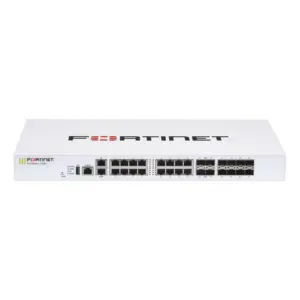
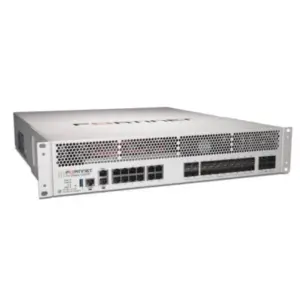
The FPA-1000G is a 2RU hardware platform with a single AMD EPYC 7402 processor specified at 24 cores and 48 threads at 2.80 GHz, 128 GB DDR4 memory, six 2 TB hard disk drives, a Trusted Platform Module, four copper Gigabit Ethernet interfaces, two 1GbE SFP interfaces, and two 10GbE SFP+ interfaces. Dual 300 W auto-ranging power supplies operate in a 1+1 redundant arrangement. Fortinet specifies a base capacity of 50 local plus remote users, 5,000 secrets, 2,000 folders, and 5,000 secret requests. These characteristics make the appliance suitable for organizations that want a dedicated physical privileged-access platform rather than relying only on distributed credential practices or manually administered jump systems.
For procurement teams in Uganda, the important buying question is not simply whether the appliance fits in a rack. A successful deployment depends on mapping privileged identities, target systems, administrative protocols, authentication sources, session-control requirements, retention expectations, availability objectives, support coverage, and the licensing bill of materials. FourTeck can assist with this validation before an order is finalized so that the quoted configuration aligns with the intended operating model.
FortiPAM 1000G Procurement Fact Rail
FPA-1000G hardware appliance
Enterprise privileged access management
2RU sliding-rail appliance
4× GE RJ-45, 2× GE SFP, 2× 10GE SFP+
6× 2 TB HDD
Dual 300 W, 1+1 redundant
50 local + remote users
Project-specific quotation
The appliance should be quoted as part of a complete deployment rather than treated as an isolated server. Buyers should confirm required user entitlements, concurrent-session needs where applicable, security services, support term, high-availability requirements, optics, cabling, rack accessories, implementation scope, and the desired warranty or replacement process. The regional warranty baseline is therefore the manufacturer and support entitlement attached to the exact bill of materials; it should be verified on the formal quotation rather than assumed from a generic product listing.
Operational Architecture and Platform Overview
Privileged access is different from ordinary employee access because administrator credentials can alter systems, read sensitive information, create accounts, change security controls, and disrupt services. A mature privileged-access design therefore needs more than a password database. FortiPAM is designed around the lifecycle of privileged identities and sessions: discovering accounts, onboarding credentials, storing secrets, controlling release or use, rotating credentials, governing approvals, monitoring sessions, recording activity, and producing an audit trail. This approach reduces dependence on administrators knowing or permanently retaining powerful passwords.
FortiPAM can protect passwords, SSH keys, API tokens, and certificates while applying policy to privileged access. Organizations can use governance workflows tied to identity, role, and zero-trust tags, and can integrate internal or external identity providers. Fortinet also positions FortiPAM with passwordless, single sign-on, adaptive multi-factor authentication, endpoint validation through FortiClient-based zero-trust access, and controls for web and native administrative sessions. These functions matter when a business wants to separate authentication of the human operator from possession of the target-system credential.
The 1000G hardware gives the control plane substantial compute and local storage resources. Its AMD EPYC processor and 128 GB memory support the application workload, while six 2 TB disks provide local capacity for platform data and recorded activity. Fortinet documents the default storage arrangement as RAID-10 and notes that failed disks can be replaced; additional disks are not supported, although replacement with higher-capacity disks is supported. This distinction should be understood during capacity planning: storage expansion is not the same as simply adding more drives to unused bays.
Network connectivity includes both copper and optical interfaces, allowing deployment into common enterprise management networks and higher-speed aggregation environments. Two 10GbE SFP+ interfaces are particularly useful where architecture teams want resilient uplinks or higher-bandwidth paths for session proxy traffic and administration. The final port design should account for management separation, target-system reachability, user ingress, high-availability communications, monitoring architecture, and any security-zone boundaries enforced by adjacent firewalls or switches.
Typical procurement pain points include uncertainty over how many users must be licensed, whether service accounts count toward operational scale, how session recording affects storage, whether a second appliance is needed for resilience, and how existing directory, MFA, endpoint, server, network, database, and cloud administration workflows will be integrated. These questions should be resolved in a requirements workshop before purchase. The appliance is strongest when it becomes part of an access-governance process rather than an isolated vault deployed without operational ownership.
Enterprise Business Outcomes and Value Analysis
Key Hardware and Software Highlights
| Component | FortiPAM 1000G Detail | Operational Relevance |
|---|---|---|
| Compute | AMD EPYC 7402, 24C/48T, 2.80 GHz | Dedicated processing foundation for privileged-access services. |
| Memory | 128 GB DDR4 | Supports platform operations and active management workloads. |
| Storage | 6× 2 TB HDD; default RAID-10 | Local platform and recording capacity with disk redundancy. |
| Network | 4× GE RJ-45, 2× GE SFP, 2× 10GE SFP+ | Flexible copper and fiber integration across management and data paths. |
| Power | Dual 300 W 1+1 redundant, 100–240 VAC | Supports separate power feeds and maintenance resilience. |
| Hardware Trust | Trusted Platform Module | Adds a hardware-backed trust component to the appliance platform. |
| Credential Controls | Discovery, vaulting, rotation, governance | Reduces unmanaged privileged credentials and manual password handling. |
| Session Controls | Monitoring, recording, filtering, termination | Improves oversight and accountability for elevated access. |
Technical Specifications Ledger
The following values are based on the current Fortinet FortiPAM data sheet for the FPA-1000G. Where a specification is not published in the referenced appliance table, it should be confirmed during quotation rather than inferred.
| Specification | FPA-1000G |
|---|---|
| Copper interfaces | 4× 10/100/1000 RJ-45 |
| Optical interfaces | 2× 1GbE SFP; 2× 10GbE SFP+ |
| Local storage | 6× 2 TB HDD |
| TPM | Yes |
| Power supply | 300 W redundant auto-ranging, dual 1+1 |
| Base local + remote users | 50 |
| Secrets | 5,000 |
| Folders | 2,000 |
| Secret requests | 5,000 |
| CPU | Single AMD EPYC 7402, 24C/48T, 2.80 GHz |
| RAM | 128 GB DDR4 |
| Dimensions | 89 × 437 × 647 mm; 3.5 × 17.2 × 25.5 in |
| Weight | 22 kg / 48.5 lb |
| Form factor | 2RU |
| Rack mount | Sliding rail |
| Power source | 100–240 VAC, 50–60 Hz |
| Maximum current | 100–240 V / 7.5–3.9 A |
| Average / maximum power | 233.7 W / 285.67 W |
| Heat dissipation | 1008.83 BTU/h |
| MTBF | 90,600 hours |
| Operating temperature | 0°C to 40°C / 32°F to 104°F |
| Storage temperature | -40°C to 70°C / -40°F to 158°F |
| Humidity | 5%–90% non-condensing |
Facilities teams should use maximum rather than average power for circuit and UPS headroom, while thermal planning should consider the published heat figure plus neighboring equipment. The 647 mm chassis depth also requires confirmation of usable cabinet depth, rear cable bend radius, rail compatibility, PDU position, and service clearance. A nominally suitable 19-inch cabinet can still create installation problems if rear PDUs obstruct the chassis or if fiber connectors cannot maintain a safe bend radius.
Configuration and Sizing Worksheet
Step 1 — Estimate Workload and Scale
Create an inventory of privileged human users, external support users, service accounts, application identities, network-device administrators, database administrators, cloud administrators, and operational technology accounts. Then classify the secrets that require custody: passwords, SSH keys, API tokens, certificates, and other credentials. Compare this inventory with the 1000G base capacity of 50 local plus remote users, 5,000 secrets, 2,000 folders, and 5,000 secret requests. Include growth for new branches, systems, vendors, projects, and mergers instead of sizing only for the current month.
Step 2 — Validate Rack and Environment
Reserve 2RU of rack height and verify at least the published 647 mm chassis depth plus cabling and service clearance. Confirm operating temperature remains between 0°C and 40°C and humidity stays within 5% to 90% non-condensing. Review cabinet airflow, front-to-rear clearance, rail mounting, rack loading, grounding, and access for disk or power-supply service.
Step 3 — Plan Power and Cabling
Use two independent AC feeds where the site supports A/B power. The appliance has dual 300 W redundant supplies and accepts 100–240 VAC. For network links, decide which paths use RJ-45, 1GbE SFP, or 10GbE SFP+. Confirm optic type, fiber type, connector format, switch compatibility, VLAN design, routing, firewall policy, and out-of-band management expectations before ordering accessories.
Step 4 — Define Licensing and Services
FortiPAM ordering can include user-related entitlements, concurrent-session elements, security services, support, and high-availability considerations. Do not assume that appliance hardware alone represents the complete deployment cost. State the number of protected users, desired term, high-availability or disaster-recovery requirement, data protection features, and support level when requesting the bill of materials.
Step 5 — Prepare the Quote Checklist
Provide legal company name, delivery city, expected deployment date, user count, estimated number of secrets, target-system types, required protocols, authentication source, MFA approach, HA/DR requirement, support term, optics and cables, rack constraints, implementation needs, training expectations, and any tender documentation requirements. A complete request reduces revisions and makes commercial comparison easier.
Deployment Scenarios and Industry Use Cases
Large Enterprise and Multi-Site Networks
A multi-site enterprise can position FortiPAM as the governed access layer for infrastructure administrators who manage servers, firewalls, switches, virtualization platforms, databases, and business applications across headquarters, branches, data centers, and cloud environments. Rather than distributing privileged passwords to multiple teams, the organization can centralize credential custody and grant access through defined policies. Session monitoring and recording can strengthen change accountability, while role-based workflows can distinguish network, systems, database, application, and vendor privileges. For geographically distributed operations, network latency and reachability between users, FortiPAM, and target systems should be tested during design.
Financial and Banking Institutions
Banks, insurers, payment organizations, and financial service providers typically operate systems where privileged access has direct implications for confidentiality, transaction integrity, availability, and audit obligations. FortiPAM can help reduce shared credentials, enforce controlled access windows, rotate secrets, monitor privileged sessions, and preserve evidence of administrative activity. Deployment design should identify critical payment, core banking, database, network, security, virtualization, and backup platforms, then establish separate approval and emergency-access procedures. High availability is particularly important where administrators depend on the platform during incidents or after-hours recovery.
Education and Campus Networks
Universities and large education environments often have decentralized technology ownership across central IT, faculties, laboratories, research groups, contractors, and student-facing services. A privileged-access platform can provide consistent custody and audit controls without requiring every team to share the same operational practices. Administrators can be granted appropriate access to network, server, storage, identity, research, and application resources while sensitive credentials remain protected. Procurement should account for seasonal workload, contractor access, distributed campuses, and the possibility of a large number of service identities relative to human administrators.
Government and Defense Procurement
Public-sector and security-sensitive environments may require stronger separation of duties, formal approval chains, traceable privileged activity, controlled vendor access, and documented support processes. FortiPAM can form part of that governance architecture, but the appliance should be assessed within the organization’s own classification, accreditation, cryptographic, retention, network-separation, and procurement rules. Tender documents should state required support terms, replacement procedures, implementation responsibilities, acceptance testing, documentation, and any restrictions on remote access or data handling. Where multiple security zones exist, connectivity and trust boundaries should be designed before the final bill of materials is approved.
Technical Deep Dive: Processing, Acceleration and Hardware Foundation
The FPA-1000G is built as a dedicated x86 enterprise appliance rather than a small embedded access device. Its single AMD EPYC 7402 processor provides 24 cores and 48 threads at 2.80 GHz, paired with 128 GB DDR4 memory. For buyers, the practical importance of this specification is predictable resource allocation for the privileged-access platform and separation from unrelated virtual workloads. It also gives infrastructure teams a clearly defined physical unit for lifecycle management, maintenance windows, power, cooling, monitoring, and disaster-recovery planning.
Local storage consists of six 2 TB hard disks. Fortinet documentation states that FortiPAM 1000G uses RAID-10 by default, that failed drives can be replaced, that extra drives cannot simply be added, and that replacement using higher-capacity disks is supported. Session recording and audit retention can consume meaningful storage, so buyers should establish retention requirements before assuming that raw disk capacity equates to usable recording capacity. RAID overhead, platform data, logs, recording formats, growth, and operational reserve all influence practical retention.
The interface mix provides four copper Gigabit ports, two 1GbE SFP ports, and two 10GbE SFP+ ports. This allows architects to separate traffic classes or integrate with different switching layers, subject to FortiPAM configuration and the site design. Interface quantity should not be confused with required network topology: redundant switching, VLAN separation, firewall traversal, DNS, NTP, identity services, certificate infrastructure, and target-system routing all need deliberate planning.
Technical Deep Dive: Software Ecosystem, Firmware Security and Operational Control
FortiPAM’s value is centered on privileged account and session management. It can discover and onboard unmanaged credentials, protect multiple secret types, automate password creation and rotation, and govern access according to identity and policy. Administrators can use web-based access methods for protocols such as SSH, RDP, VNC and SFTP, while supported native application workflows can protect credentials from direct user exposure. This can reduce the operational habit of copying passwords into tickets, spreadsheets, chat messages, or personal password stores.
Session monitoring and recording are important controls for privileged operations because authentication alone cannot show what happened after access was granted. FortiPAM provides live session monitoring, recording, audit capabilities, and controls that can restrict user activity, including command or SSH filtering in supported workflows. Organizations should define who is authorized to review recordings, how long records are retained, how emergency sessions are handled, and how monitoring data is protected from unauthorized access.
Firmware lifecycle management should be treated as a controlled change process. Before shipment, FourTeck can validate the requested firmware baseline where project scope permits, while the customer should confirm compatibility with integrations and operational policies. Production upgrades should include backup, release-note review, maintenance-window approval, rollback planning, HA sequencing where applicable, and post-upgrade validation of authentication, credential rotation, target connectivity, session launching, recording, alerts, and reporting.
Technical Deep Dive: High Availability, Redundancy and Disaster Recovery
Privileged-access infrastructure can become operationally critical because administrators may depend on it to reach systems during incidents. FortiPAM supports high-availability and disaster-recovery configurations, and Fortinet’s ordering guidance specifically provides hardware HA examples using two FPA-1000G appliances. This means resilience should be designed as a business requirement rather than added after the first outage. If the organization requires continued privileged access after a hardware or site failure, request an HA or DR bill of materials at the quotation stage.
Hardware redundancy begins inside the appliance with dual 300 W 1+1 power supplies. For this to deliver practical value, each supply should connect to a genuinely independent power path where available, ideally separate rack PDUs backed by appropriate UPS infrastructure. Network resilience likewise depends on upstream switch design, cabling, routing, and failure domains. Two power supplies do not create site resilience, and multiple network ports do not automatically create a resilient architecture.
A complete continuity plan should define appliance failure, disk failure, power loss, switch loss, identity-provider loss, WAN outage, site outage, and administrator lockout scenarios. Recovery procedures should identify who can authorize emergency access and how critical systems can still be reached if a dependent service is unavailable. Periodic testing matters because a documented failover process that has never been exercised can conceal DNS, certificate, routing, identity, synchronization, or operational gaps.
Pre-Purchase Buyer Gap Checklist
Is hardware the entire cost? Usually not. The final project can include support, user or session entitlements, security services, HA/DR components, optics, cabling, implementation, training, and logistics. Ask for a line-item bill of materials with term lengths clearly stated.
Will the appliance fit the rack? It is 2RU and 647 mm deep, but usable cabinet depth must include rails, rear cabling, PDUs, fiber bend radius, and maintenance access. Confirm the actual rack rather than relying only on nominal cabinet depth.
What is the power requirement? The platform accepts 100–240 VAC and has dual 300 W supplies. Published consumption is 233.7 W average and 285.67 W maximum. Use the maximum figure when reserving circuit and UPS headroom, and account for 1008.83 BTU/h heat dissipation.
Can storage be expanded by adding disks? Fortinet states that additional hard disks are not supported. Failed disks can be replaced, and replacement with higher-capacity disks is supported. The default RAID configuration is RAID-10 and is not changeable according to Fortinet’s technical guidance.
What about lifecycle and firmware? Confirm the currently orderable SKU, support term, recommended firmware train, entitlement dates, and replacement process on the formal quotation. Enterprise procurement should avoid assumptions based on old web listings or inherited bills of materials.
Will it work with existing systems? Build a target inventory covering Windows and Linux servers, network devices, databases, applications, virtualization, cloud platforms, identity providers, MFA, certificate services, DNS, NTP, logging, ticketing, and endpoint controls. Validate required protocols and workflows before rollout.
Do we need two appliances? If privileged access must remain available during appliance maintenance or failure, discuss HA. If access must survive a site-level incident, discuss DR and the network dependencies that accompany it. Resilience should follow the organization’s recovery objectives.
How should vendor access be handled? Define sponsor approval, time limits, MFA, target restrictions, session monitoring, recording, credential exposure rules, and offboarding. A privileged-access appliance is most effective when these governance decisions are documented before vendors are onboarded.
Uganda Procurement, Delivery and Deployment Logistics
For Uganda projects, FourTeck can structure the quotation around the exact FortiPAM 1000G requirement rather than presenting a generic hardware-only figure. The first stage is requirements capture: customer organization, delivery location, desired deployment date, number of privileged users, secret volume, target systems, required access methods, support term, resilience requirements, and implementation scope. This information allows the bill of materials to be checked for omissions before commercial approval.
Order processing can include commercial confirmation, availability validation through the supply chain, import and delivery planning, and coordination of technical staging where requested. Delivery lead time is dependent on stock position, manufacturer or distributor allocation, transport method, customs processing, destination, and project timing; therefore, a fixed lead time should not be assumed until confirmed on the quote or order acknowledgement.
Pre-configuration support can be discussed for projects that need a defined baseline before installation. Typical preparation may include bill-of-materials verification, firmware baseline review, management addressing plans, rack and power checks, interface mapping, licensing readiness, and implementation documentation. Final production configuration should follow the customer’s approved security architecture and change-control process.
Uganda Coverage Matrix
Head-office, data-center, financial, telecom and enterprise deployment coordination.
Enterprise, institutional and airport-area project delivery planning.
Industrial, manufacturing, education and branch infrastructure requirements.
Regional enterprise, healthcare, education and distributed-site procurement.
Northern Uganda institutional, NGO, enterprise and public-sector deployments.
Coverage requirements should be stated with the exact delivery address, installation site constraints, preferred logistics method, and required project date. For multi-site rollouts, consolidating quantities and site requirements into a single schedule can simplify staging, labeling, documentation, and phased dispatch.
Cross-Border and Regional Supply Chains
Organizations operating across East Africa, the Gulf, and wider African markets may need consistent product sourcing and project coordination across multiple legal entities or deployment sites. FourTeck maintains regional web channels for Uganda, Kenya, broader African markets, United Arab Emirates, and Kuwait. Regional procurement planning can help standardize appliance models, support terms, accessories, firmware baselines, documentation, and deployment practices across sites.
Cross-border supply still requires country-specific confirmation of stock, lead time, freight, import procedures, taxes, delivery terms, and warranty routing. A multinational project should therefore identify the destination country for each unit, the purchasing entity, required incoterms where relevant, deployment schedule, and whether staging is centralized or performed locally.
Related Infrastructure and Internal Planning Links
A FortiPAM project often touches more than the privileged-access appliance itself. Buyers may need firewall policy changes, switching capacity, optical transceivers, rack power, UPS capacity, endpoint controls, centralized logging, management tooling, and professional services. Use the FourTeck Uganda technology catalog to coordinate complementary infrastructure, or contact the team for a validated project bill of materials. For multi-country requirements, the Africa supply portal can support broader planning.
Where the deployment is part of a Fortinet architecture, ask about compatible Fortinet firewalls, FortiClient endpoint and zero-trust components, centralized management, logging and reporting platforms, transceivers, and support services. Rather than choosing accessories by connector appearance alone, confirm supported media type, link speed, fiber standard, distance, switch port, and vendor compatibility. For power planning, verify rack PDU plug types, dual-feed availability, UPS runtime objectives, and maximum load. For resilience, include a second appliance and any network or support dependencies required by the HA/DR design.
FourTeck’s Uganda contact team can consolidate these requirements into one procurement discussion, reducing the risk of receiving the appliance without the optics, licenses, support, rack readiness, or implementation inputs needed to place it into service.
FourTeck Technical Service Capabilities
Enterprise security purchases benefit from technical validation before shipment. FourTeck can review the requested appliance model against the stated user scale, secret volume, deployment topology, network interfaces, rack environment, power architecture, and resilience objective. Bill-of-materials verification helps identify missing support terms, optics, accessories, redundant units, or services before the order reaches installation day.
Staging requirements can be agreed per project. Depending on scope, preparation may include asset identification, visual checks, firmware baseline review, entitlement readiness, management-address planning, interface mapping, rack and power documentation, and configuration handover notes. Firmware changes should always be aligned with the customer’s approved compatibility and change process rather than applied automatically.
Post-sales support planning should establish who owns vendor case creation, what information is required for hardware replacement, how failed disks or appliances are handled, where configuration backups are stored, and how escalation works outside normal hours. Customers should keep serial numbers, entitlement records, approved configuration backups, network diagrams, and operational runbooks accessible to authorized staff. These practices shorten diagnosis time when the privileged-access platform is needed most.
FortiPAM 1000G Technical FAQ
1. What is Fortinet FortiPAM 1000G used for?
FortiPAM 1000G is used to control and audit privileged access to sensitive systems. It can help organizations discover privileged accounts, onboard credentials, protect passwords and other secrets, automate credential rotation, apply access policies, monitor sessions, record administrative activity, and create stronger accountability around elevated access. Typical protected targets include servers, network infrastructure, databases, applications, security platforms, virtualization environments, and other systems requiring administrator-level credentials. The appliance should be deployed as part of a defined privileged-access governance process that covers onboarding, approval, emergency access, monitoring, credential lifecycle, offboarding, retention, and periodic access review.
2. How many users and secrets does the FPA-1000G support at base capacity?
Fortinet lists the FPA-1000G base system capacity at 50 local plus remote users, 5,000 secrets, 2,000 folders, and 5,000 secret requests. These values provide an initial sizing reference, but procurement teams should not count only named infrastructure administrators. Include third-party vendors, temporary privileged users, operations teams, security teams, service identities, application accounts, automation credentials, SSH keys, API tokens, certificates, and anticipated growth. If high availability, disaster recovery, additional services, or specific session requirements are needed, request a validated bill of materials because the commercial configuration may include more than the base appliance.
3. What network interfaces are available?
The FortiPAM 1000G provides four 10/100/1000 copper RJ-45 interfaces, two 1GbE SFP interfaces, and two 10GbE SFP+ interfaces. This combination supports common copper management connectivity and fiber-based integration into enterprise switching environments. Before ordering transceivers, confirm the switch-side port type, required speed, fiber mode, connector, distance, and supported optic. Network design should also consider management separation, user-to-appliance reachability, appliance-to-target reachability, DNS, NTP, identity services, logging, firewall policy, routing, and HA links. Port availability alone does not determine the final topology.
4. What are the rack, power and cooling requirements?
The FPA-1000G is a 2RU appliance measuring approximately 89 × 437 × 647 mm and weighing about 22 kg. It uses sliding rails. Power input is 100–240 VAC at 50–60 Hz through dual 300 W redundant power supplies. Fortinet lists average power consumption at 233.7 W, maximum consumption at 285.67 W, and heat dissipation at 1008.83 BTU/h. The operating temperature range is 0°C to 40°C with 5% to 90% non-condensing humidity. Verify usable rack depth, rear PDU clearance, cable bend radius, airflow, UPS capacity, circuit headroom, and independent A/B feeds where resilience is required.
5. Does FortiPAM 1000G support high availability?
Yes. Fortinet states that FortiPAM supports HA and DR configurations, and its ordering guidance includes an example of a hardware HA deployment using two FPA-1000G appliances. The exact design and entitlements should be validated for the intended software release and project requirements. HA planning should include more than purchasing a second chassis: network paths, power feeds, identity services, DNS, certificates, synchronization, target reachability, monitoring, backups, operational procedures, and failure testing all matter. For site-level continuity, discuss a disaster-recovery architecture separately from local appliance redundancy.
6. Can the hard disks be upgraded or expanded?
Fortinet technical guidance for the FortiPAM 1000G and 3000G states that hard-disk replacement is supported but adding extra hard disks is not supported. Replacement using higher-capacity drives is supported, while the RAID configuration is not changeable and defaults to RAID-10. This means storage planning should be done carefully before deployment, especially when session recording retention is important. Buyers should estimate recording volume, audit retention, operational reserve, and backup requirements rather than treating the six 2 TB disks as entirely available application space. Any replacement procedure should follow current Fortinet administration guidance and support instructions.
7. Are licenses or subscriptions required beyond the hardware?
The final commercial requirement depends on the intended deployment. Fortinet publishes an ordering guide that includes user entitlements, concurrent-session licensing examples, security-service options, support, and HA configurations. Therefore, a hardware SKU should not automatically be treated as the complete project cost. When requesting a quote, provide user count, required term, HA or DR needs, session expectations, desired security services, and support level. FourTeck can use those inputs to prepare or validate the bill of materials. Always review start and end dates, renewal requirements, quantities, and support coverage on the formal quotation before issuing a purchase order.
8. Can FortiPAM protect credentials without revealing them to administrators?
FortiPAM is designed to protect privileged credentials and can support proxy-based access workflows where the credential remains protected rather than being handed directly to the end user. Fortinet documents web-based access methods and supported native application workflows, along with credential storage, rotation, and session controls. The exact behavior depends on the access method, target protocol, endpoint design, policy, and software release. During proof-of-concept or implementation, test each required administrator workflow—such as SSH, RDP, file transfer, web administration, and native tools—to verify that credential protection and user experience meet the organization’s requirements.
9. How should warranty and hardware replacement be planned in Uganda?
Warranty and replacement handling should be tied to the exact Fortinet support entitlement included in the purchased bill of materials. Buyers should confirm support level, entitlement term, replacement conditions, logistics responsibilities, serial-number registration, and escalation process on the quote. For critical environments, keep an up-to-date asset register, configuration backups, rack diagrams, power mappings, support contacts, and documented failure procedures. Fortinet provides specific guidance for hard-disk replacement on the FortiPAM 1000G, while broader appliance replacement will depend on the active support contract. FourTeck can help coordinate the procurement and support-routing information associated with the supplied unit.
10. What information should we provide for configuration support and quotation?
Provide the number of privileged human users, estimated secrets and service accounts, target platforms, required protocols, identity provider, MFA requirements, network zones, site count, HA or DR objectives, recording and retention expectations, support term, deployment deadline, rack and power details, optics requirements, and desired implementation assistance. Include any tender compliance documents or acceptance criteria early. A network diagram and sample administrator workflows are particularly useful because they expose routing, firewall, authentication, certificate, and operational dependencies. With these details, the appliance, licensing, accessories, services, and delivery plan can be checked as one coherent solution rather than as disconnected line items.
Request a FortiPAM 1000G Uganda Procurement Quote
For an accurate Fortinet FortiPAM 1000G quotation, send FourTeck your expected privileged-user count, secret volume, target systems, required protocols, HA or DR requirement, support term, delivery city, and preferred project schedule. The team can help verify the appliance specification, licensing structure, interfaces, optics, rack requirements, redundant power design, support coverage, and implementation scope before the order is placed. This reduces the risk of discovering after delivery that a second appliance, additional entitlement, transceiver, cable, rack change, or support service is still required.
Organizations in Kampala, Entebbe, Jinja, Mbarara, Gulu, and other Uganda locations can request project-specific commercial and technical guidance. For multi-country deployments, include the destination and quantity for each site so regional sourcing and delivery planning can be reviewed together.
Reviews
There are no reviews yet.