
Fortinet FortiProxy 4000G Secure Web Gateway for Enterprise Internet Security
The Fortinet FortiProxy 4000G is a high-capacity secure web gateway designed for organizations that need to inspect, control and protect large volumes of employee and application web traffic without turning internet security into an operational bottleneck. It is positioned for large enterprises and complex institutions where tens of thousands of users may depend on centrally governed web access. The appliance supports license capacity from 500 to 60,000 users and offers inline proxy, transparent/WCCP proxy, explicit proxy and routed proxy deployment modes. That flexibility matters during procurement because a secure web gateway rarely enters an empty network: it must fit existing routing, switching, firewall, authentication and application architectures with minimal disruption.
For organizations in Uganda, the 4000G provides a practical platform for consolidating web filtering, application control, encrypted traffic inspection, intrusion prevention, sandbox-assisted protection, inline cloud application controls and data protection policies. It can help security teams create consistent rules for staff, departments, branches, guest users and specialized business groups while maintaining the visibility needed to investigate policy violations and suspicious web activity. With up to 250 virtual domains, the platform can also support administrative separation for complex environments, managed services or organizational units that require distinct policy boundaries.
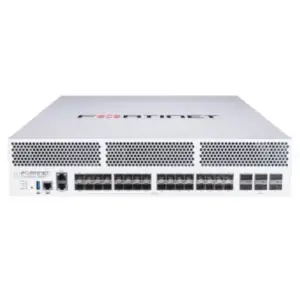
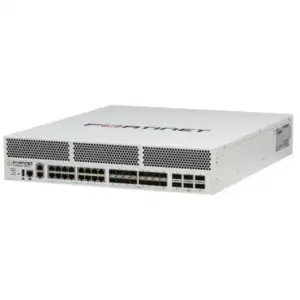
The hardware is a 2U rack appliance with 256 GB memory, 8 TB integrated storage, four 10 GE SFP+ ports, two GE SFP ports, four GE RJ45 ports and two GE RJ45 bypass interfaces. Dual power supplies provide a foundation for resilient rack installation. These characteristics make the model suitable for data-centre and core-network roles where interface density, storage, redundancy and high user scale are procurement priorities rather than optional extras.
A correct order should be based on more than the appliance name. User count, peak internet bandwidth, SSL inspection percentage, application mix, authentication method, log-retention expectations, high-availability design, transceiver requirements and FortiGuard service selections should be documented before the final bill of materials is approved. FourTeck can help Uganda buyers translate those requirements into a validated quotation and deployment plan.
FortiProxy 4000G Procurement Fact Rail
FortiProxy 4000G / FPX-4000G
500–60,000 licensed users
2U rack appliance
256 GB / 8 TB
4 × 10 GE SFP+
Dual power supplies
This fact rail should be read as the starting point for a bill-of-materials discussion. The 4000G is not simply a larger proxy server; it is a security platform whose effective capacity depends on the inspection services, policy depth, encrypted traffic volume and concurrent workload placed on it. A deployment handling mostly straightforward web access has a different resource profile from one performing broad SSL decryption, content inspection, data-loss controls and multiple security services across a large user population. Buyers should therefore avoid selecting a model solely by counting employees.
The integrated interface mix is particularly useful when planning migration. Copper GE ports can serve management or conventional network attachments, SFP ports support fiber-based Gigabit links, and the four 10 GE SFP+ ports provide higher-speed connectivity for core or aggregation environments. The two GE RJ45 bypass interfaces can be relevant in selected inline designs. Confirm the exact cabling, optics, switch-side interface standards and link speeds before ordering. Fortinet transceivers and any required cables should be itemized rather than assumed to be included.
Operational Architecture and Platform Overview
Enterprise web access has become difficult to govern because the browser is now an access layer for business applications, cloud platforms, collaboration suites, file-sharing systems and third-party services. Traditional perimeter controls can identify connections, but security teams often need deeper context about destinations, applications, users and content. FortiProxy addresses this requirement by placing secure web gateway controls in the path of web traffic or by receiving traffic through supported proxy methods. It can enforce policy while examining encrypted and unencrypted sessions according to the organization’s security design.
The 4000G is designed for large-scale deployments. Fortinet specifies support for 500 to 60,000 licensed users and up to 250 virtual domains. Virtual domains are important where a single physical appliance must maintain logically separated administrative or policy environments. A large organization can use this capability to separate business units, subsidiaries or service groups while retaining the operational advantages of a shared platform. Architects should still validate whether their intended segmentation model, logging architecture and administrative delegation align with FortiProxy software capabilities before committing to a design.
Deployment mode is another major architectural decision. Explicit proxy designs intentionally direct client browsers or endpoints to the proxy, often through configuration or PAC files. Transparent or WCCP approaches can reduce endpoint configuration requirements by redirecting traffic through network infrastructure. Inline proxy places the appliance directly in the traffic path, while routed proxy designs fit environments where routing decisions are part of the security architecture. Each option changes failure behavior, troubleshooting methods and migration steps. A proof-of-concept or staged rollout can therefore be valuable for environments with complex legacy applications.
Encrypted traffic inspection is central to modern web security because a large share of business and malicious traffic uses TLS. Inspection can improve visibility, but it also creates design obligations. Certificate trust must be distributed correctly, privacy and regulatory requirements must be respected, exception categories may be necessary, and applications using certificate pinning can require special treatment. The appliance should be sized for the expected inspection load, not merely raw link capacity. Security and legal teams should jointly define which traffic categories are decrypted and which remain exempt.
FortiProxy can combine web filtering, application visibility and control, intrusion prevention, antivirus functions, sandbox-cloud integration and data protection capabilities depending on the selected services and licensing. This consolidation can reduce the number of disconnected enforcement points that operations teams must manage. It also allows policies to be designed around business behavior: who may access a service, what content can be uploaded, which categories are restricted, and what should happen when suspicious activity is detected.
Integrated 8 TB disk storage supports local operational data needs, while 256 GB memory provides a substantial hardware foundation for a high-scale proxy role. Management methods include HTTPS, SSH, CLI, SNMP and an RJ45 console. Those options support both interactive administration and integration with established network-operations practices. Procurement teams should document management-network addressing, monitoring requirements, administrator authentication and log-export destinations before installation so that the device enters production with operational controls already defined.
Enterprise Business Outcomes and Value Analysis
1. Performance and Throughput Integrity
Large organizations cannot treat web security as a low-bandwidth edge service. Thousands of users can generate sustained encrypted traffic, large software downloads, video collaboration, cloud storage transfers and SaaS sessions simultaneously. The 4000G provides a purpose-built hardware platform with 10 GE connectivity and large memory capacity for this class of workload. Correct sizing should model peak traffic and inspection depth, preserving headroom for growth and unexpected bursts rather than targeting average utilization.
2. Reliability and High Availability
A secure web gateway can become business-critical because loss of the service may interrupt access to cloud applications and external websites. Dual power supplies allow connection to independent power sources or UPS paths. At the solution level, buyers should consider paired appliances and a documented failover design where uptime requirements justify it. Redundancy should cover power, network paths, upstream switches, authentication dependencies and management services, not only the proxy appliance.
3. Infrastructure Scalability
Support for up to 60,000 licensed users and up to 250 virtual domains makes the 4000G relevant to large enterprises and shared infrastructure environments. Growth planning should include users, devices per user, remote access patterns, new branches, cloud adoption and future inspection requirements. A scalable design reserves interface and processing capacity so that security policy can become stronger over time without immediately forcing a hardware replacement.
4. Security and Access Control
Web filtering, application control, encrypted traffic visibility, intrusion prevention and data protection can be applied as coordinated controls rather than isolated products. This gives policy owners a clearer framework for restricting risky destinations, controlling unsanctioned applications and reducing opportunities for sensitive information to leave through web channels. Licensing must be mapped to the exact services required, because the appliance and subscription components together determine the delivered security capability.
5. Centralized Operations
The platform supports browser-based administration, SSH, CLI, SNMP and console access, allowing it to fit common enterprise management practices. Operational simplicity comes from standardizing policy ownership, change control, monitoring and incident workflows. Before go-live, define who can administer the appliance, how changes are approved, where logs are retained, how alerts are escalated and how configuration backups are protected.
6. Cost and Energy Planning
The strongest cost model includes hardware, subscriptions, support, optics, rack capacity, power, cooling, deployment engineering and operational effort. Consolidating multiple web-security functions can reduce tool sprawl, but the financial benefit depends on the existing environment. Buyers should compare a three- to five-year lifecycle rather than only acquisition price. Renewal dates and user-license growth should be forecast at procurement time to avoid surprise operating costs.
Key Hardware and Software Highlights
256 GB Memory
A substantial memory configuration supports the platform’s large-enterprise role. Capacity planning must still consider concurrent sessions, inspection services and policy complexity rather than treating installed memory as a standalone performance guarantee.
8 TB Integrated Storage
Four 2 TB disks provide 8 TB of integrated storage. Determine how local storage will be used alongside centralized logging, reporting and retention systems. Compliance-driven organizations should establish retention periods and export workflows before production deployment.
10 Gigabit Connectivity
Four 10 GE SFP+ interfaces provide high-speed attachment options for data-centre aggregation and core networks. Validate supported optics, fiber type, connector standards and switch compatibility when building the order.
Mixed GE Interfaces
Two GE SFP and four GE RJ45 interfaces provide flexibility for management and production designs. Two GE RJ45 bypass interfaces are also specified, useful for selected inline topologies where bypass behavior is part of the resilience plan.
Dual Power
Dual power supplies allow resilient power architecture when each supply is connected to a separate protected feed. Confirm rack PDU socket types, voltage, available capacity and cable routing before shipment.
Flexible Proxy Modes
Inline, transparent/WCCP, explicit and routed proxy modes let architects adapt the appliance to different network designs. Mode selection should be documented during solution design because it affects routing, endpoint configuration, failover and troubleshooting.
Fortinet positions FortiProxy as a purpose-built secure web gateway with specialized hardware acceleration and integrated security services. The operational benefit is that policy enforcement, content inspection and access control are handled by a platform designed specifically for web-security workloads. This is especially relevant where generic proxy servers have become difficult to scale or where organizations want consistent controls across business units.
Technical Specifications Ledger
| Specification | FortiProxy 4000G | Procurement Note |
|---|---|---|
| License capacity | 500–60,000 users | Select subscription and user tier for actual deployment. |
| Deployment modes | Inline, Transparent/WCCP, Explicit, Routed | Confirm topology before staging. |
| Virtual domains | Up to 250 | Useful for administrative and policy separation. |
| Memory | 256 GB | Platform hardware specification. |
| Storage | 8 TB, 4 × 2 TB hard disk | Plan centralized log retention separately where required. |
| 10 GE interfaces | 4 × SFP+ | Optics and fiber requirements should be confirmed. |
| GE SFP | 2 ports | Validate transceiver compatibility. |
| GE RJ45 | 4 ports | Copper Gigabit connectivity. |
| Bypass interfaces | 2 × GE RJ45 | Relevant to selected inline designs. |
| Management | HTTPS, SSH, CLI, SNMP, RJ45 console | Plan secured management network access. |
| Form factor | 2U | Reserve adequate rack depth and airflow. |
| Dimensions | 88 × 445 × 810 mm | Deep chassis; confirm cabinet depth and rear clearance. |
| Weight | Approx. 21 kg | Use suitable rack rails and safe installation practice. |
| Input voltage | 100–240V AC, 50–60 Hz | Confirm local PDU and UPS capacity. |
| Power supplies | Dual | Connect to independent protected feeds where possible. |
| Operating temperature | 0–40°C | Maintain conditioned data-centre environment. |
| Storage temperature | -25–70°C | Observe storage and transport limits. |
| Humidity | 10%–90% non-condensing | Prevent condensation and excessive humidity. |
| Safety / compliance | FCC, ICES, CE, RCM, VCCI, BSMI Class A, UL/cUL, CB | Confirm tender-specific documentation requirements. |
Specifications should be checked against the current manufacturer data sheet and the exact orderable part before purchase, particularly when a tender requires a formal compliance matrix. Firmware, subscriptions, support packages, optics and accessories are separate procurement considerations. The physical depth of approximately 810 mm deserves special attention: shallow wall cabinets and some compact communications racks may not provide sufficient clearance for the chassis, rails, power cables and airflow. A site survey should verify usable rack depth rather than nominal cabinet depth.
Configuration and Sizing Worksheet
Step 1 — Estimate the real workload
Start with named and concurrent users, but add devices per user, branch traffic, guest access and machine-generated web sessions. Record average and peak internet utilization, then estimate future growth for at least three years. Identify the percentage of traffic expected to undergo deep SSL inspection and the security profiles that will be active. A conservative design leaves operating headroom for policy expansion, traffic bursts and software evolution.
Step 2 — Map network topology
Choose whether the target design will be explicit, transparent/WCCP, inline or routed. Draw upstream and downstream switches, routers, firewalls, internet circuits and authentication services. Mark failure paths and determine what happens if the proxy, a switch or a link becomes unavailable. This drawing should drive port selection and cabling quantities.
Step 3 — Verify rack and environmental requirements
Reserve 2U of rack space and verify sufficient cabinet depth for an 810 mm chassis plus rails, cable bend radius and rear service clearance. Confirm ambient temperature, humidity control and front-to-rear airflow conditions. Record rack loading and ensure the cabinet can safely support the appliance. Plan installation with appropriate lifting and mounting procedures because the unit weighs approximately 21 kg.
Step 4 — Design redundant power
The dual supplies should ideally terminate on independent protected power paths. Document PDU outlet types, UPS capacity, input voltage and available circuit load. Redundant supplies provide limited benefit if both connect to one overloaded or unprotected source. For critical deployments, align proxy power architecture with the data centre’s A/B feed strategy.
Step 5 — Select licensing and support
FortiProxy capability depends on the chosen service package and user tier. Identify required web filtering, malware protection, application controls, sandbox integration, data protection and support services. Determine whether the project needs standard support or faster hardware replacement objectives. Ask for a quotation that clearly separates appliance, subscriptions, support, optics, accessories and professional services.
Step 6 — Prepare the quote checklist
Provide: organization name and delivery city; estimated users; peak internet bandwidth; expected encrypted-traffic inspection percentage; deployment mode; number of appliances; high-availability requirement; copper and fiber port requirements; required transceivers; subscription term; desired support level; rack and power environment; preferred deployment date; and whether staging or configuration assistance is required. This information reduces back-and-forth and makes the commercial quotation easier to compare with technical requirements.
Deployment Scenarios and Industry Use Cases
Large Enterprise and Multi-Site Networks
A large enterprise may centralize internet breakout in one or more data centres and steer branch traffic through shared security infrastructure. FortiProxy 4000G can serve as the secure web gateway at that aggregation point, applying common policies while using virtual domains or policy structures to separate business units. Architects should account for WAN failure behavior and avoid making remote sites dependent on a single unreachable proxy path. Where local internet breakout is required, the design may combine central policy governance with distributed enforcement components.
Migrations should begin with a representative user group. Validate authentication, SaaS access, certificate distribution, software-update traffic, collaboration tools and exception handling before expanding. Large environments often contain legacy applications that behave differently when proxied or decrypted. A controlled pilot creates an exception inventory and gives the operations team time to build repeatable troubleshooting procedures.
Financial and Banking Institutions
Banks and financial institutions typically require strict access control, detailed auditability and careful handling of sensitive information. A secure web gateway can restrict risky destinations, govern web applications and strengthen monitoring of outbound activity. Data protection policies may help reduce accidental leakage through browser-based channels. However, policy design must align with internal governance, privacy requirements and application-owner approvals. Inspection exclusions should be documented rather than created informally.
Availability is equally important because web access supports customer service, treasury, research, communications and cloud applications. Financial deployments should evaluate paired appliances, redundant switches, independent power and tested recovery procedures. Support and replacement objectives should match the institution’s service-level expectations.
Educational and Campus Networks
Universities and large schools face highly variable traffic, diverse devices, guest users and changing populations. Web filtering and application control can help enforce acceptable-use policies while allowing academic resources. The 4000G’s user scale can suit large campuses, but sizing should reflect peak periods such as registration, examinations, software distribution and streaming-heavy events. Authentication integration and privacy rules need careful design when user populations include staff, students, visitors and shared devices.
Government and Public-Sector Procurement
Government networks often require formal technical compliance, documented warranties, controlled change procedures and predictable lifecycle support. The 4000G’s 2U form factor, dual power, high user capacity and multiple deployment modes can fit central ministries, shared service environments and large agencies. Tender teams should specify required subscriptions, support term, delivery scope, transceivers, installation services and acceptance testing. A compliance response should distinguish manufacturer specifications from proposed solution architecture so evaluators can verify both.
Technical Deep Dive: Processing, Acceleration and Hardware Architecture
Secure web gateways perform more work than basic packet forwarding. They may establish proxy sessions, classify destinations, identify applications, decrypt TLS, inspect content, apply security profiles and generate logs before traffic continues. Each additional inspection stage consumes resources and can affect latency. Fortinet describes FortiProxy as using purpose-built architecture and specialized ASIC technology to accelerate web-security processing. For a buyer, the important implication is that the platform is engineered around security inspection rather than being a generic server with proxy software added afterward.
The 4000G combines 256 GB memory with a network layout centered on four 10 GE SFP+ interfaces plus Gigabit fiber and copper options. This makes it practical to connect the appliance into high-bandwidth enterprise aggregation layers. Yet physical interface speed must not be confused with inspected throughput. The real workload depends on cipher suites, object sizes, session rates, security services and policy complexity. A design review should therefore document the expected traffic profile and select a capacity margin appropriate to business growth.
Integrated storage also contributes to the appliance’s operational design. Local disk can support platform functions and logs, but regulated environments frequently export security records to centralized analytics or retention systems. Storage planning should define which data stays locally, which data is forwarded, how long it is retained and how administrators respond if an external logging destination becomes unavailable.
Technical Deep Dive: Software Ecosystem, Firmware Security and Control
FortiProxy software provides the policy framework through which administrators define proxy behavior, security inspection and access rules. Current Fortinet documentation lists the 4000G among models supported by modern FortiProxy firmware branches. Firmware management should be treated as an operational process: teams need a maintenance window, configuration backup, release-note review, compatibility check, rollback plan and post-upgrade validation procedure. Security appliances should not be upgraded casually during business hours simply because a newer release is available.
Management is available through HTTPS, SSH, CLI, SNMP and console access. Enterprises should restrict management-plane reachability, use role-based administrative practices, centralize authentication where appropriate and monitor privileged changes. SNMP can support infrastructure monitoring, while centralized logging and management products can complement local administration depending on the broader Fortinet architecture. Exact interoperability should be confirmed against the versions planned for deployment.
Security subscriptions are another essential software consideration. Web filtering, threat protection, sandbox-related capabilities and other services may depend on active entitlements. Procurement documents should name the required bundle, user tier and term instead of requesting only the hardware appliance. This prevents a technically correct chassis from arriving without the services expected by the security team.
Technical Deep Dive: High Availability, Redundancy and Recovery
High availability begins with identifying failure domains. The 4000G has dual power supplies, but true service resilience can also require redundant appliances, switches, links, power feeds, DNS, authentication and upstream internet paths. A design that duplicates the proxy while leaving a single upstream switch may still have a major single point of failure. The resilience plan should trace the complete user-to-internet path.
Recovery procedures should be documented and tested. Maintain protected configuration backups, record firmware versions, preserve licensing information and document interface mappings. When replacing hardware, the team should know how to restore configuration, validate subscriptions, reconnect management, confirm policy behavior and return traffic to normal service. Support contracts and replacement options should be chosen according to acceptable outage duration.
Bypass interfaces can contribute to selected inline designs, but bypass behavior is not a substitute for a complete continuity strategy. Organizations must decide whether failure should fail open, fail closed or redirect through another security node, based on risk and business requirements. Those choices should be approved before deployment because they determine the balance between connectivity and enforcement during abnormal conditions.
Pre-Purchase Buyer Gap Checklist
Are security services included with the chassis? Do not assume so. Request a line-item quotation showing the appliance, user-based subscription, support, FortiGuard services, optics, cables and engineering. A clear bill of materials prevents licensing gaps at installation.
Is 60,000 users a universal performance guarantee? No. It is the stated license-capacity ceiling for the model. Real performance depends on traffic patterns and enabled inspection. Size from workload and security policy, not only employee count.
Will the appliance fit an existing rack? Verify this carefully. The chassis is approximately 810 mm deep. Rack depth must accommodate the unit, rails, power connectors, cable bend radius and service clearance. A nominally deep cabinet can have less usable internal depth because of doors, PDUs or cable managers.
Do SFP/SFP+ ports mean optics are automatically supplied? Procurement should treat optics as explicit bill-of-materials items unless the quotation says otherwise. Match fiber type, distance, connector and switch-side standard.
What about full-load power? Confirm current manufacturer electrical specifications and use them for UPS/PDU calculations. Do not size power solely from an average value. Both redundant feeds must have sufficient capacity for expected operating conditions.
Can it work with other vendors? Proxy functions operate in standard IP networks, but exact interoperability with authentication, switching, routing, logging and security systems depends on protocols, software versions and design. Validate critical integrations before purchase.
What happens to certificate-pinned applications? Some applications resist TLS interception. Build a controlled exception process and test business-critical applications during pilot deployment. Exceptions should be narrowly defined and periodically reviewed.
How should lifecycle risk be handled? Confirm current sale status, support coverage, firmware branch and renewal options at quotation time. For multi-year projects, align hardware lifecycle with planned service term and internal refresh cycles.
Is one appliance enough? It may be for non-critical environments, but high-availability requirements often justify a redundant design. Consider outage tolerance, maintenance windows and the business impact of losing web access.
What information should be in the purchase order? Include exact hardware part, license tier and term, support package, transceivers, accessories, delivery location and any staging or installation scope. Ambiguous descriptions are a common source of procurement delays.
Uganda Procurement, Delivery and Project Logistics
FourTeck supports enterprise technology procurement in Uganda with quotation preparation, bill-of-materials validation and delivery coordination. For FortiProxy 4000G projects, the process should begin with technical discovery rather than a bare model request. The team can review user scale, topology, interfaces, subscription requirements and support expectations before final commercial confirmation. This is particularly important when the appliance will be installed in a production data centre where missing optics, incorrect licensing or inadequate rack depth can delay commissioning.
Quote lead time and delivery timing depend on product availability, configuration, import logistics and project scope at the time of order. Buyers should request a current lead-time statement rather than relying on a generic estimate. For tender or budget planning, provide the target deployment date early so supply-chain constraints can be considered. Orders requiring multiple appliances, specialized transceivers or longer subscription terms may need additional coordination.
Pre-configuration can reduce site time when the implementation parameters are available before shipment. Typical preparation can include firmware review, baseline configuration planning, interface mapping, management settings and documentation. Final production changes should follow the customer’s approved change process and be validated in the destination environment.
Uganda Coverage Matrix
Kampala: Suitable for headquarters, banks, telecom environments, government institutions, universities and data-centre projects requiring centralized secure web access. Entebbe: Procurement support can cover enterprise offices, aviation-related organizations, hospitality groups and institutions connecting to centralized infrastructure. Jinja: Industrial, manufacturing, education and multi-site businesses can plan FortiProxy deployment as part of wider network-security upgrades. Mbarara: Regional enterprises, campuses, healthcare organizations and branch networks can source the platform with licensing and implementation planning. Gulu: Public-sector, education, NGO and enterprise projects can be supported through coordinated quotation and delivery processes. For every location, final logistics depend on order scope and current availability, so delivery commitments should be confirmed in the formal quotation.
Cross-Border and Regional Supply Chains
Organizations operating across East Africa and the Gulf often need consistent equipment standards across subsidiaries. FourTeck regional resources can support coordinated sourcing through Uganda, Kenya, broader African markets, UAE and Kuwait. Multi-country procurement should standardize the technical bill of materials while accounting for local delivery, tax, import and warranty processes.
For regional projects, define whether subscriptions and support are associated with a central organization or individual country entities, and confirm the intended installation location for each appliance. Keep serial-number records, entitlement information and configuration documentation centrally available. A standardized naming convention for sites, interfaces and policy templates can simplify operations across borders while still allowing local exceptions.
Related Enterprise Security and Infrastructure Options
A FortiProxy project frequently touches adjacent security and network categories. Buyers can explore Fortinet enterprise security solutions in Uganda and request compatible firewall, management, logging, switching and connectivity components as part of one validated architecture. For organizations with regional operations, the FourTeck Africa portfolio can support cross-border standardization, while FourTeck Kenya supports neighboring deployments.
Related procurement may include FortiGate firewalls for network-level enforcement, FortiManager for centralized administration in supported designs, FortiAnalyzer for centralized logging and analytics, compatible SFP/SFP+ transceivers, enterprise rack infrastructure and protected power systems. The exact combination should be driven by architecture rather than brand bundling. Ask for a compatibility review when mixing existing switches, firewalls, authentication systems and monitoring platforms.
If the 4000G exceeds the required scale, the FortiProxy 2000G or 400G may be appropriate alternatives. Conversely, organizations considering virtualization can evaluate FortiProxy virtual models where their compute platform, licensing approach and traffic architecture make a virtual deployment preferable. A side-by-side sizing exercise is useful before selecting the final form factor.
FourTeck Technical Service Capabilities
Enterprise procurement is most successful when the technical bill of materials is validated before the purchase order. FourTeck can assist by reviewing the requested appliance, user tier, subscription term, support package, transceivers, rack requirements and related components. This helps identify omissions such as missing optics or a subscription that does not match the intended user population.
Staging support can prepare the appliance for a more controlled installation. Depending on agreed scope and information supplied by the customer, preparation may include firmware review, baseline settings, interface planning and configuration documentation. Any pre-shipment firmware activity should be aligned with the customer’s approved target version and compatibility requirements. Production credentials and sensitive configuration data should be handled according to the customer’s security procedures.
Post-sales technical support can focus on deployment guidance, troubleshooting and coordination within the purchased support framework. For complex migrations, define the responsibilities of FourTeck, the customer’s internal team, Fortinet support and any third-party integrators before the change window. Clear ownership reduces delays when an issue crosses network, security, identity or application boundaries.
Extended Technical FAQ
1. What size organization is the FortiProxy 4000G designed for?
Fortinet specifies a license capacity from 500 to 60,000 users for the 4000G, placing it in the high-capacity end of the FortiProxy hardware family. That figure should be treated as a licensing range, not as a promise that every 60,000-user environment has the same performance profile. A university with streaming-heavy traffic, a bank performing broad TLS inspection and an enterprise with mostly SaaS productivity traffic can place very different demands on the appliance. Proper sizing should include concurrent users, peak bandwidth, session behavior, security profiles, decryption percentage and expected growth. FourTeck can use these inputs to help frame a more defensible model selection.
2. Which deployment modes are supported?
The FortiProxy 4000G supports inline proxy, transparent/WCCP proxy, explicit proxy and routed proxy modes. This gives architects several ways to insert the secure web gateway into an existing network. Explicit proxy can provide direct control over how clients use the proxy, while transparent approaches can reduce endpoint configuration. Inline and routed designs fit other network architectures. The best choice depends on routing, endpoint management, failure behavior and migration constraints. Before purchase, document the proposed traffic path and test business-critical applications. Changing deployment mode later can affect network configuration, client behavior and troubleshooting procedures, so the topology decision should be made early.
3. Does FortiProxy 4000G support encrypted traffic inspection?
Yes, encrypted traffic visibility and SSL inspection are core FortiProxy capabilities. Effective deployment requires more than enabling a setting. Organizations need a trusted certificate strategy, endpoint certificate distribution, privacy rules, application exception procedures and capacity planning for the additional processing involved. Some applications use certificate pinning or other behaviors that can conflict with interception. A pilot should identify those applications before broad rollout. Security teams should also agree which categories must not be decrypted because of legal, privacy or organizational policy. The result should be a documented inspection standard that balances visibility with operational and compliance requirements.
4. What interfaces are available on the 4000G?
The appliance provides four 10 GE SFP+ ports, two GE SFP ports, four GE RJ45 ports and two GE RJ45 bypass interfaces. This mix supports high-speed fiber connectivity as well as conventional Gigabit copper and fiber links. Procurement teams should not assume that every required optical module is bundled with the chassis. Specify transceiver speed, fiber type, distance and connector requirements, then verify compatibility with the adjacent switch. Also decide which interfaces are dedicated to management, production traffic, synchronization or other design functions. A port map prepared before shipment makes rack installation and cabling substantially easier.
5. What are the rack and power requirements?
FortiProxy 4000G is a 2U appliance measuring approximately 88 × 445 × 810 mm and weighing about 21 kg. The 810 mm depth is important: verify usable cabinet depth after accounting for doors, PDUs, vertical cable managers, rails and rear cable bend radius. The appliance accepts 100–240V AC at 50–60 Hz and includes dual power supplies. For resilient installation, connect the supplies to independent protected feeds where the facility supports A/B power. UPS and PDU sizing should use current manufacturer electrical specifications and suitable headroom. Confirm environmental conditions and airflow before installing the appliance in a densely populated rack.
6. Are licenses and FortiGuard services included automatically?
Do not assume that the hardware purchase alone includes every service required for the intended security policy. FortiProxy uses user-based licensing and can be paired with security service bundles and support offerings. The quotation should state the exact user tier, subscription duration, included services and support level. If the project expects web filtering, malware protection, sandbox-cloud integration, application control or advanced data protection, make those requirements explicit. This is one of the most important procurement checks because an appliance can be physically installed yet still lack the entitlement expected by the security design. Ask for a line-by-line bill of materials before approval.
7. Can FortiProxy 4000G integrate with existing firewalls and network equipment?
FortiProxy is designed for deployment in standard enterprise IP networks and offers multiple proxy modes, so it can be incorporated into environments containing existing routing, switching and firewall infrastructure. Exact interoperability depends on the intended design, protocols, software versions and third-party products. Fortinet also describes integration possibilities with FortiGate, including content inspection use cases. For mixed-vendor environments, validate routing behavior, WCCP requirements where used, authentication, certificate handling, logging and failover during solution design. A proof-of-concept is especially useful where legacy applications or unusual network paths are involved. Compatibility should be demonstrated for critical workflows rather than assumed from interface standards alone.
8. How should high availability be planned?
Start by defining the maximum acceptable outage for web access. The appliance has dual power supplies, but resilient service may require more than redundant power. Consider a paired appliance design, redundant network switches, diverse links, separate power feeds, resilient DNS and authentication, and tested recovery procedures. Determine whether a failure should interrupt traffic, bypass inspection or redirect through another node. Each choice has security and availability consequences. Maintenance is another factor: a redundant architecture can allow planned firmware or hardware work with less disruption. The final design should be documented with failure scenarios and tested periodically so operations staff know what to expect during a real incident.
9. What warranty and replacement planning should a Uganda buyer consider?
Warranty and hardware replacement expectations should be confirmed in the formal quotation because support levels and replacement objectives can vary by purchased service and location. Fortinet offers support and priority replacement options across its product families, but the exact entitlement should be matched to the organization’s acceptable outage window. Keep serial numbers, proof of purchase, entitlement details and configuration backups accessible to authorized support staff. For critical environments, consider whether the business requires a redundant appliance so operations are not dependent on replacement delivery time. FourTeck can help align the proposed support package with the customer’s operational requirement during procurement.
10. Can FourTeck assist with configuration and deployment?
FourTeck can support solution validation, bill-of-materials review, staging and deployment planning according to the agreed project scope. Useful pre-deployment inputs include network diagrams, management IP details, deployment mode, authentication method, inspection requirements, policy groups, logging destinations and interface assignments. Configuration assistance is most effective when the customer’s security policy and change-control responsibilities are clearly defined. For major migrations, use a phased approach: prepare the appliance, validate management and logging, test a pilot user group, resolve application exceptions, confirm failover behavior and only then expand traffic. This reduces operational risk compared with moving an entire enterprise population in one change window.
Request a FortiProxy 4000G Uganda Procurement Quote
For an accurate quotation, send your expected user count, peak internet bandwidth, deployment mode, SSL inspection requirements, preferred subscription term, redundancy requirements and delivery city. FourTeck can review the bill of materials for appliance, licenses, support, transceivers and related infrastructure before the order is finalized. This is especially valuable for large deployments where a missing entitlement or interface component can delay a scheduled change window.
If you are comparing FortiProxy 4000G with 2000G, 400G or virtual options, include the projected three-year growth profile and any high-availability requirement. The resulting discussion can focus on fit, capacity and lifecycle rather than simply selecting the largest model. Current availability, lead time and commercial terms should be confirmed at quotation stage.
Reviews
There are no reviews yet.