
Fortinet FortiProxy VM16 – Enterprise Secure Web Gateway for Uganda
Fortinet FortiProxy VM16 is a virtual secure web gateway platform intended for organizations that require centralized control of web traffic without adding a dedicated physical proxy appliance at every deployment point. It is positioned for substantial enterprise environments, with Fortinet listing license capacity from 100 to 25,000 users, up to 100 virtual domains and a maximum of 10 network interfaces. For Ugandan enterprises, banks, universities, government environments, service providers and distributed organizations, the VM16 tier provides a practical way to place web-security enforcement within an established virtualization architecture while preserving flexibility around network topology and resource allocation.
The procurement decision is not simply a matter of selecting a virtual machine image. Buyers need to align the VM tier, licensed user count, protection subscriptions, VDOM requirements, virtualization resources, storage, network interfaces and support entitlement with the actual deployment design. FourTeck helps organizations prepare that bill of materials so that the quoted solution reflects the intended user population and operational requirements rather than an incomplete base license.
Instant Specifications & Procurement Fact Rail
FortiProxy VM16
Virtual secure web gateway
100–25,000 users
Up to 100
Up to 10 virtual network interfaces
Configuration-specific quotation
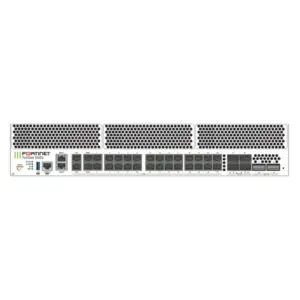
FortiProxy VM16 is software rather than a rack appliance, so physical power supplies, chassis dimensions and copper or optical port layouts are properties of the hosting infrastructure rather than the FortiProxy license itself. This distinction matters during procurement. Server capacity, hypervisor compatibility, virtual switching, storage design and redundancy should therefore be reviewed alongside FortiProxy licensing.
Operational Product Architecture & Overview
FortiProxy is designed to provide secure web gateway functions through proxy-based traffic control. The VM16 edition places these capabilities inside a virtualized environment, allowing security teams to integrate web controls with existing compute, network and operational processes. Supported deployment approaches across the FortiProxy family include inline proxy, transparent or WCCP proxy, explicit proxy and routed proxy modes. This breadth is valuable when an organization is replacing a legacy proxy, introducing centralized controls for the first time or integrating web access policy into a network where endpoint and routing changes must be minimized.
The VM16 class is particularly relevant when smaller VM tiers create an uncomfortable growth ceiling. A procurement team may have thousands of employees today but also need to account for contractors, students, guests, branches, acquisitions or additional protected user groups. Selecting the VM16 tier can provide room within its licensed capacity while maintaining separation through virtual domains where required. Fortinet lists up to 100 VDOMs for this model, allowing administrators to design logical administrative or policy boundaries subject to the appropriate licensing.
Virtual deployment also changes capacity planning. Unlike a fixed appliance, the solution depends on the underlying host, storage and virtual networking environment. Current Fortinet material identifies FortiProxy VM16 as a 32-vCPU-class offering with unlimited RAM allocation in the licensing specification and eight disks in the published virtual-appliance table. Another current Fortinet data sheet describes the VM16 software appliance with 32 vCPU cores and an 8 TB disk specification. Procurement teams should validate the exact release-specific deployment guide and image requirements before allocating production resources.
Operationally, administrators can use HTTPS, SSH, CLI and SNMP management. These options support browser-based administration, command-line workflows and integration with monitoring practices. The real business value comes from bringing web policy, inspection and access governance into a manageable enforcement layer. Organizations often reach this purchase point because direct internet access has become difficult to govern consistently, older proxy infrastructure is approaching capacity, remote and branch traffic has multiplied, or audit teams require clearer policy control.
Enterprise Business Outcomes & Value Analysis
Key Hardware & Software Highlights
Because FortiProxy VM16 is a virtual appliance, its most important infrastructure characteristics are licensed compute scale, disk allocation, virtual interfaces and compatibility with the chosen virtualization platform. Fortinet’s published FortiProxy specifications list VMware ESX/ESXi, KVM Platform and Microsoft Hyper-V for the virtual appliance family. The VM16 table lists 32 CPU, unlimited GB RAM, eight disks and up to 10 network interfaces. These figures should be interpreted as product-tier specifications and then mapped carefully to the supported deployment guide for the software release being installed.
The software platform supports multiple proxy deployment modes. This allows architects to choose a topology based on routing ownership, endpoint configuration, network transparency and migration constraints. VDOM capability provides another important design tool, especially for managed environments, business units or institutional networks that require policy separation. Advanced caching and WAN optimization are listed as included in Fortinet’s ordering material, while the SWG Protection Bundle, Data Protection Service, Content Analysis and Client Browser Isolation are examples of capabilities that may require add-on licensing depending on the selected commercial package.
Technical Specifications Ledger
| Specification | FortiProxy VM16 | Procurement Note |
|---|---|---|
| Product type | Virtual secure web gateway | Requires compatible virtual infrastructure. |
| License capacity | 100–25,000 users | Select actual user entitlement during quotation. |
| vCPU class | 32 CPU / vCPU class | Confirm release-specific host requirements. |
| RAM | Unlimited GB RAM listed | Allocate according to supported deployment guidance and workload. |
| Disk | 8 disks; current data sheet also references 8 TB disk specification | Validate image/release storage layout before provisioning. |
| Network interfaces | Maximum 10 | Virtual NIC mapping depends on topology. |
| VDOM | Up to 100 | Five VDOMs are listed as included in ordering material; additional VDOM licensing may apply. |
| Management | HTTPS, SSH, CLI, SNMP | Supports common enterprise administration workflows. |
| Deployment modes | Inline, Transparent/WCCP, Explicit, Routed Proxy | Topology selection should be completed before implementation. |
Physical dimensions, appliance power draw, rack-unit size and dedicated hardware power redundancy do not apply directly to a software VM. The relevant environmental, electrical and compliance characteristics are those of the servers, storage, switches and data-center infrastructure hosting the virtual appliance. This is an important distinction in tenders: procurement documents should not copy hardware-appliance specifications into a VM16 requirement.
Configuration & Sizing Worksheet
Step 1 — Establish the protected population
Count employees, contractors, students, shared workstations and other identities that will consume the selected entitlement. Do not size only for today’s active headcount. Include realistic growth and clarify how Fortinet defines licensed users for the chosen subscription.
Step 2 — Characterize workload
Document peak concurrent users, internet bandwidth, TLS-heavy applications, expected inspection depth, file-transfer behavior and branch concentration. The maximum licensed population is not a promise that every workload behaves identically; actual performance depends on enabled functions and infrastructure.
Step 3 — Validate the virtualization environment
Confirm the exact hypervisor release, host CPU availability, memory, storage performance, datastore capacity, virtual switching and NIC design. Reserve enough resources to prevent contention from unrelated virtual machines.
Step 4 — Define segmentation
Decide whether one policy domain is sufficient or whether departments, customers, agencies or business units need VDOM separation. VM16 supports up to 100 VDOMs, but additional licensing can apply.
Step 5 — Select subscriptions
Identify required protection services, support level, content analysis, browser isolation or data-protection capabilities. Fortinet ordering documentation shows that several services are add-ons, so a base-license-only comparison can be misleading.
Step 6 — Prepare the quote request
Provide the intended user count, subscription term, hypervisor, number of VDOMs, support requirement, preferred deployment mode, target implementation date and whether engineering assistance is required. A complete request reduces commercial revisions and helps ensure that license codes and services align with the intended architecture.
Deployment Scenarios & Industry Use Cases
Large Enterprise and Multi-Site Networks
A large enterprise can centralize web-policy enforcement for headquarters and branches, subject to WAN architecture and latency requirements. Explicit or transparent approaches can be evaluated depending on whether endpoints can be configured and whether traffic redirection already exists. VM16’s large user range provides room for consolidated populations, while VDOMs can help separate subsidiaries or administrative teams.
Financial and Banking Institutions
Banks and financial organizations typically need carefully governed outbound web access, controlled change processes and clear separation between environments. FortiProxy can form part of this architecture, but procurement should include detailed policy design, certificate handling, logging, privacy requirements, high availability and support coverage. Production deployment should follow the institution’s security and compliance controls rather than a generic template.
Educational and Campus Networks
Universities may have highly variable populations across staff, students, laboratories, libraries and guest networks. A VM-based gateway can fit existing data-center virtualization while allowing administrators to design differentiated policies. User-license planning is especially important where enrollment and guest access fluctuate.
Government and Public-Sector Procurement
Government deployments often require formal bills of materials, support documentation, controlled implementation and clear lifecycle planning. FourTeck can assist with commercial configuration and technical validation. The final architecture should reflect the agency’s authorized security, privacy and procurement requirements, including any restrictions governing traffic inspection and data handling.
Technical Deep Dive: Processing & Virtual Architecture
VM16 receives its processing resources from the virtualization host rather than dedicated Fortinet ASIC hardware. This makes host planning central to performance. CPU contention, NUMA placement, storage latency and virtual-switch design can influence the behavior of demanding security workloads. Procurement teams should therefore treat the host platform as part of the solution even if it is purchased under a separate infrastructure budget. Capacity planning should be based on the inspection services that will actually be enabled, not merely the raw internet circuit speed.
Technical Deep Dive: Software Ecosystem & Operational Control
FortiProxy provides multiple management interfaces and several deployment modes, which supports both conventional security operations and more automated administration practices. Release management remains important. Teams should maintain a controlled firmware process, review release notes, preserve configuration backups, test major upgrades and align changes with support entitlements. Optional protection bundles and services should be documented in the renewal calendar so that security functions do not lapse unexpectedly.
Technical Deep Dive: High Availability & Recovery
Resilience must be designed across layers. A redundant hypervisor cluster does not automatically solve every proxy failure scenario, and application-level resilience does not eliminate upstream switch, DNS, routing or storage dependencies. The implementation plan should document failure domains, recovery objectives, configuration backup procedures, license recovery processes and maintenance windows. Where continuous web access is business-critical, test failover under representative traffic before declaring production readiness.
Pre-Purchase Buyer Gap Checklist
Before approving a purchase order, verify what is included and what is optional. The VM16 name identifies a capacity tier, but the usable solution can also depend on the number of licensed users, protection bundle, content-analysis requirements, browser isolation, data protection, VDOM expansion and support coverage. Confirm subscription duration and renewal terms so the finance team can distinguish initial acquisition from recurring operational expenditure.
Confirm the software release and supported hypervisor version. A broad statement such as “VMware supported” is not enough for a production change record; the implementation team needs the precise compatibility information for the target build. Check virtual CPU availability, RAM allocation, datastore space and IOPS, backup compatibility and virtual NIC mapping. Determine whether the host cluster has enough spare capacity during a node failure, because a design that works only when every host is healthy can undermine the intended resilience.
Clarify certificate and TLS inspection requirements before rollout. Inspection can affect applications that use certificate pinning or unusual protocols, so exceptions and testing may be required. Document identity integration, authentication flow, logging destinations, DNS behavior and routing ownership. If traffic is redirected with WCCP or another transparent method, verify the surrounding network devices and fail-open/fail-closed behavior.
Finally, confirm the commercial lifecycle. Ask how support cases are opened, what information is required for license transfer or recovery, how renewals are quoted and whether implementation assistance is included or separately scoped. These details are frequently more important to long-term operational success than the headline model name.
Uganda Regional Procurement & Delivery Logistics
For Uganda projects, FourTeck can prepare a configuration-specific quotation after receiving the expected user count, required term, subscription services, VDOM requirement and support level. Because FortiProxy VM16 is software, delivery normally centers on licensing and entitlement rather than shipping a physical chassis; however, any accompanying servers, switches, storage, optics or other infrastructure may have separate logistics. Order processing should therefore distinguish electronic license components from physical items.
Pre-configuration planning can include deployment-mode review, resource validation, interface mapping and a checklist for production implementation. Exact commercial lead times, entitlement activation and support commencement should be confirmed on the formal quotation. Customers planning a fixed change window should communicate that date before order placement so dependencies can be identified early.
Local Coverage Matrix
FourTeck Uganda supports procurement discussions for organizations in Kampala, Entebbe, Jinja, Mbarara and Gulu as well as other locations nationwide. Kampala projects commonly involve headquarters, data centers and institutional environments; Entebbe requirements may include hospitality, aviation-adjacent businesses and distributed offices; Jinja and Mbarara deployments often serve regional operations, education and commercial networks; and Gulu projects may involve branch consolidation and public-sector infrastructure. Since VM16 is delivered as a virtual solution, the central design question is where the hosting environment resides and how users reach it, rather than the physical distance to a standalone proxy appliance.
Cross-Border & Regional Supply Chains
Organizations operating across East Africa or the Gulf can coordinate related requirements through FourTeck regional sites. Visit FourTeck Uganda, FourTeck Kenya, FourTeck Africa, FourTeck UAE and FourTeck Kuwait. Cross-border projects should standardize the technical bill of materials while separately accounting for local commercial terms, taxes, implementation arrangements and any physical infrastructure logistics.
Related Products & Infrastructure Options
A complete secure-web-gateway project may include more than the VM16 entitlement. Buyers can compare smaller FortiProxy VM tiers where the protected population is lower, or the VMUL tier where the required scale exceeds VM16’s user ceiling. Hardware FortiProxy models may be considered when a dedicated appliance is preferred. Supporting architecture can also involve enterprise networking solutions, compatible virtualization hosts, resilient switching, backup infrastructure and centralized management components. Contact FourTeck Uganda for a bill-of-materials review rather than ordering isolated components without compatibility validation.
FourTeck Technical Service Capabilities
FourTeck can assist with engineering validation before the order is finalized. This includes reviewing the requested model tier, licensed population, VDOM count, subscription requirements, host assumptions and proposed deployment topology. Bill-of-materials verification is particularly useful for software security products because commercial omissions may not become obvious until implementation. Staging and deployment planning can cover virtual resource allocation, interface mapping, management access, backup planning and change-window preparation. Where applicable, teams can also coordinate supported firmware selection and pre-production validation. Post-sales assistance can focus on entitlement checks, configuration guidance and escalation preparation within the scope agreed for the project.
Extended Technical FAQ
1. How many users can FortiProxy VM16 support?
Fortinet lists VM16 license capacity from 100 to 25,000 users. The purchased entitlement should match the organization’s licensing requirement, and buyers should not interpret 25,000 users as a universal performance guarantee for every inspection profile. Workload characteristics, enabled services, virtual resources and traffic behavior affect practical sizing. Provide expected user count and peak traffic details when requesting a quote.
2. Which hypervisors are supported?
Fortinet’s FortiProxy virtual-appliance specifications list VMware ESX/ESXi, KVM Platform and Microsoft Hyper-V. Compatibility should still be checked against the exact FortiProxy software release planned for deployment. Hypervisor family support and release-specific compatibility are different questions, and production teams should validate both before scheduling installation.
3. How many virtual CPUs are associated with VM16?
Current Fortinet material identifies FortiProxy VM16 as a 32-vCPU-class virtual appliance. Host CPU planning should include more than simply finding 32 available logical CPUs. Infrastructure teams should consider contention, reservation policies, NUMA behavior, cluster failover capacity and the demands of other workloads sharing the same virtualization platform.
4. Does VM16 include every FortiProxy security service?
No assumption should be made that every service is bundled into the base entitlement. Fortinet’s ordering guide identifies optional or add-on services such as the SWG Protection Bundle, Content Analysis, Client Browser Isolation and Data Protection Service, depending on the commercial offer. Request a line-item quotation that identifies each required subscription and its term.
5. How many VDOMs can VM16 use?
Fortinet lists a maximum of 100 VDOMs for VM16. Ordering information indicates five VDOMs are included and additional VDOM capacity can require add-on licensing. VDOM design should be based on genuine administrative or policy-separation requirements because additional domains add operational complexity as well as possible licensing cost.
6. Can VM16 replace an existing explicit proxy?
It can be evaluated for that role because explicit proxy is among FortiProxy’s supported deployment modes. Migration requires more than deploying the VM. Administrators should inventory existing policies, authentication methods, PAC files or endpoint settings, certificate requirements, bypass rules, logging, upstream dependencies and application exceptions. A staged migration with representative user testing is preferable to an untested cutover.
7. Is physical rack space required?
The FortiProxy VM16 software itself has no dedicated rack-unit footprint because it runs on virtualization infrastructure. Rack space is required only for the servers, storage and network equipment hosting or supporting it. If the organization already has suitable cluster capacity, no additional server chassis may be needed. Resource validation should be completed before making that assumption.
8. What warranty applies to a virtual appliance?
A software virtual appliance is supported through its applicable license and FortiCare/support entitlement rather than through the chassis-replacement warranty model used for physical hardware. Buyers should confirm support term, service level, entitlement start date and escalation process on the quotation. Any physical host equipment has its own separate warranty terms from its manufacturer or supplier.
9. Can FourTeck assist with configuration?
Configuration assistance can be scoped according to the project. Useful pre-deployment tasks include validating the virtualization platform, confirming resource allocation, reviewing proxy mode, planning interfaces and routing, defining management access and documenting licensing. More extensive implementation, migration or policy engineering should be explicitly included in the commercial scope so responsibilities and deliverables are clear.
10. What information is needed for an accurate quote?
Provide the number of protected users, desired subscription duration, required protection services, VDOM count, support level, target hypervisor, preferred deployment mode and expected implementation date. Also identify whether the project needs professional services or supporting physical infrastructure. These details allow the quote to represent the intended production solution instead of an incomplete base SKU.
Prepare Your FortiProxy VM16 Procurement Package
Request a Uganda-specific FortiProxy VM16 quotation with the correct user entitlement, subscriptions, VDOM capacity and support coverage. Share your virtualization platform, user population and deployment objective so the proposed bill of materials can be checked before purchase. FourTeck can help align commercial licensing with the technical design and identify supporting infrastructure requirements for a smoother implementation.
Reviews
There are no reviews yet.