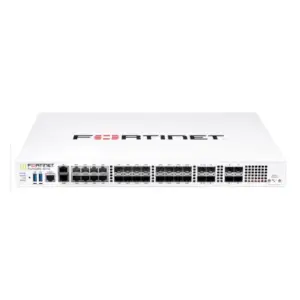
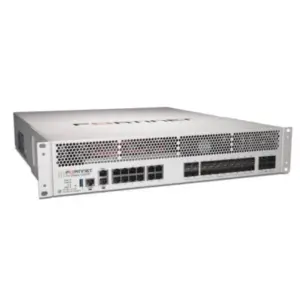
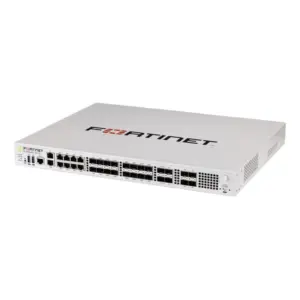
Fortinet FortiSandbox 3000G Advanced Threat Analysis Appliance for Uganda
The Fortinet FortiSandbox 3000G is a 2RU enterprise sandbox appliance designed for high-volume organizations that need controlled, on-premises analysis of suspicious files and advanced threats. It combines substantial compute resources, 150 sandboxing virtual machines, resilient storage, redundant power and high-speed 10 GE connectivity to support demanding security operations. For Ugandan enterprises evaluating advanced malware analysis infrastructure, the 3000G is particularly relevant where file volumes, regulatory considerations, data-control policies or operational response requirements make a dedicated appliance preferable to relying exclusively on remote services.
FortiSandbox analyzes potentially malicious content using multiple inspection techniques and can exchange threat intelligence and remediation information with the broader Fortinet Security Fabric and supported third-party systems. This makes the appliance more than an isolated analysis server: in a properly designed architecture it can become a specialist detection layer receiving suspicious objects from security controls and returning verdicts that help connected systems block, quarantine or investigate threats.
Procurement should therefore consider the 3000G as part of an integrated security workflow. The correct order is influenced by expected file submissions, retention and reporting needs, connected products, rack and power availability, subscriptions, support coverage and deployment design. FourTeck supports Uganda customers with bill-of-materials validation, quote preparation and implementation planning before purchase.
Instant Specifications & Procurement Fact Rail
FSA-3000G
2RU appliance
8 × 10 GE SFP+ slots
4 × 2 TB RAID-10
150 VMs
2 × redundant hot-swappable AC PSUs
These specifications make the appliance suitable for data-center deployments rather than small branch environments. Buyers should plan two rack units, sufficient cabinet depth for the 650 mm chassis plus cable clearance, appropriate SFP+ optics or DAC connectivity, two protected AC feeds where power redundancy is required, and cooling capacity appropriate for the stated maximum load. Quote status, lead time, warranty entitlement and subscription term should be confirmed for the final Uganda order because these commercial elements vary by bill of materials and supply conditions.
Operational Architecture & Overview
Traditional perimeter inspection is effective at identifying many known threats, but sophisticated malware can evade straightforward signature checks, arrive inside common documents, use delayed execution or behave differently after reaching an endpoint. FortiSandbox addresses this gap by providing a dedicated environment where suspicious objects can be subjected to deeper static and dynamic analysis. The 3000G expands this capability for organizations whose security controls generate enough submissions that analysis capacity and turnaround time become material design considerations.
The appliance is engineered around virtualization capacity. Fortinet specifies 150 sandboxing VMs for the 3000G, substantially increasing the number of analysis environments available compared with earlier hardware. This matters because sandbox workloads are not equivalent to simple packet forwarding. Files may need to be opened or executed in isolated guest environments while behavior is observed, artifacts are collected and a verdict is produced. Greater VM capacity allows more work to proceed concurrently and helps security teams prevent analysis queues from becoming a bottleneck during periods of elevated file volume.
The storage subsystem uses four 2 TB drives in RAID-10. RAID-10 combines mirroring and striping, providing a practical balance between performance and resilience for an appliance performing intensive analysis and logging tasks. Hot-swappable storage supports serviceability, while the Trusted Platform Module provides a hardware trust component. Eight 10 GE SFP+ slots give network architects flexibility for high-speed data-center connectivity and segmentation. These interfaces should be mapped during design to management, submission and integration requirements rather than ordered without a port plan.
The 3000G is also designed for infrastructure resilience. Two hot-swappable power supplies support redundant power design, allowing connection to separate protected feeds or PDUs where the facility supports it. Front-to-back airflow aligns with common data-center cooling patterns. Because the appliance can become an important security-analysis dependency, rack placement, power distribution, upstream switch design and monitoring should be treated as production infrastructure decisions rather than afterthoughts.
Enterprise Business Outcomes & Value Analysis
Key Hardware & Software Highlights
The 3000G hardware platform is deliberately data-center oriented. Its 2RU chassis provides the physical resources needed for the high VM count, resilient disk array and redundant power system. Eight 10 GE SFP+ slots allow fiber or compatible direct-attach designs according to switch infrastructure. Four 2 TB drives operate in RAID-10 and are hot-swappable, which supports serviceability without treating every disk incident as a full chassis replacement. Dual power supplies are likewise hot-swappable and redundant, enabling the appliance to use independent protected power paths where available.
At the software layer, FortiSandbox combines static and dynamic analysis, behavioral observation and threat intelligence. Its role is to identify suspicious or previously unknown content that may not be adequately classified by conventional controls alone. Integration is a central purchasing consideration. Fortinet documents integration with products including FortiGate, FortiMail, FortiClient, FortiWeb, FortiADC and FortiProxy, allowing sandbox verdicts to become part of wider prevention and response workflows. Third-party integration options can also be relevant, but exact compatibility should be validated against the deployed software versions and intended workflow before the bill of materials is finalized.
Technical Specifications Ledger
| Form factor | 2RU appliance |
| Network interfaces | 8 × 10 GE SFP+ slots |
| Storage | 4 × 2 TB RAID-10, hot-swappable |
| TPM | Supported |
| Dimensions | 88 × 438 × 650 mm (3.5 × 17.2 × 25.6 in) |
| Weight | 44 lb / 20 kg |
| Power supplies | 2 × 100–240 V AC, 50/60 Hz; redundant and hot-swappable |
| Maximum current | 100 V / 10 A; 240 V / 5 A |
| Power consumption | 471.9 W average / 542.4 W maximum |
| Heat dissipation | 1850.67 BTU/h |
| Airflow | Front to back |
| Operating temperature | 0°C to 40°C |
| Storage temperature | -40°C to 70°C |
| Humidity | 10% to 90%, non-condensing |
| Certifications | FCC Part 15 Class A, RCM, VCCI, CE, BSMI, KC, UL/cUL, CB, GOST |
For rack planning, do not use the nominal chassis depth as the only clearance figure. Space is also required for rear power cables, airflow and bend radius, while front-side fiber or DAC routing must remain serviceable. The stated maximum power figure should be used as a conservative reference when checking PDU and UPS capacity. Environmental specifications describe supported appliance conditions; the room itself should be engineered with sufficient cooling margin for adjacent equipment and expected growth.
Configuration & Sizing Worksheet
Step 1 — Estimate workload. Record the security products that will submit files, average and peak daily submission counts, dominant file types, acceptable verdict latency and anticipated growth. Include mail gateways, firewalls, web controls, endpoint workflows and file-sharing services where relevant.
Step 2 — Validate the physical environment. Reserve 2RU, confirm cabinet depth for a 650 mm chassis plus service clearance, check rail compatibility, ensure front-to-back airflow is consistent with the rack cooling design, and verify that the room can accommodate up to 1850.67 BTU/h of heat dissipation.
Step 3 — Plan power and connectivity. Where redundant operation is required, map each PSU to a separate protected feed or PDU. Confirm voltage, outlet type and UPS headroom. Specify compatible 10 GE SFP+ optics, fiber patch leads or supported DACs based on the connected switches and distance.
Step 4 — Confirm subscriptions and guest environments. Sandboxing capabilities can depend on service subscriptions and guest VM licensing. Exact FortiGuard and operating-system requirements should be quoted for the intended analysis environment rather than assumed from the appliance hardware alone.
Step 5 — Prepare the quote. Provide delivery city, organization type, expected deployment date, integration products and versions, preferred support term, rack and power details, optical requirements, and whether staging or remote deployment assistance is required. This reduces revisions and helps ensure the commercial quote reflects a deployable solution.
Deployment Scenarios & Industry Use Cases
Large Enterprise and Multi-Site Networks
A large organization can centralize suspicious-file analysis in a primary data center while branch security controls forward eligible content through the enterprise security architecture. This design can avoid duplicating sandbox appliances at every site while retaining a controlled analysis platform. Network latency, WAN resilience and submission policies should be considered so remote sites do not create unexpected bottlenecks.
Financial and Banking Institutions
Banks and financial organizations routinely handle high-value transactions, email attachments, customer uploads and internal documents. A dedicated sandbox can provide an additional inspection layer for suspicious content while keeping the analysis platform within controlled infrastructure. Deployment should be aligned with internal segmentation, audit requirements, privileged access processes and incident-response procedures.
Educational and Campus Networks
Universities can experience diverse unmanaged devices, high email volumes, research downloads and file-sharing activity. Centralized sandbox analysis can complement gateway and endpoint controls, especially where many faculties and campuses share security services. Sizing should account for academic peaks, student intake periods and large research data workflows.
Government and Defense Procurement
Public-sector environments may place strong emphasis on local control, segmentation and formal change processes. The on-premises 3000G provides a dedicated appliance form factor suitable for controlled data-center deployment. Buyers should define data handling, update processes, support access, integration boundaries and any air-gapped requirements during technical design, as these can materially affect implementation.
Technical Deep Dive: Processing & Virtualized Analysis
The distinguishing capacity characteristic of the 3000G is its 150 sandboxing VMs. Dynamic analysis requires isolated environments capable of executing or opening content and observing behavior. In a busy SOC, concurrent analysis capacity is important because suspicious objects can arrive in bursts rather than at a steady rate. Fortinet states that the 3000G provides significantly greater processing resources than the 3000F and up to twice its performance and capacity. This makes the platform relevant to consolidation projects where two older units might otherwise be considered simply to reach the required processing level.
Capacity is still workload-dependent. A procurement team should not translate VM count directly into a guaranteed files-per-hour figure without considering file types, enabled analysis techniques and submission behavior. The practical objective is to size the system so ordinary peaks do not produce unacceptable queues while retaining margin for incident surges and future growth.
Technical Deep Dive: Software Ecosystem & Operational Control
FortiSandbox is designed to operate autonomously or as part of Fortinet’s broader security ecosystem. Integration with FortiGate, FortiMail, FortiClient, FortiWeb, FortiADC and FortiProxy can allow suspicious files to be escalated for deeper inspection and resulting intelligence to be shared back into prevention workflows. This coordinated model is valuable because sandboxing is most effective when verdicts can trigger action rather than remain confined to a report viewed after the event.
Operational control includes software maintenance, administrator access, update planning, reporting and retention. Organizations should identify who owns the appliance, who may change analysis profiles, how updates are approved, how incidents are escalated and how integrations are tested after upgrades. Current FortiSandbox documentation should be consulted before deployment because supported releases and integration details evolve over the hardware lifecycle.
Technical Deep Dive: Redundancy & Recovery
At the chassis level, the 3000G provides dual hot-swappable power supplies and hot-swappable RAID-10 storage. These features improve maintainability and protect against selected component failures, but they should not be confused with complete service-level redundancy. A data-center power failure, network outage, chassis fault or software incident can still affect a single appliance.
Organizations with strict recovery objectives should define acceptable downtime and analysis backlog before deciding whether one appliance is sufficient. The design may need redundant network paths, protected power, configuration backup, spare strategy or multiple FortiSandbox systems. Recovery procedures should also document how connected security products behave if sandbox analysis is temporarily unavailable, ensuring that fail-open or fail-closed decisions are intentional and consistent with risk policy.
Pre-Purchase Buyer Gap Checklist
Are subscriptions included? Hardware acquisition and security-service entitlement are separate commercial considerations. Confirm the exact FortiGuard services, support term and guest operating-system licensing required for the planned deployment.
Will it fit the rack? The chassis is 88 × 438 × 650 mm and weighs 20 kg. Verify usable rack depth, rail requirements, front and rear service clearance, cable bend radius and airflow before delivery.
What is the electrical load? Fortinet specifies 471.9 W average and 542.4 W maximum consumption. Use the maximum value when checking conservative PDU and UPS sizing, then include redundancy and other equipment on the same circuits.
Are optics included? The appliance provides SFP+ slots; the final solution should explicitly identify required transceivers or DACs. Match optics to switch vendor requirements, fiber type and link distance.
Can it integrate with existing security products? FortiSandbox supports multiple Fortinet integrations and third-party options, but compatibility should be checked against exact product versions and desired workflows before purchase.
How should capacity be compared with older models? Fortinet positions the 3000G above the 3000F with 150 VMs and up to twice the performance and capacity. Migration decisions should nevertheless be based on measured workload and operational requirements rather than model generation alone.
Uganda Procurement & Delivery Logistics
FourTeck supports enterprise procurement for FortiSandbox 3000G projects in Uganda. A useful quotation request should include the end-user organization, deployment location, expected project schedule, desired support period, required subscriptions, integration environment and any accessories. For data-center appliances, buyers should also state whether SFP+ optics, fiber patching, rack accessories, staging or implementation support are required.
Once the technical scope is established, the bill of materials can be checked before commercial processing. Delivery timing depends on stock position, distributor allocation, import movement and the completeness of the final order. Organizations working against a tender deadline or planned maintenance window should request lead-time confirmation early rather than assuming immediate availability.
Pre-configuration requirements should be agreed before shipment. Depending on project scope, this can include software-version checks, interface planning, integration review and deployment documentation. Sensitive production credentials should not be embedded in procurement correspondence; final privileged configuration should follow the customer’s security procedures.
Uganda Coverage Matrix
Kampala: primary enterprise and data-center procurement support for corporate headquarters, financial institutions, government agencies and service providers. Entebbe: support for aviation, hospitality, institutional and commercial infrastructure. Jinja: industrial, manufacturing and regional enterprise deployments. Mbarara: western Uganda organizations requiring centralized security infrastructure and branch integration. Gulu: northern Uganda projects, institutional networks and multi-site deployments. Delivery and implementation scope should be confirmed per project because logistics, access requirements and installation windows vary by site.
Cross-Border & Regional Supply Chains
Organizations operating across East Africa and the Gulf can coordinate related infrastructure through FourTeck regional channels. Uganda requirements can be handled through FourTeck Uganda, Kenya projects through FourTeck Kenya, wider continental requirements through FourTeck Africa, UAE procurement through FourTeck UAE, and Kuwait requirements through FourTeck Kuwait. Multi-country organizations should standardize the approved model, subscriptions, software baseline, optics and support expectations while allowing for local delivery, tax and import conditions.
Related Infrastructure & Internal Planning
A FortiSandbox project often intersects with adjacent security and data-center requirements. Review enterprise security solutions in Uganda and request guidance for compatible FortiGate firewall integration, FortiMail email-security workflows, FortiClient endpoint workflows, 10 GE SFP+ connectivity, rack infrastructure, UPS capacity and protected power distribution. Rather than purchasing accessories independently, provide the switch model, fiber type, rack specification and power environment so compatibility can be validated as one bill of materials.
For organizations replacing an earlier FortiSandbox generation, the migration plan should include configuration review, integration dependencies, update path, change window, rollback plan and disposal or redeployment of the previous appliance. Capacity gains are valuable only when the surrounding network and operating process are prepared to use them.
FourTeck Technical Service Capabilities
FourTeck can assist with engineering validation before purchase, helping confirm whether the proposed appliance, subscriptions, interfaces and accessories match the intended environment. Bill-of-materials review is particularly important for enterprise security appliances because missing optics, incorrect support terms or unplanned licensing can delay commissioning even when the core chassis has arrived.
Where included in the project scope, staging can cover inventory verification, software baseline checks, labeling, interface planning and pre-shipment readiness review. Firmware or software updates should be selected against the customer’s compatibility requirements rather than applied automatically without change consideration. Post-sales assistance can support deployment planning, integration review and troubleshooting coordination, with the exact service boundary documented in the quotation.
Extended Technical FAQ
1. What is the FortiSandbox 3000G designed to do?
It is a high-capacity on-premises sandbox appliance for analyzing suspicious files and advanced threats. It combines static and dynamic techniques, behavioral analysis and threat intelligence to produce verdicts that can support prevention and investigation. The 3000G is intended for organizations with substantial analysis demand, including large enterprises, financial institutions and high-volume file services. Its dedicated appliance format is useful when local operational control and predictable infrastructure capacity are important.
2. How much sandbox capacity does the 3000G provide?
Fortinet specifies 150 sandboxing VMs for the FortiSandbox 3000G. This gives the platform significant concurrent analysis resources and is a major step above previous-generation hardware. Fortinet states that the model offers up to twice the performance and capacity of the 3000F. Actual processing results depend on file types, analysis settings and workload, so a sizing exercise should consider peak submissions and desired verdict times.
3. What network ports are available?
The appliance provides eight 10 GE SFP+ slots. This supports high-speed data-center integration but also means the procurement bill should account for the physical link method. Determine whether each connection requires SFP+ optical transceivers and fiber patch leads or compatible direct-attach cabling. Match transceiver type to the connected switch, fiber plant, distance and network design. Do not assume all required optics are automatically included with the base appliance.
4. Does the appliance provide redundant power?
Yes. The 3000G has two redundant, hot-swappable AC power supplies supporting 100–240 V AC at 50/60 Hz. To gain the intended resilience, each supply should normally be connected to an appropriately designed protected power path rather than both being placed on the same single point of failure. The appliance is rated at 471.9 W average and 542.4 W maximum power consumption, so UPS and PDU capacity should be checked before installation.
5. What rack space and cooling should be planned?
The chassis occupies 2RU and measures approximately 88 × 438 × 650 mm. It weighs about 20 kg and uses front-to-back forced airflow. Fortinet specifies heat dissipation of 1850.67 BTU/h and an operating range of 0°C to 40°C. Buyers should verify rack depth, rail fit, cable clearance and cooling margin. Cabinet planning should include space beyond the bare chassis dimensions so power and network cables remain serviceable without obstructing airflow.
6. Can FortiSandbox integrate with other Fortinet products?
Yes. Fortinet documents FortiSandbox integration with products including FortiGate, FortiMail, FortiClient, FortiWeb, FortiADC and FortiProxy. This enables suspicious objects and resulting verdicts to participate in coordinated security workflows. Integration design should identify exactly which devices submit content, how verdicts are returned, what happens when the sandbox is unavailable and which software versions are deployed. Compatibility should be validated before implementation, especially in mixed-generation environments.
7. Are subscriptions or licenses required beyond the hardware?
A complete FortiSandbox deployment can involve FortiGuard service entitlements, support coverage and licensing associated with guest operating environments. Requirements depend on the intended configuration and should be confirmed in the ordering guide and final quote. Procurement teams should request a bill of materials that clearly separates the hardware appliance, service subscriptions, support term and any operating-system or VM-related licensing so there are no hidden assumptions during commissioning.
8. How is hardware replacement handled?
Replacement processes depend on the purchased support entitlement, warranty status, diagnosis and regional service procedure. The appliance includes serviceable components such as hot-swappable drives and power supplies, which can simplify certain hardware interventions. Organizations should retain serial and support information, maintain configuration backups and document escalation contacts. For mission-critical environments, also decide whether the business can tolerate an RMA interval or requires architectural redundancy beyond component-level protection.
9. Is the 3000G suitable for financial institutions in Uganda?
Its high analysis capacity, on-premises form factor, redundant hardware features and security-platform integrations make it a strong candidate for large financial environments, but suitability depends on the institution’s architecture and policies. Banks should evaluate data handling, segmentation, administrator access, incident workflow, retention, integration with email and perimeter controls, recovery objectives and change-management requirements. A technical validation exercise should precede purchase so the appliance is integrated into the bank’s security operating model rather than deployed as a standalone tool.
10. What information should be provided when requesting a Uganda quote?
Provide the product model, delivery location, required support period, expected deployment date, connected security products, estimated file volume, rack environment and any requirements for optics, staging or implementation assistance. If replacing an existing FortiSandbox, include the current model and software version. For tender procurement, include mandatory compliance and documentation requirements. The more complete the technical context, the easier it is to prepare a bill of materials that covers the appliance and the dependencies needed for production deployment.
Plan Your FortiSandbox 3000G Deployment in Uganda
For a dependable procurement outcome, validate the appliance together with subscriptions, support, rack capacity, power redundancy, 10 GE connectivity and integration requirements. FourTeck can review the intended environment and prepare a commercial proposal aligned with the deployment scope. Include your delivery city, preferred support term, project schedule and existing Fortinet infrastructure when requesting the quotation. This helps reduce procurement revisions and ensures that required accessories and service elements are identified before shipment.