
Fortinet FortiWeb 4000F in Uganda
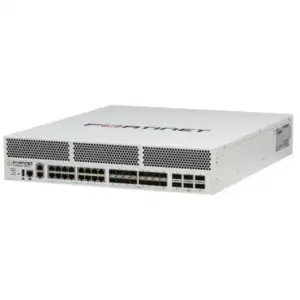
A high-throughput hardware web application firewall built to protect large-scale web applications and APIs while supporting demanding encrypted traffic environments.
Fortinet positions the 4000F at the top end of its current FortiWeb hardware appliance range, with up to 70 Gbps throughput, hardware SSL/TLS processing and a network interface mix designed for substantial application-security deployments. It is intended for buyers whose sizing exercise goes beyond simply counting websites: traffic peaks, TLS workload, API exposure, availability design, security subscriptions and network topology all matter.
Fortinet
FortiWeb 4000F
Hardware WAF
Up to 70 Gbps
2U rackmount
Product overview: where the 4000F fits
FortiWeb is Fortinet’s web application firewall platform for protecting web applications and APIs from known and unknown exploits. The 4000F is the high-capacity hardware appliance in the family and is designed for environments where application security inspection must operate alongside substantial production traffic. Rather than functioning as a conventional perimeter firewall alone, a WAF works at the application layer and examines HTTP and HTTPS interactions that reach web servers, portals and API endpoints.
That distinction matters for organizations running internet banking portals, customer self-service systems, e-commerce platforms, government services, education portals, SaaS applications or business APIs. Attacks such as SQL injection, cross-site scripting, credential stuffing, malicious automation and protocol abuse can target the application itself even when network-level controls are correctly configured. FortiWeb adds application-aware inspection, machine-learning-based anomaly analysis, API discovery and protection, bot mitigation, client-side protection and integration with other Fortinet security components.
The 4000F should be considered when the protected environment requires high aggregate inspection capacity and high-speed interfaces. Its interface set includes eight Gigabit Ethernet bypass ports, ten 10G BASE-SR SFP+ ports with two bypass ports, and two bypass 40G QSFP interfaces. Hardware SSL/TLS processing is particularly relevant where encrypted application traffic is a major part of the workload. Two 960 GB SSDs provide local storage, while dual hot-swappable power supplies and supported active/passive or active/active clustering help buyers design for service continuity.
Selection still depends on architecture. Buyers should establish expected clean and attack traffic, peak concurrent demand, TLS certificate strategy, reverse-proxy or transparent deployment approach, upstream switch interfaces, high-availability requirements, logging destination and required FortiGuard services. FourTeck can use these details to help Uganda procurement and technical teams structure a configuration request and quotation.
Business benefits mapped to real deployment needs
Protect application logic beyond the network perimeter
FortiWeb combines conventional WAF controls with machine-learning analysis to distinguish expected application behavior from potentially malicious anomalies. For security teams, this creates a control point focused specifically on web and API traffic rather than relying on a general network firewall to understand application-layer abuse.
Support high-volume protected services
The 4000F carries an official throughput figure of up to 70 Gbps. That headline capacity, together with 10GbE and 40GbE connectivity, makes the platform relevant when application protection must be inserted into fast data-center paths. Actual performance remains configuration and traffic dependent, so sizing should include enabled inspection functions and encrypted traffic characteristics.
Reduce exposure from undocumented APIs
API discovery continuously evaluates application traffic and can build an inventory that supports positive security policies. FortiWeb supports schema-oriented protection for OpenAPI, XML and generic JSON, which is useful where mobile applications, partner integrations and internal services have expanded the API attack surface.
Control malicious automation
Bot mitigation combines machine learning with threshold detection, bot deception and behavior-oriented techniques. This matters for login pages, public portals and transaction services where credential stuffing, scraping or automated abuse can consume resources or expose user accounts.
Build resilience into the security layer
Fortinet lists active/passive and active/active clustering for the 4000F, while the hardware includes dual hot-swappable power supplies. These capabilities let architects avoid treating the WAF as an isolated single point of failure, provided the wider network, power and application architecture is designed accordingly.
Give security operations better application context
FortiView, dashboards, centralized logging, user/device tracking and attack categorization provide operational visibility for teams investigating application events. Integration with FortiGate, FortiSandbox and supported vulnerability scanners can further connect WAF findings to a broader security workflow.
A platform distinguished by capacity, application intelligence and interface flexibility
For a buyer evaluating the 4000F, the meaningful differentiator is the combination of high protected throughput and application-specific controls. The appliance is not merely a fast packet-processing device. Its purpose is to apply WAF, API, bot and application-delivery functions while fitting into enterprise data-center architectures.
- 70 Gbps throughput: official maximum performance figure; real results vary with configuration and traffic.
- Hardware SSL/TLS processing: supports demanding encrypted application environments.
- High-speed connectivity: ten 10GbE SFP+ ports and two bypass 40G QSFP interfaces complement eight GE bypass interfaces.
- Application and API protection: includes OWASP-focused controls, API discovery, schema verification and CI/CD integration capabilities.
- Operational options: active/passive and active/active clustering, administrative domains, REST API, centralized logging and FortiView.
Technical specifications ledger
| Product type | Hardware web application firewall |
| Throughput | Up to 70 Gbps; performance varies with system configuration |
| GE interfaces | 8 GE, all bypass |
| 10G interfaces | 10 × 10G BASE-SR SFP+, including 2 bypass |
| 40G interfaces | 2 × QSFP, bypass |
| SSL/TLS processing | Hardware |
| Storage | 2 × 960 GB SSD |
| USB | 2 interfaces |
| Form factor | 2U rackmount |
| Power supply | Dual hot-swappable |
| Power input | 100–240V AC, 50–60 Hz |
| Average power consumption | 248.5 W |
| Dimensions | 88 × 444 × 574 mm |
| Weight | 22.5 kg |
| Operating temperature | 0°C to 40°C |
| High availability | Active/passive and active/active clustering |
| Application licenses | Unlimited |
| Administrative domains | 64 |
The most important specifications for procurement are throughput, interface mix, SSL/TLS processing and high-availability capability. A 70 Gbps maximum figure does not mean every security policy and traffic profile will operate at that number. Buyers should model peak HTTP/HTTPS demand, encrypted sessions, attack inspection, API traffic, logging and redundancy. Interface planning is equally important: verify whether the surrounding switching fabric uses 1GbE, 10GbE or 40GbE and confirm required optics, cabling and bypass behavior. Rack space, power feeds and cooling should be included in the data-center implementation plan. Subscription selection also deserves separate review because FortiGuard security services can be purchased according to required protection capabilities.
Configuration worksheet for procurement teams
01 What workload will the appliance protect?
Document public websites, portals, web services, mobile back-end APIs and business-to-business APIs. Different applications create different request patterns and security-policy requirements. Include whether payment pages or client-side script monitoring are relevant.
02 What is the traffic and performance scale?
Provide normal and peak application throughput, expected growth, encrypted traffic percentage and any seasonal spikes. Capacity planning should consider security features rather than using raw internet bandwidth as the only sizing input.
03 How will it connect to existing systems?
Map upstream and downstream interfaces, VLANs, routing, load balancers, application servers, certificate ownership and logging platforms. Confirm 10GbE/40GbE optics and cabling requirements before purchase.
04 What growth, security services and HA design are expected?
Identify whether the project requires active/passive or active/active clustering, additional FortiGuard services, API protection, bot mitigation, sandbox integration or vulnerability-scanner workflows. Subscription needs should be matched to the security design.
05 What installation and support expectations apply?
Confirm rack space, redundant power, delivery destination, implementation ownership, change windows, support coverage expectations and project quantity. These details affect the completeness of the quote and deployment plan.
Ideal business use cases
Large digital service portals
A public or private organization operating heavily used online services may need application-layer controls that can keep pace with large traffic volumes. The 4000F can be positioned in front of application infrastructure to inspect HTTP/HTTPS requests and enforce security policies. The fit is strongest when the organization has measured traffic demand and a data-center network capable of using the appliance’s high-speed interfaces. HA architecture and certificate handling should be defined before implementation.
Financial and transaction-oriented applications
Organizations exposing authentication, account, payment or transaction workflows face threats that target application logic and credentials. FortiWeb capabilities for attack signatures, machine-learning anomaly detection, bot mitigation, credential-focused defenses and client-side protection can contribute to a layered application-security program. Buyers should map regulatory requirements and decide which security services and logging controls are required rather than assuming a single appliance automatically creates compliance.
API-heavy enterprise environments
Mobile applications and partner integrations can create an API estate that changes faster than traditional security inventories. FortiWeb API discovery and schema-oriented protection can help security teams identify and protect exposed interfaces. For this use case, teams should supply OpenAPI, XML or JSON schema information where available and align WAF policy updates with development and CI/CD processes.
Service-provider or shared security platforms
With 64 administrative domains and substantial throughput, the appliance can suit architectures where security functions are segmented across multiple administrative contexts. The exact design depends on tenancy, traffic isolation, logging and operational ownership. Procurement should verify whether one high-capacity platform or multiple smaller appliances provides the preferred resilience and fault-domain strategy.
Deep dive 1 — Machine-learning application protection
Application security generates a difficult operational trade-off: policies that are too loose may miss malicious requests, while policies that are too aggressive can interrupt legitimate users. FortiWeb approaches this with multiple layers. Traditional WAF engines evaluate signatures, reputation, protocol validity and related controls. Machine-learning analysis then models application behavior and evaluates anomalies to determine whether they appear malicious.
For an enterprise deployment, the practical value is not simply that machine learning exists. The important question is how quickly the security team can establish useful protection while keeping false detections manageable as applications change. A banking form, customer portal, API endpoint and content-management system have different expected inputs. FortiWeb’s application modeling is designed to create context around those differences and apply threat analysis to anomalous requests.
Buyers should still plan governance. Application owners need to identify critical services, security teams need logging and incident processes, and change teams should coordinate major application releases with WAF policy review. Vulnerability-scanner integration and virtual patching can also be relevant when discovered application weaknesses cannot immediately be corrected in source code.
Deep dive 2 — High-capacity encrypted traffic handling
Modern application traffic is predominantly encrypted, so a WAF sizing exercise must consider the work involved in TLS processing as well as raw traffic movement. The 4000F uses hardware SSL/TLS processing and provides high-speed network interfaces that support placement in demanding data-center paths. Its up-to-70-Gbps throughput figure makes it the highest-throughput FortiWeb hardware appliance listed in Fortinet’s current product table.
That does not remove the need for measurement. Cipher suites, session behavior, security features, traffic mix and system configuration influence real performance. A sound project therefore collects baseline and peak traffic data, estimates growth and validates whether redundancy changes the required capacity per appliance.
Capability line 1: Hardware SSL/TLS processing supports encrypted application inspection.
Capability line 2: Ten 10G SFP+ ports and two 40G QSFP bypass interfaces support high-speed connectivity designs.
Capability line 3: Active/passive and active/active clustering provide architecture choices for availability.
Deep dive 3 — API, bot and client-side exposure
Application security is no longer limited to inspecting browser requests to traditional websites. APIs connect mobile apps, partners and automated services; bots can abuse login and transaction workflows; third-party JavaScript can create client-side risk after a page reaches the browser. FortiWeb addresses these areas through API discovery and protection, bot mitigation and client-side protection capabilities.
API discovery can continuously evaluate traffic and help establish an inventory. Positive security models can use supported schema specifications such as OpenAPI, XML and generic JSON. Bot controls combine machine learning and policy techniques to distinguish legitimate automation from abuse. Client-side protection can monitor scripts associated with sensitive pages and is designed to assist with relevant PCI DSS 4.0 requirements.
Buyer decision checklist
- Identify every public API and determine whether current schemas are available.
- Document login abuse, scraping, credential stuffing or automated transaction risks.
- Establish whether payment pages require client-side script monitoring.
- Decide which FortiGuard subscriptions and integrations belong in the security architecture.
- Align WAF policy ownership with application development and release processes.
What buyers should check before purchase
| Risk | What to confirm | Why it matters | What to share with FourTeck |
|---|---|---|---|
| Oversizing or undersizing | Peak protected traffic, TLS load, enabled services and growth | Headline throughput is an up-to value and actual performance varies | Traffic measurements and growth estimate |
| Network mismatch | 1G/10G/40G topology, optics, bypass design and cabling | Incorrect interfaces or optics can delay deployment | Switch models, port types and topology diagram |
| Incomplete security coverage | FortiGuard services, API needs, bot defense and integrations | Required services depend on the security policy and subscriptions | Security objectives and required services |
| Availability gap | HA mode, redundant power, rack, support and replacement expectations | The WAF must fit the wider continuity design | HA plan, rack/power details and support expectations |
Also confirm deployment mode, certificate management, DNS or routing changes, logging destinations, administrative separation and implementation responsibility. A technically correct appliance can still become a poor purchase if optics, subscriptions, rack requirements or operational ownership are omitted from the project scope. For replacement projects, provide the existing model and current utilization so the new design can be reviewed against actual usage rather than nameplate specifications.
Uganda availability and service planning
FourTeck can assist organizations sourcing FortiWeb 4000F solutions in Uganda with configuration review, quotation preparation and delivery coordination. Availability can vary by hardware, subscription term, project quantity and supply conditions, so buyers should request a current quotation rather than assume stock. For Kampala projects, it is useful to provide the required deployment date, delivery site, quantity, FortiGuard service requirements, support expectations and any optics or accessories needed with the appliance.
Technical review can help procurement teams distinguish the appliance itself from the broader deployment bill of materials. Depending on the architecture, that may include transceivers, fiber or copper cabling, redundant power planning, rack resources, certificates, security subscriptions and implementation services. Warranty and support options should be confirmed for the proposed configuration at quotation stage. FourTeck can also help structure project quantities and identify an appropriate FortiWeb model when measured traffic indicates that another capacity tier is a better fit.
Uganda location coverage
Organizations planning application-security projects in Kampala, Entebbe, Jinja, Mbarara and Gulu can contact FourTeck for product-selection and quotation assistance. Delivery coordination depends on the final destination, quantity and current supply position. For multi-site projects, provide a site list and preferred delivery arrangement so the commercial proposal can reflect the actual rollout rather than repeating separate city-based requests.
East Africa and regional project support
For organizations coordinating infrastructure across more than one country, FourTeck can discuss requirements through its Uganda, Kenya and broader Africa channels, with additional regional presence represented by its UAE and Kuwait websites. Regional supply and service arrangements should be confirmed for each project rather than inferred from another market. This is particularly important for enterprise security appliances where subscription terms, delivery destinations, support expectations and implementation schedules may differ by country.
Multi-country buyers can improve quotation consistency by supplying a common technical baseline: application traffic, required FortiWeb capacity, security services, interface requirements, HA design and quantity by destination. Visit FourTeck Uganda, FourTeck Kenya, FourTeck Africa, FourTeck UAE or FourTeck Kuwait where relevant to the project.
Related products and alternative capacity paths
Fortinet’s hardware family provides multiple capacity tiers. A buyer should select the tier from measured application demand, not simply choose the largest appliance. The following catalogue paths are useful discussion points when preparing a project:
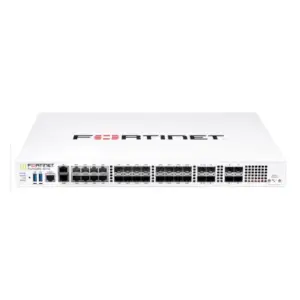
FortiWeb 3000F — Suitable for projects whose protected traffic requirement is materially below the 4000F tier; Fortinet lists up to 10 Gbps throughput. Ask FourTeck to compare capacity assumptions through the Uganda product consultation desk.
FortiWeb 2000F — A 5 Gbps hardware tier for smaller application-security footprints where the 4000F would be unnecessarily large. Use the FortiWeb configuration request to validate sizing.
FortiWeb 1000F — Fortinet lists up to 2.5 Gbps throughput, providing another hardware option for lower traffic requirements. Discuss the application profile through FourTeck security solution guidance.
FortiWeb virtual or cloud deployment — Organizations whose application estate is virtualized or public-cloud based may prefer a VM, public-cloud or SaaS path instead of physical hardware. FourTeck can help frame the requirement via the application-security quote page.
Why buyers contact FourTeck
01 / Product selection guidance. FourTeck can use traffic, interface and application requirements to structure a model discussion instead of treating every FortiWeb appliance as interchangeable.
02 / Configuration review. Enterprise WAF projects can involve optics, HA, certificates, subscriptions, rack resources and integration requirements. Reviewing these elements before quotation reduces omissions.
03 / Commercial quote assistance. Buyers can request a current project quotation based on quantity, delivery destination and selected services without relying on unverified stock or price claims.
04 / Uganda delivery coordination. The commercial discussion can include the destination and project schedule so delivery expectations are reviewed against current availability.
05 / Alternative matching. If measured requirements indicate a different FortiWeb capacity tier or deployment form factor, the project can be adjusted before purchase.
06 / Project and quantity planning. Multi-appliance, HA and multi-site requirements can be discussed as one architecture and bill of materials rather than isolated unit requests.
Frequently asked questions
01. What is the FortiWeb 4000F primarily used for?
It is a high-performance hardware web application firewall for protecting web applications and APIs. FortiWeb inspects application-layer traffic and provides controls for threats such as OWASP Top 10 attacks, malicious bots, API abuse and known or unknown exploits. The 4000F is aimed at environments needing the highest hardware throughput tier in the current FortiWeb appliance family.
02. Is 70 Gbps guaranteed in every deployment?
No. Fortinet lists throughput as an up-to performance value and states that actual performance varies depending on system configuration. Security functions, encrypted traffic, request characteristics and architecture can influence real results. Procurement teams should therefore provide measured peak application traffic and expected security services so sizing is based on the intended workload.
03. Which network interfaces does the appliance provide?
The official datasheet lists eight Gigabit Ethernet bypass interfaces, ten 10G BASE-SR SFP+ ports with two bypass ports, and two bypass 40G QSFP interfaces. The correct transceivers and cabling depend on the surrounding network. Share switch models and required link speeds during quote preparation so interface accessories can be reviewed.
04. Can FortiWeb protect APIs as well as websites?
Yes. FortiWeb includes API discovery and protection capabilities. It can continuously evaluate traffic to discover APIs and supports positive security models based on schema specifications including OpenAPI, XML and generic JSON. Organizations should still maintain API ownership and development governance so discovered endpoints and policy changes can be reviewed appropriately.
05. Does the 4000F support high availability?
Fortinet lists active/passive and active/active clustering for the model. The hardware also includes dual hot-swappable power supplies. A resilient deployment requires more than enabling an HA feature: redundant network paths, power feeds, upstream/downstream design and operational procedures should be planned so the WAF layer fits the application’s wider continuity architecture.
06. Are FortiGuard subscriptions required?
Fortinet offers multiple FortiGuard security services for FortiWeb and notes that annual subscriptions can be selected individually or through bundles. The appropriate services depend on the protection objectives, such as reputation, security updates, credential defenses, sandboxing or malware inspection. Ask for the subscription scope to be itemized with the hardware quote.
07. What information should an Uganda buyer provide for a quote?
Provide expected normal and peak web/API traffic, percentage of encrypted traffic, interface speeds, HA requirements, deployment mode, desired security subscriptions, quantity, delivery destination and support expectations. Existing WAF utilization or a network diagram can also improve the discussion. These inputs help distinguish the appliance, accessories and services needed for the complete project.
08. Can the appliance help with bot and credential attacks?
FortiWeb includes bot mitigation capabilities using machine learning and policy techniques such as threshold detection and bot deception. Fortinet also offers credential-focused security services. The appropriate policy should reflect the application’s login and transaction workflows, because legitimate automation, search crawlers and monitoring systems may need different treatment from malicious bots.
09. What deployment modes are supported?
Fortinet lists reverse proxy, inline transparent, true transparent proxy, offline sniffing and WCCP among FortiWeb deployment options. The right mode depends on network topology, routing, application architecture and the desired enforcement model. A topology diagram is useful during planning because deployment mode can affect IP addressing, traffic flow, certificates and change requirements.
10. Should every large organization choose the 4000F?
No. Model choice should follow measured demand and architecture. Fortinet offers lower hardware tiers as well as virtual, cloud and SaaS FortiWeb options. A 4000F may be appropriate for very high-throughput physical deployments, but another form factor or capacity tier can be more suitable when traffic, cloud strategy, fault domains or operational requirements differ.
Build the FortiWeb quote around your application architecture
For a useful proposal, share traffic measurements, protected applications and APIs, interface speeds, HA preference, FortiGuard service needs, quantity and Uganda delivery destination. FourTeck can use that information to help prepare a configuration-focused quotation and identify points that need confirmation before purchase.
- Peak HTTP/HTTPS and API traffic
- 10GbE or 40GbE connectivity requirements
- HA, power and rack design
- Security subscriptions and integration requirements
- Quantity and delivery location
Reviews
There are no reviews yet.