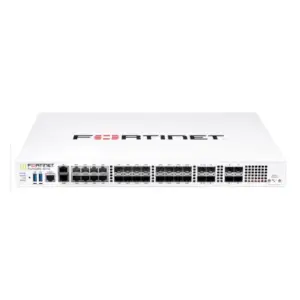
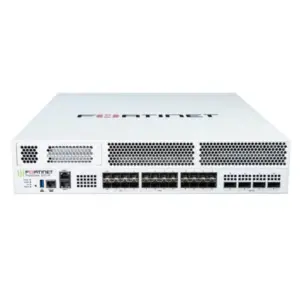
FortiSwitch FS-348G in Uganda
A 48-port managed Layer 2/3 access switch combining 24 Gigabit Ethernet copper ports, 24 multi-gigabit 2.5GE copper ports and four 10GE SFP+ uplinks.
The FS-348G is designed for business networks that need more edge bandwidth than an all-1GE access layer can provide, without requiring PoE from the switch itself. It is a useful fit for organizations modernizing wired access, connecting higher-throughput endpoints and building a Fortinet-managed LAN.
Product overview
The Fortinet FS-348G addresses a common access-layer planning problem: many organizations still have large numbers of ordinary 1GbE devices, while a growing subset of endpoints can benefit from 2.5GbE. Replacing every connection with a higher-speed interface may be unnecessary, but limiting the entire access layer to 1GbE can create avoidable constraints. This switch provides both interface classes in one 48-port platform and adds four 10GE SFP+ interfaces for upstream connectivity.
That combination makes the switch relevant to enterprise offices, campuses, branch environments, education networks and other managed LANs where endpoint requirements are mixed. The 2.5GE interfaces can be assigned to devices with greater bandwidth demands, while conventional 1GE ports continue serving standard Ethernet endpoints. The four 10GE SFP+ ports allow network designers to plan fiber or compatible direct-attach uplinks according to topology and distance requirements.
The FS-348G is part of Fortinet’s managed switching portfolio and can participate in Fortinet-oriented LAN architectures. Management design matters because FortiSwitch deployments can use FortiLink-integrated approaches as well as supported standalone or centralized management methods, depending on architecture and software context. Buyers should therefore consider the switch as part of a network design rather than simply compare port counts.
Another important distinction is power delivery. This specific FS-348G model is listed without PoE. That is appropriate where attached equipment is independently powered, but it changes suitability for networks expected to power wireless access points, IP phones, cameras or IoT equipment over Ethernet. FourTeck can help Uganda buyers review port-speed distribution, uplink media, management requirements, PoE expectations and project quantity before quotation.
Business benefits
Use multi-gigabit capacity where it matters
Twenty-four 2.5GE RJ45 interfaces give network teams room to place higher-throughput endpoints on faster copper connections while retaining another 24 ports for ordinary Gigabit Ethernet. This can support a measured access-layer upgrade rather than forcing every device into the same speed tier.
Keep a familiar copper access model
The switch uses RJ45 for its 48 access interfaces, helping organizations continue using structured copper cabling where cable category, distance and endpoint capability support the intended link rate. Cabling quality should be verified for multi-gigabit operation.
Build faster upstream paths
Four 10GE SFP+ uplinks provide higher-speed options for connecting the access layer toward aggregation, distribution, firewall or other network infrastructure. Transceiver type, fiber specification and topology remain project-dependent and should be selected together.
Integrate switching with Fortinet operations
FortiSwitch platforms are designed for Fortinet networking environments, including FortiLink-based integration and supported centralized management choices. For organizations already standardizing on Fortinet security and network operations, this can reduce management fragmentation when the architecture is planned correctly.
Avoid paying for an unnecessary PoE budget
In networks where endpoints already have local power, a non-PoE switch can be the technically appropriate choice. The benefit depends entirely on endpoint requirements; buyers should not select it for a deployment that expects Ethernet-delivered power.
Plan for segmented, controlled business LANs
As a managed Layer 2/3 platform, the FS-348G is intended for structured network environments rather than unmanaged desktop switching. VLAN, access-control, monitoring and other supported switching functions can be applied according to the chosen Fortinet management architecture and software release.
What distinguishes the FS-348G
Its practical differentiator is not simply having 48 copper ports; it is the split between standard 1GE and 2.5GE access, backed by dedicated 10GE SFP+ uplinks in a non-PoE platform.
24 x 1GE RJ45: conventional Gigabit access for standard wired endpoints.
24 x 2.5GE RJ45: multi-gigabit access for compatible higher-bandwidth devices.
4 x 10GE SFP+: flexible high-speed uplink interfaces; optics and cabling are selected separately according to deployment.
MACsec: Fortinet’s product description identifies MACsec capability for this model; deployment depends on supported configuration and software context.
Technical specifications ledger
| Specification | FS-348G detail |
|---|---|
| Product type | Managed Layer 2/3 FortiSwitch access switch |
| 1GE access | 24 x 1GE RJ45 |
| Multi-gigabit access | 24 x 2.5GE RJ45 |
| Uplinks | 4 x 10GE SFP+ |
| PoE | No PoE on FS-348G |
| Security capability | MACsec listed for model; feature use depends on supported configuration |
| Management | Fortinet management options; architecture and software dependent |
| Uplink media | SFP+ optics/DAC selected separately based on link design |
| Deployment | Business access-layer switching; exact topology configuration dependent |
The most important purchasing specification is the port mix. A buyer should map actual endpoint requirements against the 24 standard Gigabit ports and 24 multi-gigabit ports instead of assuming that all 48 copper interfaces provide identical speed capability. The next decision is uplink design. The four SFP+ interfaces are valuable only when matched with compatible optics, fiber, direct-attach cabling and upstream equipment.
PoE status is equally important. The FS-348G does not provide PoE, so a project built around powered access points, phones or surveillance devices should be reviewed before a purchase order is raised. Management and security capabilities should also be checked against the intended FortiOS, FortiLink, standalone or centralized management design and current supported software documentation. FourTeck can use these details to help build a more accurate bill of materials.
Configuration worksheet
01 What will connect to the switch?
Separate ordinary 1GE endpoints from devices expected to use 2.5GE. This determines whether the 24/24 port split matches the real access requirement and whether multiple switches are needed.
02 How much edge and uplink bandwidth is required?
Estimate concurrent traffic, not just endpoint count. Higher-speed access devices can increase upstream demand, so the four 10GE uplinks should be incorporated into an aggregation and redundancy plan.
03 What must it interoperate with?
Confirm the upstream switch or firewall, transceiver compatibility, copper cabling, VLAN design, authentication requirements and existing Fortinet environment. Compatibility decisions can change optics, cabling and management design.
04 What growth is expected?
Reserve capacity for additional multi-gigabit endpoints and consider whether future wireless, workstation or edge-device upgrades will increase demand. If future endpoints require PoE, that should influence the model choice now.
05 What are the installation and sourcing expectations?
Share rack environment, power arrangement, required accessories, project quantity, preferred delivery location and support expectations. Availability and commercial terms can vary by sourcing cycle.
Ideal business use cases
Campus access refresh with mixed endpoint speeds
An organization replacing an older all-Gigabit access switch may already have many 1GE desktops and printers while introducing 2.5GE-capable devices. The FS-348G allows both groups to coexist on one switch. Network planners should validate structured cabling and reserve the multi-gigabit ports for endpoints that can use the additional bandwidth.
Fortinet-oriented branch or office LAN
Where Fortinet security and network management already form part of the architecture, FortiSwitch can provide a more integrated operational model. The exact management method should be chosen according to the FortiGate, FortiOS and FortiSwitch design, rather than assuming every deployment uses the same controller arrangement.
High-density wired office without PoE endpoints
Some offices have dense wired workstation, appliance or lab connectivity but use separate power for endpoints. In that environment, a non-PoE 48-port switch can be a sensible fit. If the office also needs powered phones or access points, the PoE requirement should be separated or a different switch variant considered.
Aggregation-conscious edge deployments
The four 10GE SFP+ interfaces support access-layer designs that need faster paths upstream. This can be useful where multiple multi-gigabit endpoints share business applications or storage traffic. Redundancy, link aggregation, optics and upstream port availability should be planned together.
Deep dive 1 — Mixed-speed access without unnecessary redesign
Access networks rarely modernize all endpoints at once. A company may retain hundreds of Gigabit-capable devices for years while selectively deploying newer systems that can negotiate above 1GbE. The FS-348G’s split copper layout is useful because it gives the designer two access-speed pools in a single chassis: 24 conventional 1GE connections and 24 2.5GE connections.
This does not remove the need for planning. A 2.5GE port only produces a multi-gigabit link when the endpoint, cable plant and negotiation conditions support it. Buyers should inventory which devices genuinely need more than 1GbE and place those endpoints deliberately. That can include performance-sensitive workstations or other compatible equipment, while ordinary business devices remain on 1GE.
The operational advantage is a more targeted refresh. Instead of treating every access port as identical, the network team can align physical connectivity with endpoint capability. That approach also makes future capacity discussions clearer: when the 2.5GE pool begins filling, the organization has a measurable signal that its next access-layer expansion may require more multi-gigabit density.
Deep dive 2 — 10GE uplinks shape the upstream design
Four SFP+ interfaces give the FS-348G dedicated 10GE uplink options, but their value depends on the surrounding network. The buyer needs to determine where the switch connects, how far the link runs and what media the upstream device supports.
Capability line 1: four 10GE SFP+ interfaces provide multiple high-speed upstream connectivity choices.
Capability line 2: SFP+ optics or direct-attach solutions are selected according to distance, fiber and peer-interface requirements.
Capability line 3: uplink redundancy and aggregation should be designed against the upstream platform and current supported configuration.
A bill of materials that contains only the switch can therefore be incomplete. Transceivers, fiber patching, compatible peer ports and rack connectivity may all be required. FourTeck can review these elements with the Uganda project team before quotation so that the switch is not purchased without the components needed to connect it into the network.
Deep dive 3 — Management and security belong in the selection decision
FortiSwitch is designed as more than an unmanaged connectivity device. Fortinet supports integrated and centralized management approaches across its switching portfolio, and the best method depends on the customer’s architecture. Organizations using FortiGate and FortiLink may prioritize unified visibility and policy operations, while other deployments may have different supported management requirements.
Security-related switching functions also depend on software, topology and configuration. The FS-348G is specifically described with MACsec capability, while FortiSwitch management platforms support a broader set of network-control functions. Buyers should map required functions to current vendor documentation and the intended software release before committing to a design.
Buyer decision checklist
□ Confirm whether the switch will be FortiLink-managed or use another supported management method.
□ Identify the FortiGate or management platform and software version involved.
□ Document VLAN, authentication, monitoring and access-control requirements.
□ Confirm whether MACsec is required and supported for the intended links and configuration.
□ Include management licensing or services only where applicable to the selected architecture.
What buyers should check before purchase
| Risk | What to confirm | Why it matters | What to share with FourTeck |
|---|---|---|---|
| Wrong port-speed assumption | 24 ports are 1GE and 24 are 2.5GE | Endpoint placement and capacity depend on the split | Endpoint inventory and speed needs |
| PoE mismatch | FS-348G is non-PoE | Powered endpoints need another power strategy or model | Number and type of PoE devices |
| Incomplete uplink BOM | Optics, fiber/DAC and peer interfaces | SFP+ ports require compatible connectivity components | Distance, media and upstream equipment |
| Management incompatibility | Fortinet management design and software support | Feature availability can depend on architecture and release | FortiGate/model/version and required functions |
These checks are especially important for project purchases. A model number alone does not describe the complete deployment. Rack accessories, transceivers, patching, management design, support requirements and quantity can affect the final bill of materials. Buyers should also state whether the equipment is for a new build, an expansion or replacement of an existing switch. Replacement projects may introduce compatibility constraints that are not obvious from the new switch specification alone.
Uganda availability and service
FourTeck can assist customers sourcing the FS-348G for Uganda projects, subject to current product availability and commercial sourcing conditions. The support process can include configuration review, quote preparation, accessory planning, delivery coordination and guidance on applicable manufacturer support or warranty options. No assumption should be made about immediate stock until the current requirement is checked.
For Kampala projects, provide the required quantity, deployment schedule and technical bill of materials when requesting a quotation. This helps distinguish a simple switch requirement from a complete access-layer package that may also need SFP+ transceivers, fiber components, rack accessories or related Fortinet equipment.
Uganda location coverage
FourTeck can coordinate enquiries for business and project customers in Kampala and can also discuss requirements destined for Entebbe, Jinja, Mbarara and Gulu. Delivery arrangements, project quantities and sourcing schedules should be confirmed during quotation because availability and logistics vary by order. For multi-site deployments, send a location-by-location quantity plan so that the commercial and technical requirement can be reviewed as one project rather than as disconnected purchases.
East Africa and regional availability
Organizations planning standardised Fortinet deployments across more than one market can discuss regional sourcing requirements with FourTeck. Uganda requirements can be coordinated alongside enquiries for Kenya and selected East Africa or Africa markets where relevant. FourTeck’s regional web presence also includes the UAE and Kuwait for customers managing broader procurement programmes. Regional availability, logistics, support terms and commercial conditions should be confirmed for each destination rather than assumed to be identical across countries.
For cross-border projects, a useful request identifies the destination country, site count, switch quantity, required accessories, management environment and desired project window. This makes it easier to determine whether the same configuration can be used at every site or whether local infrastructure differences require changes.
Related products and useful FourTeck links
FortiSwitch PoE alternatives: If powered endpoints are central to the project, ask FourTeck to match the required port speeds and PoE budget to a suitable FortiSwitch PoE model rather than using the non-PoE FS-348G.
FortiGate security appliances: For FortiLink-oriented secure LAN designs, the appropriate FortiGate platform should be sized according to users, traffic, security services and site architecture.
FortiAP wireless access: Multi-gigabit switching is often considered alongside newer wireless infrastructure; access-point model, Ethernet speed and PoE requirements must be matched together.
Explore FourTeck Uganda business technology solutions
Contact FourTeck Uganda for FortiSwitch configuration and quotation
FourTeck Kenya for related regional requirements | FourTeck Africa | FourTeck UAE | FourTeck Kuwait
Why buyers contact FourTeck
01 / Product selection guidance. FourTeck can review whether the FS-348G’s mixed 1GE/2.5GE access layout matches the endpoint plan or whether another switch profile is more suitable.
02 / Configuration review. Buyers can share uplink distances, transceiver requirements, Fortinet management environment and PoE expectations before finalising the bill of materials.
03 / Quote assistance. Project quantity, destination and required accessories can be consolidated into a clearer commercial request.
04 / Business IT context. Switch selection can be considered alongside firewalls, wireless, structured connectivity and the broader LAN design rather than treated as an isolated hardware purchase.
05 / Delivery and support guidance. FourTeck can discuss current sourcing, Uganda delivery coordination and applicable support or warranty information during quotation without assuming availability in advance.
Frequently asked questions
01. What is the FortiSwitch FS-348G mainly used for?
It is a managed business access switch for networks needing a combination of standard Gigabit and 2.5 Gigabit copper connectivity. It provides 24 x 1GE RJ45 ports, 24 x 2.5GE RJ45 ports and four 10GE SFP+ uplinks. It is particularly relevant where a network is moving some endpoints beyond 1GbE while retaining many conventional Gigabit devices.
02. Does the FS-348G provide Power over Ethernet?
No. Fortinet lists the FS-348G as a non-PoE model. That means endpoints requiring power over their Ethernet connection need another power method or a suitable PoE-capable switch variant. Before ordering, count access points, IP phones, cameras and other powered devices so the switch choice reflects the actual power requirement.
03. Are all 48 copper ports 2.5GE?
No. The copper access ports are split into two groups: 24 x 1GE RJ45 and 24 x 2.5GE RJ45. This distinction matters when mapping endpoints to ports. Buyers should identify how many devices genuinely need multi-gigabit connectivity and ensure that number fits within the 24 available 2.5GE interfaces.
04. What is required to use the 10GE SFP+ uplinks?
The switch provides four 10GE SFP+ interfaces, but the complete link requires compatible connectivity such as appropriate SFP+ transceivers and fiber, or a supported direct-attach solution where suitable. The correct choice depends on distance, media type and the upstream device. Share those details with FourTeck when requesting the bill of materials.
05. Can it be integrated with a FortiGate environment?
FortiSwitch platforms support Fortinet-integrated management architectures including FortiLink in supported deployments. The exact design depends on the FortiGate model, FortiOS/FortiSwitch software support and required features. Buyers should provide their existing Fortinet platform details so compatibility and the intended management model can be reviewed against current documentation.
06. Does the switch support MACsec?
Fortinet’s product information for the FS-348G identifies MACsec capability. Actual use should be validated for the intended software release, interface design and peer device because security features depend on supported configuration. If MACsec is a project requirement, include it explicitly in the technical request rather than assuming it will be enabled automatically.
07. Is the FS-348G suitable for a wireless network upgrade?
It can provide multi-gigabit wired access that may be useful in networks with compatible higher-speed devices, but this model does not supply PoE. Wireless access points commonly require Ethernet power, so AP speed and power requirements must be checked together. A PoE-capable FortiSwitch may be a better fit when the switch is expected to power the wireless edge.
08. How can I request this switch in Uganda?
Send FourTeck the required quantity, delivery destination, endpoint-speed requirements, uplink media and distances, management environment and any accessory requirements. FourTeck can review the request and prepare a quotation subject to current sourcing and availability. For project orders, include the expected deployment schedule and whether the equipment is for a new installation or replacement.
09. What should I confirm for a bulk or multi-site project?
Confirm the quantity per site, the number of 1GE and 2.5GE endpoints, upstream topology, optics, rack requirements, PoE needs and management architecture. Multi-site projects should also identify destination locations and implementation phases. These details help determine whether every site can use the same switch configuration or whether some locations require a different model.
Build the right FS-348G bill of materials for your Uganda network
Share your switch quantity, endpoint-speed mix, uplink distance and media, Fortinet management environment, rack requirements and whether any devices need PoE. FourTeck can use those details to review the configuration and prepare a current quotation.