
FortiSwitch FS-424E-Fiber in Uganda
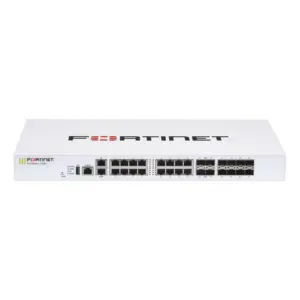
A 1 RU managed Layer 2/3 switch with 24 Gigabit Ethernet SFP ports and four 10 Gigabit Ethernet SFP+ uplinks for fiber-focused campus, aggregation and distribution designs.
This model is aimed at networks where optical media is central to the topology: building links, floor distribution, extended cable runs, electrically isolated segments or aggregation points that need many SFP interfaces in one rack unit. FourTeck can help Uganda buyers match the switch to FortiGate management, optics, fiber type, link distance and project quantities before quotation.
Fortinet
FS-424E-Fiber
Managed Layer 2/3 fiber switch
24 × GE SFP
4 × 10GE SFP+
Not provided
A fiber-oriented access and distribution platform
The FS-424E-Fiber addresses a specific infrastructure need: placing many Gigabit Ethernet optical links into a single managed switch while retaining multiple higher-speed uplink paths. Instead of filling a copper switch with media converters or relying on a small number of fiber uplinks, the unit exposes 24 GE SFP slots directly. That makes it relevant to organizations whose physical network already uses fiber between buildings, floors, cabinets, security zones or distant equipment rooms.
Fortinet lists the unit as a Layer 2/3 switch that is compatible with FortiGate switch-controller management. In practical terms, an organization can deploy it as part of a Fortinet-managed LAN using FortiLink or use supported standalone management workflows. The best approach depends on the existing FortiGate estate, intended segmentation model, operational ownership and software version. For buyers standardizing on the Fortinet Security Fabric, central administration can reduce the amount of separate switching configuration that has to be maintained.
The physical design is compact: 1 RU rack mount, approximately 440 mm wide, 200 mm deep and 44 mm high. Its relatively shallow depth can be valuable in communications racks where rear clearance is limited, but airflow remains a real design consideration because the published airflow direction is side-to-side. The unit uses an internal AC power supply and accepts 100–240 V AC at 50/60 Hz. Average power consumption is published at 36 W, with a 38 W maximum for the switch itself, excluding the power requirements of separate optical modules.
The main procurement decision is not just the switch quantity. Each fiber link requires a suitable transceiver and matching fiber path. A buyer should therefore map port-by-port requirements: speed, distance, single-mode or multimode media, duplex or other connector format, link partner, and whether any 10GE uplink will operate at 10GE or with a compatible 1GE SFP. A correct bill of materials often contains the switch, transceivers, patch cords, rack accessories and support coverage as separate lines.
Operational outcomes that matter in fiber-heavy networks
Consolidate optical links without external conversion
Twenty-four GE SFP cages allow a design to terminate numerous optical links directly in the switch. For campuses with multiple fiber-fed closets or distant network endpoints, this can reduce dependence on individual media converters and simplify rack organization. The business value is a cleaner physical design with fewer standalone conversion devices to power, document and troubleshoot.
Create faster upstream paths
Four SFP+ interfaces provide uplink options at up to 10GE, helping an aggregation or distribution point avoid concentrating all traffic onto a single Gigabit path. Link design still depends on topology and configuration, but the availability of four 10GE cages gives network architects room for redundant uplinks, aggregated links or connections toward higher-capacity core services.
Manage switching and security together
When deployed with a compatible FortiGate through FortiLink, the switch can become part of a unified administration model. This matters to organizations trying to coordinate VLANs, device access policies, segmentation and troubleshooting without maintaining completely separate operational silos for the firewall and access network.
Support large Layer 2 and Layer 3 tables
Published system limits include 32K MAC addresses, 4K VLANs and IPv4/IPv6 route-entry capacities of 16K/8K. Those values are useful when evaluating the switch for campus distribution roles where simple edge-port counts do not tell the whole story. Actual design limits should still be validated against the software release and intended features.
Use a compact rack footprint
The 1 RU chassis combines 28 optical-capable network interfaces in a shallow 200 mm depth. In branch data rooms, campus cabinets and aggregation racks, this can preserve vertical rack capacity for firewalls, patch panels, UPS equipment and additional switching.
Keep deployment options open
FortiSwitch supports standalone operation as well as FortiLink-based integration. That flexibility can help phased projects where the immediate requirement is switching but the longer-term architecture may include deeper FortiGate integration, centralized policy administration or broader Secure SD-Branch designs.
Its defining advantage is not simply port count; it is the concentration of configurable optical access ports with multiple 10GE uplinks.
For a buyer, that distinction matters because an SFP-based switch does not lock each access interface to one fixed cable reach or optical medium. The cage gives the design team a choice of supported transceivers. That flexibility is powerful, but it also moves responsibility into the bill of materials: every optic has to match the fiber plant and link partner.
Direct fiber-oriented access or aggregation connectivity. Transceivers are selected separately for the intended media and distance.
Higher-speed uplinks with support for 1GE SFP operation in the SFP+ cages where required.
Published switching capacity for the platform, supported by 190 Mpps packet forwarding in the Fortinet family datasheet.
Deployment can align with an integrated FortiGate environment or an independent switching requirement.
FortiSwitch FS-424E-Fiber technical details
| Specification | Published value |
|---|---|
| Total network interfaces | 24 × GE SFP + 4 × 10GE SFP+; SFP+ ports support 1GE SFP |
| Dedicated management port | 1 × 10/100 management port |
| Console | 1 × RJ-45 serial console port |
| Form factor | 1 RU rack mount |
| PoE | Not available on this model |
| Switching capacity | 128 Gbps duplex |
| Packet forwarding | 190 Mpps duplex |
| MAC address storage | 32K |
| Network latency | Less than 1 microsecond |
| VLANs supported | 4K |
| Link aggregation group size | 8 |
| Packet buffers | 4 MB |
| Memory / flash | 1 GB DDR4 / 256 MB |
| ACL | 1.5K |
| Spanning Tree instances | 32 |
| IPv4 / IPv6 route entries | 16K / 8K |
| Host entries IPv4 / IPv6 | 16K / 7K |
| Dimensions | 44 × 200 × 440 mm (H × D × W) |
| Weight | 2.55 kg |
| Power input | 100–240 V AC, 50/60 Hz; built-in AC power supply |
| Published consumption | 36 W average / 38 W maximum |
| Operating temperature | 0°C to 50°C |
| Humidity | 5% to 95%, non-condensing |
| Airflow | Side-to-side |
The specifications with the greatest purchasing impact are the port media, uplink capacity, airflow and management mode. The 24 front-facing GE ports are SFP cages, so they need compatible modules rather than ordinary RJ-45 patch cables. A project using long-distance single-mode fiber will need different optics from one using short multimode runs. The four SFP+ uplinks are valuable when the switch aggregates traffic toward a core, firewall or upstream distribution layer, but each uplink still needs a compatible module and fiber path.
The published 128 Gbps switching capacity and 190 Mpps forwarding figure indicate the platform’s switching scale, while the Layer 3 table capacities can matter in more routed designs. For a simple Layer 2 aggregation role, those table limits may not be the main decision driver. For a more complex campus design with many VLANs, routed interfaces or policy boundaries, they deserve attention during architecture review.
Physical deployment also matters. Side-to-side airflow differs from the front-to-back pattern common in some data-center hardware. Confirm rack ventilation, neighboring equipment and clearance so warm exhaust is not recirculated. Finally, verify the FortiSwitchOS release and FortiGate compatibility if FortiLink management is planned. FourTeck can review these variables as part of a pre-quote configuration discussion.
Five questions to answer before building the bill of materials
01 — What workload or operational requirement will the switch serve?
Define whether the unit will aggregate remote buildings, connect fiber-fed cabinets, form a campus distribution layer, sit between access switches and a core, or provide optical ports for specialized equipment. The answer changes the uplink design, redundancy plan and required optics. A building-aggregation role may emphasize link distance and resilience, while a data-room aggregation role may emphasize port density and 10GE upstream bandwidth.
02 — How many links and how much traffic must be supported?
Count active fiber endpoints today, then reserve realistic headroom. Do not size only by the 24-port total. Identify which links are 1GE, which uplinks should operate at 10GE, and whether multiple uplinks will be aggregated or used for redundancy. If several high-traffic access switches feed the unit, the upstream architecture should be sized so a single narrow uplink does not become the practical bottleneck.
03 — What must the switch interoperate with?
Record the FortiGate model if FortiLink is planned, the software releases in use, transceiver types, fiber plant, connector format and link partners. Optics are not interchangeable merely because they fit an SFP cage. The module, wavelength, reach and fiber type must match both ends. Where third-party optics are being considered, compatibility policy should be checked before purchase.
04 — What growth, upgrade or management path is expected?
Consider whether the site is moving toward a centrally managed Fortinet LAN, whether more routed segmentation will be introduced, and whether additional buildings or cabinets will be connected. Growth planning can influence how many ports are reserved, which uplinks are lit initially, and whether support coverage should align with a broader infrastructure lifecycle.
05 — What installation, support and delivery expectations apply?
Confirm rack space, airflow, AC power, patching, cable management, support term, project quantity and required delivery destination. If the switch is replacing an older unit, include the current model and transceiver inventory so reusable components can be identified cautiously rather than assumed compatible.
Where a dense fiber switch can simplify infrastructure
Multi-building campus aggregation
A school, university, hospital compound, government facility or commercial campus may already have fiber between buildings because copper distance is impractical or electrical isolation is preferred. In this role, the switch can terminate many 1GE optical building links and forward aggregated traffic through one or more 10GE uplinks. The configuration note is important: each building run must be matched to the correct optic and fiber mode, and redundancy should be planned at topology level rather than assumed from the switch alone.
Floor or communications-room distribution
Large offices and institutional buildings sometimes use fiber from a main equipment room to intermediate closets. Placing a 24-port SFP switch at the aggregation point can organize those links in one managed platform. Buyers should verify whether downstream closets present optical interfaces directly or whether additional switches and transceivers are required. The 10GE SFP+ ports can provide faster paths toward the core if the upstream equipment supports the same media and speed.
Fortinet-managed secure campus networks
Organizations already operating a compatible FortiGate may prefer to manage switching through FortiLink so segmentation and network access policies are coordinated with the security infrastructure. The value here is operational consistency rather than the assumption that every network should be converted to a single vendor. Confirm the intended FortiGate controller model, FortiSwitchOS compatibility and design scale before finalizing the architecture.
Fiber aggregation for remote equipment zones
Manufacturing, warehousing, utility, transport and large-property environments can have distant equipment zones connected over fiber. Where the environment itself is suitable for standard rack equipment, the switch can act as a centralized optical aggregation device. It is not a ruggedized industrial switch, so temperature, dust, enclosure and site conditions must stay within the published operating limits. If harsh-environment installation is required, a rugged platform should be evaluated instead.
Fiber flexibility is useful only when transceiver planning is disciplined
The 24 SFP access interfaces are the characteristic feature of this model. An SFP cage is a modular physical interface: the switch provides the port, while the inserted transceiver determines how that port connects to the outside cable plant. This architecture lets a network team choose an optical module appropriate to the actual link instead of accepting one fixed reach built into the switch.
That flexibility is particularly useful when a single aggregation rack serves a mixture of distances. A nearby communications room may use multimode fiber while a remote building may require single-mode optics. The exact module choices should follow Fortinet compatibility guidance and the characteristics of the installed fiber. Connector type and patching also matter, especially on older sites where historical fiber plant records may be incomplete.
Procurement teams should resist treating optics as a generic accessory. A quotation that includes only the switch can appear complete but may leave the deployment unable to connect on installation day. A more useful bill of materials maps each active port to the speed, link distance, fiber mode and matching transceiver at both ends. Spare modules can then be selected based on the actual deployed types instead of buying a random mix.
The SFP+ uplinks add another planning layer. They can operate at 10GE and are compatible with 1GE SFP modules, providing flexibility during phased upgrades. A site might initially light one or two 10GE uplinks and reserve others for redundancy or expansion. However, compatibility with the upstream switch or firewall must be confirmed before choosing the module and cabling. FourTeck can use the topology and fiber details supplied by the buyer to help structure a clearer quote request.
FortiLink can turn the switch into part of a unified network-security operating model
FortiLink is Fortinet’s integration path between FortiGate and FortiSwitch. In a compatible deployment, switch administration and access-layer policy can be handled through the FortiGate environment. For organizations already standardized on FortiGate, this can simplify day-to-day administration, visibility and segmentation. Standalone deployment remains an option where independent switch management is preferred.
From a buyer’s perspective, the key question is operational ownership. If the firewall and LAN are managed by the same team, integrated control may reduce context switching and help troubleshooting. If the switching team has independent tools and processes, standalone operation may be more suitable. The hardware can support both directions, but the implementation choice should be intentional and documented before rollout.
10GE uplinks, table scale and rack details shape the real deployment
The four SFP+ uplinks provide the headroom that differentiates this switch from a design built only around Gigabit optical ports. In an aggregation role, multiple 1GE links can feed traffic toward a faster upstream connection. The right number of active uplinks depends on expected traffic, redundancy objectives, spanning-tree or link-aggregation design, and the capabilities of the upstream device. The published link-aggregation group size is eight, but the topology and software configuration determine how that feature should be used in practice.
Layer 2 and Layer 3 scale also deserves attention. Fortinet publishes 32K MAC addresses, 4K VLANs, 16K IPv4 route entries and 8K IPv6 route entries for this model. Most smaller campus deployments will not approach every limit, but these figures help distinguish the platform from simple unmanaged or lightly managed fiber aggregation equipment. If the switch is expected to carry routed interfaces, multicast, many segmented networks or advanced access policies, the design should be validated against the exact FortiSwitchOS version and enabled features.
Physical details can be just as important as logical ones. The chassis is shallow and light, but it uses side-to-side airflow. A rack packed tightly with devices that exhaust in a different direction can create localized heat issues even when the room is generally cool. Confirm cable management around the SFP cages, side ventilation, AC power and rack depth. The published operating range is 0°C to 50°C with 5% to 95% non-condensing humidity.
Buyer decision checklist
- Confirm how many GE fiber links will be active on day one and at expected growth.
- Define which SFP+ uplinks need 10GE and which, if any, will operate at 1GE.
- Verify link aggregation and redundancy with the upstream device.
- Check FortiGate and FortiSwitchOS compatibility for FortiLink deployments.
- Validate rack airflow, power, patching and transceiver clearances.
- Record the exact fiber mode and distance for every optic in the bill of materials.
What buyers should check before purchase
| Risk | What to confirm | Why it matters | What to share with FourTeck |
|---|---|---|---|
| Wrong media assumption | The site genuinely needs SFP-based fiber ports rather than RJ-45 copper. | The switch has no 24-port copper access bank and no PoE output. | Endpoint types, existing cabling and desired port count. |
| Incorrect optics | Mode, distance, wavelength, connector and compatibility. | A physically fitting SFP can still be unsuitable for the fiber path or peer device. | Fiber test records, link length and remote equipment model. |
| Management mismatch | Standalone versus FortiLink, FortiGate model and software versions. | Integration features depend on a compatible management environment. | FortiGate inventory and intended administration model. |
| Incomplete deployment scope | Rack, airflow, AC power, patch cords, support term and quantity. | A chassis-only purchase may omit components required for installation and lifecycle support. | Rack details, site location, project quantity and support expectations. |
Another common risk is treating a replacement as a like-for-like swap without checking the old transceivers. Existing SFPs may be reusable in some circumstances, but reuse should be based on documented compatibility rather than the shape of the module. If an older switch has failed, share its exact model, the optic part numbers and the fiber destinations. This allows the replacement design to preserve working links where appropriate while identifying components that need to change.
For larger projects, also confirm whether all units are required at once or in phases. Phasing affects how spare optics, support terms and configuration templates are planned. Where an exact model has limited availability, FourTeck can discuss a suitable alternative path without presenting a substitute as identical. The comparison should focus on media type, port count, uplink speed, management compatibility and the operational role the original switch was meant to serve.
Plan the switch, optics and support as one Uganda procurement package
FourTeck can assist Uganda organizations with product selection, configuration review and quotation for the FS-424E-Fiber and related Fortinet switching requirements. Availability can vary with project quantity, transceiver selection, support coverage and supply conditions, so a current quote is the appropriate way to confirm the commercial package. For Kampala projects, it is useful to provide the installation address, required date window and whether the order is part of a new deployment, expansion or replacement.
Our pre-quote discussion can cover the FortiGate controller environment, number of fiber links, optic requirements, uplink design, rack considerations and desired support term. Delivery coordination and warranty guidance are handled according to the quoted products and applicable vendor terms; no assumption of immediate stock or guaranteed lead time should be made until the order configuration is reviewed.
Project buyers can also provide expected quantities for later phases. This helps structure an initial bill of materials with sensible spares and a repeatable configuration. Use the FourTeck Uganda contact page to send your topology, quantities and fiber details for review.
Procurement support for projects across Uganda
FourTeck can coordinate quotations and project discussions for organizations in Kampala as well as deployments serving Entebbe, Jinja, Mbarara and Gulu. The practical requirement is the same across locations: provide the switch quantity, fiber topology, transceiver specifications and delivery destination so the proposal can reflect the actual installation. Multi-site customers should identify which units and optics belong to each site, especially when fiber distances differ. That site-by-site information makes staging, labeling and purchasing clearer and helps avoid mixing single-mode, multimode or uplink modules between locations.
Regional coordination for distributed IT projects
Organizations with infrastructure in more than one country may need the same switching standard across several sites. FourTeck can discuss requirements originating in Uganda alongside projects in Kenya and selected East Africa or Africa markets, subject to current product availability, commercial terms and destination-specific delivery arrangements. The purpose of regional coordination is consistency: matching model families, transceiver specifications, management approach and support expectations where the network architecture is intended to remain common.
For groups that also operate in the Gulf, FourTeck’s regional web presence includes the UAE and Kuwait. These sites should be treated as contact and procurement channels rather than proof of identical stock or lead times in every market. A network design can be standardized globally while the commercial fulfillment details remain local to each order.
Start with FourTeck Uganda; for related regional discussions see FourTeck Kenya, FourTeck Africa, FourTeck UAE and FourTeck Kuwait. Share the country, quantity and required configuration for each site so the response can be scoped correctly.
Alternative paths to consider before final selection
Practical help around the hardware decision
01. Product selection guidance. A fiber switch should be chosen because the topology requires optical access or aggregation links, not simply because fiber sounds more advanced. FourTeck can help distinguish when this model fits and when a copper or PoE alternative is more appropriate.
02. Configuration review. The switch, optics, patching, FortiGate integration and uplink plan form one system. Reviewing these elements together reduces the chance that an installation is delayed by an incompatible module or missing accessory.
03. Quote assistance. Project quantities, support options and delivery requirements can be included in a structured quotation rather than leaving the buyer to infer the complete package from a chassis model number.
04. Business IT context. Switch selection affects firewalls, VLAN design, upstream capacity, rack power and operational processes. A procurement discussion can therefore be framed around the network role rather than a single specification.
05. Uganda delivery coordination. The destination, project schedule and quantity are reviewed during quotation. Availability and lead time are confirmed for the specific order rather than assumed.
06. Alternative product matching. If the requested model is not the best fit or current sourcing conditions point elsewhere, FourTeck can discuss alternatives based on media, port count, uplink speed and management compatibility.
Questions Uganda buyers often need answered before ordering
01. What is the primary use of the FS-424E-Fiber?
It is designed for managed Layer 2/3 networks that need many fiber interfaces in one rack unit. The switch provides 24 GE SFP ports and four 10GE SFP+ uplinks, making it suitable for optical access, building aggregation or campus distribution roles. Its value is strongest where the installed cabling is fiber. For mainly copper endpoints or devices needing PoE, another FortiSwitch model is usually more appropriate.
02. Does the switch include SFP or SFP+ transceivers?
The switch provides SFP and SFP+ cages; the deployment should be quoted with transceivers selected for the required media and distance. Do not assume that one optic type fits every link. Single-mode and multimode fiber, wavelength, connector format, reach and link-partner compatibility all influence the correct module. Share your fiber details with FourTeck so the optics can be reviewed as part of the project bill of materials.
03. Can the four SFP+ uplinks run at 1 Gigabit?
Yes. Fortinet’s published specification notes that the SFP+ ports are compatible with 1GE SFP modules. That can help phased deployments where an uplink starts at Gigabit speed and moves to 10GE later. Compatibility still depends on the chosen transceiver and peer device, so the actual module list and upstream switch or firewall should be checked before purchase.
04. Does the FS-424E-Fiber provide PoE for cameras or access points?
No. This fiber model does not provide Power over Ethernet. If the project requires the switch to deliver power to IP phones, Wi-Fi access points, cameras or other powered devices, a PoE-capable copper model should be evaluated. The fiber switch can still aggregate downstream PoE switches over optical links, but the endpoint power budget belongs to those downstream switches rather than this chassis.
05. Can this model be managed through FortiGate?
Fortinet specifies the model as FortiGate switch-controller compatible and supports FortiLink deployment within the FortiSwitch architecture. The exact FortiGate model, FortiOS release and FortiSwitchOS version should be checked for the intended design. This is particularly important in established environments where software upgrades are controlled. FourTeck can review the equipment list supplied by the buyer before quotation.
06. Is the switch suitable for a network core?
It can perform Layer 2/3 switching and may fit some distribution or aggregation roles, but whether it is suitable as a core depends on the required port speeds, routing scale, redundancy, traffic volume and architecture. Its main physical strength is 24 GE fiber ports with four 10GE uplinks. High-capacity cores needing more 10GE, 25GE, 40GE or 100GE interfaces should be evaluated against higher-tier switching platforms.
07. What should I provide to get an accurate Uganda quote?
Provide the required switch quantity, destination, current FortiGate model if applicable, number of fiber links, single-mode or multimode media, approximate link distances, connector requirements, number of 10GE uplinks, rack environment and desired support term. If this is a replacement, include the old switch model and existing optic part numbers. Those details help the quotation cover the actual deployment rather than the chassis alone.
08. What rack and cooling details should be checked?
The model is a 1 RU rack-mount unit approximately 440 mm wide and 200 mm deep. Fortinet publishes side-to-side airflow, so the rack should allow clear intake and exhaust paths at the sides. Confirm adjacent equipment does not trap hot air and that cable management leaves access to the SFP cages. The published operating temperature range is 0°C to 50°C with non-condensing humidity limits.
09. What if the FS-424E-Fiber is not the right fit?
The alternative should be chosen by requirement, not model-name similarity. If you need copper access, consider a copper FortiSwitch. If you need endpoint power, select a PoE model with the required budget. If you need more high-speed uplinks or a larger core role, evaluate a higher-capacity platform. FourTeck can compare those paths using port media, density, uplink speed and management compatibility.
Build the quote around your fiber topology, not just the chassis model
Send FourTeck the number of links, fiber mode, approximate distances, FortiGate environment, uplink requirements, rack location and project quantity. We can use those details to review the switch configuration, identify the optic categories that need confirmation and prepare a current Uganda quotation with appropriate project notes.
- Switch quantity
- GE fiber-link count
- 10GE uplink count
- Single-mode or multimode
- Link distances
- FortiGate model
- Rack and power details
- Delivery destination
Reviews
There are no reviews yet.