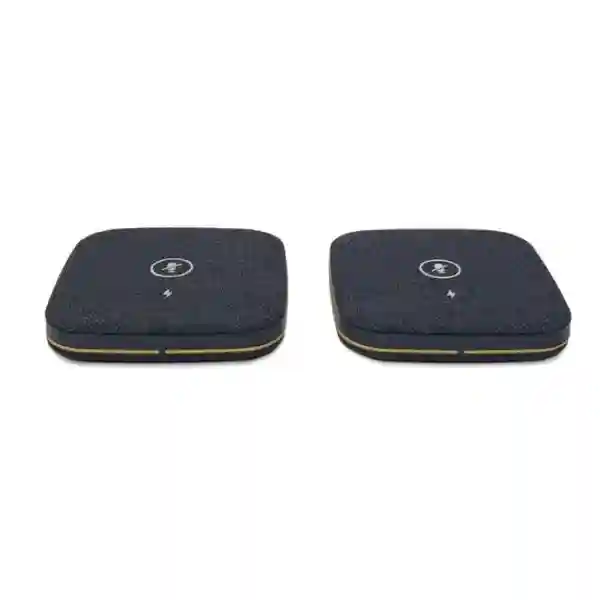
Yealink CPW65 Wireless Expansion Microphone for Enterprise Conference Rooms
The Yealink CPW65 is a pair of compact wireless DECT expansion microphones engineered to widen voice pickup around compatible Yealink conference-room systems. Its primary role is straightforward: place microphone coverage closer to participants who sit beyond the comfortable pickup area of the central conferencing device, without running audio cables across the meeting table. For organizations equipping boardrooms, management meeting spaces, training rooms and collaboration areas, that flexibility can improve room usability while keeping the table visually clean and easier to reconfigure.
Each CPW65 contains three microphones and provides omnidirectional 360-degree pickup within a radius of approximately 3 metres. The microphones communicate wirelessly with the supported host system using DECT technology. Yealink positions the CPW65 primarily as an expansion accessory for the CP965 conference phone, where a pair can extend coverage to participants positioned away from the main unit. The microphones also include capacitive mute controls, full-duplex operation, echo cancellation and a rechargeable battery, so the room can operate without a microphone cable at every seat.
Procurement should treat the CPW65 as part of a conferencing system rather than as a universal standalone USB microphone. Host compatibility, firmware, room dimensions and the intended meeting topology should be validated before purchase. This is especially important when a project mixes different Yealink room platforms or plans to reuse accessories across several generations of conferencing equipment. FourTeck can review the proposed host device and room requirements before quotation, helping the buyer order the correct accessory set for the intended deployment.
For Uganda projects, quotations can be prepared for single meeting rooms or multi-site rollouts. Share the host conference device, number of rooms, approximate table dimensions, participant capacity and delivery destination. That information helps establish whether the CPW65 is the appropriate expansion option and whether any additional conference-phone, power, mounting or connectivity items should be included.
Instant Specifications & Procurement Fact Rail
Yealink CPW65
Wireless DECT expansion microphone pair
360°, 3 m radius per microphone
1500 mAh, up to 13-hour talk time
Yealink CP965
Project pricing on request
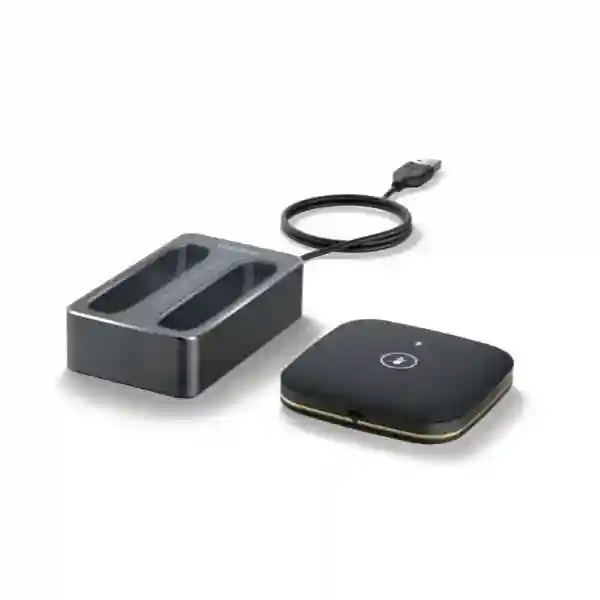
The CPW65 package is designed around two wireless microphone units, a charging cradle, a short Micro USB charging cable and quick-start documentation. The microphones use rechargeable batteries rather than permanent table cabling. The published dimensions are 78.59 × 78.59 × 15.3 mm for each microphone and 100 × 60 × 25.8 mm for the charging cradle. Yealink lists operating humidity at 10–90% and storage temperature from -20°C to 60°C. Regional radio variants use different DECT frequency bands, so the correct market version should be confirmed as part of the quotation. Warranty terms should likewise be stated on the commercial quotation because project, distributor and regional conditions can vary.
Operational Product Architecture & Overview
Conference-room audio problems are frequently caused not by the meeting platform itself but by geometry. A central conference phone may be acoustically capable, yet long tables, U-shaped layouts, furniture, room reverberation and participant distance can make voices at the far end sound less consistent. The CPW65 addresses this physical problem by moving additional pickup points nearer to speakers. Rather than asking every participant to lean toward a central device, the pair can be positioned where conversational activity actually occurs.
At the hardware level, each CPW65 uses a three-microphone arrangement for omnidirectional capture. The device is designed for 360-degree pickup within a 10-foot, or approximately 3-metre, radius. In practical planning, that specification should not be interpreted as a promise that every room within that geometric radius will sound identical. Ceiling height, reflective glass, HVAC noise, speaker volume, room partitions and table materials all influence intelligibility. A professional layout therefore uses the published pickup radius as a planning boundary and then positions microphones to minimize excessive distance and obstructions.
The wireless link is based on DECT, which separates microphone placement from a physical audio cable. This can be valuable in executive boardrooms where exposed wiring is undesirable, in multipurpose rooms where tables move frequently, and in leased offices where permanent cabling may be restricted. The CPW65 is not simply a generic wireless microphone, however. It forms part of a compatible Yealink conferencing architecture, and the host-device relationship matters. The CP965 is the central reference platform for CPW65 deployment, and compatibility should be checked carefully when a buyer proposes other Yealink room systems.
Operationally, the microphone has capacitive mute control and status indication so participants can manage privacy locally. Full-duplex technology supports natural two-way conversation, while echo cancellation helps reduce the disruptive return of far-end audio into the microphone path. These capabilities matter in real meetings because the objective is not merely to collect sound; it is to preserve conversational rhythm when multiple people speak and respond naturally.
Power architecture is equally practical. Each microphone contains a 1500 mAh battery. Yealink publishes up to 13 hours of talk time and 11 days of standby time, giving a typical meeting room enough endurance for a working day of sessions when batteries are maintained correctly. The place-and-charge cradle reduces the need to orient each microphone in a precise direction during charging. IT teams should still incorporate charging into room-closing procedures, because wireless convenience depends on disciplined battery management.
The exterior uses black fabric coordinated with the CP965 design and is described by Yealink as resistant to water, grease and stains. This does not turn the microphone into an outdoor or industrial device; rather, it helps the accessory tolerate normal boardroom handling. Buyers should keep liquids away from charging electronics and maintain the device according to manufacturer guidance.
Enterprise Business Outcomes & Value Analysis
The primary value is better placement of pickup points around a larger meeting table. A participant who sits far from the central conference phone can have a microphone positioned closer to the normal speaking position. This can reduce the operational temptation to raise voices, pass a device around the room or rearrange seats around technology. The benefit is especially relevant to formal board meetings where every participant should be able to contribute from an assigned seat.
A dedicated expansion accessory avoids improvised audio arrangements built from unrelated consumer microphones. When specified with a supported host, the CPW65 becomes part of the conference-room audio path, with local mute controls, battery status and a purpose-built wireless connection. Reliability still depends on correct pairing, charging and firmware practices, so those tasks should be included in room support procedures.
Organizations often discover that a conference phone suitable for a medium room needs additional coverage when deployed on a longer table. A pair of CPW65 microphones provides a way to extend the usable acoustic footprint without immediately redesigning the room around a permanently installed ceiling microphone system. It is therefore useful when standardized conference-room equipment must accommodate more than one furniture layout.
Capacitive mute control gives users a direct way to mute microphone pickup. For regulated or confidential environments, this is an operational control rather than a substitute for wider information-security policy. Teams should still manage room access, platform authentication, recording permissions and endpoint configuration according to organizational policy.
Wireless tabletop microphones reduce cable clutter and make room reset easier. The charging cradle provides a defined home for the microphones between sessions. Clear operating procedures can instruct staff to return both units to the cradle after use, check battery state before high-profile meetings and avoid moving microphones to unrelated rooms where they may become difficult to track.
Where the existing Yealink host platform is compatible, expansion microphones may offer a focused way to address pickup coverage without replacing the entire conference system. Procurement should compare this accessory-based approach with the cost of a new room kit, installed DSP architecture or ceiling array. The right choice depends on room size, expected lifespan and integration requirements rather than purchase price alone.
Key Hardware & Software Highlights
Three-Microphone Array
Three built-in microphones provide omnidirectional capture around each CPW65. This arrangement is intended to collect speech from multiple seating directions instead of requiring users to face a narrow microphone axis.
DECT Wireless Link
DECT connectivity lets the microphones communicate with the supported conferencing host without a tabletop audio cable. Regional frequency variants must be matched to the deployment market and regulatory requirements.
Capacitive Mute Control
A touch-based mute interface gives meeting participants direct control of microphone state. Status LEDs assist with common states such as active calls, mute, registration and out-of-range conditions.
Rechargeable Power
The 1500 mAh battery supports extended meeting operation, with published endurance of up to 13 hours talk time and 11 days standby. Actual endurance can vary with age, charging habits and operating conditions.
Place-and-Charge Cradle
The charging cradle is designed for easy placement without demanding precise directional alignment, encouraging users to return the microphones to their charging location between meetings.
Conference Audio Functions
Optimal HD voice, full-duplex operation and echo cancellation are intended to maintain natural conversation when the CPW65 is used in its supported conferencing environment.
Technical Specifications Ledger
| Specification | Yealink CPW65 Detail | Procurement Meaning |
|---|---|---|
| Product class | Wireless DECT expansion microphone pair | Accessory requiring a compatible host conferencing system |
| Microphones | 3 built-in microphones per unit | Omnidirectional tabletop voice collection |
| Pickup range | 10 ft / 3 m radius, 360° | Use as a room-planning guide; acoustics affect results |
| Wireless distance | Yealink CPW65 datasheet states up to 20 m with CP965 | Validate room layout and host documentation for the intended firmware |
| Battery | 1500 mAh | Rechargeable wireless operation |
| Talk time | Up to 13 hours | Suitable for extended working-day meeting schedules when charged |
| Standby | Up to 11 days | Still recommended to return units to cradle after use |
| Microphone dimensions | 78.59 × 78.59 × 15.3 mm | Compact tabletop footprint |
| Cradle dimensions | 100 × 60 × 25.8 mm | Allow accessible charging space near room power |
| Operating humidity | 10–90% | Indoor enterprise deployment |
| Storage temperature | -20°C to 60°C | Observe controlled storage and shipping practices |
| DECT Europe | 1880–1900 MHz | Regional version selection matters |
| DECT US | 1920–1930 MHz | Do not substitute regional radio variants without validation |
| Package | 2 microphones, charging cradle, 0.3 m Micro USB cable, quick-start guide | Confirm local power/USB charging provision where required |
Specification values should be read together with the host-system documentation. Conference-room ecosystems evolve through firmware and accessory revisions, and a project may encounter host devices purchased at different times. For this reason, a bill of materials should identify not only the CPW65 but also the exact host model and deployment mode. Where a system depends on a particular firmware level, staging should include a compatibility check before equipment is dispatched to site.
Configuration & Sizing Worksheet
Step 1 — Measure the Conversation Area
Record the usable table length and width, not merely the room dimensions. Mark the normal seating positions and identify participants who are farthest from the central CP965. The CPW65 provides a published 3-metre pickup radius per microphone, but placement should favor normal speaking positions rather than the theoretical edge of coverage. If the room has strong reverberation or continuous HVAC noise, plan conservatively and test the final placement.
Step 2 — Confirm the Host Platform
Document the exact Yealink host model, hardware generation, firmware and meeting mode. The CPW65 is designed for compatible Yealink conferencing systems and is prominently specified with the CP965. Do not assume that a wireless microphone supported by one MeetingBar, MeetingBoard or UVC architecture will automatically work with another. Compatibility matrices and firmware notes should be checked during project validation.
Step 3 — Plan Charging and Daily Handling
Choose a stable location for the charging cradle near a suitable power source. The room operating procedure should require both microphones to be returned after meetings. For executive rooms with back-to-back sessions, assign facilities or IT staff to verify battery condition before important meetings. Battery endurance is generous, but unmanaged accessories can still be left uncharged after being moved between rooms.
Step 4 — Validate Radio and Regional Version
DECT frequency allocations differ by market. Procurement teams buying for Uganda or for a regional multi-country deployment should ensure that each shipment contains the correct approved variant for its destination. Avoid transferring radio accessories between regions simply because the physical enclosure looks identical.
Step 5 — Review Licensing and Services
The CPW65 itself is an audio accessory rather than a meeting-platform subscription. However, the complete conferencing solution may depend on SIP services, hosted PBX licensing, Microsoft Teams, Zoom or another collaboration platform associated with the host device. Include those platform requirements in the overall room budget. The microphone purchase should not be confused with service licensing.
Step 6 — Prepare the Quote Request
For an accurate commercial proposal, provide the quantity of rooms, host model, number of CPW65 pairs, delivery city, desired project schedule and any installation or staging requirement. For a new room, also provide expected participant count, table shape, network availability and collaboration platform. This lets the supplier distinguish a simple accessory requirement from a complete conference-room deployment.
Deployment Scenarios & Industry Use Cases
Large Enterprise & Multi-Site Networks
A large organization may standardize conference rooms around the CP965 and then encounter different table lengths across headquarters, branches and project offices. The CPW65 can be included in the standard room bill of materials for spaces where additional pickup points are required. Standardization simplifies user training because participants encounter the same mute behavior and charging process across sites. Asset registers should record each microphone pair with its assigned room to reduce loss when furniture or equipment is moved.
Financial & Banking Institutions
Banks and financial institutions often conduct meetings involving management, risk, audit, compliance and external stakeholders. Clear voice pickup is important when decisions depend on precise discussion. Wireless microphones can help maintain a formal boardroom layout without routing temporary cables across premium furniture. Procurement should combine the audio design with organizational policies for call security, meeting recording, access control and approved collaboration services.
Educational & Campus Networks
Universities, training centers and administrative campuses use meeting rooms for faculty coordination, remote collaboration and management sessions. Furniture may be reconfigured more frequently than in a fixed corporate boardroom. Wireless expansion microphones can accommodate changing seating arrangements while avoiding a new cable path each time the room changes. IT should designate charging responsibility because shared spaces experience higher accessory movement than executive rooms.
Government & Public-Sector Procurement
Government deployments often require formal bills of materials, clear model identification, regional compliance and predictable warranty handling. A CPW65 procurement should identify the compatible host, required quantity and intended room. Where tender documentation asks for technical compliance, the published microphone count, pickup radius, battery specification, physical dimensions and package contents can be mapped to the requirement. Any unconfirmed requirement should be clarified rather than inferred from a related Yealink model.
Hotels, Healthcare and Professional Services
Administrative meeting rooms in hospitality, healthcare and professional-service organizations can also benefit from expanded voice coverage. The CPW65 is intended for controlled indoor conferencing rather than clinical, outdoor or industrial use. In healthcare environments, it should remain in normal administrative meeting spaces unless the organization’s infection-control and equipment policies specifically approve its use elsewhere.
Technical Deep Dive 1: Microphone Processing & Wireless Architecture
The CPW65 architecture is purpose-built around distributed tabletop capture. Three microphone elements inside each compact unit collect speech from around the device, supporting a 360-degree pickup pattern. This matters because meeting participants do not sit on a single axis: they turn toward colleagues, documents and displays while speaking. An omnidirectional expansion microphone is therefore easier to position in the center of a seating zone than a narrow directional microphone that demands careful aiming.
Full-duplex conferencing allows both ends of a conversation to speak without the severe clipping associated with older half-duplex speakerphone behavior. Echo cancellation is part of the audio design, helping separate far-end loudspeaker content from local microphone pickup. The final acoustic result remains a system property: host processing, speaker volume, room reverberation and network conditions all contribute. The CPW65 should therefore be assessed as one component in the end-to-end voice path.
DECT provides the wireless transport between microphone and supported host. For room designers, the important advantage is deterministic placement freedom: microphones can be moved to useful positions on the table without extending an audio cable. The published connection range should be treated as a maximum under suitable conditions, not as a reason to place microphones unnecessarily far from the host. Keeping the layout compact and within the intended meeting area generally makes room operation easier.
Technical Deep Dive 2: Host Ecosystem, Firmware & Operational Control
Unlike a generic USB microphone, the CPW65 participates in a Yealink host ecosystem. This distinction is central to procurement. A buyer may see the same brand on several conferencing devices and assume accessories are interchangeable, but compatibility is model-specific and can depend on firmware. The CP965 is the principal host identified for the CPW65, while Yealink compatibility documentation shows that support across other room products is not universal. A project that includes AVHub or selected UVC systems may require specific firmware and should be validated against current Yealink documentation.
Local LEDs communicate operating states such as active call, mute, registration and out-of-range conditions. These indicators are valuable during support because they give technicians a first diagnostic signal before deeper investigation. If a microphone appears unavailable, support staff can check charge state, pairing, host status, distance and firmware rather than immediately replacing hardware.
For fleet management, the host conference platform is normally the point where administrators apply configuration and firmware policy. The expansion microphone itself should be documented as an accessory associated with a specific room. When a host is upgraded, replaced or reset, the room acceptance test should include both CPW65 units, mute behavior, pickup from representative seats and charging operation.
Technical Deep Dive 3: Availability, Redundancy & Meeting Continuity
The CPW65 is not a high-availability network appliance with dual power supplies; continuity is achieved through operational design. The first control is battery discipline. A microphone that is returned to its cradle after meetings is more likely to be available for the next session. The second control is asset discipline: keep each pair assigned to its room and avoid informal borrowing between rooms unless the support team tracks the move.
The third control is graceful room design. Because the CP965 includes its own microphone system, the room should be tested to understand how usable it remains if an expansion microphone is temporarily unavailable. This does not mean the expansion units are unnecessary; rather, it gives the support team a documented fallback for an urgent meeting while a battery is charged or an accessory issue is investigated.
For critical boardrooms, organizations may hold a spare approved accessory or maintain a service agreement with replacement procedures. The economic decision depends on meeting criticality and replacement lead time. A spare can be justified where executive, regulatory or customer meetings cannot easily be moved. For ordinary rooms, centralized spares may be more cost-effective than one spare pair per room.
Pre-Purchase Buyer Gap Checklist
Is the CPW65 a standalone conference microphone? No. It should be purchased as a compatible expansion accessory within a supported Yealink conferencing architecture. Confirm the host model before ordering.
How many units are supplied? Yealink describes the CPW65 as a pair, and the published package content lists two wireless expansion microphones plus the charging cradle and charging cable. Confirm the exact commercial pack on the supplier quotation.
Will it work with every Yealink MeetingBar or MeetingBoard? Compatibility is not universal. Current compatibility documentation should be checked for the exact host, firmware and deployment mode. Do not select an accessory solely by brand.
Are there hidden platform subscriptions? The microphone is an accessory, but the wider room may use licensed collaboration or telephony services. Budget the CPW65 separately from Microsoft Teams, Zoom, SIP trunking, hosted PBX or other services associated with the host system.
What about wireless range? Yealink’s CPW65 datasheet states a largest distance of 20 metres between CP965 and CPW65. Other CP965 documentation has cited different maximum figures in specific contexts, so the deployment should follow the current host and accessory documentation for the actual firmware. In most boardrooms, optimal placement is driven by participant pickup geometry rather than maximum radio distance.
Does the microphone need network cabling? The CPW65 uses wireless DECT communication to the supported host and rechargeable battery power, so it does not require an Ethernet cable at each microphone position.
What physical clearance is needed? Each microphone is only 78.59 mm square and 15.3 mm high, but the room also needs an accessible location for the 100 × 60 × 25.8 mm charging cradle. Avoid placing the cradle where cables will be strained or where liquids are routinely served.
How should lifecycle risk be managed? Record the host model, firmware baseline and accessory assignment. Before expanding an older installed base, validate that currently supplied CPW65 stock remains supported with the installed hosts. For a new standardized rollout, consider buying accessories within the same project window to reduce mixed-generation complexity.
What should be tested before acceptance? Test both microphones from representative seats, local mute, host recognition, wireless stability, battery charging and a real remote call. Acceptance should be based on the room’s actual acoustic behavior, not only on successful pairing.
Uganda Procurement & Delivery Logistics
FourTeck can prepare a Uganda quotation for Yealink CPW65 requirements ranging from a single boardroom accessory set to a multi-site conferencing project. The quotation process is most efficient when the buyer provides the exact host device, quantity, delivery location and required schedule. If the host is already installed, include its model and, where possible, firmware information. For a new room, provide participant capacity and table dimensions so the accessory requirement can be considered alongside the main conferencing platform.
Order processing can include bill-of-materials review, regional variant verification and coordination of compatible Yealink components. Delivery timing depends on stock position, project quantity, import requirements and destination. Rather than relying on a generic lead-time promise, procurement teams should request a dated commercial quotation that states the expected supply position for the specific quantity required.
Pre-configuration support can be useful when the CPW65 is delivered as part of a larger conference-room package. Where scope permits, host firmware, accessory compatibility and basic staging can be reviewed before dispatch. Site teams should still perform final room acceptance because wireless conditions and acoustics can only be fully assessed in the actual installation environment.
Warranty handling should follow the terms stated on the project quotation and applicable manufacturer/distributor process. Keep serial information, purchase documents and installation records. If a fault occurs, structured diagnostics—charge, pairing, host firmware, range and physical condition—can distinguish configuration issues from hardware failure and reduce unnecessary replacement delays.
Uganda Coverage Matrix
Corporate headquarters, banks, NGOs, government offices, hotels and enterprise meeting-room deployments.
Hospitality, aviation-linked businesses, institutional offices and regional conference facilities.
Manufacturing, education, hospitality and branch-office conferencing requirements.
Regional businesses, healthcare administration, education and distributed enterprise sites.
Institutional, development-sector, education and multi-site organization requirements.
For projects outside these hubs, delivery planning can be incorporated into the quotation. Provide the exact destination and any site-access restrictions. Multi-location orders should identify quantities by site so packing, dispatch and asset assignment can be coordinated before shipment.
Cross-Border & Regional Supply Chains
Organizations operating across East Africa, the Gulf and broader African markets may require consistent Yealink room standards in multiple countries. FourTeck regional channels can support project coordination while keeping destination-specific radio variants, logistics and commercial terms visible. For Uganda requirements visit FourTeck Uganda; Kenya projects can be coordinated through FourTeck Kenya; broader continental requirements can reference FourTeck Africa. UAE requirements are supported through FourTeck UAE, while Kuwait projects can use FourTeck Kuwait.
Cross-border standardization should never ignore local radio and warranty considerations. The same CPW65 model family may have market-specific DECT frequency variants. A regional bill of materials should therefore allocate equipment by destination rather than pooling all units indiscriminately. Commercial teams should also identify importer-of-record, tax, delivery and warranty responsibilities for each destination before purchase-order release.
Related Yealink Solutions & Internal Paths
The CPW65 normally belongs to a wider meeting-room bill of materials. Buyers planning a new deployment can review the Yealink solutions portfolio for compatible conference devices and communications endpoints. The central host for many CPW65 projects is the Yealink CP965 conference phone; where the room requires a different architecture, the accessory choice should be reassessed rather than carried over automatically.
Organizations standardizing voice communications may also need IP phones for offices and reception desks, video conferencing solutions for collaboration rooms, and project consultation for bill-of-materials validation. Internal category structures can change, so buyers who do not find the required model should use the contact page with the exact Yealink part number and required quantity.
For mixed room estates, avoid selecting microphones independently from the host. Yealink offers several microphone families for different systems. A compatibility-led design prevents an apparently similar accessory from arriving on site only to discover that it cannot pair with the installed platform.
FourTeck Technical Service Capabilities
A conferencing accessory purchase becomes easier to deploy when the technical assumptions are checked before shipment. FourTeck project support can begin with engineering validation of the proposed host and microphone combination. The objective is to ensure that the requested CPW65 units correspond to the conferencing platform named in the project and that the quantity makes sense for the room plan.
Bill-of-materials verification is particularly valuable for new conference rooms because the microphone is only one element. The host conference phone, network connectivity, PoE or power requirements, collaboration service, display and any video components may need to work together. A structured bill reduces last-minute accessory gaps during installation.
Where included in project scope, staging can cover host firmware review, basic accessory pairing and pre-shipment checks. Firmware should be selected according to the approved deployment rather than upgraded casually without considering platform compatibility. Post-sales support can assist with structured troubleshooting, including charge status, pairing, range, firmware and room-level behavior. Hardware warranty cases can then be escalated with clearer evidence if diagnostics indicate a physical fault.
For larger rollouts, asset schedules can map microphone pairs to room locations. This small administrative step improves support because technicians know which accessories belong to which host and can avoid creating pairing confusion through untracked swaps.
Extended Technical FAQ
1. What is the Yealink CPW65 used for?
The CPW65 is a wireless expansion microphone accessory used to extend voice pickup around compatible Yealink conference-room systems. Its most direct application is with the Yealink CP965 conference phone. Each unit contains three microphones and provides 360-degree pickup within an approximately 3-metre radius. The package contains two microphones, allowing them to be placed nearer participants seated away from the central conference phone. This is useful on longer boardroom tables and in rooms where cable-free microphone placement is preferred. It should not be treated as a generic standalone microphone for arbitrary computers or conferencing hardware.
2. Is the CPW65 compatible with every Yealink conferencing product?
No. Compatibility is model-specific. The CPW65 is prominently designed for the CP965, while Yealink compatibility information shows that support across other room products varies and may depend on firmware. Some Yealink MeetingBar and MeetingBoard systems use different microphone families. Before ordering, provide the exact host model and deployment mode. For existing systems, firmware information is also useful. This prevents a common procurement error: assuming that accessories carrying the same manufacturer name are interchangeable. A supplier should validate the intended host rather than relying only on physical connector appearance or product-family branding.
3. How far can each CPW65 pick up a speaker?
Yealink specifies 360-degree voice pickup within a radius of 10 feet, approximately 3 metres, for each CPW65. This is a useful design figure, but real room acoustics matter. A participant speaking quietly in a reflective glass room with strong HVAC noise may not sound the same as a participant at the same distance in a treated boardroom. Place the microphones close to the primary seating zones rather than using the outer edge of the published radius as the default target. Final acceptance should include test calls from representative seats at normal speaking volume.
4. How long does the CPW65 battery last?
The CPW65 uses a 1500 mAh rechargeable battery. Yealink publishes up to 13 hours of talk time and up to 11 days of standby time. These figures make the microphones suitable for extended business meeting schedules when they begin the day properly charged. Battery endurance can change with battery age, temperature, usage and charging behavior, so organizations should not build room procedures around the absolute maximum. Returning both microphones to the charging cradle after use is the simplest operating practice. Critical rooms should include a pre-meeting battery check as part of their readiness routine.
5. Does CPW65 require Ethernet or a cable across the table?
No Ethernet connection is required at the CPW65 microphone position. The accessory communicates wirelessly with its supported host using DECT technology and operates from its internal rechargeable battery. This is one of its main practical benefits: microphone positions can be selected according to participant seating rather than the availability of a table cable outlet. The charging cradle still needs an appropriate charging connection, so room designers should reserve a convenient location for it. The central host conference device has its own network and power requirements, which must be planned separately.
6. Are software licenses required for the CPW65?
The CPW65 is a hardware audio accessory and is not itself a collaboration-service subscription. However, the complete meeting-room solution may depend on services or licenses used by the host platform. For example, a room may use SIP telephony, a hosted PBX, Microsoft Teams, Zoom or another collaboration environment. Those service costs should be included in the overall project budget where applicable. When comparing quotations, separate the microphone hardware cost from the host device, platform subscriptions, installation, network services and support. This makes total project cost easier to understand and avoids attributing unrelated licensing to the microphone.
7. What comes in the CPW65 package?
Yealink’s published package content lists two CP Wireless Expansion Microphones, one charging cradle, a 0.3-metre Micro USB cable and a quick-start guide. Buyers should confirm the commercial package and any required local charging power provision on the supplier quotation, especially for multi-country projects. The presence of a charging cable does not necessarily mean every possible power adapter or site-specific power accessory is included. Recording package contents at goods receipt is also useful because the two microphones and cradle should remain together as a room set for easier asset management and support.
8. How is warranty or replacement handled in Uganda?
Warranty should be confirmed on the commercial quotation because terms can depend on the supply channel, project and regional policy. Keep the purchase invoice, serial information and deployment record. If a microphone appears faulty, first verify charging, host compatibility, pairing, firmware, wireless range and physical condition. LED states can help identify registration, mute or out-of-range conditions. If diagnostics indicate hardware failure, the supplier can use the purchase and diagnostic information to guide the applicable warranty process. For mission-critical rooms, organizations may choose to hold an approved spare rather than rely solely on replacement lead time.
9. Can FourTeck help with configuration and room sizing?
Yes, configuration guidance can be incorporated into a project scope. For a useful review, provide the host model, room dimensions, table dimensions, expected participant count, collaboration platform and number of rooms. The published 3-metre pickup radius can then be considered against the seating plan. For existing installations, include the host firmware if available. Configuration support may include compatibility review, bill-of-materials validation and basic staging. Final acoustic acceptance should still be performed on site because room materials, ambient noise and furniture arrangement affect the result in ways that cannot be determined from a product datasheet alone.
10. What should procurement confirm before issuing a purchase order?
Confirm five items: exact CPW65 model and regional radio variant, compatible host model, required quantity of microphone pairs, delivery destination and warranty terms. For an existing room, verify that the installed host firmware supports the planned accessory configuration. For a new room, confirm the complete bill of materials rather than buying the microphone in isolation. Also document who will install, pair and test the units. A simple acceptance checklist should cover charging, host registration, mute operation, pickup from representative seats and a live remote call. These checks turn a product purchase into a deployable room solution.
Request a Yealink CPW65 Procurement Quote
For a reliable quotation, send the number of CPW65 pairs required, the Yealink host model, the number of conference rooms and the Uganda delivery location. If you are upgrading an existing CP965 room, include the current system details so compatibility can be checked before order processing. For new boardrooms, share the table size, participant capacity and collaboration platform so the wider room bill of materials can be reviewed.
FourTeck can support procurement planning for Kampala, Entebbe, Jinja, Mbarara, Gulu and other Uganda destinations, as well as coordinated regional requirements. Commercial availability, delivery schedule and warranty terms should be confirmed on the project quotation. This provides procurement teams with a documented basis for approval rather than relying on generic availability assumptions.

Reviews
There are no reviews yet.