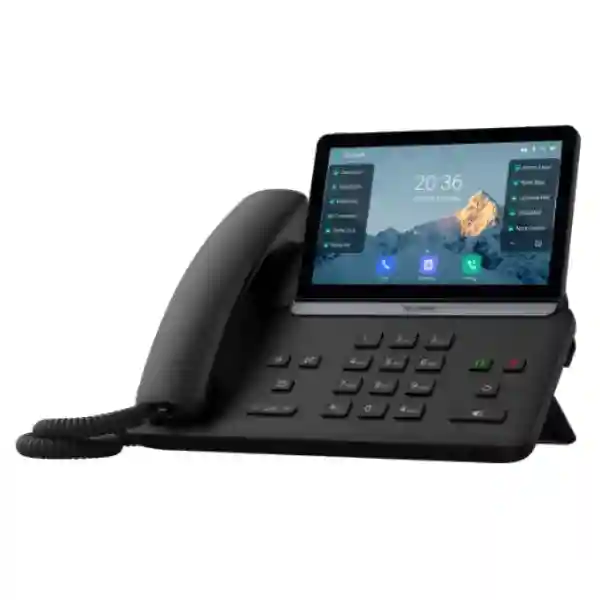
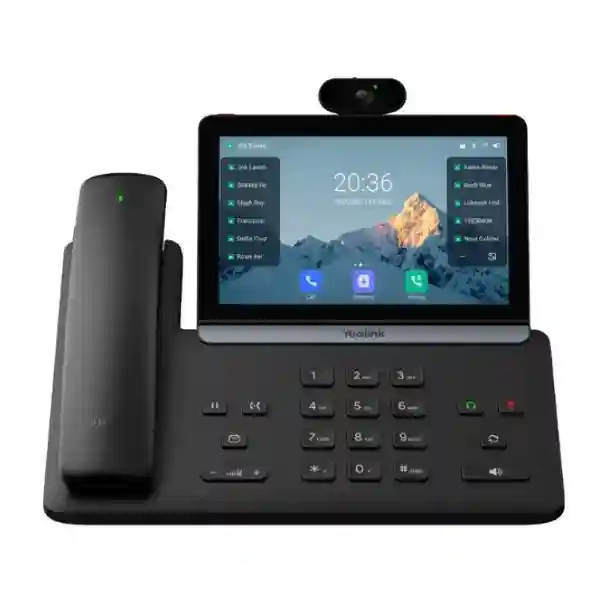
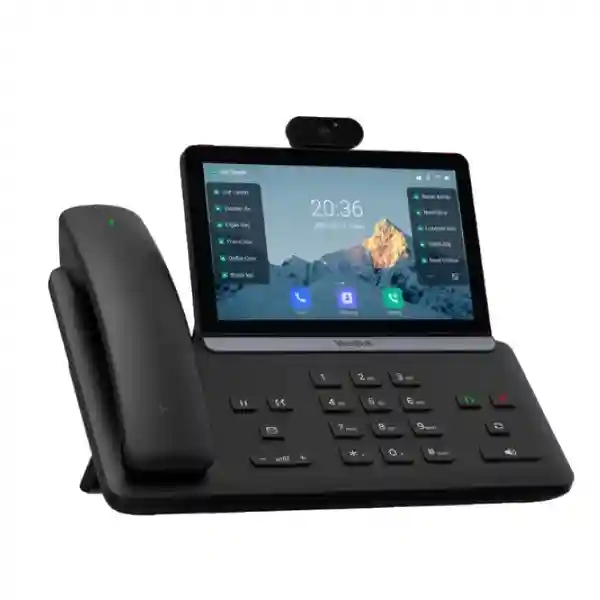
Yealink Dealer Entebbe – Business IP Phones, UC & Collaboration Solutions
Fourteck provides a practical procurement route for organizations seeking Yealink communication equipment in Entebbe, Uganda. The portfolio spans SIP desk phones, cordless DECT systems, professional headsets, conference endpoints, Microsoft Teams and Zoom-oriented devices, video collaboration equipment and supporting accessories. The purpose of this page is to help business buyers move from a broad requirement such as “we need Yealink phones” to a deployment-ready bill of materials that reflects user roles, network readiness, communication platform, room size, mobility requirements and rollout schedule.
Business communication purchases frequently fail at the detail level. A phone can be technically capable yet still be unsuitable because the user needs more programmable keys, integrated Wi-Fi, Bluetooth, a different headset connection, an expansion module or a specific provisioning method. A conference-room endpoint can look appropriate on paper but be mismatched to room dimensions, display arrangement or collaboration platform. Fourteck therefore encourages buyers to identify the operating requirement first and select the model second. This approach is especially useful for hotels, schools, clinics, professional offices, logistics operations, financial teams, government departments and organizations around Entebbe that are refreshing older telephony estates or moving toward SIP and cloud-based communications.
Yealink maintains broad product families for office voice, mobility and collaboration. Current procurement should always confirm exact model status, firmware, regional package, included accessories and platform compatibility before purchase. Fourteck can assist with this validation and prepare a quotation aligned to quantity and delivery requirements.
Instant Procurement Facts
IP phones, DECT, headsets, conferencing and video collaboration
SMB, enterprise, hospitality, education, healthcare and public sector
Model-dependent Ethernet, PoE, USB, Bluetooth, Wi-Fi and DECT
Quotation and stock confirmation required
Confirm model, source and regional warranty terms on quotation
A dealer-level procurement request differs from buying a single fixed model because the correct specification changes by endpoint. Entry desk phones can prioritize affordability and straightforward SIP calling; executive phones may prioritize larger displays, more keys and wireless connectivity; reception users may require expansion modules; roaming personnel may need DECT; and meeting rooms require sizing around room geometry, participants and platform. For this reason, power supplies, PoE requirements, handset counts, base stations, repeaters, headsets, cables, wall mounts and licensing should be checked as one bill of materials rather than treated as afterthoughts.
Operational Architecture and Portfolio Overview
Yealink endpoints generally sit at the user edge of a business communications environment. A SIP desk phone connects through the LAN to an IP PBX, hosted PBX or compatible calling platform. Depending on the selected model, the endpoint may receive power through Power over Ethernet or use a compatible external power adapter. The device registers to the communication service, negotiates supported voice functions and provides the user interface for calls, contacts, transfer, hold, conferencing and other features exposed by the platform. In a properly planned network, voice traffic is supported by appropriate switching, VLAN design, DHCP and DNS services, time synchronization, quality-of-service policy and reliable internet or WAN connectivity where hosted services are used.
DECT deployments add a mobility layer. Instead of tying every user to a desk, compatible handsets communicate with a DECT base or multi-cell environment, while the base system interfaces with the IP communications infrastructure. This is valuable for hotels, warehouses, clinics, campuses and operational teams that move between work areas. The engineering question is not simply how many handsets are needed; buyers should also consider radio coverage, building materials, roaming expectations, concurrent call demand, base placement and expansion strategy.
Headsets add another layer of user experience. Call-heavy teams benefit from matching wearing style, wired or wireless preference, device interfaces and acoustic environment to the role. Meeting-room products require even more careful planning because camera field of view, microphone pickup, speaker coverage, room acoustics, table layout, display placement and collaboration platform all affect the result. A boardroom should not be sized like a small huddle room, and a simple USB video bar should not automatically be assumed to replace a larger-room architecture.
Procurement managers usually begin researching a dealer because they face one of several operational pressures: an aging phone estate, new office opening, PBX migration, cloud calling adoption, inconsistent devices across branches, user complaints about audio or usability, increased hybrid meetings, expansion of reception and customer-service teams, or a requirement to standardize equipment. The most useful response is therefore a role-based design. Count basic users, advanced users, receptionists, mobile users, call-intensive users and meeting spaces separately. Then map each group to an appropriate product family and verify platform support.
Network readiness is equally important. Gigabit pass-through may matter where a workstation shares the phone’s network drop. PoE budgets matter when dozens or hundreds of endpoints are powered by access switches. Voice VLAN configuration can simplify segmentation, while QoS can help protect real-time traffic during periods of congestion. Remote provisioning can reduce deployment effort when many endpoints must be configured consistently. Security planning should include administrator credential policy, firmware governance, encrypted signaling/media where supported by the complete platform, and controlled access to device management interfaces.
For Entebbe buyers, the practical objective is to receive a quotation that accounts for the whole environment. Fourteck can work from an exact model request or from a functional requirement. When the model is already specified, the team can validate package and accessory requirements. When the model is not known, the buyer can provide extension count, user roles, PBX or cloud platform, network details, room requirements and budget range so that a suitable shortlist can be prepared.
Enterprise Business Outcomes and Value Analysis
Key Hardware and Software Highlights
The Yealink portfolio covers multiple hardware tiers rather than one universal specification. Buyers can choose from compact desk phones, feature-rich executive endpoints, cordless systems, conference devices, professional headsets and room collaboration products. Physical interfaces may include Ethernet, USB, headset ports and model-dependent wireless connectivity. Some desk phones support expansion modules for users who need additional programmable keys. DECT systems combine bases and handsets for mobile voice. Video products can integrate cameras, microphones, speakers, touch controllers or room compute elements depending on architecture.
Software capabilities likewise depend on model and platform. SIP endpoints can expose account registration, programmable keys, directories, call history, transfer and conference functions, while enterprise management workflows can include provisioning and firmware maintenance. Teams- or Zoom-oriented products should be selected specifically against the intended service and certification requirements. Buyers should confirm whether a device is delivered with the required regional firmware and whether any service-side licensing is supplied separately by the communications platform provider.
The operational outcome matters more than the feature count. Dual-port Gigabit Ethernet can be useful when a PC shares a desk network connection. PoE can simplify cabling by avoiding local power bricks where the switching environment supports adequate power. Bluetooth can support selected wireless accessories. Wi-Fi can be valuable where cabling constraints exist, although wired Ethernet is often preferred for predictable fixed-desk connectivity. USB interfaces can support compatible accessories. Expansion modules can make busy-line handling easier for reception and administrative roles. Each feature should therefore be tied to a documented user need.
Technical Specifications Ledger
| Area | Portfolio Guidance | Procurement Check |
|---|---|---|
| Voice endpoints | SIP desk phone families from basic to advanced | Accounts, display, keys, Ethernet speed, PoE |
| Mobility | DECT handsets, bases and multi-cell options | Coverage, concurrency, roaming, handset quantity |
| Headsets | Wired and wireless professional options | Connector, wearing style, call control compatibility |
| Conferencing | Audio and video collaboration families | Room size, platform, display and microphone plan |
| Network | Model-dependent Fast/Gigabit Ethernet and Wi-Fi | Switch ports, VLAN, QoS, cabling |
| Power | Model-dependent PoE or external adapter | PoE budget and included adapter status |
| Wireless | Bluetooth/Wi-Fi on selected products | Integrated versus accessory-dependent support |
| Dimensions | Varies by exact model | Verify desk, wall, rack or room clearance |
| Environment | Varies by product family | Check temperature/humidity limits for deployment site |
| Compliance | Model and regional package dependent | Request exact datasheet and regional conformity details |
Because “Yealink Dealer Entebbe” represents a portfolio procurement page, publishing a single throughput, dimension, power draw or environmental figure would be misleading. These values must be taken from the exact selected model. Fourteck can attach or reference the applicable model specification during quotation. This distinction is important when procurement documentation requires measurable acceptance criteria. A SIP-T3-series desk phone, an executive touchscreen phone, a DECT base, a wireless headset and a room video system are fundamentally different products and should not inherit generic technical numbers.
Configuration and Sizing Worksheet
1. Estimate workload and user roles
Begin with the number of users and separate them by function. Count basic extension users, managers, receptionists, call-heavy agents, roaming staff and meeting rooms. Record the number of simultaneous calls expected at busy periods. Identify whether users require one account or multiple registrations, dedicated line keys, shared lines, busy-lamp fields, call recording through the platform, wired or wireless headsets, or mobility away from the desk.
2. Assess the physical environment
Document desk space, wall-mount needs, meeting-room dimensions, cable routes and wireless coverage. For DECT, note walls, floors, concrete structures and areas where staff must maintain calls while moving. For video rooms, note seating distance, table length, display size and camera position. Environmental conditions should remain within the selected product’s published operating limits.
3. Verify power and cabling
Confirm the quantity and standard of Ethernet drops, switch port availability and PoE capacity. If PoE is not available, determine which devices require external adapters and whether those adapters are included. Check whether computers will share network connections through desk phones and whether Gigabit pass-through is required. Confirm UPS protection for switches and communication servers where continuity is important.
4. Confirm platform and licensing
Name the PBX, hosted voice service, Microsoft Teams environment, Zoom environment or other collaboration platform. Confirm required user licenses with the service provider. Endpoint purchase does not automatically imply that calling plans, SIP trunks, cloud subscriptions or third-party licenses are included. Ask for a compatibility check before approving large quantities.
5. Prepare the quotation request
Provide model preferences if known, quantities, delivery location, required date, platform, accessory list and any installation or pre-configuration requirement. Include company procurement details needed for a formal quotation. For multi-site projects, separate quantities by site so packing and rollout can be planned correctly.
Deployment Scenarios and Industry Use Cases
Large enterprise and multi-site networks
Enterprises often standardize two or three desk-phone tiers rather than one device for everyone. A cost-effective model can serve general users, a richer model can serve managers and supervisors, and a reception profile can use an endpoint with additional keys or expansion capability. Centralized templates can make configuration more consistent across Kampala, Entebbe, Jinja, Mbarara and Gulu branches. The design should also include WAN resilience, voice VLANs, QoS, directory integration and a clear firmware policy. Spare units can be kept for rapid replacement at critical sites.
Financial and banking environments
Financial organizations usually place emphasis on controlled configuration, predictable calling, user accountability and secure network practices. Endpoint selection should be coordinated with the institution’s approved PBX or unified communications architecture. Management access should be restricted, credentials controlled, firmware maintained and unnecessary services disabled according to internal policy. Reception, branch operations, contact teams and executives can require different endpoint classes. Procurement documentation should specify exact model numbers and approved firmware baselines.
Education and campus networks
Schools, universities and training institutions can combine fixed desk phones for administration with cordless mobility for operations, security or facilities teams. Large campuses need careful coverage planning for DECT or Wi-Fi-dependent devices. Classroom, administration and meeting spaces may also use video collaboration equipment. A phased rollout can reduce disruption by validating network readiness and user workflows in one building before expanding.
Government and public-sector procurement
Public-sector projects often require formal bills of materials, clear warranty terms, delivery schedules and acceptance criteria. The buyer should identify whether tender specifications refer to mandatory standards, interfaces, accessories, certificates or manufacturer documentation. Equivalent substitutions should not be assumed without approval. Fourteck can help structure a model-specific quotation and supporting technical information, while the procuring entity retains control over compliance evaluation and acceptance.
Hospitality, healthcare and logistics
Entebbe’s hospitality, healthcare, aviation-adjacent and logistics environments can have strong mobility needs. Hotels may require front-desk phones plus cordless devices for operations. Clinics may need reception, administration and mobile staff communication. Warehouses and logistics teams may need cordless coverage across working areas. These deployments benefit from coverage surveys, durable device selection where appropriate, clear charging arrangements and a plan for replacement batteries or accessories over the service life.
Technical Deep Dive: Endpoint Processing and Media Architecture
A business voice endpoint is a real-time network device. It must maintain registration with the communications platform, process signaling, encode and decode media, drive displays and keys, manage network interfaces and respond consistently to user actions. The exact processor and hardware architecture vary by model, so procurement should focus on supported functions and platform interoperability rather than assuming that processor clock speed alone predicts call quality. Audio performance is influenced by codec support, microphones, speakers, acoustic design, packet loss, jitter, latency and network configuration. Where wideband audio is required, confirm that both endpoint and calling path support compatible codecs.
Video endpoints add substantially more processing. Cameras capture and encode video, microphones capture room audio, speakers reproduce remote participants and the collaboration platform manages sessions and content. Room performance therefore depends on more than the endpoint. Lighting, acoustics, seating layout, display positioning and network bandwidth can materially affect the experience. Before purchasing a room kit, identify the target platform and room class and verify every required component.
Technical Deep Dive: Software, Firmware Security and Operational Control
Firmware governance is a core lifecycle responsibility. New devices should be checked against the organization’s approved version, and updates should be tested before broad deployment where operational continuity is important. Administrator credentials should be changed from defaults, management access limited to trusted networks and provisioning channels protected according to platform capabilities. Organizations using centralized provisioning should protect configuration files because they can contain sensitive account or service information.
Platform integration also needs disciplined change management. A firmware update can introduce improvements but may alter behavior with a PBX, headset or management tool. Large estates should maintain a representative test group before mass updates. Configuration templates should be version-controlled, and rollback procedures should be documented where the management platform supports them.
Technical Deep Dive: High Availability and Disaster Recovery
A desk phone by itself does not create high availability. Resilience is achieved across power, LAN, WAN, call control and service provider layers. PoE switches can be protected by UPS systems; access switching can be designed with appropriate redundancy; internet-dependent voice can use resilient connectivity; and PBX or cloud architectures can provide service continuity according to their design. Critical locations should document what happens when internet, power or a communications server fails.
Endpoint resilience can also be operational. Keep spare handsets or phones for critical desks, maintain configuration backups or provisioning templates and document replacement steps. For DECT systems, understand the effect of losing a base or manager component. For meeting rooms, keep essential cables and adapters available. Disaster recovery planning should specify which users must regain communications first and how alternate calling methods will be used during a major outage.
Pre-Purchase Buyer Gap Checklist
Are there hidden licenses? The endpoint price may not include PBX user licenses, SIP trunks, cloud calling subscriptions, Teams or Zoom service entitlements, management subscriptions or third-party integrations. Ask for a line-by-line statement of what is included and what is supplied by another provider.
Is the model current? Confirm lifecycle status before a large rollout. Product families evolve, and older models may remain in distribution after newer generations appear. A current model can simplify long-term standardization, but existing estates may intentionally require an older compatible unit. Record the decision.
Does the box include a power supply? Do not assume it does. Many enterprise endpoints are designed for PoE environments, and packaging can vary. Verify included accessories on the quotation and confirm switch PoE budget.
Will it work with our PBX? SIP support is broad but not identical across every feature. Basic registration may work while advanced features require specific provisioning or platform support. Validate the exact model against the intended service, especially for large orders.
Can our network support it? Count switch ports, check PoE capacity, confirm VLAN and QoS design, and assess internet/WAN quality. A voice deployment can expose weaknesses in an overloaded network.
Will our headsets work? Connector type alone does not guarantee full call-control compatibility. Confirm the exact headset and phone pairing, including any required adapter or electronic hook switch accessory.
What happens if a unit fails? Understand warranty route, replacement process, turnaround expectations and whether you should hold local spares. For critical operations, spare stock can be more useful than relying solely on warranty turnaround.
How much physical space is needed? Check desk footprint, handset clearance, expansion-module space, cable bend radius and wall mounting. Meeting-room equipment needs camera sightlines and microphone placement, while DECT infrastructure needs suitable mounting positions.
Can we standardize configuration? For dozens of endpoints, manual configuration becomes costly. Confirm provisioning options, template management and firmware workflows before rollout.
What should be documented at handover? Maintain model and serial inventories, extension assignments, firmware versions, configuration ownership, administrator access procedures, warranty records and support contacts. This reduces future troubleshooting time.
Uganda Procurement and Delivery Logistics
Fourteck Uganda supports quotation discussions for Entebbe and other Ugandan locations. A useful enquiry includes the exact Yealink model where known, quantity, destination, desired delivery date and communication platform. If the model is not known, provide the user roles and operational requirement. The sales process can then move through product selection, compatibility review, bill-of-materials preparation, commercial quotation and order coordination.
Delivery time depends on model, quantity and stock position at the time of order. Buyers should therefore avoid treating a web page as a real-time stock promise. Request written confirmation for project deadlines. For larger deployments, consider whether staged delivery is preferable to a single shipment. Multi-branch projects should identify site quantities and contacts in advance.
Pre-configuration can be discussed where project scope permits. Useful staging activities may include firmware alignment, labeling, configuration template preparation and basic validation against supplied parameters. The exact scope should be agreed before order because cloud credentials, PBX access and customer security policies may affect what can be completed before delivery.
Local Coverage Matrix
Kampala: corporate offices, call-handling teams, education, healthcare and multi-site headquarters. Entebbe: hospitality, professional offices, logistics, aviation-adjacent operations, schools and service businesses. Jinja: manufacturing, hospitality, education and branch-office communication. Mbarara: regional enterprises, healthcare, education and distributed business operations. Gulu: NGOs, public services, education, healthcare and regional branch deployments. Requirements can be quoted by site so buyers can maintain consistent endpoint standards while adapting quantities and accessories to local needs.
Cross-Border and Regional Supply Coordination
Organizations operating across East Africa and the Gulf may need consistent Yealink standards across multiple countries. Fourteck’s regional web presence can support procurement conversations through Uganda, Kenya, Africa, UAE and Kuwait. Cross-border projects should define destination-specific quantities, import responsibilities, warranty route, lead time and local configuration ownership before order placement.
Standardization can reduce support complexity, but regional differences still matter. Packaging, power accessories, availability, commercial terms and compliance documentation can vary. A multinational bill of materials should therefore use exact part numbers and destination notes rather than only family names. If one model is unavailable in a country, substitutions should be technically reviewed before approval.
Related Products and Internal Procurement Paths
Buyers considering Yealink desk phones should also review the supporting network and communications environment. Fourteck Uganda can discuss IP PBX and VoIP solutions, structured cabling, network switching and wireless infrastructure. For Yealink portfolio guidance across Africa, review Yealink Product Africa. Cordless projects can consider Yealink W75, W76P and W77P families where their exact requirements fit the deployment. Meeting-room projects should evaluate cameras, microphones, speakers, room controllers and required platform licenses as one system rather than buying isolated components.
Accessory planning is equally important. Confirm compatible headsets, expansion modules, power adapters, PoE switching, USB or wireless accessories, wall mounts and network cabling. A complete quotation reduces delays caused by missing low-cost accessories that become critical on installation day.
Fourteck Technical Service Capabilities
Technical procurement support begins with validation. Fourteck can help translate user counts and business requirements into a structured bill of materials, identify accessory dependencies and flag areas where the buyer should confirm platform support. For replacement projects, existing phone models, PBX details and network information can be reviewed so the new equipment is selected with fewer assumptions.
Staging requirements can be defined before shipment. Depending on project scope and access, this can include device labeling, firmware review, configuration preparation and basic functional checks. Pre-shipment work is most effective when the customer provides approved settings and clear acceptance criteria. Security-sensitive credentials should be handled according to agreed procedures rather than embedded casually in shared documents.
Post-sales support can cover deployment questions, configuration guidance and coordination around warranty or replacement processes according to the commercial agreement. For complex systems, the support boundary should be clear: endpoint configuration, PBX administration, LAN configuration, internet service and cloud-platform licensing may be managed by different parties. Defining ownership before rollout prevents delays when an issue crosses system boundaries.
Extended Technical FAQ
1. Which Yealink phone should an Entebbe office choose?
The correct model depends on the role rather than the city. Start with the number of SIP accounts, programmable keys, Ethernet speed, PoE availability, headset requirements, display preference and need for Bluetooth or Wi-Fi. Basic staff can often use a simpler endpoint, while managers, receptionists and high-call-volume users may need more advanced controls. If you already use a PBX or hosted calling platform, provide its name and version where relevant. Fourteck can then narrow the product family and identify accessories. For a large deployment, test a small number of devices with your platform and user workflows before approving the full quantity.
2. Are Yealink phones compatible with every IP PBX?
Many Yealink phones use SIP and can interoperate with a wide range of SIP-based systems, but feature-level compatibility is not universal. Registration and basic calling may function while advanced features such as shared lines, directory synchronization, remote provisioning, presence, busy-lamp fields or call recording controls depend on the PBX and its integration. Firmware version can also matter. For this reason, the exact phone model should be checked against the intended platform before a large purchase. Provide your PBX or cloud service details with the quotation request so compatibility can be considered as part of the selection process.
3. Do I need PoE switches?
PoE is a convenient way to power compatible desk phones through Ethernet, but whether it is required depends on the selected model and installation design. If compatible external power adapters are used, PoE may not be necessary. In a business deployment, PoE often simplifies desks and allows phone power to be protected centrally by a UPS-backed switch. Before ordering, calculate the switch’s total PoE budget rather than checking only whether individual ports support PoE. Also confirm whether the phone package includes an adapter, because enterprise packaging may assume a PoE environment.
4. What licensing costs should we expect?
Hardware and service licensing should be treated separately. A Yealink endpoint purchase may not include your PBX user license, SIP trunk, hosted voice subscription, Microsoft Teams calling entitlement, Zoom service, management subscription or third-party integration. Requirements vary by platform and deployment. Ask your communications service provider to confirm service-side licensing and ask the hardware supplier to state exactly what is included in the device quotation. This prevents a common procurement problem where the phones arrive but users cannot be activated because the communication service or calling plan has not been purchased.
5. Can Fourteck support DECT planning for hotels and mobile teams?
Yes, DECT procurement can be discussed for environments where staff need to move while remaining reachable. Planning should cover handset count, concurrent calls, coverage area, building construction, roaming requirements, charging locations and future expansion. A small office may need a straightforward base-and-handset system, while a larger hotel, campus or warehouse may need multi-cell design. Radio planning should not be based solely on an idealized distance figure because walls, floors and interference affect coverage. For important deployments, validate coverage in the real building and document where bases or repeaters will be installed.
6. Can we use existing headsets with new Yealink phones?
Possibly, but compatibility should be checked by exact headset and phone model. Physical connector compatibility does not always mean that every call-control function will work. Some combinations may require a USB connection, adapter or electronic hook switch accessory, while Bluetooth support depends on the endpoint and headset. Before buying phones in quantity, list the headset manufacturer and model used by each user group. For call-center or reception teams, test answer/end controls, mute, volume and audio behavior because these details have a direct effect on daily productivity.
7. How should firmware updates be managed?
Large estates benefit from a controlled firmware process. Record the approved firmware version, test updates on representative devices and confirm interoperability with the PBX, headsets and provisioning system before mass deployment. Avoid unmanaged updates during critical operating periods. Protect provisioning systems and administrator credentials, and keep configuration templates under change control. When devices are newly purchased, the installed firmware may not match the organization’s standard, so staging can include version alignment where appropriate. The customer’s security and change-management policy should determine the final process.
8. What warranty information should procurement request?
Request written warranty terms applicable to the exact product, source and destination. Clarify the warranty period, what constitutes a covered failure, the process for submitting a claim, required proof of purchase and whether replacement is advance, return-to-base or another arrangement. For operationally critical environments, warranty should not be the only continuity plan because processing takes time. Holding a small number of compatible spare phones or handsets can allow immediate service restoration while a failed unit moves through the warranty process.
9. Can Yealink equipment be pre-configured before delivery?
Pre-configuration may be possible depending on project scope, platform access and security requirements. Typical preparation can include labeling, firmware review, provisioning parameters and basic checks. The buyer should provide approved settings in a controlled format and decide whether credentials will be inserted before shipment or applied securely on site. For cloud-managed environments, devices may also use platform-specific provisioning workflows. A pilot batch is useful for large deployments because it validates the template and user experience before hundreds of endpoints are staged.
10. What information produces the fastest accurate quotation?
Provide the Yealink model and quantity if already selected. If not, provide the number of users, user roles, PBX or cloud platform, network environment, PoE availability, required wireless features, headset needs, meeting-room dimensions where applicable, delivery location and desired date. Mention whether you need installation, configuration, staging or only hardware supply. For multi-site projects, break quantities down by location. This information allows the quotation to include the correct accessories and reduces back-and-forth questions that can delay procurement approval.
Request a Yealink Entebbe Procurement Quote
Send Fourteck your required Yealink model, quantity and delivery location, or describe the communication problem you need to solve. Include your PBX or cloud platform, user count, PoE environment, headset needs and required delivery date where available. For meeting rooms, include room dimensions and preferred collaboration platform. For DECT, include coverage areas and handset quantities. Fourteck can use these details to prepare a more precise product and accessory recommendation.
Stock, pricing and lead times should be confirmed at quotation stage. For project deployments, request exact part numbers, included accessories, warranty terms and any agreed staging or support scope in writing. This creates a clearer approval path for both IT and procurement teams and reduces installation-day surprises.


Reviews
There are no reviews yet.