
Yealink Device Management Platform – Centralized Enterprise Endpoint Management
Yealink Device Management Platform (YDMP) is an on-premise management environment designed to help administrators deploy, configure, monitor, maintain and troubleshoot supported Yealink communication endpoints from a centralized web interface. It is intended for organizations that have moved beyond individual handset administration and need repeatable operational control across departments, branches, campuses or customer environments. Rather than treating every phone or room endpoint as an isolated appliance, YDMP provides a common operational layer for device information, firmware, configuration, resources, alarms, diagnostics, scheduled tasks and administrative permissions.
For Uganda-based enterprises, this becomes particularly useful when communication endpoints are distributed between a Kampala headquarters and regional offices, customer-service floors, schools, healthcare sites, hospitality properties, warehouses or public-sector facilities. Central administration can reduce travel to remote sites, improve consistency and make large-scale changes easier to govern. FourTeck can assist procurement teams with device-count estimation, supported-model checks, firmware planning, server sizing, rollout sequencing and commercial quotation preparation.
YDMP should be evaluated as software infrastructure rather than as a physical desk device. The correct bill of materials therefore depends on the deployment model, number and type of endpoints, server resources, network reachability, security policy, software entitlement and implementation scope. Organizations preferring a hosted service can also evaluate Yealink Management Cloud Service (YMCS), while teams requiring direct infrastructure control may favor the on-premise YDMP approach.
Instant Specifications & Procurement Fact Rail
Yealink Device Management Platform (YDMP)
On-premise software platform
Web-based centralized management
Deployment, configuration, upgrades, monitoring and diagnostics
TLS, HTTPS and authentication controls supported
Quote-based; licensing and scope should be confirmed
Procurement teams should avoid treating a management platform quote like a single-box hardware purchase. The meaningful specification is the complete operating scope: device population, supported endpoint generations, server capacity, storage growth, network topology, administrative structure and service responsibilities. Earlier Yealink documentation recommends server resources that scale with managed device count; current sizing and supported operating-system requirements should be validated for the release being proposed. Warranty treatment also differs from physical endpoint warranties because software, subscriptions, implementation services and any server hardware can have separate commercial terms.
Operational Product Architecture & Overview
YDMP sits above supported Yealink endpoints as a centralized operations layer. Devices can be organized and administered by site, while configuration logic can be applied globally or by model and group. This architecture is valuable because a large endpoint estate rarely stays static: users move, firmware changes, security requirements evolve, new branches open, templates are revised and administrators need evidence that tasks actually completed. A central platform turns those activities into controlled workflows.
The management plane covers device registration and inventory, account information, configuration management, firmware and resource management, task scheduling, dashboard visibility, alarms, diagnostics and logs. Administrators can perform remote actions such as rebooting endpoints, restoring settings, distributing resources or updating configuration, subject to model and firmware support. Scheduled tasks make it possible to plan disruptive maintenance outside business hours instead of relying on manual intervention at each endpoint.

Operational visibility is equally important. Device-management projects often begin after administrators experience recurring registration failures, inconsistent firmware, unexplained call-quality complaints or configuration drift. YDMP provides monitoring and diagnostic functions that help teams narrow the investigation. Yealink documentation describes status information, alarm handling, packet capture, ping, traceroute, logs and call-quality analysis among the available capabilities. These tools do not replace sound network engineering, but they can shorten the path from user complaint to actionable evidence.
The platform also supports multi-site structures and role management. That matters in environments where a central IT team owns standards but local administrators need limited access to their own site. Separating privileges reduces the operational risk of giving every technician unrestricted control. Open API capability can support integration with broader operational systems, subject to the functions exposed by the deployed release.
For sizing, storage must account not only for the software itself but also for firmware packages, resources, logs, configuration backups and future growth. Network design should permit secure management traffic between endpoints and the server while respecting segmentation policies. DNS, certificates, firewall rules, routing, time synchronization and administrative access paths should be considered before rollout. A pilot with representative endpoint models is recommended before mass onboarding.
Enterprise Business Outcomes & Value Analysis
Key Hardware & Software Highlights
YDMP is software, so the relevant “hardware” architecture is the customer-provided server or virtual infrastructure on which the platform runs. Capacity planning must therefore map managed device count to processor, memory and storage resources, while allowing headroom for logs, backups and uploaded firmware. Older Yealink sizing guidance listed an 8-core CPU, 16 GB RAM and at least 200 GB storage for deployments up to 6,000 devices, with storage growth as device counts increase, and larger CPU/RAM allocations for higher device populations. Because platform releases evolve, FourTeck recommends validating current server requirements during quotation rather than purchasing infrastructure solely from historic sizing tables.
Software highlights include automatic or batch device onboarding, real-time device information, global and model-specific configuration, scheduled tasks, firmware and resource management, remote configuration backup and restore, site management, dashboards, network diagnostics, alarms, account management, administrative roles, operation logs and an open API. Compatibility is model- and firmware-dependent, so a device inventory should be checked before migration.
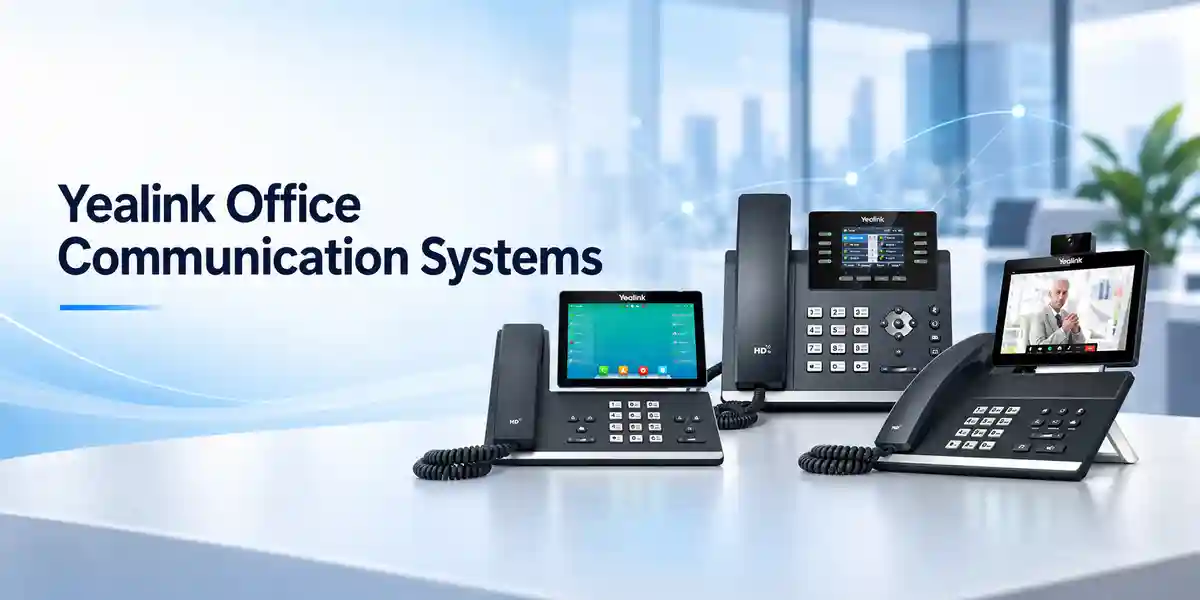
This combination changes the operating model from reactive handset administration to fleet management. A firmware package can be staged centrally; a configuration policy can target an appropriate device group; an administrator can review task results; and alarms can highlight endpoints requiring attention. The value is strongest where endpoints are numerous, geographically dispersed or subject to controlled maintenance procedures.
Technical Specifications Ledger
| Area | Capability / Procurement Note |
|---|---|
| Product type | On-premise Yealink device-management software |
| Interface | Web-based administration |
| Device operations | Registration, inventory, configuration, firmware/resource updates, reboot/reset and supported remote actions |
| Configuration | Global parameters, model templates, configuration blocks, backup and restore |
| Sites | Multi-site organization and device management by site |
| Diagnostics | Status, logs, packet capture/export, ping and traceroute functions documented |
| Alarms | Severity-based alarm handling with supported notification workflows |
| Security | TLS, HTTPS, certificate and authentication capabilities; exact implementation depends on release |
| Administration | Sub-accounts, roles, permissions and operation logs |
| Integration | Open API for supported management integrations |
| Server sizing | Depends on device quantity and current software release; validate CPU, RAM, storage and OS before order |
| Endpoint support | Broad Yealink phone and collaboration-device support; model and firmware matrix must be checked |
| Power / dimensions | Not applicable to the software itself; determined by hosting server infrastructure |
The absence of a chassis, port count or appliance power rating is important for procurement: YDMP should not be compared to a hardware controller by looking for rack-unit dimensions. The physical footprint belongs to the selected server or virtualization host. Procurement should therefore document compute resources, storage protection, backup strategy, network interfaces and power resilience for the hosting environment separately from the Yealink software entitlement.
Configuration & Sizing Worksheet
- Count the managed estate. Build an inventory by model, firmware, site and business criticality. Include expected growth over the intended platform lifecycle, not only devices installed today.
- Validate compatibility. Compare every model and firmware train against the current YDMP support matrix. Legacy phones can have minimum firmware requirements or lifecycle limitations.
- Choose hosting resources. Size CPU, memory and storage against device count and expected logs/resources. Include storage growth, backups and a practical operating margin.
- Map network reachability. Document VLANs, branch WAN paths, firewall rules, DNS, certificates, proxy requirements and secure administrator access.
- Define administrative roles. Decide whether central administrators control all sites or whether branch technicians receive delegated privileges.
- Plan firmware governance. Establish pilot groups, maintenance windows, rollback procedures and approval gates before fleet-wide updates.
- Confirm licensing. Ask the quotation to state software entitlement, device limits, subscription or maintenance terms, upgrade rights and any professional services separately.
- Prepare the quote request. Provide device quantity, models, sites, preferred deployment date, server environment, integration requirements and support expectations.
A useful sizing worksheet should also distinguish “managed device count” from concurrent administrator count and from total employee count. A company may have thousands of employees but a much smaller managed Yealink estate, or it may operate shared phones and meeting spaces that create a different ratio. Storage is affected by retained resources and operational records as well as endpoint quantity. If the organization has strict recovery objectives, hosting design may need redundant virtualization, replicated storage or infrastructure backup independent of YDMP itself.
Deployment Scenarios & Industry Use Cases
Large Enterprise & Multi-Site Networks
A multi-site company can use site structures to separate headquarters, branches and operational facilities while retaining central standards. Model-specific templates help prevent a configuration intended for one endpoint family from being indiscriminately applied to another. Scheduled changes can be aligned to local maintenance windows. The central team gains visibility without requiring routine physical access to every office.
Financial & Banking Institutions
Banks and financial organizations usually require controlled change, administrative accountability and strong segmentation. YDMP can form part of that operating model by centralizing endpoint management, roles, logs, alarms and approved firmware distribution. It should be deployed inside the institution’s security architecture, with firewall policy, certificates, identity controls, backup, change approval and audit retention designed according to internal standards.
Education & Campus Networks
Universities and large schools often have phones spread across administration buildings, faculties, residences, libraries and service areas. Central device inventory and remote actions reduce the need for technicians to walk between buildings for routine configuration. Site or group structures can mirror campus organization, while scheduled tasks reduce disruption during teaching hours.
Government & Public-Sector Procurement
Public-sector deployments benefit from a clearly documented bill of materials, compatibility matrix, server design, security controls and support responsibilities. An on-premise platform can be attractive where policy favors local infrastructure control. Procurement documents should define the exact software release, endpoint population, license scope, implementation deliverables, acceptance criteria, administrator training and post-deployment support.
Technical Deep Dive: Processing, Software Control & Resilience
1. Processing and Management Engine Architecture
Unlike a network switch or session border controller, YDMP does not primarily forward production voice packets through a hardware ASIC. Its workload is management-plane processing: receiving device information, storing state, serving the administrative interface, executing tasks, managing files and records, and supporting diagnostics. That distinction affects sizing. CPU and memory should be provisioned for management activity and scale, while storage planning must consider uploaded firmware, resources, configuration backups and operational data. Server virtualization can simplify allocation and recovery, but the underlying host must still provide sufficient resources and reliable storage.
For geographically distributed endpoints, WAN design matters because management traffic crosses branch links. Administrators should assess latency, routing, firewall behavior and maintenance bandwidth, especially before pushing firmware to many devices. Staggered update groups can reduce peak load and operational risk.
2. Software Ecosystem, Firmware Security & Operational Control
The platform’s strongest operational benefit is policy consistency. Firmware and resource files can be centrally managed and distributed; configuration can be organized into reusable structures; and task results can be reviewed. Security depends on more than enabling HTTPS. Organizations should maintain valid certificates, restrict management access, separate administrator privileges, protect server credentials, keep the platform patched and control which endpoint groups receive changes. Device firmware must also remain within supported releases.
An upgrade program should begin with representative pilot devices. Successful registration is not enough: test calling, provisioning, directories, headsets, expansion modules, authentication and business-specific features after the firmware change. Only then should the update move to broader groups.
3. High Availability, Redundancy & Disaster Recovery
Management-platform resilience should be designed around the business impact of losing administrative control. Existing phones may continue their primary communications through the call platform even when a separate management server is unavailable, but administrators can lose centralized visibility and change capability. Therefore the recovery objective should reflect how quickly management functions must return. Protect configuration data, platform databases and required files through a tested backup process. If YDMP is virtualized, infrastructure-level snapshots or replication may complement application backup, but they should not substitute for a documented recovery procedure.
Power redundancy, redundant storage and resilient networking belong to the hosting infrastructure. Organizations requiring stronger availability should ask FourTeck to review the proposed topology and clarify which resilience functions are native to the selected YDMP release versus provided by the customer’s virtualization or data-center platform.
Pre-Purchase Buyer Gap Checklist
Before approving a purchase, confirm what is actually included. Is the quotation for YDMP software, implementation, support, endpoint licenses, server hardware or a combination? Does the proposed entitlement impose a managed-device ceiling? Are future software upgrades included during a defined maintenance period? Which endpoint models are supported today, and which require firmware changes before onboarding? These questions prevent a low headline price from hiding implementation work.
Check lifecycle alignment. A management platform can support a broad installed base, but older endpoint families may have firmware restrictions or may be approaching end-of-support status. A compatibility spreadsheet should record model, quantity, current firmware, target firmware and any replacement recommendation. This is particularly important when an organization has accumulated phones over several procurement cycles.
Check infrastructure costs. YDMP is on-premise, so the organization needs suitable compute, memory, storage, backup and network resources. If new server hardware is required, include rack space, redundant power, UPS capacity, virtualization licenses and backup capacity in the project budget. If existing virtual infrastructure is used, confirm that resource reservations and recovery procedures meet the expected scale.
Check cross-vendor boundaries. YDMP is designed around Yealink endpoint management. Do not assume that third-party phones will receive the same management functions merely because they share SIP interoperability with the call platform. Likewise, PBX compatibility and management-platform compatibility are separate questions. A phone may register to a third-party SIP platform while its YDMP feature set remains dependent on Yealink model and firmware support.
Finally, define acceptance. A useful acceptance test can include successful onboarding, inventory visibility, template assignment, firmware staging, scheduled task execution, alarm generation, diagnostic export, role testing and configuration backup. Documenting these outcomes before rollout creates a measurable handover rather than an ambiguous “software installed” milestone.
Uganda Procurement, Delivery & Technical Preparation
FourTeck supports Uganda organizations that need a commercial and technical path from endpoint inventory to a deployable management solution. A quote request should begin with the number of Yealink devices, their models, the number of sites, the preferred on-premise or cloud management approach and any integration or security constraints. This information allows the proposed scope to separate software entitlement, server requirements, endpoint upgrades and professional services.
Because YDMP is software, “delivery” can involve license or software fulfillment, documentation and implementation coordination rather than only physical freight. Where server hardware, endpoints or accessories are included, physical logistics are quoted separately according to availability and destination. Pre-configuration work can include reviewing the device inventory, defining site structures, preparing configuration standards and planning pilot groups. Final timelines depend on stock, entitlement processing, project scope and customer readiness.
For Kampala and other Uganda locations, customers should request a written commercial offer that identifies validity period, taxes where applicable, delivery assumptions, warranty/support boundaries and implementation exclusions. This creates a clear procurement baseline for internal approval.
Local Coverage Matrix
Kampala: suitable for headquarters, banks, service centers and large office deployments requiring centralized endpoint administration. Entebbe: relevant for hospitality, logistics, aviation-related offices and distributed corporate facilities. Jinja: supports industrial, education and branch-office environments. Mbarara: useful for western-region enterprises, campuses, healthcare and regional operations. Gulu: supports northern-region institutions, NGOs, public-sector offices and expanding branch networks. For each location, project scope should account for WAN connectivity, remote-site access, local maintenance windows and any physical endpoint delivery required alongside the software platform.
Cross-Border & Regional Supply Chains
Organizations operating across several countries can coordinate management-platform planning with regional endpoint procurement. FourTeck maintains regional web presences for Uganda, Kenya, broader African markets, the UAE and Kuwait. Cross-border projects should standardize model numbers, firmware baselines and configuration policy while recognizing that freight, taxes, commercial terms and local support arrangements can differ by destination.
A regional rollout benefits from one master device inventory and site-by-site implementation waves. Pilot the management policy in a representative location, capture lessons, then replicate approved templates. This reduces configuration divergence and makes later operations more predictable.
Related Yealink Solutions
A complete project may combine YDMP with Yealink SIP phones, executive desk phones, receptionist endpoints, conference-room systems, wireless phones and accessories. Explore the FourTeck Uganda portfolio for compatible communications equipment, or contact the team for model-specific recommendations. Organizations considering hosted administration should compare YDMP with Yealink Management Cloud Service. Large phone deployments may also require PoE switching, structured cabling, UPS protection, headsets and expansion modules. Rather than selecting each component independently, request a validated bill of materials that maps endpoint type to user role and site requirements.
Typical companion categories include office desk phones for general users, touchscreen or executive models for senior staff, reception phones with expansion modules for high call volumes, call-center phones and headsets for service teams, conference-room devices for shared spaces, and Wi-Fi handsets for mobile operational staff. The management design should be checked against each chosen endpoint family.
FourTeck Technical Service Capabilities
FourTeck can support engineering validation before procurement by reviewing endpoint models, firmware baselines, site counts, server assumptions and the desired operating model. Bill-of-materials verification is particularly important where a management platform is purchased alongside new phones, because endpoint compatibility, power accessories, expansion modules and licensing can otherwise be split across disconnected quotations.
Staging can be planned around a pilot group rather than an immediate fleet-wide change. Where the project includes endpoint firmware updates, the target version should be validated against both YDMP support and the organization’s call platform. Configuration templates should be documented, tested and approved. After deployment, support can focus on management workflows, endpoint onboarding, firmware distribution, configuration policy and diagnostic procedures according to the agreed service scope.
For complex environments, customers should provide a network diagram and a representative endpoint inventory during technical review. That enables more useful advice than a generic device-count quotation and helps identify firewall, certificate, routing or legacy-firmware issues before implementation.
Extended Technical FAQ
What is Yealink Device Management Platform?
YDMP is Yealink’s on-premise software platform for centralized management of supported Yealink endpoints. It provides functions for device registration and inventory, configuration, firmware and resource management, scheduled tasks, monitoring, alarms, diagnostics, account administration and related operations. It is designed for administrators who need to manage a fleet rather than configuring every endpoint independently. Exact capabilities depend on the software release and the managed model’s firmware, so procurement should use a current compatibility matrix.
Is YDMP the same as Yealink Management Cloud Service?
No. They address similar centralized-management needs but use different deployment approaches. YDMP is the on-premise platform, allowing an organization to host the management environment in its own infrastructure. YMCS is Yealink’s cloud-based management service. The better fit depends on security policy, infrastructure ownership, operational preference, subscription model, geographic requirements and internal skills. Organizations with strict local hosting policies may favor YDMP, while teams seeking reduced server administration may evaluate YMCS.
Does every Yealink phone work with YDMP?
Compatibility must be checked by exact model and firmware. Yealink publishes supported-device information covering many SIP phones and collaboration devices, but minimum firmware requirements vary and older products can have limitations. Before purchase, create a spreadsheet of every model and its current firmware version. FourTeck can use that list to help identify devices that are ready for onboarding, devices that need firmware upgrades and legacy endpoints that may require a replacement plan.
What server resources are required?
Requirements depend primarily on the software release and number of managed devices. Historic Yealink guidance has scaled CPU and memory with device quantity and recommended storage growth as additional devices are added. Do not treat those historic figures as a substitute for current release requirements. During procurement, confirm the supported operating system, CPU, RAM, disk capacity and any database or virtualization requirements. Add headroom for firmware files, logs, backups and future device growth.
Can YDMP remotely update firmware and configuration?
Yes, centralized firmware/resource management and remote configuration are core platform functions for supported devices. Administrators can organize configuration, push supported changes and schedule tasks. However, safe operations require governance: test updates on a pilot group, confirm compatibility with the PBX or collaboration service, schedule disruptive changes outside critical hours and retain a rollback approach. A successful management-platform push should be followed by functional checks on representative devices.
What security controls should be planned?
Yealink documentation describes TLS, HTTPS, certificates, authentication, administrative roles and operation logs among relevant controls. The customer should still design the surrounding security architecture: firewall policy, network segmentation, trusted certificates, administrator identity, least-privilege roles, server hardening, backups and patching. Management access should be limited to authorized networks and personnel. Endpoint firmware should be maintained at supported security levels, and administrative changes should follow the organization’s change-control process.
Can the platform help troubleshoot call-quality issues?
YDMP includes monitoring and diagnostic capabilities such as device status, logs, network diagnostics and call-quality-related analysis or alarms depending on device and release. These features can help administrators collect evidence without immediately visiting the user’s desk. They do not replace packet-level network engineering or PBX diagnostics, but they provide useful endpoint-side context. Troubleshooting should correlate device information with switching, WAN, SIP-platform and QoS data where necessary.
How should a multi-site Uganda deployment be organized?
Start by defining sites that reflect operational ownership, such as Kampala headquarters, Entebbe, Jinja, Mbarara and Gulu branches. Confirm WAN reachability and secure management paths from each site to the hosting environment. Use a small pilot at one or two representative locations before onboarding the full estate. Standardize configuration templates and firmware baselines, but retain site-specific parameters where required. Schedule changes according to local operating hours and business criticality.
What should be included in the commercial quotation?
Ask for the exact product or service entitlement, managed-device scope, term or maintenance period where applicable, implementation services, support scope, server hardware if supplied, endpoint upgrades if required, taxes, delivery assumptions and quotation validity. If training or migration is required, list it as a separate deliverable. The quotation should also state important exclusions so internal procurement teams can identify costs that remain with the customer, such as virtualization infrastructure, backups, WAN changes or third-party PBX work.
How are warranty and replacement handled for software?
Software support should be distinguished from hardware warranty. YDMP itself does not have a physical chassis to replace; support terms concern software entitlement, updates and technical assistance according to the purchased agreement. Yealink phones, servers and accessories have their own hardware warranty terms. When a project combines software and equipment, ask the supplier to list warranty coverage by line item and explain the return or replacement process for physical components.
Plan Your Yealink Management Deployment in Uganda
A successful YDMP purchase begins with accurate device inventory and a clearly defined operating model. Send FourTeck your Yealink model list, firmware versions, device quantities, branch locations, server preference and required management functions. The team can help structure a quotation around the correct platform scope and identify compatibility or infrastructure questions that should be resolved before rollout. For multi-site estates, include expected growth so the hosting design and commercial scope are not undersized from day one.
Request a formal Uganda quotation for Yealink Device Management Platform, associated licenses or services, compatible endpoints and implementation support. Commercial availability, current licensing, supported versions and project timelines should be confirmed at quotation stage.
Reviews
There are no reviews yet.