Yealink T74LTE 4G Business Phone for Cellular Business Communications
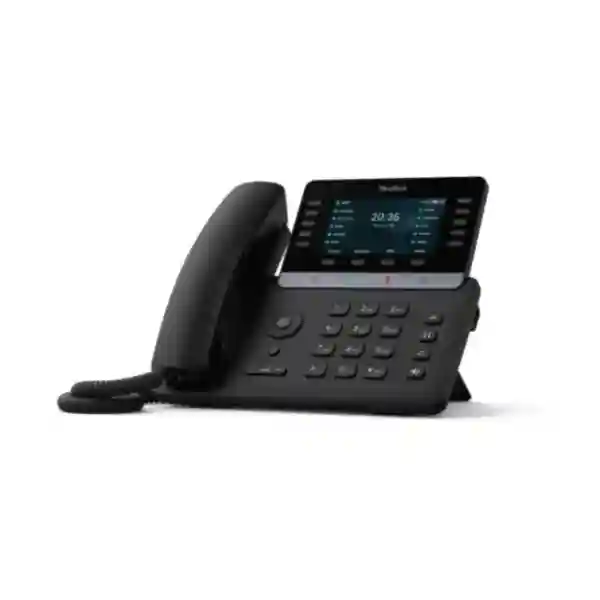
The Yealink T74LTE is a business desk phone built for organizations that need professional voice communications with the flexibility of cellular connectivity. Rather than making every desk dependent on a fixed Ethernet drop, the T74LTE can use a Nano SIM and 4G service for VoLTE calling, while also providing built-in Wi-Fi 6, Bluetooth 5.0 and wired connectivity options. This makes the platform particularly relevant for branch offices, temporary work sites, retail counters, construction operations, emergency locations, remote facilities and business continuity positions where a conventional wired voice path may be unavailable, costly to extend or unsuitable as the only communication route.
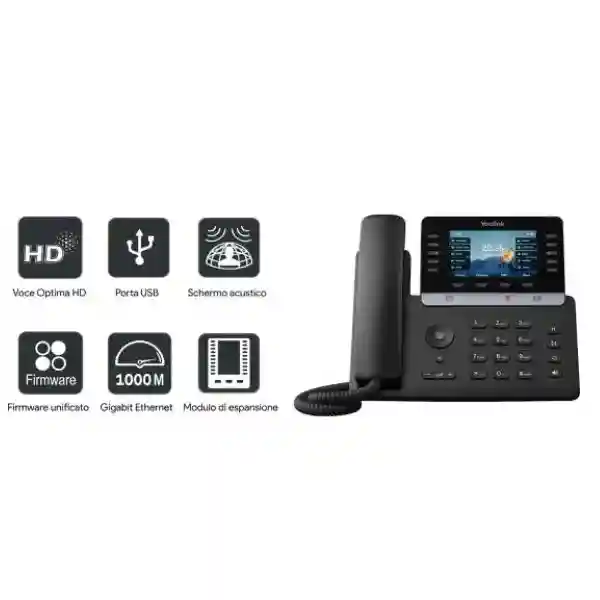
The phone combines a 4.3-inch 480 × 272 backlit display with Yealink HD audio technologies, Smart Noise Filtering, Acoustic Shield capabilities and a 3W speaker. The design provides familiar desk-phone ergonomics while supporting modern wireless deployment choices. Organizations can use the T74LTE to standardize professional endpoints across locations with different network conditions instead of treating every cellular site as a special case.
For procurement teams in Uganda, the important first step is to validate the required LTE bands, carrier/SIM service, PBX or IMS environment, power arrangement and accessory set before quantity ordering. FourTeck can help structure that validation and prepare a bill of materials for the intended deployment.
Procurement Fact Rail
Yealink T74LTE
4G / VoLTE business desk phone
Nano SIM slot
Wi-Fi 6 and Bluetooth 5.0
4.3-inch, 480 × 272, backlit
Confirm availability and project quantity
The T74LTE should be treated as a communications endpoint rather than simply a replacement for a consumer mobile handset. Procurement planning needs to consider the voice platform, cellular service, number assignment, site coverage, accessory requirements and provisioning method together. This avoids buying endpoints before the operational communications design is clear. Regional warranty terms, lead time and included accessories should be confirmed on the project quotation because supply channel and shipment configuration can affect the final commercial package.
Operational Architecture and Deployment Overview
The central architectural advantage of the Yealink T74LTE is network-path flexibility. In a traditional office telephone deployment, the endpoint usually depends on a LAN connection that ultimately reaches a SIP platform or cloud calling service. That model is efficient in established offices, but it can create practical problems in new branches, temporary sites, remote buildings and locations where structured cabling has not yet been completed. A cellular-capable desk phone changes the deployment equation by allowing the voice endpoint to operate over a mobile network where the service design supports it.
Yealink positions the T74LTE with intelligent network switching and 4G connectivity to help maintain communications when the primary network is interrupted. The European model supports multiple LTE bands including B1, B3, B7, B8, B20, B28 and B38. Because carrier spectrum and certification differ by market, Ugandan buyers should confirm the exact supplied regional variant and intended mobile operator before purchase. A supported band list is not, by itself, a guarantee of service activation; SIM provisioning, carrier policy, IMS/VoLTE support and local network conditions remain part of the deployment assessment.
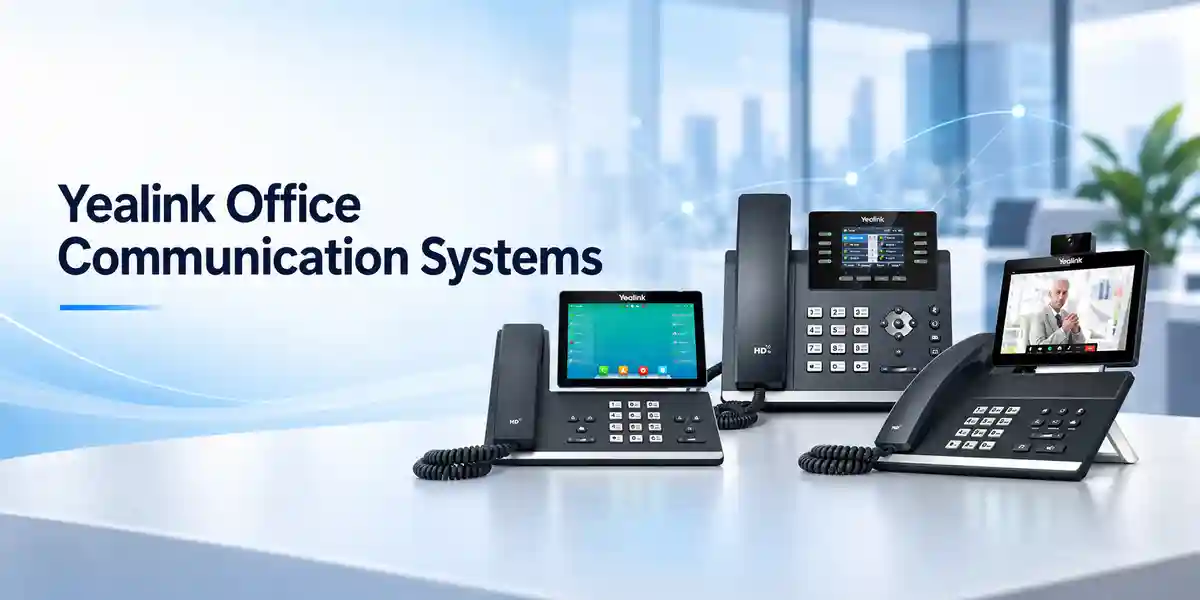
At the user layer, the 4.3-inch display, physical line controls and touchable buttons preserve the familiar behavior expected from a business desk phone. The device supports up to 16 accounts, with one IMS account identified for cellular operation. For teams accustomed to SIP calling functions, the T74LTE provides a route toward retaining structured business calling behavior while introducing cellular flexibility.
Audio architecture is equally important because a resilient connection is of limited value if calls are difficult to understand. The T74LTE combines HD voice, Smart Noise Filtering, Acoustic Shield functions and a 3W speaker. These capabilities are intended to improve intelligibility in active workspaces and reduce distracting ambient sound. That can be useful at reception desks, retail counters, dispatch positions and operational offices where callers need consistent voice quality despite surrounding activity.
For IT operations, mass deployment and centralized provisioning can be more significant than the headline cellular capability. Yealink supports Redirection and Provisioning Service and boot-based provisioning methods for the T7 family, enabling administrators to plan repeatable endpoint onboarding rather than manually configuring every phone. The practical benefit grows with fleet size: configuration templates, account policies, security parameters and feature settings can be standardized before or during rollout.
Enterprise Business Outcomes and Value Analysis
Key Hardware and Software Highlights
| Capability | T74LTE implementation | Operational relevance |
|---|---|---|
| Cellular | Nano SIM, 4G, VoLTE | Professional voice deployment without depending exclusively on a wired LAN |
| Wireless LAN | Built-in Wi-Fi 6 | Flexible office connectivity where compatible WLAN service is available |
| Personal wireless | Bluetooth 5.0 | Headset and supported accessory integration |
| Audio | HD audio, Smart Noise Filtering, Acoustic Shield, 3W speaker | Clearer conversations in busy business environments |
| Security | TEE, secure boot protections, TLS 1.3, SRTP, WPA3 | Supports layered endpoint, network and media protection |
| Provisioning | RPS and zero-touch-oriented deployment workflows | Reduces repetitive manual setup for larger fleets |
Technical Specifications Ledger
| Specification | Details |
|---|---|
| Product type | 4G business desk phone |
| Display | 4.3-inch 480 × 272 pixel display with backlight |
| Stand | Two adjustable angles |
| SIM | Nano SIM card slot |
| Calling | VoLTE; up to 16 accounts including one IMS account |
| Wi-Fi | Built-in Wi-Fi 6 |
| Bluetooth | Built-in Bluetooth 5.0 |
| Headsets | USB headset and EHS support |
| Expansion | Supports compatible color-screen expansion modules |
| Speaker | 3W speaker |
| Audio processing | HD audio, Smart Noise Filtering and Acoustic Shield features |
| Security examples | Trusted Execution Environment, secure boot integrity verification, firmware encryption/signing, TLS 1.3, SRTP, WPA3, encrypted configuration |
| Europe LTE bands | B1, B3, B7, B8, B20, B28, B38; confirm supplied variant and Ugandan carrier compatibility before ordering |
Specifications can vary by regional hardware or firmware release. A procurement quotation should identify the exact supplied variant, included power accessories and compatibility assumptions rather than relying only on a generic model name.
Configuration and Sizing Worksheet
Step 1 — Count users and operational positions. Separate ordinary desks from critical positions such as reception, security, dispatch, management and emergency communications. This identifies which users actually require cellular resilience and which may be better served by conventional SIP phones.
Step 2 — Validate cellular service. Record the intended mobile operator, SIM type, available LTE coverage and VoLTE/IMS requirements for each site. Confirm the regional T74LTE variant before purchase. For remote facilities, perform coverage testing at the actual desk location rather than assuming outdoor coverage represents indoor performance.
Step 3 — Define the call platform. Document whether the phone will be used primarily in LTE/IMS mode, LAN/SIP mode, or as part of a resilience design using multiple available network paths. Provide PBX, hosted voice or SIP service details where interoperability validation is required.
Step 4 — Plan power and accessories. Identify local power availability, backup-power expectations, headset requirements, expansion modules and desk mounting constraints. Critical sites should include the phone in the wider UPS or continuity plan where appropriate.
Step 5 — Prepare provisioning data. For fleet deployments, define naming conventions, account templates, security parameters, firmware policy, directory integration and remote management responsibilities. Repeatable provisioning reduces commissioning time and configuration drift.
Quote checklist: quantity, delivery city, carrier/SIM environment, PBX or voice service, required accessories, power requirements, desired pre-configuration, warranty expectations and target deployment date. Providing these details with the request allows a more accurate commercial and technical response.
Deployment Scenarios and Industry Use Cases
Large Enterprise and Multi-Site Networks
Multi-site organizations can use cellular-capable endpoints selectively at branches where fixed network rollout is delayed, at continuity desks, or in locations that need a voice path independent of a single LAN circuit. The main design task is deciding where cellular service creates measurable operational value rather than deploying it indiscriminately. Central provisioning can then keep configuration policies aligned across the fleet.
Financial and Banking Environments
Banks and financial organizations often require controlled communications at branches and operational sites. The T74LTE can be evaluated for selected continuity positions or sites where network diversity is required. Security teams should validate TLS, SRTP, configuration protection, authentication and carrier arrangements against internal policy before production deployment.
Education and Campus Operations
Campuses can contain gatehouses, maintenance buildings, temporary offices and remote facilities that are inconvenient to cable solely for a desk telephone. A cellular business endpoint can offer a practical alternative where coverage is suitable, while preserving familiar desk-phone controls for staff.
Government, Public Safety and Field Operations
Public-sector procurement may involve temporary offices, field locations and operational facilities where rapid deployment matters. The T74LTE should be assessed as part of a complete communications design covering carrier availability, power continuity, device management, security policy and lifecycle support. Where communications are mission-critical, no single endpoint or carrier should be treated as a complete disaster-recovery strategy.
Technical Deep Dive: Connectivity and Endpoint Architecture
The T74LTE combines several connectivity domains in one desk endpoint: cellular 4G for VoLTE service, Wi-Fi 6 for wireless LAN access, Bluetooth 5.0 for compatible peripherals and conventional business-phone interfaces for accessories. The value of this architecture is not raw processing throughput; it is the ability to choose an appropriate communications path for the site while maintaining a consistent user interface. Intelligent network switching is designed to support continuity when the primary network experiences interruption. Buyers should define the expected switching behavior during testing and confirm how their specific carrier, SIP platform and local network interact with the phone.
For voice quality, endpoint processing includes noise filtering and acoustic controls that target common office distractions. The 3W speaker is intended to deliver strong hands-free output, while HD audio improves the experience when the connected service and codecs support it. In practical terms, organizations should conduct acceptance calls using the same network, headsets and room conditions expected in production.
Technical Deep Dive: Firmware Security and Operational Control
Yealink describes the T7 security design in three layers covering device integrity, network protection and transmission security. The device-integrity layer includes Trusted Execution Environment concepts, secure boot verification, firmware encryption and signature certificates. Network protections include mechanisms such as 802.1X and WPA3, while transmission protections include TLS 1.3, strong cipher suites, SRTP and encrypted configuration files. These features provide building blocks for a managed enterprise deployment, but their effectiveness depends on correct configuration and compatible infrastructure.
Operational control should therefore include approved firmware versions, controlled administrator credentials, encrypted provisioning where supported, configuration backups, defined reset procedures and a documented ownership model for updates. Organizations with many endpoints should avoid unmanaged one-off configurations because inconsistent settings complicate troubleshooting and security review.
Technical Deep Dive: Availability and Recovery Planning
Cellular connectivity can reduce dependence on a fixed local network, but true availability is a system property. The phone still depends on usable radio coverage, an active service, the carrier network, voice-platform reachability and power. For business continuity, procurement teams should identify each dependency and decide what level of redundancy is justified. A site that requires voice during broadband failure may benefit from cellular service; a site that must also operate through extended utility outages needs suitable backup power. A site that cannot tolerate a single-carrier outage may need additional communications methods beyond one phone and one SIM.
Pre-Purchase Buyer Gap Checklist
Is the regional variant compatible with the intended Ugandan mobile operator? Confirm this before ordering. LTE bands are necessary technical inputs, but carrier activation, VoLTE support and service policy also matter.
Are there hidden service costs? The hardware purchase is only one part of a cellular deployment. Budget for SIM/mobile service, any PBX or hosted calling subscription, accessories, provisioning effort, support and replacement stock as applicable.
Will existing headsets work? The phone supports USB headsets and EHS scenarios, but exact headset interoperability should be checked by model. Include headset part numbers in the quote request when reusing an existing fleet.
Can it be centrally provisioned? Yealink supports RPS and provisioning workflows intended for mass deployment. Confirm the planned provisioning platform and configuration method before staging large quantities.
Does cellular connectivity replace disaster recovery? No. It can be one useful component of resilience, but power, carrier availability, upstream calling services and operational procedures still require planning.
What should be tested in a pilot? Validate indoor coverage, SIM activation, inbound and outbound calling, number presentation, PBX functions, switching behavior, headset operation, directories, security policy, firmware, provisioning and recovery after power/network interruption.
Uganda Procurement, Delivery and Technical Preparation
FourTeck can structure Yealink T74LTE procurement around the intended deployment rather than treating the order as an isolated handset purchase. A useful quotation request states the quantity, delivery location, intended carrier, voice platform, accessory requirements and desired commissioning date. This allows the proposed equipment and services to be checked before order processing.
For larger deployments, staging requirements should be agreed before shipment. These may include firmware alignment, configuration templates, labeling, accessory matching and documented device allocation. Pre-shipment validation can reduce the amount of repetitive work required when phones reach individual branches. Actual lead time depends on quantity, stock position, project configuration and delivery destination, so timing should be confirmed on the quotation rather than assumed.
Coverage can be coordinated for Kampala, Entebbe, Jinja, Mbarara and Gulu, as well as other Ugandan locations subject to project logistics. Kampala projects may involve head-office, branch, hospitality, retail and institutional deployments; Entebbe requirements can include business, logistics and service environments; Jinja and Mbarara deployments may support branch and regional operations; and Gulu projects may require additional planning for remote-site logistics. For every location, the cellular network itself should be validated independently at the intended site.
Regional Supply Coordination
Organizations operating across multiple countries can coordinate procurement through FourTeck regional channels. Visit FourTeck Uganda for Ugandan requirements, FourTeck Kenya for Kenyan projects, FourTeck Africa for broader African supply coordination, FourTeck UAE for UAE procurement and FourTeck Kuwait for Kuwait requirements. Cross-border projects should identify the destination country for every device because carrier compatibility, regional variants, warranty routes, import requirements and lead times may differ.
Related Yealink Solutions
A T74LTE deployment may sit alongside conventional Yealink SIP phones, Wi-Fi phones, executive desk phones, reception endpoints, call-center phones and unified communications accessories. Buyers planning a mixed estate can review the Uganda technology portfolio and request a matched bill of materials for desk phones, compatible headsets, expansion modules, switching, wireless infrastructure and backup-power requirements. Mixed deployments are often more economical than assigning cellular capability to every user: critical or difficult-to-cable positions can use the T74LTE while standard desks use the network endpoint best suited to their environment.
FourTeck Technical Service Capabilities
Enterprise endpoint procurement benefits from engineering checks before shipment. FourTeck can assist with bill-of-materials validation, model and accessory matching, deployment assumptions, staging requirements and firmware planning. Where pre-configuration is included in the project scope, configuration information should be supplied through an agreed secure process and validated against the target calling environment.
For multi-site rollouts, device naming, branch allocation, configuration standards and acceptance criteria can be documented before dispatch. This creates a repeatable handover process and helps support teams distinguish device faults from carrier, PBX, local network or configuration issues. Post-sales technical support requirements should be defined in the quotation, including the expected escalation route, warranty handling and any on-site or remote assistance needed for the deployment.
Extended Technical FAQ
1. What is the Yealink T74LTE designed for?
It is a professional business desk phone designed to combine familiar office calling with 4G cellular connectivity. The model is useful where organizations need a fixed desk-phone experience but cannot or do not want to depend exclusively on a wired network connection. Typical examples include remote offices, temporary sites, retail locations, construction facilities, emergency positions and continuity desks. Its suitability depends on carrier service, local coverage, voice-platform compatibility and the exact regional variant supplied.
2. Does the T74LTE support VoLTE?
Yes. Yealink specifies VoLTE calling for the T74LTE. VoLTE service in a real deployment still depends on the mobile operator, SIM provisioning, network coverage and supported regional configuration. Before ordering a fleet in Uganda, provide the intended carrier and deployment location so compatibility can be reviewed. A pilot unit is advisable for projects where cellular voice is business-critical or where indoor coverage conditions are uncertain.
3. How many accounts does the phone support?
Yealink lists support for 16 accounts, including one IMS account. The actual account design should be matched to the operating mode and calling platform. Procurement teams should document which accounts are required, how extensions or mobile identities will be assigned, and whether the endpoint will participate in a SIP PBX, hosted service or carrier IMS environment. This information also helps determine the correct provisioning template.
4. Does it have Wi-Fi and Bluetooth?
Yes. The T74LTE includes built-in Wi-Fi 6 and Bluetooth 5.0. Wi-Fi provides another network option in environments with suitable wireless infrastructure, while Bluetooth supports compatible accessory workflows. The phone also supports USB headsets and EHS scenarios. Exact headset and accessory models should be checked before quantity procurement, particularly when an organization intends to reuse an existing headset estate.
5. What security features are available?
The T7 security framework includes protections for device integrity, network access and transmitted communications. Yealink identifies capabilities including a Trusted Execution Environment, secure boot integrity verification, firmware encryption and signing, 802.1X, WPA3, TLS 1.3, SRTP and encrypted configuration files. These are technical controls rather than a substitute for organizational security policy. Administrators should configure them consistently with PBX, WLAN, certificate and provisioning requirements.
6. Can the T74LTE be deployed in large quantities?
Yes, the platform is designed with mass-deployment workflows in mind. Yealink’s Redirection and Provisioning Service and boot/provisioning mechanisms can reduce repetitive manual setup. For a large rollout, define firmware, account templates, security settings, directories, feature keys, device naming and branch assignments before staging. A controlled pilot followed by a standardized rollout generally produces a more supportable fleet than configuring devices individually at each site.
7. Is it suitable as an emergency or backup phone?
It can be a useful component of a communications-continuity design because cellular connectivity can provide an alternative to a fixed LAN path. However, resilience depends on more than the handset. The deployment must consider mobile network availability, SIM service, upstream voice services and electrical power. Critical environments should perform failure testing and may need UPS protection, multiple carriers or additional communications technologies depending on the required availability level.
8. What should be confirmed before purchasing for Uganda?
Confirm the exact regional hardware variant, LTE band compatibility, intended mobile operator, VoLTE or IMS service requirements, indoor signal conditions, PBX or hosted calling environment, power arrangement, required headsets or expansion modules, provisioning method, quantity, delivery city and warranty expectations. These checks are especially important for cellular products because a compatible radio band alone does not guarantee that every carrier service feature will operate in every market.
9. How is warranty or replacement handled?
Warranty terms and replacement procedures should be confirmed on the commercial quotation for the supplied units. Keep serial numbers, invoices and deployment records so a reported issue can be traced to the correct device. During fault isolation, support may need to distinguish hardware failure from SIM activation, carrier coverage, PBX configuration, firmware or accessory problems. For larger estates, maintaining a small approved spare pool can reduce operational downtime while a warranty case is processed.
10. Can FourTeck assist with configuration?
Configuration assistance can be scoped as part of the project. Useful pre-deployment tasks may include model validation, firmware alignment, provisioning-template preparation, accessory matching, labeling and acceptance testing. The exact work depends on the calling platform and customer requirements. For the most efficient quotation, provide the expected quantity, carrier, PBX or hosted voice service, account requirements, security baseline, delivery sites and desired deployment date when requesting pricing.
Request a Yealink T74LTE Procurement Quote
Send FourTeck your required quantity, Ugandan delivery location, intended mobile operator, voice platform, accessory requirements and target deployment date. For larger projects, include any provisioning, staging, labeling or technical validation requirements so the quotation can reflect the complete deployment rather than hardware alone. The T74LTE is particularly useful where professional desk-phone operation must extend beyond the limits of conventional fixed network cabling, but successful deployment starts with carrier, platform and site validation.

Reviews
There are no reviews yet.