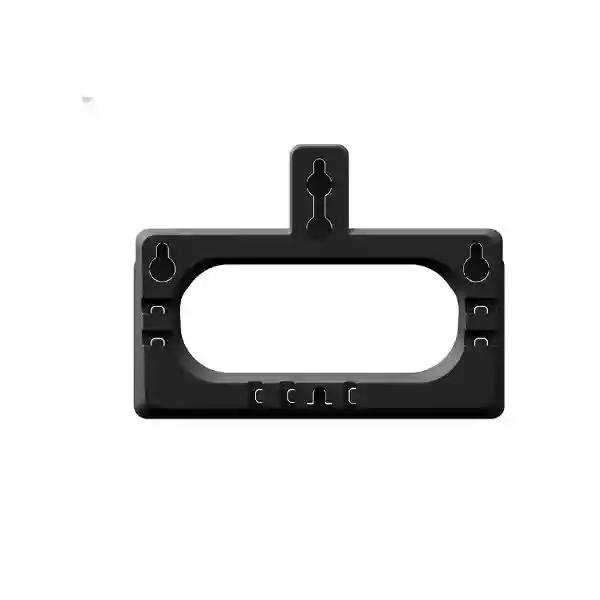
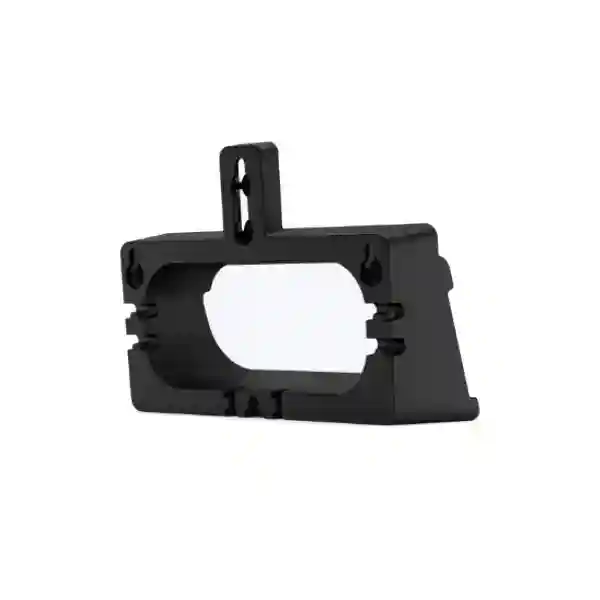
Yealink T8X Wall Mount – Secure Wall Installation for T8 Series SIP Phones
The Yealink T8X Wall Mount is the dedicated physical mounting solution for compatible Yealink SIP Phone T8X endpoints. Its job is simple but operationally important: it allows an organization to move a compatible business phone from a conventional desk position to a fixed wall position, creating a cleaner installation, preserving working surface area and helping standardize handset placement across professional facilities. Yealink describes the accessory as a wall mount bracket for its SIP Phone T8X family, emphasizing space-saving deployment, straightforward installation, stability and durability.
For procurement teams, a wall bracket should not be treated as an afterthought. A phone deployment can be technically correct yet physically awkward if mounting requirements are discovered only after endpoints arrive. Reception counters may have little usable desk depth. Clinical or service environments may need surfaces kept clear. Shared rooms can benefit from a telephone that remains in a predictable location. Warehouses, security points, administrative corridors and back-office areas may need communication endpoints positioned away from active work surfaces. In these situations, the T8X Wall Mount becomes part of the installation bill of materials rather than merely an optional cosmetic accessory.
FourTeck supplies the Yealink T8X Wall Mount for Uganda projects with practical pre-order assistance covering compatibility, quantities, destination planning and related Yealink endpoint requirements. Before ordering, buyers should identify the exact T8X phone model, count every location that requires wall installation, assess the wall surface and confirm how Ethernet and handset cabling will be routed. This prevents common installation-day problems such as ordering too few brackets, discovering incompatible mounting surfaces or leaving cables without an appropriate path.
Instant Specifications & Procurement Fact Rail
Wall mount bracket
Yealink SIP Phone T8X
Secure wall installation
Not required by bracket
None on bracket
Quote on request
This fact rail distinguishes the mounting accessory from the telephone itself. The bracket does not process voice traffic, consume PoE, require an IP address or carry a software subscription. Network and power specifications remain properties of the installed T8X telephone. The mount contributes to the physical deployment layer: position, stability, space utilization and installation consistency. Warranty terms, package contents, exact supported phone variants and current stock should be confirmed on the commercial quotation because these can vary by supply batch and regional channel.
Operational Product Architecture & Overview
Unlike an IP phone, switch or gateway, the Yealink T8X Wall Mount has no packet-processing architecture, backplane, operating system or firmware. Its architecture is mechanical. That distinction matters because procurement specifications sometimes copy requirements from the host phone into the accessory line item and create unnecessary ambiguity. The correct evaluation criteria are mechanical compatibility, installation stability, physical fit, cable access, mounting surface suitability, serviceability and the operational layout of the room in which the phone will be used.
A wall-mounted telephone changes how people interact with the endpoint. The position should allow users to see the display, reach the keypad or touchscreen comfortably, lift and replace the handset without obstruction, and connect required cables without creating strain. Facilities teams should therefore decide mounting height and position using the actual user environment rather than choosing a location solely because it is close to an Ethernet outlet. In a reception environment, the phone may be placed beside a workstation to free the primary counter. In a shared operational room, the goal may be a permanent communications point visible to all staff. In a healthcare or service environment, reducing loose equipment on horizontal surfaces can simplify housekeeping and space management.
The strongest procurement case for a dedicated bracket is repeatability. When a multi-site project uses the correct accessory for the phone family, installers can follow a common physical deployment method instead of improvising generic holders or shelves. Standardization helps facilities documentation, relocation work and future endpoint replacement. It also gives the project manager a clearer bill of materials: each wall-mounted phone location receives the required phone, bracket, network connectivity and any separately needed power or headset accessories.
Another consideration is cable behavior. The wall bracket itself does not replace Ethernet, handset or optional accessory cables. The installation plan should preserve appropriate bend radius, avoid pinching, keep connectors accessible and prevent cable weight from pulling on ports. If network cabling emerges directly from the wall, confirm the outlet position before drilling. If surface trunking is used, leave enough clearance for the trunking and connector path. These small checks can save significant rework when dozens of phones are deployed across a building.
The mounting surface is equally important. Different buildings use concrete, brick, blockwork, timber, gypsum board or composite partitions. The fastener method must suit the actual wall and local building practice. The bracket should never be assumed to compensate for a weak or unsuitable substrate. Where the wall type is uncertain, the installer or facilities engineer should assess it before installation and choose appropriate anchors or reinforcement. FourTeck can help validate the accessory selection, while structural fastening decisions should remain with the competent installer responsible for the site.
Enterprise Business Outcomes & Value Analysis
Wall placement removes the phone footprint from desks, counters and workbenches. This can be valuable where every centimetre of working surface is used for terminals, paperwork, clinical materials, payment devices or operational tools. The outcome is not increased network performance; it is better use of physical workspace and a more deliberate communications layout.
A purpose-built accessory helps standardize the way compatible T8X phones are mounted across rooms, floors and branches. Consistency reduces improvised installation methods and gives facilities teams a repeatable reference for future moves, additions and changes.
A fixed wall position can keep a shared phone easy to locate. In environments with rotating staff, shared desks or service counters, a defined position prevents the endpoint from being moved around the workspace or buried behind other equipment.
Although the bracket is not a security device, fixed placement can reduce casual movement of the phone and improve cable organization. Physical security requirements such as restricted access, locking or anti-theft controls must still be addressed separately where required.
The mount requires no configuration interface, software account or recurring subscription. Once correctly installed with the compatible phone, it becomes a passive part of the workplace infrastructure. This minimizes the administrative burden associated with the accessory itself.
Including mounting hardware during initial procurement is generally more efficient than discovering the requirement after phone deployment. Correct quantity planning can reduce separate shipments, emergency accessory purchases and technician return visits.
The bracket is passive and consumes no electrical power. It does not add to PoE budgets or require an AC outlet. Power planning is determined by the installed telephone and any active accessories, not by the wall mount.
Key Hardware & Deployment Highlights
| Element | Purpose | Operational Outcome |
|---|---|---|
| Dedicated T8X mounting form | Supports compatible T8X phone wall placement | Cleaner, standardized deployment |
| Passive mechanical design | No electronics or firmware | No additional network administration |
| Wall-positioned endpoint | Moves phone away from horizontal workspace | Improved desk and counter utilization |
| Installation-oriented construction | Provides stable physical support when correctly fitted | Predictable phone location for users |
Because this is a mounting accessory, buyers should resist specifications that imply switching throughput, voice codecs, CPU acceleration or software functions are features of the bracket. Those capabilities belong to the T8X phone. The mount should instead be evaluated as a component of the complete endpoint installation. This keeps tender documents accurate and makes supplier comparisons easier.
Technical Specifications Ledger
| Specification | Procurement Detail |
|---|---|
| Brand | Yealink |
| Product | SIP Phone T8X Wall Mount |
| Accessory class | Wall mount bracket |
| Designed function | Secure wall installation of compatible Yealink SIP Phone T8X endpoints |
| Electrical input | None for bracket |
| PoE consumption | None for bracket; phone power requirements apply separately |
| Network ports | None on bracket |
| Software / firmware | Not applicable to passive bracket |
| Subscription | No subscription required for bracket |
| Installation environment | Professional indoor deployment subject to suitable wall construction and installer assessment |
| Dimensions / weight | Confirm against current Yealink packaging or quotation documentation where required for logistics |
| Warranty | Regional commercial terms to be confirmed on quotation |
This ledger intentionally separates confirmed functional characteristics from details that should be validated against the current supply batch. Accessory packaging, dimensions, included fasteners and regional warranty terms can be relevant to tenders, but they should not be invented where the manufacturer product page does not state them. For formal procurement, FourTeck can include required commercial confirmations in the quotation or supporting bill of materials.
Configuration & Sizing Worksheet
Step 1 — Count Wall-Mounted Endpoints
Walk through the floor plan and mark every T8X phone that will be installed on a wall rather than on its desk stand. Include reception points, shared rooms, corridors, service counters, clinics, guard rooms, warehouses and back-office locations. The number of brackets should align with the number of confirmed wall positions, with project spares considered where organizational policy requires them.
Step 2 — Confirm Exact Phone Compatibility
Record the exact Yealink phone model for each position. Do not assume that accessories for older or different Yealink series are interchangeable. The product is specifically presented by Yealink for the SIP Phone T8X family. Where a project mixes phone families, separate accessory lines should be created and verified before purchase.
Step 3 — Survey the Wall and User Position
Identify wall construction, available mounting area, nearby electrical or data services and comfortable user reach. Check doors, cabinets, screens and furniture that could interfere with handset removal or display visibility. The competent installer should select fasteners appropriate to the actual substrate and local construction requirements.
Step 4 — Plan Ethernet and Power
The mount requires no power, but the phone does. Confirm whether the T8X endpoint will use PoE or another supported power method and ensure the network cable reaches the intended position without excessive tension. Keep connectors serviceable and avoid cable routes that create trip, snag or pinch hazards.
Step 5 — Licensing Review
There is no software license for the wall bracket. Any platform subscription, calling service, device management entitlement or application licensing belongs to the phone and communications environment. Keeping this distinction explicit prevents an accessory quote from being confused with the complete telephony solution.
Step 6 — Prepare the Quote Request
Provide the exact phone models, bracket quantity, delivery city, project deadline and whether phones or other accessories are required in the same order. For multi-site rollouts, list quantities by branch. This gives the supplier enough information to structure a useful quotation and reduces clarification cycles.
Deployment Scenarios & Industry Use Cases
Large Enterprise and Multi-Site Networks
Large organizations frequently mix desk-based and wall-based phone positions. A headquarters may use desktop T8X phones for executives while placing wall-mounted units in shared operational spaces. Branch offices can repeat the same installation standard. Procurement teams should map brackets to endpoint locations in the bill of materials so the physical deployment method is visible before installation begins.
Financial and Banking Institutions
Banks and financial offices often have controlled counters, back-office areas and service points where desk space is carefully allocated. Wall placement can keep a communications endpoint accessible without consuming counter space. The mounting accessory does not provide banking security controls; network segmentation, authentication, voice security and physical access policies remain functions of the wider communications architecture.
Educational and Campus Networks
Universities, schools and training facilities may use fixed phones in administration offices, staff rooms, reception areas, laboratories and shared facilities. Wall mounting can make the phone position obvious and reduce accidental relocation. Campus teams should document the room number and endpoint identity alongside the bracket requirement for easier installation and asset management.
Government and Public-Sector Procurement
Government projects benefit from precise accessory schedules. Where wall mounting is required, the tender should state the compatible phone family and bracket quantity rather than using a generic phrase such as “mounting hardware.” This improves bid comparability and helps prevent delivery of an unsuitable universal bracket. Formal projects should also request the applicable warranty, delivery and acceptance terms in the supplier quotation.
Healthcare, Hospitality and Service Environments
Hospitals, clinics, hotels and service organizations can have locations where a fixed communications point is preferable to a movable desk device. The phone can be positioned near the relevant work zone while leaving counters clearer. Installation height, cleaning practices, wall material and cable routing should be reviewed for the specific environment.
Three Technical Deep-Dives
1. Mechanical Architecture Instead of Processing Architecture
The most important technical distinction is that the T8X Wall Mount is not an active communications device. It has no processor, codec engine, memory subsystem, Ethernet switching fabric or packet acceleration hardware. Its value is mechanical alignment with the intended phone family. This changes the engineering review: instead of asking about throughput, the project team should ask whether the bracket matches the endpoint, whether the wall can support the installation, whether users can comfortably operate the mounted phone and whether cabling can be routed without strain. This distinction also simplifies network planning because adding the bracket does not alter VLAN design, switch-port capacity, DHCP scope, PoE budget or call-server sizing. Those calculations are driven by the phones themselves. For tender writers, accurately categorizing the bracket prevents technically irrelevant requirements from being attached to the accessory and makes acceptance testing more sensible.
2. Software Ecosystem and Operational Control
The bracket contains no software and therefore introduces no firmware update schedule, administrative password, certificate lifecycle or management portal. The installed T8X phone remains the managed endpoint. This is useful operationally because the mounting choice does not add another managed asset to the communications network. Nevertheless, physical placement can affect support workflows. Technicians must be able to access cables, inspect the phone and remove it when service is required. A good installation therefore balances a secure fixed position with maintainability. Before a large rollout, organizations can create a standard mounting template covering height, cable entry direction, outlet position and service clearance. That document becomes part of the physical deployment standard while the telephony team continues to manage endpoint software through the normal Yealink or platform processes applicable to the phone.
3. Availability, Redundancy and Disaster Recovery
A passive wall mount does not create high availability in the network sense, but physical deployment decisions can support operational resilience. Shared or emergency communication points are easier to locate when their positions are standardized. During a device replacement, a compatible mounting approach can simplify returning the endpoint to its documented position. Organizations that maintain spare phones should consider whether spare mounting accessories are also appropriate for critical sites, particularly when locations are remote or replacement logistics are slow. Redundant call servers, network links, PoE switches and WAN paths remain separate design matters. The bracket should be viewed as part of the physical continuity plan: it helps preserve the endpoint location, while active infrastructure provides communications resilience.
Pre-Purchase Buyer Gap Checklist
Is a license required? No license is required for the passive wall bracket. Licensing associated with calling platforms, device management or applications belongs to the phone solution.
Does it provide PoE? No. The bracket does not supply power or data. Ensure the installed T8X phone has the required network and power connectivity.
Will it fit every Yealink phone? Buyers should not make that assumption. Yealink identifies this accessory for its SIP Phone T8X family. Mixed-model projects should validate each phone/accessory pairing.
Are screws and anchors universal? Wall construction differs. Even where mounting hardware is supplied, the responsible installer must ensure the fastening method is appropriate for the actual substrate and installation conditions. Confirm package contents when the exact fastener set is important to the project.
What hidden costs should be planned? Potential project costs include installation labor, wall preparation, data outlet relocation, cable trunking, phone power arrangements and technician travel. The bracket itself has no subscription cost.
How much clearance is needed? Leave enough space for users to operate the phone, lift the handset, view the screen and for technicians to reach cables. Avoid mounting directly against furniture edges, doors or fixtures that could interfere with use.
Can the phone be relocated later? A wall-mounted endpoint can be relocated, but the new position may require new fixing points and cable work. For offices that change layouts frequently, compare the benefits of fixed mounting with conventional desktop deployment.
Should spare brackets be ordered? This depends on rollout scale, criticality and procurement lead times. Large organizations often evaluate a small spare quantity for standardized accessories, especially when supporting distributed branches.
Uganda Procurement & Delivery Logistics
FourTeck can structure Uganda quotations for individual accessories, complete Yealink phone deployments or multi-site bills of materials. A useful request should state the exact T8X model, wall mount quantity, delivery location and whether the order must include phones, headsets, expansion modules, power accessories or related infrastructure. Where the project has a deadline, include the target date so commercial and logistics planning can be aligned from the start.
Order processing can include commercial validation, quantity confirmation and coordination of the applicable supply route. Actual lead time depends on stock position, order quantity, shipment route and project requirements, so buyers should rely on the issued quotation rather than a generic delivery promise. For larger rollouts, staged delivery may be considered where this better matches site readiness.
Technical pre-configuration generally applies to active Yealink endpoints rather than to the passive bracket. FourTeck can nevertheless support the deployment by validating the accessory line against the intended phone family and reviewing the bill of materials before shipment. This is particularly valuable where multiple phone series or installation methods appear in the same project.
Local Coverage Matrix
Corporate offices, government sites, financial institutions, hospitality and multi-floor deployments.
Business, hospitality, logistics and institutional communication projects.
Commercial, industrial, educational and distributed branch requirements.
Regional business, healthcare, education and branch-office procurement.
Institutional, public-sector and enterprise communications deployments.
For projects outside these hubs, provide the destination and required quantity when requesting a quote. Nationwide planning should account for final-mile transport, site readiness and whether installation resources are centralized or locally assigned.
Cross-Border & Regional Supply Chains
Organizations operating across several countries can coordinate related procurement through FourTeck regional channels. Uganda requirements can be addressed through FourTeck Uganda, Kenya requirements through FourTeck Kenya, broader continental projects through FourTeck Africa, UAE sourcing through FourTeck UAE, and Kuwait requirements through FourTeck Kuwait. Cross-border orders should identify destination countries, per-country quantities and required delivery windows so commercial documentation and logistics can be planned correctly.
Related Yealink Solutions
A wall mount is usually one component in a larger communications project. Buyers can explore Yealink business communications solutions in Uganda and request related T8 Series phones, compatible headsets, expansion modules, PoE infrastructure and deployment accessories through the same project quotation. For installations that mix executive, reception and shared-area endpoints, consolidate the requirements into one bill of materials rather than ordering each accessory independently. This makes it easier to validate quantities and model relationships before dispatch.
Useful related procurement groups include T8 Series SIP phones for professional users, Yealink headset options for hands-free calling, expansion modules for high-call-volume positions, Ethernet switching and PoE resources for active phones, structured cabling components, and replacement power accessories where the selected phone deployment does not rely solely on PoE. Contact FourTeck with the current phone inventory or proposed endpoint schedule to identify appropriate companion items.
FourTeck Technical Service Capabilities
FourTeck can support enterprise Yealink procurement beyond simply supplying a bracket. Engineering validation can review whether the requested mounting accessory corresponds to the intended endpoint family. Bill-of-materials verification can identify mismatched quantities, omitted accessories and inconsistent model naming before an order proceeds. This is useful in tenders where phone endpoints, headsets, expansion modules and mounting accessories may be listed on separate lines.
For active Yealink devices ordered with the project, staging requirements can be discussed separately. Depending on project scope, this may include firmware alignment, configuration preparation or labeling workflows. These services apply to the endpoint rather than the passive wall bracket, but coordinating them under the same project can reduce installation-day workload. Post-sales support can also assist with product identification, warranty routing under the applicable commercial terms and technical escalation where a deployed phone or accessory needs investigation.
Extended Technical FAQ
1. What is the Yealink T8X Wall Mount used for?
It is a dedicated wall mounting bracket for compatible Yealink SIP Phone T8X endpoints. Its purpose is to support secure, space-saving wall installation instead of conventional desk placement. The accessory is useful in offices, receptions, shared spaces, service points and other locations where a fixed phone position or clearer work surface is desirable. It is a passive mechanical accessory, so it does not add calling features, network capacity or software functionality to the phone.
2. Does the bracket require power, PoE or a network connection?
No. The wall mount itself has no electronics, network port or power input. The installed T8X phone still requires whatever power and Ethernet connectivity is specified for that exact phone model. When planning the wall position, make sure the data cable and any required power connection can reach the phone safely. The bracket should not be included in PoE load calculations because it consumes no electrical power.
3. Is the T8X Wall Mount compatible with every Yealink IP phone?
Do not assume universal compatibility. Yealink presents this product specifically as the wall mount bracket for its SIP Phone T8X family. If your organization has T8X phones alongside T7, T5, T4 or other Yealink families, list the exact model numbers before ordering accessories. FourTeck can help review the model schedule so the quotation reflects the correct mounting solution for each endpoint family rather than treating all Yealink brackets as interchangeable.
4. Are there software licenses or recurring fees for the wall mount?
No software subscription is required for the passive bracket. However, the installed phone may operate with a hosted calling platform, PBX, device management service or other communications environment that has its own licensing or service charges. Those costs should be evaluated separately. In procurement documents, list the wall mount as a physical accessory so stakeholders do not confuse it with telephony service licensing.
5. What should be checked before drilling the wall?
Confirm the wall material, proposed phone height, user reach, nearby furniture, cable route and location of data or electrical services. The responsible installer should choose fasteners appropriate to the wall substrate and verify that the mounting surface is suitable. Also ensure the phone can be operated and serviced without obstruction. A pre-installation survey is especially worthwhile when many brackets will be fitted across a new office or branch network.
6. Can FourTeck help confirm compatibility before purchase?
Yes. Provide the exact Yealink T8X phone model or the endpoint bill of materials with the quote request. Compatibility validation is particularly important in projects containing several Yealink generations or phone families. A short review before procurement can prevent accessory mismatches from reaching the site and can also identify where wall mounting is needed versus standard desktop placement.
7. How should quantities be calculated for a multi-site rollout?
Count the confirmed wall-mounted phone positions at each site and map them to the exact phone models. Keep the quantity schedule by branch or building so receiving teams know where each accessory is intended to go. Consider whether project policy requires a small spare pool for critical or remote sites. Do not automatically order one bracket per phone if some endpoints will remain on desks; match brackets to the physical deployment plan.
8. Does wall mounting change phone configuration?
The bracket itself does not change SIP accounts, VLANs, codecs, security settings or device management. Those remain phone and network configuration matters. Physical placement can, however, influence user ergonomics and cable routing, so installation teams should coordinate with network teams on outlet position and PoE availability. The result should be a phone that is both technically connected and practically usable in its wall position.
9. How is warranty handling managed?
Warranty terms should be taken from the commercial quotation and applicable regional supply conditions. Keep purchase records, product identification and shipment documentation for future support. If an accessory appears damaged on arrival, report it promptly through the supplier process and retain packaging where requested. For large enterprise projects, documenting accessories alongside endpoint serial and location records can simplify support administration even though the bracket itself may not have an electronic serial-management workflow.
10. Can the bracket be used in reception, healthcare or warehouse environments?
A wall-mounted phone can be useful in many professional indoor environments where fixed placement and space efficiency are important. Suitability depends on the complete site conditions: wall construction, exposure, cleaning requirements, cable protection, user access and the environmental rating of the phone itself. The bracket does not make an indoor phone weatherproof or ruggedized. Where dust, moisture, impact or public access is a concern, evaluate the complete endpoint installation and not only the mount.
Plan Your Yealink T8X Wall-Mount Deployment
For a reliable quotation, send FourTeck the exact T8X phone model, required bracket quantity, delivery destination and project timeline. For multi-site projects, include a branch-by-branch schedule and identify whether phones or related accessories are also required. FourTeck can review the accessory requirement, structure the commercial quotation and coordinate Uganda delivery planning. Confirming mounting needs before endpoint installation helps reduce last-minute accessory orders, avoids improvised mounting methods and gives installers a clearer deployment standard.


Reviews
There are no reviews yet.