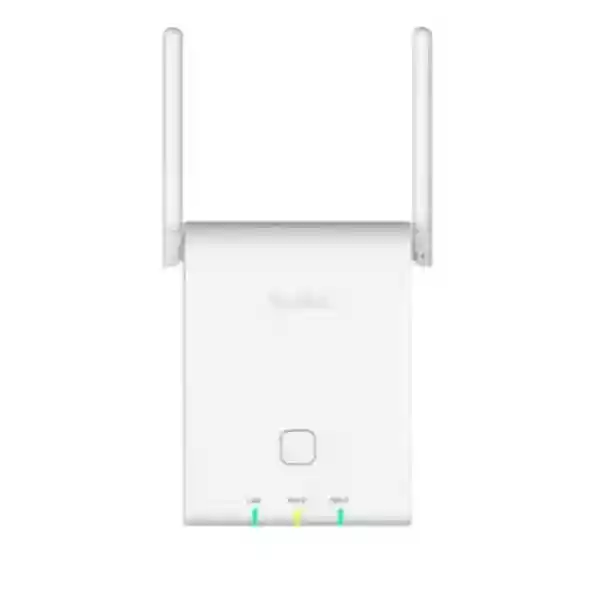
Yealink W70B DECT IP Base Station for Business Cordless SIP Communications
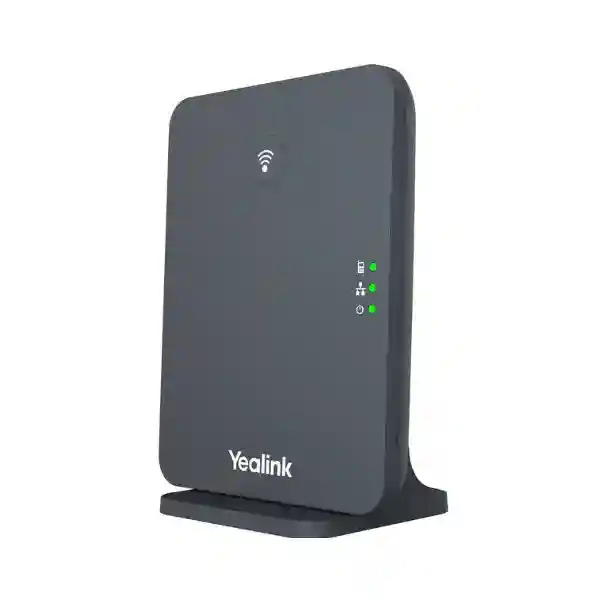
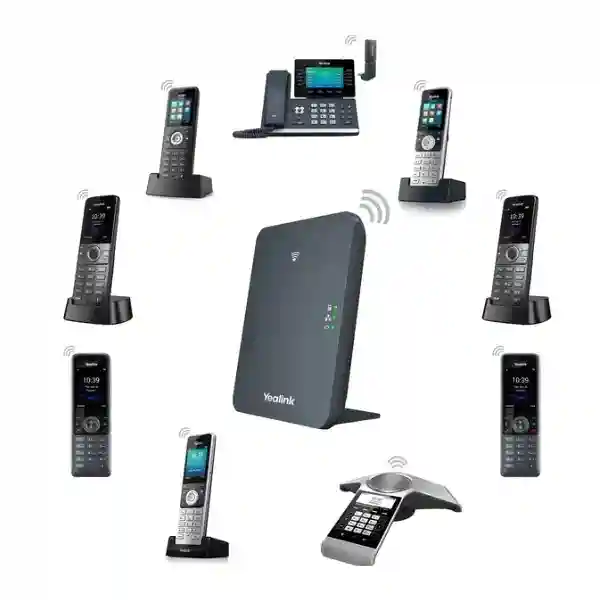
The Yealink W70B is a high-performance DECT IP base station built for small and medium-sized organizations that need reliable cordless voice mobility while retaining the control and economics of SIP-based communications. It provides the bridge between an Ethernet/IP telephony environment and compatible Yealink DECT handsets or headsets, supporting up to 10 SIP accounts, up to 10 DECT devices and up to 20 simultaneous calls. For procurement teams in Uganda, this combination makes the W70B particularly relevant where employees need to move between desks, counters, stock areas, corridors, workshops or service zones without losing access to business calling.
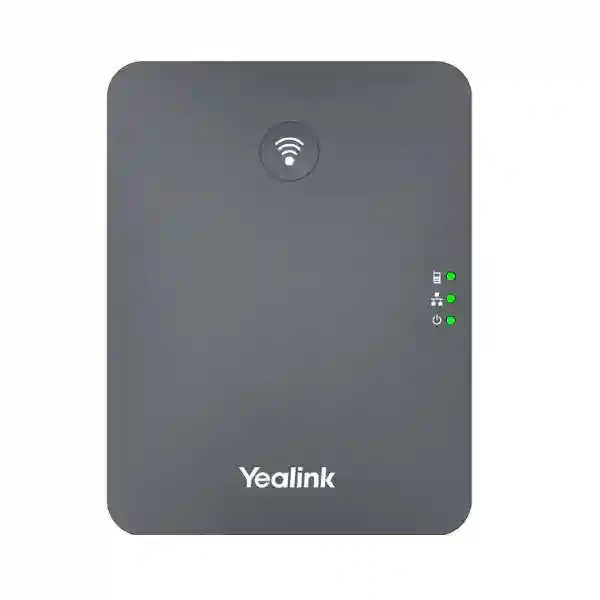
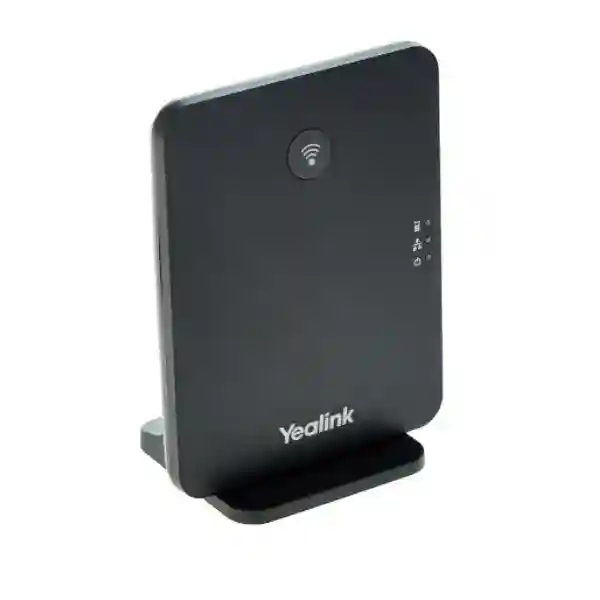
Rather than treating cordless telephony as a consumer accessory, the W70B provides enterprise-oriented networking, security and provisioning functions. The base supports SIP, VLAN tagging and priority, LLDP, 802.1X, static or DHCP addressing, TLS transport, SRTP media encryption, HTTPS and secure configuration handling. It can be powered through IEEE 802.3af Class 1 PoE or an external 5 V/600 mA Yealink adapter, giving installers flexibility when planning wall, desk or communications-room placement. Its compact 130 × 100 × 25.1 mm enclosure reduces space requirements and supports desktop or wall mounting.
A correct W70B purchase is not simply a base-station decision. Buyers should also define the number and type of compatible Yealink DECT endpoints, expected concurrent calls, coverage area, building materials, SIP service or PBX, network VLAN policy, PoE availability and any repeater requirement. FourTeck can help translate those operational details into a practical bill of materials for a Uganda deployment.
Instant Specifications & Procurement Fact Rail
Yealink W70B
DECT IP base station
10 SIP accounts / 20 simultaneous calls
Up to 10 compatible DECT handsets/headsets
1 × RJ45 10/100M Ethernet
802.3af Class 1 PoE or 5 V/600 mA adapter
The procurement baseline should include confirmation of the regional radio-frequency variant, handset compatibility and warranty terms on the issued quotation. The W70B is intended for business environments and is most effective when the radio layout is planned rather than assumed. Yealink specifies ideal-condition coverage of up to 50 metres indoors and 300 metres outdoors, but walls, reinforced concrete, metal shelving, lifts, machinery and neighboring radio systems can materially reduce usable range. A site requiring extended coverage can use up to six Yealink RT30 repeaters per base station, subject to appropriate positioning and deployment validation.
Operational Product Architecture & Overview
At the network edge, the W70B connects to the wired LAN through a 10/100M Ethernet interface. On the voice side it registers SIP identities and provides the DECT radio layer used by compatible cordless endpoints. This separation is operationally useful: the IP network carries signaling and media to the PBX or SIP platform, while users gain cordless movement inside the planned DECT coverage zone. The architecture reduces the need for an Ethernet drop at every handset location and can be valuable in spaces where users are mobile by job function.
Capacity planning should begin with concurrency rather than employee count alone. The platform supports up to 10 SIP accounts and 20 simultaneous calls. A business with ten mobile staff may have a very different call profile from a warehouse where only a few users make calls at once. The W70B therefore fits best when the expected busy-hour traffic, handset count and PBX design are considered together. Paging, intercom, call hold, transfer, waiting, three-way conferencing, call forwarding, voicemail indication and Push-to-Talk support provide a broad foundation for everyday business calling, with exact service behavior also dependent on the connected telephony platform.
Audio support includes G.722 wideband and common narrowband codecs including G.711 variants, G.726, G.729/G.729A and iLBC, with optional AMR-WB support noted by the manufacturer. Voice-quality mechanisms include VAD, comfort-noise generation, automatic gain control, packet-loss concealment and adaptive jitter buffering. These functions do not replace sound LAN engineering, but they help the endpoint ecosystem handle real-world packet and audio conditions more gracefully.
For administration, the W70B supports browser, handset and automatic provisioning workflows. Yealink RPS, Plug and Play and provisioning over TFTP, FTP, HTTP or HTTPS can reduce repetitive configuration during multi-unit deployments. System log export and trace capabilities assist troubleshooting. This matters when an organization is deploying several bases across branches: standardized templates can reduce configuration drift and make replacement procedures easier to document.
Enterprise Business Outcomes & Value Analysis
The strongest financial case normally comes from matching the platform to an appropriate use case rather than buying excess infrastructure. The W70B is not a multi-cell controller intended to solve every campus-scale mobility problem. It is a capable single-base platform for defined coverage zones and compatible endpoints. When a project requires seamless roaming across many large areas or a much larger user population, the architecture should be reviewed against Yealink multi-cell alternatives before finalizing the bill of materials.
Key Hardware & Software Highlights
10/100M Ethernet
A single RJ45 network interface carries the IP connection to the voice network. The interface is suitable for the traffic profile of a DECT voice base and supports common enterprise network controls including VLAN, LLDP and 802.1X.
PoE or Adapter Power
IEEE 802.3af Class 1 PoE supports clean installation from a compatible switch. Where PoE is unavailable, the external adapter specification is 100–240 V AC input with 5 V/600 mA DC output.
Secure SIP Transport
The W70B supports UDP, TCP and TLS for signaling, with SRTP available for media protection. Security should be configured end to end with compatible PBX, certificates, policies and network controls.
Provisioning Framework
RPS, PnP and protocol-based automatic provisioning support repeatable deployment. Administrators can prepare templates and reduce manual touch time when rolling out bases across branches.
Technical Specifications Ledger
| Category | Confirmed Specification | Procurement Relevance |
|---|---|---|
| Calls | Up to 20 simultaneous calls | Check peak concurrency rather than only user count. |
| Endpoints | Up to 10 compatible handsets/DECT headsets | Confirm exact handset/headset model before purchase. |
| SIP | Up to 10 SIP accounts; SIP v1/v2 | Validate registration model with PBX or hosted provider. |
| Repeaters | Up to 6 RT30 repeaters per base | Useful for extending coverage in suitable layouts. |
| Ethernet | 1 × RJ45 10/100M | Requires one wired LAN connection. |
| PoE | IEEE 802.3af, Class 1 | Confirm switch PoE availability and budget. |
| Network controls | 802.1Q/802.1P VLAN, 802.1X, LLDP, STUN, static/DHCP | Supports common voice-LAN segmentation practices. |
| Security | TLS 1.0/1.2/1.3, SRTP, HTTPS, OpenVPN, L2TP VPN, digest authentication, AES configuration encryption | Actual protection depends on compatible server-side configuration. |
| Range | Up to 50 m indoor / 300 m outdoor in ideal conditions | Real buildings can reduce range significantly. |
| Dimensions | 130 × 100 × 25.1 mm | Compact desktop or wall placement. |
| Operating environment | -10°C to +45°C; 10–95% humidity | Install within specified environmental limits. |
| Storage | -30°C to +70°C | Relevant for warehousing and transport planning. |
The specification ledger should be read as a design boundary rather than a guarantee that every environment will achieve maximum range or maximum call quality simultaneously. Radio performance depends on placement and construction; voice performance depends on LAN, WAN, PBX and codec conditions; and advanced calling features can depend on the SIP platform. Procurement documentation should therefore state the intended topology and dependencies alongside the hardware quantities.
Configuration & Sizing Worksheet
- Estimate workload. Record the number of mobile users, SIP identities and peak concurrent calls. Keep the W70B ceilings of 10 endpoints, 10 SIP accounts and 20 simultaneous calls visible during sizing.
- Map radio coverage. Mark the intended base position and all areas where calls must work. Identify reinforced walls, metal storage, plant rooms and other obstacles. Do not size from ideal-distance figures alone.
- Review power and cabling. Confirm an Ethernet drop and whether the connected switch supports 802.3af PoE. If not, plan an appropriate AC outlet for the supplied adapter.
- Select compatible endpoints. Choose Yealink DECT handsets or supported headsets for each role. Yealink states that its DECT implementation is not compatible with third-party DECT devices, so generic DECT interchangeability should not be assumed.
- Validate PBX services. Confirm SIP credentials, registration method, codecs, VLAN, TLS/SRTP policy, NAT handling and feature expectations with the voice platform.
- Prepare the quote. Include W70B quantity, endpoint models and quantities, RT30 repeaters if required, PoE switching dependencies, mounting considerations, delivery location and any requested staging or configuration support.
Licensing is primarily a question for the connected PBX, hosted SIP service or communications platform rather than a reason to assume a hidden per-handset W70B license. Buyers should request confirmation of extension licenses, SIP trunks, hosted-seat subscriptions, call recording, directory integration and other service charges from the relevant platform provider. This separates hardware acquisition from recurring service costs and produces a clearer total-cost model.
Deployment Scenarios & Industry Use Cases
Large Enterprise / Multi-Site Networks
Within a larger enterprise, W70B bases can serve defined small zones or branches where the endpoint count remains within the platform limits. Standard provisioning templates, VLAN policy and centralized PBX registration can create consistent branch deployments. For large contiguous campuses requiring broader mobility, buyers should assess whether a multi-cell DECT architecture is more appropriate rather than attempting to stretch a single-base design beyond its intended scale.
Financial & Banking Institutions
A branch can use cordless endpoints for selected operational roles while maintaining a segmented voice network. TLS and SRTP capabilities can form part of the communications-security design, but financial organizations should apply their own certificate, identity, firewall, logging and retention requirements. Device configuration should follow internal change-control processes, and default credentials or unused services should be addressed during staging.
Educational & Campus Networks
Administrative offices, libraries, maintenance teams and smaller facilities can benefit from cordless mobility where users frequently leave a fixed desk. Coverage planning is especially important across concrete structures and multiple floors. A base and repeater plan should be tested against real movement routes rather than estimated solely from floor-plan dimensions.
Government & Public-Sector Procurement
Government deployments commonly require precise model identification, documented quantities, warranty terms, delivery schedules and compliance with internal network-security standards. The W70B can be quoted as a defined component of a SIP communications solution, with compatible handsets and repeaters itemized separately. Technical validation should include regional DECT frequency requirements, power method, PBX compatibility and support responsibilities.
Technical Deep Dive 1: Voice Processing & DECT Architecture
The W70B combines IP voice handling with a DECT radio subsystem. SIP signaling establishes and manages sessions with the configured communications platform, while RTP media carries voice traffic over the IP network. On the cordless side, compatible Yealink endpoints communicate with the base using the supported regional DECT band. This architecture keeps mobile endpoints untethered from Ethernet while preserving integration with a SIP-based business telephone system.
The platform’s codec set is important when integrating with existing systems. G.722 supports wideband voice where the full call path permits it, while common narrowband codecs support interoperability with many SIP environments. Packet-loss concealment, jitter buffering and other voice mechanisms can improve resilience, but they cannot compensate for severe congestion or unstable WAN links. Voice VLAN design, QoS policy and adequate upstream connectivity remain core network responsibilities.
Twenty simultaneous calls is a significant concurrency figure relative to ten registered DECT endpoints, but buyers should remember that the PBX, SIP trunks and WAN path must also support the required sessions. Capacity should be evaluated end to end. The radio layer likewise needs sufficient signal quality throughout the intended user area. When coverage is marginal, adding an RT30 repeater or repositioning the base may be more effective than changing IP settings.
Technical Deep Dive 2: Firmware Security & Operational Control
Security starts with transport choices. The W70B supports TLS versions including TLS 1.3 and SRTP, allowing protected signaling and media when the peer platform is configured compatibly. HTTPS supports protected management and provisioning sessions, while digest authentication and encrypted configuration files provide additional controls around identity and configuration handling. Organizations should select current cryptographic settings permitted by their PBX and security policy rather than enabling legacy options simply because they are available for compatibility.
Operational control also depends on repeatable configuration. Auto-provisioning can distribute settings from approved templates and can reduce mistakes during fleet deployment. Administrators should control access to provisioning files, use HTTPS where practical, protect credentials, limit management reachability and maintain a documented firmware policy. Before a large rollout, test firmware with the target handset models and PBX features in a representative environment.
Logging and trace export are useful during fault isolation. A disciplined support process should capture base firmware version, handset firmware, network addressing, switch port/VLAN information, SIP registration status and the timing of the observed issue. That information helps distinguish radio coverage problems from SIP registration, firewall, DNS, DHCP or upstream voice-platform faults.
Technical Deep Dive 3: Availability, Redundancy & Recovery
The W70B supports outbound proxy server backup, which can contribute to a resilient SIP design where the telephony service provides suitable redundant proxy infrastructure. Availability should nevertheless be considered as a complete service chain: PoE switch, LAN, gateway, WAN, PBX or hosted platform, DNS and power all affect whether users can place calls. A base station cannot by itself provide end-to-end high availability.
For critical sites, a UPS-backed PoE switch can keep the base powered during short utility interruptions, subject to the switch and UPS runtime. Organizations using the external adapter can consider protected power appropriate to their environment. Configuration backups, documented provisioning templates and a spare-unit strategy can shorten recovery from hardware failure. Where replacement time is operationally sensitive, keeping a pre-approved spare may be more practical than relying solely on emergency logistics.
Radio resilience deserves separate treatment. Repeaters extend coverage but should not be confused with redundant base controllers. If a business process cannot tolerate the loss of a single base, the overall architecture should be reviewed for a higher-availability or multi-cell design. Procurement teams should define the acceptable outage duration before selecting the topology.
Pre-Purchase Buyer Gap Checklist
Are there hidden recurring hardware licenses? The base hardware should be separated from licenses or subscriptions required by the PBX, hosted extension service, SIP trunks or optional communications applications. Ask for recurring charges to be itemized independently.
Will any DECT handset work? No assumption should be made. Yealink explicitly states that its DECT technology is not compatible with third-party DECT devices. Confirm the exact supported Yealink endpoint model and firmware combination.
Will 50 metres indoor range always be achieved? No. The published indoor and outdoor ranges are ideal-condition figures. Concrete, steel, glass coatings, shelving and interference can reduce usable coverage. Plan from the real site.
Does the unit require a dedicated electrical outlet? Not when powered from a compatible IEEE 802.3af PoE switch. An external adapter is another supported power path.
Can it support a large campus? The W70B is a single-base system with defined endpoint and coverage limits. Large roaming estates should be evaluated against multi-cell architectures.
What should be checked for cross-vendor SIP compatibility? Review SIP registration, codecs, TLS/SRTP, NAT, directory services and required call features. Standards support helps interoperability, but platform-specific behavior should be tested before a large purchase.
What about lifecycle and firmware? Confirm current support status and approved firmware during quotation and staging. Keep a record of the delivered firmware and configuration baseline so later maintenance can be controlled.
Uganda Procurement & Delivery Logistics
For Uganda projects, a useful quotation request should identify the W70B quantity, compatible handset or headset models, number of users, deployment locations and any required RT30 repeaters. It should also state whether the customer expects PoE switching, PBX configuration assistance, device staging or only hardware supply. This prevents a base-only quote from being mistaken for a complete cordless telephony solution.
FourTeck can structure the bill of materials so that base stations, cordless endpoints, repeaters and relevant infrastructure dependencies are visible as separate line items. Delivery timing should be confirmed on the formal quotation because stock position, project quantity, import movement and destination can change. Where configuration support is included, customers should provide approved SIP and network parameters through an appropriate secure process rather than embedding credentials in ordinary purchasing correspondence.
Pre-shipment checks can include model and quantity verification, firmware baseline review, accessory validation and configuration planning where agreed. For branch deployments, labeling units by site or extension plan can reduce installation confusion. Warranty terms and return procedures should be stated in the commercial documents applicable to the order.
Local Coverage Matrix
Corporate offices, hospitality, retail and service deployments.
Business, logistics, hospitality and administrative requirements.
Commercial, industrial and branch-office communications.
Regional enterprise, healthcare, education and retail projects.
Institutional, NGO, commercial and public-sector deployments.
Project planning should distinguish delivery coverage from on-site engineering scope. For every location, provide the exact delivery destination, quantity and requested services so logistics and technical requirements can be reflected accurately in the quotation.
Cross-Border & Regional Supply Chains
Organizations operating across several countries can align Yealink procurement and communications standards through FourTeck regional channels. Visit FourTeck Uganda for Uganda requirements, FourTeck Kenya for Kenya, FourTeck Africa for broader African projects, FourTeck UAE for United Arab Emirates requirements and FourTeck Kuwait for Kuwait. Cross-border projects should explicitly confirm the required DECT frequency variant, local power/accessory requirements, delivery terms and warranty handling for each destination. Radio regulations and product variants can differ by market, so a model name alone should not be treated as sufficient regional validation.
Related Yealink Products & Solution Planning
A complete deployment may require more than the W70B base. Buyers can explore Yealink business communications solutions in Uganda and request compatible DECT handsets, DECT headsets, RT30 repeaters, PoE switching and SIP platform integration as part of the same bill-of-materials discussion. Typical endpoint selection should reflect user role: standard office mobility, rugged operational use, reception coverage, warehouse movement or headset-based calling each creates different requirements. Where a project grows beyond a single-base architecture, request a review of Yealink multi-cell DECT options rather than adding components without a topology plan.
FourTeck Technical Service Capabilities
Technical procurement support can begin before the order is placed. FourTeck can review the requested bill of materials against user count, endpoint type, coverage assumptions, PoE availability and PBX requirements. This validation helps identify missing handsets, repeaters or infrastructure dependencies while changes are still inexpensive.
Where included in project scope, staging can establish an agreed firmware baseline and prepare standardized settings before shipment. Pre-shipment checks can verify product identity, accessories and labeling against the purchase requirement. For multi-site projects, configuration templates and site naming conventions can improve repeatability. Post-sales troubleshooting can be more efficient when the customer retains the deployment record, firmware versions, network parameters and problem timestamps. The exact service scope, response terms and on-site requirements should be agreed in the quotation rather than assumed from the hardware purchase.
Extended Technical FAQ
1. How many users and calls can a Yealink W70B support?
The W70B supports up to 10 compatible DECT handsets or DECT headsets, up to 10 SIP accounts and up to 20 simultaneous calls. Those limits describe different aspects of the system and should not be confused. Endpoint count is the number of supported cordless devices, SIP accounts relate to registrations or identities, and simultaneous calls describe concurrent call capacity. The connected PBX, SIP service and network must also support the intended call load. For procurement, record all three numbers in the design so that a high user count is not incorrectly sized from call capacity alone.
2. Is the W70B compatible with third-party DECT handsets?
Buyers should not assume generic DECT handset compatibility. Yealink states that its DECT technology is focused on its audio VoIP and low-bit-rate data applications and is not compatible with third-party DECT devices. Select a handset or headset from the W70B compatibility list and verify current firmware support for the exact model. This is especially important when replacing an older base while hoping to reuse existing cordless devices. Provide the model numbers of installed handsets during quotation so compatibility can be checked before the purchase is finalized.
3. Does the W70B need PoE?
PoE is supported but is not the only power method. The Ethernet port supports IEEE 802.3af Class 1 Power over Ethernet, which is convenient because one cable can provide both network connectivity and power from a compatible switch. The manufacturer also specifies an external adapter with 100–240 V AC input and 5 V/600 mA DC output. During site planning, choose one power method and confirm the installation position accordingly. For critical communications, consider how the selected power source behaves during utility outages and whether protected power is required.
4. What range should be expected indoors?
Yealink specifies up to 50 metres indoors and 300 metres outdoors under ideal conditions. Those figures are planning references, not guaranteed coverage in every building. Reinforced concrete, metal doors, racks, machinery, low-emissivity glass, floor slabs and other radio systems can reduce practical range. The most reliable method is to plan base placement around real work areas and validate coverage where calls must be maintained. The W70B supports up to six RT30 repeaters per base station for suitable extension scenarios, but repeater placement should also be validated.
5. Which security features are available?
The W70B supports TLS for signaling, SRTP for media, HTTPS for secure web/provisioning communications, digest authentication and AES-encrypted configuration files, along with supported SHA256, SHA384 and SHA512 functions. It also lists OpenVPN and L2TP VPN capabilities. Security is an end-to-end property, so these capabilities must be paired with compatible PBX settings, certificate handling, secure network segmentation and controlled administrator access. Organizations should disable unnecessary exposure, protect provisioning credentials and follow their own firmware and password policies.
6. Can the W70B be centrally provisioned?
Yes. Yealink documents automatic provisioning through TFTP, FTP, HTTP, HTTPS and RPS, along with Plug and Play mechanisms. Centralized provisioning is valuable for multi-unit or multi-branch projects because administrators can create controlled configuration templates instead of manually entering every setting. A secure provisioning design should protect configuration files and credentials and preferably use encrypted transport where supported. Before a broad rollout, test the template against the target PBX, network VLAN, handset models and firmware so that a configuration error is not replicated across all sites.
7. Does the W70B require a recurring license?
Hardware procurement should be separated from the licensing of the communications service. The base itself is purchased as hardware, while the connected PBX or hosted service may require extension licenses, hosted seats, SIP trunks or subscriptions for optional services such as recording or advanced collaboration. These commercial requirements vary by platform. Ask the supplier or PBX provider to itemize hardware, one-time software charges and recurring subscriptions separately. That produces a clearer total-cost picture and prevents a buyer from incorrectly assuming that purchasing the base alone provides a complete telephone service.
8. What should be included in a warranty or replacement request?
Keep the invoice or order reference, serial information, model, firmware version, problem description and troubleshooting evidence. For intermittent issues, record timestamps and whether the problem affects one handset, all handsets, registration, audio or power. Network details such as switch port status and SIP registration state can help distinguish a base hardware fault from an upstream network or PBX issue. Warranty eligibility and replacement procedure depend on the commercial terms of the specific order, so buyers should confirm the applicable warranty baseline on the formal quotation and retain those documents.
9. Can FourTeck help with configuration?
Configuration assistance can be scoped around the project requirement. Useful inputs include SIP server details, extension plan, VLAN ID, IP addressing method, security policy, endpoint models and site naming convention. For larger rollouts, a standard configuration template can reduce manual effort and make later replacements easier. Credentials should be exchanged through an agreed secure process. The quotation should state whether the requirement is hardware supply only, remote configuration guidance, pre-staging, or a broader deployment service so responsibilities are clear before delivery.
10. When should a buyer consider a different DECT architecture?
A different architecture should be evaluated when the project exceeds the W70B endpoint or coverage model, requires broad seamless mobility across a large campus, or has availability requirements that cannot tolerate a single base. The W70B is well suited to defined small and medium business coverage zones, but attempting to force a single-base product into a large multi-building requirement can create coverage and operational compromises. Share the number of users, floor plans or approximate areas, roaming expectations and concurrent-call demand so the design can be compared with a multi-cell DECT alternative before equipment is ordered.
Prepare Your Yealink W70B Uganda Procurement Request
For an accurate quotation, provide the number of W70B base stations required, expected cordless users, preferred compatible handset or headset models, delivery city, PBX or hosted SIP platform, and whether PoE, repeaters or configuration assistance are required. If the building has challenging walls, multiple floors or long warehouse aisles, include that information so coverage assumptions can be reviewed before the bill of materials is finalized. FourTeck can help align hardware quantities with the intended communications topology and identify dependencies that should be priced separately.

Reviews
There are no reviews yet.