Cordless business mobility • Uganda
Yealink W75 Mini DECT Multi-Cell System for Business Voice Mobility
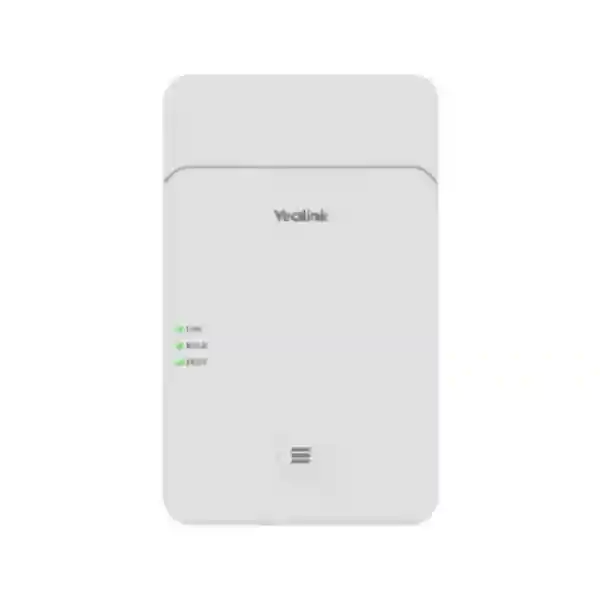
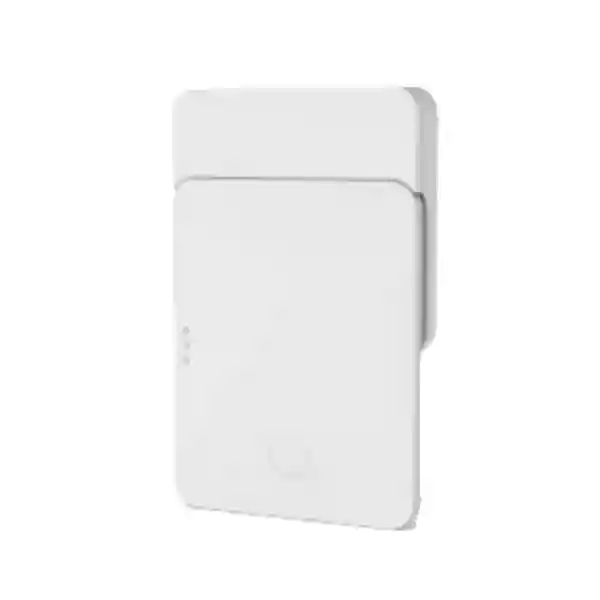
The Yealink W75 Mini MC is a purpose-built cordless IP telephony platform for organisations that have outgrown single-cell DECT but do not require the scale of a very large multi-cell estate. The system combines the W75DM DECT Manager with W75B radio bases to create coordinated wireless voice coverage across adjoining work areas. Rather than forcing staff to remain close to one base, the architecture supports seamless roaming and handover across as many as three bases, with capacity for up to 20 registered handsets, 20 SIP accounts and 20 simultaneous calls.
This makes the W75 particularly relevant to Uganda businesses with mobile teams: clinics where nurses move between rooms, warehouses where supervisors cross aisles, schools with administrative and maintenance staff, hospitality properties with service teams, workshops, retail back offices and multi-room professional premises. The procurement advantage is that capacity remains clearly bounded. Buyers can design around a known ceiling, validate radio coverage before rollout and select handsets according to user role rather than purchasing an oversized platform.
The W75 connects standard SIP telephony to Yealink DECT endpoints while supporting familiar network controls such as VLAN, 802.1X, LLDP, DHCP or static addressing, secure web administration and encrypted signaling/media options. Power over Ethernet on the base and manager simplifies placement where suitable PoE switching is available. Because radio performance depends on walls, shelving, reinforced concrete, machinery and interference, professional sizing should consider the actual building rather than treating published maximum range as guaranteed coverage.
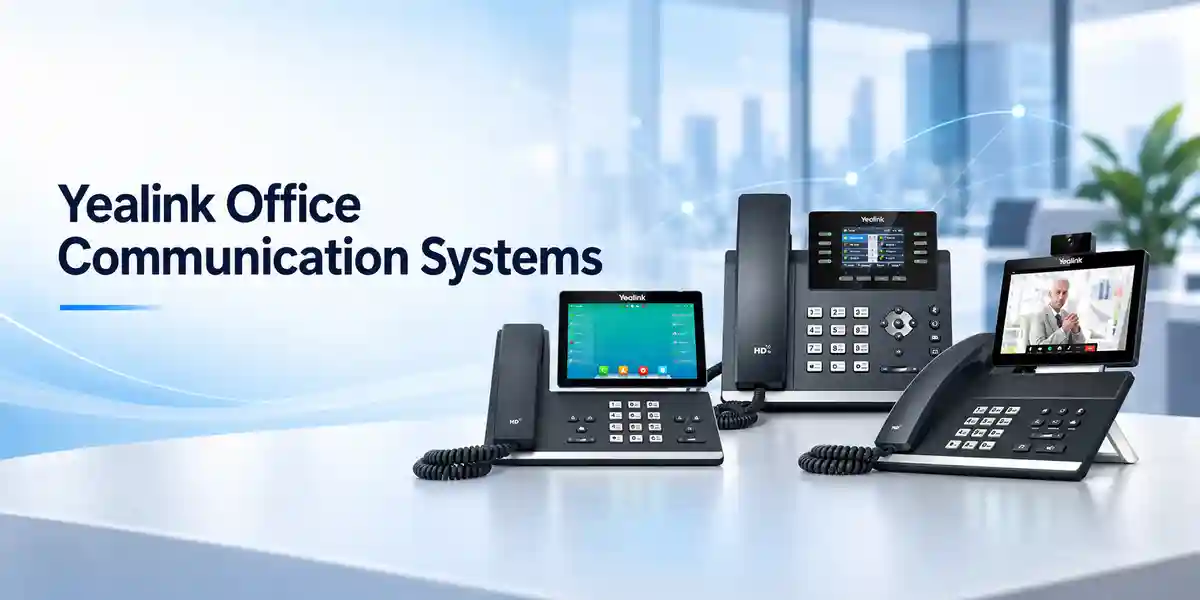
Plan the W75 as part of the complete office voice environment: IP network, SIP service, PoE, DECT coverage and role-appropriate handsets.
Instant Specifications & Procurement Fact Rail
W75 Mini MC: W75DM + W75B architecture
Up to 3 bases and 20 handsets
Up to 20 simultaneous calls
10/100M Ethernet, IEEE 802.3af Class 3 PoE
Business quote; confirm current stock and lead time
Confirm regional warranty terms on quotation
A procurement fact rail is useful because a DECT system is rarely bought in isolation. The W75 platform must be matched with handsets, network power, SIP service and physical coverage. Published capacity should therefore be treated as the technical ceiling, not as a promise that every floor plan will require the same number of bases. A three-base installation in a lightly partitioned office can behave very differently from a three-base installation in a warehouse with steel racking or a building with dense reinforced walls. FourTeck can prepare a quotation around the required number of W75B bases, compatible handsets, PoE requirements and any staging services requested.
Operational Product Architecture & Overview
The W75 solves a specific infrastructure problem: users need cordless voice mobility across a space larger or more complex than one DECT cell, but the organisation does not need the much higher endpoint counts associated with large multi-cell systems. In practical terms, the DECT Manager coordinates the system while radio bases provide the wireless coverage used by registered Yealink endpoints. SIP signaling links the voice environment to the organisation’s IP PBX or hosted telephony service, while voice media is carried across the IP network and DECT radio domain according to the active call path.
This separation of management and radio coverage matters during design. Adding a base can improve radio reach or capacity in a difficult zone, but it does not change the overall W75 ceiling of three bases and 20 handsets. Buyers should therefore begin with two questions: how many people need cordless endpoints, and where must those people maintain calls while moving? The first question establishes endpoint scale; the second establishes radio topology. A site with 12 users concentrated around one corridor may need a different layout from a site with the same 12 users split between offices, stores and an outdoor loading area.
Yealink specifies seamless roaming and handover, enabling compatible handsets to move between cells while remaining part of the same coordinated system. The platform supports up to eight narrowband calls per base and up to eight wideband calls per base with four active handsets for wideband operation, while the complete system supports up to 20 simultaneous calls. That distinction is important when a department expects concentrated calling in one physical zone. System-wide capacity alone is not enough; the expected number and codec profile of concurrent calls around each base should be considered.
The network layer is deliberately straightforward. W75DM and W75B use a 10/100M RJ45 Ethernet interface and support IEEE 802.3af Class 3 PoE. An external 5V/1.2A Yealink adapter is also specified, with availability depending on package and order configuration. Network services include static or DHCP addressing, SNTP/NTP, VLAN tagging and priority, LLDP, 802.1X, STUN and outbound proxy backup. SIP v1 and v2 support enables integration with standards-based environments, subject to PBX interoperability and feature validation.
Management is equally important to operating cost. The platform supports browser configuration, phone-side configuration where applicable, automatic provisioning, RPS, Plug and Play provisioning, handset upgrades over the air, trace packages and system log export. For administrators responsible for several handsets, centralized control reduces repetitive endpoint work and provides a more consistent configuration baseline. Directory options include local contacts, remote phonebooks, LDAP, XML phonebooks and supported platform directories, helping organisations expose useful contact data to mobile users.
The most common buying friction is uncertainty about coverage. Yealink publishes an indoor range of approximately 20–50 metres, with 50 metres described as an ideal distance, and up to 300 metres outdoors in ideal conditions. These figures are planning references rather than guarantees. Concrete cores, fire doors, metal storage, lifts, plant rooms, dense shelving and radio interference can reduce usable range. A sensible deployment therefore maps user movement and difficult construction zones before fixing base locations.
Enterprise Business Outcomes & Value Analysis
Key Hardware & Software Highlights
W75DM management layer
The manager provides the administrative control point for the coordinated mini multi-cell environment. Central configuration supports repeatable operations and reduces the need to treat each handset as an isolated device.
W75B radio layer
Up to three bases create the DECT radio footprint. Correct placement is more important than simply maximizing distance: overlapping coverage should support roaming and handover where users cross between cells.
Ethernet and PoE
Each unit uses a 10/100M Ethernet interface with IEEE 802.3af Class 3 PoE support. This simplifies mounting when the voice VLAN and PoE switch are already available at the selected cable location.
SIP and audio
SIP v1/v2, G.722, G.711, G.726, G.729/G.729A and iLBC are among documented capabilities. Codec choice should align with the PBX, bandwidth policy and desired audio profile.
Provisioning and diagnostics
TFTP, FTP, HTTP, HTTPS, RPS, Plug and Play, browser configuration, trace packages and log export give administrators multiple ways to deploy and troubleshoot the platform.
Directory integration
Local, remote, LDAP and XML phonebooks can place business contacts closer to mobile staff. Supported BroadWorks/Xsi functions may also be available depending on platform and configuration.
The W75 is not a general wireless data access point and should not be designed like Wi-Fi. Its purpose is dedicated DECT voice mobility. That distinction can be valuable in busy facilities because the cordless voice domain is planned around telephony requirements rather than sharing the same radio technology used by laptops and phones. However, successful service still depends on the wired IP network, SIP platform and appropriate QoS/security configuration. Procurement teams should therefore include both telephony and network administrators in final validation.
Technical Specifications Ledger
| Category | Confirmed specification | Procurement interpretation |
|---|---|---|
| System scale | Up to 3 base stations; 20 handsets; 20 VoIP accounts; 20 simultaneous calls | Suitable for small-to-medium cordless estates; evaluate a larger platform if growth exceeds these ceilings. |
| Per-base calling | Up to 8 narrowband calls per base; up to 8 wideband calls with 4 active handsets per base | Size for call concentration in each physical cell, not only total system calls. |
| Per handset | Up to 2 simultaneous calls per handset | Supports common hold/switching workflows subject to PBX features. |
| Radio coverage | Approx. 20–50 m indoors; up to 300 m outdoors under ideal conditions | Survey or validate difficult sites because construction and interference affect range. |
| DECT band | Regional variants include 1880–1900 MHz Europe, 1920–1930 MHz US and other market bands | Order the correct regional SKU and confirm regulatory suitability for Uganda before deployment. |
| Ethernet | 1 × RJ45 10/100M | Provide structured cabling to each planned manager/base location. |
| Power | IEEE 802.3af PoE Class 3; external 100–240V AC to 5V/1.2A DC adapter option | Confirm PoE budget and whether adapters are required or included in the ordered package. |
| Network controls | VLAN 802.1Q/802.1P, 802.1X, LLDP, STUN, static/DHCP, SNTP/NTP | Fits managed voice networks with segmentation and standard addressing policies. |
| Security | TLS, HTTPS, SRTP, digest authentication, AES-protected configuration, OpenVPN, SHA-256/384/512 support | Validate firmware and PBX support for the desired secure protocol profile. |
| W75DM dimensions | 100 × 101 × 36 mm | Compact wall-mountable management unit. |
| W75B dimensions | 130 × 100 × 25.1 mm | Allow clear radio placement and cable access rather than hiding the base behind dense metalwork. |
| Operating environment | -10°C to +45°C; 10–95% operating humidity | Keep units within supported indoor environmental conditions. |
| Storage | -30°C to +70°C | Observe appropriate storage and transport conditions. |
| Compatible handsets | W56H, W57R, W59R, W71H, W73H, W74H, W78H | Choose by user role and confirm required firmware/interoperability before rollout. |
Specifications should be read as system design inputs. For example, PoE support does not mean every existing switch has sufficient PoE budget, and a 50-metre ideal indoor distance does not mean two bases should automatically be installed 100 metres apart. Radio cells need useful overlap where handover occurs. Likewise, SIP compatibility does not guarantee every proprietary PBX feature will map identically. A pre-deployment test can verify registration, transfer, caller identification, directories, voicemail signaling, secure transport and any business-critical call functions.
Configuration & Sizing Worksheet
1. Estimate workload and scale
List every person who requires a cordless endpoint and separate today’s requirement from the expected 24–36 month requirement. Record the busiest expected simultaneous-call period. If the endpoint forecast approaches 20 or the design clearly needs more than three radio cells, consider a higher-scale platform before committing to W75. For each zone, estimate how many users could be on calls at the same time so that per-base call capacity is not overlooked.
2. Map the physical environment
Mark reception, corridors, offices, stock rooms, stairs, workshops, loading areas and any outdoor transition zones. Identify reinforced concrete, metal partitions, server rooms, lifts, cold rooms, dense shelving and other structures that can affect DECT propagation. Select potential base positions with access to Ethernet and power while avoiding placement inside metal cabinets or behind major obstructions. Where voice continuity is critical, validate coverage in the actual building.
3. Validate power and cabling
Document the PoE switch model, available ports, total PoE budget, UPS protection and voice VLAN. Each planned W75 device location needs Ethernet. Where PoE is not used, verify the correct Yealink adapter and a protected mains outlet. The network design should also identify DHCP scope or static addresses, NTP, DNS, gateway, PBX address, VLAN settings, 802.1X requirements and firewall rules.
4. Confirm platform and feature compatibility
Record the PBX or hosted voice provider, SIP domain, authentication method, codec policy, secure transport requirements and directory source. Decide whether users need LDAP, XML, remote phonebooks or provider-specific directories. Test the functions that matter operationally: transfer, hold, call waiting, DND, caller ID, voicemail indication, forwarding, conference and emergency dialing behavior.
5. Select endpoints by role
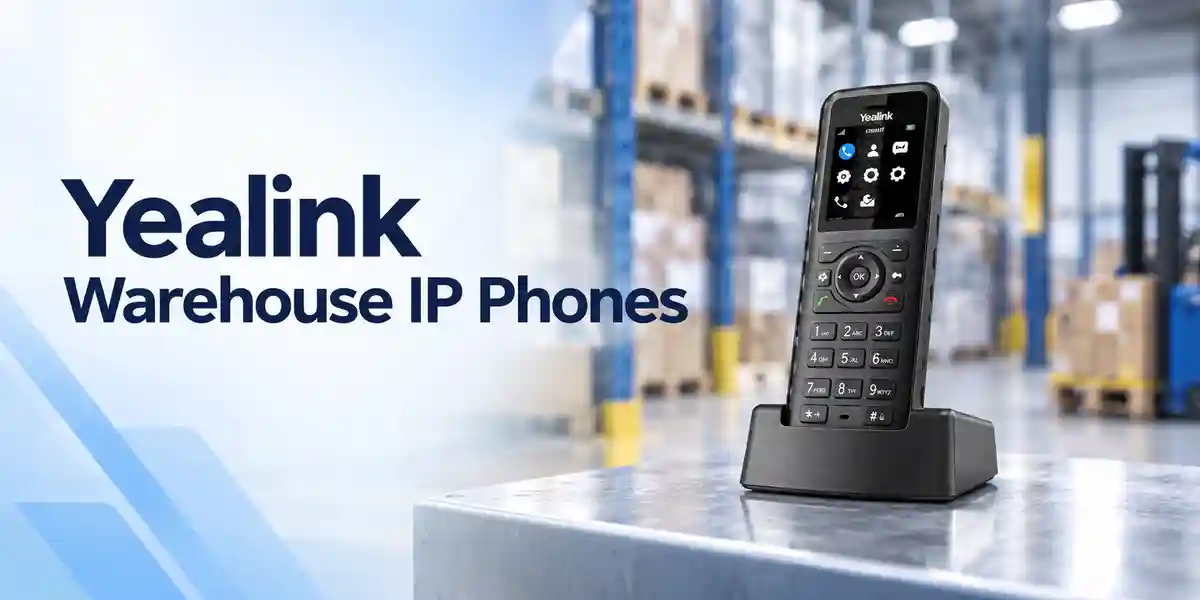
Do not assign the same handset merely for purchasing convenience. General office staff may value a lightweight model; warehouse or maintenance users may need a rugged option; supervisors may need a higher-feature handset. The W75 supports a range of Yealink DECT endpoints, allowing the bill of materials to reflect work conditions while retaining one coordinated cordless infrastructure.
Quote preparation checklist
Send FourTeck the site location, floor plan if available, number of floors, approximate area, construction notes, handset count, concurrent-call estimate, handset preferences, PBX/provider, existing PoE switch details, required accessories, desired delivery location and whether staging is required. This information enables a more useful quotation than requesting a base price alone because it exposes dependencies that could otherwise appear after purchase.
Deployment Scenarios & Industry Use Cases
Large office or multi-zone enterprise site
Within its 20-handset and three-base limits, the W75 can serve a business office where mobile employees move between reception, meeting areas, administration, stores and support spaces. Bases can be positioned to create overlapping cells along movement paths. The design objective is not simply to cover the maximum square metres; it is to maintain usable voice service where staff actually walk during calls. The manager centralizes the environment while the SIP connection integrates cordless users with the wider business telephone system.
Financial services and branch operations
A bank branch, microfinance office or insurance operation may need cordless voice for supervisors, security coordination, facilities staff or back-office teams while maintaining segmented network policy. VLAN, 802.1X, HTTPS, TLS and SRTP capabilities can support a controlled architecture when configured alongside the organisation’s security standards. Procurement teams should validate firmware, PBX interoperability, logging, credential handling and the organisation’s required encryption profile before production deployment.
Education and campus buildings
Schools, training centres and smaller campus buildings can use DECT mobility for administrators, maintenance staff, security and operations teams. A three-base system can be appropriate for a bounded building or group of adjacent work areas, but larger campuses may exceed W75 scale. Site planning should pay particular attention to stairwells, concrete classroom blocks, outdoor walkways and transitions between buildings. If users need uninterrupted calls across a much wider campus, a larger multi-cell architecture may be more appropriate.
Government and public-sector facilities
Public offices often require predictable bills of materials, clear device inventories and centralized administration. The W75’s defined endpoint ceiling can simplify planning for a department or facility with modest cordless requirements. Before procurement, confirm the correct regional radio variant, security baseline, approved PBX integration, warranty route and any tender-specific documentation. Where continuity requirements are high, protect the LAN, PoE switching, PBX and upstream power in addition to using the W75’s own backup capabilities.
Healthcare, hospitality and warehouse operations
These environments share one characteristic: employees are frequently away from desks. A cordless system can keep extensions reachable without forcing staff to return to fixed phones. Healthcare buyers should map treatment rooms and restricted areas; hotels should map guest-service routes, back offices and service floors; warehouses should pay special attention to steel racking and loading zones. Rugged handset options can be paired with the system for demanding roles where compatible.
Three Technical Deep-Dives
DECT processing, call paths and radio coordination
The W75 architecture coordinates SIP telephony with DECT radio mobility. Handsets communicate over DECT to the active base. The DECT Manager coordinates system behavior and SIP signaling toward the PBX, while media uses the wired and wireless paths required for the call. During movement, the platform manages roaming and handover between coordinated cells. This is why base placement requires overlapping service areas rather than isolated islands. A user may begin a call near one base and walk toward another; the design must provide sufficient radio quality through the transition zone for the handover process to occur reliably.
Capacity also has a spatial dimension. Twenty system-wide calls do not imply unlimited concentration at one base. Yealink documents up to eight narrowband calls per base and up to eight wideband calls with four active handsets per base. If a warehouse has 15 registered users but ten are frequently clustered near dispatch, that local calling pattern should influence placement and expectations. Codec policy can also affect wideband behavior, so PBX configuration and handset firmware should be validated together.
Software ecosystem, firmware security and operational control
The platform supports multiple provisioning methods, including TFTP, FTP, HTTP, HTTPS, RPS and Plug and Play. In a controlled business deployment, administrators can use centralized templates to establish SIP credentials, network settings, directory sources and operational preferences. Over-the-air handset upgrade capability reduces the need to collect every handset for routine firmware maintenance. Trace packages and log export provide useful diagnostic material when troubleshooting registration, call routing or roaming behavior.
Security should be treated as a configuration discipline rather than a checkbox. The W75 family supports encrypted signaling and media capabilities, secure web access, digest authentication, protected configuration files and network access controls. Current Yealink product information also references newer TLS support in recent firmware. The exact security profile available in a deployed system depends on firmware, PBX support and administrator settings. FourTeck can stage current approved firmware and validate a requested secure SIP profile before shipment when project scope includes configuration services.
High availability, redundancy and recovery planning
Yealink documents Sync Level 1 base backup: if the active Level 1 base becomes unavailable, another base can act as the backup and restore the synchronization role. The product documentation also describes a manager dual-hot capability. These functions are valuable because radio coordination is a critical part of multi-cell service. They do not, however, replace broader continuity planning. If the PoE switch fails, if the PBX is unreachable, or if the WAN carrying hosted voice is down, cordless radio redundancy alone cannot maintain full service.
A resilient design therefore considers the entire dependency chain. Place critical PoE switching on UPS power, maintain suitable network paths, configure PBX redundancy where available, use outbound proxy backup when appropriate, document configuration backups and keep replacement hardware strategy aligned with service requirements. For sites where telephony is operationally critical, a spare base or pre-agreed replacement process may be justified. Recovery procedures should identify who owns the PBX, LAN, WAN and DECT layers so faults are routed quickly to the correct support team.
Pre-Purchase Buyer Gap Checklist
Are handsets included? Treat the W75 Mini MC infrastructure and user handsets as separate bill-of-materials items unless the quotation explicitly states a bundle. Confirm exact package contents, base quantity, manager quantity, adapters and selected handsets before approving a purchase order.
Are there hidden recurring licenses? The hardware itself should be quoted clearly, but the PBX or hosted SIP service may have its own extension, subscription, calling or feature charges. Directory platforms and management services can also be separate. Ask for the complete recurring and one-time cost picture rather than assuming the DECT hardware price represents the whole telephone service.
Will it work with our PBX? The W75 uses SIP standards, but business telephony includes platform-specific features. Confirm registration and test the functions users depend on. Basic calling may work while specialized directory, feature-key or provider workflows require specific configuration or firmware.
Can we use third-party DECT handsets? Yealink states that its DECT technology is not compatible with third-party DECT devices for this ecosystem. Build the handset plan around supported Yealink models and validate firmware requirements.
How many bases do we really need? Floor area alone is insufficient. Building materials and user movement matter. Start with a radio plan and, where the environment is difficult, validate on site. Published outdoor ideal range should never be used to infer indoor coverage through multiple walls.
Will the existing switch power it? The W75 supports IEEE 802.3af Class 3 PoE, but the switch must have compatible ports and sufficient aggregate power budget. If PoE is unavailable, confirm adapter requirements and local sockets.
Is the radio variant correct for Uganda? DECT frequencies differ by region. Procurement should confirm the regional SKU supplied is appropriate for the intended country and complies with applicable local requirements. Do not import a radio variant simply because it is cheaper in another market.
What happens when the organisation grows? The W75 ceiling is 20 handsets and three bases. If expansion forecasts approach those limits, compare the cost of starting on a larger multi-cell platform against replacing infrastructure later. Capacity headroom should reflect credible growth, not an arbitrary percentage.
What about mounting clearance? W75 devices are compact and wall mountable, but radio equipment performs best when placed deliberately. Avoid dense metal enclosures, hidden positions behind major obstructions and locations where cabling is strained. Ensure technicians can reach the unit for service while keeping it protected from accidental damage.
Uganda Procurement & Delivery Logistics
FourTeck Uganda can structure the W75 quotation around the actual deployment rather than treating the system as a single isolated SKU. A typical request begins with the required number of cordless users, the site type and the intended PBX or hosted voice platform. From there, the bill of materials can identify the W75 infrastructure, compatible handset models, optional power adapters, network dependencies and any requested configuration service. Where the customer provides a floor plan, it can be used as an initial coverage-planning input, with on-site validation considered for complex radio environments.
Stock status and delivery time should be confirmed at quotation stage because business hardware availability can change. For project purchases, buyers should state the required delivery date, installation location and whether the order must be delivered as one complete batch. If handsets, bases or accessories have different lead times, the quotation can clarify whether partial delivery is useful or whether the project should wait for a complete kit.
Pre-configuration can include agreed firmware validation, basic network parameters, SIP templates and device labeling where project scope permits. Customers should provide credentials through an appropriate secure process rather than embedding sensitive passwords in a general purchase-order email. For larger deployments, a staging worksheet can record device role, location, MAC address, extension and handset assignment so the installation team receives a traceable set of equipment.
Local coverage
FourTeck can support business enquiries for Kampala, Entebbe, Jinja, Mbarara and Gulu, as well as other Uganda locations subject to delivery arrangements. Kampala projects commonly include offices, hospitality, healthcare and warehouses; Entebbe deployments may involve hospitality, logistics and service operations; Jinja and Mbarara customers often require solutions for commercial, education, healthcare and industrial sites; Gulu organisations can use the same structured quotation process for public, private and institutional requirements. Delivery schedules, installation expectations and support scope should be confirmed for the exact destination.
Cross-Border & Regional Supply Chains
Organisations operating across East Africa and the Gulf often prefer consistent product families and documentation across branches. FourTeck maintains regional web presences for Uganda, Kenya, broader African markets, UAE and Kuwait. Cross-border projects should still treat radio regulation, warranty routing, taxes, import requirements and local PBX conditions as country-specific matters.
For a regional W75 standard, define an approved handset list, firmware baseline, configuration template, naming convention and support process. Confirm that the DECT radio variant supplied in each country is appropriate for that jurisdiction. This prevents a central procurement team from assuming that one physical SKU can be moved freely between countries without regulatory or support consequences. Regional consistency should come from architecture and operational standards, while the actual radio hardware remains correctly sourced for each destination.
Related Yealink Solutions & Internal Paths
A W75 project normally includes more than the multi-cell core. Explore Yealink W73H handset options, Yealink W74H options, Yealink W78H options and Yealink W59R rugged handset options when matching endpoint type to user role. Organisations expecting growth beyond three bases or 20 handsets can also review Yealink W80 multi-cell solutions and Yealink W90 multi-cell solutions. For the broader voice environment, browse Yealink IP phone solutions or contact FourTeck for a consolidated bill of materials.
Related-product selection should follow architecture rather than model popularity. A rugged handset is useful only where working conditions justify it; a larger multi-cell platform is useful only where scale, redundancy or growth requires it. The objective is a coherent voice system with the right endpoints, power, cabling, SIP service and support plan.
FourTeck Technical Service Capabilities
Technical service begins with bill-of-materials validation. The team can review the requested W75 quantities against user count, expected growth and site topology, flag obvious capacity conflicts and identify compatible handset requirements. For network readiness, project information can include switch model, PoE availability, VLAN design, IP addressing and PBX details. This reduces the chance that hardware arrives before the required network services are ready.
Staging services can be scoped for projects that need a repeatable deployment baseline. Depending on agreed scope, this may include firmware checks, configuration templates, device labeling, basic registration parameters and documentation. Pre-shipment validation is especially useful when equipment will be installed at remote sites where troubleshooting time is expensive. It can also help ensure that all devices in a batch follow the same approved firmware and configuration standard.
Post-sales support can assist with product-level configuration and diagnostics within the agreed support boundary. Complex faults may span the handset, DECT radio layer, Ethernet network, PBX, SIP provider or WAN. Good troubleshooting therefore relies on clear ownership and evidence such as logs, traces, extension details and a description of where the fault occurs. FourTeck can help customers distinguish product configuration issues from upstream network or service-provider issues and coordinate warranty processing where applicable.
Extended Technical FAQ
1. How many handsets and calls can the Yealink W75 support?
The W75 Mini MC supports up to 20 registered handsets, 20 VoIP accounts and 20 simultaneous calls across a system of up to three base stations. Buyers should also consider per-base capacity because calls may be concentrated in one area. Yealink documents up to eight narrowband calls per base and up to eight wideband calls with four active handsets per base. For a site with busy departments, estimate concurrency by zone rather than relying only on the system-wide maximum. If expected growth will exceed 20 handsets or three bases, evaluate a larger multi-cell platform before purchase.
2. Does the W75 provide seamless roaming between bases?
Yes. Seamless roaming and handover are core purposes of the W75 mini multi-cell design. Compatible handsets can move through coordinated coverage zones while remaining part of the same system, and an active call can hand over between cells when the radio design supports a suitable transition. Physical layout remains critical. Bases need appropriate coverage overlap, and walls, metal structures, lifts, machinery and other obstacles can affect signal quality. A coverage plan or site validation is recommended for buildings with difficult construction or business-critical mobility.
3. Which Yealink handsets are compatible?
Yealink documentation lists W56H, W57R, W59R, W71H, W73H, W74H and W78H among compatible handsets. Compatibility can depend on firmware, so the project should validate current versions and any special feature requirements. This range lets organisations choose different endpoints for different work roles. A general office user may prioritize size and ease of use, while a maintenance or warehouse user may need a rugged model. Third-party DECT devices should not be assumed compatible; Yealink specifically positions the system around its own DECT ecosystem.
4. Can the W75 be powered by PoE?
Yes. W75DM and W75B support IEEE 802.3af Class 3 Power over Ethernet through their 10/100M RJ45 network interface. PoE can simplify installation because a single Ethernet cable can carry network connectivity and power, and the switch can be protected by a centralized UPS. Before deployment, verify that the selected switch supports the required PoE standard and has enough total power budget for all connected devices. If PoE is unavailable, Yealink specifies an external 100–240V AC input to 5V/1.2A DC adapter option; confirm adapter inclusion on the quotation.
5. What network and security features are available?
The W75 supports common managed-network capabilities including VLAN 802.1Q/802.1P, 802.1X, LLDP, static or DHCP addressing, STUN, SNTP/NTP and outbound proxy backup. Security capabilities include encrypted signaling and media options such as TLS and SRTP, HTTPS administration, digest authentication, AES-protected configuration files, OpenVPN and strong hash support. Exact protocol availability can depend on firmware and the connected PBX. Security requirements should therefore be written into the staging checklist and validated end to end rather than assumed from a feature list.
6. Will the W75 work with our IP PBX or hosted voice service?
The W75 supports SIP standards and is designed to connect to VoIP PBX environments, but full feature behavior varies between platforms. Registration and basic calling are only the first checks. A business should also validate transfer, hold, caller ID, voicemail indication, forwarding, DND, conferencing, directory integration, secure transport and any provider-specific features. If the PBX is cloud-hosted, firewall, NAT, DNS and WAN reliability also matter. Share the PBX or service-provider details with FourTeck during quotation so compatibility questions can be identified before deployment.
7. How far does each W75 base cover?
Yealink publishes an indoor range of roughly 20–50 metres, with 50 metres representing an ideal distance, and up to 300 metres outdoors under ideal conditions. These numbers are not a guarantee for every building. Reinforced concrete, metal shelving, machinery, fire doors, lifts and the geometry of corridors can reduce coverage. The correct design method is to map where users need service, identify difficult construction zones and position bases to provide useful overlap. For warehouses, hospitals, hotels and multi-floor buildings, practical radio validation is preferable to estimating coverage from floor area alone.
8. Does the W75 require recurring hardware licenses?
The W75 is purchased as hardware, but the complete voice solution can still involve recurring costs outside the DECT system. Your IP PBX, hosted voice provider, SIP trunks, user extensions, calling plans, directory services or support agreements may have subscriptions or licenses. Procurement should request a complete cost schedule separating hardware, accessories, telephony service, installation and ongoing support. This prevents confusion between the price of the W75 infrastructure and the total cost of providing business telephone service to 20 users.
9. What happens if a synchronization base fails?
Yealink documents Sync Level 1 base backup for the W75. If the active Level 1 base goes offline, another suitable base can assume the backup role so the system can restore normal synchronization. Yealink also describes a dual-hot manager function. These features improve system resilience, but they cannot compensate for failures elsewhere in the service chain. A failed PoE switch, PBX, WAN connection or upstream power source can still interrupt calls. Critical sites should protect network equipment with UPS power, maintain appropriate PBX/WAN resilience and document replacement procedures.
10. What information is needed for an accurate Uganda quotation?
Provide the number of cordless users, expected simultaneous calls, building type, number of floors, approximate coverage area, difficult construction features, preferred handset models, PBX or hosted voice platform, existing PoE switch details and delivery location. If available, include a floor plan and mark the areas where staff must maintain calls while moving. Also state whether you need pre-configuration, installation assistance, labeling or post-sales support. With these inputs, FourTeck can prepare a bill of materials that addresses the complete deployment instead of quoting only the core W75 hardware.
Prepare a Yealink W75 Deployment That Fits the Site
The strongest W75 purchase starts with the real operating requirement: where staff move, how many people need cordless extensions, how many calls occur at once, which handset types suit each role, and how the existing LAN and PBX will support the deployment. FourTeck Uganda can use those inputs to prepare a practical bill of materials and business quotation for the Yealink W75 Mini DECT Multi-Cell System. Include your location, user count, PBX platform and floor plan where available. Current stock, lead time, warranty route, regional variant and delivery terms can then be confirmed on the quotation.

Reviews
There are no reviews yet.