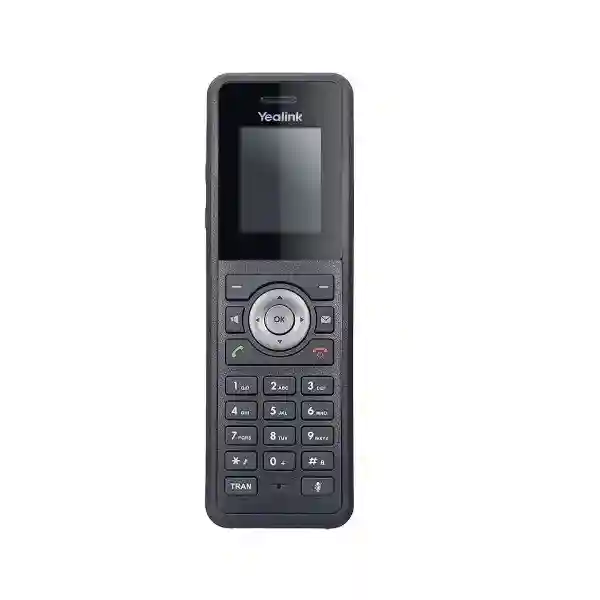
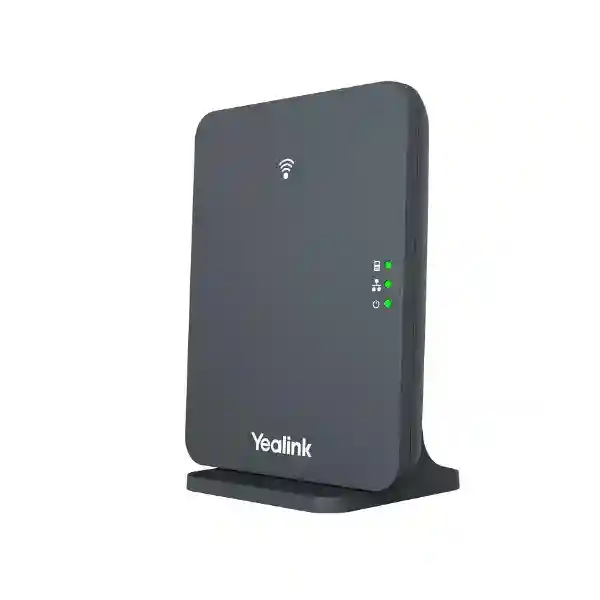
Yealink W79P Rugged DECT Phone System for Mobile Business Voice
The Yealink W79P is a rugged business cordless voice platform designed for teams that need to move through demanding work areas while remaining reachable on the company telephone system. Rather than placing a fixed desk phone at every work position, the W79P combines the W70B IP-connected DECT base station with the W59R rugged handset. The base links the wireless handset environment to a SIP service or compatible IP PBX, while the handset gives the user practical freedom to walk between work zones, respond to calls, transfer conversations, use a Bluetooth headset and receive vibration or safety alerts. This architecture is particularly relevant to warehouses, maintenance operations, manufacturing floors, loading areas, workshops, construction support teams, hotels, healthcare support environments and other sites where a conventional desk endpoint is inconvenient.
For procurement teams in Uganda, the key advantage is not simply cordless calling. The system provides a defined business capacity model: up to 10 compatible DECT endpoints, up to 10 SIP accounts and up to 20 simultaneous calls on one W70B base. The W59R handset is IP67 rated and combines a rubberized, work-oriented design with a 1.8-inch colour display, Bluetooth connectivity, vibration alerting, noise reduction and dedicated alarm functions. In ideal radio conditions, Yealink specifies up to 50 metres of indoor DECT range and up to 300 metres outdoors. Actual coverage depends on walls, shelving, reinforced concrete, machinery, metal structures, interference and base placement, so professional site planning remains important.
The W79P is therefore best evaluated as a complete communication node rather than an isolated handset. Buyers should confirm SIP platform compatibility, required extension count, concurrent-call demand, radio coverage, PoE availability, charging locations, alarm requirements and future handset expansion. FourTeck can use those inputs to prepare a deployment-oriented quotation rather than a simple unit-price response.
Instant Specifications & Procurement Fact Rail
W70B base + W59R rugged handset
W59R handset: IP67
Up to 10 endpoints, 10 SIP accounts, 20 calls
1 × RJ45 10/100M Ethernet
IEEE 802.3af PoE Class 1 or AC adapter
Quote-based business procurement
The fact rail gives procurement teams a rapid qualification view. The W79P is a single-cell DECT system, so its capacity and radio architecture should be matched to the building before quantities are finalized. A single base can serve a compact facility very effectively, while complex multi-building estates or sites requiring seamless roaming across many radio cells may need a different Yealink multi-cell architecture. The W59R supports two simultaneous calls per handset, while the base platform supports twenty concurrent calls across the system. The base can be powered through a compatible PoE switch, which can simplify installation and allow the communications layer to benefit from centralized UPS protection where the switching infrastructure is backed up. Where PoE is not available, an approved AC power method can be used. Warranty terms, lead time and exact included accessories should be stated on the FourTeck quotation because commercial conditions can vary by shipment and sourcing channel.
Operational Product Architecture & Overview
The W79P separates the wired IP connection from the user’s mobile endpoint. The W70B base station sits on the Ethernet network and communicates with the organization’s SIP platform. The W59R handset communicates over DECT radio rather than ordinary Wi-Fi. This distinction matters operationally. Voice traffic from the handset is carried through a purpose-built cordless voice environment, while the base provides the bridge to the IP network. The result is a deployment model in which roaming staff do not need a network socket at each work position and do not consume a conventional Wi-Fi client association for the handset itself.
The W70B is designed for small and medium business environments and supports up to ten compatible Yealink DECT handsets or endpoints. It can register up to ten SIP accounts and process up to twenty simultaneous calls. This means capacity planning should consider both users and call concurrency. A ten-handset warehouse does not necessarily generate twenty calls at once, but the available system headroom can be valuable during busy dispatch windows, shift handovers or customer-service peaks. Each W59R can manage up to two simultaneous calls, supporting common workflows such as call waiting, hold and transfer.
Radio planning is equally important. Yealink states ideal-condition ranges of up to 50 metres indoors and 300 metres outdoors. These figures are useful design references, not guaranteed site radii. Steel shelving, cold-room panels, concrete cores, elevator shafts, machinery, dense storage, multiple floors and long corridors can alter radio behaviour. The correct procurement process therefore begins with a floor plan and user movement pattern. The base should be located where network connectivity, power and radio geometry all make sense. Up to six RT30 repeaters can be used with the base where appropriate to extend coverage, although buyers should distinguish coverage extension from a true multi-cell roaming architecture when designing larger estates.
The rugged handset addresses another frequent operational problem: ordinary office cordless phones can be poorly suited to dusty, humid or physically demanding locations. The W59R carries an IP67 rating and has a work-oriented rubberized exterior. It includes vibration alerting, which is useful when acoustic ringers are difficult to hear, and Bluetooth for compatible wireless headsets. Alarm functions include push-button, no-movement, man-down and running alerts. These features can support workplace communication procedures, but they should not be treated as a replacement for a certified life-safety system or site-specific emergency process.
Audio is built around HD voice capabilities, full-duplex speakerphone operation, hearing-aid compatibility and flexible noise reduction. Codec support includes G.722 and multiple narrowband codecs, with additional codec availability depending on configuration. On the network side, the platform supports SIP, VLAN tagging, 802.1X, LLDP, DHCP or static addressing and common NAT traversal functions. Security mechanisms include TLS, HTTPS, SRTP, digest authentication and encrypted configuration files. These controls help the W79P fit into managed business voice networks where configuration integrity and protected signaling are important.
Management is another part of the architecture. The system supports provisioning through TFTP, FTP, HTTP, HTTPS and Yealink RPS, with browser, phone and automated configuration methods. Handset firmware can be updated over the air through the base. For organizations with several devices, this reduces the need to manually configure every handset from its keypad. Procurement teams should still confirm the intended PBX templates, firmware baseline, extension plan and remote-management policy before rollout.
Enterprise Business Outcomes & Value Analysis
The W70B supports up to twenty simultaneous calls, ten SIP accounts and ten compatible DECT endpoints. This gives supervisors and procurement teams a clear capacity ceiling to compare against extension count and peak calling patterns. Rather than buying only for today’s minimum requirement, a site can reserve endpoint capacity for new shifts, departments or replacement handsets. The system is particularly effective where a modest number of mobile users need reliable business voice without the wiring footprint of individual desk phones.
The W59R’s IP67 construction is intended for challenging workplaces where dust, moisture and everyday handling create more risk than in an office. Its rugged form reduces dependence on consumer-style cordless devices that may not tolerate operational conditions. Long stated battery endurance, quick charging and vibration alerting also support shift-based work. Actual battery duration varies with Bluetooth use, call load, signal conditions, age and charging practices.
A business can begin with the bundled handset and base, then add compatible endpoints up to the W70B limit. This modularity helps organizations avoid deploying a separate base for every user. Optional RT30 repeaters can address selected coverage gaps. For facilities that exceed the single-cell model, the same procurement exercise can identify when a Yealink multi-cell system is more appropriate, preventing overextension of a single base.
TLS, SRTP, HTTPS, digest authentication, encrypted configuration files, VLAN support and 802.1X provide tools for integrating the system into controlled enterprise networks. These capabilities are most valuable when they are deliberately configured. Buyers should align certificate handling, voice VLAN policy, provisioning credentials, PBX transport settings and administrator access with the organization’s network standards.
Automated provisioning and Yealink RPS support can reduce repetitive configuration work. A defined template can carry server addresses, account parameters and policy settings to devices, while over-the-air handset upgrades reduce physical intervention. This becomes increasingly valuable when several branches use the same platform and the IT team wants repeatable configuration rather than one-off handset programming.
DECT mobility can reduce the need to install a wired desk endpoint at every operational position. PoE support on the base can consolidate power and network delivery, while one base can support multiple endpoints. Cost planning should include additional handsets, repeaters, headsets, PoE switching, PBX licensing, hosted SIP subscriptions, spares and installation effort rather than comparing only the initial bundle price.
Mobile staff can answer and transfer calls while moving between operational zones instead of returning to a fixed desk. Bluetooth headset support can help hands-busy workflows, and vibration alerts can improve awareness in noisy spaces. Alarm functions provide additional workflow options for organizations that establish suitable response procedures and understand that handset alarms complement rather than replace dedicated safety systems.
Key Hardware & Software Highlights
| Component | Capability | Operational meaning |
|---|---|---|
| W59R handset | IP67 rugged design | Better suited to dust, moisture and demanding handling than standard office handsets. |
| W70B base | 10 endpoints / 20 calls | Consolidates multiple mobile users on one IP-connected DECT base. |
| Ethernet & PoE | 10/100M RJ45, 802.3af Class 1 | Can simplify base installation and centralize power through compatible switching. |
| Bluetooth | Wireless headset connectivity | Supports hands-free work where users must move or handle equipment. |
| Provisioning | HTTP/HTTPS/TFTP/FTP/RPS | Enables repeatable rollout and centralized configuration workflows. |
| Security | TLS, SRTP, HTTPS, AES configuration protection | Provides controls for protected signaling, media and configuration handling. |
The value of these features depends on deployment discipline. PoE is useful only when the connected switch supports the required standard and the voice network has sufficient power budget. Security features need corresponding PBX and network settings. Automated provisioning requires controlled templates and credentials. Ruggedization reduces environmental risk but does not make the handset indestructible. Bluetooth supports flexible headsets, but accessory compatibility should be checked before bulk purchase. A strong bill of materials therefore connects each feature to a real operational requirement rather than treating the specification sheet as a checklist of isolated functions.
Technical Specifications Ledger
| Area | Specification | Procurement note |
|---|---|---|
| Bundle | W70B base station and W59R handset | Confirm shipment contents on quote. |
| Display | 1.8-inch 128 × 160 TFT colour display | Backlit screen and keypad support mobile operation. |
| Protection | IP67 W59R handset | Suitable for demanding environments within manufacturer limits. |
| Capacity | Up to 10 handsets, 10 SIP accounts, 20 simultaneous calls | Size against user count and peak concurrency. |
| Per handset | Up to 2 simultaneous calls | Supports hold and call-waiting workflows. |
| Range | Up to 50 m indoor / 300 m outdoor in ideal conditions | Site materials can significantly change coverage. |
| Repeaters | Up to 6 RT30 per base | Use after radio planning; not a substitute for every multi-cell requirement. |
| Ethernet | 1 × RJ45 10/100M | Connect base to voice/data network. |
| Power | IEEE 802.3af PoE Class 1; external adapter 100–240 V input, 5 V/600 mA output | Verify PoE budget and regional power arrangements. |
| Battery | 1460 mAh lithium-ion, 3.7 V, 5.4 Wh | Battery performance changes with age and usage. |
| Talk time | Up to 28 hours ideal; lower with Bluetooth headset use | Plan charging around actual shift patterns. |
| Standby | Up to 360 hours ideal; lower with Bluetooth | Treat as laboratory-style reference, not guaranteed field runtime. |
| Audio | HD audio, full-duplex speakerphone, HAC, noise reduction | Codec and PBX settings affect end-to-end quality. |
| Wideband codec | G.722; AMR-WB optional | Confirm platform support where specific codecs matter. |
| Network | SIP, VLAN 802.1Q/802.1P, 802.1X, LLDP, DHCP/static, STUN | Align with enterprise voice VLAN and access policies. |
| Security | TLS, HTTPS, SRTP, digest authentication, AES-protected configuration | Requires compatible server-side configuration. |
| Handset dimensions | 157 × 51 × 24 mm | Useful for holster, storage and charging planning. |
| Base dimensions | 130 × 100 × 25.1 mm | Compact wall or desktop placement. |
| Handset operating temperature | 0 to 40°C | Check local environment before deployment. |
| Base operating temperature | -10 to +45°C | Avoid unsuitable enclosures and heat accumulation. |
| Humidity | 10–95% operating humidity | Observe installation and condensation limits. |
Specifications should be interpreted as system design inputs. A procurement document should state the handset quantity, base quantity, repeater requirement, intended SIP platform, power method, headset requirement and installation assumptions. The W79P uses Yealink DECT endpoints; third-party DECT handset interoperability should not be assumed. SIP interoperability is a separate consideration and should be validated against the PBX or hosted provider. Where a project has strict compliance, environmental or firmware requirements, request confirmation against the exact hardware and software revision offered.
Configuration & Sizing Worksheet
Step 1 — Count mobile users and extensions. Record how many people need a handset during the busiest shift, whether handsets are assigned individually or shared, and how many distinct SIP extensions are required. The W70B supports up to ten compatible endpoints and ten SIP accounts. If the requirement exceeds that limit, do not simply add users to the design without reassessing the architecture.
Step 2 — Estimate call concurrency. Note how many calls may occur at the same time during dispatch peaks, customer-service periods, shift changes and incident response. The base supports up to twenty simultaneous calls, while each handset supports up to two. PBX trunks and licenses must also be sized independently because base capacity does not create external call channels by itself.
Step 3 — Map the radio environment. Mark offices, loading bays, warehouse aisles, stairwells, outdoor yards, workshops, concrete cores and metal partitions. The published ideal-condition range is up to 50 metres indoors and 300 metres outdoors, but real structures can reduce coverage. Place the base with radio geometry in mind, not merely next to the nearest switch. Identify whether RT30 repeaters are appropriate or whether a multi-cell design is required.
Step 4 — Validate network and power. The base needs Ethernet and can use IEEE 802.3af PoE Class 1. Confirm switch compatibility, available PoE budget, VLAN assignment, DHCP scope, NTP, DNS, firewall policy, SIP reachability and any 802.1X requirement. If using AC power, ensure a suitable outlet and approved power arrangement are available at the chosen base position. Where voice continuity matters, consider UPS-backed switching and upstream network resilience.
Step 5 — Confirm platform and service requirements. Identify the IP PBX, hosted SIP provider or Microsoft SIP Gateway scenario. Record server addresses, extension credentials, outbound proxy requirements, transport method, codec policy, voicemail integration and directory requirements. Confirm whether the platform charges per extension, user, trunk or feature. Those service costs are separate from the handset hardware.
Step 6 — Define accessories and spares. Determine whether users need Bluetooth headsets, belt clips, spare batteries, additional charging cradles, repeaters or replacement handsets. For critical operations, keeping a preconfigured spare can reduce downtime compared with waiting for a replacement shipment.
Step 7 — Prepare the quote request. Provide site city, handset count, base count if already known, floor-plan dimensions, number of floors, construction type, SIP platform, PoE availability, accessory needs, desired delivery window and whether preconfiguration is required. This information allows FourTeck to prepare a more useful commercial response and identify design questions before equipment reaches site.
Deployment Scenarios & Industry Use Cases
Large Enterprise & Multi-Site Operations
Within a large organization, the W79P can be used in defined single-cell zones such as a maintenance store, security post, warehouse section or branch office. The important design decision is scope. A large enterprise should not assume that one single-cell base is the correct architecture for an entire campus. Instead, identify localized teams that fit within the ten-endpoint capacity and radio footprint. Standardized provisioning templates can help multiple branches maintain consistent SIP, VLAN and security settings. If users must roam continuously across a broad campus, a Yealink multi-cell platform should be evaluated.
Financial & Banking Facilities
Banks and financial institutions may use rugged cordless endpoints for facilities, security coordination, archives, loading areas or back-office operational teams where fixed desk phones are not practical. Network administrators can place the W70B on a controlled voice VLAN and use supported encrypted signaling and media where the PBX configuration allows. Deployment should follow the institution’s access-control, logging, certificate and change-management standards. Handset alarm functions can supplement internal procedures, but they should never be represented as certified security or emergency infrastructure.
Educational & Campus Networks
Schools, universities and training centers can deploy the system for maintenance, stores, laboratories, workshops, residence support or security teams. DECT mobility allows staff to remain reachable without relying on a desk location. Before purchase, campus IT teams should map building materials and identify whether a single-cell deployment is appropriate for each zone. A W79P in an individual workshop or facility can be straightforward; seamless roaming across many buildings is a different requirement and should be designed with the appropriate multi-cell platform.
Government, Utilities & Controlled Facilities
Government agencies, utilities and public-sector operations often require documented bills of materials, predictable configuration and controlled procurement. The W79P can suit stores, workshops, field-support bases and operational buildings where staff need a rugged handset. Procurement documentation should identify exact model, quantity, accessories, firmware expectations, warranty route, delivery location and acceptance requirements. Organizations with formal security accreditation should validate the complete SIP and network architecture under their own standards rather than relying solely on endpoint feature descriptions.
Warehousing, Logistics & Light Industry
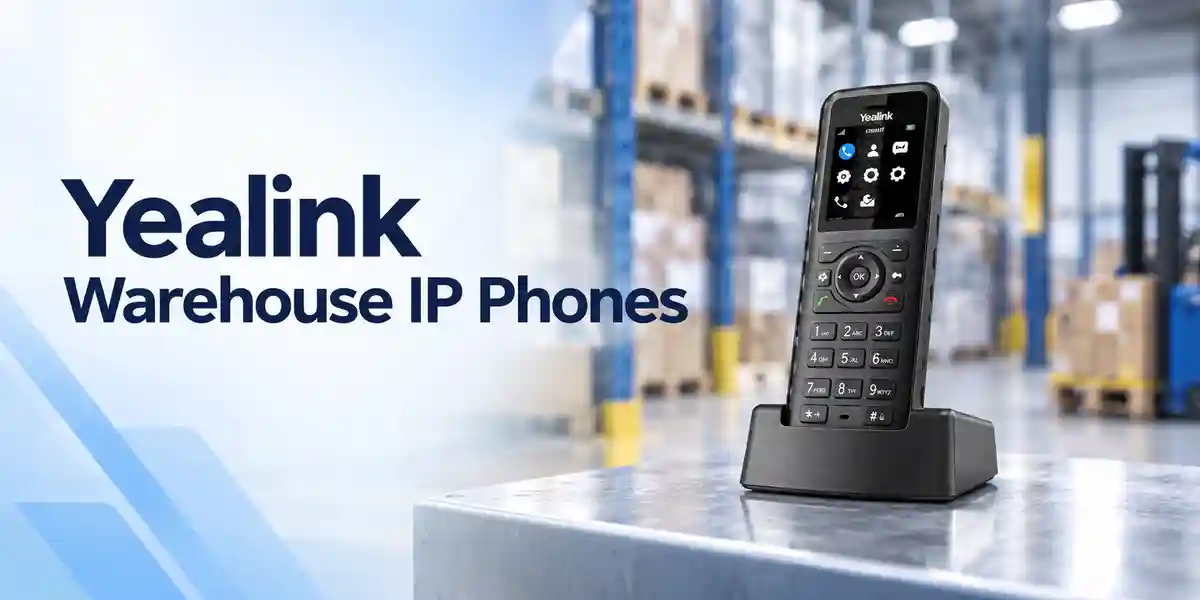
This is one of the clearest W79P use cases. Workers may move between receiving, storage, picking, dispatch and loading areas while calls need to follow them. The IP67 handset, vibration alert, Bluetooth support and noise reduction address common practical issues in such environments. Radio surveys are particularly valuable because metal racking and stored goods can reshape coverage. A base positioned solely for convenient cabling may perform worse than one placed for radio visibility, so network and facilities teams should coordinate placement.
Technical Deep Dive: Processing, Radio & Voice Architecture
The W79P architecture concentrates IP processing at the W70B and keeps the handset on the DECT side of the system. This is operationally different from deploying a Wi-Fi handset. The base manages SIP registration and IP connectivity, while the DECT radio layer serves mobile endpoints. Capacity is expressed as up to ten SIP accounts, ten endpoints and twenty simultaneous calls. For planners, these are three separate dimensions. Endpoint count defines how many supported devices can register. SIP account count defines available account registrations. Concurrent-call capacity defines the aggregate call-processing ceiling. The user experience then depends on PBX capacity, LAN quality, WAN performance and radio conditions.
Voice quality uses HD audio capabilities and G.722 wideband support, together with full-duplex speakerphone operation and noise-reduction functions. Wideband audio requires compatible end-to-end conditions; a wideband-capable handset cannot force an external carrier or remote endpoint to use the same codec. The base also supports network controls such as VLAN tagging, LLDP and 802.1X, which help administrators place voice devices into an established enterprise access model. PoE Class 1 support simplifies physical installation because a compatible switch can provide both data connectivity and base power over the Ethernet run.
DECT coverage should be understood as a radio-engineering parameter, not a promise of a perfect circle around the base. The ideal figures of 50 metres indoors and 300 metres outdoors provide an upper reference. Dense construction, metal, elevation changes and interference can shorten useful range. Repeaters can extend selected coverage, but very large facilities may require multi-cell design to achieve predictable roaming and handover. That architectural choice should be made before bulk ordering.
Technical Deep Dive: Firmware Security & Operational Control
The platform includes TLS, SRTP, HTTPS, digest authentication, OpenVPN support and encrypted configuration files. These mechanisms give administrators options for protecting signaling, media and provisioning, but the final security posture depends on configuration across the endpoint, PBX, network and certificate infrastructure. For example, enabling encrypted SIP transport requires compatible server settings and certificate handling. SRTP similarly depends on the call platform. A procurement team should therefore ask whether the deployment partner will merely deliver hardware or also align device configuration with the organization’s security standard.
Provisioning is a major operational advantage in repeated deployments. The W79P supports common provisioning methods and Yealink RPS, while handset upgrades can be delivered over the air through the base. A controlled template can reduce typing errors and speed rollout across multiple endpoints. Good practice includes separating reusable configuration from device-specific credentials, restricting administrative access, documenting firmware versions and testing updates on a limited group before broad deployment. Where change windows are formal, the handset and base should be incorporated into the same governance process as other voice endpoints.
The system also supports logging and trace export functions useful for troubleshooting. When calls fail, the endpoint is only one possible cause. Engineers may need to distinguish DECT coverage problems from DHCP, DNS, VLAN, firewall, SIP authentication, NAT, PBX routing or carrier issues. A structured deployment baseline makes that diagnosis faster because the expected network and account parameters are documented.
Technical Deep Dive: Availability, Redundancy & Recovery
The W79P is a single-base architecture, so availability planning should recognize the base as an important dependency for its registered handsets. If the W70B loses power, Ethernet connectivity or SIP reachability, the associated cordless users may lose service. PoE can improve operational design when the switch is connected to a UPS, because base power then follows the protected network infrastructure. This does not create full redundancy by itself; upstream switching, routing, PBX and WAN dependencies still need consideration.
Organizations with high continuity requirements should define spare strategy and recovery procedure. A spare base or handset can be useful, but restoration time depends on configuration availability and registration procedures. Centralized provisioning can shorten replacement work if templates and credentials are securely maintained. Hosted voice deployments should also examine internet resilience, while on-premises PBX deployments should examine server and trunk redundancy. The W70B supports outbound proxy server backup features, but the complete failover behaviour depends on the surrounding SIP platform.
For disaster recovery, document device inventory, MAC addresses where relevant, extension assignments, provisioning locations, firmware baseline and administrator ownership. Keep replacement accessories compatible with the installed generation. A rugged handset can reduce everyday failure risk, but operational continuity still comes from system-level planning rather than physical durability alone.
Pre-Purchase Buyer Gap Checklist
Is the W79P a complete working bundle? The standard W79P architecture combines a W70B base and W59R handset, with charging and connection accessories specified by Yealink. Commercial shipment contents should still be confirmed on the quotation because packaging, regional power accessories and sourcing can vary.
Does the handset connect directly to Wi-Fi? The W79P uses DECT between handset and base. The W70B connects to the IP network through Ethernet. This is important when comparing it with Wi-Fi cordless products.
Can third-party DECT handsets be assumed to work? No. Yealink documents its DECT ecosystem around compatible Yealink endpoints and specifically warns against assuming third-party DECT device compatibility. If an existing site has cordless devices from another manufacturer, list them during design rather than assuming reuse.
Are there hidden service costs? The hardware itself does not remove the need for a SIP service or PBX. Depending on the chosen platform, there may be extension licenses, hosted-user subscriptions, SIP trunks, calling charges, support agreements or configuration services. Request these as separate commercial lines where applicable.
Will published range be achieved in a warehouse? Not necessarily. The stated 50-metre indoor and 300-metre outdoor figures are ideal-condition references. Steel racks, inventory, walls and machinery can reduce or reshape coverage. Coverage validation is more reliable than buying solely from the maximum range figure.
Does IP67 mean the handset cannot be damaged? No. The rating addresses defined ingress-protection conditions; it does not make the handset immune to every impact, chemical, temperature, misuse or environmental exposure. Follow manufacturer limits and workplace procedures.
How should power be planned? The W70B can use 802.3af PoE Class 1 or an approved AC arrangement. PoE is attractive because it reduces local adapters and can benefit from centralized UPS backup. Confirm switch power budget before deployment.
What happens when the site grows beyond ten handsets? That is the point to reassess architecture. Additional isolated W70B systems may fit separate zones, but a facility needing seamless roaming across many cells should consider an appropriate Yealink multi-cell system rather than stretching a single-cell design beyond its intended scale.
What about product lifecycle? Procurement teams should ask for current availability, hardware revision and recommended successor options at quote time. Product generations evolve, and a long-term standardization project should avoid assuming that a historical model remains the best choice indefinitely.
What should be tested before bulk rollout? Validate SIP registration, inbound and outbound calling, transfer, hold, voicemail, caller ID, directory functions, Bluetooth accessories, alarm behaviour, radio coverage, charging routine and firmware policy on a pilot group. A short acceptance checklist prevents configuration assumptions from becoming a fleet-wide issue.
Uganda Procurement & Delivery Logistics
FourTeck Uganda can structure W79P procurement around the actual deployment rather than a bare hardware count. A useful request begins with the number of mobile users, site location, building type, current PBX or hosted voice platform, PoE availability and expected accessories. From that information, the quotation can identify the core W79P bundles, additional compatible handsets, repeaters or headsets where required, and any requested configuration or staging services.
Order processing should distinguish stock status from lead time. Availability can change between quotation and purchase order, particularly for specific product generations, so buyers should request a validity period and confirm availability when approving the order. Delivery planning should include the final destination, receiving contact, site access conditions and whether equipment will be delivered centrally or distributed to branches. Projects with fixed commissioning dates should allow time for commercial approval, sourcing, transport, staging and acceptance testing.
Preconfiguration can reduce on-site effort when the customer provides approved SIP and network parameters in advance. Depending on project scope, devices can be prepared with a defined firmware baseline, provisioning details, VLAN settings or account templates before dispatch. Credentials should be exchanged using an agreed secure method. For multi-site projects, label plans and asset records can make branch distribution easier and reduce confusion during installation.
Warranty processing should be based on the commercial terms stated on the quotation or invoice. Keep serial numbers, purchase documentation and fault descriptions. Where a unit develops a problem, structured troubleshooting helps separate handset, battery, charger, base, network and SIP-platform faults before a replacement is requested.
Local Coverage Matrix
Suitable for corporate offices, warehouses, hospitality operations, workshops and service facilities requiring rugged cordless voice.
Useful for logistics, hospitality, facilities and operational teams where mobility and reliable internal calling are priorities.
Relevant to industrial, manufacturing, warehouse and commercial deployments that need durable mobile endpoints.
Supports branch, education, healthcare support, hospitality and distribution communication requirements.
Can be specified for institutional, commercial, logistics and facilities teams requiring SIP-connected cordless mobility.
Regional delivery and project support should be confirmed against the specific order, quantity and schedule. For sites outside major hubs, provide the exact delivery destination and commissioning expectations early so transport and technical coordination can be included in the project plan.
Cross-Border & Regional Supply Chains
Organizations operating across East Africa, the Gulf and wider African markets often benefit from a consistent device standard and a region-aware sourcing process. FourTeck maintains regional web presences for Uganda, Kenya, African enterprise markets, UAE and Kuwait. Cross-border projects should still account for local taxes, import processes, delivery terms, power accessories, regulatory requirements and warranty routing.
For standardized deployments, create a common technical baseline covering handset model, base model, firmware, SIP template, network policy, accessory list and acceptance test. Then adapt commercial and logistics details by country. This approach reduces configuration drift while allowing local procurement realities to be handled transparently. Where product generation changes during a long rollout, validate successor compatibility before mixing hardware across sites.
Related Yealink Solutions & Internal Resources
A W79P project may sit within a broader business voice environment. Buyers can explore Yealink solutions in Uganda for fixed desk endpoints, conferencing and complementary communication hardware. Teams that need ordinary office desk devices alongside rugged cordless users can review the wider FourTeck Uganda technology portfolio and request a combined bill of materials.
When mobility requirements exceed a single W70B radio cell, ask about Yealink multi-cell DECT systems and compatible rugged handsets rather than purchasing repeaters without a coverage design. Where users need hands-free operation, request compatible Bluetooth headset options. Where PoE is preferred, include suitable managed PoE switching and UPS planning in the same infrastructure review. For branch rollouts, provisioning, labeling and firmware staging can also be included in the commercial discussion.
Because category structures can change, the most reliable route for model-specific alternatives and accessories is the FourTeck Uganda contact team. Provide the current W79P requirement and state whether the priority is ruggedness, larger roaming coverage, newer-generation hardware, additional handsets or integration with an existing PBX. That makes the alternative-model comparison relevant to the project rather than generic.
FourTeck Technical Service Capabilities
Enterprise voice hardware delivers the best result when the bill of materials and configuration are checked before dispatch. FourTeck can support the procurement workflow by validating model references, endpoint quantities, accessory assumptions, PoE requirements and the relationship between the W79P and the customer’s SIP environment. This is particularly useful when a project includes several branches or mixes rugged cordless users with conventional desk phones.
Staging can include agreed firmware preparation, configuration templates and device labeling where included in the project scope. Pre-shipment checks can verify that ordered components match the approved bill of materials. For customers migrating from another phone platform, the technical discussion should cover extension mapping, network VLANs, SIP credentials, directory requirements, codec policy and acceptance tests before the installation window.
Post-sales troubleshooting is most effective when the deployment is documented. Keep network diagrams, extension assignments, firmware versions and purchase records. If a fault occurs, engineers can then isolate whether the issue is radio coverage, handset hardware, battery, charging, base connectivity, DHCP, VLAN, SIP registration, PBX routing or upstream service. For warranty cases, serial information and reproducible fault details help streamline assessment.
Extended Technical FAQ
1. What exactly is included in the Yealink W79P system?
The W79P is built around one W70B DECT IP base station and one W59R rugged DECT handset. Yealink documentation also identifies the charging cradle, rechargeable battery, base stand, Ethernet cable, decorative cover, quick-start material and power accessories in the package. Exact shipment contents should still be confirmed on the FourTeck quotation because regional packaging and commercial sourcing can differ. If your project needs more than one mobile user, additional compatible handsets are ordered separately up to the W70B capacity. A quote should therefore state the number of complete W79P bundles, extra handsets, repeaters, headsets and spare accessories rather than using a single ambiguous quantity.
2. How many handsets and calls can one W79P base support?
The W70B base supports up to ten compatible Yealink DECT endpoints, up to ten SIP accounts and up to twenty simultaneous calls. Each W59R handset can handle up to two simultaneous calls. These limits are useful for sizing, but they do not replace PBX and trunk planning. Your hosted voice service or on-premises PBX must also provide sufficient user licenses, extensions and external call capacity. For example, a W70B may technically process many concurrent calls while a SIP trunk has fewer external channels. Count users, SIP accounts and peak calls separately, then verify that every layer of the voice system supports the intended load.
3. Is the W59R suitable for warehouses and industrial environments?
The W59R is specifically designed as a ruggedized DECT handset and carries an IP67 ingress-protection rating. It also has a rubberized work-oriented design, vibration alerting, Bluetooth headset support and noise-reduction features that make it attractive for warehouses, workshops, logistics facilities and similar environments. However, IP67 should not be interpreted as immunity from all damage. Temperature limits, chemicals, severe impact and site-specific hazards still matter. Before bulk deployment, confirm that the handset is appropriate for the exact environment and test radio coverage around shelving, machinery, cold rooms, concrete structures and loading zones.
4. What range should we expect inside a building?
Yealink specifies up to 50 metres indoors and 300 metres outdoors in ideal conditions. Real buildings rarely behave like ideal radio spaces. Reinforced concrete, metal racks, elevators, machinery, stored goods, partitions and multiple floors can reduce or redirect usable coverage. The most reliable approach is to use the published figures as planning references and validate the actual site. The W70B supports compatible RT30 repeaters for selected coverage extension. If users need seamless movement across a very large facility, multiple buildings or a broad campus, evaluate a proper multi-cell DECT architecture rather than assuming repeaters will solve every roaming requirement.
5. Does the W79P require separate licenses?
The hardware purchase and the voice service are separate considerations. The W79P needs access to a compatible SIP platform, such as an IP PBX or hosted service. That platform may charge for users, extensions, SIP trunks, calling plans, advanced features or support. Those commercial terms are determined by the chosen service, not by the handset alone. Some optional codec or platform capabilities may also depend on the environment. Before ordering, identify the PBX or hosted provider and ask for a complete cost view covering hardware, service licenses, trunks, installation, accessories and ongoing support so the project budget is not based only on endpoint price.
6. Can the W70B be powered from our PoE switch?
Yes, the W70B supports IEEE 802.3af Power over Ethernet, Class 1. This can simplify installation because a single Ethernet run carries network connectivity and power to the base. It can also improve continuity when the PoE switch is protected by a suitable UPS. Before deployment, confirm that the switch supports the required standard and has enough available PoE budget. The base can also use the specified external power arrangement where PoE is unavailable. Do not substitute unapproved adapters simply because the connector appears to fit; voltage, current and quality matter. Include the intended power method in the deployment documentation.
7. What security features are available?
The W79P platform supports security mechanisms including TLS, SRTP, HTTPS, digest authentication, encrypted configuration files and multiple cryptographic hash options, along with network controls such as 802.1X and VLAN support. These are capabilities rather than automatic guarantees. Protected signaling and media require compatible PBX configuration, certificates and policies. Administrators should also secure provisioning credentials, restrict management access, maintain supported firmware and document configuration changes. For organizations with formal security requirements, the endpoint should be assessed as part of the complete voice architecture, including switches, firewalls, SIP servers, trunks and remote-management systems.
8. Can FourTeck help configure the phones before delivery?
Preconfiguration can be discussed as part of the project scope. Useful preparation may include an agreed firmware baseline, provisioning parameters, network settings, device labels and SIP templates, subject to the information and access supplied by the customer. For security, account credentials should be exchanged using an approved method and handled according to the customer’s policy. A pilot configuration is recommended before a large rollout. The pilot should test registration, inbound and outbound calling, transfers, voicemail, directories, Bluetooth accessories, alarm behaviour and radio coverage. Once the baseline is accepted, it can be applied more consistently to the remaining deployment.
9. How are warranty and replacement issues handled?
Warranty terms should be taken from the FourTeck quotation or invoice for the specific supply. Keep purchase documentation, serial numbers and the original deployment records. When a fault is reported, first isolate the affected component: handset, battery, charger, base station, Ethernet connection, network service or SIP platform. A reproducible fault description and troubleshooting record can accelerate assessment. For operationally critical sites, consider holding an approved spare handset or base so service restoration does not depend entirely on replacement lead time. If a project requires a specific replacement service level, request that requirement during procurement rather than assuming a standard hardware warranty includes it.
10. When should we choose a multi-cell system instead of the W79P?
Choose the W79P when a single W70B cell, optionally supported by suitable repeaters, fits the user count and coverage requirement. Reassess the architecture when you need more than ten endpoints on one system, broad multi-floor or multi-building coverage, or seamless roaming across many radio cells. A large warehouse, hospital, campus or industrial estate may be better served by a Yealink multi-cell DECT platform. The decision should be based on floor plans, movement paths, concurrency, coverage testing and growth plans. FourTeck can use those inputs to compare a single-cell W79P design with a multi-cell alternative before quantities are finalized.
Plan Your Yealink W79P Deployment in Uganda
For a useful quotation, send FourTeck your required handset quantity, installation city, building type, approximate coverage area, number of floors, current PBX or hosted SIP platform, PoE availability and any Bluetooth headset, repeater or spare-unit requirements. If the site is a warehouse or industrial facility, include information about metal racking, concrete partitions and outdoor working zones. These details help determine whether the W79P single-cell architecture is appropriate and whether additional coverage components should be considered.
The commercial proposal can then separate core hardware, optional endpoints, accessories, configuration services and delivery assumptions. Availability and pricing should be confirmed at quotation time because product lifecycle and supply conditions can change. For organizations standardizing across multiple Ugandan branches, request a repeatable configuration and labeling plan so each site receives a consistent deployment baseline.

Reviews
There are no reviews yet.