ENTERPRISE CELLULAR CONNECTIVITY | UGANDA
Cisco Meraki MG52 5G Cellular Gateway for Enterprise WAN
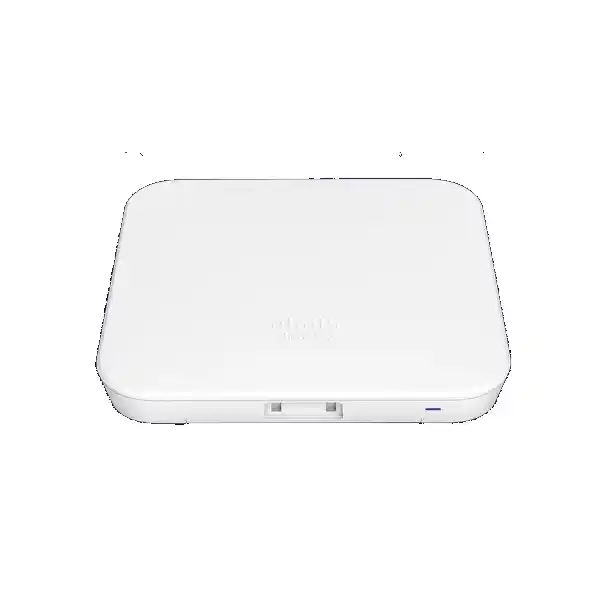
The Cisco Meraki MG52 is a cloud-managed 5G cellular gateway that converts a supported operator’s mobile data connection into Ethernet WAN connectivity. It helps businesses establish an alternative to fixed-line internet, add a cellular failover path, or provision branch locations where terrestrial connectivity is difficult. The MG52 is the integrated-antenna model; customers requiring externally attached directional antennas should evaluate the separate MG52E.
Designed for distributed networks, the gateway combines 5G SA/NSA Sub-6 GHz connectivity, LTE Cat 20 fallback capability, dual physical nano-SIM slots, eSIM hardware, two 2.5 GbE Ethernet interfaces, and Meraki dashboard management. It is not a substitute for a firewall or an operator data contract: a complete deployment typically requires the gateway, suitable Meraki licensing, an active supported cellular subscription, adequate signal and a downstream router or firewall selected for the business topology.
For a Uganda quotation, provide the installation city, number of sites, mobile network operator, required bandwidth, failover expectations and power arrangements. FourTeck can prepare a configuration-focused bill of materials rather than an ambiguous hardware-only estimate.
Procurement Facts at a Glance
MG52-HW, integrated antennas; confirm regional radio SKU before purchase.
5G SA/NSA Sub-6 GHz and LTE Cat 20; two 2.5 GbE ports.
802.3at PoE+ or supported DC adapter; maximum specified power load 16 W.
Price, stock, licensing, lead time and local warranty handling subject to quotation.
How the MG52 Fits a Business Network
The MG52 bridges a cellular access network and an Ethernet-connected downstream device. A branch firewall can treat the Ethernet handoff as a WAN uplink and apply its own routing, security policies and VPN configuration. For a primary wireless WAN deployment, an administrator should first assess coverage, data-plan limitations, traffic demand and application latency. For failover, the firewall or SD-WAN appliance must detect loss of the preferred uplink and switch according to its configured policy. The cellular gateway itself does not eliminate the need for thoughtful routing design.
Meraki dashboard monitoring gives administrators remote visibility into cellular connectivity, signal conditions and device status. Features include alerting, remote diagnostics, configuration event logs and scheduled firmware management. A live license and connectivity to the management service are important operational dependencies. The two Ethernet interfaces can support two downstream connections; one interface is configurable for wired WAN diagnostic use. The deployment should account for the fact that two Ethernet ports do not mean two independent cellular modems.
Radio placement frequently determines success. A device placed inside a shielded communications rack may receive substantially worse signal than one installed near an exterior wall or appropriate protected mounting position. Measure operator signal before finalizing mounting. Confirm weather exposure, cable routing, grounding and surge protection where relevant. Although the enclosure is IP67 rated, the overall installation must use compliant cabling and mounting practices.
Business Outcomes
- Higher WAN flexibility: A 5G uplink can supplement fiber or fixed wireless service where network diversity is essential.
- Continuity planning: A correctly configured downstream firewall can fail over to the cellular path when the primary circuit fails.
- Repeatable branch rollout: Centralized dashboard workflows support standard configuration and monitoring across locations.
- Operator choice: Dual SIM slots support operational selection between suitable plans; they do not provide simultaneous SIM load balancing.
- Security administration: Pair the gateway with an appropriately configured security appliance, operator service and access policies.
- Cost visibility: Plan hardware, licensing, SIM data, telemetry, power and support as distinct budget lines.
- Site adaptability: PoE+ power and compact mounting enable installation closer to suitable radio coverage.
- Remote troubleshooting: Signal diagnostics and event history can reduce unnecessary first-line site visits.
Technical Specifications
| Specification | Cisco Meraki MG52 |
|---|---|
| Radio | 5G SA/NSA Sub-6 GHz, LTE Cat 20 |
| Maximum wireless data rate, passthrough | 2 Gbps down / 300 Mbps up, theoretical |
| Maximum wireless data rate, NAT | 1.5 Gbps down / 300 Mbps up, theoretical |
| Ethernet | Two 2.5 GbE RJ45, one dedicated LAN and one convertible LAN/WAN |
| SIM | Two nano (4FF) physical SIM slots; one eSIM |
| Antenna | Integrated internal antennas |
| Dimensions | 173 × 173 × 36.5 mm |
| Weight | 560 g without accessories |
| Power | 802.3at PoE+ or supported DC power; maximum 16 W |
| Operating temperature | -40°C to 50°C |
| Humidity | 5%–95%, non-condensing |
| Ingress protection | IP67 |
| Management | Cisco Meraki dashboard, with appropriate Enterprise license |
| Package | MG52 hardware and mounting plate |
Specifications reflect Cisco Meraki published documentation; regional cellular bands, operator certifications and procurement eligibility require confirmation for the intended installation.
Configuration and Sizing Worksheet
Step 1 — Workload: List expected concurrent users, application traffic, peak download and upload demand, critical services and acceptable failover duration. Compare measured carrier performance rather than assuming theoretical modem rates will be achieved.
Step 2 — Signal: Record candidate operator coverage, RSRP and RSRQ at the proposed mounting position. Test at busy hours as well as quiet periods. Where the internal-antenna MG52 cannot obtain a reliable signal, evaluate the external-antenna MG52E and approved accessories instead.
Step 3 — Power: Verify the chosen PoE+ source has adequate power budget and cable length. If using DC, quote the correct regional adapter. Do not assume simultaneous PoE and DC inputs operate as uninterrupted redundant feeds: the device prioritizes the adapter and may restart when changing power sources.
Step 4 — Management: Identify the Meraki organization, licensing duration, ownership, administrator accounts and alert recipients. License options include 1-, 3-, 5-, 7- and 10-year MG52 Enterprise terms.
Step 5 — Bill of materials: Specify MG52-HW, Enterprise license, suitable SIM/data service, approved power equipment, Ethernet cabling, mounting provisions, optional surge protection and any downstream firewall or router. Confirm regional compliance and operator bands before purchase.
Deployment Scenarios
Distributed Enterprises
A retail or service organization can attach an MG52 to the WAN interface of a branch security appliance. Central monitoring helps the operations team distinguish cellular signal degradation from firewall or fixed-line issues. Data budgets should cover normal operations, failover traffic and management telemetry.
Financial Institutions
A branch may use the cellular path as an alternative uplink for approved applications. The security architecture must still address encryption, segmentation, access control and regulatory obligations. Test recovery under realistic transactions before treating the design as a continuity solution.
Education and Campus Networks
Campus administration buildings, temporary facilities and remote learning sites may benefit from cellular backhaul. Plan traffic shaping and content access policies at the downstream network layer, and assess carrier capacity during high-demand periods.
Government and Field Operations
Portable or temporary operational locations can use cellular access where a wired circuit is not practical. Procurement teams should validate applicable regulatory, data-handling, approved-carrier and physical-security requirements independently.
Architecture Deep Dives
Cellular Processing and Ethernet Handoff
The integrated modem supports 5G SA/NSA Sub-6 GHz and LTE Cat 20 connectivity. SA and NSA describe different radio and core-network arrangements; availability depends on the operator. Published 2 Gbps downstream passthrough and 1.5 Gbps downstream NAT maximums are ceilings under specified conditions, not guaranteed site throughput. A 2.5 GbE port avoids an unnecessary one-gigabit Ethernet bottleneck in suitable environments.
Firmware, Licensing and Operational Control
Administrators claim the device into a Meraki organization, assign it to a network and apply the relevant Enterprise license. The dashboard provides device status, cellular information, event history, alerts and firmware scheduling. Before deployment, allow for initial cloud connectivity and firmware updates. Restrict administrator privileges and document who controls subscription renewals and cellular account credentials.
High Availability and Recovery
Two downstream Ethernet connections can serve supported high-availability topologies, including paired MX appliances sharing a cellular uplink. This does not create redundant radio hardware or independent operator sessions. Dual SIMs support selecting an alternative subscription, but only one SIM operates at a time. A resilient design also tests power, coverage, cabling, carrier outages and failback behavior.
Buyer Questions Before Ordering
Is a license included? Do not assume so. Request a quotation that explicitly identifies the Enterprise license SKU and term.
Will any Uganda SIM work? Not necessarily. Confirm device radio bands, operator provisioning, APN, plan restrictions and local approval before ordering.
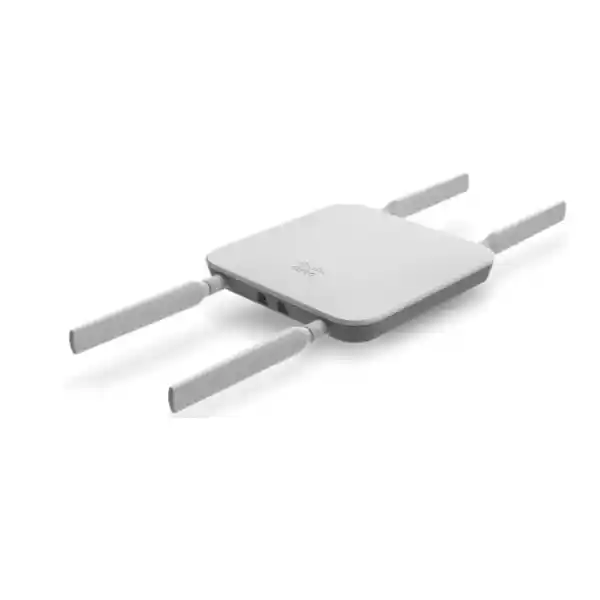
Can I use external antennas? The MG52 uses integrated antennas; MG52E is the appropriate variant to evaluate for supported external antenna solutions.
Is the advertised speed guaranteed? No. Carrier congestion, spectrum, signal, data plans and network design affect observed performance.
Does dual SIM mean bonded bandwidth? No. Only one SIM is active at a time; do not budget for simultaneous dual-SIM aggregation.
Will the device work without an MX? It can provide Ethernet connectivity to a compatible downstream device, but routing and security functions must be designed for the use case.
What does the power specification mean? The published maximum load is 16 W; source selection and adapter priority matter for continuity planning.
Uganda Procurement and Delivery
FourTeck accepts inquiries for MG52 projects in Kampala, Entebbe, Jinja, Mbarara and Gulu, as well as other Ugandan locations subject to delivery arrangements. A complete inquiry should identify quantity, site locations, preferred carrier, licensing term, power method and any staging requirements. Hardware availability, price, lead time, taxes, shipping, warranty routing and technical services should be confirmed in the written quotation. No stock or delivery guarantee is implied by this listing.
For cross-border projects, procurement teams may coordinate requirements through FourTeck Uganda, FourTeck Kenya, FourTeck Africa, FourTeck UAE and FourTeck Kuwait. Verify export eligibility, destination approvals, taxes and warranty jurisdiction for each country.
Related Equipment and Services
Depending on the deployment, ask about the Cisco Meraki MG52E for approved external antennas, Meraki MX security appliances for WAN failover and security policy, Meraki switches with suitable PoE capacity, the MG52 Enterprise license, approved power adapters, Ethernet cabling and surge protection. Request a consolidated bill of materials through FourTeck’s contact page rather than assuming that accessories or subscriptions ship with the gateway.
Technical Services
FourTeck can discuss pre-order compatibility checks, bill-of-materials review, licensing coordination, device staging and deployment assistance subject to agreed service scope. For operational handover, request an inventory record, configured organization ownership, firmware status, test results, SIM information and escalation contacts. Hardware warranty eligibility and replacement decisions follow the manufacturer’s applicable terms.
Frequently Asked Questions
1. What is the Cisco Meraki MG52 used for?
The MG52 supplies cellular internet connectivity to an Ethernet-connected network device. Organizations use it for primary wireless WAN, fixed-line backup, temporary branches and locations with difficult wired connectivity. The downstream network appliance remains responsible for functions such as firewall policy, traffic steering and VPN design.
2. Does the MG52 support 5G Standalone?
Yes. It supports 5G SA and NSA Sub-6 GHz modes, along with LTE Cat 20. Actual network attachment depends on the mobile operator, supported bands, provisioning and local coverage. Verify the intended carrier before placing an order.
3. Does it require a Meraki subscription?
Yes, plan for an appropriate MG52 Enterprise license for Meraki dashboard operation and support. Published licensing terms include one, three, five, seven and ten years. Request the exact license SKU and renewal responsibilities on the quotation.
4. Can two SIM cards share traffic?
No. Two physical SIM slots allow operator or subscription selection, but only one SIM is active at a time. Do not confuse dual-SIM capability with simultaneous cellular aggregation. Any switchover behavior should be validated against the current firmware and operational design.
5. Is MG52 suitable for outdoor installation?
The MG52 has an IP67-rated enclosure and a published operating temperature range of -40°C to 50°C. Nevertheless, installation quality, environmental exposure, proper cable sealing, surge protection and grounding all affect reliability. Follow the manufacturer installation guide.
6. How does MG52 differ from MG52E?
MG52 has internal antennas, whereas MG52E supports the manufacturer’s compatible external dipole and optional patch antenna solutions. The right choice depends primarily on placement and measured signal conditions. Non-approved antennas are not supported.
7. What Ethernet connectivity is available?
Two 2.5 GbE RJ45 ports are provided: one dedicated LAN and one convertible LAN/WAN interface. The convertible port may be used for wired WAN diagnostics. Confirm the intended topology and downstream port compatibility before installation.
8. How much mobile data will monitoring consume?
Cisco documentation estimates roughly 500–800 MB per month of telemetry and connection monitoring while idle, subject to firmware changes. Downstream user traffic adds to this amount. Size the data plan for management overhead, normal traffic and any failover period.
9. What warranty applies?
Cisco documentation lists a lifetime hardware warranty for MG52 devices and one year for accessories, subject to manufacturer terms and eligibility. Confirm local claim handling, purchase documentation and replacement procedures in advance. Retain original packaging and identifying details.
10. What information is needed for a Uganda quotation?
Provide hardware quantity, deployment cities, preferred operator, expected application loads, preferred license term, installation environment and downstream firewall model. Also specify whether power adapters, PoE equipment, configuration services or delivery are required. This helps avoid omissions and enables a comparable commercial proposal.
Plan Your Cisco Meraki MG52 Deployment
Request a Uganda quotation that separates gateway hardware, Meraki Enterprise licensing, cellular connectivity, power accessories and implementation services. Include operator and site details so compatibility and radio placement can be assessed before purchase. Final pricing, availability and delivery schedules are confirmed individually.

Reviews
There are no reviews yet.