
Fortinet FortiNAC CA-600F High-Performance Network Control and Application Server Uganda
The FortiNAC CA-600F is an enterprise Network Access Control appliance built for organizations that need to identify devices, understand who and what is connecting, enforce access policies and coordinate response across complex network environments. Fortinet positions this model as a high-performance Control and Application Server, with capacity for up to 15,000 network ports per server. For Ugandan enterprises planning large campus, banking, government, education, healthcare or distributed commercial networks, that capacity makes the CA-600F an important option when a smaller appliance would create an early scaling constraint.
Procurement of a network access control platform should begin with more than a model number. Buyers need to establish managed-port scale, site count, switch and wireless infrastructure, authentication dependencies, segmentation objectives, resilience targets, licensing requirements and operational ownership. FourTeck supports this process by helping customers convert those requirements into a practical bill of materials and deployment plan. The objective is to reduce avoidable surprises involving licenses, rack space, optics, power feeds, platform compatibility or project scope after the purchase order is issued.
FortiNAC provides visibility and control over devices and users attached to the network, supporting organizations that need a more disciplined approach to onboarding, access enforcement and response. The F-series appliance runs FortiNAC-OS, and Fortinet documents a deliberately restricted default access posture on the appliance, with additional services enabled as required for configured functions.
Procurement Fact Rail
FNC-CA-600F
Control and Application Server
Up to 15,000 network ports per server
1U rack mount
2 x 960GB SSD, software RAID1
Hot-plug 1+1 redundant PSU
The fact rail gives procurement teams a fast starting point, but final sizing should be based on the live environment rather than maximum port count alone. A design review should consider how ports are distributed across sites, the quantity and diversity of network devices, required integrations, planned growth, availability expectations and whether centralized management is required for multiple FortiNAC servers. Quote status, lead time, warranty entitlement and subscriptions should be confirmed on the commercial proposal because they can vary by sourcing route and project date.
Operational Architecture and Network Control
The CA-600F sits in the control plane of an enterprise access environment rather than acting like a conventional inline firewall carrying every production packet. Its role is to maintain awareness of the access infrastructure and connected endpoints, apply network access policy and coordinate enforcement through supported network equipment and integrations. This architectural distinction matters during procurement because appliance selection should be tied to managed infrastructure scale and control requirements, not confused with firewall throughput calculations.
Fortinet’s current platform information identifies the CA-600F as a Control and Application Server capable of managing up to 15,000 network ports. In a larger design, FortiNAC servers can be stacked to expand capacity. This provides a growth path for organizations whose campuses, branches, access switches, wireless networks and connected-device estates continue to expand. A bank may need control across headquarters, branches and service facilities; a university may need visibility across teaching blocks, residences, labs and administrative networks; a government organization may need consistent access policy across geographically separated offices. In each case, the value of the platform depends on accurate discovery, integration and policy design.
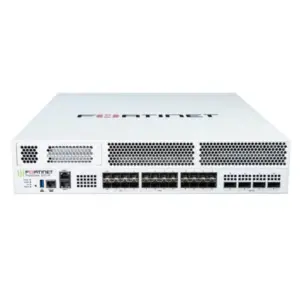
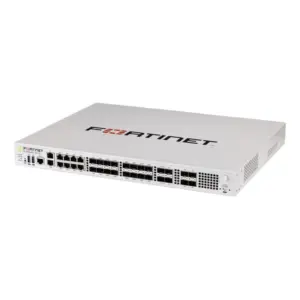
The hardware platform is designed for data-centre installation. The CA-600F uses a 1U rack-mount chassis, enterprise processor resources, DDR4 memory, dual solid-state disks configured with software RAID1 and high-speed network interfaces. Redundant hot-plug power supplies help remove a single PSU as an avoidable hardware dependency when both feeds are correctly provisioned. This does not eliminate the need for UPS capacity, separate power distribution paths, cooling calculations or wider high-availability planning; it provides the physical foundation on which those practices can be built.
FortiNAC-OS also changes the operational conversation around appliance administration. Fortinet documents limited ports open by default, with additional access explicitly enabled when features require it. For security teams, this supports a least-exposure approach to management services. During implementation, administrators should map every required integration and communication path, then permit only what the approved architecture requires. This is especially important in regulated networks where change records, firewall rules and administrative access need to be documented before go-live.
Enterprise Business Outcomes
Hardware and Software Highlights
| Component | CA-600F Design | Operational Relevance |
|---|---|---|
| Processor | AMD EPYC 7413, 24 core, 2.65GHz base | Enterprise compute platform for high-scale control and application workloads. |
| Memory | 32GB DDR4 | Supports the appliance software and operational state required by the platform. |
| Storage | 2 x 960GB SSD | Solid-state appliance storage with software RAID1 protection. |
| Networking | 1 x GbE RJ45 plus 4 x 1GbE SFP or 10GbE SFP+ | Flexible connectivity for management and network integration; confirm optics and cabling in the BOM. |
| Power | Hot-plug 1+1 redundant PSU | Supports redundant power-feed design and serviceability. |
| Operating system | FortiNAC-OS | Purpose-built appliance software environment with restricted services by default. |
Technical Specifications Ledger
| Specification | FortiNAC CA-600F |
|---|---|
| Part number | FNC-CA-600F |
| Function | High-performance Control and Application Server |
| Capacity | Up to 15,000 network ports per server |
| CPU | AMD EPYC 7413, 24 core, 2.65GHz base frequency |
| Memory | 32GB DDR4 |
| Disk | 2 x 960GB SSD |
| RAID | Software RAID1 |
| Network interfaces | 1 x GbE RJ45 and 4 x 1GbE SFP or 10GbE SFP+ |
| Console access | RJ45 type COM port for CLI |
| Form factor | 1U rack mount |
| Dimensions | 1.73 x 17.20 x 24 in / 44 x 437 x 610 mm |
| Weight | 41 lb / 18.6 kg |
| Power supply | Hot-plug, 1+1 redundant PSU |
| Input power | 225 W |
| Input current | 2.3A at 100V; 0.94A at 240V |
| Cooling | 5 system fans |
| Heat dissipation | Approximately 767.73 BTU/h |
| Operating temperature | 0°C to 40°C |
| Storage temperature | -20°C to 70°C |
| Humidity | 5% to 90% non-condensing |
| Compliance | Applicable worldwide safety, EMC and materials certifications including NRTL/SCC/CE, FCC/ICES/CE and RoHS references documented by Fortinet |
Specifications should be checked against the current Fortinet data sheet and the exact quoted SKU at the time of purchase. In particular, buyers should confirm included accessories, rail kit requirements, transceiver requirements, power cords, software entitlement and support term. Physical depth of 610 mm means rack clearance deserves attention: allow room not only for the chassis but also for cable bend radius, rear airflow, power connections and service access. A nominally deep rack can still become difficult to service if rear PDUs, cable managers or dense patching occupy the same clearance zone.
Configuration and Sizing Worksheet
1. Establish managed scale
Count access ports across switches that will participate in the deployment and distinguish current utilization from installed capacity. Include headquarters, branches, campuses, data-centre access networks and planned projects. Do not size only around today’s active endpoints. A three-to-five-year growth estimate is useful when deciding whether the CA-600F’s 15,000-port tier offers suitable headroom.
2. Map infrastructure diversity
Prepare an inventory of switch, wireless, directory, authentication and security platforms. Record vendor, model family, software version and management method. Compatibility should be validated before procurement where the design depends on specific enforcement behavior. Mixed-vendor networks deserve particular attention because a capability available on one switch family may be implemented differently on another.
3. Validate rack and environment
Reserve one rack unit and check the 610 mm chassis depth against usable rack depth. Confirm ambient operating conditions remain within the documented 0°C to 40°C range and provide enough cooling for the appliance’s documented heat output. Review front-to-rear airflow, cable routing and maintenance clearance rather than considering rack-unit height alone.
4. Design power resilience
The redundant power architecture provides the most value when each PSU is connected to an independent protected feed. Where possible, use separate rack PDUs backed by resilient UPS infrastructure. Incorporate the documented 225 W input figure into rack power budgeting and verify connector and power-cord requirements on the quote.
5. Confirm licensing and support
Hardware alone is not a complete NAC project. Confirm required FortiNAC licensing, support entitlement, software version strategy and any services required for design, installation, migration or policy rollout. The commercial proposal should clearly separate appliance hardware, subscriptions or licenses, support and professional services so stakeholders can understand recurring and one-time costs.
6. Build the quote checklist
For a faster quotation, provide organization name, delivery city, expected managed-port count, number of sites, network vendors, high-availability requirement, target implementation date, preferred support duration and any required optics or accessories. For formal tenders, include mandatory compliance wording, documentation requirements and bid validity period at the beginning of the process.
Deployment Scenarios
Large enterprise and multi-site networks
A large enterprise can use the CA-600F as the control and application tier for a substantial access estate. The planning objective is to establish consistent device visibility and access policy across office floors, headquarters, warehouses, branches and operational sites. Before deployment, teams should identify which network segments will be brought under control first, how exceptions will be handled, who approves policy changes and how enforcement will be tested without disrupting critical services. A phased rollout is often more manageable than activating broad enforcement everywhere on day one.
Financial and banking institutions
Banks and financial institutions typically place strong emphasis on controlled access, traceability, change governance and resilience. A FortiNAC project should therefore be mapped to branch architecture, employee and contractor access, managed and unmanaged endpoints, infrastructure devices and operational exceptions. Procurement should include a high-availability review, support escalation path and documented compatibility assessment. Where branch connectivity can be intermittent, operational teams should also understand expected behavior during WAN disruption and recovery.
Education and campus environments
Universities and large schools often have unusually diverse endpoint populations: staff systems, student devices, lab equipment, printers, cameras, access-control systems and specialist teaching equipment. Port counts can grow quickly across multiple buildings. The CA-600F’s scale can suit a substantial campus, but successful deployment depends on defining onboarding and access rules that accommodate this diversity without creating unnecessary support burden.
Government and regulated environments
Government procurement commonly requires formal bills of materials, warranty terms, delivery documentation and controlled configuration practices. NAC policy should be aligned with network zones, administrative roles and approved device categories. Where the environment includes sensitive or isolated systems, compatibility and enforcement methods should be tested before production adoption. FourTeck can assist with product documentation, commercial quotation structure and staging requirements based on the project scope.
Technical Deep Dive: Compute and Appliance Architecture
The CA-600F hardware platform uses an AMD EPYC 7413 processor with 24 cores and a 2.65GHz base frequency, paired with 32GB DDR4 memory. This should be understood as server-class compute for the FortiNAC control and application workload rather than a packet-forwarding acceleration engine. FortiNAC’s purpose is network visibility, access control and orchestration; therefore, buyers should not compare its CPU specification directly with a firewall’s security-throughput figures. The more meaningful sizing metric supplied by Fortinet for this model is managed network-port capacity.
Two 960GB SSDs provide local storage and are configured as software RAID1. Mirroring improves tolerance to an individual disk failure, but RAID is not a substitute for configuration protection, operational backups or disaster-recovery planning. Procurement teams should ask how backups will be performed, where they will be retained and how quickly the organization expects service to be restored after a severe appliance or site event.
Network connectivity includes a copper Gigabit Ethernet interface and four interfaces supporting 1GbE SFP or 10GbE SFP+ connectivity as documented for the platform. Exact transceiver and cabling requirements should be captured in the BOM. If the appliance is being installed into an existing data-centre switching standard, confirm whether required optics are already available or need to be purchased with the appliance.
Technical Deep Dive: Software Control and Secure Administration
FortiNAC-F appliances run FortiNAC-OS. Fortinet’s appliance guidance notes that limited TCP/UDP ports are open by default and that additional access is enabled through the CLI as features are configured. This is operationally important because a deployment often depends on communications among the NAC platform, network devices, authentication systems and administrative workstations. Rather than opening broad service ranges in advance, teams can document the required communications and permit them deliberately.
Administrative security should include restricted management subnets, controlled privileged accounts, change approval and secure backup handling. The appliance should be treated as security infrastructure: management access should not be exposed unnecessarily, credentials should be protected and upgrade procedures should be tested against the organization’s change-management process. Fortinet’s current documentation also lists the CA-600F among supported hardware for FortiNAC-F 7.6, helping buyers understand that the F-series platform remains within the documented software hardware-support matrix at the time this content was prepared.
Technical Deep Dive: Availability, Redundancy and Recovery
Resilience begins at the physical layer. The CA-600F’s 1+1 hot-plug power supplies allow two independent power paths when the rack is designed accordingly. If both supplies are plugged into the same PDU or the same unprotected circuit, much of that resilience is lost. The appliance’s mirrored storage similarly protects against a specific disk failure scenario but not against chassis loss, site outage, configuration error or operational corruption.
A complete availability design therefore considers appliance redundancy, power diversity, network path diversity, backup and restoration procedures, monitoring and spare or replacement logistics. The required design differs between organizations. A campus may accept a defined maintenance window, while a bank may require much tighter recovery objectives. These expectations should be stated before the quotation is finalized because they can materially affect the quantity of appliances, licenses, network interfaces and implementation services required.
Buyer Gap Checklist Before Purchase
Are licenses included? Do not assume that ordering the physical appliance completes the commercial requirement. Ask for the hardware, required FortiNAC entitlements, support and any implementation services to be shown clearly on the quotation.
Will it fit the rack? The appliance is 1U high but approximately 610 mm deep. Check usable depth after accounting for doors, rear PDUs, cable management and connector bend radius.
How much power should be reserved? Fortinet documents 225 W input power for the CA-600F. Use this figure for preliminary planning, then validate the final rack power budget and power-cord arrangement during implementation.
Does it work with existing switches and wireless infrastructure? Compatibility is a design question, not merely a brand question. Supply the exact vendor, model and software versions so required discovery and enforcement methods can be checked.
What happens when the environment exceeds 15,000 ports? Fortinet states that deployments can scale by stacking servers when one server is insufficient. Growth planning should determine when that expansion point is likely to occur and what management architecture will be used.
What about high availability? Redundant PSUs and mirrored disks improve hardware resilience, but service availability must be designed at the system level. Define acceptable downtime and recovery objectives before choosing the final architecture.
Which software release should be deployed? Select a release supported for the appliance and compatible with the planned integrations. Upgrade paths and release notes should be reviewed as part of implementation planning rather than after installation.
Uganda Procurement and Delivery Logistics
FourTeck supports organizations procuring FortiNAC CA-600F hardware for projects in Uganda. A commercial request should ideally include the required quantity, destination, expected port scale, support duration and whether the project needs implementation or pre-configuration assistance. Once these details are available, the quotation can be structured so decision-makers can distinguish appliance cost from licensing, support, accessories and services.
Delivery timing should be confirmed on the live quotation because enterprise security hardware availability changes with distributor inventory, allocation and international logistics. For projects tied to tender deadlines or fixed implementation windows, provide the required delivery date at the beginning of the enquiry. FourTeck can then align sourcing and logistics discussions with the project schedule rather than treating delivery as an afterthought.
Pre-shipment planning can include verification of the ordered model, accessories and commercial entitlements, along with agreed staging activities where applicable. Customers should identify any site-access restrictions, receiving documentation requirements or regional forwarding needs before dispatch. For deployments outside Kampala, shipment planning should account for onward delivery and the availability of appropriate technical staff during installation.
Uganda Coverage
Enterprise, banking, telecom, hospitality and government procurement support.
Support for commercial, aviation-adjacent, institutional and distributed-network projects.
Supply planning for industrial, education, hospitality and regional business networks.
Regional enterprise and institutional procurement with coordinated delivery planning.
Project quotation and logistics coordination for northern Uganda deployments.
Projects in other Ugandan cities and districts can be quoted according to delivery requirements. For multi-site rollouts, provide a site list and indicate whether equipment should be delivered centrally or distributed by location. Centralized delivery can simplify acceptance and staging, while direct-to-site distribution can reduce internal transport effort; the appropriate model depends on the customer’s project controls.
Cross-Border and Regional Supply
Organizations operating across East Africa, the Gulf and broader African markets often need consistent product selection and documentation across multiple countries. FourTeck supports regional procurement through Uganda, Kenya, Africa, UAE and Kuwait channels. This can be useful for organizations standardizing FortiNAC architecture across subsidiaries while maintaining country-specific quotations, logistics and receiving requirements.
Cross-border projects should identify the purchasing entity, delivery country, end-user location and required documentation for each shipment. Warranty and support entitlements should also be validated for the intended destination. Where a project spans several countries, a consolidated technical bill of materials can help preserve architectural consistency while commercial documents are issued according to local requirements.
Related Fortinet Infrastructure
A FortiNAC project is commonly connected to a wider network-security architecture. Buyers may also need Fortinet solutions in Uganda, compatible switching infrastructure, wireless access infrastructure, FortiGate security gateways, optical transceivers, rack power accessories and UPS systems. For large FortiNAC environments, customers should also consider whether a dedicated FortiNAC Manager tier is required and whether smaller or larger Control and Application Server models better fit particular sites. The CA-500F addresses a lower port tier, while the CA-700F is positioned for higher scale. Selecting one standard appliance for every location may be operationally simple but commercially inefficient when site sizes differ substantially.
Ask FourTeck to prepare a coordinated bill of materials rather than an isolated appliance quote when the project includes new switching, wireless, firewall, optics or rack infrastructure. This makes it easier to check interface types, available ports, transceiver requirements, power loading and implementation dependencies before dispatch.
FourTeck Technical Service Capabilities
Technical procurement support can begin before an order is placed. FourTeck can review the requested model against the stated port scale, site topology, rack environment and resilience requirement, helping customers identify obvious mismatches early. Bill-of-materials verification is especially useful when a project includes licenses, optics, cables, redundant appliances or multiple support terms.
Where agreed within the project scope, staging can include model and accessory checks, baseline preparation and coordination of software or firmware requirements before shipment. Production configuration should follow an approved design, with customer-specific credentials and sensitive network information handled through appropriate secure processes. Pre-shipment software updates should be planned against the release approved for the customer’s environment rather than performed simply because a newer build exists.
Post-sales assistance can cover product clarification, deployment coordination and escalation support according to the purchased service scope. For complex NAC deployments, clearly assign responsibility for network discovery, policy design, integration testing, user communication, enforcement activation and acceptance testing. This avoids the common project problem where hardware arrives successfully but ownership of the operational rollout remains undefined.
FortiNAC CA-600F Technical FAQ
How many network ports can one FortiNAC CA-600F manage?
Fortinet lists the FortiNAC CA-600F at up to 15,000 network ports per server. That figure is the principal published capacity reference for model selection. Real project design should still account for infrastructure complexity, integrations, growth and resilience. If an environment is already close to the maximum, buying with no expansion margin may lead to an earlier scale-out requirement. Fortinet indicates that additional servers can be stacked when a deployment grows beyond the capacity of a single server, so large organizations should plan both the initial appliance count and the longer-term management architecture.
Is the CA-600F a firewall?
No. The CA-600F is a FortiNAC Control and Application Server. Its purpose is network access control, device and user visibility, policy enforcement coordination and related operational functions. It should not be evaluated using firewall throughput or threat-inspection metrics. In a Fortinet architecture it can complement firewalls, switches, wireless systems and other security components, but it performs a different role. When preparing a bill of materials, keep the NAC control requirement separate from perimeter security, segmentation gateway and WAN-security requirements so each component is sized according to its actual function.
Does the appliance require licensing?
A FortiNAC project should be quoted as a complete solution rather than assuming the physical server alone provides every required entitlement. Licensing and support requirements depend on the intended deployment and commercial package. Ask for the quotation to show hardware, required licenses or subscriptions, support duration and professional services separately. This makes recurring costs visible during approval and prevents a situation where the appliance is delivered but the organization still needs additional entitlements before the planned feature set can be implemented.
What rack space and depth are required?
The CA-600F is a 1U rack-mount appliance measuring approximately 44 x 437 x 610 mm. The 1U height is straightforward, but rack depth deserves careful verification. A 610 mm chassis requires additional rear clearance for power connectors, network cables, cable bend radius and maintenance access. Rear PDUs and cable-management arms can reduce usable depth. Before ordering, compare the appliance dimensions with the actual usable internal rack space, not only the rack manufacturer’s nominal external depth. Also confirm rail and mounting requirements for the exact shipment.
Does it include redundant power?
Fortinet documents hot-plug 1+1 redundant power supplies for the CA-600F. To benefit from this feature, connect the supplies to appropriately independent power paths, ideally separate protected PDUs backed by resilient UPS infrastructure. Two supplies connected to the same failed circuit do not provide meaningful feed diversity. The appliance’s documented input power is 225 W, which should be incorporated into rack and UPS planning. The broader availability design should also include network redundancy, appliance recovery procedures and any additional FortiNAC system-level redundancy required by the organization’s recovery objectives.
Can the CA-600F work in a mixed-vendor network?
FortiNAC is designed for enterprise access-control environments, but the exact behavior available with a particular switch, wireless controller or other infrastructure component should be validated against the specific vendor, model and software release. Mixed-vendor compatibility should never be assumed from a broad brand statement. Provide an infrastructure inventory during design so discovery, authentication and enforcement requirements can be checked. Where a critical business process depends on a specific action, test it in a representative environment before broad production enforcement.
Which operating system does the F-series appliance use?
FortiNAC-F appliances use FortiNAC-OS. Fortinet documents a restricted default service posture in which limited ports are open initially and additional access is enabled when required by configured features. This makes implementation planning important: teams should identify communications required for management, network-device integration and other dependencies, then create the corresponding firewall and access rules deliberately. Administrators should also review the release notes and supported upgrade path for the software version selected for deployment.
What happens if a disk fails?
The appliance uses two 960GB SSDs configured with software RAID1, which mirrors data and provides protection against an individual disk failure scenario. RAID does not replace backups or a disaster-recovery plan. Organizations should establish how configuration and application data are protected, how backup copies are secured and how restoration will be performed after a severe event. Hardware replacement procedures and support escalation should be understood before production deployment, especially where the NAC platform is considered critical security infrastructure.
Can FourTeck help with configuration planning?
Yes, configuration and implementation assistance can be scoped according to the project. Useful inputs include network diagrams, port counts, switch and wireless inventories, authentication systems, required access policies, administrative model, site list and high-availability expectations. For larger deployments, it is sensible to define discovery and visibility phases before moving into stronger enforcement. The commercial proposal should state which activities are included—such as design review, staging, installation assistance, integration, policy configuration, testing or knowledge transfer—so responsibilities are clear to both the customer and implementation team.
How should Uganda customers request a quote?
Send the required quantity, delivery location, approximate managed-port count, number of sites, infrastructure vendors, desired support term and target project date. If the purchase is part of a tender, include the required technical schedule and commercial documentation. If high availability is required, state the expected recovery objective so the architecture can be reviewed before pricing. Buyers should also identify whether they need optics, rack accessories, UPS infrastructure, implementation services or multi-country delivery. Providing these details at the beginning usually produces a more useful quotation than requesting only a unit price.
Request a FortiNAC CA-600F Uganda Procurement Quote
For a complete quotation, share your expected network-port scale, number of locations, switching and wireless environment, resilience requirements, licensing expectations and delivery destination. FourTeck can help align the FortiNAC CA-600F appliance with the wider bill of materials so hardware, licenses, support, optics and implementation requirements are considered together. Organizations in Kampala, Entebbe, Jinja, Mbarara, Gulu and other Ugandan locations can request project pricing and delivery coordination. Multi-country organizations can also discuss standardized regional supply for East Africa, the wider African market and Gulf operations.
Reviews
There are no reviews yet.