
Enterprise Application Delivery | Uganda
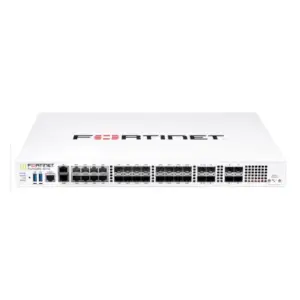
Fortinet FortiADC 420F Application Delivery Controller
Fortinet FortiADC 420F is a purpose-built application delivery appliance for organizations that need to distribute client traffic across application servers, accelerate encrypted sessions, preserve service availability and simplify control of critical web and business applications. In practical terms, it sits in the delivery path between users and application infrastructure, examining connections and directing them to healthy resources according to configured policies. That role matters when a single server can no longer absorb demand, when maintenance must occur without user disruption, or when an organization wants consistent handling of sessions across multiple application nodes.
For procurement teams in Uganda, the 420F is especially relevant when a project has moved beyond basic reverse proxying and needs a dedicated appliance with hardware-assisted SSL processing, high connection capacity, multiple copper and fibre interfaces, virtual domains and high-availability options. Fortinet’s published data sheet lists up to 20 Gbps L4/L7 throughput, up to 700,000 Layer 4 connections per second, 2.1 million Layer 4 HTTP requests per second, 25 million concurrent Layer 4 connections, 20,000 SSL connections or transactions per second using 2K keys, and 10 Gbps SSL bulk encryption throughput. These are vendor laboratory maximums rather than guaranteed production results, so sizing must account for cipher mix, persistence, inspection features, logging, policy complexity and real application behaviour.
FourTeck supports buyers that want the appliance supplied as part of a complete deployment bill of materials rather than as an isolated box. A quote can include the correct appliance variant, FortiCare term, required FortiADC service bundle, compatible optics, rack accessories, redundant power components where applicable, patching and implementation support. This approach reduces the risk of receiving hardware that is technically correct but incomplete for the intended topology.
Procurement Snapshot
Product class: Hardware application delivery controller
Form factor: 1U rack appliance
Published L4/L7 throughput: Up to 20 Gbps
Published SSL bulk throughput: Up to 10 Gbps
Memory: 32 GB ECC
Storage: 120 GB SSD
Supply approach: Quote, licensing and configuration validated before shipment
Instant Specifications and Procurement Fact Rail
FortiADC 420F
Enterprise / data centre
GE copper, GE SFP and SFP+ fibre
100–240V AC, 50–60Hz
Project pricing on request
Confirm FortiCare and regional entitlement on quote
The fact rail is intended to help procurement, infrastructure and finance teams identify the major ordering dependencies early. It should not be treated as a final bill of materials. Interface counts and performance statements may vary across Fortinet documentation revisions, bundles and regional ordering references. FourTeck therefore checks the manufacturer part number, current hardware description, power configuration, service entitlement and optics requirements before a purchase order is finalized. This verification is important for projects involving redundant uplinks, fibre aggregation, dedicated management networks or paired high-availability appliances, because missing transceivers, incorrect support terms or an assumed second power supply can delay commissioning even when the core appliance arrives on schedule.
Operational Product Architecture and Overview
The architectural purpose of FortiADC 420F is to create a controlled application-delivery layer between users and the servers or services that answer their requests. Instead of exposing every application server directly, the organization can present virtual services through the appliance and apply health checks, load-distribution policies, persistence rules, SSL handling and other delivery logic at a central point. The result is a topology in which backend application nodes can be added, removed, patched or recovered without forcing users to understand where the service physically resides. This is particularly valuable for ERP portals, internet banking systems, public web services, student information systems, patient or clinical portals, internal business applications and API estates that must remain reachable even as individual servers change state.
At Layer 4, the appliance can make rapid decisions using transport-level information and connection state. At Layer 7, it can work with application-aware policies where deeper request handling is required. Fortinet publishes substantial connection rates and concurrent-connection capacity for the platform, which makes the 420F appropriate for environments where the number of sessions matters as much as aggregate throughput. A procurement team should therefore evaluate both bandwidth and session profile. A 5 Gbps application that creates many short-lived encrypted connections can be more demanding than a much larger bulk transfer workload. Likewise, persistent sessions, client certificate requirements, complex scripts, content switching, compression and extensive logging can materially alter real-world capacity.
The hardware platform is built as a 1U rack appliance with ECC memory and SSD storage. ECC memory is important in enterprise systems because it is designed to detect and correct certain memory errors that could otherwise affect long-running network services. The SSD provides local storage for system functions, configuration data and operational records. Dedicated management interfaces allow administrative access to be separated from production traffic, while console access provides a direct recovery path when remote management is unavailable. HTTPS, SSH, console CLI and SNMP support give operations teams several ways to integrate the appliance into established administration and monitoring procedures.
A major architectural consideration is SSL processing. Encrypted traffic has become the default for modern applications, but terminating and re-establishing TLS sessions consumes processing resources. FortiADC 420F uses hardware SSL acceleration technology, allowing organizations to move part of that computational burden away from application servers. This can improve consistency and simplify certificate handling, though the exact benefit depends on cipher choice, key size, handshake rate and whether encryption is terminated, bridged or re-encrypted toward backend servers. Buyers should size SSL capacity using realistic transaction patterns rather than relying only on aggregate throughput.
The appliance also supports virtual domains, with Fortinet’s data sheet listing 45. Virtual domains can be useful to segment administrative or service contexts on a shared platform. For service providers, large enterprises and institutions with multiple departments, this can reduce the need to dedicate a full physical appliance to every logical application environment. However, virtual domains do not eliminate the need for overall capacity planning; all logical contexts still consume the resources of the physical system. Governance should therefore define who owns policies, certificate management, change approval, monitoring and capacity thresholds across the shared device.
Procurement managers typically investigate this model when existing load balancers are approaching performance limits, server teams are managing certificates manually on too many hosts, application maintenance causes visible outages, business growth has created unpredictable traffic peaks, or legacy delivery infrastructure is becoming difficult to support. The 420F addresses these pressures by centralizing delivery control in a dedicated appliance. It does not replace correct application architecture or backend redundancy; rather, it becomes a key control point that coordinates how healthy resources are used. For mission-critical deployments, that control point should itself be deployed redundantly, monitored closely and included in disaster-recovery planning.
Enterprise Business Outcomes and Value Analysis
1. Performance and Throughput Integrity
A dedicated application delivery appliance helps isolate delivery processing from general-purpose application servers. Load balancing, connection handling, SSL processing and health monitoring can be performed in a platform engineered specifically for those functions. This matters when business applications experience bursts rather than steady traffic. Capacity planning should compare average bandwidth, peak bandwidth, new connection rate, concurrent sessions and encryption workload so that the selected model retains operational headroom during end-of-month processing, enrolment periods, digital campaigns or public-service deadlines.
2. System Reliability and High Availability
The business value of a load balancer is closely tied to uptime. FortiADC can be incorporated into redundant designs so that application access does not depend on a single appliance. A robust project should consider appliance pairing, redundant switching paths, duplicate power feeds, backend server diversity, state synchronization requirements and maintenance procedures. The optional redundant PSU capability of the 420F can improve resilience at the device level, but true service continuity also requires redundancy outside the chassis.
3. Network and Infrastructure Scalability
Application teams can scale by adding backend servers while presenting users with a consistent service endpoint. This supports gradual growth and reduces the pressure to oversize individual servers. It also creates a cleaner path for phased migrations, because old and new application nodes can coexist during transition windows. Capacity growth should still be monitored at the ADC, uplinks, firewall, switch fabric and backend tiers so that moving a bottleneck does not simply create a new one.
4. Enterprise Security and Access Control
Centralizing application delivery provides a strategic enforcement point for certificates, connection policies, traffic handling and application security features available within the selected FortiADC licensing bundle. This can reduce configuration inconsistency across individual servers. Buyers should confirm which security capabilities are native to the base appliance and which depend on a subscription bundle, because a technically capable platform may require the correct entitlement for the intended protection profile.
5. Centralized Management and Operational Simplicity
Operations teams gain a central location for virtual services, health checks, pools, certificates and delivery policies. This can simplify change control compared with administering equivalent settings independently on many servers. The benefit is strongest when configuration standards, naming conventions, role-based administration and monitoring integrations are defined at deployment time. Centralization increases operational leverage, but it also increases the importance of disciplined access control and backup procedures.
6. Total Cost of Ownership and Energy Efficiency
The financial decision should include more than hardware price. Buyers should model support subscriptions, optics, redundant power components, rack space, implementation labour, staff training, renewal terms, expected lifecycle and the cost of downtime. Fortinet lists average power consumption of 68 W and a maximum of 140 W for the 420F in its data sheet. These figures can help data-centre teams estimate annual energy and heat load, while the 1U form factor limits rack-space consumption.
7. Change Windows and Maintenance Flexibility
Health-aware traffic distribution can make planned server maintenance less disruptive. Nodes can be drained or removed from service while healthy capacity continues to answer requests. For organizations that struggle to find maintenance windows, this is an operational benefit that can be more important than raw throughput. The exact workflow depends on persistence behaviour, application state design and session handling, so application owners should participate in the implementation plan.
Key Hardware and Software Highlights
Hardware SSL Acceleration
Dedicated SSL acceleration supports encrypted application delivery while reducing the extent to which backend servers must spend compute resources on handshakes and bulk cryptography. The operational outcome is more predictable encrypted-session handling, especially where secure portals create large numbers of concurrent clients.
ECC Memory
The listed 32 GB ECC memory platform is designed for long-running enterprise workloads where stability matters. ECC memory provides protection against certain memory faults, supporting the reliability expectations of always-on network services.
Mixed Interface Media
GE RJ45, GE SFP and high-speed SFP+ interfaces give designers flexibility when connecting access switches, aggregation layers, server fabrics and management networks. Exact port counts should be validated against the current ordering description before optics are purchased.
Optional Redundant Power
The published hardware specification describes a single PSU with support for dual hot-swap power. A redundant supply option can reduce exposure to a single internal PSU failure when connected to independent upstream power sources.
Virtual Domains
Up to 45 virtual domains in the published data sheet support logical separation of services, tenants or administrative contexts. This can increase utilization of a shared appliance while keeping policy boundaries organized.
Multiple Management Methods
HTTPS, SSH CLI, direct console and SNMP support fit common enterprise operating models. A dedicated management network is recommended so administrative access remains separated from application-facing traffic.
These highlights should be translated into project outcomes during design. Hardware acceleration is valuable only when the encrypted workload is understood; redundant power helps only when the rack provides independent feeds; fibre interfaces require the correct transceiver type and optical budget; virtual domains require governance and capacity allocation; and management flexibility requires access-control discipline. FourTeck’s role during procurement is to connect the feature list to the actual deployment so that the delivered hardware, support and accessories form a usable system rather than a collection of individually valid part numbers.
Technical Specifications Ledger
| Specification | Published FortiADC 420F Detail | Procurement Note |
|---|---|---|
| L4/L7 throughput | Up to 20 Gbps in the current data sheet | Measure real traffic mix and feature usage. |
| L4 connections per second | Up to 700,000 | Important for short-session workloads. |
| L4 HTTP requests per second | Up to 2.1 million | Vendor test value; production results vary. |
| Maximum L4 concurrent connections | 25 million | Review persistence and timeout design. |
| L7 CPS | Up to 200,000 | Application rules can influence capacity. |
| SSL CPS/TPS, 2K keys | Up to 20,000 | Cipher and key choices materially affect results. |
| SSL bulk encryption throughput | Up to 10 Gbps | Size with encrypted traffic percentage. |
| Compression throughput | Up to 14 Gbps | Evaluate whether application already compresses content. |
| Virtual domains | 45 | Shared hardware capacity still applies. |
| Memory | 32 GB ECC | Enterprise reliability-oriented memory. |
| Network interfaces | Data sheet lists 4 × 10 GE SFP+, 4 × GE SFP, 4 × GE RJ45 | Newer ordering references may differ; verify exact current SKU before order. |
| Management interfaces | 2 × 10/100/1000 | Use isolated management VLAN/network where possible. |
| Storage | 120 GB SSD | Local operational storage; external monitoring is still recommended. |
| Management protocols | HTTPS, SSH CLI, DB9 console CLI, SNMP | Align with privileged-access policy. |
| Power supply | Single; supports dual hot-swap PSU | Confirm whether optional second PSU is included. |
| Dimensions | 44 × 438 × 420 mm | Allow cable bend radius and service clearance. |
| Weight | 6.4 kg | Confirm shipping weight separately. |
| Form factor | 1U | Reserve adjacent space according to site airflow policy. |
| Input voltage | 100–240V AC, 50–60Hz | Validate rack PDU outlet and cord type. |
| Power consumption | 68 W average / 140 W maximum | Use maximum for conservative power planning. |
| Heat dissipation | 232 BTU/h | Include in rack cooling calculations. |
| Operating temperature | 0°C to 40°C | Maintain controlled data-centre environment. |
| Storage temperature | -20°C to 75°C | Applies to non-operating storage. |
| Airflow | Front to back | Match hot-aisle/cold-aisle rack orientation. |
| Regulatory | FCC Part 15 Class A, RCM, VCCI Class A, CE, UL/c | Confirm any tender-specific certifications. |
| PSU efficiency | 80 Plus Platinum | Supports efficient rack power planning. |
Performance values are published maximums and depend on system configuration. A technical design should therefore include a safety margin instead of specifying the appliance exactly at the predicted peak. For environments with encrypted traffic, script execution, persistence, application security functions or complex health checks, the chosen margin should be larger. Procurement teams should also distinguish between interface capability and optics supplied in the box. SFP and SFP+ cages normally require compatible transceivers or DACs selected for the connected switch, cable length and fibre type.
Configuration and Sizing Worksheet
Step 1: Estimate Workload and Growth
Start with the last 30 to 90 days of application telemetry if available. Record peak ingress and egress throughput, new TCP connections per second, concurrent connections, HTTP request rate, encrypted-session percentage and certificate types. Separate normal peaks from exceptional events such as payroll runs, admission periods or national service deadlines. Add expected growth for at least the intended refresh cycle. A common error is sizing only from average bandwidth; the more useful exercise is to model the worst credible combination of bandwidth, connection churn and encryption demand.
Step 2: Confirm Environment and Rack Space
Reserve 1U of rack height plus sufficient front and rear access for cabling and service. The appliance is approximately 420 mm deep, but practical rack planning must also include power connectors, fibre bend radius and airflow. Confirm the rack supports front-to-back cooling and that ambient operating conditions remain within the published 0°C to 40°C range. For sites with inconsistent cooling, power fluctuations or generator transitions, include the ADC in the facility resilience design rather than treating it as an isolated network device.
Step 3: Design Power and Cabling
For a production deployment, identify whether the appliance will be ordered with the optional redundant power supply. If dual supplies are used, connect them to independent PDUs or UPS-backed circuits where possible. For data connectivity, document each intended port, media type, link speed, switch interface and transceiver. Verify whether uplinks are copper, multimode fibre, single-mode fibre or direct attach. Mixing the wrong optics is one of the most preventable causes of delayed commissioning.
Step 4: Select Support and Service Entitlements
The appliance hardware and the desired operating capabilities should be ordered as a coherent package. Fortinet offers FortiADC bundles and FortiCare support terms that vary by duration and service level. Confirm whether the project requires only core delivery functionality or additional network security, application security or broader security bundle capabilities. Also define the support period—commonly one, three or five years—so renewal dates are known from the start. For regulated environments, consider whether replacement service levels and entitlement documentation must be written into the tender.
Step 5: Build the Quote Preparation Checklist
Completing this worksheet before requesting final commercial pricing reduces back-and-forth and helps ensure that competing quotations are comparable. Two suppliers can quote the same appliance model but include different support terms, different optics and different power options, producing prices that look inconsistent until the bill of materials is normalized. FourTeck can review the requirement and flag these differences before a purchase decision is made.
Deployment Scenarios and Industry Use Cases
Large Enterprise and Multi-Site Networks
A large enterprise may use the FortiADC 420F in a central data centre to publish ERP, CRM, HR, finance, intranet and customer-facing services to users across Kampala and branch locations. Instead of directing every branch to a single backend server, the ADC can distribute traffic across a pool and remove unhealthy nodes automatically. In a mature design, a second ADC provides appliance-level redundancy, upstream switches provide path diversity and server clusters provide application redundancy. The ADC becomes the traffic coordinator, not the only resilience mechanism. This topology can also support phased server upgrades because old and new nodes may operate concurrently while traffic is shifted gradually.
Financial and Banking Institutions
Banks and financial services companies place unusual emphasis on connection security, deterministic change control and uptime. Internet banking, internal teller systems, payment gateways and API services can all create encrypted traffic with strict availability expectations. A dedicated ADC provides centralized certificate and traffic-handling functions while health checks prevent clients from being sent to known-failed application nodes. The design should account for TLS policy, client persistence, transaction state and disaster-recovery procedures. A high-availability pair is generally more appropriate than a standalone appliance for services where outage costs are high. Support and replacement entitlements should also be selected according to the institution’s recovery objectives rather than lowest acquisition cost.
Educational and Campus Networks
Universities and large schools can experience extreme seasonality. Registration portals, learning systems and examination resources may run at moderate levels for much of the year and then surge when enrolment, results or course-selection windows open. The FortiADC 420F can distribute these spikes across multiple servers while keeping a single service endpoint for users. Campus IT teams can use health monitoring to take individual servers out of rotation for upgrades or troubleshooting. Where multiple faculties or systems share the appliance, virtual domains may help create administrative separation, provided the institution defines ownership and capacity allocation clearly.
Government and Defence Procurement
Public-sector environments often have formal tender requirements, long equipment lifecycles and strict documentation expectations. The 420F can be used in service-delivery architectures where citizen portals, internal government systems or departmental applications require resilience and controlled traffic distribution. Procurement should document the exact manufacturer part numbers, support terms, power redundancy, optics, rack accessories, acceptance tests and delivery conditions. For sensitive environments, configuration handling, firmware provenance, administrator access and pre-staging procedures should be agreed before shipment. Where site information is restricted, the bill of materials can still be validated using interface, capacity and support requirements without exposing application data.
Across all four scenarios, the core design principle is the same: the ADC increases the resilience and manageability of an application service only when the backend, network and power architecture are also designed for resilience. A pair of ADCs connected through one switch is still dependent on that switch. Two power supplies connected to one PDU still share a power failure domain. Several backend servers hosted on one physical hypervisor still share a compute failure domain. FourTeck can help map these dependencies during the pre-sales design stage so the procurement scope aligns with the availability objective.
Technical Feature Deep-Dives
Processing, Acceleration and Hardware Engine Architecture
Application delivery performance cannot be reduced to a single throughput number. The FortiADC 420F must accept new connections, maintain connection state, perform health-based forwarding decisions, potentially inspect application-layer information, manage persistence, process encryption and relay traffic toward backend systems. Each of these activities consumes a different mix of system resources. Fortinet publishes distinct figures for L4/L7 throughput, L4 connections per second, HTTP request rate, concurrent connections, L7 connection creation, SSL transactions and compression throughput precisely because different applications stress different dimensions of the platform.
Hardware SSL acceleration is central to the 420F’s value. TLS termination involves asymmetric cryptographic work during handshakes followed by symmetric encryption for bulk traffic. The handshake rate is particularly important for applications that create many short sessions, while bulk encryption throughput matters for long-lived transfers. An architecture that performs well at 10 Gbps of encrypted bulk traffic may still encounter a different ceiling when faced with a very large number of new handshakes per second. For this reason, migration projects should collect connection telemetry rather than assuming that current switch-port utilization provides a complete capacity picture.
The mixed interface design also affects practical performance. Multiple data interfaces allow separation of client-side and server-side traffic, link aggregation strategies and integration with different network zones. The exact physical topology should be defined before cabling is purchased. If a design requires 10G fibre on both sides of the ADC plus dedicated high-speed HA links, the available interface count becomes a design constraint independent of processing capability. A correct sizing exercise therefore combines system performance, port availability, link media and failure-domain design.
Software Ecosystem, Firmware Security and Operational Control
The FortiADC software layer provides the operational controls that turn the appliance into an application delivery platform. Administrators define virtual services, backend pools, health checks, traffic distribution behaviour, SSL settings, policies and administrative access. Operational success depends less on creating a working first configuration than on establishing a repeatable lifecycle: controlled changes, configuration backups, certificate renewal, firmware planning, monitoring and documented recovery procedures.
Firmware management should be handled as a planned operational discipline. Before upgrading, administrators should review release notes, supported upgrade paths, compatibility considerations and known issues, then capture a configuration backup and define rollback steps. In a high-availability pair, upgrades can often be structured to reduce service disruption, but maintenance procedures should be tested against the actual application behaviour. A backend application that embeds server identity in a session, for example, may react differently to failover than a stateless web service.
Administrative control should use the strongest practical separation. Dedicated management interfaces allow the appliance to be administered from a restricted network rather than from client-facing paths. HTTPS and SSH can be limited to trusted administrative sources. SNMP can feed monitoring platforms, while console access provides local recovery capability. Organizations should align the ADC with privileged-access controls used for firewalls and core switches: named accounts where supported, strong authentication, role separation, change logging, limited source networks and secure storage of backups.
High Availability, Redundancy and Disaster Recovery
Because an ADC sits directly in the application path, high availability deserves design attention from the start. A single FortiADC 420F can improve backend resilience but remains a single point of failure at the delivery tier. Mission-critical services should therefore consider a redundant pair. The pair design should include state behaviour, heartbeat or synchronization connectivity, upstream and downstream path diversity, addressing, routing, switch configuration and failover testing.
Power redundancy is one layer of the design. The 420F’s optional dual hot-swap power capability can protect against an individual PSU failure, but both supplies should connect to independent upstream power sources to create meaningful resilience. Network redundancy is another layer: each appliance should have planned connections to resilient switching infrastructure so a cable, optic or switch failure does not isolate the service. Backend redundancy is a third layer: multiple healthy application nodes should exist in separate failure domains wherever practical.
Disaster recovery extends beyond local high availability. Organizations operating a secondary site may choose to replicate application services and use global server load balancing or external DNS strategies to steer users between sites. The precise approach depends on recovery time objectives, recovery point objectives, network connectivity and application data replication. Procurement teams should clarify whether the 420F project is only for local server load balancing or is expected to participate in a multi-site continuity design. That distinction influences licensing, second-site hardware and implementation scope.
Pre-Purchase Buyer Gap Checklist
Enterprise buyers often focus on the appliance model and overlook dependencies that determine whether the equipment can be commissioned immediately. The first question is licensing. Confirm whether the quoted part number is hardware only, a hardware-plus-support bundle, or a bundle that includes additional FortiADC service capabilities. The second question is support duration. A lower initial price with one year of coverage is not directly comparable to a three-year or five-year bundle, and renewal timing affects lifecycle budget.
The next question is physical connectivity. SFP and SFP+ ports do not automatically imply that optical modules are included. Buyers should define fibre type, wavelength, distance, switch model and required speed, then order compatible transceivers or direct-attach cables. For multimode links, confirm the fibre grade and patch lead. For single-mode links between rooms or buildings, confirm optical budget and termination. If the connected switch uses vendor-specific compatibility enforcement, that should be checked before the optics list is finalized.
Power configuration is another frequent gap. Fortinet documentation describes a single supply with support for dual hot-swap power. Buyers who require redundant power should ensure the second PSU is explicitly included on the bill of materials and that the destination rack has two suitable PDU outlets. The published maximum power consumption of 140 W should be used for conservative rack planning, while the average figure is useful for ongoing energy estimation. Heat dissipation and front-to-back airflow should be considered when the appliance joins a dense rack.
Lifecycle planning also matters. Procurement should confirm current orderability, manufacturer support status and the expected period for which the chosen software train will be supported. Hardware generation names alone do not tell the entire lifecycle story, and long public-sector or financial-sector projects may need equipment to remain supported for several years after implementation. The support term should therefore align with the organization’s refresh policy.
Cross-vendor compatibility should be evaluated at interfaces and protocols rather than assumed from brand. FortiADC can sit in networks using switches, routers, firewalls, hypervisors and servers from many vendors, but details such as VLAN tagging, LACP design, routing, transceiver compatibility and monitoring integration should be validated. If the ADC is replacing another vendor’s appliance, migrate logical behaviour, not just object names: persistence methods, health-check expectations, header modifications, SSL profiles and timeout values may differ.
Finally, ask what is included in implementation. Hardware delivery alone is different from staging, firmware validation, base configuration, high-availability pairing, service migration and acceptance testing. Define whether certificates will be installed, whether existing virtual services must be migrated, who owns DNS changes, what rollback plan is expected and who will test applications after cutover. A clear scope avoids the common situation in which hardware arrives but commissioning responsibility is ambiguous.
Uganda Regional Procurement and Delivery Logistics
FourTeck can prepare FortiADC 420F quotations for Uganda projects based on the required quantity, support term, service bundle, power configuration, optics and destination. The commercial process typically begins with technical validation so that the quoted line items correspond to the intended deployment. For a high-availability design, two appliances and appropriate support should be listed explicitly. If redundant PSUs, SFP/SFP+ modules or cabling are required, these should appear as separate bill-of-materials items rather than being assumed.
Order processing depends on stock position, manufacturer or distributor availability, selected support bundle and import logistics. Enterprise appliances can have variable lead times, so buyers working against a fixed installation window should request current availability before issuing a purchase order. FourTeck can coordinate shipment planning and provide documentation needed for receiving teams. Exact delivery dates remain subject to confirmed stock, export processing, carrier movement and local clearance.
Pre-configuration support can be arranged where the project requires staging before shipment. Useful activities include firmware review, base management settings, interface naming plan, high-availability preparation and bill-of-materials verification. Sensitive production credentials and certificates should be handled according to the customer’s security policy. Where customers prefer to configure locally, FourTeck can still provide a validated hardware and licensing package plus remote implementation support.
For quotation accuracy, buyers should provide the delivery city, organization type, required quantity, intended support term, whether the appliance will operate singly or as a pair, and whether optics are needed. If an existing ADC is being replaced, sharing the current interface map and approximate traffic profile can improve migration planning without requiring disclosure of confidential application data.
Local Coverage Matrix
Kampala
Primary enterprise delivery destination for corporate offices, banks, government agencies, data centres and system integrators.
Entebbe
Supply support for airport-area organizations, hospitality, government operations, logistics and institutional networks.
Jinja
Project fulfilment for industrial, educational, manufacturing and regional business environments.
Mbarara
Procurement support for healthcare, education, financial services and distributed enterprise infrastructure.
Gulu
Enterprise equipment supply for institutions, public-sector operations, NGOs and regional network deployments.
Coverage outside these hubs can be planned according to destination, carrier route and project requirements. For remote sites, it is useful to stage and validate the bill of materials before shipment because returning for a missing optic, power component or console accessory can be more disruptive than in Kampala. Buyers should also identify whether installation teams require equipment to arrive at a central warehouse or directly at the deployment site.
Cross-Border and Regional Supply Chains
FourTeck supports enterprise sourcing across multiple regional markets, which is useful for organizations standardizing application delivery infrastructure across East Africa, the Gulf and wider African operations. Uganda requirements can be coordinated through FourTeck Uganda, while projects with Kenyan sites can reference FourTeck Kenya. Multi-country African deployments can also be supported through FourTeck Africa.
For organizations that procure centrally through the UAE, FourTeck UAE can support regional coordination, while Kuwait requirements can be handled through FourTeck Kuwait. Cross-border supply should always account for part-number consistency, regional support entitlement, local import requirements, shipment insurance and the practical location where warranty service will be consumed. A central purchase model can simplify commercial control, but service entitlement should still match the countries where appliances are installed.
Related Products and Internal Planning Links
Organizations comparing capacity tiers should review the broader FortiADC family before finalizing the 420F. Smaller environments may be able to use an entry or midrange model, while high-growth data centres may need a larger platform to preserve headroom over a multi-year lifecycle. Related planning areas also include switching, optical transceivers, rack power and security controls around the published applications.
When comparing models, do not choose solely from headline throughput. Compare connection rate, encrypted workload, interface requirements, redundancy, expected growth and software entitlements. A model that appears oversized on average bandwidth may be appropriate once SSL handshakes, failover headroom and future growth are included. Conversely, a large model does not solve a design that lacks backend redundancy or has a single upstream failure point.
FourTeck Technical Service Capabilities
FourTeck can support the FortiADC 420F procurement lifecycle from specification review through delivery and post-sales coordination. Engineering validation begins by checking workload assumptions, port requirements, high-availability expectations and licensing. This is followed by bill-of-materials verification to ensure the appliance, support, security bundle, transceivers, redundant power components and accessories are aligned. The objective is to remove ambiguity before a purchase order is issued.
For projects requiring staging, pre-shipment services can include visual inspection, serial and part-number verification, firmware review, base management configuration and preparation of a deployment checklist. Firmware changes should always follow the customer’s approved release policy and Fortinet’s documented upgrade path. For high-availability pairs, configuration planning can identify heartbeat links, production interfaces and management addressing in advance so onsite work is more predictable.
Post-sales support can cover installation guidance, configuration assistance, troubleshooting coordination and manufacturer support escalation within the purchased entitlement. For replacement or warranty events, accurate serial records and entitlement information reduce administrative delay. Customers are encouraged to maintain their own configuration backups and operational documentation even when external support is available, because rapid recovery depends on both replacement hardware and a known-good configuration.
Extended Technical FAQ
1. What is the FortiADC 420F primarily used for?
The FortiADC 420F is used to distribute application traffic across multiple backend servers and to provide a centralized delivery layer for services that need high availability, SSL handling, health monitoring and policy-based traffic management. Rather than sending users directly to individual servers, organizations publish a virtual service through the ADC. The appliance then selects an appropriate healthy backend according to the configured method. This design is useful for business portals, internet-facing websites, banking services, ERP systems, education platforms and APIs. It is not a substitute for resilient backend design; it coordinates and improves the use of that backend capacity.
2. How much throughput does FortiADC 420F provide?
Fortinet’s current FortiADC data sheet lists up to 20 Gbps L4/L7 throughput for the 420F, together with up to 10 Gbps SSL bulk encryption throughput. Fortinet also publishes connection-rate and concurrency figures because application delivery capacity depends on more than bandwidth. Real production performance varies with system configuration, cipher selection, key size, policy complexity, persistence, scripting, compression and other enabled functions. Buyers should therefore size from peak traffic, new connections, concurrent sessions and encrypted workload rather than using a single headline number. FourTeck can help translate an existing traffic profile into a capacity discussion before quotation.
3. Does the 420F include redundant power supplies?
The Fortinet data sheet describes the FortiADC 420F with a single power supply and support for dual hot-swap power. This means buyers who require redundant power should verify that the optional second PSU is explicitly included in the final bill of materials. Redundant power is most useful when each supply is connected to an independent upstream source, such as separate PDUs or UPS-backed feeds. Connecting both PSUs to the same failure point provides less protection. Because ordering descriptions can change over time, FourTeck confirms the exact shipped power configuration on quotation rather than assuming the second supply is standard.
4. Are SFP and SFP+ transceivers included with the appliance?
The presence of SFP or SFP+ cages should not be interpreted as confirmation that the required transceivers are bundled. Enterprise network appliances are commonly ordered with optics selected separately according to link speed, fibre type, wavelength and distance. Before ordering, identify the connected switch port, whether the link uses multimode or single-mode fibre, the required reach, and whether direct-attach copper is appropriate. FourTeck can include compatible optics in the bill of materials after this information is supplied. Correct transceiver selection is particularly important for high-availability pairs because the design may require multiple identical links across two appliances.
5. What licensing or subscription should be ordered?
The required entitlement depends on the feature scope and support period. Fortinet offers FortiADC hardware with different service bundles and FortiCare support options. Buyers should identify whether they need core application delivery only or additional network-security, application-security or broader security capabilities, then select the matching bundle and duration. One-year, three-year and five-year terms are common procurement choices, but exact availability and part numbers should be confirmed at quote time. Comparing hardware-only pricing with a multi-year security bundle can be misleading because the scope is different. FourTeck can normalize competing bills of materials so decision makers understand what each quoted total includes.
6. Can FortiADC 420F be deployed as a high-availability pair?
Yes, FortiADC appliances are commonly designed into high-availability architectures where a second appliance reduces dependency on a single ADC. A complete HA plan should cover more than purchasing two units. It should define synchronization or heartbeat connectivity, addressing, upstream and downstream switching, power diversity, failover behaviour, monitoring and application testing. The backend application must also tolerate the intended failover pattern. For critical services, schedule an acceptance test that verifies not only appliance failover but also client-session behaviour and backend health. FourTeck can quote two matched appliances with aligned support and accessories when an HA topology is required.
7. What rack and power requirements should be planned?
Fortinet lists the 420F as a 1U appliance measuring approximately 44 × 438 × 420 mm and weighing 6.4 kg. Input power is 100–240V AC at 50–60Hz, with published average consumption of 68 W and maximum consumption of 140 W. Airflow is front to back. Rack planning should allow additional rear clearance for power connectors and fibre bend radius, and the rack cooling pattern should match the appliance airflow. If optional dual PSUs are used, reserve two suitable PDU outlets, ideally on separate protected feeds. Use the maximum power figure for conservative circuit planning rather than the average figure.
8. Can the FortiADC 420F work with non-Fortinet switches and servers?
Yes, application delivery controllers are generally deployed in heterogeneous environments containing switching, routing, firewall, compute and storage platforms from multiple vendors. Compatibility should be assessed at the interface and protocol level. Confirm Ethernet speeds, VLAN design, routing behaviour, link aggregation method, transceiver support, health-check method and application protocol. If existing application servers rely on unusual persistence or proxy-header behaviour, test those functions during migration. The fact that components use standard Ethernet does not eliminate configuration dependencies, but there is no requirement that every adjacent network or server device be from the same manufacturer.
9. How is warranty or hardware replacement handled?
Warranty and replacement handling depends on the FortiCare service purchased, the appliance entitlement and regional service conditions. Buyers with strict recovery objectives should choose a support level that matches the business impact of hardware failure and should not assume all service tiers provide the same replacement target. Keep serial numbers, invoices, support contracts and entitlement records accessible to the operations team. In the event of failure, troubleshooting information and configuration backups can accelerate diagnosis and replacement. FourTeck can assist with escalation and replacement coordination within the terms of the purchased support, but the exact service commitment comes from the selected Fortinet entitlement.
10. Can FourTeck help configure or migrate an existing load balancer?
FourTeck can provide configuration and migration assistance as a scoped technical service. A migration normally starts with an inventory of existing virtual services, backend pools, health checks, certificates, persistence behaviour, timeout values, routing, DNS dependencies and maintenance procedures. These requirements are then mapped to the FortiADC design rather than copied blindly from another vendor’s terminology. A staged cutover plan should include configuration backup, application-owner validation, DNS or routing change steps, monitoring and rollback. The safest migrations are those where success criteria are written before the change window and where both network and application teams are present for acceptance testing.
Request a FortiADC 420F Uganda Procurement Quote
For a precise quotation, send FourTeck the required quantity, deployment mode, expected support term, application security requirements, interface media, preferred optics and Uganda delivery destination. If the appliance will replace an existing load balancer, include approximate peak throughput, new connection rate and whether traffic is predominantly encrypted. FourTeck can review the requirement, identify likely licensing and accessory dependencies, validate the bill of materials and prepare a commercial proposal suited to the project. For high-availability deployments, request matched units, aligned subscriptions, redundant power options and the necessary transceivers at the same time so implementation is not delayed by missing components. Final availability, lead time and commercial pricing are confirmed at quotation stage.
Reviews
There are no reviews yet.