
Fortinet FortiDDoS 1500F Enterprise DDoS Protection Appliance
Fortinet FortiDDoS 1500F is a purpose-built inline DDoS defense platform designed for organizations that must keep internet-facing networks, applications, DNS services and critical digital infrastructure available during high-volume or high-packet-rate attacks. In practical terms, the appliance sits in the traffic path, continuously evaluates traffic behavior and applies mitigation when abnormal patterns threaten service continuity. Fortinet specifies a maximum inspected rate of 30 Gbps, approximately 28 million packets per second, support for more than 16 million TCP sessions, more than eight million DNS/NTP mitigation responses per second and a mitigation time below one second. Those characteristics place the 1500F in a useful tier for larger enterprise and institutional environments where ordinary firewall capacity alone is not the preferred control for dedicated DDoS defense.
Procurement teams in Uganda often need more than a model number. They need to establish whether the appliance matches actual WAN capacity, whether the chosen fiber interfaces fit the existing topology, whether bypass behavior is required, whether dual power feeds are available in the rack, whether a second unit is needed for high availability, and what support coverage should accompany the hardware. FourTeck can structure the bill of materials around those requirements so that the quoted system is aligned with the deployment rather than treated as an isolated appliance purchase.
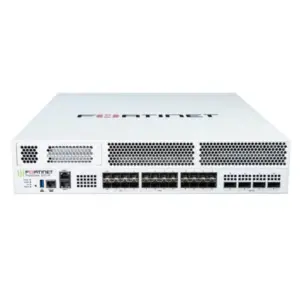
The 1500F provides four DDoS defense port pairs: two pairs using 10 GE SFP+ or GE SFP interfaces without built-in bypass, and two pairs using 10 GE LC short-range multimode interfaces with integrated optical bypass. Two GE RJ45 management ports provide administrative connectivity. Dual redundant AC power supplies and a 480 GB SSD support data-centre operations. Because DDoS appliances are normally inserted into critical traffic paths, interface planning and fail-open/fail-safe expectations should be validated before ordering.
Instant Specifications & Procurement Fact Rail
FortiDDoS 1500F
Up to 30 Gbps
Approx. 28 Mpps
>16 million
<1 second
2U rackmount
The procurement baseline should include the appliance, suitable optics or direct-attach components where applicable, rack and power readiness, support entitlement, implementation services if required, and a documented design for bypass and redundancy. Stock position, lead time, commercial warranty and support response depend on the final bill of materials and should be confirmed on the formal quotation.
Operational Product Architecture & Overview
DDoS protection is fundamentally a capacity and decision-speed problem. A target can become unavailable because bandwidth is saturated, because packet processing resources are exhausted, because connection state is overwhelmed, or because a specific protocol is abused at rates that appear superficially legitimate. FortiDDoS addresses this by inspecting traffic inline and maintaining detailed behavioral baselines so abnormal traffic can be identified and mitigated rapidly. The platform is built around full packet inspection rather than relying only on sampled traffic. This matters when attack traffic is distributed across many sources or constructed to resemble ordinary client behavior.
For the 1500F, the 30 Gbps inspected-rate ceiling must be interpreted in the context of the real deployment. Engineers should compare it with aggregate protected traffic, peak legitimate bursts, expected growth, attack exposure and the topology of each protected link. Packet rate is equally important. Small-packet floods can create extreme processing pressure even when bandwidth is below the nominal link speed, which is why the approximate 28 Mpps capability is a key sizing figure. The appliance also supports a very large TCP session population, useful where web services, APIs, portals and transactional systems experience substantial concurrent connection counts.
The physical interface architecture gives deployment teams flexibility. SFP+/SFP pairs can integrate with existing transceiver-based designs, while the integrated LC short-range multimode interfaces provide optical bypass on designated port pairs. Bypass is operationally important because an inline security device should not become an unnecessary single point of failure. However, bypass behavior, fiber type, wavelength, patching and upstream/downstream interface compatibility need to be confirmed before installation. The 1500F-LR is a distinct long-range variant; procurement teams should not assume that the standard 1500F and LR optics are interchangeable in design intent.
Operational teams also gain centralized visibility into attack events, traffic behavior and mitigation activity. That visibility supports incident response, capacity planning and post-event reporting. Rather than waiting for users to report an outage and then attempting manual filtering, a dedicated appliance is designed to detect traffic anomalies continuously and react automatically. This is especially valuable for environments where availability has direct financial, regulatory, public-service or reputational consequences.
Enterprise Business Outcomes & Value Analysis
Key Hardware & Software Highlights
FortiDDoS 1500F combines dedicated inline traffic interfaces, optical bypass capability on selected links, redundant power and local SSD storage with Fortinet’s DDoS detection and mitigation software. The hardware layout is significant because each interface choice maps to a physical network design. Two pairs of 10 GE SFP+/GE SFP ports allow transceiver-based integration, while two pairs of 10 GE LC SR multimode ports include optical bypass. Two GE RJ45 management ports separate administrative access from protected data links. The 480 GB SSD provides local storage capacity for the appliance platform.
At the software layer, FortiDDoS continuously observes a large number of traffic parameters and builds normal traffic baselines. Mitigation can then be applied when behavior deviates in a manner associated with DDoS activity. Fortinet positions the platform for autonomous mitigation, reducing the need for an operator to manually create emergency filters during every event. Full packet inspection is especially useful for detecting attack patterns that may be missed or recognized later by sampling-based approaches.
The combination of physical bypass and software mitigation addresses two different availability risks: malicious traffic and security-device interruption. Procurement teams should verify which protected links require bypass, whether the fiber plant is multimode or single-mode, and whether the standard 1500F or 1500F-LR is appropriate. These details should be settled during design validation rather than after delivery.
Technical Specifications Ledger
| Specification | FortiDDoS 1500F | Procurement Note |
|---|---|---|
| Maximum inspected rate | 30 Gbps | Size against peak legitimate traffic and growth. |
| Packet rate | Approx. 28 Mpps | Critical for small-packet flood planning. |
| TCP sessions | >16 million | Review concurrent service demand. |
| DNS/NTP mitigation | >8M responses/s | Relevant for exposed DNS/NTP services. |
| Mitigation time | <1 second | Designed for rapid automated response. |
| SFP+/SFP defense ports | 2 LAN + 2 WAN | No built-in bypass on these pairs. |
| 10 GE LC SR MM | 2 LAN + 2 WAN, 850 nm | Integrated optical bypass. |
| Management | 2 x GE RJ45 | Plan management VLAN and secure admin access. |
| Storage | 480 GB SSD | Included appliance storage. |
| Power | Dual redundant AC, 100-240 V, 50-60 Hz | Use separate feeds where available. |
| Maximum power | Approx. 433 W | Allow suitable PDU and cooling capacity. |
| Form factor | 2U | Reserve rack space and service clearance. |
| Dimensions | 438 x 88.2 x 580 mm | Verify cabinet depth. |
| Weight | Approx. 9 kg | Confirm rail and rack loading. |
| Operating temperature | 0°C to 40°C | Maintain controlled data-centre environment. |
Published performance figures should be treated as platform sizing references rather than a substitute for design validation. Traffic composition, enabled protections, topology and operational conditions can affect practical results. The final deployment should be reviewed against the current Fortinet documentation and the exact ordered SKU.
Configuration & Sizing Worksheet
Step 1 — Measure protected workload. Record normal average throughput, busy-hour throughput, peak bursts, packets per second, concurrent sessions, critical protocols and projected growth. Include every link that will traverse the appliance. A 10 Gbps circuit does not necessarily create only 10 Gbps of aggregate design demand when multiple protected segments are involved.
Step 2 — Map the physical topology. Identify upstream routers, firewalls, load balancers, core switches and internet circuits. Document fiber type, wavelength, connector type and transceiver requirements. Determine which links need integrated bypass and which can use SFP+/SFP interfaces.
Step 3 — Validate rack and environment. Reserve 2U rack space plus appropriate front and rear service clearance. Confirm cabinet depth for the 580 mm chassis, suitable airflow, grounding and an operating environment within the published range. Ensure the rack can support the appliance and related cabling without obstructing adjacent systems.
Step 4 — Plan redundant power. Dual AC power supplies are most valuable when connected to independent PDUs or UPS-backed feeds. Confirm 100-240 V AC compatibility, plug and PDU arrangements, and cooling capacity based on the appliance’s maximum power and heat output.
Step 5 — Decide availability architecture. For critical services, determine whether appliance-level high availability is required in addition to built-in bypass. High availability and bypass solve different failure scenarios. Document failover expectations, maintenance windows and routing behavior before implementation.
Step 6 — Define support requirements. Specify the required FortiCare/support level, desired hardware replacement response, firmware access requirements and term length. Support choices can affect the final commercial configuration and lifecycle operating model.
Step 7 — Prepare the quotation request. Provide appliance quantity, delivery city, organization type, WAN bandwidth, packet-rate information if available, number of protected links, fiber details, preferred support term, HA requirement, installation requirement and any target delivery date. This information reduces back-and-forth and helps produce a more accurate bill of materials.
Deployment Scenarios & Industry Use Cases
Large Enterprise and Multi-Site Networks
Large enterprises increasingly centralize public applications, remote-access gateways, APIs and shared services in primary data centres or colocation facilities. A DDoS event against those shared ingress points can affect users across many branches simultaneously. FortiDDoS 1500F can be positioned inline at the protected edge so malicious traffic is mitigated before it consumes downstream application and security resources. For multi-site designs, planners should decide whether protection is centralized or whether each major internet edge requires independent capacity.
Financial and Banking Institutions
Banks, payment organizations and financial platforms depend on consistent availability for online banking, customer portals, payment interfaces and partner connectivity. DDoS events can create both service disruption and operational distraction. A dedicated mitigation appliance provides a focused control layer for protecting availability. Procurement should include HA design, dual power, support response, change-control procedures and post-event reporting requirements.
Educational and Campus Networks
Universities and large campuses host learning systems, public websites, research services, DNS infrastructure and remote-access platforms while supporting highly variable traffic populations. Attack exposure can rise during registration, examinations or public events. A properly sized DDoS platform helps maintain essential services while giving network teams better visibility into abnormal traffic.
Government and Defense Procurement
Public-sector networks often operate services that must remain reachable during periods of heightened public demand or targeted disruption. Procurement processes may require documented hardware specifications, support terms, delivery records, serial-number tracking, controlled staging and formal acceptance. FourTeck can align supply documentation and technical validation with project requirements while the customer’s security team retains authority over final policy and production configuration.
Technical Deep Dive: Processing, Acceleration & Inspection
The most important sizing distinction in DDoS defense is the difference between bandwidth and packet rate. A flood of very small packets can create enormous packet-processing demand without consuming the full nominal bandwidth of a link. FortiDDoS 1500F’s approximately 28 Mpps inspected capability therefore complements its 30 Gbps inspected-rate figure. Procurement teams should collect both metrics wherever possible. The appliance performs full packet inspection and is designed to make mitigation decisions rapidly rather than relying solely on traffic samples. This supports detection of distributed attacks whose individual sources may generate relatively modest traffic.
Connection scale is another design factor. More than 16 million TCP sessions provide substantial state capacity for environments with large numbers of concurrent users and connections. DNS and NTP protection is also significant because these protocols are frequently involved in reflection, amplification and service-exhaustion scenarios. The published response-rate capability gives engineers a reference for evaluating authoritative or recursive service exposure. Correct protection policy still depends on knowing which services are legitimate, how traffic normally behaves and where the appliance is inserted in the topology.
Technical Deep Dive: Software Ecosystem, Firmware Security & Control
A DDoS appliance must be operationally manageable before an incident occurs. Teams should establish baseline learning periods, administrative access controls, logging destinations, alerting workflows, change ownership and escalation procedures. Firmware should be maintained according to the organization’s change-management policy and the support entitlement associated with the appliance. Before production deployment, administrators should review release notes, backup the configuration and define a rollback path.
The platform’s autonomous mitigation model can reduce reaction time, but automation should exist within a governed operational process. Security teams should know who can change thresholds, who reviews attack reports, how exceptions are approved and how upstream carriers are engaged when attack volume exceeds local circuit capacity. Dedicated DDoS mitigation protects the infrastructure within its design envelope; it cannot create additional ISP bandwidth when the external circuit itself is fully saturated upstream.
Technical Deep Dive: High Availability, Redundancy & Recovery
Availability planning begins with failure domains. Dual power supplies protect against a single PSU fault but only deliver meaningful feed redundancy when connected to independent power paths. Optical bypass protects selected inline links against particular appliance interruption scenarios, while an HA pair can address broader device availability requirements. These controls should be considered together rather than treated as interchangeable.
A recovery plan should document appliance replacement, configuration backup, firmware version, cable mapping, transceiver inventory and escalation contacts. During staging, label every protected link and management connection. If a replacement appliance is required, accurate documentation shortens restoration time. Organizations with strict recovery objectives may also hold approved spare optics and patch leads locally because a small accessory can otherwise delay recovery even when replacement hardware is available.
Pre-Purchase Buyer Gap Checklist
Does the base appliance include everything needed? Not necessarily. The chassis is the core of the solution, but the deployment may also require compatible transceivers, fiber patching, support contracts, installation services and a second appliance for HA. Request a complete bill of materials rather than comparing chassis prices alone.
Will it fit the existing rack? The 1500F is a 2U appliance with an approximate depth of 580 mm. Cabinet depth, rail clearance, rear cable bend radius and airflow should be checked before delivery.
What power planning is required? The platform uses dual redundant AC power supplies and supports 100-240 V AC. Maximum power is approximately 433 W. Confirm PDU sockets, UPS capacity and whether each PSU can be connected to a separate feed.
Are all 10GbE ports equivalent? No. The appliance includes SFP+/SFP defense interfaces and fixed LC short-range multimode interfaces with integrated optical bypass. The physical design must match the intended fiber and bypass requirements.
Does local DDoS protection solve every volumetric attack? No appliance can recover bandwidth that has already been saturated upstream of the protected site. Organizations exposed to attacks larger than their carrier links should coordinate an upstream mitigation strategy with their ISP or scrubbing provider as part of a layered design.
What about lifecycle and support? Confirm current product lifecycle status, available support terms, replacement service and firmware entitlement on the quotation. These commercial details can change over time and should be validated at purchase rather than assumed from older project documents.
Uganda Procurement & Delivery Logistics
FourTeck supports Uganda customers through a quotation-led enterprise procurement process. For FortiDDoS 1500F, the most useful starting information is quantity, destination, required support term, preferred delivery schedule and the technical details of the protected links. Where the deployment requires optics, cabling, redundant appliances or implementation support, these should be included in the same request so the commercial offer reflects the complete project.
After technical validation, the quotation can identify the appliance and associated items, commercial validity, expected lead time and applicable support or warranty conditions. Delivery timing depends on stock position, sourcing route, project quantity and logistics. Customers should therefore avoid planning a production cutover against an assumed delivery date until the order and lead time are formally confirmed.
Pre-configuration and staging requirements can be discussed before shipment. Depending on project scope, this can include bill-of-materials validation, firmware planning, labeling, configuration review and deployment documentation. Sensitive production credentials should remain under customer control and should not be embedded in staging information unless an approved secure process exists.
Local Coverage Matrix
Projects can be coordinated for Kampala, Entebbe, Jinja, Mbarara and Gulu, as well as other Uganda locations subject to delivery arrangements. Kampala deployments commonly include enterprise headquarters, data centres and financial institutions; Entebbe projects may involve hospitality, logistics and institutional networks; Jinja and Mbarara can require branch, industrial and regional infrastructure delivery; and Gulu projects may involve government, education, NGO and distributed enterprise operations. For every location, the quotation should specify the exact delivery point and whether onsite technical services are required.
Cross-Border & Regional Supply Chains
Organizations operating across East Africa, the Gulf and wider African markets can coordinate related procurement through FourTeck regional channels. Uganda requirements can be initiated at FourTeck Uganda, Kenya projects through FourTeck Kenya, broader continental requirements through FourTeck Africa, UAE procurement through FourTeck UAE, and Kuwait requirements through FourTeck Kuwait. Cross-border projects should account for destination-specific freight, import procedures, taxes, documentation and lead times. Standardizing the approved model, support term and accessory list across countries can simplify operations while still allowing local logistics to be managed separately.
Related Products & Infrastructure Planning
A complete DDoS protection project may also require upstream routing, switching, firewalling, optical connectivity, rack infrastructure and resilient power. Buyers can review enterprise networking solutions and request related Fortinet appliances, compatible transceivers, fiber patching, rack PDUs and UPS options as part of the same project. Where 30 Gbps inspected capacity is not the correct tier, FourTeck can help compare other FortiDDoS models based on traffic volume, packet rate, interface requirements and growth. The objective should be a coherent protected path rather than a collection of independently purchased components.
For new data-centre builds, include the FortiDDoS appliance in the rack elevation and structured cabling plan early. For brownfield deployments, document the current WAN-to-firewall path, maintenance window, patching sequence and rollback procedure. This reduces installation risk and helps identify missing optics or cable types before engineers arrive onsite.
FourTeck Technical Service Capabilities
FourTeck can support engineering validation before procurement by reviewing the proposed model, traffic requirements, interface plan and accessory list. Bill-of-materials verification is particularly important for inline appliances because incorrect optics or bypass assumptions can prevent installation even when the main chassis is correct. Project teams can also request staging coordination, labeling, firmware planning and pre-shipment checks according to the agreed service scope.
Post-sales assistance can cover deployment coordination, configuration guidance and support-case escalation within the purchased service framework. For controlled environments, documentation can include port maps, serial references, firmware information and handover notes. Customers should define responsibility boundaries in advance: carrier routing, firewall policy, DDoS policy, change approval and application testing may be owned by different teams. A clear implementation plan brings those owners together before the maintenance window.
Extended Technical FAQ
1. What capacity does FortiDDoS 1500F provide?
Fortinet currently lists the 1500F with a maximum inspected rate of 30 Gbps and approximately 28 Mpps. It also supports more than 16 million TCP sessions and more than eight million DNS/NTP mitigation responses per second. These are important sizing references, but they should be compared with real peak traffic, packet rate and growth. If the protected environment can exceed the appliance’s design envelope, a larger model or a different architecture should be considered. Upstream circuit saturation must also be addressed with carrier-side planning where necessary.
2. Which network interfaces are available?
The 1500F provides four DDoS defense port pairs. Two pairs use 10 GE SFP+ interfaces that can also support GE SFP operation and do not provide built-in bypass. Two additional pairs use 10 GE LC short-range multimode 850 nm interfaces with integrated optical bypass. The appliance also has two GE RJ45 management ports. Because the interface groups have different physical and bypass characteristics, the deployment diagram should identify exactly which pair protects each link and what fiber or transceiver is required.
3. Does the appliance support optical bypass?
Yes, the standard 1500F includes integrated optical bypass on its 10 GE LC short-range multimode interface pairs. The SFP+/SFP pairs do not have built-in bypass. Bypass helps maintain link continuity during certain appliance failure or power scenarios, but it is not a substitute for a complete HA and disaster-recovery design. Engineers should test the intended bypass behavior during commissioning and document how upstream and downstream devices react when the protected path changes state.
4. Is a second appliance required for high availability?
That depends on the organization’s availability objective. Dual power supplies and optical bypass reduce specific failure risks, while an HA deployment can provide broader appliance-level resilience. Critical banking, government, service-provider and large-enterprise environments often evaluate redundant appliances because the cost of service interruption may exceed the additional hardware investment. The final architecture should consider device failure, maintenance, firmware upgrades, power failure, switch/router failure and carrier failure rather than focusing on a single component.
5. What rack and power requirements should be planned?
FortiDDoS 1500F is a 2U rackmount appliance measuring approximately 438 mm wide, 88.2 mm high and 580 mm deep, with a weight around 9 kg. It uses dual redundant AC power supplies with 100-240 V AC, 50-60 Hz input. Published maximum power is approximately 433 W. Buyers should verify cabinet depth, rail clearance, airflow, PDU socket type, UPS capacity and cable routing. Connecting the two PSUs to independent protected feeds provides stronger resilience than connecting both to the same PDU.
6. Does FortiDDoS require additional support or subscriptions?
Fortinet positions FortiDDoS autonomous mitigation as not requiring an additional subscription simply to perform mitigation, but buyers should still define the FortiCare/support coverage needed for firmware access, technical assistance and hardware replacement. Optional security services or support bundles may be available depending on the commercial program. The safest procurement approach is to request a quotation that explicitly lists the appliance, support term and any optional services so there is no ambiguity about recurring costs.
7. Can FortiDDoS 1500F protect DNS infrastructure?
Yes. Fortinet lists advanced DNS and NTP DDoS mitigation for the platform, with the current model overview indicating more than eight million DNS/NTP mitigation responses per second. DNS services are frequent targets because they are essential to application reachability and can be abused in reflection or amplification attacks. Protection policies should distinguish legitimate resolver or authoritative traffic from anomalous patterns. Teams should also maintain upstream controls and sound DNS architecture because availability depends on more than one defensive layer.
8. Can it stop attacks larger than the internet circuit?
An onsite appliance cannot recover a circuit that has already been saturated before traffic reaches the site. If an organization has a 10 Gbps internet link and an attack overwhelms that link upstream, local mitigation alone cannot restore the missing carrier capacity. FortiDDoS remains valuable for attacks within reachable capacity and for protecting downstream systems from packet and protocol exhaustion, but organizations exposed to very large volumetric attacks should coordinate with their ISP or an upstream scrubbing service as part of a layered DDoS strategy.
9. What information should be supplied for an Uganda quotation?
Provide the number of appliances, delivery city, protected WAN capacity, peak traffic if known, number of protected links, fiber type, required interface or transceiver details, support duration, HA requirement and whether installation or staging assistance is needed. If there is a target project date, include it so lead-time expectations can be assessed. A network diagram is helpful for complex deployments, especially when bypass, multiple internet links or redundant firewalls are involved. This information allows the quotation to cover the complete deployment rather than only the base chassis.
10. Can FourTeck assist with configuration and deployment planning?
Yes, configuration and deployment assistance can be scoped with the project. Typical pre-deployment work includes validating the bill of materials, confirming interface mapping, reviewing rack and power readiness, planning firmware, defining management connectivity and documenting the implementation sequence. Production DDoS policy should be based on the customer’s actual services and traffic patterns. For regulated or high-security environments, access controls, credential handling, change approval and handover documentation should be agreed before staging begins.
Request a FortiDDoS 1500F Procurement Quote for Uganda
For a deployment-ready quotation, send FourTeck your appliance quantity, delivery location, protected bandwidth, fiber/interface requirements, preferred support term and high-availability requirements. The team can help validate the bill of materials, identify required optics and cabling, and align the order with rack, power and implementation needs. This is particularly important for an inline DDoS platform, where correct interface selection and resilience planning directly affect deployment success.
Whether the project is a new data-centre edge, a banking platform, a government service, a campus network or an upgrade to an existing perimeter, begin with a capacity and topology review. That creates a clearer commercial scope and reduces the risk of missing accessories or infrastructure requirements.
Reviews
There are no reviews yet.