
Fortinet FortiDDoS 2000F Enterprise DDoS Protection Appliance
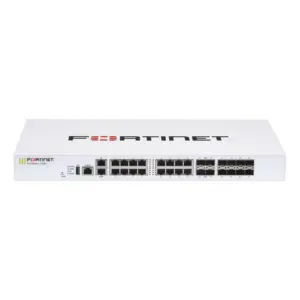
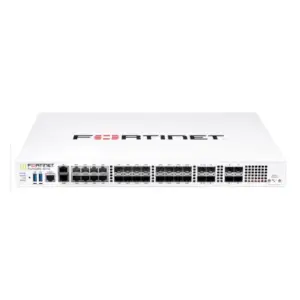
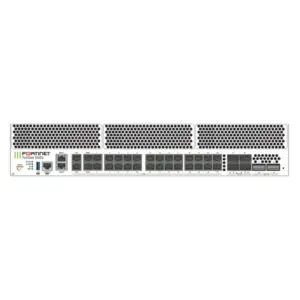
Fortinet FortiDDoS 2000F is a purpose-built inline DDoS protection appliance for organisations that need to keep internet-facing applications, DNS services, portals, transaction systems and critical network infrastructure available while volumetric and protocol attacks are being detected and mitigated. It is positioned for demanding enterprise and institutional environments where a smaller appliance may not provide sufficient packet-processing headroom, interface flexibility or connection scale. The 2000F combines high inspected throughput with very high small-packet processing capacity, a 2RU chassis, redundant hot-swappable AC power, 10GE and 40GE connectivity and passive optical bypass support. This combination makes it suitable for high-value network edges where continuity matters as much as raw mitigation capacity.
For a Uganda deployment, appliance selection should begin with the actual traffic profile rather than the nominal ISP circuit speed. A 10 Gbps internet connection can experience a very different packet rate depending on packet size, protocol mix, reflection traffic and concurrent connection behaviour. Procurement teams should therefore document normal peak traffic, expected growth, upstream routing, protected public address space, critical applications, transceiver requirements, fail-open policy and redundancy objectives. FourTeck can use these inputs to help prepare a bill of materials and deployment plan that accounts for the appliance, optics, cabling, support, rack position, power feeds and implementation requirements.
FortiDDoS is designed to inspect traffic continuously and react automatically to abnormal behaviour. The platform is especially relevant when an organisation cannot rely solely on manual intervention during an attack or when business services must remain reachable through rapidly changing attack patterns. The appliance can protect multiple services and subnets while maintaining visibility into traffic behaviour, making it useful for banks, government platforms, universities, large enterprises, data centres and other organisations with public-facing infrastructure.
Instant Specifications & Procurement Fact Rail
FortiDDoS 2000F
Inline DDoS mitigation
2RU appliance
Up to 76 Gbps
Up to 60 Mpps
Dual hot-swappable AC
The procurement fact rail provides a quick starting point, but these values should not be treated as a complete sizing decision. Fortinet documentation lists 76 Gbps maximum inspected throughput, 60 Mpps inspected packet throughput, 33 million simultaneous TCP connections, 8 million simultaneous sources, 920 kcps session setup and teardown, and latency below 50 microseconds. The chassis accepts 100–240V AC at 50–60Hz, with documented average power consumption of approximately 333W and maximum consumption of approximately 433W. Its physical size is approximately 88 x 444 x 580 mm and weight is about 9 kg. Buyers should allow additional rack clearance for cabling, airflow and service access. Stock and final commercial availability are quotation-based. Warranty and support terms should be confirmed on the issued quotation because service level, support duration and replacement procedures can vary with the selected Fortinet service package and regional fulfilment route.
Operational Product Architecture & Overview
The FortiDDoS 2000F sits in the traffic path so that it can inspect packets before they reach protected infrastructure. This architecture is fundamentally different from a device that only receives sampled flow records or depends on an operator to redirect traffic after an incident begins. Inline placement gives the appliance direct visibility of packets and allows mitigation policies to be enforced at the network edge. For organisations running revenue-generating applications or citizen-facing services, this matters because the useful measure is not simply whether an attack can be identified; it is whether legitimate traffic can continue reaching the protected service while malicious traffic is suppressed.
The appliance supports four 10GE SFP+ data interfaces and four 40GE QSFP+ data interfaces in its documented hardware configuration. Fortinet documentation also describes passive optical fail-open bypass capability for two links when appropriately cross-connected through the bypass module. This is an important architectural consideration because an inline security appliance must be planned as part of the physical network path. Transceiver type, fibre mode, wavelength, reach and paired-port compatibility should be validated before shipment. When bypass is used, the optical characteristics of the local network device, FortiDDoS ports and upstream device must be compatible, because the bypass path can optically connect the endpoints directly.
At the processing level, the 2000F is engineered for both bandwidth and packet-rate pressure. DDoS events frequently use small packets, reflection traffic, SYN floods and protocol behaviours that can create very high packets-per-second loads without consuming the theoretical maximum line bandwidth. This is why the documented 60 Mpps inspected packet rate and SYN flood mitigation capability are procurement-relevant figures. A buyer evaluating only Gbps may overlook a packet-rate bottleneck. The platform also supports advanced mitigation for DNS, NTP, DTLS and QUIC traffic, which is useful where modern applications depend on UDP-based protocols and public infrastructure services.
Another operational issue is baseline behaviour. Enterprise networks are not static: month-end processing, registration periods, streaming events, public announcements, software updates and seasonal campaigns can change legitimate traffic. A DDoS platform therefore needs sufficient monitoring granularity to distinguish unusual malicious patterns from legitimate growth. FortiDDoS is built around continuous traffic monitoring and autonomous mitigation, reducing dependence on a human analyst being available at the exact moment an attack starts. This is particularly valuable for organisations that do not operate a large 24-hour security operations team locally.
The 2000F also addresses infrastructure continuity through redundant power and bypass planning. Dual hot-swappable AC power supplies allow connection to independent power distribution units where the rack design supports them. Front-to-back airflow should be preserved, and the documented operating range of 0°C to 40°C and 5% to 90% non-condensing humidity should be considered when selecting a data-centre or communications-room location. In Uganda, where facilities may use generator and UPS systems, the design review should verify clean power, independent feeds, UPS runtime and generator transfer behaviour rather than assuming redundant appliance power supplies alone create full power resilience.
Procurement managers typically investigate the 2000F because they have outgrown lower-capacity mitigation, are exposing more services to the internet, have experienced availability incidents, are preparing a new data-centre edge, or need stronger control over DDoS response. The right deployment therefore combines appliance capacity with routing, ISP coordination, application architecture and operational processes. FourTeck can help translate those requirements into a practical procurement scope rather than treating the appliance as an isolated box.
Enterprise Business Outcomes & Value Analysis
1. Performance & Throughput Integrity
The 2000F provides substantial headroom for organisations whose edge traffic must be inspected without turning the mitigation layer into a bottleneck. Its documented maximum inspected throughput of 76 Gbps and packet rate of 60 Mpps allow designers to evaluate both bandwidth-heavy and packet-heavy attack conditions. This dual view is critical because reflection and flood attacks can stress packet processing long before a circuit reaches its nominal bandwidth ceiling. Proper sizing preserves room for legitimate traffic, attack traffic and future business growth.
2. System Reliability & High Availability
Availability depends on more than attack detection. The appliance provides dual hot-swappable AC power supplies and supports high-availability deployment strategies. Passive optical bypass can also be incorporated for supported links, reducing the risk that an appliance outage automatically becomes a network outage. Buyers should decide whether the design requires bypass, appliance HA, upstream redundancy, or a combination, then validate cabling and failure behaviour before implementation.
3. Network & Infrastructure Scalability
With 10GE and 40GE interface options, the platform can fit high-capacity network edges and provide room for organisations moving beyond single low-speed uplinks. Scalability planning should include peak clean traffic, projected three-to-five-year growth, protected subnet count, concurrent sources, TCP connection scale and upstream carrier design. This avoids purchasing against today’s average utilisation only.
4. Enterprise Security & Access Control
FortiDDoS focuses on maintaining service availability under denial-of-service conditions. It continuously evaluates traffic and applies mitigation to malicious patterns while allowing legitimate communication to proceed. It should be deployed as part of a layered architecture that can also include firewalls, application protection, endpoint controls and upstream carrier services. Its value is strongest when responsibilities between these layers are clearly defined.
5. Centralized Operational Simplicity
Autonomous mitigation reduces the requirement for an operator to identify every event and manually activate a response. This can shorten operational response and improve consistency, particularly outside normal office hours. Teams still need monitoring, change control, incident review and policy governance, but the mitigation engine is designed to respond rapidly without waiting for a manual intervention workflow.
6. Total Cost of Ownership & Energy Planning
The purchase price is only one part of lifecycle cost. Buyers should include support, optics, rack capacity, power, cooling, implementation, spares strategy and staff training. With approximately 333W average and 433W maximum documented consumption, the 2000F also creates a measurable data-centre power and cooling requirement. Evaluating these items before the purchase order gives finance and infrastructure teams a more accurate operational budget.
Key Hardware & Software Highlights
| Component | Capability | Operational Outcome |
|---|---|---|
| Packet processing | Up to 76 Gbps / 60 Mpps inspected | Handles high-bandwidth and high-packet-rate events with substantial inspection capacity. |
| 10GE interfaces | Four SFP+ ports | Supports common enterprise and data-centre fibre uplinks. |
| 40GE interfaces | Four QSFP+ ports | Provides higher-capacity connectivity for aggregated edge designs. |
| Optical bypass | Passive bypass support for two links | Supports continuity planning if the inline appliance becomes unavailable. |
| Power system | Dual redundant hot-swappable AC | Allows connection to independent rack power paths and servicing with reduced interruption risk. |
| Storage | 960 GB SSD | Provides local system storage for appliance operation and data functions. |
The hardware features become valuable only when they are matched to the physical design. For example, a 40GE port does not automatically guarantee a successful 40GE deployment: the correct QSFP+ modules, fibre type, reach, switch/router support and port pairing must be validated. Similarly, redundant power supplies provide the greatest benefit when each supply is connected to a separate protected power path. The software layer should be planned with current supported firmware, administrative access controls, monitoring integration, configuration backup and change-management procedures. FourTeck can help review these dependencies before shipment so the procurement package includes the components required for a workable installation rather than only the base appliance.
Technical Specifications Ledger
| Specification | FortiDDoS 2000F |
|---|---|
| Maximum inspected throughput | 76 Gbps |
| Inspected packet throughput | 60 Mpps |
| Maximum mitigation | 76 Gbps / 60 Mpps |
| SYN flood mitigation | 21 Mpps |
| Simultaneous TCP connections | 33 million |
| Simultaneous sources | 8 million |
| Session setup/teardown | 920 kcps |
| Latency | Less than 50 µs maximum/typical |
| Attack mitigation response | First packet to under 2 seconds in current data sheet |
| Advanced protocol mitigation | DNS, NTP, DTLS, QUIC |
| 10GE interfaces | 2 LAN + 2 WAN SFP+ 10GE |
| 40GE interfaces | 2 LAN + 2 WAN QSFP+ 40GE |
| Passive optical bypass | 8 ports / 2 links, 10/40GE, 1310/1550nm |
| Storage | 1 x 960 GB SSD |
| Power supplies | Dual AC, redundant, hot-swappable |
| Input voltage | 100–240V AC, 50–60Hz |
| Power consumption | 333W average / 433W maximum |
| Operating temperature | 0°C to 40°C |
| Storage temperature | -20°C to 70°C |
| Humidity | 5%–90% non-condensing |
| Airflow | Front to back |
| Dimensions | 88 x 444 x 580 mm |
| Weight | 9.0 kg |
| Form factor | 2RU |
| Safety/compliance | FCC Class A Part 15, UL/CB/cUL, RCM, VCCI, CE |
These specifications should be interpreted within the intended deployment topology. Performance figures are platform capabilities under defined test conditions and do not remove the need to model real traffic, protocol distribution and failure scenarios. Interface planning is particularly important. The appliance has paired LAN and WAN interfaces, and transceiver compatibility must be maintained across each protected path. If passive optical bypass is required, the chosen optics and fibre plant must match the bypass design. Buyers should also reserve two rack units plus practical cable-management clearance and confirm that the rack depth supports a 580 mm chassis with rear cabling. The documented heat output and maximum power draw should be incorporated into UPS and cooling calculations. Environmental limits are equipment limits, not target operating conditions; a professionally controlled room with stable temperature and humidity remains preferable for long-term reliability.
Configuration & Sizing Worksheet
Step 1 — Measure Workload and Attack Exposure
Record every internet circuit that may pass through the appliance, its committed and burst capacity, normal peak utilisation and projected growth. Then estimate packet rate, not only bandwidth. Identify public services such as DNS, web applications, VPN gateways, APIs, mail systems and externally reachable infrastructure. Note the number of protected subnets and whether different business units need separate protection profiles. Document known historic attacks, including approximate Gbps, packets per second, protocol and duration where logs are available. The objective is to establish enough capacity headroom for legitimate peaks plus attack conditions without relying on average traffic values.
Step 2 — Validate Rack and Environment
Reserve 2RU in a rack that can accommodate the 580 mm chassis depth plus front and rear cable bend radius. Maintain front-to-back airflow and avoid placing equipment in a way that recirculates hot exhaust into the appliance intake. Confirm ambient temperature, humidity monitoring, grounding and physical access controls. For sites using UPS and generator backup, verify that both appliance power supplies can be fed from appropriately protected circuits. If the facility has dual PDUs, connect each supply to a separate PDU where design policy allows.
Step 3 — Map Interfaces, Optics and Bypass
Decide whether each protected link will use 10GE SFP+ or 40GE QSFP+. Record fibre type, connector, wavelength and required reach at both ends. Port-pair optics must be compatible. Where passive optical bypass is planned, validate all optics in the end-to-end bypass path because the upstream and downstream devices can become directly optically connected during bypass. Include spare optics and patch leads if operational policy requires onsite replacement stock.
Step 4 — Define Support and Service Requirements
Confirm the desired support duration and response level. Fortinet offers support options, while reputation services may be optional depending on the design. The appliance can provide core enterprise DDoS mitigation without making optional reputation subscriptions a prerequisite. Nevertheless, organisations should decide what support coverage, update entitlement and optional services they require for the intended lifecycle. Put these items explicitly on the quotation so finance teams can distinguish base hardware from recurring services.
Step 5 — Prepare the Quote Package
A useful request should include organisation name, deployment city, target installation date, number and speed of internet links, routing method, expected peak traffic, protected address ranges, required optics, HA requirement, bypass requirement, support term and implementation scope. Also state whether staging, firmware alignment, remote commissioning assistance or onsite engineering is needed. Providing this information at the beginning reduces back-and-forth and helps FourTeck build a more complete bill of materials.
Deployment Scenarios & Industry Use Cases
Large Enterprise and Multi-Site Networks
A large enterprise may centralise internet access in a primary data centre while branch locations connect through private WAN, SD-WAN or VPN services. In this model, the 2000F can protect the central public edge where corporate portals, VPN concentrators, APIs and shared services are exposed. The design should account for the aggregate traffic of all dependent sites, not merely users physically located in the data centre. If branches rely on central internet breakout, a DDoS incident at headquarters can become a company-wide connectivity event, making resilient edge design especially important.
Financial and Banking Institutions
Banks and payment organisations operate services where even short availability interruptions can affect customer transactions and trust. Public banking portals, mobile-service backends, payment APIs, DNS and partner connectivity may all become targets. The 2000F can be positioned ahead of protected infrastructure to detect and mitigate attack traffic while preserving legitimate sessions. Financial institutions should pair appliance deployment with strict change control, redundant power, tested bypass or HA behaviour, upstream ISP escalation procedures and documented incident ownership. Capacity planning should include salary days, month-end activity, campaign peaks and digital-channel growth.
Educational and Campus Networks
Universities and large education networks can experience unusual traffic patterns driven by registration periods, examinations, online learning, research transfers, student accommodation and public web services. Their networks may also contain many independently managed endpoints. A DDoS appliance can protect shared internet-facing services while giving network teams greater visibility into abnormal traffic. Sizing should reflect semester peaks and future bandwidth upgrades, and procurement should consider whether the appliance will protect only central services or the full campus internet path.
Government and Public-Sector Procurement
Government platforms frequently provide citizen services that must remain reachable during public events, announcements or periods of heightened threat. Procurement often requires formal technical compliance, documented specifications, warranty terms and a clear implementation scope. FortiDDoS 2000F provides a high-capacity platform that can be integrated into a controlled data-centre architecture. Public-sector buyers should map protected ministries or services, define segregation requirements, confirm support and replacement procedures, and include training or knowledge transfer where internal teams will operate the platform.
Technical Deep Dive 1: Processing, Acceleration & Hardware Engine Architecture
DDoS defence has a distinctive performance problem: attack traffic can be deliberately shaped to consume packet-processing resources rather than bandwidth alone. A stream of minimum-sized packets can force far more per-packet work than an equivalent bandwidth of large packets. The FortiDDoS 2000F therefore needs to be evaluated using both its 76 Gbps maximum inspected throughput and its 60 Mpps inspected packet capacity. The documented 21 Mpps SYN flood mitigation rate further helps architects evaluate TCP exhaustion scenarios. These figures are especially relevant for internet edges that host DNS, transactional applications or other services attractive to reflection and flood attacks.
The appliance is designed for continuous packet inspection rather than sampling. This supports rapid identification of traffic changes and enforcement of mitigation decisions. With more than 33 million simultaneous TCP connections and eight million simultaneous sources documented, the platform is intended for environments where large legitimate populations and attack-source diversity may coexist. The architecture should still be sized with headroom: running any security appliance permanently near its theoretical ceiling reduces flexibility for unusual events and future growth. A practical design compares normal peak, exceptional legitimate peak, projected growth and credible attack conditions before selecting the model.
Interface architecture also affects usable deployment capacity. Four 10GE SFP+ and four 40GE QSFP+ ports provide multiple connectivity patterns, but the appliance is not simply an unmanaged high-speed bridge. Port pairing, topology, bypass and routing design must be mapped carefully. The result should be a documented physical diagram showing upstream carrier equipment, FortiDDoS port pairs, downstream routers or firewalls, optics, fibre paths and management connectivity.
Technical Deep Dive 2: Software Ecosystem, Firmware Security & Operational Control
The operational value of a DDoS platform comes from how effectively it learns normal traffic behaviour, identifies deviations and applies mitigation without creating unacceptable disruption to legitimate users. FortiDDoS is designed around autonomous mitigation and broad monitoring, reducing reliance on manual attack-by-attack intervention. For administrators, this changes the operating model from emergency activation toward continuous policy governance, event review and tuning. Teams should establish named owners for configuration, monitoring, incident escalation and firmware maintenance before the appliance enters production.
Firmware lifecycle management should follow organisational change-control practice. Before deployment, confirm the recommended supported release for the purchased hardware and planned features. Back up configurations before upgrades, review release documentation, schedule maintenance windows and validate critical traffic after changes. Administrative access should be restricted to authorised management networks, with strong authentication and role separation where available. Logging and alerting should feed existing operational workflows so the appliance does not become an isolated security system that is noticed only during a major incident.
Optional reputation services can complement the platform but should be understood separately from the core appliance function. Procurement teams should ask which services are included, which are optional, their renewal period and the consequences of non-renewal. This avoids surprise recurring costs and allows finance teams to forecast lifecycle expenditure. FourTeck can help structure the quotation so hardware, support, optional subscriptions and professional services are clearly separated.
Technical Deep Dive 3: High Availability, Redundancy & Disaster Recovery
An inline mitigation device must be incorporated into the organisation’s availability model. The 2000F includes dual hot-swappable AC power supplies, allowing each supply to be connected to a different protected power source. That protects against some power failures but not against every chassis, software, cabling or upstream failure. Organisations with stringent uptime requirements should therefore decide whether they need appliance high availability, passive bypass, redundant carrier links, redundant routers, or several of these mechanisms together.
Passive optical bypass is particularly important to understand before ordering. The 2000F supports two fail-open links through its bypass arrangement. For bypass to work correctly, the optics and fibre path on both sides must be compatible because the network endpoints may become directly connected when the appliance is bypassed. This means wavelength, reach and optical characteristics cannot be selected independently. A pre-installation cabling matrix should list every port, optic, patch lead and remote endpoint.
Disaster recovery planning should also address configuration recovery, spare hardware strategy and support escalation. Keep current configuration backups according to internal policy, record serial and support details in the asset system, and document who can open a vendor support case. If the organisation has a secondary data centre, decide whether it requires an equivalent appliance, a smaller standby design or carrier-based protection. Run controlled failover tests so the first time the bypass or HA design is exercised is not during a live attack.
Pre-Purchase Buyer Gap Checklist
Recurring services: Ask the quotation to identify hardware, support and optional reputation services as separate commercial lines. This makes renewal exposure visible and prevents an assumption that every service is permanently included with the chassis.
Hardware lifecycle: Confirm the current orderability, support lifecycle and recommended software branch at the time of purchase. Enterprise projects can take months from design to deployment, so lifecycle status should be validated on the formal quote rather than inferred from an older bill of materials.
Rack clearance: The chassis is 2RU and approximately 580 mm deep. Allow additional rear clearance for power and data cables and front clearance for service access. Check rail compatibility and usable rack depth, especially in older communications rooms.
Power under load: Plan against the documented maximum of approximately 433W rather than average consumption alone when sizing power circuits and UPS capacity. If redundant supplies are connected to separate PDUs, ensure each power path can carry the required load under failure conditions.
Cross-vendor compatibility: The appliance can sit between equipment from different network vendors, but Ethernet speed, duplex, optics, wavelength, fibre type and routing design still need validation. Bypass paths make optical matching particularly important.
Carrier coordination: On-premises mitigation cannot clean traffic that has already saturated an upstream circuit. If the credible attack size can exceed purchased internet capacity, discuss upstream carrier controls or hybrid mitigation as part of the architecture. The 2000F supports open hybrid cloud mitigation approaches, but the operational design and external service arrangements must be planned separately.
Implementation ownership: Decide who will rack the appliance, install optics, configure management, establish baselines, integrate monitoring, test bypass, conduct acceptance testing and train operations staff. A technically correct appliance can still become a project risk if these responsibilities are not assigned before delivery.
Growth margin: Avoid sizing solely to current average bandwidth. Include expected ISP upgrades, new applications, additional branches, cloud connectivity and traffic growth over the intended hardware lifecycle. The cost of unused headroom should be weighed against the disruption and replacement cost of outgrowing the platform early.
Uganda Regional Procurement & Delivery Logistics
FourTeck supports enterprise technology procurement for customers in Uganda through a quotation-led process. For FortiDDoS 2000F projects, the most efficient starting point is a technical requirement summary covering connectivity, expected traffic, protected services, rack location, optics, support term and target deployment date. The commercial team can then align the requested configuration with sourcing and delivery requirements. Enterprise security appliances may require project-based lead-time confirmation, so buyers should avoid assuming immediate shelf availability for a specific configuration.
After commercial acceptance, order processing can include bill-of-materials verification, logistics coordination and pre-shipment checks. Delivery timing depends on source stock, chosen service package, import and customs processing, destination and any staging requirement. Buyers with fixed project milestones should state the required-on-site date when requesting the quote so sourcing options can be evaluated early. For data-centre installations, coordinate rack access, change windows, carrier engineers and internal security teams before the equipment arrives.
Pre-configuration support can include review of firmware level, management settings, interface plan and deployment documentation where included in the agreed scope. Sensitive production parameters should be handled according to the customer’s security policy. Acceptance testing should verify hardware health, power redundancy, interface operation, management access, monitoring, bypass or HA behaviour and basic traffic flow before the appliance is considered production-ready.
Local Coverage Across Uganda
FourTeck can coordinate FortiDDoS 2000F procurement requirements for organisations in Kampala, Entebbe, Jinja, Mbarara and Gulu, as well as other locations across Uganda. Kampala deployments commonly include corporate headquarters, banks, government facilities, carrier hotels and data-centre environments where rack, fibre and power details can be gathered during project planning. Entebbe organisations may require secure logistics and scheduled delivery to controlled facilities. Jinja, Mbarara and Gulu projects can benefit from early confirmation of destination, access windows and onsite engineering expectations so logistics and technical resources are aligned. Regional delivery should be treated as part of the implementation plan: identify who receives the shipment, who verifies serial numbers and packaging, where equipment will be stored before installation, and how the change window will be coordinated. For remote sites, include spare optics, patch leads and any console accessories in the original bill of materials to reduce the risk of an installation delay caused by a small missing component.
Cross-Border & Regional Supply Chains
Organisations operating across East Africa, the Gulf and wider African markets can coordinate related technology requirements through FourTeck regional channels. Uganda customers can visit FourTeck Uganda, while Kenyan requirements can be directed through FourTeck Kenya. Multi-country African projects can use FourTeck Africa. UAE procurement is supported through FourTeck UAE, and Kuwait requirements through FourTeck Kuwait. Cross-border projects should standardise model numbers, support terms, optics and firmware strategy wherever practical while still accounting for local power, carrier, customs and delivery conditions. A shared bill-of-materials template helps regional IT teams avoid accidental differences between sites and simplifies spares, training and support procedures.
Related Infrastructure & Internal Procurement Paths
A FortiDDoS deployment normally touches several adjacent infrastructure areas. Buyers can begin with the Uganda enterprise technology catalogue and use the project quotation desk to request related network security, switching, routing, rack, UPS and fibre components. When planning the protected edge, consider whether firewall capacity remains adequate after DDoS traffic is filtered, whether upstream routers have sufficient interface capacity, and whether the rack has dual protected power. Optics and patch leads should be specified at the same time as the appliance because incorrect reach or fibre mode can prevent commissioning. For high-availability projects, the bill of materials may need a second appliance, additional optics, separate power leads and additional rack space. FourTeck can consolidate these dependencies into a single project review so procurement teams can compare the complete installed requirement rather than the base appliance price alone.
FourTeck Technical Service Capabilities
Enterprise security hardware benefits from engineering validation before shipment. FourTeck can support requirement review and bill-of-materials verification so model, interface type, optics, support and accessory choices align with the intended topology. This is especially valuable for FortiDDoS 2000F because the appliance can be deployed with different high-speed interface paths and bypass requirements. A pre-shipment review can identify missing transceivers, incorrect fibre assumptions, insufficient rack depth or an unclear redundancy plan before those issues reach the installation window.
Where included in the agreed project scope, staging activities can cover hardware inspection, serial capture, firmware review and basic configuration preparation. Pre-shipment firmware alignment should follow vendor-supported release guidance and customer change policy. Configuration templates can be prepared around management addressing, interface mapping and administrative access while leaving sensitive production values for controlled commissioning.
Post-sales technical support can assist with deployment coordination, troubleshooting and vendor case escalation according to the purchased service arrangement. Customers should maintain their own configuration backups, diagrams, credentials and operational procedures. For larger projects, knowledge transfer can cover appliance role, monitoring, incident review, bypass behaviour and routine maintenance so internal teams understand not only how the device is configured but also how it fits into the wider availability architecture.
Extended Technical FAQ
1. What capacity does FortiDDoS 2000F provide?
Fortinet documents maximum inspected throughput of 76 Gbps and inspected packet throughput of 60 Mpps for the 2000F, with maximum mitigation listed at 76 Gbps / 60 Mpps. It also supports approximately 33 million simultaneous TCP connections and eight million simultaneous sources. These values make it suitable for substantial enterprise edges, but the correct sizing decision should consider circuit capacity, packet rate, normal traffic, growth, protocol mix and credible attack characteristics. Keep operational headroom rather than selecting a model that only matches today’s normal peak.
2. Does the appliance support 10GE and 40GE connectivity?
Yes. The documented interface set includes four 10GE SFP+ data interfaces arranged as LAN/WAN pairs and four 40GE QSFP+ data interfaces arranged as LAN/WAN pairs. Interface selection requires compatible transceivers and cabling. For paired links, validate speed and optical characteristics on both sides. If passive bypass is part of the design, confirm wavelength, fibre mode and reach across the complete bypass path before purchasing optics.
3. Is a subscription required for basic enterprise DDoS mitigation?
Fortinet’s ordering information indicates that IP and domain reputation subscriptions are optional and are not required for enterprise DDoS mitigation. Support services remain an important part of an enterprise deployment and should be selected for the required term and service level. Ask for the quotation to show the base appliance, support and optional services separately. This provides clarity about recurring costs and helps procurement teams understand which capabilities depend on a service renewal.
4. How does optical bypass affect the design?
The 2000F supports passive optical fail-open bypass for two links when the relevant port pairs are connected through the supported bypass arrangement. During bypass, the upstream and downstream network devices can become optically connected directly. As a result, all transceivers in that path must have compatible optical characteristics. Bypass is valuable for continuity planning, but it should be tested during commissioning and documented so operations staff understand what traffic path is created when the appliance is unavailable or manually bypassed.
5. What rack and power resources are required?
The appliance occupies 2RU and measures approximately 88 x 444 x 580 mm, with a weight of about 9 kg. Allow additional space for cable bend radius and service access. Power input is 100–240V AC at 50–60Hz. Fortinet documents approximately 333W average and 433W maximum consumption. Two redundant hot-swappable AC power supplies are provided. For stronger resilience, connect them to independent protected PDUs where the facility design supports this, and size UPS capacity using the maximum requirement plus appropriate engineering margin.
6. Can FortiDDoS 2000F protect DNS and modern UDP-based services?
The platform includes advanced mitigation capabilities for DNS, NTP, DTLS and QUIC traffic. This matters because reflection attacks and modern application protocols can create high packet rates and complex traffic patterns. Protection should still be designed around the actual services the organisation operates. Document authoritative DNS servers, public applications, UDP services and expected legitimate peaks so policies and baselines can be reviewed after deployment. Application owners should participate in acceptance testing to verify that legitimate traffic remains reachable.
7. How should we handle attacks larger than our internet circuit?
An on-premises appliance can only inspect traffic that reaches it. If an attack saturates the upstream carrier link before traffic reaches the FortiDDoS, local mitigation cannot restore capacity that has already been consumed upstream. Organisations with credible exposure to attacks larger than their circuits should discuss carrier controls or hybrid mitigation. The 2000F supports open hybrid cloud mitigation approaches, but external service design, routing and escalation procedures must be planned with the relevant provider. This should be addressed during architecture design rather than after the first saturation event.
8. What should be included in the warranty and support discussion?
Ask the supplier to state the exact Fortinet support package, duration, entitlement start date, replacement process and escalation path on the quotation. Do not assume that all projects use the same replacement SLA or regional process. Internal teams should record the appliance serial number, contract details and support contacts in the asset-management system. If the network has very high availability requirements, consider whether the business needs a second appliance or onsite spare strategy rather than relying solely on replacement logistics.
9. Can FourTeck assist with configuration and deployment planning?
FourTeck can help review the bill of materials, interface plan, optics, rack and power requirements, support selection and implementation scope. Depending on the agreed service package, staging or configuration assistance can also be included. Customers should provide a topology diagram, addressing plan, protected services, link speeds, routing method and required change window. A structured pre-deployment review is particularly useful for inline appliances because physical cabling and bypass behaviour are as important as the logical configuration.
10. What information should we provide for an accurate Uganda quotation?
Provide the organisation name, delivery city, target installation date, internet link speeds, peak traffic, expected growth, protected public services, preferred 10GE or 40GE interfaces, fibre and optic details, HA requirement, bypass requirement, support term and required engineering services. If you have historic DDoS data, include approximate Gbps, packet rate and protocols. Also state whether the project needs remote commissioning, onsite assistance, training, spare optics or additional infrastructure. These details allow the quotation to reflect the real deployment rather than only the appliance chassis.
Plan Your FortiDDoS 2000F Deployment in Uganda
A successful DDoS protection project starts with correct capacity, topology and resilience planning. FortiDDoS 2000F offers high inspected throughput, strong packet-processing capacity, 10GE and 40GE connectivity, redundant power and optical bypass options for demanding enterprise environments. FourTeck can help turn your network requirements into a practical procurement scope covering appliance configuration, optics, support, rack and power dependencies, staging and delivery. Send your current circuit capacity, peak traffic, protected services, deployment city and target date. The team can then prepare a tailored quotation and identify any technical information that should be confirmed before order placement. For organisations upgrading an existing mitigation platform, include the current model, observed peak utilisation and known attack history so replacement sizing can account for both present demand and future growth.
Reviews
There are no reviews yet.