
Fortinet FortiNDR 2500G Network Detection and Response Appliance Uganda
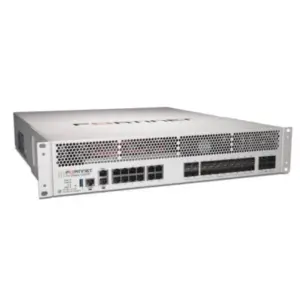
The Fortinet FortiNDR 2500G is a high-capacity, on-premises network detection and response appliance built for enterprises that need to observe network behavior, retain local evidence and investigate suspicious activity without depending entirely on cloud-hosted inspection. In standalone mode it can perform local monitoring and analysis; in sensor mode it can participate in a distributed FortiNDR architecture. This makes the appliance relevant to large corporate networks, regulated environments, data centers, financial institutions, government infrastructure, universities and organizations operating segmented or restricted networks in Uganda.
The appliance is particularly suited to procurement projects where network visibility must scale beyond ordinary branch-level monitoring. Four 25GbE SFP28 capture interfaces provide substantial physical monitoring capacity, while Fortinet specifies 15Gbps NDR sniffer throughput using its enterprise traffic profile. The system also processes up to 200,000 NetFlow records per second and lists malware-analysis performance of up to 252,000 files per hour. These figures should be interpreted as platform sizing references rather than a substitute for a traffic assessment: actual requirements depend on traffic composition, monitored segments, packet duplication, retention policy, integrations and enabled services.
For Ugandan buyers, a successful FortiNDR 2500G procurement is therefore more than ordering a chassis. The bill of materials should account for compatible SFP28 or SFP+ transceivers, optical or copper media as applicable, SPAN/TAP architecture, management connectivity, redundant power feeds, rack depth, subscription entitlements and any high-availability requirement. FourTeck can structure the quotation around these practical dependencies so that the supplied system aligns with the intended deployment rather than leaving critical accessories to be discovered during installation.
Instant Specifications & Procurement Fact Rail
FortiNDR 2500G
Standalone or Sensor
2RU rackmount
4 × 25GbE SFP28, 10Gbps capable
15Gbps enterprise mix
15.36TB usable, RAID 10
100–240VAC; redundant hot-swap PSUs
Quote-based availability and warranty confirmation
This fact rail is intended to help procurement teams rapidly identify the physical and operational class of the platform. The 2500G occupies the middle of Fortinet’s current on-premises hardware range: it is materially more capable than entry monitoring hardware while remaining a sensor/standalone appliance rather than the dedicated center role of the 3600G. Transceivers are purchased separately, so optic selection should be included in the commercial review. Warranty and support terms can vary by bundle and entitlement; the quotation should state the applicable regional coverage explicitly.
Operational Product Architecture & Overview
FortiNDR 2500G is designed to ingest copies of production traffic rather than sit as a conventional forwarding gateway. Network teams typically deliver traffic to its sniffer interfaces through switch SPAN ports, network TAPs or equivalent monitoring infrastructure. Support for 802.1Q traffic allows observation of tagged network segments, while NetFlow support can extend visibility where flow telemetry is part of the architecture. This passive observation model is valuable when the security team needs deeper network evidence without introducing an inline dependency into critical application paths.
Port roles are deliberately separated. Fortinet documents Port1 as a 10G SFP+ management interface used for GUI access, receiving files from Security Fabric devices, REST API and ICAP functions. Port2 is a 10G SFP+ interface used for high availability in standalone deployments and is unused for that role when the appliance operates as a sensor. Ports3 through Port6 are 25G SFP28 sniffer interfaces. A dedicated 1GbE RJ45 bootloader interface and serial console provide service and initialization paths. This separation matters in a production design because management, HA synchronization and monitored traffic should be mapped deliberately rather than treated as interchangeable interfaces.
The appliance contains four hot-swappable SSDs with 15.36TB usable capacity under the default RAID 10 arrangement. Storage is central to NDR planning because local payload and event retention consume capacity according to traffic volume and analysis behavior. A buyer should therefore evaluate not only peak link speed but the average sustained monitored load, expected event volume and evidence-retention objective. Oversizing only the physical capture interface while ignoring storage and sustained processing can produce a technically connected system that does not meet investigation expectations.
Fortinet publishes an enterprise-mix NDR sniffer throughput figure of 15Gbps for this model. The four 25GbE interfaces do not mean that 100Gbps of arbitrary sustained production traffic can be fully analyzed at the stated NDR processing level. Interface capacity and inspection throughput are different sizing dimensions. During design, mirrored links should be assessed for average and burst behavior, duplicate packets, east-west traffic volume and whether aggregation can create sustained loads above the appliance’s processing profile.
For organizations replacing fragmented monitoring tools, the architectural advantage is consolidation of network evidence, anomaly investigation and malware-oriented analysis within an on-premises platform that can integrate with the broader Fortinet Security Fabric. For organizations already operating FortiGate or FortiSandbox, the integration path can reduce handoffs between network and security teams. In mixed-vendor estates, procurement should identify required REST, ICAP, SIEM, SOAR or other integration workflows before purchase and confirm the supported software release against the intended operational design.
Enterprise Business Outcomes & Value Analysis
The strongest value case emerges when the platform is sized as part of a security operations architecture rather than purchased as an isolated appliance. Organizations should define which network zones will be monitored, who investigates detections, how evidence is retained, which adjacent platforms receive events and what response process follows a validated incident. That operational model determines whether the hardware capacity becomes useful security visibility or merely unused infrastructure.
Key Hardware & Software Highlights
| Component / Capability | Implementation | Operational Outcome |
|---|---|---|
| Capture interfaces | 4 × 25GbE SFP28; capable of 10Gbps operation | Flexible connection to high-speed monitoring fabrics and aggregated SPAN/TAP feeds. |
| Management / HA | 2 × 10GbE SFP+ | Separates administrative and HA functions from capture traffic. |
| Local storage | 4 hot-swappable SSDs; 15.36TB usable RAID 10 | Balances local evidence retention with disk redundancy and serviceability. |
| Power architecture | Redundant hot-swappable PSUs | Supports connection to separate rack PDUs for improved power-path resilience. |
| Traffic telemetry | SPAN/sniffer, 802.1Q, NetFlow support | Allows multiple visibility methods according to network topology and licensing. |
| Deployment modes | Standalone and Sensor | Suitable for a self-contained site or distributed monitoring architecture. |
The practical significance of these features is architectural flexibility. A data center can dedicate high-speed optical monitoring feeds to the SFP28 interfaces, isolate management on a separate administrative network and reserve the second 10G interface for HA where standalone resilience is required. Hot-swappable storage and power components improve serviceability, but organizations should still define maintenance procedures, replacement-part logistics and escalation contacts before the appliance becomes operationally critical.
Technical Specifications Ledger
| Specification | FortiNDR 2500G | Procurement Note |
|---|---|---|
| Deployment | Standalone, Sensor | Choose mode according to single-site or distributed architecture. |
| Sniffer / SPAN / 802.1Q | Supported | Validate switch mirroring or TAP design. |
| Capture ports | 4 × 25GbE SFP28, 10Gbps capable | Transceivers are purchased separately. |
| Management / HA | 2 × 10GbE SFP+ | Plan optics and dedicated management VLAN/network. |
| Service ports | 1 × GbE RJ45 console; 1 × GbE RJ45 bootloader | Useful for local initialization and recovery workflows. |
| Storage | 4 hot-swappable SSDs, 15.36TB usable | Default software RAID 10. |
| NDR sniffer throughput | 15Gbps enterprise mix | Use sustained monitored traffic, not port totals, for sizing. |
| NetFlow performance | 200,000 flows/second | NetFlow entitlement may be licensed separately. |
| Malware analysis | 252,000 files/hour | Published platform performance reference. |
| Form factor | 2RU | Confirm rack rail and depth clearance. |
| Dimensions | 88 × 438 × 695.8mm without handle; 88 × 483 × 740.8mm with handle | Deep chassis requires cabinet verification. |
| Weight | 40lb / 18.14kg | Allow safe rack installation procedure. |
| AC input | 100–240VAC, 50–60Hz | Dual feeds recommended for redundant PSUs. |
| Power consumption | 524.8W idle / 682.2W full loading | Include UPS/PDU and cooling calculations. |
| Heat dissipation | 2327.8 BTU/h | Coordinate with data-center cooling capacity. |
| Operating temperature | 0°C to 40°C | Maintain controlled rack environment. |
| Storage temperature | −20°C to 70°C | Relevant to warehousing and transport. |
| Humidity | 5%–90% | Avoid condensation and uncontrolled environments. |
| Operating altitude | Up to 10,000ft / 3,048m | Suitable for normal Ugandan enterprise facilities. |
| Certifications | FCC, ISED, CE, RCM, VCCI, BSMI Class A, UL/cUL, CB | Confirm project-specific compliance requirements. |
Specifications should be reconciled with the exact Fortinet ordering bundle and current software release at quotation time. Firmware compatibility, subscription services and optional capabilities evolve independently from the physical chassis, while optics and certain entitlements are not necessarily included in the base hardware bundle. A procurement-ready quotation should therefore identify the appliance bundle, renewal term, NetFlow requirement, transceiver quantities, power accessories and professional services separately enough for technical and finance teams to review.
Interactive Configuration & Sizing Worksheet
1. Estimate monitored workload
List every network segment intended for observation and record average throughput, normal peak, exceptional peak and whether the feed will contain duplicate traffic. Identify internet edges, server farms, user VLANs, inter-VLAN routing points, WAN aggregation and critical east-west paths. The goal is not simply to count switch port speeds; it is to estimate how much mirrored traffic reaches the FortiNDR appliance at the same time. Compare sustained demand against the published 15Gbps enterprise-mix processing reference and preserve sensible headroom for growth and bursts.
2. Validate rack and environment
Reserve 2RU and confirm usable cabinet depth. With handles, the published chassis depth reaches approximately 740.8mm, so shallow cabinets require particular attention. Check front-to-rear airflow, service clearance, cable bend radius and the ability to safely install an 18.14kg appliance. Verify that the room remains within the 0°C to 40°C operating range and that cooling can accommodate approximately 2327.8 BTU/h heat dissipation.
3. Design redundant power and cabling
Where the facility provides A/B power, connect the redundant hot-swappable PSUs to separate protected feeds. Include maximum loading of 682.2W in UPS and PDU calculations rather than planning only around idle consumption. For capture links, identify whether each monitored source requires SFP28 at 25Gbps or SFP+ operation at 10Gbps, then specify matching optics, fiber type and reach. Do not assume transceivers are included with the appliance.
4. Confirm subscriptions and software architecture
Fortinet ordering information lists hardware bundles and renewals separately, and NetFlow support has a separate licensing line for the 2500G. Confirm the desired contract duration, renewal approach and whether the appliance will be standalone or a sensor. If centralized management is planned, include the appropriate center architecture and validate supported software versions across all components.
5. Prepare the quotation checklist
A useful RFQ should include: FortiNDR 2500G quantity; standalone or sensor mode; expected sustained monitored traffic; number and speed of capture links; SFP28/SFP+ optic type and quantity; rack location; dual power availability; HA requirement; NetFlow requirement; desired support term; integration targets; delivery city; installation or staging requirement; and any public-sector, banking or institutional documentation requirements. Providing these details early reduces commercial revisions and helps ensure that the delivered bill of materials is deployable.
Deployment Scenarios & Industry Use Cases
Large Enterprise and Multi-Site Networks
A large enterprise can position the 2500G at a primary data center, campus core or aggregation point where high-value east-west and north-south traffic can be mirrored. In a multi-site design, sensor deployments can place visibility closer to important locations while a centralized management layer coordinates investigation. This approach avoids attempting to backhaul every packet copy across constrained WAN links. The engineering team should prioritize traffic that provides meaningful security context: authentication services, server-to-server communications, internet ingress/egress, application tiers and sensitive administrative networks.
Financial and Banking Institutions
Banks and financial organizations often need detailed visibility while maintaining strong control over where security data is stored. An on-premises NDR architecture can support that objective by keeping captured evidence within controlled infrastructure. Deployment planning should map monitoring to core banking application zones, payment networks, privileged administration paths, data-center interconnects and internet-facing services. Change control, role separation, evidence retention and integration with the institution’s SIEM or incident-management processes should be documented before commissioning.
Educational and Campus Networks
Universities and large education environments combine student devices, staff systems, research networks, data centers, guest access and sometimes residential connectivity. This diversity can make behavior-based network visibility useful, but it also creates substantial traffic volumes. The 2500G can be placed at campus aggregation points, with mirrored feeds selected according to security priorities. Teams should avoid indiscriminately duplicating every high-bandwidth research or backup flow if those streams consume capacity without contributing proportional investigation value.
Government and Defense Procurement
Government agencies may require local data control, segmented networks, restricted external connectivity and formal procurement documentation. FortiNDR’s on-premises architecture is relevant to these environments, including isolated or tightly controlled networks. Exact deployment requirements should be validated against the agency’s security policy, accreditation process and network classification. Procurement documentation can specify appliance model, support entitlement, optics, serial-number recording, staging requirements, firmware baseline, delivery controls and acceptance testing. Where high availability is mandatory, the paired architecture and synchronization path should be included in the design rather than added after delivery.
Technical Deep Dive 1: Processing, Acceleration & Capture Architecture
The first sizing distinction is between physical ingress capacity and analytical throughput. Four 25GbE SFP28 ports provide connection flexibility, but Fortinet’s published NDR sniffer performance for an enterprise mix is 15Gbps. In practical terms, a design may connect several high-speed monitoring links whose average combined traffic remains within the analytical envelope, or distribute selected VLANs and segments across capture ports. The appliance can also process up to 200,000 NetFlow records per second. These metrics address different telemetry forms and should not be combined into a single simplistic capacity number.
Packet-copy quality matters. Oversubscribed SPAN sessions can drop packets before traffic reaches the appliance, while poorly configured aggregation can duplicate frames and waste processing capacity. Network TAPs may provide more deterministic visibility in critical locations, but introduce their own optical and cabling requirements. Procurement and implementation teams should therefore treat monitoring infrastructure as part of the solution. A high-performance NDR appliance cannot reconstruct packets that were never delivered to its capture interface.
Local SSD capacity complements processing by preserving data used for events and analysis. RAID 10 offers redundancy and performance characteristics appropriate to intensive storage activity, with 15.36TB usable from four drives. Retention is workload-dependent. Buyers with explicit evidence-retention targets should model actual monitored throughput and event behavior instead of assuming a fixed number of days from raw disk capacity.
Technical Deep Dive 2: Software Ecosystem, Firmware Security & Operational Control
FortiNDR 2500G is supported in FortiNDR’s current on-premises software family and can operate as a standalone appliance or sensor. Software lifecycle management should be handled as an operational process: establish an approved release, review Fortinet release notes before upgrades, maintain configuration backups, test integrations and schedule changes according to business impact. Management access should reside on a controlled administrative network, and role assignments should follow the organization’s privileged-access policy.
Integration is especially important in mature security operations. Fortinet documents Security Fabric integration with platforms such as FortiGate and FortiSandbox, while management services include REST API and ICAP functions. A deployment can therefore participate in a broader detection and response workflow rather than becoming an isolated console. Before purchase, define which systems send data to FortiNDR, which receive detections, and who owns response actions. This reduces the common gap between acquiring visibility and building a repeatable incident-handling process.
Licensing should be reviewed with equal discipline. Hardware bundle, renewal and NetFlow entitlements can be distinct ordering items. Procurement teams should request a quote that makes contract duration and renewal obligations explicit, particularly for multi-year budgets. The objective is to avoid an apparently complete hardware purchase that omits a capability expected by the technical design.
Technical Deep Dive 3: High Availability, Redundancy & Disaster Recovery
Fortinet’s ordering guidance identifies active-passive high availability for the 2500G in standalone mode. A resilient design therefore starts by determining whether monitoring continuity is business-critical enough to justify two appliances. If it is, both devices, the HA connection, mirrored traffic delivery, management connectivity and independent power paths should be designed together. Merely purchasing a second chassis without ensuring that both appliances can receive the necessary traffic does not create a complete HA architecture.
Power resilience begins inside the chassis with redundant hot-swappable PSUs, but it should extend to separate rack PDUs, UPS systems and upstream electrical feeds where the facility supports them. Storage uses RAID 10 and hot-swappable drives, which helps tolerate certain component failures, but RAID is not a substitute for configuration backup or a disaster-recovery plan. Operational teams should document replacement procedures, configuration recovery, software image availability and escalation paths.
For geographically distributed organizations, disaster recovery may favor sensors at multiple sites rather than concentrating all visibility at one location. This can preserve local observation during WAN disruption and reduce packet-mirroring dependency across long-distance links. The right architecture depends on traffic distribution, regulatory requirements and the central-management model. FourTeck can help translate these requirements into a bill of materials before commercial approval.
Pre-Purchase Buyer Gap Checklist
Are optics included? Fortinet’s data sheet states that transceivers are purchased separately. Specify speed, media, connector and reach for each capture and management link.
Does four 25GbE capture ports mean 100Gbps NDR throughput? No. Physical interface capacity and processing performance are different. Fortinet publishes 15Gbps enterprise-mix NDR sniffer throughput for the 2500G.
Are there separate licenses? The ordering guide shows hardware bundle and renewal items, and lists NetFlow support separately for the 2500G. Request a line-item entitlement review against the required functions.
Will it fit the rack? The appliance is 2RU and approximately 695.8mm deep without handles, reaching about 740.8mm with handles. Verify cabinet depth, rail compatibility, cable bend space and rear service clearance before delivery.
What power should the facility reserve? Fortinet lists 524.8W idle and 682.2W at full loading. Use maximum load for UPS/PDU planning and account for redundant feeds.
Can it be deployed without sending captured data to a public cloud? FortiNDR on-premises is designed for local deployment and local storage, making it relevant to controlled, OT and air-gapped environments. Any external integrations should still be reviewed against policy.
What about third-party infrastructure? The appliance receives standard network copies through SPAN/TAP-style designs, but integration workflows vary. Confirm switch mirroring behavior, transceiver interoperability, VLAN tagging, SIEM/SOAR requirements and supported APIs before sign-off.
How should lifecycle risk be handled? Confirm current Fortinet support status, software compatibility, subscription term and replacement process at quotation time. Record the exact ordered SKU and support contract so future renewals and RMA requests can be matched accurately.
Uganda Regional Procurement & Delivery Logistics
FourTeck Uganda can prepare a project quotation for the FortiNDR 2500G based on appliance quantity, support term, optics, accessories and deployment services. Enterprise security appliances are commonly handled through quote-based supply because the correct commercial configuration depends on licensing duration and the final bill of materials. Buyers should provide the delivery city, organization details, required quote validity, tax or institutional documentation requirements and expected project schedule.
Before order confirmation, the technical scope can be reviewed for capture-port quantities, optic types, rack requirements, high availability and integration needs. This is especially useful when a tender lists only the appliance model but the deployment requires transceivers, subscriptions or professional services that are not implicit in the base chassis. Where staging is requested, the scope can define software baseline checks, labeling, inventory capture and configuration tasks permitted before shipment.
Delivery timing depends on distributor stock, allocation, import logistics and the exact bundle. For that reason, lead time should be confirmed on the commercial quotation rather than treated as a fixed website promise. On receipt, organizations should inspect packaging, verify serials and line items against the purchase order, and follow controlled rack installation and commissioning procedures.
Local Coverage Matrix
Enterprise, banking, data-center and public-sector project coordination.
Commercial, institutional and infrastructure delivery coordination.
Industrial, education and multi-site network procurement support.
Regional enterprise and campus project supply planning.
Regional institutional and distributed-network project coordination.
Coverage is not limited to these hubs. Uganda projects can be quoted according to the actual delivery location and implementation scope. For remote sites, it is particularly useful to finalize optics, power accessories and configuration requirements before dispatch because correcting an incomplete bill of materials after equipment reaches site can add avoidable delay.
Cross-Border & Regional Supply Chains
Organizations operating across East Africa and the Gulf may need consistent hardware standards across multiple countries. FourTeck’s regional web presence supports procurement conversations for Uganda, Kenya, broader African markets, the UAE and Kuwait. Cross-border projects should standardize the technical bill of materials while allowing commercial terms, import processes, tax treatment and delivery schedules to be handled per destination.
For a multi-country FortiNDR rollout, define the common appliance model, software baseline, subscription duration, optic standard, naming convention, management architecture and acceptance checklist centrally. Then map country-specific delivery and support requirements. This approach improves consistency while avoiding the assumption that logistics and commercial conditions are identical in every market.
Related Products & Internal Links
A complete network-detection project may include adjacent Fortinet platforms and infrastructure accessories. Explore the FourTeck Uganda enterprise technology catalog for complementary security and networking requirements. Depending on architecture, buyers may also evaluate FortiGate next-generation firewall platforms, FortiSandbox integration, centralized FortiNDR management, network switches that can provide appropriate SPAN feeds, SFP28/SFP+ transceivers, fiber patching and protected rack power.
For smaller monitoring requirements, FortiNDR 1000F may be considered where its published throughput and interface profile are sufficient. For architectures requiring a dedicated center role, FortiNDR 3600G is the current hardware center platform in Fortinet’s on-premises lineup. Virtual FortiNDR options can also be relevant where hypervisor or public-cloud deployment is preferred. Model selection should follow measured traffic and topology rather than simply choosing the largest or smallest chassis.
For assistance matching related hardware and services, use the Uganda contact and quotation page. Providing a network diagram or simplified traffic-flow description can make the recommendation more precise.
FourTeck Technical Service Capabilities
Enterprise security procurement benefits from engineering validation before the purchase order is released. FourTeck can review the proposed bill of materials against the intended deployment, including appliance quantity, capture-port requirements, transceiver types, licensing term, high-availability expectations and rack/power constraints. This helps expose omissions that are difficult to solve after equipment reaches the site.
Where agreed within the project scope, staging activities can include inventory and serial verification, visual inspection, firmware baseline review, labeling, and pre-shipment configuration preparation. Firmware changes should be performed against an approved release and change plan rather than automatically installing the newest image without compatibility review. Integration preparation can document management addressing, VLANs, capture sources and required connections to adjacent security systems.
Post-sales support scope can be aligned to the commercial engagement and manufacturer entitlement. For hardware faults, accurate serial and contract information accelerates escalation and replacement processing. For configuration issues, network diagrams, software versions, logs and a clear problem statement help engineers isolate whether the fault relates to traffic mirroring, optics, management connectivity, licensing, software or the appliance itself.
Extended Technical FAQ
1. What is the FortiNDR 2500G primarily used for?
The FortiNDR 2500G is an on-premises network detection and response appliance used to observe network traffic, identify suspicious behavior, support malware-oriented analysis and provide evidence for security investigation. It receives mirrored or tapped traffic rather than acting as a normal inline router. The model supports standalone and sensor modes, so it can serve a substantial individual environment or participate in a distributed FortiNDR design. Its combination of high-speed capture interfaces, local SSD storage and Fortinet ecosystem integration makes it suitable for enterprise data centers, campuses, regulated networks and environments where captured data should remain locally controlled.
2. How much traffic can FortiNDR 2500G analyze?
Fortinet publishes NDR sniffer throughput of 15Gbps using an enterprise traffic mix for the 2500G. The appliance has four 25GbE SFP28 capture interfaces, but those physical port speeds should not be interpreted as 100Gbps of sustained NDR analysis. A correct design measures the combined mirrored workload expected to reach the appliance, including average load, peaks, duplicate packets and growth. For heavily utilized 25Gbps links, it may be necessary to select only security-relevant traffic, distribute monitoring across sensors or redesign aggregation so sustained analytical demand remains within the intended platform capacity.
3. Are SFP28 and SFP+ transceivers included?
Fortinet’s on-premises data sheet indicates that transceivers are purchased separately. This is an important procurement detail because the 2500G uses SFP28 capture ports and SFP+ management/HA connectivity. The quotation should identify the required speed, fiber type, wavelength and reach for each connection. Buyers should also confirm the transceiver used at the switch or TAP side and ensure the complete optical path is compatible. If capture ports will operate at 10Gbps rather than 25Gbps, specify that explicitly so the correct SFP+ optics and network configuration are supplied.
4. Does FortiNDR 2500G require subscriptions or licenses?
The Fortinet ordering guide lists a FortiNDR 2500G hardware bundle and corresponding renewal item, and it identifies NetFlow support with a separate licensing item. Exact entitlement requirements should therefore be confirmed for the planned features and contract duration when the quote is prepared. Procurement teams should ask for line-item clarity covering the appliance bundle, service duration, renewal expectations and any separately licensed functions. This is preferable to budgeting only for the physical chassis because the operational value of an enterprise security platform depends on maintaining the services and capabilities required by the security architecture.
5. Can the appliance be deployed in high availability?
Yes. Fortinet’s ordering guidance identifies active-passive high availability for FortiNDR hardware models operating in standalone mode. The 2500G includes a 10G SFP+ interface assigned to the HA function in standalone mode. A complete HA design should include two appropriately entitled appliances, the HA link, management connectivity, traffic-delivery architecture and independent power paths. Network engineers should verify how mirrored traffic reaches both units so a failover does not leave the surviving appliance without the necessary observation feeds. The redundant power supplies inside each chassis complement, but do not replace, appliance-level HA.
6. How much rack space, power and cooling are required?
FortiNDR 2500G is a 2RU appliance weighing about 18.14kg. Its published depth is approximately 695.8mm without handles and 740.8mm with handles, so rack depth deserves careful verification. Fortinet lists 100–240VAC input and approximately 524.8W idle / 682.2W full-load power consumption. Heat dissipation is listed at 2327.8 BTU per hour. Data-center planning should therefore reserve two rack units, suitable rail and service clearance, two protected power connections where redundant feeds are available, adequate UPS/PDU capacity and sufficient cooling. Cable bend radius for optical connections should also be considered.
7. What local storage does FortiNDR 2500G provide?
The appliance uses four hot-swappable SSDs and provides 15.36TB usable storage with the default RAID 10 configuration. Local storage supports the on-premises model by retaining data used for network detection, events and investigation. Retention duration is not a single universal figure because it depends on monitored traffic volume, analysis behavior and the data being retained. Organizations with formal evidence-retention objectives should provide those targets during sizing. RAID 10 improves resilience and performance but should not be treated as a substitute for configuration backup, documented recovery procedures or a wider business-continuity strategy.
8. Can FortiNDR 2500G integrate with existing security tools?
Fortinet documents integration with its Security Fabric, including platforms such as FortiGate and FortiSandbox, and the management interface supports functions including REST API and ICAP. The practical integration design depends on the systems already used by the organization and the workflow security teams want to achieve. Before purchase, document where alerts should go, which platforms provide files or telemetry, whether a SIEM or SOAR must receive events, and which team owns response. Mixed-vendor environments should validate required interfaces and software-version compatibility rather than assuming every third-party workflow is automatic.
9. How is warranty or hardware replacement handled in Uganda?
Warranty and replacement terms depend on the manufacturer support entitlement and the commercial bundle purchased, so the applicable coverage should be stated on the quotation. Organizations should retain the appliance serial number, purchase documentation and support contract details. If a hardware issue occurs, those records help establish entitlement and accelerate diagnosis or replacement processing. For critical environments, buyers should also evaluate the operational impact of replacement lead time and consider high availability where monitoring continuity is essential. FourTeck can assist with the procurement-side documentation and escalation process according to the support scope attached to the order.
10. Can FourTeck assist with configuration before deployment?
Configuration and staging support can be scoped according to project requirements. Useful pre-deployment work includes validating the bill of materials, confirming optic compatibility, documenting management addressing, mapping capture ports, reviewing rack and power requirements, recording serial numbers and agreeing the software baseline. More extensive configuration can include preparation for standalone or sensor deployment and integration planning with adjacent systems, subject to the agreed service scope. Customers should provide a network diagram, monitored VLANs or links, management network information, desired deployment mode and integration requirements so configuration decisions reflect the actual environment rather than generic defaults.
Request a FortiNDR 2500G Uganda Procurement Quote
For a procurement-ready quotation, send FourTeck the required quantity, delivery location, expected monitored traffic, capture-link speeds, optic requirements, support duration and whether the system will operate standalone, as a sensor, or in an HA design. If those details are not yet finalized, share the network topology and security objective so the bill of materials can be reviewed before pricing. This reduces the risk of missing transceivers, licenses, rack considerations or integration dependencies.
FourTeck can support enterprise, banking, education, government and multi-site projects across Uganda, with regional coordination available for organizations standardizing deployments beyond the country. Commercial availability, lead time, warranty and service scope will be confirmed on the project quotation.
Reviews
There are no reviews yet.