
FortiWeb 2000F in Uganda
A 2U enterprise web application firewall for protecting business web applications and APIs with published throughput of 5 Gbps.
The appliance combines application-layer inspection, hardware SSL/TLS processing and flexible copper, SFP and 10 Gigabit connectivity for organizations that need a dedicated security control between users and important web services. FourTeck can assist with model validation, service selection, deployment planning and Uganda quotation preparation.
Application-layer protection for business-critical web services
FortiWeb 2000F is a physical Web Application Firewall (WAF) designed to inspect and control HTTP and HTTPS traffic associated with web applications and APIs. A WAF works at the application layer rather than serving only as a conventional network perimeter firewall. That distinction matters for organizations whose customer portals, online services, enterprise applications, APIs or internally published systems need protection against application-specific attacks.
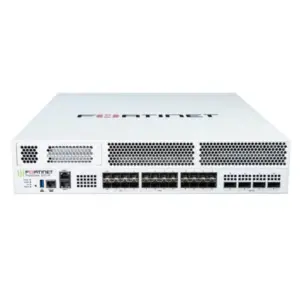
Fortinet positions FortiWeb as web application and API protection with capabilities that address common application risks, malicious bots and other Layer 7 threats. The platform includes machine-learning and behavioral-analysis functions within the wider FortiWeb security architecture. For the 2000F hardware model, Fortinet publishes 5 Gbps throughput, hardware SSL/TLS processing, four 10G BASE-SR SFP+ ports, four Gigabit Ethernet bypass interfaces, four Gigabit SFP interfaces, two USB interfaces and two 480 GB SSDs. The appliance occupies 2U of rack space and uses hot-swappable redundant power supplies.
This capacity makes the model relevant where an organization has moved beyond an entry-level WAF but does not need the substantially higher performance of the larger FortiWeb appliances. The correct fit cannot be determined from a single throughput number. Application traffic patterns, HTTPS use, request rates, security policies, logging requirements and the security services enabled can affect the practical sizing decision.
Deployment architecture is equally important. Fortinet documents reverse-proxy, transparent, WCCP and offline-protection approaches, with supported functions varying by operating mode. High-availability options are also part of FortiWeb architecture. An organization replacing an existing WAF therefore needs to map its present traffic path and failover requirements before deciding how the new appliance will sit in the network.
For Uganda projects, FourTeck can work from a buyer’s current topology, application inventory and expected traffic profile to prepare a configuration request. This is especially useful when procurement teams need the hardware appliance, support coverage and security-service licensing aligned in one quotation rather than treating the appliance as a standalone box.
Why the 2000F matters in an application-security design
01
Inspect threats at the application layer
FortiWeb evaluates web and API traffic where attacks such as injection and cross-site scripting occur. This gives security teams a control specifically designed for applications rather than relying only on network-layer filtering.
02
Support substantial protected traffic
Fortinet lists 5 Gbps throughput for the 2000F. That creates a useful sizing point for larger application environments while keeping procurement below the scale of the 3000F and 4000F models. Real sizing must still consider security features and traffic characteristics.
03
Integrate with mixed interface requirements
The combination of bypass Gigabit Ethernet, Gigabit SFP and 10G SFP+ interfaces gives network architects options when placing the appliance into existing switching and application-delivery paths.
04
Handle encrypted application traffic in hardware
Hardware SSL/TLS processing is specified for the platform. This is important because modern applications are commonly delivered over HTTPS and application security controls need visibility into encrypted sessions according to policy.
05
Plan resilient physical deployments
The 2U appliance includes hot-swappable redundant power supplies, while FortiWeb architecture supports high-availability designs. Buyers should define their desired availability model and confirm the quantity and topology required.
06
Apply centralized application-security policy
A dedicated WAF gives security teams a policy and monitoring point for protected applications, helping separate application-security controls from general routing and perimeter-firewall functions.
A hardware WAF positioned between midrange and high-capacity FortiWeb platforms
The distinguishing value of the 2000F is its combination of 5 Gbps published throughput, 10 Gigabit interfaces, bypass-capable Gigabit ports, hardware SSL/TLS processing and enterprise appliance construction. It is not simply a faster entry model; its interface mix and rack design make it appropriate for more demanding data-centre application paths.
5 Gbps throughput
Published system-performance figure; validate against your enabled features and real traffic profile.
4 × 10G SFP+
Useful for higher-speed network integration where 10 Gigabit optical connectivity is required.
4 GE bypass + 4 SFP GE
Provides additional copper bypass and fibre Gigabit interface options.
Hardware SSL/TLS
Supports the appliance’s role in inspecting protected HTTPS application traffic.
FortiWeb 2000F technical specifications
| Specification | Published detail | Buyer relevance |
|---|---|---|
| Product class | Web Application Firewall appliance | Application and API protection |
| Throughput | 5 Gbps | Primary capacity reference; workload dependent |
| RJ45 interfaces | 4 GE, all bypass | Copper connectivity and bypass design |
| SFP GE | 4 | Gigabit fibre connectivity |
| 10G BASE-SR SFP+ | 4 | Higher-speed network paths |
| SSL/TLS processing | Hardware | Encrypted application inspection |
| USB | 2 | Appliance administration/service use |
| Storage | 2 × 480 GB SSD | Local appliance storage |
| Form factor | 2U | Rack-space planning |
| Power | Hot-swappable redundant power supplies | Power-feed and resilience planning |
| Security services | Based on selected license/bundle | Confirm required services and term |
The most important figures for procurement are throughput, interface type, rack format and licensing. The 5 Gbps figure provides an initial model-selection reference, but it should not be treated as a guarantee for every security-policy combination. A deployment with heavy HTTPS inspection, sophisticated application policies, bot controls and extensive logging has a different operating profile from a simple HTTP workload.
Interface planning deserves equal attention. Buyers should identify whether the WAF will connect through copper Gigabit, fibre Gigabit or 10 Gigabit links and confirm appropriate transceivers and cabling. The four bypass-capable GE ports can matter in designs that use hardware bypass behavior, while the four 10G SFP+ ports make the model viable in faster data-centre paths. The 2U form factor and redundant hot-swappable power supplies also need to be incorporated into rack, PDU and power-feed planning.
Five questions to answer before requesting the appliance
01 — What applications and APIs will be protected?
List public websites, customer portals, mobile-app APIs, partner APIs and internally published services. Different applications may require different policies, certificates and deployment paths. Knowing the application inventory helps determine whether one appliance pair can serve the environment and how policies should be segmented.
02 — What is the realistic protected traffic scale?
Record current and peak HTTP/HTTPS traffic, expected growth and major seasonal events. If possible, include requests per second and encrypted-traffic share. These details make the 5 Gbps published capacity meaningful in the context of the actual workload rather than using a WAN circuit speed as the only sizing input.
03 — How will FortiWeb connect to the existing network?
Document switch interfaces, VLANs, IP addressing, load balancers, firewalls and application servers. FortiWeb supports several architectural modes, and feature support can vary by mode. Interface speed and media type also determine whether SFP/SFP+ transceivers or other connectivity accessories must be included.
04 — Which security services and growth requirements apply?
Identify advanced bot protection, threat analytics, FortiGuard services, support level and other services needed by the security team. License and subscription choices can materially change the bill of materials. Also consider application growth and whether future capacity may justify a larger model.
05 — What are the installation and availability expectations?
Define whether the organization requires a single appliance, high availability, redundant upstream/downstream links, dual power feeds and planned maintenance windows. Procurement should also state the required support term and any project deadline, while recognizing that product availability and delivery scheduling need confirmation at quotation time.
Quote Preparation
Share application count, peak protected throughput, HTTPS percentage, interface requirements, deployment mode if known, HA requirement, security-service needs, support term, quantity, delivery destination in Uganda and any required optics or rack accessories.
Where this FortiWeb appliance can make operational sense
Financial and transactional web services
A bank, fintech provider, insurer or payment-oriented organization may operate customer-facing applications and APIs that are continuously exposed to internet traffic. A dedicated WAF provides application-layer inspection in front of those services. The 2000F can be considered where the protected traffic profile fits its capacity and 10 Gigabit connectivity is useful. The design should account for encrypted sessions, API behavior, availability objectives and any upstream load-balancing architecture. Security-service licensing should be selected around the organization’s threat model rather than assumed from the hardware alone.
Government and public digital services
Public portals often combine citizen-facing websites, forms, authentication systems and APIs. These services can require a dedicated security layer that recognizes web application behavior. The appliance can fit a rack-based data-centre design, but procurement teams should first identify the number of applications, criticality, maintenance windows and resilience requirements. If high availability is required, the topology and appliance quantity should be planned before purchase.
Enterprise customer and partner portals
Large organizations increasingly expose web portals to customers, dealers, suppliers and remote staff. A WAF can protect those application entry points while giving the security team a dedicated place to apply application policies. Buyers should validate the expected HTTPS traffic and ensure that certificate management, load balancers and server addressing align with the selected FortiWeb operating mode.
Service-provider and hosted application environments
Organizations hosting multiple business applications may need segmentation and consistent application-security controls across different services. The 2000F’s capacity and interface mix can suit a consolidated environment when traffic remains within the appropriate sizing envelope. Policy design, tenant separation requirements, logging and future expansion should be assessed before choosing the model.
Throughput is a starting point; application behavior determines the real sizing conversation
Fortinet publishes 5 Gbps throughput for the FortiWeb 2000F. That figure is useful because it positions the model clearly within the hardware family: above the 2.5 Gbps 1000F and below the 10 Gbps 3000F. Yet application-security appliances do more than forward packets. They inspect requests, evaluate policies, process encrypted sessions and may run additional security functions depending on the chosen service package and configuration.
For a buyer, the sensible approach is to build a traffic profile. Measure ordinary and peak application traffic, identify the proportion carried over HTTPS, note unusual seasonal peaks and list the major applications. If an organization expects rapid digital-service growth, include a reasonable planning horizon rather than sizing only for today’s average traffic.
This is also where application architecture becomes relevant. A small number of high-volume APIs can behave differently from many lower-volume websites. A portal that experiences short transaction peaks may require different headroom from a predictable internal service. Security teams should therefore work with application owners and network teams instead of making the WAF purchase from a bandwidth spreadsheet alone.
FourTeck can use these details to help structure a quotation request around the correct FortiWeb model and services. Where the 2000F does not provide appropriate headroom, the requirement can be reviewed against another model rather than forcing the project into a predetermined appliance.
Connectivity designed for serious data-centre paths
The 2000F provides four 10G BASE-SR SFP+ interfaces alongside four SFP Gigabit Ethernet ports and four bypass-capable Gigabit RJ45 interfaces. This mixed interface set is valuable when an organization must place the WAF between switching, load-balancing and server infrastructure that does not use a single media type.
10 Gigabit capability: four SFP+ interfaces support higher-speed links where application traffic is aggregated through 10G network infrastructure.
Gigabit flexibility: SFP GE and copper GE interfaces provide options for existing networks and management of different traffic paths.
Bypass consideration: all four GE RJ45 interfaces are specified as bypass ports, a hardware characteristic that should be mapped deliberately to the intended topology.
Procurement should not assume that transceivers and cabling are automatically included in the desired form. Confirm optical standards, fibre type, switch compatibility and cable distances. If the design uses redundant paths or an HA pair, calculate optics and cables for the complete topology rather than for one appliance.
Security services and deployment mode must be part of the purchase decision
FortiWeb is more than hardware throughput. Fortinet offers security services and bundles for the platform, and its documentation describes several operating modes including reverse proxy, transparent approaches, WCCP and offline protection. Those choices affect how traffic reaches the WAF and which capabilities are available in a particular architecture.
A reverse-proxy deployment, for example, places FortiWeb directly in the application traffic flow with behavior that differs from an offline monitoring arrangement. Organizations also need to decide whether high availability is required and how the WAF interacts with load balancers, firewalls, DNS and application servers. These are architecture decisions, not last-minute installation details.
Buyer decision checklist
- Confirm the intended FortiWeb operation mode with the network/security architect.
- Identify whether high availability is required and whether the design is active-passive or another supported approach.
- List the FortiGuard and advanced security services required by policy.
- Confirm the support term and service level required by the organization.
- Document certificate, DNS, load-balancer and application-server dependencies.
- Check whether additional optics, cables or rack/power accessories are required.
Putting these decisions into the quotation request helps prevent a common procurement gap: receiving the correct appliance model but an incomplete licensing, support or connectivity package.
What buyers should check before purchase
| Risk | What to confirm | Why it matters | What to share with FourTeck |
|---|---|---|---|
| Wrong capacity | Peak protected traffic and growth | Security workloads need operating headroom | Traffic metrics and application count |
| Incomplete connectivity | Port type, optics and cabling | Appliance must match switching topology | Switch ports, fibre type, link speed |
| License mismatch | Security services, support level and term | Required functions may depend on selected services | Security requirements and desired term |
| Architecture mismatch | Deployment mode, HA and surrounding systems | Mode affects integration and supported functions | Topology diagram and availability objective |
Other practical checks include rack space, redundant power feeds, maintenance procedures, project quantity and delivery location. If the appliance is replacing an older WAF, provide the existing model, current licenses and any known performance constraints. This gives the quotation process a useful baseline and allows an alternative model to be proposed where requirements have changed.
Uganda availability and service planning
FortiWeb hardware availability, support subscriptions and security-service options can vary with the requested configuration and sourcing cycle. FourTeck can prepare a Uganda quotation after reviewing the appliance quantity, required services, support term, interface accessories and project schedule. For Kampala deployments, buyers can also provide rack, power and topology details so that obvious configuration gaps can be identified before commercial confirmation.
Delivery coordination should be planned around confirmed quotation terms rather than assumed stock status. For project purchases or multiple appliances, share the total quantity and any phased deployment requirement. Warranty and support guidance should be based on the Fortinet coverage included with the selected quotation and subscription, so procurement teams should state their expected support period at the beginning of the request.
Uganda location coverage
FourTeck can receive business enquiries for FortiWeb projects across Uganda, including Kampala, Entebbe, Jinja, Mbarara and Gulu. The practical process is to provide the destination, required quantity and target deployment schedule with the technical requirements. Delivery feasibility and commercial terms can then be coordinated against the confirmed product configuration rather than making assumptions about local inventory.
East Africa and regional requirements
Organizations operating across more than one market can use FourTeck’s regional web presence when a FortiWeb project extends beyond Uganda. Requirements may include Kenya or selected East Africa and Africa markets, while FourTeck also maintains regional sites for the UAE and Kuwait. Each destination should be treated as a separate commercial and delivery requirement because product availability, logistics and service arrangements can differ by market.
For multi-country projects, provide a location-by-location quantity, desired support term and a consistent technical baseline. This makes it easier to compare whether the same FortiWeb configuration is appropriate at every site or whether application traffic and architecture require different models. Visit FourTeck Uganda, FourTeck Kenya, FourTeck Africa, FourTeck UAE or FourTeck Kuwait according to the relevant project market.
Related products and purchasing routes
Why buyers contact FourTeck for a FortiWeb project
01 — Product selection guidance. A WAF purchase begins with application traffic, architecture and security requirements. FourTeck can use those details to help structure the model request rather than treating every FortiWeb appliance as interchangeable.
02 — Configuration review. Buyers can provide interface, HA, licensing and support requirements so the quotation request includes the important components and service choices.
03 — Quote assistance. Commercial availability changes over time. FourTeck can prepare a current quotation based on the exact requested configuration and Uganda destination.
04 — Business IT context. Application security connects to switching, firewalls, load balancers, servers and cloud services. Supplying the surrounding architecture helps identify dependencies that procurement alone may overlook.
05 — Project and quantity planning. Multi-appliance, HA and multi-site requirements can be quoted against a documented bill of materials and project schedule.
06 — Alternative model matching. If the traffic profile or architecture points to another FortiWeb model or form factor, the requirement can be reviewed before an unsuitable appliance is ordered.
FortiWeb 2000F buyer questions
01. What is the FortiWeb 2000F used for?
It is a hardware web application firewall used to protect web applications and APIs by inspecting HTTP and HTTPS traffic at the application layer. It can help defend applications against common web threats and malicious traffic while providing security teams with dedicated application-security policies. It should complement, rather than be confused with, a conventional network firewall.
02. What throughput does the appliance provide?
Fortinet publishes 5 Gbps throughput for the 2000F. Use this as a model-comparison and initial sizing figure, not as the sole purchasing criterion. Actual deployment requirements depend on traffic patterns, encrypted sessions, security functions, logging, policy complexity and required growth headroom. Share peak protected traffic with FourTeck when requesting a configuration.
03. Which network interfaces are available?
The published hardware specification includes four Gigabit Ethernet RJ45 bypass interfaces, four Gigabit SFP interfaces and four 10G BASE-SR SFP+ ports. This allows different copper and fibre integration options. Buyers should separately confirm the required transceivers, fibre standards and cables for their switches and link distances.
04. Does it support SSL/TLS processing?
Yes. Fortinet specifies hardware SSL/TLS processing for the 2000F. This is relevant because modern web applications commonly use HTTPS and a WAF may need to inspect encrypted application sessions according to the organization’s security policy. Certificate handling and the intended deployment architecture should be reviewed as part of implementation planning.
05. Is additional licensing required?
FortiWeb appliances can be combined with Fortinet security services, support coverage and bundles. The exact requirement depends on the capabilities and support level the organization needs. Treat licensing as part of the initial design and quotation rather than assuming that hardware alone includes every advanced service for the full desired term.
06. Can FortiWeb 2000F be deployed in high availability?
Fortinet’s FortiWeb architecture supports high-availability designs, including documented active-passive and active-active approaches. The appropriate design depends on network topology and application availability requirements. If HA is mandatory, state this before quotation so appliance quantity, interfaces, cabling and surrounding network design can be considered together.
07. How much rack space does it require?
The 2000F is a 2U appliance. Rack planning should also account for front and rear access, cabling, airflow and redundant power connections. Fortinet specifies hot-swappable redundant power supplies, so organizations seeking power resilience should confirm suitable PDU outlets and independent power feeds where their data-centre design requires them.
08. Is the FortiWeb 2000F available in Uganda?
Availability should be confirmed for the requested configuration, quantity, support term and project timing. FourTeck can prepare a current Uganda quotation and coordinate delivery planning after those details are supplied. No stock level or delivery time should be assumed until it appears in the applicable commercial quotation.
09. What information should I send for a quote?
Provide the number of protected applications, current and peak traffic, HTTPS percentage if known, required interfaces, deployment mode, HA requirement, desired security services, support term, quantity and Uganda delivery destination. Include switch and optical-interface details if transceivers or cabling need to be considered in the project bill of materials.
10. When should I consider another FortiWeb model?
Consider another model when the 5 Gbps capacity does not provide suitable headroom, when interface requirements differ, or when the application environment is better suited to a virtual or cloud deployment. Fortinet publishes multiple hardware and virtual options, so model selection should follow the workload and architecture rather than a fixed preference.
Prepare a FortiWeb 2000F configuration for your Uganda project
Send FourTeck your application count, peak protected traffic, interface requirements, deployment mode, high-availability requirement, security-service needs, support term and delivery destination. These details allow the quotation to be built around the actual application-security design rather than only the appliance model name.
- Application and API inventory
- Peak HTTP/HTTPS traffic and expected growth
- Required GE, SFP and 10G connectivity
- HA, licensing and support requirements
- Quantity and Uganda project location
Reviews
There are no reviews yet.