
FortiSwitch FS-1048E in Uganda
A 1RU high-density Layer 2/3 fibre switch for enterprise aggregation, campus backbone and data-centre switching designs.
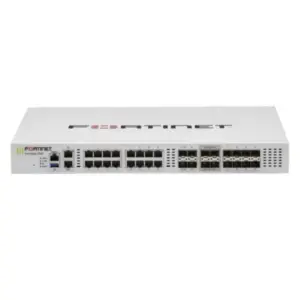
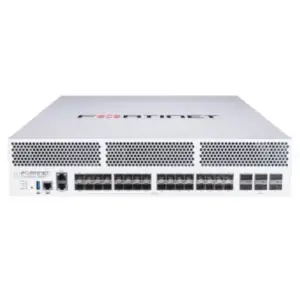
With 48 GE/10GE SFP/SFP+ slots and flexible 40GE or 100GE uplinks, the FS-1048E is built for networks where access-layer traffic must be consolidated efficiently before moving toward core infrastructure. FourTeck helps buyers review topology, optics, breakout requirements, management mode and project quantities before quotation.
Product overview
The FS-1048E is designed for high-throughput enterprise switching rather than ordinary desktop access. Fortinet positions the platform for aggregation-layer use, where many downstream links converge and require substantially faster paths toward a core. Its 48 SFP/SFP+ interfaces can operate at Gigabit Ethernet or 10 Gigabit Ethernet, giving network architects a dense fibre-facing platform for connecting access switches, server zones or other infrastructure where supported by the wider design.
The defining selection point is uplink flexibility. Fortinet lists six 40GE QSFP+ interfaces or four 100GE QSFP28 interfaces. In practical procurement terms, that means buyers should decide the required uplink architecture before specifying transceivers. Fortinet also documents split-port modes, allowing selected high-speed interfaces to be broken into lower-speed logical links depending on the selected port configuration and software release. This flexibility is useful, but it also creates a compatibility planning requirement: optics, breakout assemblies, fibre type, peer equipment and desired port mode must align.
Fortinet documents 1,760 Gbps switching capacity for the platform. In an aggregation design, that capacity supports the role of consolidating substantial traffic while maintaining high-speed connections toward the core. The switch can also participate in Fortinet-managed environments through FortiLink, which can simplify operations for organizations already using FortiGate as part of their network architecture.
For Uganda buyers, the important question is not simply whether 48 fibre ports are sufficient. Procurement teams should map current 1G/10G connections, expected growth, core uplink bandwidth, redundancy requirements, rack power, optics and management architecture. FourTeck can use those details to help define a practical bill of materials and quotation.
Business benefits
Consolidate high-speed fibre links
Forty-eight GE/10GE SFP/SFP+ slots provide dense connectivity for aggregation designs. This reduces the need to spread fibre-facing links across multiple lower-density devices when the topology and resiliency plan support consolidation.
Build faster paths toward the core
40GE and 100GE uplink options allow network architects to match aggregate access bandwidth with higher-capacity core connectivity. The result can be a cleaner hierarchy and better headroom for growing east-west and north-south traffic.
Adapt uplinks through breakout modes
Supported split-port configurations can turn selected high-speed interfaces into multiple lower-speed links. This gives architects additional options when migration plans involve mixed 10G, 25G, 50G and 100G requirements.
Integrate management with Fortinet infrastructure
FortiLink support allows compatible FortiGate-led management designs. Organizations standardizing on Fortinet can use this architecture to reduce the operational separation between security and switching policy.
Preserve rack efficiency
The 1RU form factor places substantial fibre density and uplink capacity in a compact rack footprint, useful where aggregation equipment must deliver high port density without consuming excessive rack units.
Design for resilient aggregation
High-speed uplinks can be incorporated into redundant topologies such as multi-chassis link aggregation designs when engineered appropriately, helping reduce dependence on a single forwarding path.
What distinguishes the FS-1048E
The platform combines dense 1G/10G fibre access with configurable 40G/100G uplinks and enterprise switching capacity in 1RU, making it particularly suited to the aggregation layer rather than conventional user access.
48 SFP/SFP+ slots: supports dense GE/10GE fibre-facing connectivity.
Flexible uplinks: six 40GE QSFP+ or four 100GE QSFP28 modes provide architectural choice.
Split-port support: selected QSFP/QSFP28 ports can be divided into lower-speed links according to supported configuration.
FortiLink compatibility: supports FortiGate-managed switching designs where appropriate.
Technical specifications ledger
| Specification | FS-1048E detail |
|---|---|
| Product type | Layer 2/3 managed Ethernet switch |
| Access / aggregation interfaces | 48 × GE/10GE SFP/SFP+ slots |
| High-speed uplinks | 6 × 40GE QSFP+ or 4 × 100GE QSFP28 |
| Switching capacity | 1,760 Gbps |
| Forwarding rate | Up to 1,310 Mpps, as listed in product references |
| Form factor | 1RU rack mount |
| Power | Dual AC power supplies |
| Management | Standalone FortiSwitchOS or FortiLink-managed deployment, subject to architecture and software compatibility |
| Split ports | Supported on selected QSFP/QSFP28 ports; available modes depend on port configuration and software version |
| PoE | Not an edge PoE access switch |
For purchasing decisions, port count alone is insufficient. Buyers should first determine how many downstream links must run at 1G or 10G and how much aggregate bandwidth must reach the core. The uplink configuration then determines the appropriate QSFP+/QSFP28 optics and whether breakout cables are useful. Link distance is equally important because short-range multimode, long-range single-mode and direct-attach options are not interchangeable. FortiLink management should also be checked against the planned FortiGate architecture and software compatibility. Finally, rack power and redundancy requirements should be reviewed because aggregation switches are infrastructure-critical devices. FourTeck can help translate these technical choices into a bill of materials rather than quoting the chassis without the required connectivity components.
Configuration worksheet
01 What traffic will the switch aggregate?
Document the number and speed of downstream links, expected utilization and whether the traffic comes from access switches, server infrastructure or other network zones. This determines whether the 48-port density and 1.76 Tbps switching capacity are appropriate.
02 What scale is required now and later?
Count current 1G/10G fibre links and reserve capacity for growth. A design that consumes nearly every port on day one may require a different architecture or additional aggregation capacity.
03 What must it connect to?
Identify peer switch models, transceiver standards, fibre type, connector type and link distances. Compatibility is particularly important when selecting 40G/100G optics or breakout assemblies.
04 Which uplink and management path is planned?
Decide between 40G, 100G and supported breakout modes, and determine whether the switch will operate standalone or within a FortiLink-managed environment.
05 What project support is expected?
Confirm installation responsibility, rack readiness, power, delivery location, support expectations and quantity. These details affect the complete project scope beyond the switch chassis.
Ideal business use cases
Enterprise campus aggregation
Large campuses often need a layer between access switches and the network core. The FS-1048E fits when numerous 1G/10G fibre links from distribution or access infrastructure must converge into 40G or 100G paths. The design team should validate oversubscription targets, redundancy and optics before deployment.
Data-centre aggregation
Data centres with 10G-facing infrastructure can use the switch as an aggregation platform where its port density and high-speed uplinks align with the traffic model. Server connectivity, storage traffic and east-west flows should be assessed carefully; not every data-centre architecture has the same latency, buffer or speed requirements.
Large institutional networks
Universities, government environments and multi-building organizations may need dense fibre concentration at a central communications facility. The 1RU chassis can help conserve rack space while supporting high-capacity uplinks. Existing fibre plant and transceiver standards remain central to configuration.
Fortinet-centric network modernization
Organizations already operating FortiGate may consider FortiLink-managed switching to unify parts of their operational model. The exact topology, FortiOS/FortiSwitchOS compatibility and change-management plan should be validated before migration.
Deep dive 1 — High-density aggregation
The strongest reason to select this model is its concentration of 48 SFP/SFP+ ports in a single rack unit. Aggregation networks are fundamentally about collecting traffic efficiently while preserving enough upstream bandwidth and resilience. Forty-eight 10G-capable interfaces give architects a practical building block for linking multiple downstream network devices without using copper edge-switch assumptions.
That density is valuable only when the architecture is balanced. If many 10G links can become simultaneously busy, uplink capacity and redundancy must be planned to avoid creating an unnecessary bottleneck. Fortinet’s documented 40G and 100G options let the design team choose an uplink profile appropriate to the expected traffic. Multi-chassis link aggregation can also be relevant in resilient designs, but it must be engineered as part of the complete topology.
For procurement teams, the key lesson is that the chassis, optics and fibre plant form one system. Buying the switch first and deciding optics later can lead to incompatible distances, connector types or uplink speeds. A quote request should therefore include the downstream and upstream topology.
Deep dive 2 — Flexible 40G and 100G uplinks
The high-speed interface block can be configured for six 40GE QSFP+ ports or four 100GE QSFP28 ports. Fortinet documentation also describes split modes for selected ports, enabling lower-speed subinterfaces in supported configurations.
Capability line 1: 4 × 100G mode provides maximum individual uplink speed on ports 49–52.
Capability line 2: 6 × 40G mode provides additional physical high-speed interfaces where 40G aligns with the existing core.
Capability line 3: supported breakout modes can provide 25G, 10G, 1G or 50G combinations depending on port configuration and software support.
This flexibility is useful for phased migration. A business may have an established 40G core today but expect 100G infrastructure later, or it may need 25G connectivity to particular devices. The correct configuration should be chosen deliberately because some port modes alter which physical ports are available. Buyers should verify the intended FortiSwitchOS release, peer-device capabilities and approved optics before deployment.
Deep dive 3 — Management and operational fit
The switch can operate within Fortinet’s broader networking architecture, including FortiLink-managed deployments. For teams already using FortiGate, this can make switching policy and operational visibility more integrated than treating every switch as an isolated management domain. However, centralized management should be evaluated as an architectural choice rather than assumed automatically.
Standalone FortiSwitchOS management may be suitable in other designs. The choice affects deployment procedures, configuration ownership, software lifecycle planning and troubleshooting workflows. Before purchase, network administrators should decide who will manage the switch, which platform will hold configuration authority and how firmware upgrades will be coordinated.
Buyer decision checklist
□ Confirm FortiGate model and FortiOS release if FortiLink will be used.
□ Confirm intended FortiSwitchOS version and supported port modes.
□ Define VLAN, routing, aggregation and redundancy requirements.
□ Identify monitoring, logging and change-control expectations.
□ Plan management connectivity and out-of-band access where required.
What buyers should check before purchase
| Risk | What to confirm | Why it matters | Share with FourTeck |
|---|---|---|---|
| Wrong uplink mode | 40G, 100G or breakout requirement | Changes optics and port planning | Core switch and desired speed |
| Optics mismatch | Fibre type, distance and connector | Transceivers must match physical links | Distances and fibre details |
| Management mismatch | Standalone or FortiLink | Affects operations and compatibility | FortiGate model/software |
| Incomplete project scope | Rack, power, optics, cables, support | Chassis alone may not complete deployment | Quantity and installation scope |
Procurement should also verify lifecycle expectations and current support options at quotation time. Network infrastructure may remain in service for years, so software support, spare strategy and upgrade paths matter. Where an existing standard has moved to a newer model family, FourTeck can help compare the requested model with a suitable current alternative rather than silently substituting hardware.
Uganda availability and service
FourTeck supports Uganda buyers with product selection, configuration review and quotation coordination for enterprise networking projects. Availability can vary by model, quantity, optics, support requirements and supply conditions, so the FS-1048E should be quoted against the exact project requirement rather than assumed to be immediately available. For Kampala projects, buyers can provide the rack location, network topology, quantity, required uplinks and transceiver distances so the commercial request reflects the intended deployment.
FourTeck can also help structure the bill of materials around the switch, including compatible connectivity components where specified, and can discuss warranty or support guidance based on the quoted supply route and selected service options. Delivery coordination should be confirmed during quotation, particularly for project quantities or multi-site rollouts.
Uganda location coverage
Organizations planning deployments in Kampala, Entebbe, Jinja, Mbarara and Gulu can contact FourTeck with a consolidated requirement for switching hardware, optics and project quantities. A single project brief helps align equipment across multiple sites while allowing delivery arrangements and configuration requirements to be reviewed for each destination. Availability and logistics are confirmed during the quotation process rather than assumed in advance.
East Africa and regional availability
For organizations operating beyond Uganda, FourTeck can also discuss requirements across Kenya and selected East Africa or Africa markets, subject to the applicable supply and delivery arrangements. Regional projects benefit from consistent model naming, optics standards, firmware planning and documented bills of materials so that different sites do not unintentionally receive incompatible network components.
Buyers can review the FourTeck Uganda technology catalogue, the FourTeck Kenya site, or the FourTeck Africa portal for regional enquiry paths. UAE and Kuwait requirements can be directed through FourTeck UAE and FourTeck Kuwait. Local stock, delivery timing and warranty handling should be confirmed for the destination at quotation stage.
Related products and network paths
FortiSwitch FS-1024E: suitable when fewer 10G aggregation ports are required while retaining 100G uplink capability. Ask FourTeck to compare density and topology requirements.
FortiSwitch FS-1048G: a newer high-density FortiSwitch option with 48 × 10GE SFP/SFP+ and six 100GE QSFP28 uplink slots; useful as an alternative path where current-generation requirements favor greater 100G uplink density.
FortiSwitch FS-3032E: suited to designs that require a much denser 100GE switching platform rather than primarily 10G aggregation.
FortiGate integration: buyers planning FortiLink management should include the existing or proposed FortiGate model in the design review so software and scale requirements can be checked.
For exact product URLs and current alternatives, use the FourTeck Uganda networking enquiry and request a same-brand comparison matched to your topology.
Why buyers contact FourTeck
01 Product selection guidance. FourTeck can review whether the requested port density, uplink speed and role match the intended network layer.
02 Configuration review. Buyers can provide fibre distances, optics requirements and peer equipment so important compatibility details are considered before quotation.
03 Quote assistance. Project quantities, accessories and support requirements can be grouped into a clearer commercial request.
04 Business IT context. The discussion can cover the wider switching role rather than treating the chassis as an isolated line item.
05 Uganda coordination. Delivery destination and project timing can be reviewed during quotation without making unsupported stock or lead-time promises.
06 Alternative matching. If lifecycle, capacity or architecture suggests another FortiSwitch model, FourTeck can help compare suitable paths.
Frequently asked questions
01. What is the FortiSwitch FS-1048E mainly used for?
It is primarily suited to high-density enterprise aggregation and backbone roles where many 1G/10G fibre links need to converge toward faster 40G or 100G uplinks. Fortinet specifically illustrates the model in aggregation-layer designs. It is not intended as a PoE edge switch for directly powering phones, cameras or wireless access points.
02. How many 10 Gigabit ports does it provide?
The switch provides 48 GE/10GE SFP/SFP+ slots. The actual link speed depends on the installed supported transceiver and peer equipment. Procurement teams should specify fibre type, link distance and required speed for each connection so the optics can be planned alongside the chassis.
03. Does the FS-1048E support 100 Gigabit Ethernet?
Yes. Fortinet lists a configuration with four 100GE QSFP28 ports. The platform can alternatively operate with six 40GE QSFP+ high-speed ports. The intended mode should be chosen according to core connectivity, redundancy design, optics and the migration roadmap rather than simply selecting the highest headline speed.
04. Can the high-speed ports be split into lower-speed links?
Yes, Fortinet documents supported split-port modes for the FS-1048E. Depending on the selected port configuration and software release, high-speed ports can be divided into combinations such as 25G, 10G, 1G or 50G subports. Because some modes affect other port availability, the exact configuration should be validated before deployment.
05. Can it be managed through a FortiGate?
The model supports FortiLink-managed deployment with compatible FortiGate and software architecture. Buyers should provide their FortiGate model and FortiOS version when requesting a configuration review. That allows the management design, software compatibility and intended switching features to be considered before implementation.
06. Which transceivers are required?
There is no single optic for every deployment. Required modules depend on link speed, fibre type, distance, connector standard and peer equipment. SFP/SFP+ interfaces serve the GE/10GE links, while QSFP+/QSFP28 interfaces are used for high-speed uplinks. Breakout designs may also require compatible breakout assemblies.
07. Is the switch suitable for a large campus?
Yes, when the campus architecture requires a high-capacity aggregation layer. Fortinet includes the FS-1048E in large-campus design documentation and illustrates it as an aggregation platform. Suitability still depends on access-switch count, uplink bandwidth, redundancy, routing design, fibre plant and expected growth.
08. How should Uganda buyers request a quote?
Provide the required quantity, deployment location, number of 1G/10G links, desired 40G/100G uplinks, fibre distances, existing core switch, FortiGate model if applicable, optics requirement and target project schedule. These details help FourTeck prepare a more useful configuration discussion and quotation.
09. What should be checked if the FS-1048E is part of an older standard?
Confirm current lifecycle, software support and availability at quotation time. If the organization is expanding an established installed base, consistency may matter; for new designs, a newer FortiSwitch model may offer a better long-term path. FourTeck can compare the requested model with suitable current alternatives without assuming a substitution.
Build the FS-1048E request around your topology
Send FourTeck the switch quantity, downstream link speeds, uplink requirement, fibre distances, management approach and destination. The team can use those details to review the requested configuration and prepare quotation guidance for Uganda.
Share: quantity • 10G port count • 40G/100G requirement • optics and fibre • FortiGate model • rack and power details • project location.
Reviews
There are no reviews yet.