
FortiSwitch FS-648F in Uganda
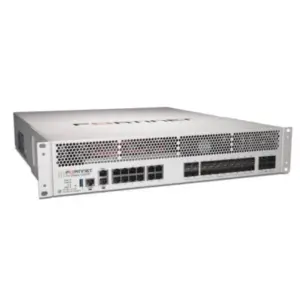
A 48-port multi-gigabit enterprise campus switch with eight 10/25GbE SFP28 uplinks for high-density access and aggregation.
This model is built for network teams that need substantially more access-layer bandwidth than a conventional 1GbE switch can provide, without moving every endpoint to fiber. Its mix of 2.5GbE and 5GbE copper ports can support modern high-throughput wired devices and wireless infrastructure, while eight 25GbE-capable uplinks give designers room for resilient links, switch interconnection and higher-capacity paths toward the campus core or security layer. FourTeck can assist with model selection, optics, stacking, FortiLink design, support options and Uganda delivery planning.
Dense multi-gig access without an all-fiber edge
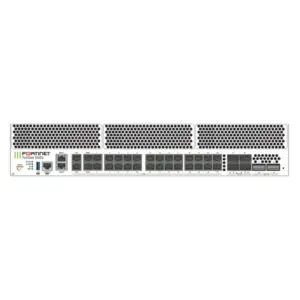
The FS-648F belongs to Fortinet’s Secure Campus switching family and is positioned for enterprise campus environments that need high access density, fast uplinks and integrated network-management options. Its 48 copper access ports are split between thirty-two 1/2.5GbE interfaces and sixteen 1/2.5/5GbE interfaces. That combination is particularly useful when endpoints have moved beyond 1GbE but a full 10GbE-to-the-desk design would be unnecessary or too costly.
The eight SFP+/SFP28 ports support 10GbE and 25GbE, allowing a network architect to reserve several links for redundant uplinks while retaining capacity for switch interconnects or aggregation. Fortinet specifies 720 Gbps full-duplex switching capacity and 1,071 Mpps packet forwarding, giving the platform substantial internal headroom for a 48-port access role.
This switch can operate as part of a Fortinet-centered campus architecture, including FortiLink-managed deployments with compatible FortiGate platforms, or in designs where standard Layer 2 and Layer 3 switching functions are required. The exact management mode, software feature use and support plan should be decided as part of the architecture rather than after the hardware is delivered.
Selection matters because this exact model does not provide PoE. For a high-density Wi-Fi deployment where the switch is expected to power access points directly, the FPoE edition may be a more appropriate path. Conversely, organizations with separately powered endpoints can avoid paying for a large PoE power subsystem they do not need. FourTeck can review this distinction alongside uplink optics, rack power, cabling, firmware compatibility and support requirements for Uganda projects.
What the architecture means for operations
01
More bandwidth at the access layer
Multi-gig copper lets capable endpoints exceed traditional 1GbE speeds while continuing to use familiar RJ45-based structured cabling where that cabling meets the required standard. For organizations upgrading wireless infrastructure, workstations or specialist devices, this can postpone the need for a wholesale fiber redesign at every desk or endpoint.
02
Eight high-speed uplinks reduce design compromises
Eight 10/25GbE SFP28 interfaces provide more uplink choices than a simple four-uplink access switch. Teams can build resilient links to upstream switches or security appliances, allocate ports to stacking where supported, and still retain interfaces for expansion. This is the model’s most important capacity advantage for larger campus designs.
03
High switching headroom
Fortinet rates the platform at 720 Gbps switching capacity and 1,071 Mpps. For procurement teams, these figures indicate that the chassis is designed for dense high-speed traffic rather than merely offering multi-gig port labels on an undersized switching fabric.
04
Power-supply resilience
The appliance uses two 350 W hot-swappable AC power supplies and supports redundant power. In environments where the access layer is operationally important, redundant supplies reduce dependence on a single internal power module, though upstream power feeds and UPS design still need their own resilience plan.
05
Compact rack footprint
A 1RU form factor gives 48 multi-gig copper ports plus eight high-speed uplinks in a compact rack unit. For dense communications rooms, this helps preserve rack space for firewalls, patch panels, optical distribution and power equipment.
06
Management choices suited to Fortinet estates
Organizations already using FortiGate can assess FortiLink-managed switching as part of a converged networking and security approach. Standalone FortiSwitchOS capabilities are also relevant. The right choice depends on operational ownership, topology, feature requirements and the wider Fortinet architecture.
Designed for the point where access switching starts behaving like aggregation.
The defining characteristic is not one specification in isolation but the combination of 48 multi-gig copper ports, eight 25GbE-capable fiber uplinks and a 720 Gbps switching fabric. That mix gives network teams a practical bridge between endpoint access and higher-speed campus transport.
For mainstream multi-gig access devices.
For higher-throughput copper-connected endpoints.
For uplinks, interconnects and supported stacking designs.
Capacity for complex enterprise segmentation and endpoint scale.
Fortinet FS-648F specification ledger
| Specification | Confirmed value |
|---|---|
| Copper interfaces | 32 × 1GE/2.5GE RJ45; 16 × 1GE/2.5GE/5GE RJ45 |
| Fiber interfaces | 8 × 10GE/25GE SFP+/SFP28 |
| Dedicated management | 1 × 10/100/1000 management port; 1 × RJ45 serial console |
| Form factor | 1RU rack mount |
| PoE | None on FS-648F; review FS-648F-FPOE for 48-port 802.3af/at/bt Type 4 PoE |
| Switching capacity | 720 Gbps duplex |
| Packet forwarding | 1,071 Mpps duplex |
| Network latency | Less than 1 microsecond |
| MAC address storage | 64K |
| VLANs | 4K |
| Packet buffers | 8 MB |
| Memory / storage | 4 GB DDR4; 32 MB flash; 32 GB SSD |
| Spanning-tree instances | 64 |
| Route entries | IPv4: 330K; IPv6: 112K |
| Host entries | IPv4: 16K; IPv6: 5K |
| Dimensions | 44 × 442 × 440 mm (H × D × W) |
| Weight | 7.149 kg |
| Power input | 100–240 V AC, 50/60 Hz |
| Maximum power consumption | 300 W |
| Power supplies | 2 × 350 W, dual hot-swappable AC |
| Airflow | Front to back |
| Operating temperature | 0°C to 45°C |
| Fortinet warranty | Limited lifetime warranty, subject to Fortinet warranty policy and applicable terms |
For purchasing, the port mix and uplink architecture matter more than headline throughput alone. Count how many endpoints genuinely require 5GbE, because only sixteen of the copper interfaces support that speed while the remaining thirty-two top out at 2.5GbE. Next, map the eight SFP28 ports to actual roles: upstream core connections, firewall links, switch interconnects or supported stacking. Optics and cable assemblies are separate design choices and must match distance, fiber type and the devices at each end. The 300 W maximum chassis consumption also makes this non-PoE model very different from the FPoE edition, whose rack-power and cooling requirements are considerably higher. Finally, validate the FortiSwitchOS release and FortiGate/FortiLink compatibility for the intended management architecture. FourTeck can help turn these technical points into a complete bill of materials rather than quoting the chassis in isolation.
Five questions that determine the right configuration
01 — What traffic and endpoint types will use the switch?
A floor dominated by ordinary office endpoints may not need the same port allocation as a wireless-heavy campus, media environment or engineering team. Identify which devices require 2.5GbE or 5GbE and which can remain at 1GbE. This determines whether the port-speed distribution fits the endpoint population or whether another model would balance capacity better.
02 — How much uplink capacity is required now and later?
Eight 25GbE-capable ports offer considerable flexibility, but capacity should be assigned deliberately. Document the number of upstream switches, firewalls, redundant paths and inter-switch links. Consider expected growth and whether link aggregation will be used. A switch with generous uplinks only provides value when optics, upstream interfaces and topology are designed to use them.
03 — How will it integrate with the existing network?
Check VLAN design, routing requirements, FortiGate integration, FortiLink management, transceiver compatibility, cabling standards and any existing switch-stack architecture. If FortiSwitch stacking is planned, Fortinet documentation lists ports 49–56 for FS-648F stack use in supported releases and requires homogeneous nodes in the documented stacking design. Software-version support should be validated during deployment planning.
04 — What growth, licensing or support path is expected?
Fortinet’s ordering material lists optional advanced switching and cloud-management licensing for applicable deployments, while FortiCare support options are separate purchasing considerations. Buyers should decide whether standard functions are sufficient, whether cloud management is required and what support response expectations apply over the equipment lifecycle.
05 — What installation and logistics constraints apply?
Confirm rack depth, 1RU availability, front-to-back airflow, redundant AC feeds, UPS capacity, patching, fiber type, optics, console access and project timing. Uganda delivery planning also depends on quantity and configuration. These details are best included in the quote request so the switching hardware arrives with the supporting components required for installation.
Where the 48-port multi-gig design is most useful
High-density enterprise office floors
Large offices increasingly mix conventional PCs, docking stations, high-performance workstations and wireless access points. A multi-gig switch can provide differentiated port speeds without forcing every connection to the same tier. The FS-648F fits environments where many endpoints benefit from 2.5GbE and a smaller group needs 5GbE. The design team should still verify whether connected devices need PoE because this specific chassis does not provide it.
Campus networks with 25GbE aggregation
Education, corporate and institutional campuses often need access switches that can connect upstream at more than 10GbE. Eight 25GbE-capable ports make the platform attractive where resilient uplinks, switch interconnections and future expansion must coexist. The upstream core or aggregation layer must have compatible SFP28 interfaces and suitable optics, and the fiber plant must support the chosen transceiver type and reach.
Fortinet-centered secure campus architectures
Organizations using FortiGate firewalls can consider FortiLink-managed switching to align access switching with a Fortinet network-security architecture. This can simplify policy and visibility workflows when correctly designed. The switch should be matched to the supported FortiGate model, FortiOS/FortiSwitchOS versions and required features. Licensing and support should be evaluated separately from hardware specifications.
Non-PoE aggregation for externally powered systems
Not every 48-port high-speed switch needs a large PoE subsystem. Environments using externally powered endpoints, dedicated injectors or separate PoE access switches may prefer the lower chassis power profile of the non-PoE model. This can be relevant in server-adjacent rooms, specialist labs or campus aggregation areas where port bandwidth and uplink density matter more than delivering DC power over Ethernet.
Multi-gig copper is valuable only when the endpoint map is accurate
The switch provides two distinct copper speed groups, and that detail should drive port planning. Thirty-two ports support 1GbE and 2.5GbE, while sixteen add 5GbE capability. A buyer who simply sees “48 multi-gig ports” can miss this distinction and later discover that too many 5GbE devices have been planned for the sixteen faster copper ports.
Before ordering, inventory devices by negotiated speed rather than by department. Modern wireless access points can exceed 1GbE aggregate traffic, specialist workstations may use 2.5GbE or 5GbE adapters, while ordinary desktops and printers may remain at 1GbE. Mapping these requirements protects the design from needless oversizing and from bottlenecks caused by placing higher-speed endpoints on the wrong port group.
Cabling is part of the same decision. Multi-gig Ethernet can often extend the usefulness of existing structured copper, but achievable speed and distance depend on cable category, installation quality and environment. A physical-layer audit can be worthwhile in older buildings. FourTeck can help buyers translate the endpoint inventory into a port map, check whether the 32/16 split is appropriate, and identify whether a different switch mix would deliver a cleaner design.
Eight 25GbE-capable ports create room for resilient topology
Uplinks often become the hidden constraint in dense access switching. Forty-eight multi-gig endpoints can collectively generate far more traffic than a small number of 10GbE uplinks comfortably carries during peaks. The eight SFP28 interfaces allow the architect to create higher-capacity pathways and preserve redundancy.
Capability line 01: each of the eight fiber interfaces supports 10GbE or 25GbE, allowing compatibility with existing 10GbE designs and migration to 25GbE where upstream infrastructure supports it.
Capability line 02: Fortinet documentation identifies ports 49–56 as stacking ports for FS-648F in supported FortiSwitch stacking releases, enabling a documented homogeneous-stack design when the software version and topology requirements are met.
Capability line 03: the switch supports substantial Layer 2/Layer 3 table scale, including 4K VLANs and large route-entry capacity, complementing the physical uplink density for complex campus designs.
Procurement should therefore include the upstream interfaces and optics, not just the switch. A 25GbE port is only useful when the device at the other end, transceiver or DAC, fiber plant and configuration all support the intended link. For resilient designs, document which links terminate on separate upstream devices and which share common physical pathways.
Non-PoE by design: a decision that affects rack power, cost and endpoint strategy
The FS-648F does not provide Power over Ethernet, and this should be treated as a design characteristic rather than a missing accessory. In many aggregation or externally powered endpoint environments, a non-PoE switch is exactly the right choice. It avoids the much larger power supplies and thermal planning associated with a full-power 48-port PoE switch. Fortinet specifies a 300 W maximum power draw and two 350 W hot-swappable AC supplies for this chassis.
For wireless-heavy access layers, however, the choice can reverse. The related FS-648F-FPOE offers 48 PoE ports with 802.3af/at/bt Type 4 support and a published 1,800 W PoE budget. That model’s maximum power consumption rises substantially, so UPS sizing, electrical circuits, cooling and rack planning must be reassessed. The correct purchase therefore depends on how endpoints receive power and how much PoE headroom future devices may require.
Buyer decision checklist
□ List every powered device and its PoE class or wattage.
□ Decide whether injectors or local power adapters are acceptable.
□ Calculate current and future PoE budget if choosing the FPoE alternative.
□ Confirm UPS and electrical capacity for the selected chassis.
□ Keep non-PoE and PoE switch roles explicit in the rack diagram.
□ Request the exact model code on the quote to prevent substitution errors.
What buyers should confirm before purchase
The safest purchase process begins with architecture, not with a price comparison. Confirm the exact model suffix, then check whether the port-speed distribution matches device demand. Validate optics against link distances and fiber type. If stacking is planned, review the supported release and homogeneous-node requirements. Support options and any optional switching or cloud-management licenses should be included in lifecycle planning. For project quantities, ask for alternatives only after the preferred architecture is documented so any substitution can be evaluated against the same requirements rather than merely against port count.
Project quotation and deployment coordination in Uganda
FourTeck supports business buyers in Uganda with product-selection review, configuration clarification, quotation and delivery coordination. Availability can vary with quantity, support term, optics, accessory requirements and supply conditions, so the recommended approach is to request a current project quote rather than assume stock status from a static webpage.
For Kampala deployments, buyers can provide the site location, rack environment, required quantity and target installation window so logistics can be planned around the complete bill of materials. For larger rollouts, FourTeck can also help structure the requirement by site or phase, including switch quantities, optical modules, cables and support options. Warranty guidance is based on the applicable Fortinet policy and the commercial terms of the supplied equipment; specific coverage should be confirmed on the quotation.
A configuration review is particularly useful for this model because the non-PoE/FPoE distinction, mixed 2.5/5GbE copper speeds and 25GbE optics can materially change the project design. Send FourTeck your network requirements for a current Uganda quotation.
Uganda location coverage
FourTeck can coordinate business technology requirements for customers planning deployments in Kampala and, subject to project logistics, locations such as Entebbe, Jinja, Mbarara and Gulu. A single multi-site requirement is usually easier to plan when the buyer supplies site-by-site quantities, delivery contacts and installation priorities. This helps keep model codes, optics and support choices consistent across the rollout while allowing local site differences to be documented clearly.
East Africa and regional availability
Organizations operating across several markets can also discuss consolidated technology requirements with FourTeck. Depending on the project, coordination may include Uganda, Kenya and selected East Africa or broader Africa markets, while FourTeck’s regional web presence also covers the UAE and Kuwait. Availability, commercial terms, delivery routes and warranty handling can differ by country, so each destination should be confirmed rather than assumed to share the same conditions.
For regional projects, provide a country-by-country quantity schedule, required support term, preferred delivery structure and any standardization rules. You can review FourTeck’s Uganda technology catalogue, Kenya business IT site, Africa solutions portal, UAE FourTeck site or Kuwait FourTeck site for regional contact pathways.
Related Fortinet switching paths to evaluate
Support around the decision, not just the model number
01. Product selection guidance: review whether the 48-port mixed-speed design fits the endpoint population and whether the PoE or non-PoE version is the correct starting point.
02. Configuration review: check 25GbE optics, cabling, stacking intentions, FortiGate integration and rack-power requirements before the bill of materials is finalized.
03. Quote assistance: structure a quote around hardware quantity, accessories and support instead of treating the switch chassis as the entire project.
04. Business IT context: evaluate the switching requirement alongside firewalls, wireless, fiber, racks and power systems that influence deployment success.
05. Uganda delivery coordination: plan quantities and destination details for single-site or multi-site business projects, with availability confirmed during quotation.
06. Alternative matching: if supply, PoE needs or port density changes, compare alternative FortiSwitch paths using the same technical requirements rather than substituting blindly.
Questions buyers ask about the FS-648F
01. What is the FortiSwitch FS-648F primarily used for?
It is an enterprise campus switch for dense multi-gigabit access and high-speed uplinks. The chassis combines 48 RJ45 ports, split between 2.5GbE-capable and 5GbE-capable groups, with eight 10/25GbE SFP28 ports. This makes it suitable for large office floors, campus access or aggregation roles where conventional 1GbE switching may constrain endpoint or wireless traffic.
02. Does the FS-648F provide PoE?
No. The FS-648F is the non-PoE model. If connected access points, cameras, phones or other devices need power from the switch, review the FS-648F-FPOE instead. The FPoE version has a published 1,800 W PoE budget and substantially different maximum power requirements, so electrical, UPS and cooling design should be assessed before choosing between the two.
03. How many 5GbE copper ports are available?
Sixteen RJ45 ports support 1GbE, 2.5GbE and 5GbE. The other thirty-two copper ports support 1GbE and 2.5GbE. Buyers should therefore identify which endpoints genuinely require 5GbE and reserve those sixteen interfaces accordingly. A port map prepared before installation avoids consuming 5GbE-capable ports with devices that cannot use the additional bandwidth.
04. What uplink speeds does it support?
The switch includes eight SFP+/SFP28 interfaces supporting 10GbE or 25GbE. Actual link operation depends on compatible optics or direct-attach cabling, the upstream device, fiber type and distance. The eight-port count allows designers to build redundant uplinks and still reserve ports for inter-switch links or supported stacking arrangements, but those roles should be documented in the topology.
05. Can it be managed with FortiGate?
FortiSwitch platforms can be deployed with FortiLink management in supported FortiGate architectures. The appropriate design depends on the FortiGate model, FortiOS and FortiSwitchOS versions, topology and required features. Buyers planning integrated management should provide their existing FortiGate details during quotation so compatibility and software requirements can be checked before deployment.
06. Does the switch support stacking?
Fortinet’s current stacking documentation includes the FS-648F and identifies ports 49–56 as stack ports for supported software. The documented stack design uses homogeneous nodes and has feature and topology requirements. Because stacking behavior can depend on the FortiSwitchOS release, verify the planned software version and reference architecture rather than assuming support solely from the hardware model.
07. What power and rack requirements should be planned?
The chassis is 1RU, accepts 100–240 V AC at 50/60 Hz and has two 350 W hot-swappable AC power supplies. Fortinet publishes a 300 W maximum power-consumption figure for this non-PoE model and front-to-back airflow. Rack depth, redundant feeds, UPS capacity and cooling should still be validated against the complete equipment stack at the site.
08. What should be included in a FourTeck quote request?
Provide quantity, delivery location, endpoint speed mix, PoE requirement, intended 10/25GbE uplink count, fiber type and distance, upstream switch or firewall models, FortiGate details if FortiLink is planned, stacking needs, required optics/cables and preferred support term. These details allow the quotation to reflect a deployable bill of materials instead of only the base switch.
09. Is the switch available for projects in Uganda?
FourTeck can quote the model for Uganda projects, with availability confirmed at the time of request. Supply can vary by quantity, support package and accessory requirements, so the website should not be treated as a real-time stock statement. For Kampala or multi-site deployments, share the required quantities and target timing so sourcing and delivery coordination can be reviewed.
10. What is the closest alternative if PoE is required?
The most direct same-platform alternative is the FS-648F-FPOE, which retains the 48-port multi-gig layout and eight 10/25GbE uplinks while adding PoE across all 48 access ports. It is not a drop-in power equivalent: the published PoE budget and maximum power consumption are much higher, so rack power, UPS capacity and cooling must be recalculated for that version.
Build the switch quote around your topology, not just the chassis.
Share your required quantity, endpoint speed mix, PoE requirement, 25GbE uplink plan, FortiGate model, optics and cabling distances, rack-power setup and support preference. FourTeck can use those details to prepare a more complete Uganda project quotation and identify any configuration issues before procurement.
Useful details: quantity / sites / port-speed map / PoE load / uplink topology / optics / management method / support term / target deployment window.
Reviews
There are no reviews yet.