
FortiSwitch FS-1024E in Uganda
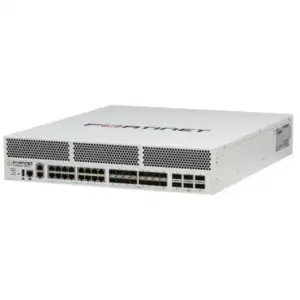
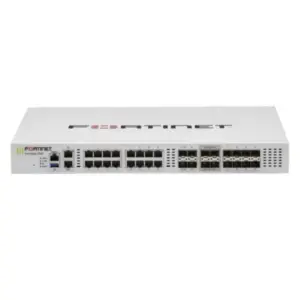
A 1RU high-speed Ethernet switch for dense 10GbE aggregation with 100GbE uplink capacity in enterprise core and data-center environments.
The FS-1024E is aimed at network teams building resilient server, firewall, storage-facing or backbone connectivity where fiber density, low-latency switching and manageable high-speed uplinks matter. FourTeck can assist Uganda buyers with configuration review, optics planning, compatibility checks and project quotation.
Product overview
Typical design roles include top-of-rack server switching, aggregation between access or distribution layers, firewall aggregation, and enterprise backbone connectivity. The model is especially relevant when an organization already operates Fortinet infrastructure and wants switching that can participate in a broader Fortinet-managed network architecture. It can be deployed according to the management model selected for the network, including Fortinet integrated approaches where supported.
The main buying decision is not simply the switch itself. A successful deployment requires matching the physical interfaces to the rest of the network. Buyers should establish whether each link uses 1GbE or 10GbE optics on the SFP-family ports, whether the two high-speed interfaces will run as native 100GbE links or use supported breakout arrangements, and which optical standards match the installed fiber and required distances. These decisions affect the transceivers, patch leads, breakout cables and peer interfaces that must accompany the appliance.
For Uganda deployments, FourTeck can review the topology and requested quantities before quotation. Sharing a port map, existing switch or firewall models, fiber distances and expected growth makes it easier to identify a suitable bill of materials and avoid ordering incompatible optics.
Business benefits
Dense high-speed aggregation
Twenty-four SFP/SFP+ slots allow a substantial number of fiber-connected systems to converge on one rack-mounted switching platform. For IT teams consolidating servers, security appliances or distribution links, this reduces the need to spread equivalent high-speed connections across multiple lower-density devices.
100GbE backbone headroom
Two QSFP28 interfaces provide a route to high-capacity upstream connectivity. This is valuable when many 10GbE workloads converge and the aggregation layer needs enough bandwidth to prevent the uplink from becoming an obvious bottleneck.
Flexible high-speed port planning
The QSFP28 ports support split-port configurations documented by Fortinet, enabling each applicable 100G interface to be divided into four 25G or 10G subports when the operating environment and design support that mode. This can make migration planning more flexible.
Resilient power design
The data-center series is designed around resilient enterprise deployment, and the FS-1024E is specified with dual hot-swappable power supplies. Redundant power should still be planned alongside separate power feeds and appropriate rack power protection where business continuity is important.
Fortinet-oriented management
Organizations using Fortinet security infrastructure can evaluate the switch as part of a more integrated operational model rather than treating switching as an isolated network silo. The exact management architecture should be confirmed against the intended FortiGate and software versions.
Compact rack deployment
The platform places substantial aggregate connectivity into a 1RU form factor. That density can matter in data-center racks where available rack units, cable routing and power allocation need to be controlled carefully.
Product highlights
The FS-1024E is distinguished by the combination of dense 10GbE-capable fiber ports, 100GbE uplinks, enterprise resiliency and Fortinet management integration in a compact platform.
- 24 SFP/SFP+ slots: supports high-density fiber aggregation with interface speed determined by the selected optics and design.
- 2 QSFP28 interfaces: supports up to 100GbE per high-speed interface.
- Breakout capability: documented split-port operation can turn applicable QSFP28 interfaces into four 25G or 10G subports.
- Dual hot-swappable power: supports resilient power planning for enterprise racks.
- FortiSwitch management ecosystem: suitable for standalone or integrated deployment approaches according to supported software and architecture.
Technical specifications ledger
| ITEM | CONFIRMED / PLANNING DETAIL |
|---|---|
| Model | FortiSwitch FS-1024E |
| Product family | FortiSwitch Campus Core and Data Center |
| Access / aggregation interfaces | 24 × 10GE SFP/SFP+ slots; optic-dependent operation |
| High-speed interfaces | 2 × 100GE QSFP28 |
| QSFP28 split ports | Ports 25 and 26 can be split into four 25G or 10G subports where supported/configured |
| Form factor | 1 RU rack-mount appliance |
| Power | Dual hot-swappable power supplies; exact input planning should follow official datasheet and supplied PSU specification |
| Management | Standalone or integrated Fortinet deployment options; software/version dependent |
| Primary deployment | Campus core, data-center aggregation, top-of-rack and firewall aggregation |
| Optics / cables | Selected separately according to speed, medium, distance and peer interface |
The most consequential specifications are the port media and uplink design. The 24 front-panel SFP/SFP+ slots make sense when the surrounding infrastructure is fiber-based or uses compatible direct-attach connectivity. Buyers moving from copper access switching should not assume their existing RJ45 cabling maps directly to this model. Likewise, the two QSFP28 interfaces are valuable only when the upstream architecture can use their capacity. If a peer device operates at a different speed, supported optics or breakout arrangements must be planned deliberately.
Power resilience also deserves attention. Dual power supplies can support a resilient design, but resilience depends on how those supplies are connected. For critical racks, teams normally evaluate separate PDUs, UPS capacity and power circuits as part of the installation plan. Finally, confirm the intended FortiSwitchOS/FortiOS version and management mode before deployment, particularly when using split ports or FortiLink integration.
Configuration worksheet
01 What workload will the switch aggregate?
List servers, hypervisors, storage-facing systems, firewalls, distribution switches and other endpoints. This establishes how many 10GbE-class interfaces are actually needed and whether traffic patterns justify 100GbE upstream links.
02 What scale and port speeds are required?
Document current port counts and expected expansion. A design using twenty 10GbE links has different uplink requirements from one using only a handful of active ports. Oversubscription targets should be discussed rather than assumed.
03 What must it connect to?
Record the exact peer-device models, interface standards, fiber type and approximate cable distances. Compatibility determines whether SR, LR or other transceivers, DACs, or breakout assemblies are appropriate.
04 How will the network grow?
Consider whether future servers will move to 25GbE, whether backbone capacity will increase, and whether QSFP28 breakout functionality could form part of the migration. Software support and port configuration should be checked for the intended design.
05 What are the installation and support expectations?
Share rack location, power arrangement, delivery destination, project schedule, quantity and support expectations. These details help FourTeck prepare a more complete quote rather than quoting the chassis without necessary supporting components.
Ideal business use cases
Data-center top-of-rack aggregation
A virtualized server rack can quickly accumulate numerous 10GbE interfaces. The FS-1024E gives infrastructure teams a concentrated fiber switching layer with high-speed QSFP28 uplinks. It fits best when servers or adapters already expose compatible optical or direct-attach interfaces. Before procurement, verify transceiver interoperability, rack airflow, uplink redundancy and the capacity of the upstream core.
Firewall and security appliance aggregation
Enterprise security designs may need several high-bandwidth firewall interfaces consolidated toward a switching fabric. This model can provide the port density required for those links while preserving high-capacity uplinks. The design team should document VLANs, link aggregation, interface speeds and the exact FortiGate or other peer interfaces before selecting optics.
Campus core or backbone refresh
Organizations replacing an older 1GbE or 10GbE backbone can use the FS-1024E as part of a higher-capacity architecture. Its 100GbE capability gives the design room to aggregate multiple downstream high-speed links. The important consideration is whether the rest of the campus is ready for fiber-based interfaces and whether redundancy requires a pair of switches rather than a single chassis.
Enterprise consolidation projects
Where several smaller switching islands are being consolidated, a dense SFP/SFP+ platform can simplify rack layout and create a clearer aggregation tier. This use case depends on careful migration planning because legacy copper devices, older optics and mismatched interface speeds may require different access switches or media strategies.
Deep dive 01 — Designing the 10GbE aggregation layer
The twenty-four SFP/SFP+ positions define the day-to-day role of this switch. They allow a network architect to gather many high-speed links into one physical device, but port count alone is not the design objective. The more useful question is how traffic from those ports converges and where it must go next. A rack containing virtualization hosts, storage traffic and security appliances can generate bursty east-west and north-south flows, so the uplink strategy should be based on expected traffic rather than simply connecting every device at its maximum interface rate.
Optics selection is equally important. SFP and SFP+ describe form factors and interface classes, not a single universal cable. The correct module depends on Ethernet speed, fiber type, wavelength, distance and the interface at the far end. Existing multimode fiber may lead to one selection, while longer building-to-building links may require another. Direct-attach cabling can be appropriate for short rack connections when both endpoints support it. Procurement teams should therefore request the switch and its connectivity components as one engineered bill of materials.
Redundancy should be considered at the architecture level. Dual power supplies improve device-level resilience, but a single switch remains one switching element. Applications with strict availability requirements may call for redundant switching paths, diverse uplinks and suitable link-aggregation or routing design. FourTeck can use the project topology to help identify the required hardware components, while final network architecture should follow the organization’s technical standards.
Deep dive 02 — 100GbE uplinks and breakout flexibility
The two QSFP28 ports provide the high-capacity side of the platform. In a conventional design they can connect toward an upstream core, spine, aggregation layer or another high-speed device at up to 100GbE. Fortinet documentation also identifies split-port support for FS-1024E ports 25 and 26, allowing a high-speed interface to be divided into four 25G or 10G subports when correctly configured and supported by the software release.
That flexibility is useful during network transitions. A business may not need native 100GbE on every link immediately, but it may have a mixture of 10GbE, 25GbE and future 100GbE requirements. Breakout capability can help bridge those stages without changing the entire chassis. However, breakout is not automatic: the correct breakout cable or optics, port configuration, software behavior and peer-device compatibility all matter. Some configuration changes may also affect operational planning, so teams should review the relevant FortiSwitchOS documentation before scheduling production changes.
2 × QSFP28 interfaces with maximum 100GbE speed.
Documented split-port support into four 25G or 10G subports per applicable interface.
Useful for backbone capacity and staged high-speed network migration.
Deep dive 03 — Management, resilience and operational fit
A core or data-center switch becomes part of daily operations for years, so management fit can matter as much as raw port speed. FortiSwitch platforms support Fortinet-oriented management approaches, including integrated deployments in supported architectures as well as standalone operation. Organizations already using FortiGate should decide whether they want the switch managed within that security-networking model or as a separate switching domain. The answer affects software planning, administrative workflow and change-control procedures.
Resilience should be mapped from the power inlet through to the network path. The FS-1024E’s dual hot-swappable power design is valuable, but buyers should also determine whether the rack provides two independent power sources, whether each source is protected by appropriate UPS infrastructure, and whether critical network paths remain available if the entire switch is offline. A redundant pair may be appropriate for applications that cannot tolerate a chassis-level outage.
Buyer decision checklist
- Confirm the FortiSwitchOS/FortiOS release intended for deployment.
- Confirm standalone versus integrated management requirements.
- Check whether split ports are part of the initial or future design.
- Plan redundant power feeds rather than relying only on two installed PSUs.
- Decide whether the business requires one switch or a redundant switching pair.
- Document monitoring, backup, firmware and change-control responsibilities.
What buyers should check before purchase
| RISK | WHAT TO CONFIRM | WHY IT MATTERS | SHARE WITH FOURTECK |
|---|---|---|---|
| Wrong interface media | Fiber/DAC type, speed and distance | SFP-family ports require suitable connectivity components | Cable distances and peer models |
| Uplink mismatch | 100G, 25G or 10G requirement | Peer interfaces and breakout design must align | Desired topology and uplink count |
| Management incompatibility | FortiGate, FortiLink and software versions | Features depend on supported architecture and release | Existing Fortinet models and versions |
| Incomplete resilience plan | Power feeds, UPS, redundant paths | Dual PSUs do not remove every single point of failure | Rack and power arrangement |
Additional checks should cover rack depth and airflow, available patching, spare optics strategy, support expectations, project quantity and lifecycle planning. Where the switch replaces older hardware, provide the existing model numbers and a simple diagram. That lets the replacement exercise focus on interface equivalence and capacity rather than assuming that two switches with similar port counts are interchangeable.
Uganda availability and service
FourTeck can assist organizations sourcing the FS-1024E for projects in Uganda. Availability can vary with quantity, transceiver requirements and supply conditions, so the recommended process is to request a current quotation rather than plan around assumed stock. For Kampala projects, the team can review the required switch quantity, optics, cabling and related network hardware before preparing the commercial offer.
Delivery coordination, configuration review and warranty guidance can be discussed as part of the quotation process. For multi-rack deployments, phased projects or infrastructure refreshes, share the planned installation schedule and quantities early so procurement requirements can be assessed together. Warranty terms should be confirmed for the specific quoted supply and any selected Fortinet support services rather than inferred from a generic product listing.
Uganda location coverage
FourTeck can coordinate product enquiries and project quotations for customers in Kampala and for business requirements serving Entebbe, Jinja, Mbarara and Gulu. The appropriate delivery arrangement depends on the order, destination and project scope. Organizations managing multiple sites can provide a consolidated quantity list and destination schedule so the switch hardware, optics and supporting components can be planned consistently across the deployment.
East Africa and regional availability
Organizations operating across borders may need the same network design for more than one country. FourTeck’s regional web presence can support enquiries covering Uganda, Kenya and selected East Africa or wider Africa markets, while separate FourTeck operations also serve the UAE and Kuwait. Regional supply requirements should be discussed as a project because availability, commercial terms, delivery arrangements and support conditions can differ by destination.
For multi-country rollouts, prepare one equipment schedule that identifies the switch quantity, optics, accessories and destination for each site. This creates a clearer basis for comparing configuration consistency and coordinating procurement. Visit FourTeck Uganda, FourTeck Kenya, FourTeck Africa, FourTeck UAE or FourTeck Kuwait according to the relevant market.
Related products and procurement paths
Network requirements vary by port density and media. Buyers considering this platform should also review the wider FourTeck Uganda enterprise networking catalogue for compatible infrastructure and alternative FortiSwitch capacities. A project needing copper 10GbE access may require a different FortiSwitch variant, while a design needing substantially more high-speed ports may call for a higher-density data-center model. The correct alternative should be selected from the actual port map rather than model numbering alone.
For a same-family path, the FortiSwitch T1024E class is relevant when fixed copper multigigabit/10GbE access is the requirement instead of the FS-1024E’s SFP/SFP+ emphasis. For higher-density fiber aggregation, models such as the FortiSwitch 1048G or 2048F family may be evaluated according to required speeds and current lifecycle availability. Buyers can send the required interface schedule through the FourTeck Uganda contact page for model matching.
Why buyers contact FourTeck
Frequently asked questions
01. What is the FS-1024E primarily used for?
It is a high-speed FortiSwitch model intended for campus-core and data-center networking roles. Its 24 SFP/SFP+ slots suit dense fiber aggregation, while two QSFP28 ports provide high-capacity uplinks. Typical projects include server aggregation, top-of-rack switching, firewall aggregation and enterprise backbone connectivity.
02. Does it provide 100GbE connectivity?
Yes. The model has two QSFP28 interfaces with a maximum speed of 100GbE. Whether a project uses them as native 100GbE links or in a supported breakout configuration depends on the peer equipment, cabling, optics, FortiSwitchOS configuration and overall network design.
03. Can the QSFP28 ports be split into lower-speed ports?
Fortinet documentation identifies FS-1024E ports 25 and 26 as supporting split-port operation. Each can be divided into four subports at supported 25G or 10G modes. Buyers should confirm the intended FortiSwitchOS release, correct breakout components and far-end interface compatibility before including this in a production design.
04. Are transceivers included?
Optics and cables should be treated as configuration items and confirmed in the quotation. The correct SFP/SFP+/QSFP28 components depend on speed, fiber medium, distance and the interface at the far end. Provide FourTeck with a port schedule and link distances so suitable connectivity components can be identified.
05. Is this suitable for a normal small office LAN?
Usually it is aimed at a more demanding environment. A small office that mainly needs 1GbE copper ports for PCs, phones and access points would generally evaluate an access-layer switch instead. The FS-1024E makes more sense when dense high-speed fiber aggregation and 100GbE uplink capacity are genuine requirements.
06. Can it be used with FortiGate?
FortiSwitch products support Fortinet integrated management architectures, subject to model and software compatibility. If FortiGate integration is part of the project, share the exact FortiGate model, FortiOS version and proposed topology. This allows compatibility and the intended management approach to be checked before deployment.
07. What should I provide when requesting a Uganda quote?
Provide switch quantity, delivery destination, required port speeds, peer-device models, fiber type, approximate link distances, desired optics, 100GbE or breakout requirements, rack/power details and any FortiGate integration needs. A topology diagram is especially useful for larger projects because it reduces ambiguity around the bill of materials.
08. Is the switch available in Kampala?
Availability can vary with quantity and supply conditions, so current status should be confirmed through a FourTeck quotation. Kampala buyers can request the switch together with required optics and supporting components. FourTeck can also discuss delivery coordination for wider Uganda project requirements without assuming stock or a fixed lead time.
09. How should power redundancy be planned?
The model’s dual hot-swappable power supplies support resilient power design, but the rack infrastructure also matters. Critical deployments should consider separate power feeds, suitable PDUs and UPS protection. If chassis-level redundancy is required, the network architecture may also need redundant switches and diverse network paths.
Build the quote around your actual network links.
Send FourTeck the switch quantity, required interface speeds, existing peer devices, fiber distances, optics requirements, management approach and Uganda delivery location. This provides a practical basis for reviewing compatibility and preparing a project quotation.
Reviews
There are no reviews yet.