
FortiSwitch FS-624F Uganda
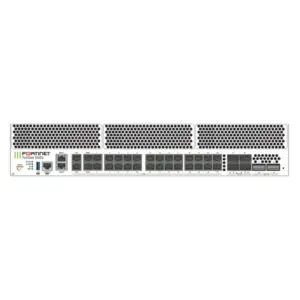
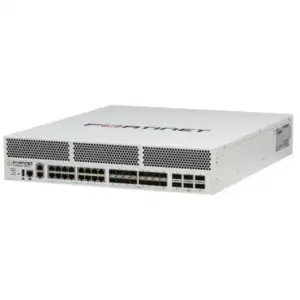
A 24-port multi-gigabit secure campus switch built for organizations moving beyond 1GbE access while retaining high-capacity 25GbE uplinks.
The Fortinet FS-624F combines 1GE, 2.5GE, and 5GE copper access with four 1GE/10GE/25GE SFP28 uplink interfaces, hardware-assisted MACsec capability, Layer 2/3 switching, and FortiGate-compatible centralized management. It is especially relevant when wireless access points, demanding workstations, shared infrastructure, or high-density campus services need more bandwidth at the edge without jumping to a full 10GbE copper access design.
Fortinet
FS-624F
Secure campus switch
24 × multi-gig RJ45
4 × SFP28 up to 25GbE
Not included
A campus access switch designed for the multi-gigabit transition
The FS-624F addresses a familiar enterprise network problem: endpoint and wireless performance has advanced faster than the traditional 1GbE access layer. Modern access points, media systems, engineering devices, shared workstations, virtualization hosts used at the edge, and other bandwidth-heavy equipment can exceed the practical headroom of a single gigabit connection. Replacing an entire campus with 10GbE copper may be unnecessary, while remaining on 1GbE can create bottlenecks. The 624F occupies a useful middle ground by supporting 1GbE, 2.5GbE, and 5GbE on each of its 24 RJ45 access interfaces.
The switch also provides four SFP28 uplink interfaces supporting 1GE, 10GE, and 25GE operation. That uplink flexibility matters when a wiring closet needs substantial northbound bandwidth to a distribution layer, FortiGate appliance, aggregation switch, or core network. Instead of treating access speed and uplink speed as separate refresh projects, the FS-624F allows organizations to modernize both sides of the closet in one platform.
Fortinet positions the 600 Series within secure campus switching. The device can operate as a standalone Layer 2/3 switch or be managed within a Fortinet architecture, including FortiLink integration with compatible FortiGate platforms. For organizations already standardizing on Fortinet security, this can simplify visibility, policy coordination, and switch administration. For organizations not yet using FortiGate, the switch remains a conventional managed switching platform, but the intended management method should be decided before deployment so licensing, operational processes, and support expectations are aligned.
Selection should focus on four questions: how many devices need more than 1GbE, whether those devices need PoE, how much uplink capacity is required, and whether FortiGate-based management is part of the design. The FS-624F is specifically the non-PoE version. It can connect powered endpoints, but it does not deliver electrical power over the network cable. That distinction is critical for wireless and surveillance projects.
For Uganda organizations planning campus upgrades, FourTeck can help translate these design questions into a suitable bill of materials. That can include the switch, SFP28 or SFP+ transceivers, direct-attach cabling where appropriate, support services, rack considerations, and quantity planning. The objective is to quote the correct switch configuration rather than treating the chassis as a complete deployment by itself.
What the FS-624F changes for a business network
Removes 1GbE as the default ceiling
Every copper access interface can negotiate 1GE, 2.5GE, or 5GE. A mixed estate can therefore retain ordinary 1GbE endpoints while allowing selected modern devices to step up to higher link speeds. This reduces the pressure to replace all attached equipment at once and makes the switch useful in phased refresh programs.
Provides meaningful uplink headroom
Four SFP28 interfaces operating up to 25GbE allow the closet to aggregate traffic without immediately creating another bottleneck above the access ports. This is particularly valuable when many multi-gigabit devices are active simultaneously or when traffic must be distributed across redundant uplinks.
Supports secure campus design
The platform includes MACsec capability for link-layer protection and integrates with Fortinet’s broader secure networking approach. Where supported by the final design, this can help organizations protect traffic between compatible devices and switches while keeping security and network operations closer together.
Fits centralized Fortinet operations
FortiLink management with an appropriate FortiGate can centralize switch discovery, VLAN configuration, port profiles, monitoring, and policy-related workflows. This can reduce the number of separate interfaces an IT team needs to manage and can standardize branch or campus operational practices.
Supports resilient power design
The FS-624F uses dual hot-swappable AC power supplies. That hardware design can support maintenance and resilience objectives when power feeds and upstream infrastructure are designed appropriately. Buyers should still plan rack power, UPS capacity, circuit distribution, and replacement-spare strategy at the project level.
Extends the life of existing copper runs
Multi-gigabit Ethernet can provide a practical upgrade path over suitable installed copper cabling. Actual achievable speed depends on cable category, length, termination quality, interference, and endpoint capability, so a cabling survey is an important part of any upgrade rather than assuming every run will support 5GbE.
The value is not simply faster ports; it is a balanced access-to-uplink design.
The FS-624F combines multi-gigabit edge connectivity with 25GbE uplinks, switching capacity suitable for dense campus use, and Fortinet-oriented management. It is a better fit for buyers who can define what is connected to the switch than for buyers choosing a model only by port count.
Fortinet FS-624F technical specifications
| Specification | Confirmed Detail | Buyer Relevance |
|---|---|---|
| Access interfaces | 24 × 1GE/2.5GE/5GE RJ45 | Supports ordinary and multi-gigabit copper endpoints. |
| Uplink interfaces | 4 × 1GE/10GE/25GE SFP/SFP+/SFP28 | Choose optics and peer-port speeds carefully. |
| PoE | Not provided on FS-624F | Use FPOE model if switch-powered endpoints are required. |
| Dedicated management | 1 × 10/100/1000 management interface | Supports separate management connectivity. |
| Console | 1 × RJ45 serial console | Useful for initial or recovery access. |
| Switching capacity | 440 Gbps full duplex | Indicates aggregate switching platform capacity. |
| Forwarding rate | 654 Mpps full duplex | Relevant to high packet-rate workloads. |
| Latency | Less than 1 µs | Supports latency-sensitive campus traffic. |
| MAC address storage | 64K | Supports large endpoint populations. |
| VLAN support | 4K VLANs | Useful for segmented campus architectures. |
| Packet buffer | 8 MB | Affects burst handling under congestion. |
| Memory | 4 GB DDR4 | Platform resource for control and services. |
| Storage | 32 MB flash + 32 GB SSD | Supports system and operational functions. |
| Spanning-tree instances | 64 | Relevant for segmented Layer 2 topologies. |
| Routing table | IPv4/IPv6 up to 330K/112K | Confirm actual feature mode and software support for intended routing design. |
| Host entries | IPv4/IPv6 up to 16K/5K | Matters in larger routed campus environments. |
| Form factor | 1RU rack mount | Plan rack depth, airflow, cable management, and service clearance. |
| Dimensions | 44 × 442 × 440 mm | Check rack suitability before installation. |
| Weight | Approx. 6.925 kg | Relevant for rack planning and handling. |
| Input power | 100–240V AC, 50/60 Hz | Confirm local PDU, UPS, plug, and power-cord requirements. |
| Maximum power consumption | 240 W | Use for power and thermal planning. |
| Power supplies | 2 × 350 W, dual hot-swappable AC | Supports resilient power architecture when feeds are designed accordingly. |
| Operating temperature | 0°C to 45°C | Ensure closet cooling stays inside published limits. |
| Airflow | Front to back | Align rack airflow direction. |
| MTBF | Greater than 10 years | Vendor-published reliability metric, not a service-life guarantee. |
The three specifications that most strongly influence a purchase are the access-port speed, uplink design, and power model. The 24 copper interfaces support mixed endpoint speeds, which is useful for organizations upgrading in stages. However, cabling quality can determine whether a device actually achieves 2.5GbE or 5GbE. Buyers should validate category, length, patching, and termination for critical runs rather than assuming every installed cable is suitable.
The four 25GbE-capable SFP28 ports are equally important because uplink optics are not interchangeable with every installed fiber path or peer device. The correct transceiver depends on distance, fiber type, connector type, and the speed supported at the far end. Finally, the FS-624F is not a PoE switch. That one characteristic can completely change the bill of materials for an access point or camera project. FourTeck can review these dependencies before quotation so the switch, optics, power, and support components are aligned.
Five questions that should be answered before a quote
01 — What workload or operational requirement is driving the upgrade?
If the requirement is simply more ports for ordinary 1GbE desktops, the 624F may provide capability that is not being used. It becomes more compelling when the deployment includes Wi-Fi access points, content-production workstations, high-throughput edge systems, or other devices capable of 2.5GbE or 5GbE. The reason for the upgrade should therefore be stated in practical terms: endpoint congestion, wireless backhaul, uplink saturation, future capacity, or secure campus standardization.
02 — How many devices need multi-gigabit connectivity now and over the next refresh cycle?
The switch has 24 copper access ports. Count the actual devices per closet, include realistic growth, and note which devices can use speeds above 1GbE. If the design regularly needs more than 24 multi-gigabit access connections in one location, another model or multiple switches may be more appropriate. Port count should also include reserved capacity for maintenance swaps and expansion.
03 — Is the existing cabling and upstream network compatible?
Multi-gigabit performance depends on the complete path. Buyers should document copper cable category and approximate runs, fiber type for uplinks, connector types, available ports on the distribution or core device, and whether the upstream interface supports 10GbE or 25GbE. A switch purchase cannot correct a mismatched optic or an unsuitable physical cable route.
04 — Will the deployment require PoE, advanced features, FortiCare, or future expansion?
The FS-624F does not supply PoE. If powered endpoints are part of the design, compare the FPOE model at the beginning rather than relying on separate injectors unless that is an intentional architecture. FortiCare support and advanced feature licensing should be reviewed according to the operational model, support expectations, and features required. Requirements can be configuration dependent.
05 — What are the installation, warranty, delivery, and support expectations?
Document required quantity, preferred delivery location, rack readiness, UPS capacity, service-window constraints, desired support coverage, and whether configuration assistance is required. This allows FourTeck to distinguish a hardware-only request from a project that needs optics, support services, deployment planning, or multiple-site coordination.
Where this switch earns its place
High-density wireless campus
Schools, offices, hotels, training centers, and similar environments may deploy Wi-Fi access points whose wired uplinks can exceed 1GbE. The FS-624F can provide 2.5GbE or 5GbE data connectivity to capable access points while maintaining higher-capacity uplinks toward distribution. The important caveat is power: if the access points depend on PoE from the switch, this exact model is not the correct choice. Use the FPOE variant or a deliberately separate power design.
Enterprise floor or building access layer
A corporate network refresh may have a mixture of ordinary office devices and a smaller number of high-throughput endpoints. Because the copper ports auto-negotiate across 1GE, 2.5GE, and 5GE, the organization does not need to dedicate every port to the same speed class. This creates a practical migration path while allowing the uplink layer to move toward 25GbE where the core and fiber infrastructure support it.
Secure campus segmentation
Organizations already using FortiGate can integrate the switch through FortiLink for centralized workflows such as VLAN configuration, port profiles, monitoring, and security-related controls. This suits teams that want switching to participate in a broader Fortinet operational model rather than functioning as an isolated network island. Compatibility should be checked against the specific FortiGate platform, FortiOS release, and intended number of managed switches.
Media, engineering, and shared-data environments
Departments moving large project files, media assets, design datasets, or local backups may see a noticeable difference when capable endpoints move beyond 1GbE. The switch can provide these users with up to 5GbE copper connectivity while keeping ordinary devices on the same platform. Actual end-to-end performance still depends on workstation NICs, storage performance, server links, application behavior, and upstream capacity.
Multi-gigabit copper without abandoning ordinary 1GbE devices
The 24 RJ45 ports are the defining characteristic of the FS-624F. Each interface can support 1GE, 2.5GE, or 5GE, allowing a network closet to serve different generations of equipment on one switch. That matters because real campus networks rarely refresh all endpoints at the same time. A finance workstation may stay at 1GbE, an access point may negotiate at 2.5GbE, and a specialist workstation or appliance may use 5GbE. The switch lets those requirements coexist without dividing devices by separate access-switch families.
For procurement teams, this flexibility can reduce the risk of buying a switch that becomes the next bottleneck as endpoint hardware improves. It also avoids the assumption that every device needs 10GbE. In many campus situations, 2.5GbE or 5GbE provides a sensible step up while continuing to use familiar twisted-pair cabling practices.
However, the physical layer cannot be ignored. Cable category, distance, patch panels, patch leads, interference, and connector quality can affect reliable multi-gigabit operation. Before a large rollout, organizations should test representative cable runs and document any closets where recabling is required. Endpoint network adapters must also support the target speed. Buying a 5GbE-capable switch does not automatically turn a 1GbE device into a 5GbE device.
FourTeck can use a port-by-port device summary to help determine whether the FS-624F is appropriately sized or whether another FortiSwitch model offers a better balance of port count, PoE capability, and uplink capacity.
25GbE uplinks turn access speed into usable network capacity
The value of multi-gigabit access disappears if every switch funnels traffic through an undersized uplink. The FS-624F addresses that concern with four SFP28 interfaces that can support 1GE, 10GE, or 25GE operation. This gives designers options: an existing campus can initially use 10GbE uplinks, while a newer distribution layer can take advantage of 25GbE where compatible optics and peer interfaces are available.
Uplink planning should consider redundancy, link aggregation, expected simultaneous traffic, and the actual capability of the upstream switch or firewall. A design that uses two uplinks for resilience may have different usable capacity than a four-link aggregation design. The number of endpoints is not enough to determine the right uplink; the workload pattern matters. Twenty-four connected devices that are mostly idle behave very differently from a switch serving wireless aggregation, high-throughput workstations, and local server traffic at the same time.
For buyers, the practical step is to document both ends of each uplink. Provide the model and port type of the distribution device, fiber type, approximate distance, and whether a redundant path is required. FourTeck can then align the switch quote with suitable optics or direct-attach options instead of quoting a chassis that cannot be connected as intended.
FortiLink, MACsec, and the management decision
The FS-624F is more than a collection of fast ports. Fortinet designed the Secure Campus family to participate in a broader security and management architecture. In FortiLink mode with a compatible FortiGate, switch functions can be brought into a centralized operational model covering discovery, VLAN configuration, dynamic port profiles, monitoring, link aggregation, device visibility, and security-related workflows. For an organization already invested in Fortinet, that can reduce management fragmentation and help standardize how access switching is operated.
The device also supports MACsec capability, which can protect Ethernet links at Layer 2 in compatible designs. Buyers should distinguish this from higher-layer encryption such as IPsec or TLS. MACsec is a link-security function and requires compatible peers and appropriate configuration. It should be selected because the network design requires protected Ethernet links, not simply because the feature appears in a specification list.
Standalone operation is also possible, which means the switch should not be rejected merely because a site has no FortiGate. The key question is which management approach matches the organization’s standards, staffing, change-control process, and future network architecture.
Buyer decision checklist
- Will the switch be FortiGate-managed through FortiLink or administered independently?
- Which FortiGate model and FortiOS version will manage it, if applicable?
- Is MACsec required on access links, uplinks, or both?
- Are advanced feature licenses needed for the intended configuration?
- What FortiCare support term and response expectations fit the production environment?
What buyers should check before purchase
| Risk | What to confirm | Why it matters | Share with FourTeck |
|---|---|---|---|
| Wrong power model | Whether endpoints require PoE | FS-624F does not provide PoE. | Device types and per-port power need. |
| Cabling mismatch | Copper category, distance, patching quality | 5GbE may not be reliable on unsuitable runs. | Cable category and typical distances. |
| Incorrect uplink optics | Fiber type, distance, peer port speed and connector | SFP28 transceivers must match both ends. | Peer device model, fiber details, distance. |
| Management mismatch | Standalone vs FortiLink deployment | Changes operational workflow and compatibility planning. | FortiGate model and management preference. |
| Incomplete support plan | FortiCare level and term | Support expectations should match production criticality. | Required term, response expectations, quantity. |
| Rack and power oversight | Rack depth, airflow, UPS and PDU | Physical constraints can delay an otherwise correct purchase. | Rack standard, available power, cooling details. |
The most common procurement mistake with this class of switch is to focus on the headline port speeds and overlook the surrounding system. A complete design includes endpoint capability, structured cabling, uplink media, power, rack environment, management platform, support, and the expected growth path. The FS-624F is a strong technical fit when those pieces align, but it should not be treated as a universal 24-port replacement. FourTeck can review the intended deployment before the final quote and help identify whether the standard 624F, the 624F-FPOE, a higher-port-count model, or another FortiSwitch family is the better match.
Procurement support for Uganda projects
FortiSwitch FS-624F availability in Uganda can vary with distributor supply, project quantity, chosen support services, and required accessories. FourTeck can assist with current quotation, model verification, transceiver selection, support-option review, and delivery coordination. For Kampala-based deployments, the procurement discussion can also cover rack readiness, uplink design, FortiGate integration, and the distinction between non-PoE and PoE switch requirements before an order is finalized.
Project buyers should avoid assuming that a switch chassis quote automatically includes every item needed for installation. Depending on the design, a working deployment may require SFP28 or SFP+ optics, direct-attach cables, patching, compatible upstream interfaces, suitable power cords, UPS capacity, and FortiCare. FourTeck can structure the quotation around these requirements and identify which elements are configuration dependent. Warranty guidance can be provided according to the selected Fortinet support and product terms without promising unverified coverage beyond the manufacturer’s published conditions.
Supporting network projects beyond one city
FourTeck can coordinate enquiries for organizations planning deployments in Kampala and other Uganda locations such as Entebbe, Jinja, Mbarara, and Gulu. The practical requirement is not to repeat the same switch everywhere without review, but to understand how each site differs. One office may need only a single non-PoE access switch, while another may require powered wireless access points, different uplink distances, or a larger quantity of ports.
For multi-site projects, buyers can provide a simple site schedule listing quantities, required access speeds, uplink media, FortiGate details, PoE requirements, and delivery locations. That gives FourTeck a clearer basis for confirming model consistency, identifying where the FS-624F is appropriate, and flagging sites that require a different FortiSwitch variant.
East Africa and international sourcing coordination
Organizations with operations across Uganda, Kenya, and selected East Africa markets may prefer to standardize switch families and support processes across multiple sites. FourTeck can assist with product enquiries and sourcing coordination for suitable regional projects, subject to local availability, delivery requirements, and the specific commercial terms applicable to each market. The technical benefit of standardization is strongest when sites also align on FortiOS versions, FortiLink management practices, optics, spare strategy, and configuration standards.
For wider procurement programs, enquiries may also be coordinated through FourTeck’s regional web properties for Africa, the UAE, and Kuwait where relevant. These links are intended as procurement pathways rather than claims of local stock or guaranteed delivery. Buyers should request current options for each destination: FourTeck Uganda, FourTeck Kenya, FourTeck Africa, FourTeck UAE, and FourTeck Kuwait.
Useful comparison paths before final selection
A quote is most useful when it resolves the design questions
01. Product selection guidance helps determine whether the non-PoE 624F is appropriate or whether the FPOE or a different FortiSwitch model better fits the endpoint mix.
02. Configuration review connects the switch to the real deployment: endpoint speeds, uplinks, optics, FortiGate integration, rack environment, and growth plan.
03. Quote assistance can bring hardware, support, and required accessories into one procurement discussion rather than leaving critical items until installation day.
04. Uganda delivery coordination can be planned around project quantity and destination without claiming unverified stock or fixed lead times.
05. Warranty and support guidance can be aligned to the chosen Fortinet product and FortiCare terms, helping procurement teams understand what is included and what must be purchased separately.
06. Alternative matching is useful when the project changes. If PoE, port count, uplink speed, or management requirements shift, FourTeck can compare nearby FortiSwitch options rather than forcing the original model into the design.
FortiSwitch FS-624F buyer questions
01. What is the FortiSwitch FS-624F mainly used for?
It is designed for secure campus and enterprise access networks that need more than standard 1GbE connectivity. The 24 RJ45 ports can support 1GE, 2.5GE, or 5GE, while four SFP28 uplinks can operate up to 25GbE. Typical reasons to choose it include multi-gig wireless backhaul, high-throughput user devices, network refresh projects, and Fortinet-managed campus environments.
02. Does the FS-624F provide PoE?
No. The FS-624F is the non-PoE member of this model pair. It can carry Ethernet data to access points, cameras, phones, and other devices, but it does not power them through the network cable. If switch-delivered power is required, buyers should review the FS-624F-FPOE or another PoE-capable model before ordering.
03. What speeds do the copper access ports support?
The switch provides 24 RJ45 interfaces supporting 1GE, 2.5GE, and 5GE. The useful benefit is mixed-speed operation: ordinary 1GbE devices and newer multi-gigabit endpoints can share the same access switch. Actual negotiated performance depends on the connected device, cabling quality, cable length, and the capabilities of the endpoint network adapter.
04. Can the uplinks run at 10GbE as well as 25GbE?
Yes. The four SFP28 uplink interfaces support 1GE, 10GE, and 25GE operation according to the Fortinet specification. This helps organizations migrate gradually from existing 10GbE distribution to 25GbE. The selected transceiver or cable, peer device, fiber type, and distance must all support the chosen speed, so optic selection should be part of the bill of materials.
05. Is a FortiGate required to use the FS-624F?
The switch can operate as a standalone Layer 2/3 managed switch, so a FortiGate is not inherently required for basic operation. A compatible FortiGate becomes important when the organization wants FortiLink-based centralized management and integrated Fortinet workflows. Before deployment, confirm the intended management model, FortiGate compatibility, software versions, and the number of switches to be managed.
06. What is MACsec and why might it matter on this switch?
MACsec is link-layer encryption for Ethernet connections. On a compatible design, it can protect traffic travelling across specific physical network links. This is different from IPsec or application-level encryption and should be considered where a security architecture explicitly requires protected Layer 2 links. Peer compatibility and configuration requirements should be reviewed before making MACsec a procurement requirement.
07. Are SFP28 transceivers included?
Do not assume uplink optics are included with the base switch. Transceiver requirements are configuration dependent and should be quoted according to fiber type, distance, connector, required speed, and the upstream device. Some short-distance designs may use suitable direct-attach cabling instead. FourTeck can help identify the correct connectivity components when the network path is documented.
08. How should I prepare for a Uganda quote?
Provide the number of switches, delivery location, target endpoint speeds, PoE requirement, FortiGate model if applicable, uplink speed, fiber type and approximate distance, required support term, and any preferred deployment date. This information lets FourTeck review whether the standard FS-624F is correct and quote relevant optics, support, or alternatives where needed.
09. Is the FS-624F suitable for Wi-Fi 6 or Wi-Fi 6E access points?
It can be a strong data-connectivity fit because many modern access points use 2.5GbE or faster wired uplinks. However, access points commonly rely on PoE, and this exact switch does not provide it. If the APs require switch-delivered power, the PoE-capable FortiSwitch variant should be considered. Also verify each access point’s actual Ethernet speed and power standard before selection.
10. What should I compare if 24 ports are not enough?
Start with the FS-648F family, which provides a larger multi-gigabit access-port count and additional SFP28 uplinks. The right choice depends on how many devices need 2.5GbE or 5GbE, whether PoE is required, how much uplink capacity is needed, and the preferred management model. FourTeck can compare models using the site port schedule rather than only the chassis price.
Confirm the switch, uplinks, and support before the purchase order
For a practical Uganda quotation, share the quantity, endpoint mix, required port speeds, whether any connected devices need PoE, your FortiGate model or standalone-management preference, uplink media and distance, delivery location, and desired FortiCare term. FourTeck can review those details and prepare a configuration-focused quote.
- Required switch quantity and sites
- 1GbE, 2.5GbE, and 5GbE endpoint count
- PoE requirement
- 10GbE or 25GbE uplink plan
- Fiber type, distance, or DAC requirement
- FortiGate and support details
Reviews
There are no reviews yet.