Professional Networked Conference Audio • Uganda
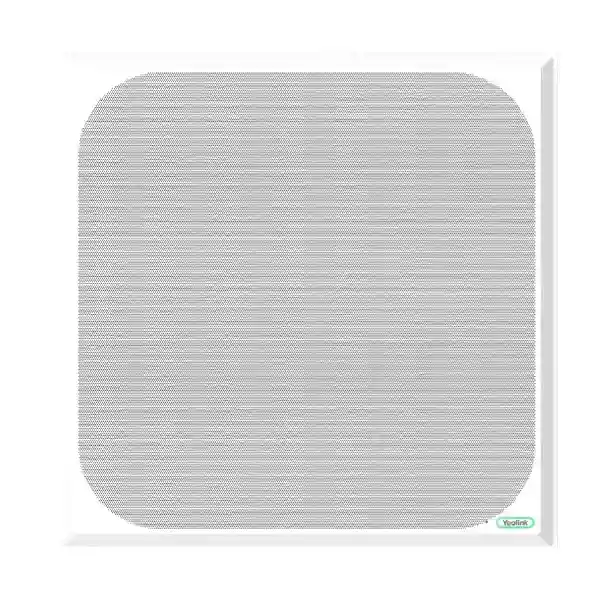
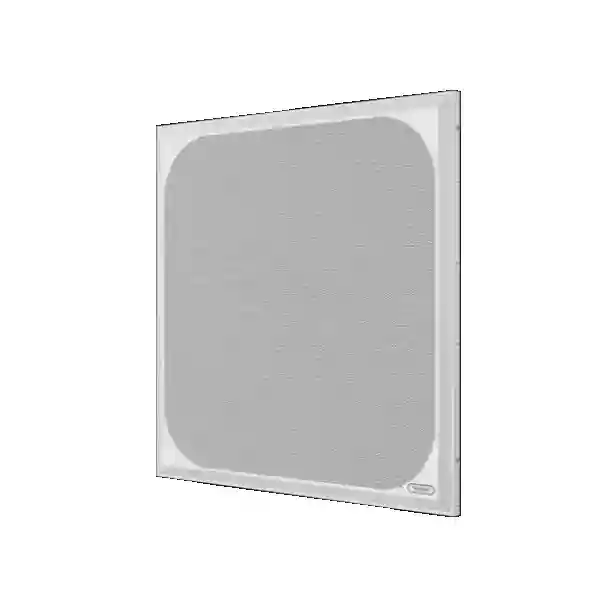
Yealink CM50 Dante Ceiling Microphone for Enterprise Meeting Rooms
The Yealink CM50 is a premium ceiling-mounted beamforming microphone built for organizations that need clear, controlled speech pickup without placing microphones, cables or charging docks on the meeting table. It combines a 127-element MEMS microphone array, Dante and AES67 network-audio transport, eight configurable pickup areas and a premium pickup radius of up to 5 metres under Yealink’s specified acoustic test conditions. The result is a ceiling audio endpoint designed for boardrooms, divisible meeting spaces, executive conference rooms, training facilities and professionally integrated collaboration environments.
For procurement teams, the CM50 solves several practical room-design problems at once. A single PoE+ Ethernet connection supplies power while providing Dante audio transport and network control, reducing the number of separate cable paths needed above the ceiling. Its 592 × 592 mm footprint aligns closely with mainstream 600 × 600 mm ceiling grids, and Yealink supports in-ceiling, suspended and on-ceiling installation approaches. The microphone is UL 2043 plenum rated, an important specification where equipment is installed in air-handling spaces and the local project specification requires suitable materials and certification.
The CM50 is particularly valuable when a project needs controllable coverage rather than indiscriminate room pickup. Eight independent customizable pickup areas, acoustic-fence functionality and sound-source localization allow an integrator to build an audio design around the actual seating plan. This can help reduce capture from display walls, doorways, equipment areas and other zones where unwanted noise originates. Dante/AES67 compatibility also gives the microphone a place in broader professional AV ecosystems rather than limiting it to one conferencing platform.
CM50 Procurement Fact Rail
Yealink CM50
Enterprise ceiling audio
Dante / AES67
IEEE 802.3at PoE+ Class 4
127 MEMS elements
Project quotation
A CM50 quotation should be treated as part of a room system rather than as an isolated microphone purchase. Buyers should identify the conferencing platform, DSP or audio bridge, PoE+ switch capacity, loudspeaker architecture, room dimensions, ceiling construction, mounting method and required cabling before finalizing quantities. FourTeck can review these dependencies so the purchase order reflects the complete deployment rather than leaving integration gaps to be solved during installation.
Operational Architecture and Room-Audio Design
Traditional table microphones are straightforward, but they occupy valuable workspace and can become a recurring operational burden. Cables are moved, expansion microphones are disconnected, wireless units require charging, and room reconfiguration changes the relationship between participants and microphone positions. The CM50 moves the primary pickup system into the ceiling plane. That architectural choice leaves the table clear and makes the audio infrastructure part of the room rather than part of the furniture.
At the acoustic front end, 127 MEMS microphone elements feed beamforming functions that allow the system to create directional pickup behavior. Yealink specifies eight customizable pickup areas. In a properly designed room, these zones can be aligned with conference-table positions, classroom discussion areas or presentation locations. Priority pickup can be used where particular areas deserve greater emphasis, while acoustic-fence functions help restrict capture beyond intended boundaries. This is useful in rooms with glass partitions, adjacent collaboration zones, doors opening onto busy corridors, or mechanical noise concentrated outside the participant area.
The published acoustic specification includes a 120 Hz to 20 kHz frequency-response range, 86 dB signal-to-noise ratio at 1 kHz under the stated measurement condition, maximum sound-pressure level of 122 dB at less than 1% THD and 86 dB dynamic range. These figures position the CM50 as a professional speech-capture endpoint capable of handling normal conferencing levels while preserving the detail required for intelligible remote conversation.
The network side is equally important. CM50 supports Dante and AES67, operating at 48 kHz and 24-bit. Yealink lists 8+2 Dante output channels and two Dante input channels, including reference paths for acoustic echo cancellation and feedback-control workflows. This channel architecture gives AV designers options when routing microphone outputs into compatible DSP platforms and room systems. Dante Media Encryption with AES-256 is supported with specified Dante platforms, while Yealink Audio Encryption with AES-256 is supported when used with Yealink AVBridge.
The physical interface is intentionally concise: an RJ-45 PoE+ Dante connection for network audio, control and power, plus a 3-pin Phoenix connector for analog output. Typical power consumption is listed at 17 W, with rated power at 19.3 W. This makes PoE budgeting a genuine design item: the switch must support IEEE 802.3at Class 4 on every CM50 port, with enough aggregate PoE budget for the number of microphones and other powered AV devices connected to the switch.
For multi-room deployments, network architecture should be planned before equipment arrives. AV traffic should follow the organization’s switching, VLAN, multicast, quality-of-service and security policies. Dante-compatible infrastructure should be validated end to end, including switch configuration and any routed boundaries. Where an enterprise already operates a standardized DSP family, the integrator should verify channel mapping and control behavior in the lab or staging environment before site deployment.
Enterprise Business Outcomes and Value Analysis
1. Consistent Speech Capture
The ceiling array is designed to provide broad room coverage while beamforming focuses pickup toward intended participant zones. This reduces dependence on users sitting close to a tabletop microphone. In executive and hybrid meetings, that consistency matters because remote attendees judge room quality primarily by how clearly they can hear every person, not by how sophisticated the local AV rack appears.
2. Room Reliability
A fixed ceiling endpoint removes batteries, charging cycles and movable microphone cables from routine meeting preparation. The microphone becomes part of the room infrastructure. Fewer user-touch points can translate into fewer accidental disconnections and less pre-meeting troubleshooting, provided the underlying PoE and network design is robust.
3. Scalable Network Audio
Dante and AES67 support let organizations integrate the CM50 into professional networked-audio designs. Additional rooms can follow a repeatable switching and DSP template, while compatible endpoints can be routed through the network rather than relying exclusively on point-to-point analog cabling.
4. Controlled Audio Boundaries
Eight customizable pickup areas and acoustic-fence functions help integrators define where the microphone should concentrate. That can be valuable in rooms where unwanted sound originates at entrances, refreshment counters, display equipment or adjacent spaces. Correct configuration remains essential; zoning is a design tool, not a substitute for good room acoustics.
5. Simplified Physical Deployment
One PoE+ cable provides the main network and power connection. In compatible suspended-ceiling grids, the 592 × 592 mm chassis is close to a standard 600 × 600 mm tile format, helping reduce intrusive tabletop hardware. Yealink also documents suspended and on-ceiling mounting approaches for spaces where direct tile-grid placement is not appropriate.
6. Lifecycle Cost Control
A well-designed ceiling system can reduce recurring battery management, cable handling and table rework. Lifecycle value depends on correct initial engineering: PoE switching, DSP capacity, loudspeaker design, acoustic treatment and commissioning should be included in the project budget rather than treated as unexpected installation extras.
Key Hardware and Software Highlights
| Capability | CM50 Implementation | Operational Outcome |
|---|---|---|
| Microphone array | 127 MEMS elements | Dense array supports beamforming and sound localization. |
| Pickup control | Up to 8 customizable areas | Coverage can be aligned with seating and presentation zones. |
| Network audio | Dante and AES67 | Integration into standards-based professional AV networks. |
| Power | IEEE 802.3at PoE+ Class 4 | Single Ethernet run for primary power, control and network audio. |
| Encryption | AES-256 options in supported ecosystems | Supports protected media transport in compatible architectures. |
| Room planning | Yealink Room Designer ecosystem | Helps integrators plan room coverage and deployment parameters. |
The most important procurement distinction is that microphone-array performance depends on the complete room. Ceiling height, reverberation, HVAC noise, loudspeaker position, participant distance, DSP configuration and network transport all influence the final experience. The CM50 provides a strong technical foundation, but enterprise results come from combining that foundation with commissioning and room-specific tuning.
Technical Specifications Ledger
| Parameter | Specification | Planning Note |
|---|---|---|
| Frequency response | 120 Hz–20 kHz | Suitable for full-band speech capture. |
| Sensitivity | 0 dBV/Pa, 94 dBSPL @ 1 kHz | Use published measurement conditions when comparing designs. |
| Signal-to-noise ratio | 86 dB @ 1 kHz, 94 dBSPL A-weighted | Room background noise still affects intelligibility. |
| Maximum SPL | 122 dB at <1% THD | Provides headroom for normal conferencing environments. |
| Dynamic range | 86 dB at <1% THD | Part of overall gain-structure planning. |
| Protocols | Dante, AES67 | Validate network and DSP interoperability. |
| Dante outputs | 8+2 channels | Plan DSP input capacity and routing. |
| Dante inputs | 2 channels: AEC reference and AFC reference | Coordinate reference routing with the audio design. |
| Sampling / bit depth | 48 kHz / 24-bit | Align compatible network-audio devices. |
| Array | 127 MEMS microphones | Enables beamforming and localization functions. |
| Dimensions | 592 × 592 × 56 mm | Confirm ceiling grid, clearance and support requirements. |
| Net weight | 5.15 kg excluding accessories | Mounting structure must be appropriate for the installed load. |
| Interfaces | 1 × RJ-45; 1 × 3-pin Phoenix analog output | Specify compatible termination and cable paths. |
| Power | IEEE 802.3at PoE+ Class 4 | Reserve adequate switch PoE budget. |
| Power consumption | 17 W typical; 19.3 W rated | Use rated figure for conservative power planning. |
| Operating temperature | 0–40 °C | Check ceiling void temperatures at the site. |
| Operating humidity | 0–93% RH | Avoid condensation and uncontrolled environmental exposure. |
| Storage temperature | -30–70 °C | Relevant to warehousing and transport handling. |
| Plenum rating | UL 2043 | Confirm project and local code requirements. |
Specifications should be checked against the current manufacturer datasheet when a tender requires a particular revision, certification statement or approved-vendor submission. Firmware capabilities and ecosystem compatibility can evolve, while physical and acoustic specifications should always be tied to the manufacturer documentation supplied for the proposed unit.
Configuration and Sizing Worksheet
Step 1 — Map the participant area
Record room length, width, finished ceiling height and table dimensions. Mark every regular seating position, presenter position and flexible furniture zone. Do not size solely from nominal room area. The relevant question is how far each talker is from the intended microphone position and whether partitions, high ceilings or atypical layouts change the acoustic relationship. Yealink states a premium pickup radius up to 5 metres under defined acoustic conditions; project design should account for the real room’s reverberation and noise.
Step 2 — Identify noise and exclusion zones
Mark doors, HVAC diffusers, projectors, equipment racks, refreshment stations, operable walls and adjacent collaboration spaces. These locations influence pickup-zone design. The CM50’s configurable areas and acoustic-fence functions are most useful when the integrator knows which parts of the room should be emphasized and which should be de-emphasized.
Step 3 — Validate ceiling and mounting conditions
Confirm whether the room has a 600 × 600 mm suspended grid, solid slab, gypsum ceiling, open structure or specialty acoustic system. Verify above-ceiling clearance, safe support points, access for service and local requirements for suspended equipment. The CM50 weighs 5.15 kg excluding accessories, so mounting cannot be treated as a cosmetic decision.
Step 4 — Calculate PoE capacity
Allocate an IEEE 802.3at Class 4 capable port to each microphone. For conservative budgeting, use the published rated power of 19.3 W per CM50 rather than only the typical 17 W figure. Add the requirements of cameras, touch panels, AV bridges and other powered endpoints, then retain reasonable switch power headroom.
Step 5 — Define the audio signal chain
List the DSP, conferencing codec or room compute, loudspeakers, amplifiers and any analog interfaces. Confirm Dante/AES67 interoperability and determine how the 8+2 output channels will be consumed. Establish the AEC and AFC reference routing. Where USB conversion is required, include an appropriate audio bridge or DSP architecture rather than assuming the microphone itself directly replaces every conferencing interface.
Step 6 — Review licensing and software dependencies
Ask the integrator to identify every license associated with the complete room system: conferencing platform subscriptions, DSP feature licenses, Dante-related software requirements, management platforms and any room-control components. The microphone procurement should distinguish included functions from licenses that belong to surrounding systems. This avoids an apparently complete bill of materials arriving without the software entitlements needed to commission the room.
Step 7 — Prepare the quote pack
For an accurate FourTeck quotation, provide room drawings where available, ceiling height, seating capacity, conferencing platform, existing DSP and switching details, required loudspeakers, preferred mounting method, project location, quantity of rooms and desired delivery window. For standardized rollouts, identify whether all rooms share one template or whether executive, training and boardroom variants require separate bills of materials.
Deployment Scenarios and Industry Use Cases
Large Enterprise and Multi-Site Networks
Enterprises with many meeting rooms benefit from repeatable room standards. A CM50-based design can become one tier in a broader room taxonomy: smaller rooms may use integrated audio, while larger boardrooms and divisible spaces use ceiling arrays, networked DSP and installed loudspeakers. Standardization should cover switch configuration, VLAN policy, firmware baseline, DSP templates, mounting details, labeling and acceptance testing. This makes future rooms easier to deploy and reduces the number of unique support procedures the IT team must maintain.
In a headquarters environment, the microphone can support high-value executive spaces where table appearance and participant flexibility matter. In branch locations, the same architecture can be reproduced where network and ceiling conditions permit. Central teams should document the approved signal chain so local contractors do not substitute incompatible PoE switches or change network settings without review.
Financial and Banking Institutions
Banks and financial organizations often combine strict network governance with high expectations for boardroom clarity. Dante media encryption capabilities in compatible architectures, controlled network segmentation and fixed ceiling hardware can support a disciplined room design. Procurement teams should involve information-security and network teams early because professional AV is no longer isolated from the IP network. Switch management, firmware governance, access controls and approved integration paths should be part of the room’s commissioning record.
For customer-facing or executive rooms, acoustic privacy must also be considered separately from microphone pickup control. Acoustic-fence functionality can reduce unwanted pickup, but it does not soundproof a room. Walls, doors, glazing, masking and architectural acoustic treatment determine whether conversations can physically be heard outside the room.
Educational and Campus Networks
Universities and training institutions can use ceiling arrays in hybrid classrooms, lecture discussion spaces and executive education rooms. Ceiling mounting keeps microphones away from students and allows furniture layouts to change without moving audio hardware. The design should account for higher background noise, HVAC systems and longer reverberation times common in teaching spaces. Large rooms may require multiple microphone zones or additional endpoints, and loudspeaker placement must be coordinated to preserve intelligibility and echo-control performance.
Campus network teams should establish whether AV devices live on dedicated VLANs and how Dante traffic is managed across switching boundaries. Classroom support staff benefit from consistent room templates and documented recovery procedures. The objective is not merely to install the microphone, but to create a room that instructors can start quickly without manually selecting complex audio routes.
Government and Controlled Procurement
Government projects frequently require detailed technical submissions, bill-of-materials control, warranty documentation and formal acceptance testing. The CM50’s published specifications can be mapped into tender compliance schedules covering acoustic performance, network protocols, PoE requirements, dimensions, operating environment and certification. Where a tender specifies equivalent-or-better requirements, FourTeck can help prepare a technical comparison based on documented manufacturer characteristics.
Controlled environments should also document firmware versions, network configuration, commissioning credentials and change-management responsibility. If the room has restrictions on external cloud services or remote management, those constraints should be identified before the solution architecture is approved. The microphone’s Dante/AES67 transport is only one component of the total security boundary.
Technical Deep Dive 1: Beamforming and Audio Engine Architecture
The defining hardware feature of the CM50 is its 127-element MEMS array. An array of this scale gives the system multiple spatial observations of the same acoustic event. Beamforming processing can use those observations to emphasize sound arriving from desired directions while reducing energy arriving from others. For meeting rooms, the practical result is not simply louder audio; it is more controlled capture. Participants can sit around a table without each requiring a dedicated physical microphone.
Sound-source localization also has value beyond the audio stream. In compatible room designs it can contribute to camera-tracking workflows, allowing the AV system to associate active speech with a location in the room. Successful tracking depends on the wider Yealink or third-party system architecture, so buyers should confirm the intended camera, processor and control integration rather than assuming microphone localization alone creates a complete tracking solution.
The eight customizable pickup areas are particularly useful in irregular rooms. An integrator can design zones around occupied regions instead of accepting one undifferentiated pickup field. Priority pickup can focus attention where key participants sit. Acoustic-fence functions can help suppress unwanted environmental sound outside configured boundaries. The benefit is strongest when commissioning includes real room measurements and listening tests rather than relying exclusively on default settings.
Technical Deep Dive 2: Network Audio, Firmware and Operational Control
Dante turns audio channels into managed network flows, changing the infrastructure conversation from analog cable runs to Ethernet switching, clocking, multicast behavior and endpoint configuration. AES67 provides standards-based interoperability options across compatible professional audio products. For enterprise buyers, this flexibility is powerful because the microphone can participate in broader AV systems rather than being tied to a proprietary analog path.
That flexibility requires governance. The network team should approve switching platforms and configuration. The AV integrator should document device names, routes, addressing, VLAN placement and reference channels. Firmware should be maintained under change control, especially in rooms used for executive, financial or government meetings. A firmware update should be tested against the DSP, conferencing application and control system before broad rollout when the organization operates many standardized rooms.
Encryption support should be understood precisely. Yealink documents Dante Media Encryption with AES-256 when used with specified compatible Dante technologies and Yealink Audio Encryption with AES-256 when working with Yealink AVBridge. Buyers should validate the end-to-end encryption architecture they require, because an endpoint feature does not automatically mean every third-party device in the audio chain uses the same protected transport mode.
Technical Deep Dive 3: Availability, Redundancy and Recovery
A ceiling microphone is only as available as its supporting infrastructure. The CM50 uses PoE+, so a switch failure or power failure can remove the microphone from service. High-value rooms should therefore consider UPS-backed switching, appropriate network redundancy at the infrastructure level and documented spare-equipment procedures. The design decision depends on the business impact of a room outage: an everyday collaboration room may accept simple recovery, while a boardroom used for regulated or executive meetings may justify more resilient supporting infrastructure.
Operational recovery begins with documentation. Keep a record of firmware, network settings, Dante routes, DSP configuration, pickup-zone design and room-control mappings. If hardware is replaced, those records reduce the time required to reproduce the approved configuration. A staged spare can shorten recovery further in sites where downtime has a high cost.
Physical serviceability matters too. Installers should preserve safe access to the ceiling unit, network cable and mounting hardware. Cable labeling should identify the destination switch and port. The switch configuration should identify the room and endpoint. These small engineering disciplines become critical months later when a support technician who did not perform the original installation must diagnose the system quickly.
Pre-Purchase Buyer Gap Checklist
Is the quoted microphone enough to create a complete room? Usually not. A complete system may also require a compatible DSP or bridge, PoE+ network switch, loudspeakers or amplifier, conferencing compute or codec, camera, touch controller, cabling, mounting hardware and commissioning. The exact bill depends on whether the room is being built from scratch or integrated with existing equipment.
Are there hidden software costs? The CM50’s hardware functions should be separated from subscriptions or licenses associated with the conferencing platform, DSP, management environment or other devices. Ask for a line-by-line statement of recurring and one-time software costs for the complete solution.
Will it fit the ceiling? The unit measures 592 × 592 × 56 mm and weighs 5.15 kg excluding accessories. A 600 × 600 mm ceiling grid is a natural fit, but the installer must verify the actual grid, support structure, plenum clearance, cable path and local safety requirements. Solid ceilings require a different mounting strategy.
How much switch power should be reserved? The published typical draw is 17 W and rated draw is 19.3 W. Use the rated value when planning aggregate PoE budget, then retain switch headroom. Confirm that the selected ports support IEEE 802.3at Class 4 rather than assuming any PoE-labeled switch is sufficient.
Will it work with third-party systems? Yealink documents Dante/AES67 interoperability and specifically describes use with standard Dante/AES67 processors. Compatibility still needs to be validated at system level. Confirm the DSP model, required channel count, conferencing interface and any USB or analog conversion.
What determines whether one microphone is enough? Room dimensions alone are insufficient. Ceiling height, participant layout, acoustic treatment, reverberation, ambient noise and expected seating flexibility all matter. Provide a drawing and ceiling height so the integrator can assess coverage rather than selecting quantity from a simple square-metre rule.
What about lifecycle and replacement? Ask for warranty terms, replacement process, expected project availability and a recommended spare strategy for critical rooms. Large organizations should record the exact model and configuration template in their asset system.
Can pickup zoning replace acoustic treatment? No. Directional processing can improve capture selectivity, but highly reverberant rooms still benefit from architectural acoustic control. Hard glass, concrete and parallel reflective surfaces can reduce speech quality even when the microphone itself is advanced.
Uganda Procurement and Delivery Logistics
FourTeck Uganda supports project-based procurement for the Yealink CM50, from single executive rooms to standardized multi-room deployments. A useful quotation request should include quantity, delivery location, room dimensions, ceiling height, conferencing platform and any existing audio infrastructure. Where the requirement is still being designed, provide drawings or photographs and identify whether the project needs only microphones or a complete room solution.
After technical scope is established, the quotation can be structured around the required hardware, compatible accessories and supporting AV components. Project lead time should be confirmed at quotation stage because enterprise AV availability can vary by quantity, shipment consolidation and accessory requirements. Buyers with a fixed installation date should communicate that milestone early so equipment, staging and contractor schedules can be aligned.
Pre-configuration can reduce site time. Depending on the final architecture, staging may include firmware baseline checks, asset labeling, configuration documentation and bill-of-materials verification. Network-specific parameters are normally coordinated with the customer’s IT team because production VLANs, addressing and switch policy remain customer-environment decisions.
For installation planning, include ceiling access, cable pathways, PoE switch readiness and any civil or electrical work in the project schedule. The CM50 simplifies endpoint cabling through PoE+, but a professional ceiling installation still requires safe mounting, tested structured cabling and proper coordination between AV, IT and facilities teams.
Local Coverage Across Uganda
Projects in Kampala can be scoped for corporate headquarters, hotels, financial institutions, universities and government meeting facilities. Entebbe deployments may include hospitality, aviation-related offices and conference facilities where installed ceiling audio keeps tables uncluttered. Jinja projects can support industrial, education and regional office environments, while Mbarara and Gulu organizations can use the same enterprise procurement approach for branch offices, training rooms and institutional collaboration spaces.
For sites outside the primary urban hubs, procurement planning should account for delivery coordination, installer travel, site access and remote technical support. Multi-location customers should provide a room schedule that identifies each site, room type, ceiling condition and target installation date. Standardizing equipment and configuration templates across Kampala, Entebbe, Jinja, Mbarara and Gulu can simplify support and spare management, while room-specific acoustic differences can still be handled during commissioning.
Cross-Border and Regional Supply
Organizations operating across East Africa and the Gulf often prefer one technical standard with region-specific procurement support. FourTeck maintains regional web presences for Uganda, Kenya, the wider African market, UAE and Kuwait. This can help multinational customers align product families and technical expectations across offices while managing commercial and delivery requirements through the appropriate regional channel.
For cross-border rollouts, create a master room standard first, then localize only the elements that must change: power infrastructure, network policy, mounting conditions, approved contractors and logistics. Keep the core microphone, DSP and configuration logic consistent where possible. A controlled design reduces integration variance and makes remote troubleshooting easier because support teams encounter familiar device names, channel maps and commissioning procedures across countries.
Related Systems and Project Components
A CM50 project frequently sits inside a wider unified-communications design. Buyers can review Yealink meeting-room solutions for complete-room scoping, request compatible Dante DSP and audio bridge options, specify PoE+ network switching, or ask for ceiling loudspeaker and amplifier packages. Where Microsoft Teams Rooms is the target platform, the project can also be scoped with Yealink MVC room systems. For professional audio integration, ask about Yealink AVBridge and compatible processing.
The best related-product list is generated from the room design rather than from brand matching alone. A microphone must connect to an audio processing and conferencing chain that meets the room’s operational needs. FourTeck can therefore prepare a coordinated bill of materials that includes network power, mounting, processing, loudspeakers, camera, control and cabling instead of leaving the buyer to reconcile separate component lists.
FourTeck Technical Service Capabilities
Enterprise AV procurement benefits from engineering review before the purchase order. FourTeck can assist with bill-of-materials validation to confirm that the proposed microphone count, DSP capacity, PoE ports, mounting approach and conferencing interfaces form a coherent system. This review is especially useful when a tender has been assembled from multiple vendor documents and interface assumptions need to be checked.
Staging can include product verification, firmware baseline review, labeling and preparation of deployment records. For repeatable room standards, configuration information can be documented so installers follow the same endpoint naming and system logic at each location. Pre-shipment firmware work should always be coordinated with the approved project baseline rather than automatically applying changes that have not been tested against the complete room system.
Post-sales support can focus on fault isolation across the audio chain: endpoint power, Ethernet link, Dante routing, DSP processing, conferencing application and loudspeaker path. Clear as-built documentation significantly improves support speed. Customers should retain switch-port records, network diagrams, room drawings, device serial information, firmware versions and configuration backups as part of the room handover package.
Extended Technical FAQ
1. What is the Yealink CM50 pickup range?
Yealink states a premium pickup radius of up to 5 metres, with the manufacturer publishing the acoustic conditions associated with that figure. Real rooms can perform differently because ceiling height, reverberation, background noise, participant orientation and reflective surfaces influence speech capture. For procurement, use the 5-metre figure as a manufacturer reference rather than a universal sizing guarantee. Supply room dimensions and ceiling height during design so the integrator can determine whether one CM50 is appropriate or whether the room requires additional microphone coverage.
2. Does the CM50 require a separate power supply?
The primary network connection uses IEEE 802.3at PoE+ Class 4, allowing power, Dante audio and network control to travel through the Ethernet connection. Yealink publishes typical power consumption of 17 W and rated power of 19.3 W. The network switch therefore needs a compatible PoE+ port and sufficient aggregate power budget. For a multi-microphone project, calculate all CM50 endpoints plus cameras, touch panels and other powered AV equipment. UPS-backed PoE switching can also be considered where room availability is operationally important.
3. Can the CM50 integrate with third-party DSP platforms?
The CM50 supports Dante and AES67, which are widely used in professional networked audio. Yealink specifically describes interoperability with standard Dante/AES67 processors and references Q-SYS Core series as an example. System-level validation is still required because a complete room may involve channel routing, echo-cancellation references, USB interfaces, camera tracking and control logic. Before ordering, provide the exact DSP and conferencing platform so channel capacity and interoperability can be checked against the proposed architecture.
4. Is the microphone suitable for Microsoft Teams Rooms, Zoom or Webex?
The CM50 can form part of professional room solutions serving major conferencing platforms when connected through an appropriate Yealink or third-party audio processing and conferencing architecture. Yealink highlights deep integration with Microsoft Teams in its room ecosystem and describes compatibility with conferencing hardware used for Teams, Cisco Webex and Zoom environments. The microphone itself is an audio endpoint, so buyers should not assume it replaces the room compute, codec, DSP or USB interface. FourTeck can scope the full signal chain for the selected platform.
5. What ceiling type is required?
The CM50 measures 592 × 592 × 56 mm and is well suited to mainstream 600 × 600 mm ceiling grids. Yealink also documents suspended and on-ceiling installation methods, allowing deployment beyond a conventional tile grid. Before installation, confirm structural support, safe mounting, above-ceiling clearance, service access and cable routing. The microphone weighs 5.15 kg excluding accessories. Local building requirements and the project consultant’s specifications remain important, even though the unit carries a UL 2043 plenum rating for suitable air-handling-space applications.
6. How do the eight customizable pickup areas help?
Customizable areas allow the integrator to align microphone behavior with the actual occupied regions of a room. For example, zones can follow seats around a boardroom table while reducing attention toward a doorway or equipment area. Priority pickup and acoustic-fence capabilities can further shape the intended capture pattern. These functions are most effective after room-specific commissioning. They should not be viewed as a replacement for acoustic treatment in highly reverberant rooms, nor as a privacy barrier preventing sound from physically traveling through walls or doors.
7. What network preparation is required for Dante?
The AV and network teams should agree on switching, addressing, VLAN placement, multicast handling, quality-of-service policy and endpoint management before deployment. Dante is networked audio, so switch configuration can directly affect room behavior. Each CM50 also requires PoE+ capacity. For standardized enterprise rollouts, document the approved switch models and configuration template. Staging the microphone, DSP and switch together before site installation can reveal routing or policy issues early, reducing commissioning time in finished meeting rooms.
8. Are there recurring licenses for the CM50?
Licensing should be assessed at complete-system level. The hardware microphone’s published feature set is only one part of the room. Conferencing services, DSP platforms, management systems, control software or supporting devices may carry subscriptions or feature licenses. Ask the quotation to separate hardware, one-time software entitlements and recurring subscriptions. This gives procurement a realistic total-cost picture and prevents commissioning delays caused by missing licenses in another component of the AV chain.
9. What warranty and replacement information should buyers request?
Warranty terms can depend on regional supply arrangements and the commercial quotation, so buyers should request the applicable warranty baseline in writing before purchase. For critical boardrooms, also ask about replacement procedure, expected turnaround and recommended spare strategy. Record each installed unit’s serial number, room location, firmware baseline and configuration. If a replacement is needed, good documentation helps technicians reproduce network settings and audio routing quickly instead of redesigning the room during an outage.
10. What information should I send FourTeck for an accurate CM50 quote?
Send the number of rooms, room dimensions, finished ceiling height, seating capacity, table layout, ceiling construction, conferencing platform and existing AV equipment. Include the DSP and network-switch models if they already exist. State whether the requirement includes installation, speakers, cameras, room compute, touch control, cabling and commissioning. For multi-site deployments, include city, quantity per location and target delivery dates. Drawings are especially useful because they allow the technical team to identify likely microphone positions, mounting constraints and cable routes before preparing the bill of materials.
Plan Your Yealink CM50 Deployment in Uganda
A successful ceiling-microphone project begins with the room, not the part number. Share your dimensions, seating plan, conferencing platform and existing network or AV infrastructure with FourTeck. The technical team can help validate microphone quantity, PoE+ capacity, compatible audio processing, mounting requirements and the supporting bill of materials before procurement. This is particularly important for boardrooms, training facilities and multi-site standards where repeatability and supportability matter as much as initial audio performance.
Request a project quotation for the Yealink CM50 and specify whether you need supply only, system integration guidance or a complete room package. For phased rollouts, identify the pilot room first so the design can be commissioned and documented before replication across additional Uganda locations.

Reviews
There are no reviews yet.